



From Wastewater to Wellbeing: Building Resilient Coastal Futures
UMS - UNEP
Clean Water, Resilient Communities, Thriving Coasts
 HOW WE WORK
UMS–UNEP/UN-Habitat: Sustainable Sanitation, Urban-Coastal Resilience & Community Engagement
Universiti Malaysia Sabah (UMS) collaborates with UNEP and UN-Habitat to enhance sanitation and coastal resilience in Sabah’s floating villages through the Global Wastewater Initiative (GWI) with ACT Malaysia. UMS also contributes to global environmental policy, with Assoc. Prof. Dr. Fiffy Hanisdah Saikim serving as a Lead Author for the Global Environment Outlook 7 (GEO-7) under UNEP. Together, these efforts strengthen UMS’s role in advancing clean water, ecosystem health, and sustainable communities.
Universiti Malaysia Sabah
UMS X UNEP/UN-Habitat: Global Environmental Outlook, Sustainable Sanitation & Community-Based Conservation
Universiti Malaysia Sabah (UMS) continues to advance the global sustainability agenda through impactful collaborations with the United Nations Environment Programme (UNEP) and the United Nations Human Settlements Programme (UN-Habitat)—spanning scientific leadership, sanitation innovation, and grassroots conservation.
At the policy and science level, Assoc. Prof. Dr. Fiffy Hanisdah Saikim, Director of the Institute for Tropical Biology and Conservation (ITBC), serves as Lead Author for the chapter “Biodiversity and Nature Loss in the State of the Global Environment and Progress Towards Internationally Agreed Goals” in the Global Environment Outlook 7 (GEO-7)—UNEP’s flagship environmental assessment. Her appointment positions UMS within UNEP’s international network of experts driving evidence-based biodiversity and climate policy worldwide.
At the community and infrastructure level, UMS collaborates with UNEP and UN-Habitat under the Global Wastewater Initiative (GWI) through projects implemented with Action Caring Team (ACT) Malaysia and local authorities. The initiative focuses on improving sanitation in Sabah’s floating-village communities via low-cost modular wastewater systems and community-led training. This partnership was highlighted in UNEP’s technical brief “Innovative Wastewater and Sanitation Solution Turns Tide in Sabah’s Floating Settlements.”
UMS also fosters student engagement and public awareness through major collaborative events:
- i. The International Forum on Caring for Our Planet (10 April 2025), co-organised with ACT Malaysia, UPM, UNEP and UN-Habitat, gathered over 145 students and staff to discuss urban sanitation, coastal resilience and pollution control with UN experts from Bangkok, Nairobi and Jakarta.
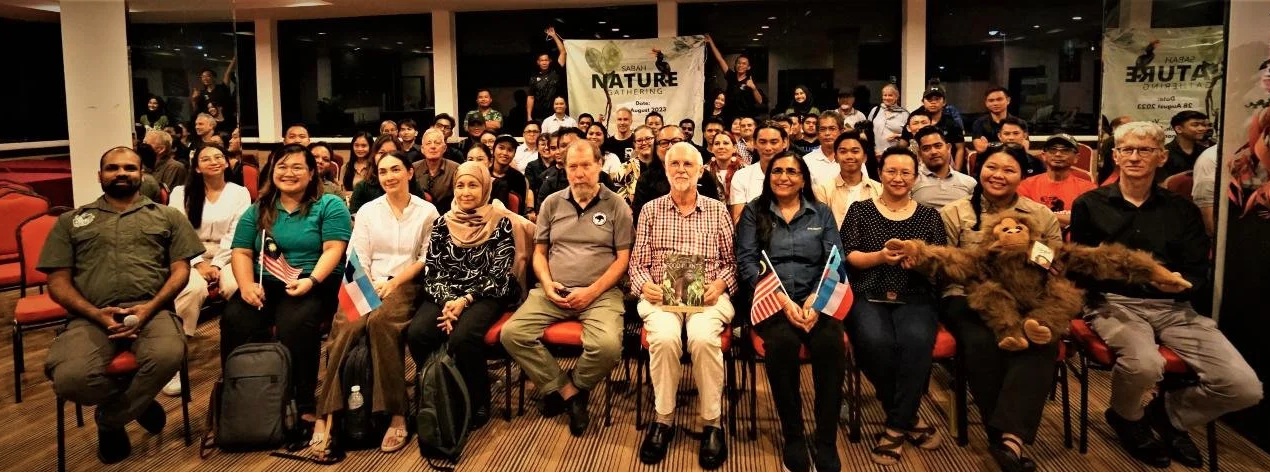
- ii. Sabah’s First NATURE Gathering (28 August 2025), jointly hosted by Borneo Rhino Alliance (BORA), 1StopBorneo Wildlife, and UMS’s Borneo Tourism Research Centre (BTRC), convened more than 70 conservationists, NGOs, and researchers to build new partnerships for biodiversity protection.
- iii. UMS’s marine researchers also collaborate with Stop Fish Bombing USA and regional partners to combat destructive fishing practices, promote reef protection, and restore marine ecosystems across Sabah’s coastal zones.
Universiti Malaysia Sabah x UNEP
Major Initiatives & Impact
- i. Smart Sanitation for Water Settlements The “Smart Sanitation for Water Settlements” initiative, led by UNEP and Action Caring Team (ACT Malaysia) with the participation of Universiti Malaysia Sabah (UMS), showcases UMS’s technical and research contribution in designing and implementing low-cost wastewater treatment systems for Sabah’s floating-village communities. Read More
- ii. UNEP Global Environment Outlook 7 (GEO-7) Assoc. Prof. Dr. Fiffy Hanisdah Saikim, Director of the Institute for Tropical Biology and Conservation, UMS, was appointed as Lead Author for the chapter “Biodiversity and Nature Loss” in UNEP’s Global Environment Outlook 7 (GEO-7), contributing to global environmental policy and assessment. Read More
- iii. Global Wastewater Initiative (GWI) UMS collaborates with UNEP and UN-Habitat through the Global Wastewater Initiative (GWI) to promote sustainable sanitation in coastal and floating settlements, advancing community health, clean water access, and climate resilience. Read More
- iv. International Forum on Caring for Our Planet Co-organised by ACT Malaysia, UPM, UNEP, UN-Habitat, and UMS, this student engagement forum gathered over 145 participants to discuss coastal resilience, pollution, and sustainable urbanisation with UN experts from Bangkok, Nairobi, and Jakarta. Read More
- iv. Sabah’s First NATURE Gathering Held at UMS on 28 August 2025, this event united over 70 NGOs, conservationists, and researchers to strengthen collaboration and share innovative solutions for protecting Sabah’s terrestrial and marine biodiversity. Read More
- iv. Stop Fish Bombing USA Collaboration UMS works with Stop Fish Bombing USA and regional partners to curb destructive fishing practices, restore coral reefs, and promote sustainable marine ecosystems across Sabah’s coastal waters. Read More
From the coral reefs of Tun Mustapha Park to the forests of the Heart of Borneo, the partnership between UMS and WWF-Malaysia is a catalyst for real-world sustainability transformation. Their collaboration unites science, community engagement, and policy innovation—delivering measurable progress toward Malaysia’s national biodiversity and climate goals.