


Green Energy. Greener Future.

UMS - SDG 7 Affordable and Clean Energy
Empowering Borneo with Clean Energy
 Brightening Lives Sustainably
UMS Bringing Solar Power, Energy Education, and Low-Carbon Solutions to Communities.
UMS advances SDG 7 by leading renewable-energy innovation, expanding solar adoption, and delivering energy-efficiency programmes across campus and rural communities. Through microgrid deployment, solar PV initiatives, research partnerships, and public education, UMS strengthens clean-energy access, reduces carbon emissions, and supports Sabah’s transition toward a low-carbon, sustainable future.
Universiti Malaysia Sabah
UMS’s Structured Plan for Energy-Efficient Building Upgrades
Universiti Malaysia Sabah (UMS) has a comprehensive, structured, and long-term plan to upgrade all existing campus buildings to higher levels of energy efficiency. These commitments are formalised under several strategic instruments, including the EcoCampus Blueprint (2017–2023), the Energy and Climate Change Management Committee established in 2018, the UMS Strategic Plan 2023–2027 (KRA 9: Green Campus), and the Sustainable Energy Management Policy (2018, reviewed 2024). Together, these frameworks outline UMS’s intention to not only comply with national energy-efficiency requirements but to become a model of sustainable campus development in Malaysia and the wider Borneo region.
UMS’s Structured Plan for Energy-Efficient Building Upgrades
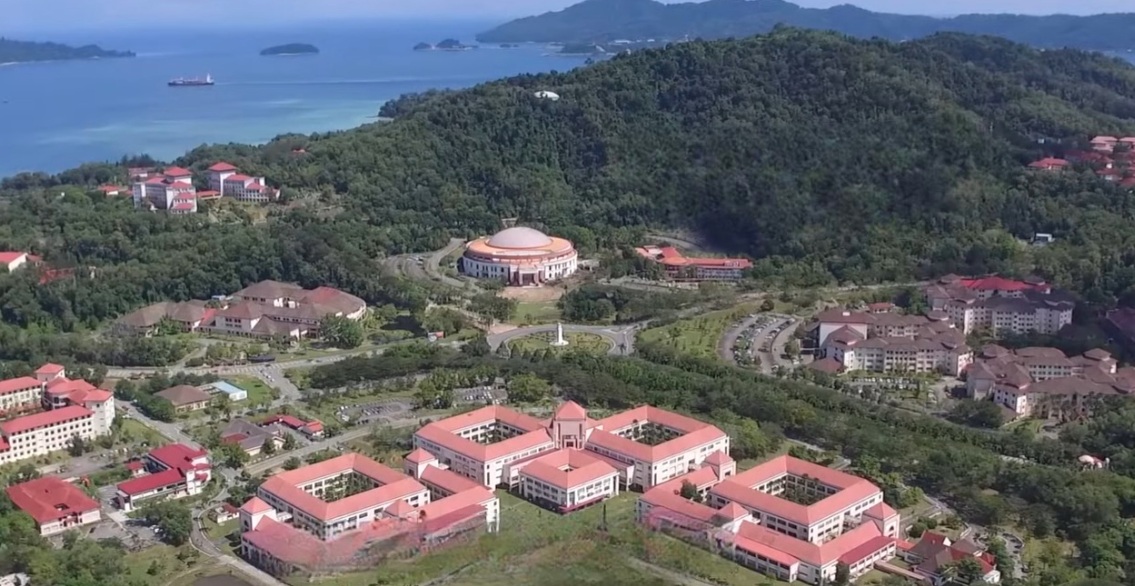
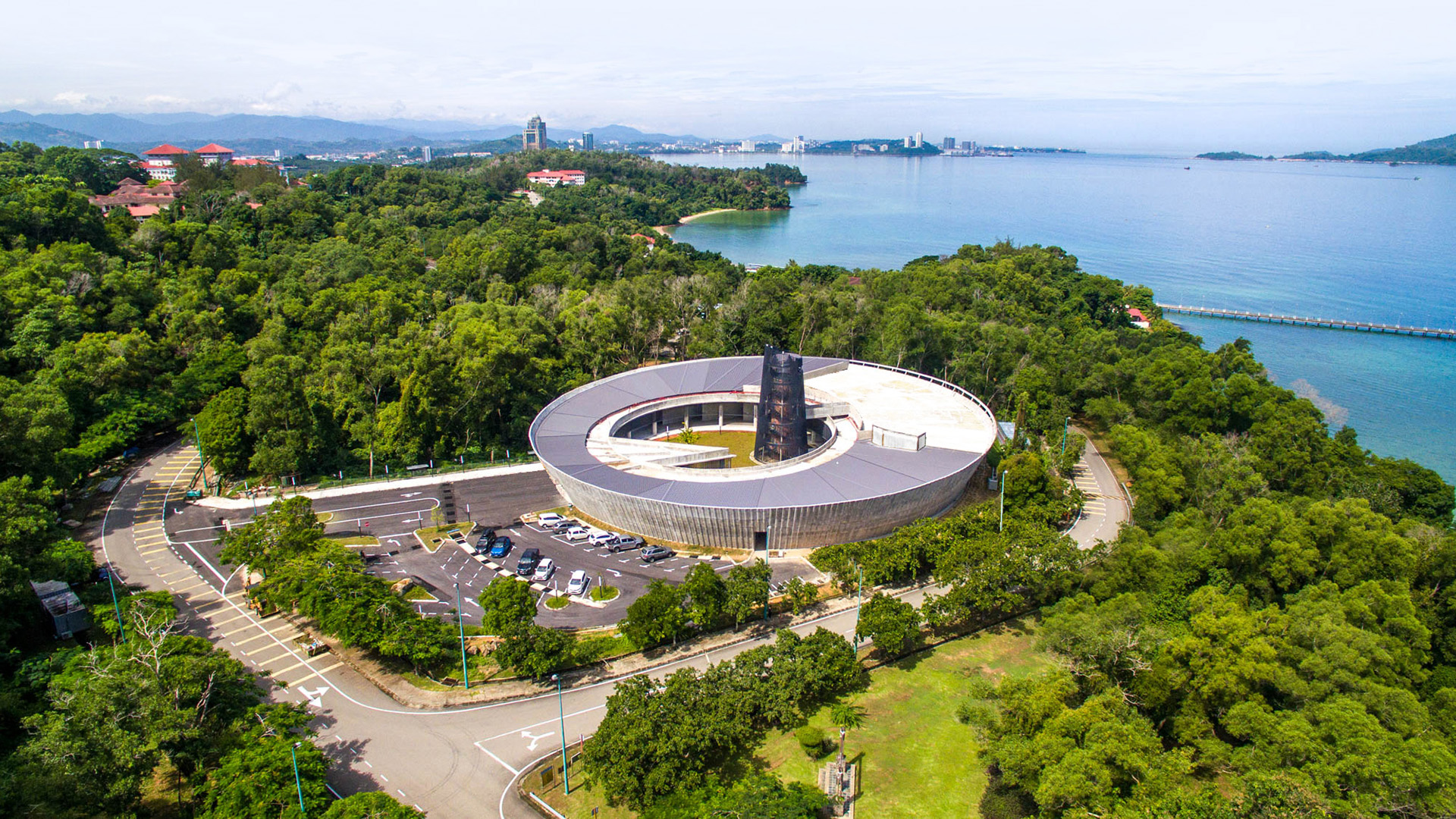
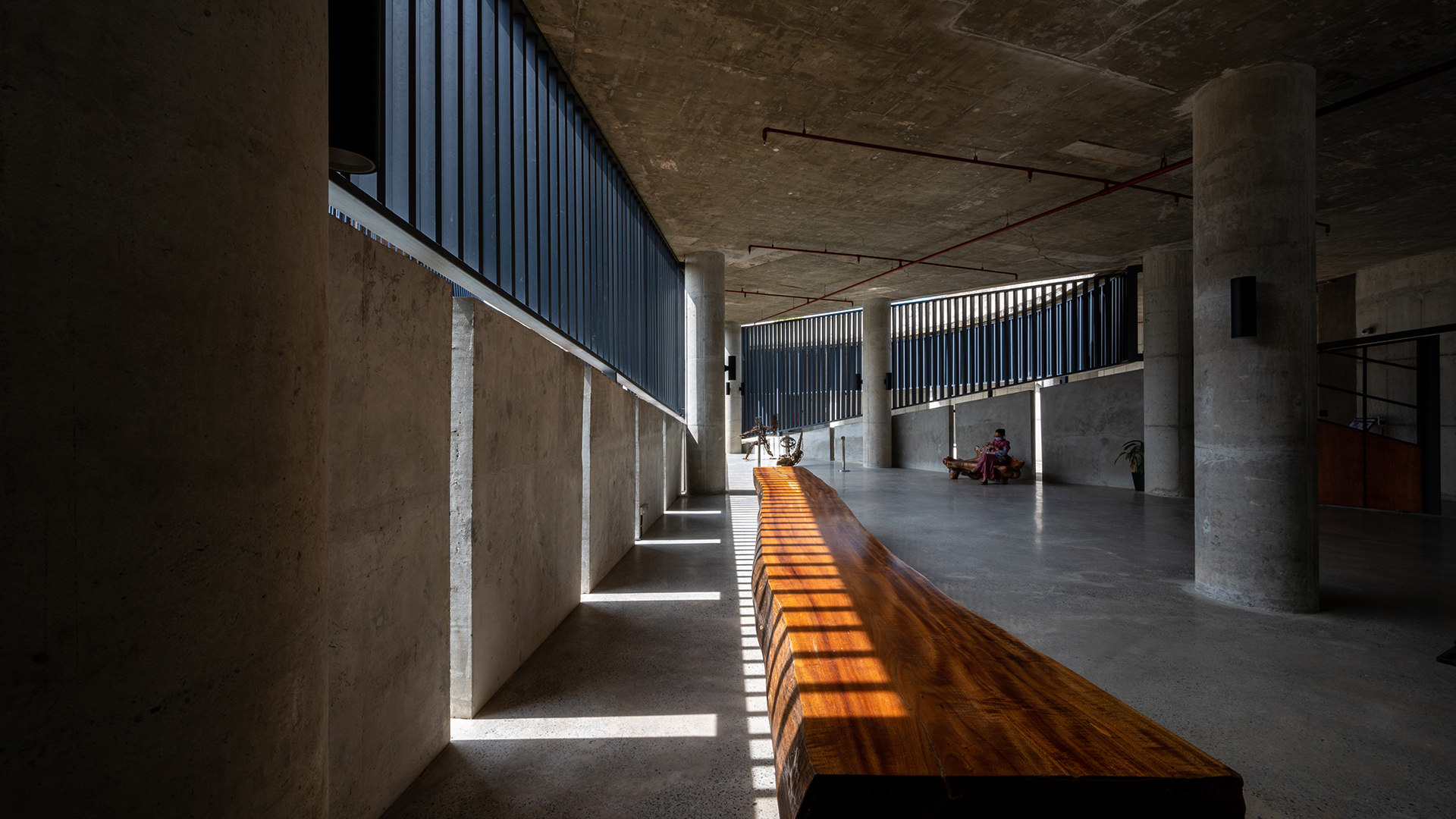
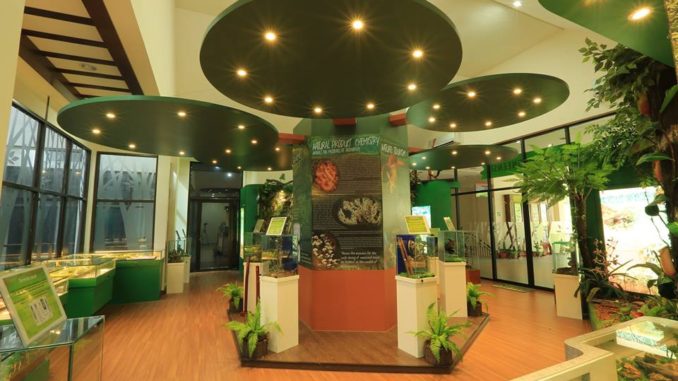
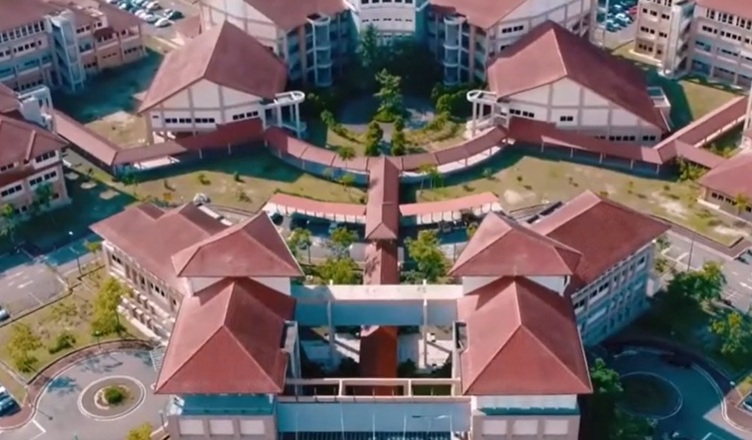
UMS’s approach to upgrading existing buildings is guided by MS 1525:2014 – Energy Efficiency and Use of Renewable Energy in Non-Residential Buildings, which sets requirements for building envelope improvements, HVAC optimisation, artificial lighting efficiency, and renewable-energy integration. UMS has adopted MS 1525 as the baseline standard for all new retrofitting projects and building upgrades carried out under the ECCMC. Universiti Malaysia Sabah (UMS) integrates passive design principles into its building construction and renovation practices, directly supporting SDG 7 by reducing reliance on mechanical cooling and artificial lighting. Key facilities across the main campus—such as the Faculty of Science and Natural Resources, Faculty of Tropical Forestry, and the Chancellery Building—feature natural ventilation outlets, large indoor atriums, wide window panels, and glassed office corridors facing open-air atrium spaces. These architectural elements maximise daylight penetration and promote cross-ventilation, significantly lowering cooling loads and improving indoor environmental comfort without excessive energy use. Evidence of these green-building features is visible throughout UMS’s flagship structures. Central atriums allow hot air to rise naturally, reducing air-conditioning dependency, while large windows and glass corridors optimise the use of natural light, cutting down the need for artificial lighting during daytime operations. Natural ventilation outlets incorporated into building façades support airflow circulation, reducing the strain on HVAC systems. These design choices align with MS 1525:2014 standards on energy-efficient non-residential buildings and the university’s Sustainable Energy Management Policy (2018, reviewed 2024), which mandates passive design integration for all renovation and new-build projects.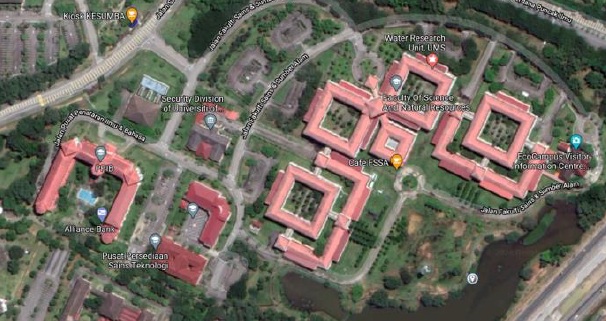
Retrofitting of Infrastructure and Equipment
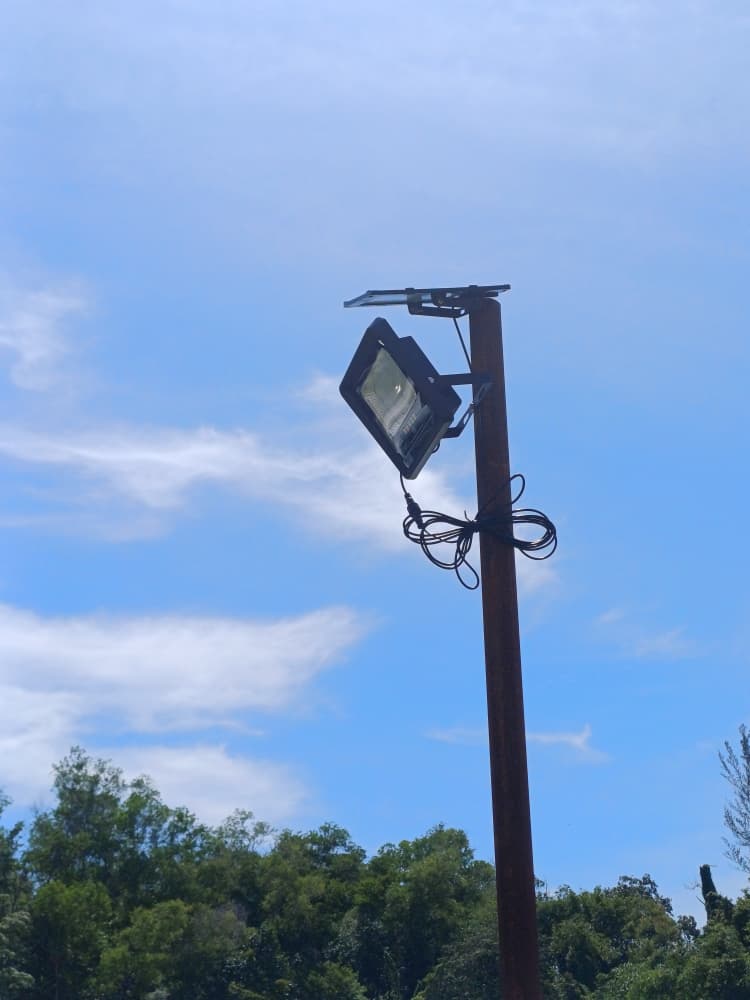
UMS has an ongoing, campus-wide programme to replace outdated and inefficient systems with high-efficiency alternatives. This includes full LED conversion for interior and exterior lighting across academic buildings, administrative offices, lecture halls, and hostels; replacing aging air-conditioning units with inverter-based, VRV/VRF, and other energy-efficient HVAC technologies; upgrading centralised chiller systems to high-performance models with improved Coefficient of Performance (COP); and modernising electrical distribution infrastructure to minimise energy losses and enhance overall transformer efficiency.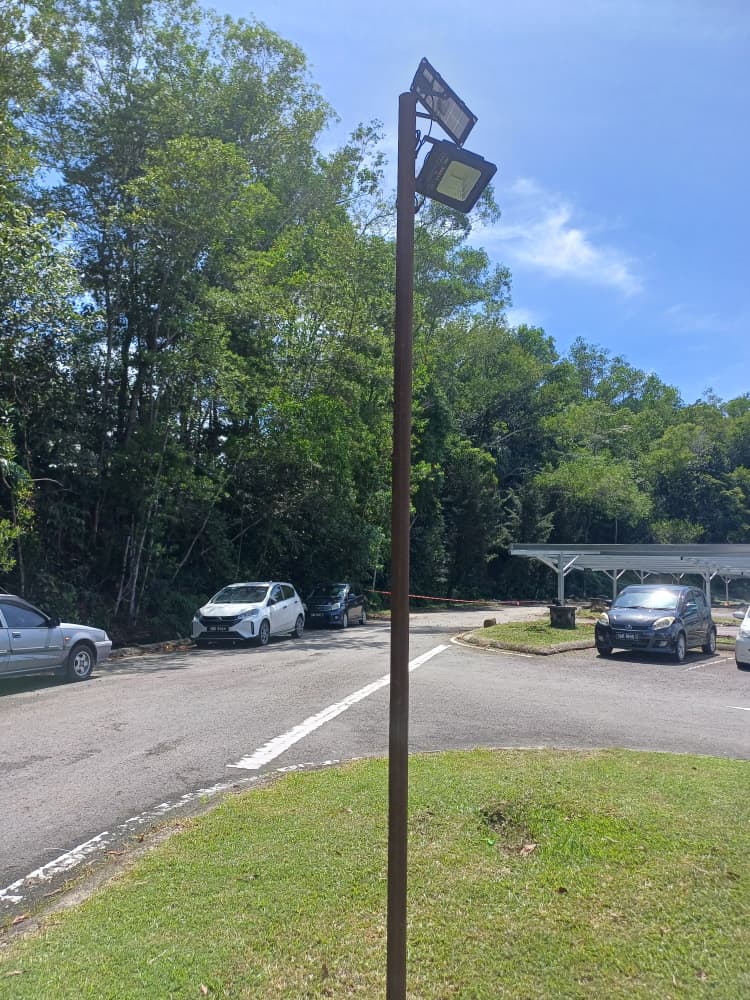
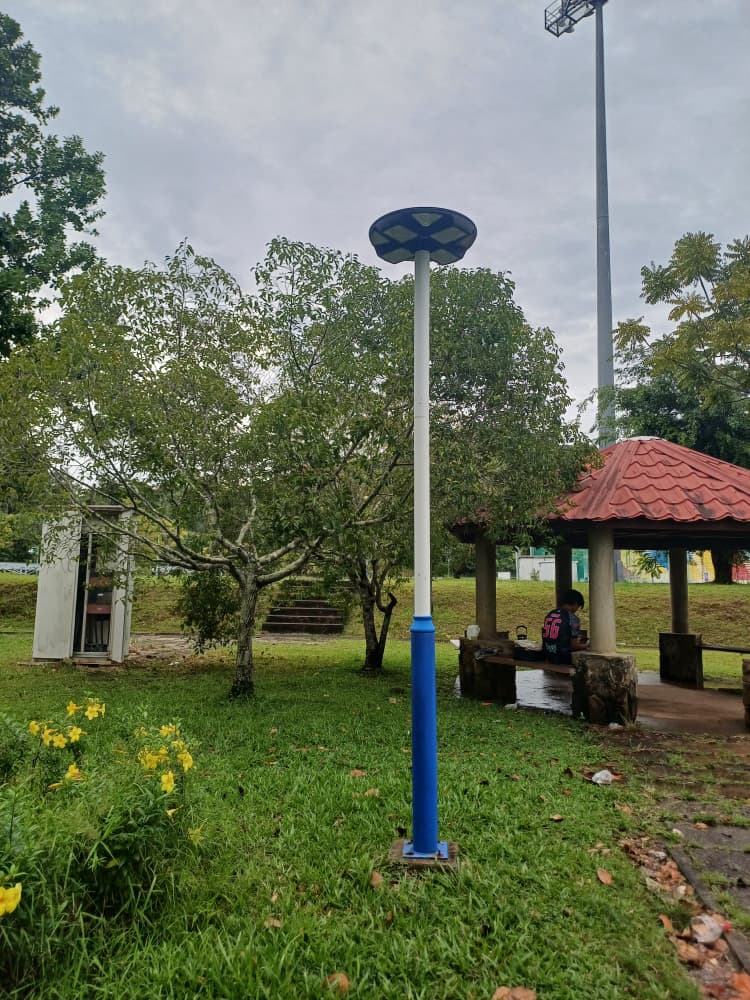
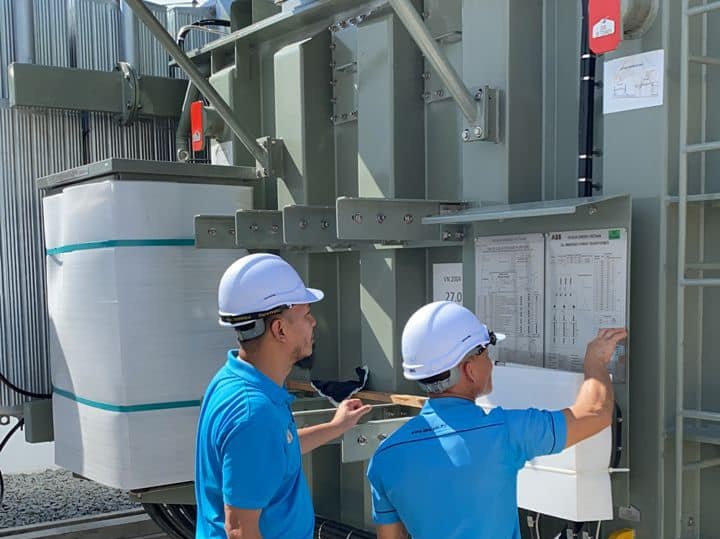
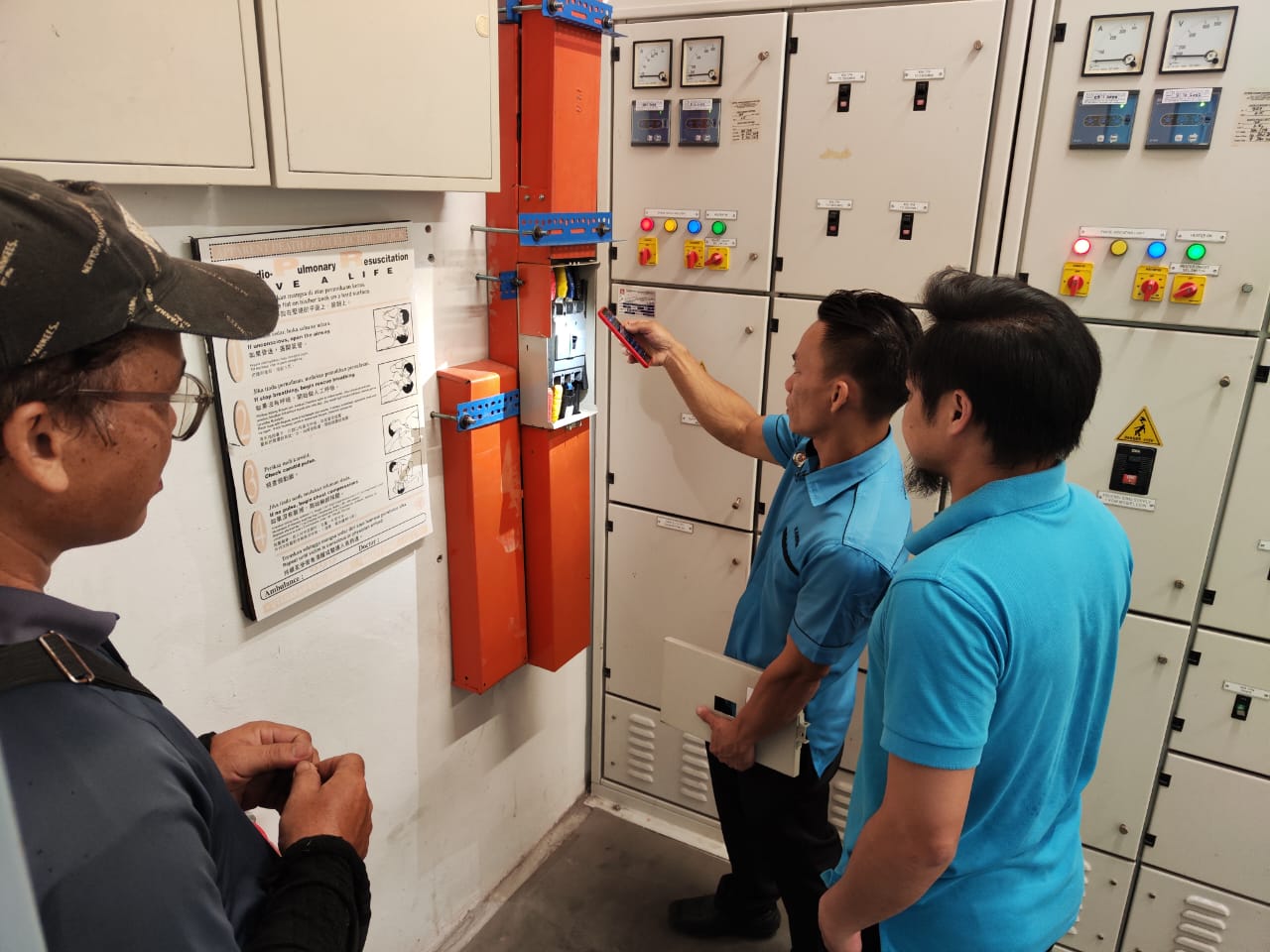
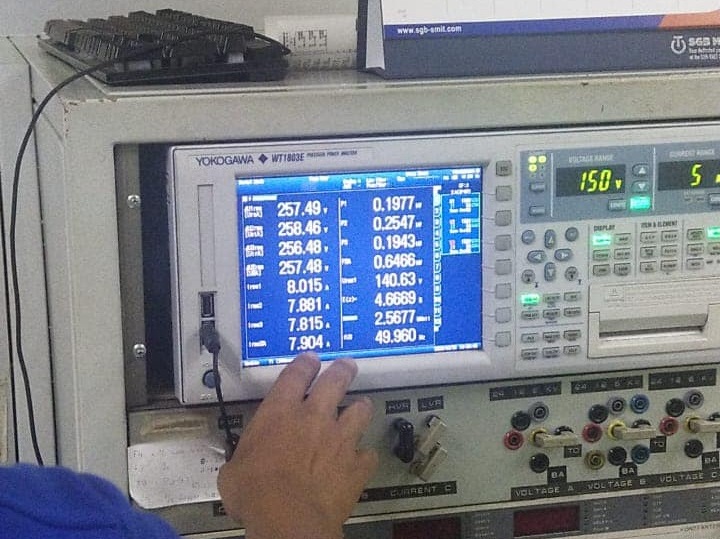
From Measurement to Mitigation — A Structured Path to Net-Zero.
UMS Carbon Governance Framework
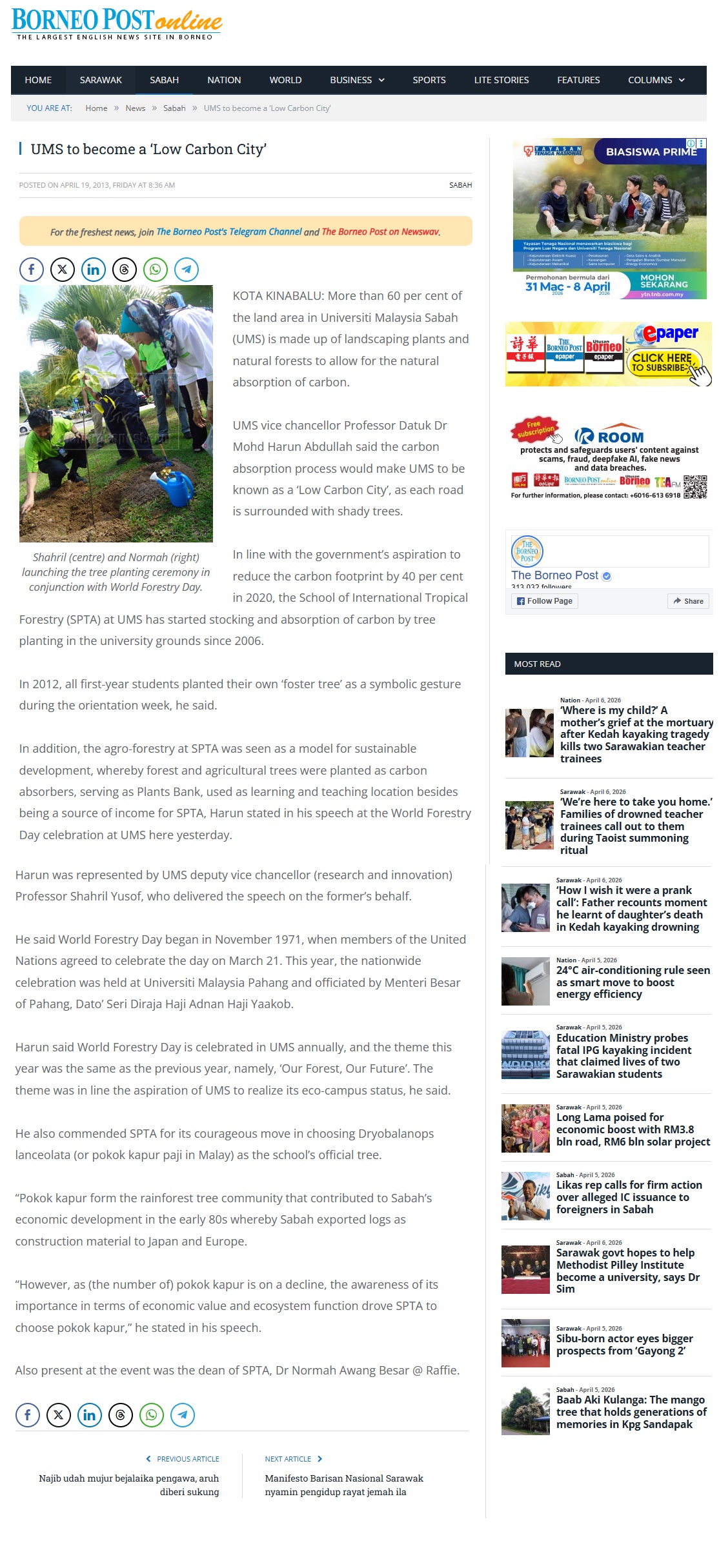
Universiti Malaysia Sabah (UMS) implements a formal, structured, and institution-wide carbon-management process coordinated through the Energy and Climate Change Management Committee (ECCMC), established under the EcoCampus Blueprint (2017–2023) and strengthened in the UMS Strategic Plan 2023–2027 (KRA 9: Green Campus). This process guides UMS in systematically managing, reducing, and reporting campus-wide carbon emissions as part of its long-term ambition to become a Low-Carbon and Net-Zero Campus by 2050. Importantly, UMS’s commitment to low-carbon and net-zero development dates back to as early as 2013 , when the university initiated its EcoCampus agenda and publicly articulated its aspiration to transform into a low-carbon campus/city, positioning sustainability as a core institutional direction. This early foundation was further reinforced through the establishment of the EcoCampus Management Centre in 2013, which serves as a central coordinating body for environmental stewardship and sustainability initiatives across teaching, research, operations, and campus life.
UMS’s Carbon-Management Process
UMS’s approach to upgrading existing buildings is guided by MS 1525:2014 – Energy Efficiency and Use of Renewable Energy in Non-Residential Buildings, which sets requirements for building envelope improvements, HVAC optimisation, artificial lighting efficiency, and renewable-energy integration. UMS has adopted MS 1525 as the baseline standard for all new retrofitting projects and building upgrades carried out under the ECCMC. UMS implements a structured five-step carbon-management cycle aligned with national and international standards, including MS 1525:2014, ISO 14001:2015, and government energy-efficiency guidelines. This cycle ensures that carbon reduction is systematic, data-driven, and continuously improved across all campus operations.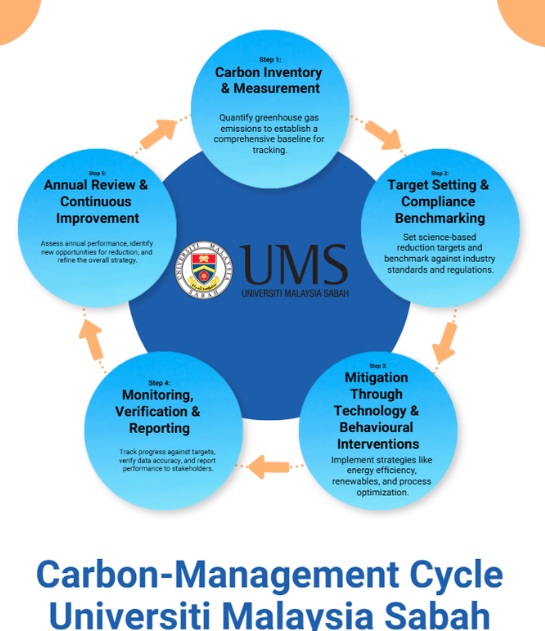
1. Carbon Inventory and Measurement
UMS begins its process with a comprehensive inventory of energy use and carbon emissions. The university measures electricity consumption, fuel usage, and building performance through smart metering installed at high-consumption buildings and monthly tracking of electricity intensity (kWh/m²/year). Scope 1 and Scope 2 emissions are fully monitored, with partial monitoring of Scope 3 sources. Data is harmonised with DOE Sabah and LAKSANA/MOF for state-level environmental reporting. This robust baseline establishes the foundation for identifying emission hotspots and planning targeted reduction strategies.2. Target Setting and Compliance Benchmarking
UMS adopts clear and measurable emission-reduction targets guided by MS 1525:2014 performance indicators, the ISO 14001 continual-improvement framework, and national energy-transition policies such as the National Energy Transition Roadmap (NETR). Internal commitments include reducing emissions by 10–20% from the 2017 baseline and securing annual efficiency improvements of 3–5%. These benchmarks define carbon-reduction pathways for existing buildings, campus operations, and upcoming infrastructure projects.3. Mitigation Through Technology and Behavioural Interventions
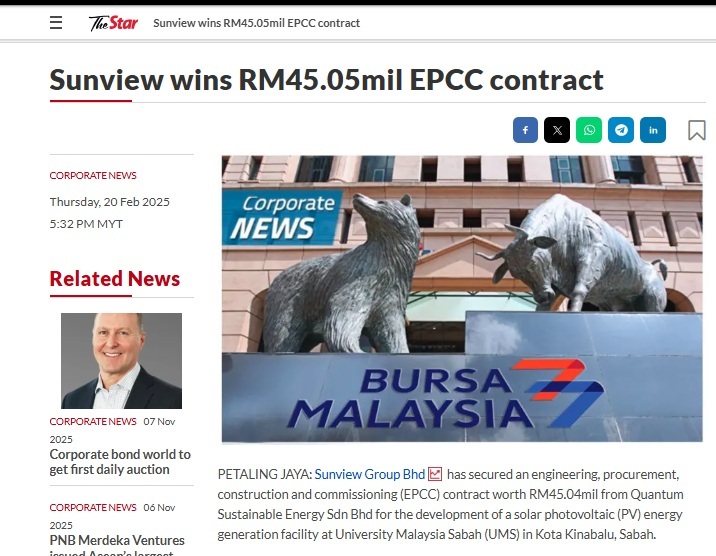
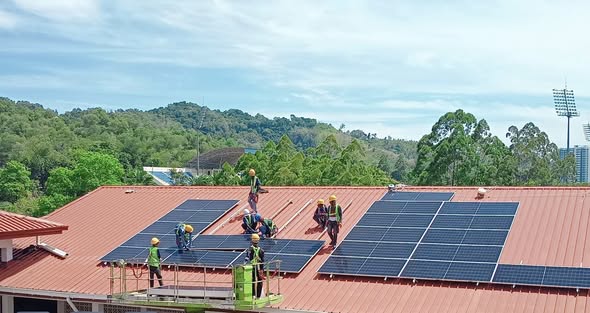
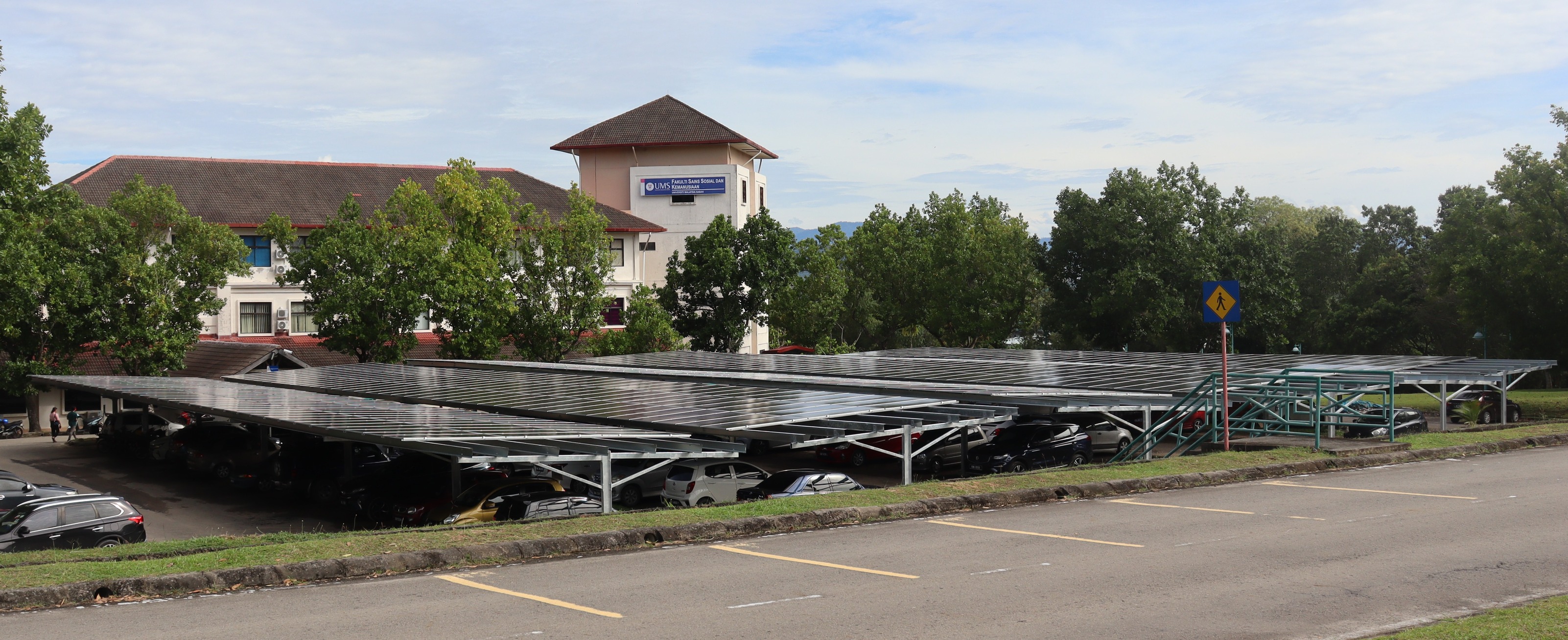
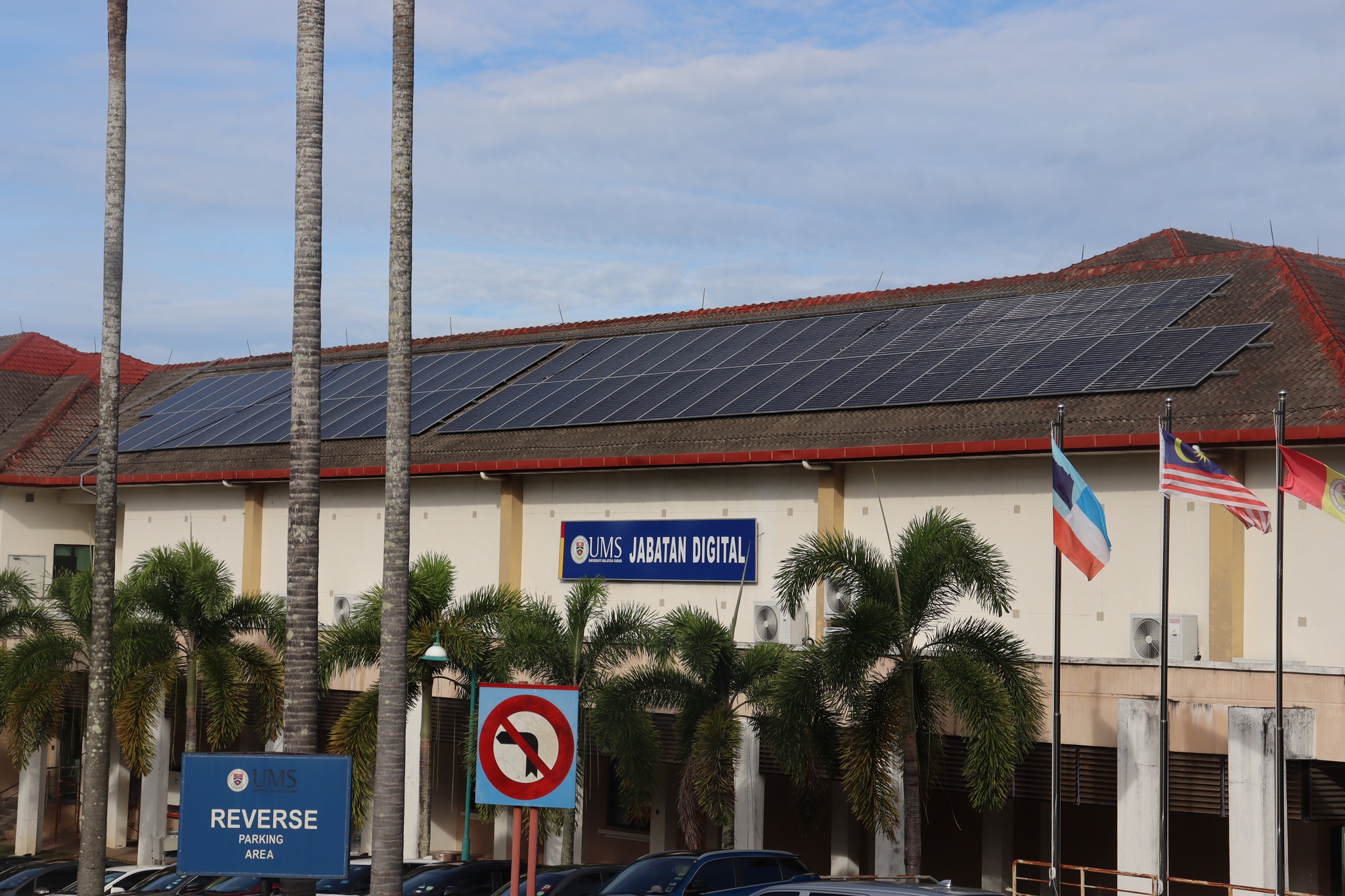
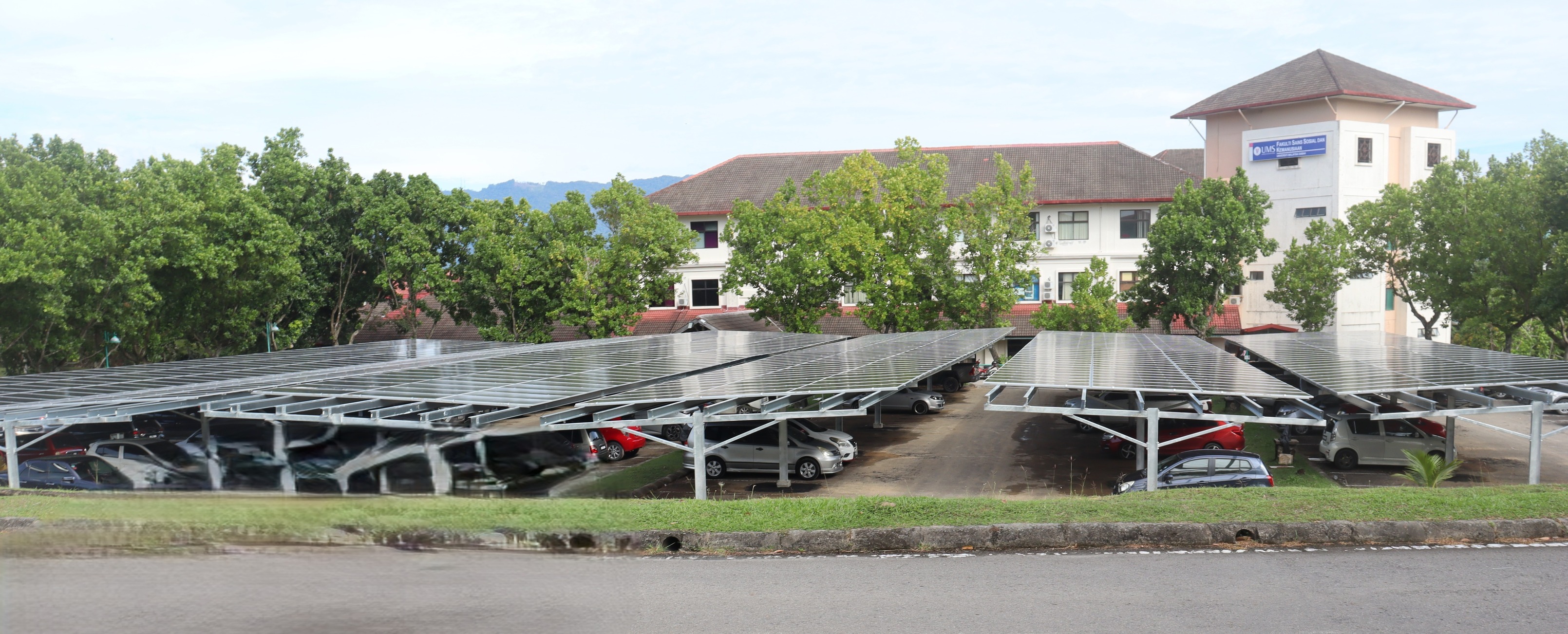
Carbon mitigation at UMS is achieved through a combination of technological upgrades and behavioural change programmes. Key measures include LED lighting retrofits, HVAC and chiller optimisation, and the procurement of high-efficiency appliances under the Government Green Procurement (GGP) Policy. A major milestone is the RM45.05 million Sunview EPCC 10.5 MWp solar PV project (2025), which will reduce grid-based emissions by up to 30%. UMS also integrates green-building features—such as natural ventilation and daylighting atriums—during renovation works. Staff and students are empowered through low-carbon behavioural programmes, including EcoCampus campaigns, SULAM modules, and Mobility Reduction Plans. Collectively, these actions significantly lower electricity use and fuel consumption across campus.4. Monitoring, Verification, and Reporting
UMS maintains rigorous oversight of its carbon-management activities. Carbon and energy data are monitored monthly by the Development of Maintenance office (Jabatan Pembangunan dan Penyelenggaraan, JPP) Energy Division, while the ECocampus Management conducts quarterly reviews to identify anomalies, assess progress, and verify reductions. Annual carbon-performance reports are submitted to university leadership, DOE Sabah, and relevant state committees. Real-time energy dashboards enable early detection of consumption spikes and inefficiencies, allowing for timely corrective action and continuous optimisation of energy use.5. Annual Review and Continuous Improvement
In alignment with the ISO 14001 management cycle, UMS conducts an annual review of its carbon-management performance. This review includes re-evaluating reduction targets, updating mitigation strategies, and integrating emerging technologies such as AI-based monitoring, expanded BEMS coverage, and microgrid systems. The university also identifies new high-impact projects for the coming year to strengthen its carbon-reduction agenda. This continuous-improvement approach ensures that UMS’s decarbonisation pathway remains dynamic, measurable, and aligned with its long-term vision of achieving a Low-Carbon and Net-Zero Campus by 2035.Towards an Energy-Efficient UMS
From Audits to Solar PV—Building a Low-Carbon and Cost-Efficient Campus
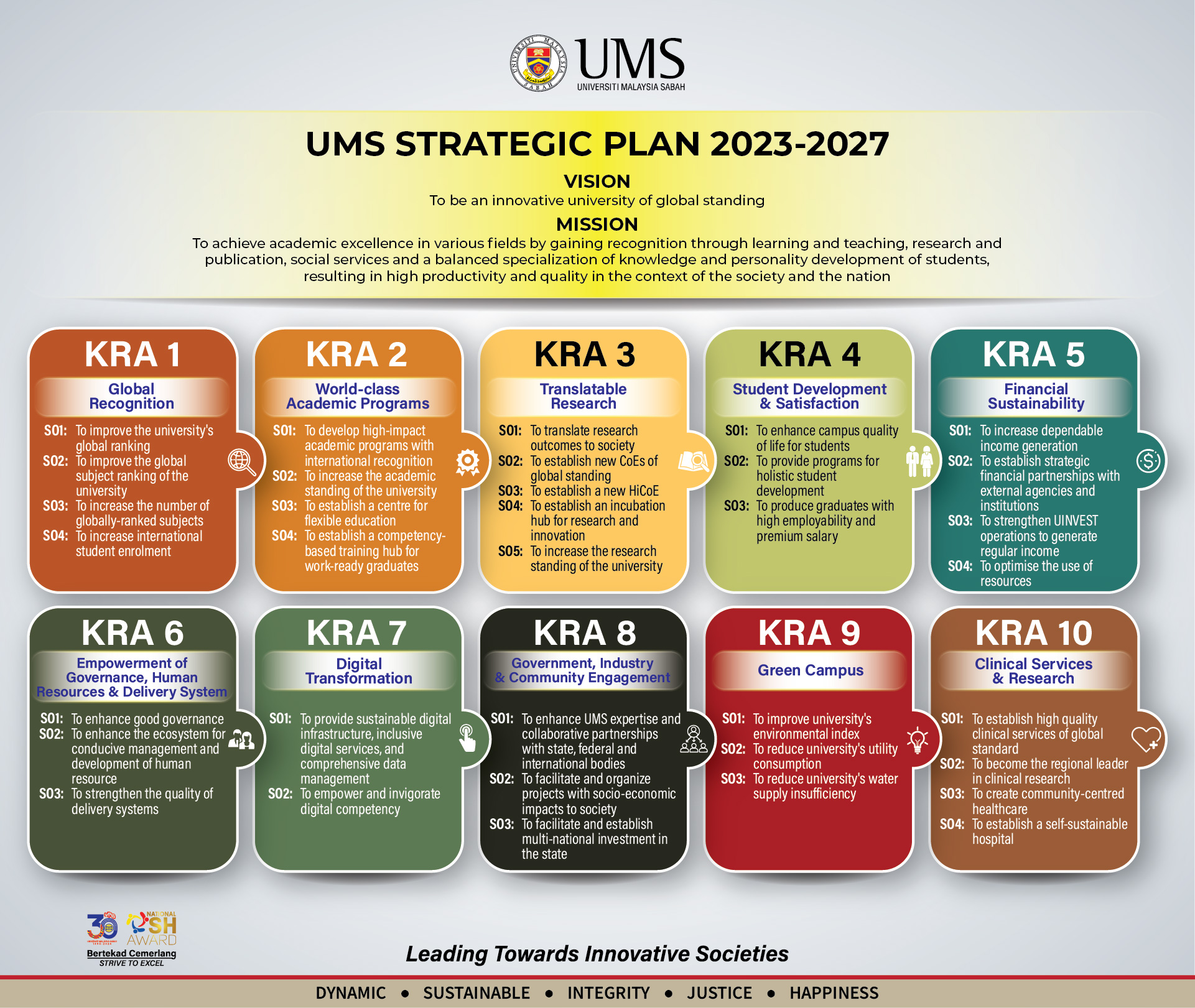
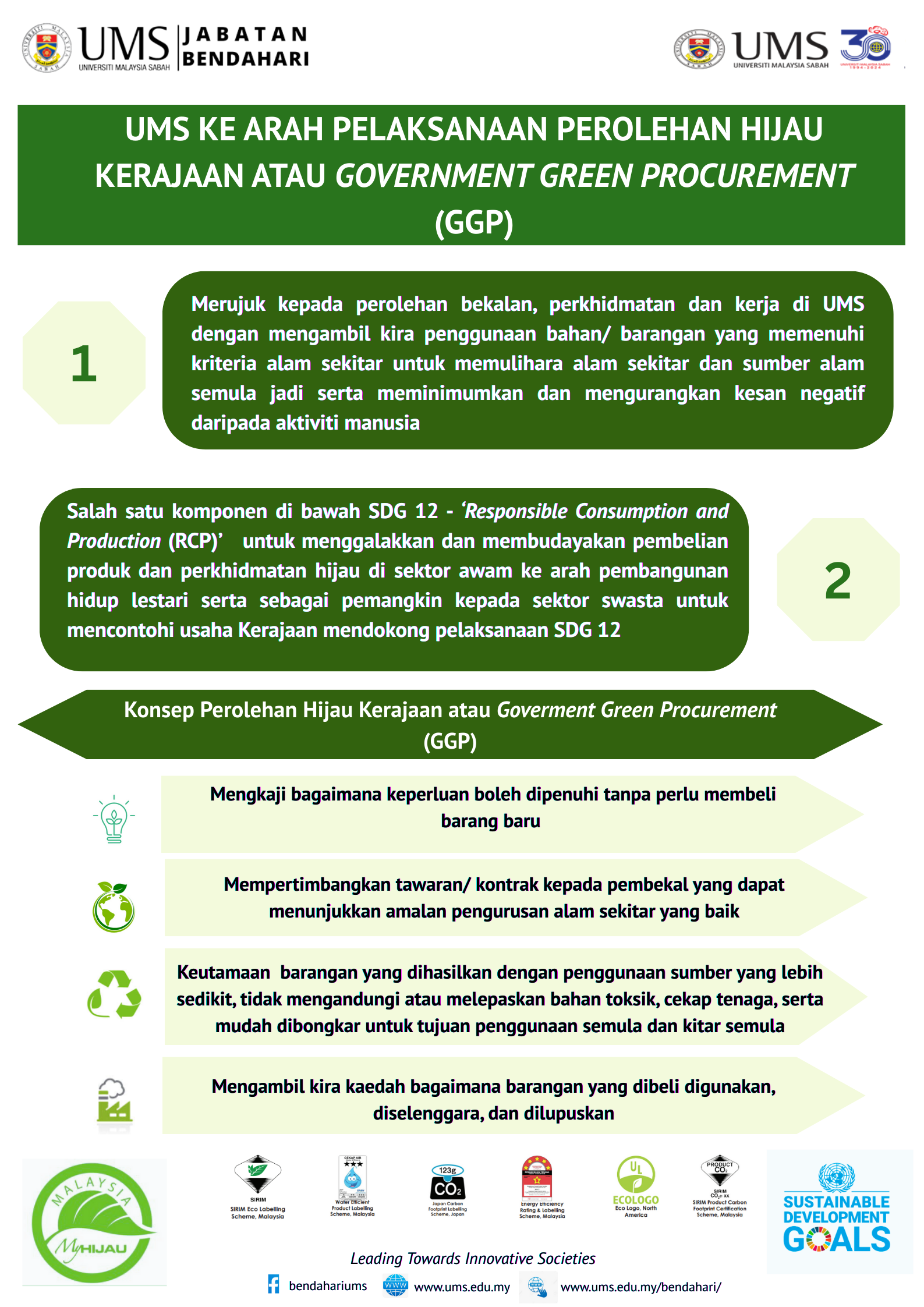
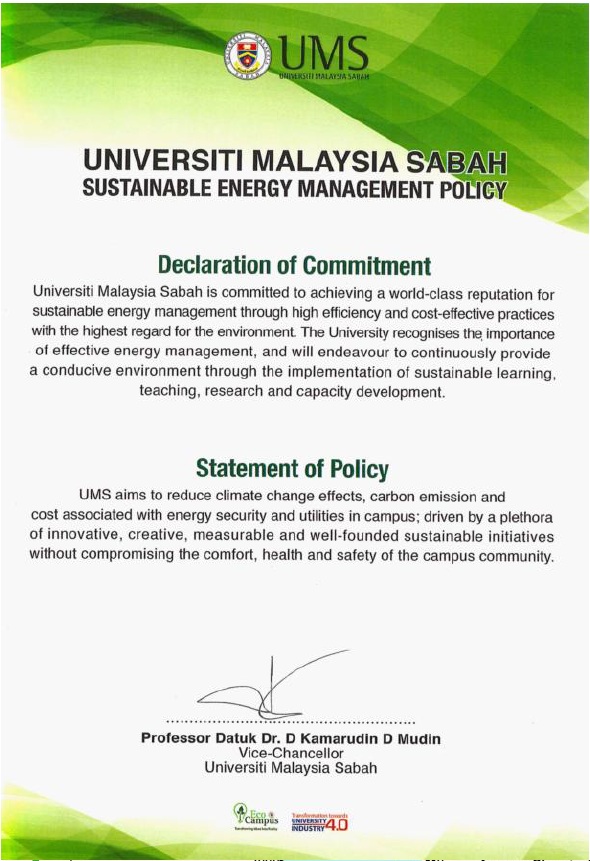
Universiti Malaysia Sabah (UMS) has a comprehensive and structured Energy Efficiency Plan that is formally implemented across all campuses to reduce overall energy consumption. This plan is grounded in two major instruments: (1) Federal Government energy-efficiency compliance under MAMPU, and (2) the university’s own Sustainable Energy Management Policy (2018, reviewed 2024). Together, these instruments ensure that all energy-related decisions, upgrades, and operational practices follow national standards and UMS’s internal commitments toward sustainable energy use. The Energy Efficiency Plan is governed by the Energy and Climate Change Management Committee (ECCMC), established under the UMS Strategic Plan 2023–2027, specifically under KRA 9: Green Campus. ECCMC functions as the central coordinating body for planning, executing, and monitoring efficiency measures across all faculties, departments, and support units. The plan is further supported by the UMS Government Green Procurement (GGP) Policy, which mandates the purchase of energy-efficient equipment in accordance with Suruhanjaya Tenaga (ST) and SIRIM efficiency ratings.
(1) Annual Energy Audits & Performance Benchmarking
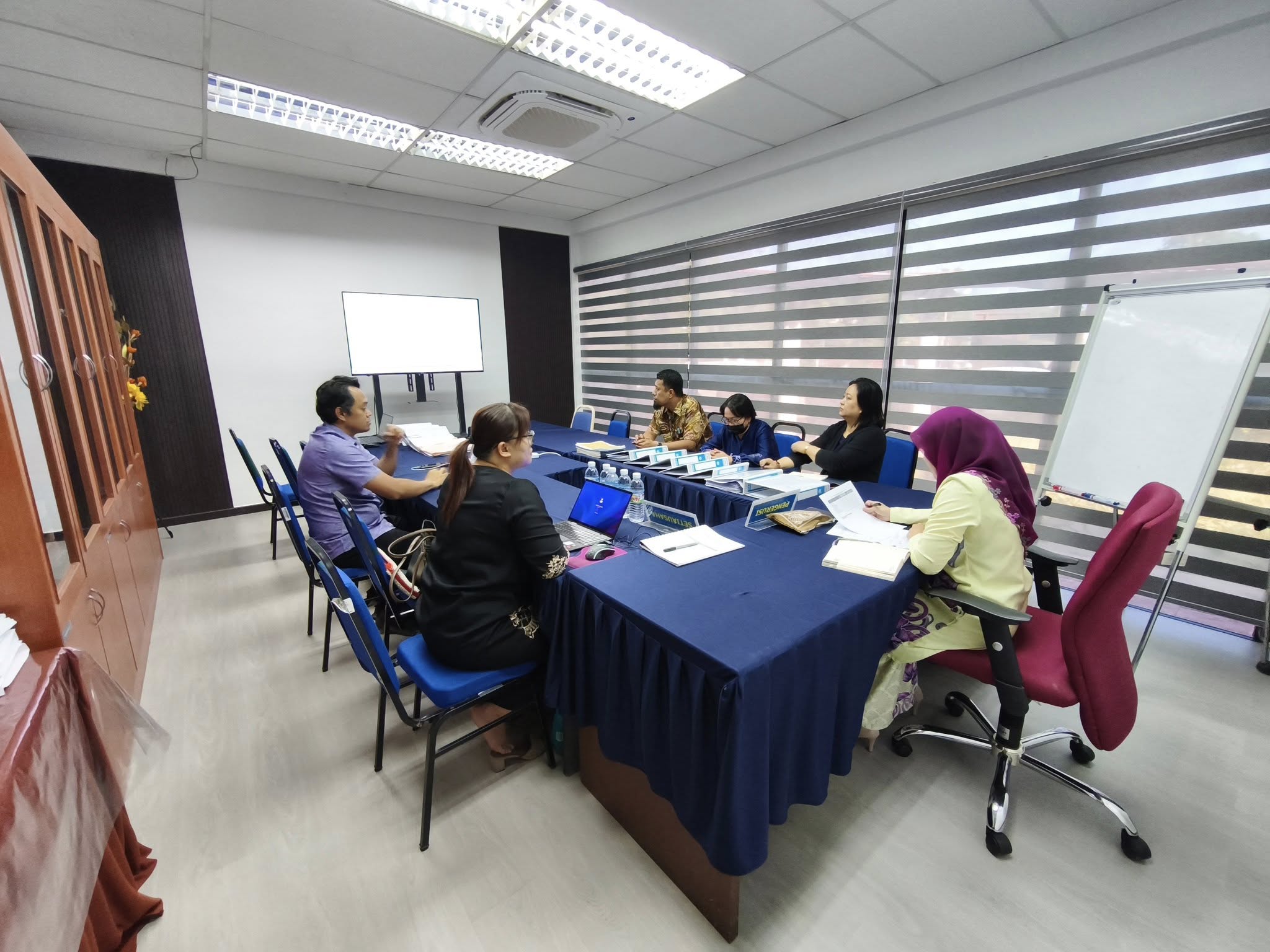
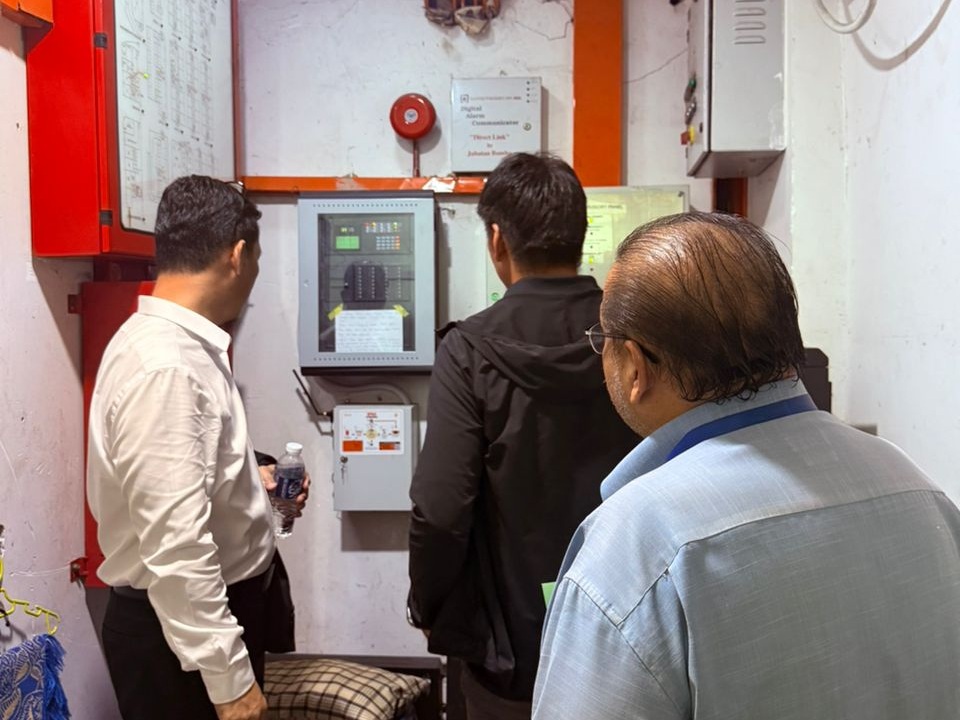
UMS conducts annual energy audits for high-consumption buildings—such as the Library, Chancellery Building, Faculty complexes, and student hostels. These audits benchmark building performance based on MS 1525:2014 – Energy Efficiency in Non-Residential Buildings, allowing ECCMC to identify inefficiencies, plan retrofits, and track long-term improvements.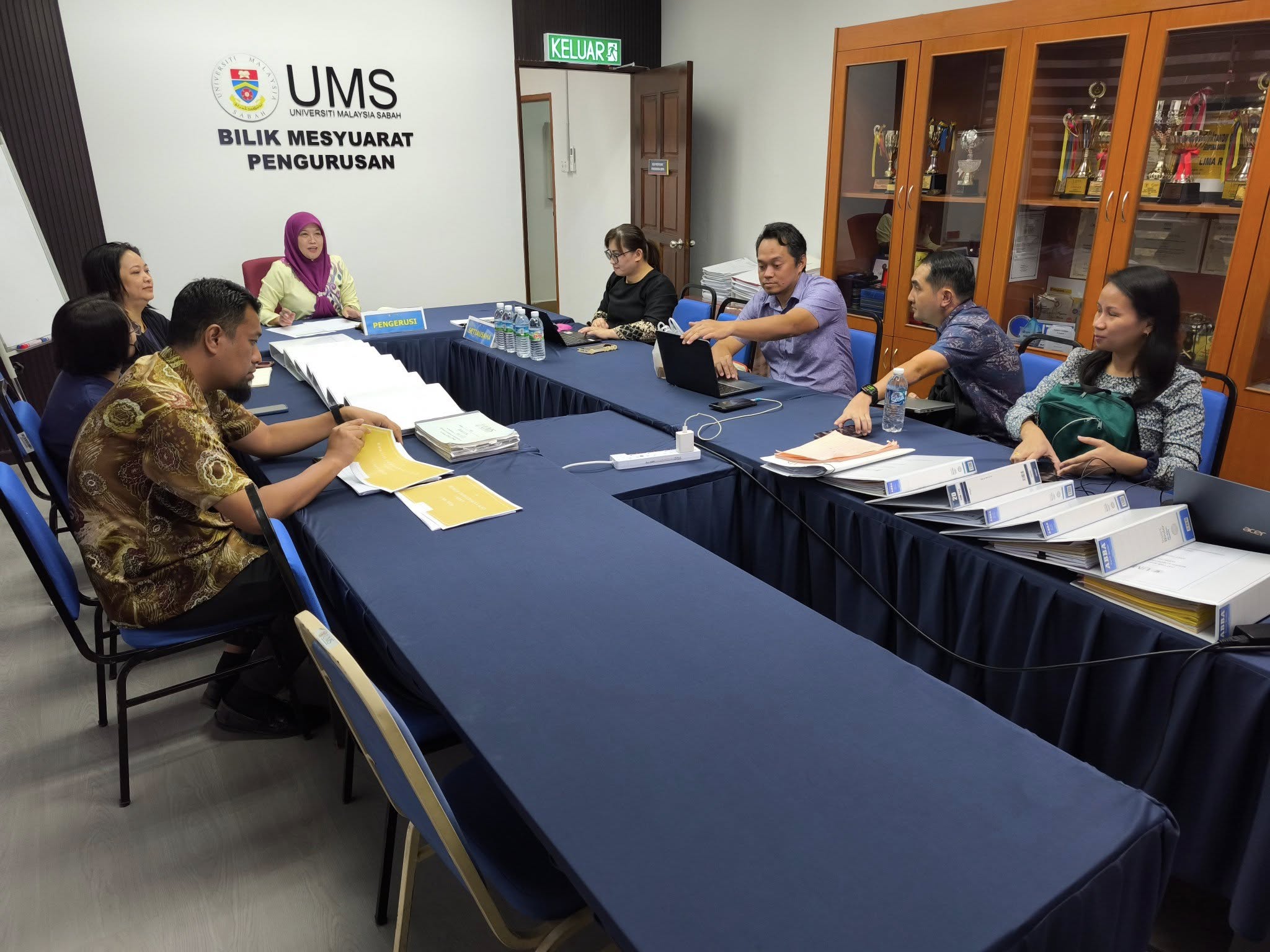
(2) Replacement of Aged Appliances with High-Efficiency Models
In line with MAMPU guidelines for public agencies, UMS replaces electrical appliances older than five (5) years, including air-conditioning units, fans, lighting systems, and laboratory equipment, with four- or five-star energy-efficient models. This measure reduces consumption from ageing and inefficient devices, especially in air-conditioned spaces, which account for 50–60% of campus electricity use. In the past year, UMS has continued its initiative to equip itself with high energy efficiency electrical appliances. Among the actions UMS has taken steps so far include;| No | Appliance | Percentage | Remarks |
|---|---|---|---|
| 1 | Air-Conditioner | 50% | • Replacing energy inefficient centralized air-conditioning in certain buildings with energy efficient split air-conditioning units with the energy rating of three-star and above (refer to Figure 2.1a) |
| 2 | Computer | 75% | • Replacement of desktop computers with laptops through UMS’ BYOD Program |
| 3 | Fluorescent / LED Light tubes | 100% | • Replacing of lighting fixture with LED and florescent light tubes in building |
| 4 | Projector | 100% | • Replacing old overhead projectors with LCD projectors |
| Average | 81% | ||
(3) LED and HVAC Retrofitting
UMS is executing a multi-year programme to convert all fluorescent lighting to LED systems across academic blocks, administrative buildings, lecture halls, laboratories, outdoor areas, and residential colleges. At the same time, the university is replacing outdated air-conditioning units with inverter-based, VRV/VRF, and high-EER systems, while optimising centralised chillers to operate with higher Coefficient of Performance (COP). These retrofits contribute directly to lowering electricity intensity and stabilising peak-demand profiles.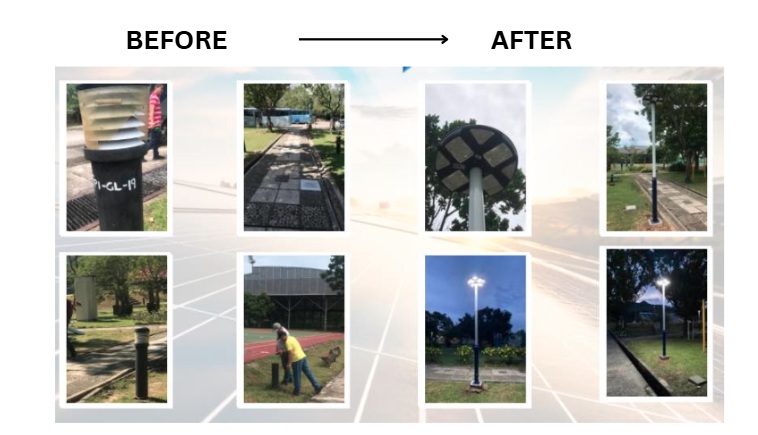
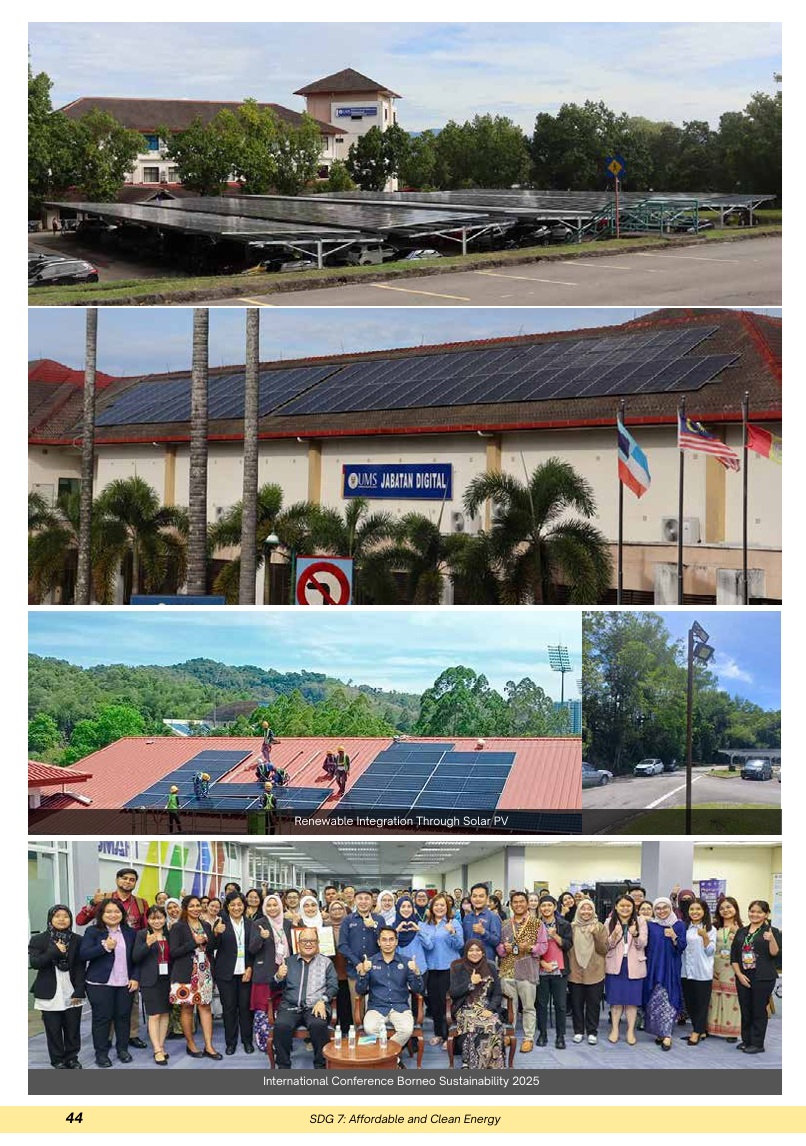
(4) Renewable Integration Through Solar PV (Sunview EPCC Project 2025)
UMS is executing a multi-year programme to convert all fluorescent lighting to LED systems across academic blocks, administrative buildings, lecture halls, laboratories, outdoor areas, and residential colleges. At the same time, the university is replacing outdated air-conditioning units with inverter-based, VRV/VRF, and high-EER systems, while optimising centralised chillers to operate with higher Coefficient of Performance (COP). These retrofits contribute directly to lowering electricity intensity and stabilising peak-demand profiles.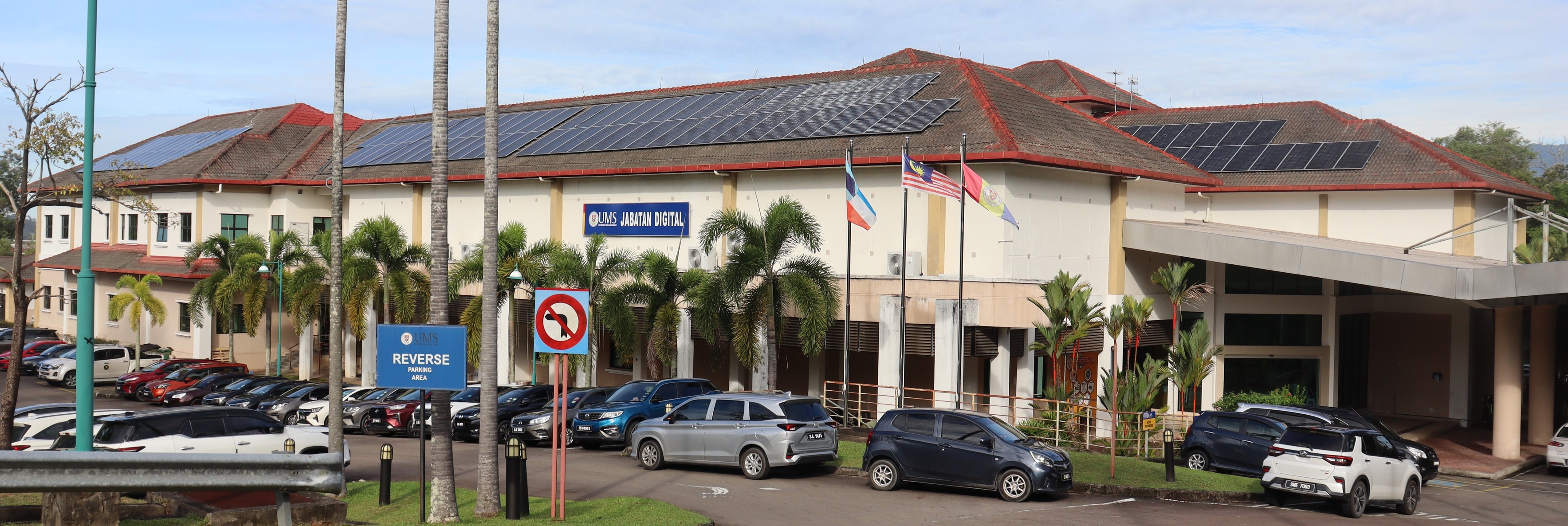
- - Up to 30% reduction in grid-electricity consumption,
- - Lower peak-demand charges,
- -Direct reduction in Scope 2 carbon emissions.
(5) Monitoring, Measurement, and Governance Framework
The Energy Efficiency Plan mandates:- - Monthly monitoring of building electricity consumption by the Jabatan Pembangunan dan Penyelenggaraan (JPP)’s certified Energy Managers,
- Quarterly ECCMC reviews to evaluate performance, identify abnormal spikes, and recommend interventions,
- Annual reporting in line with ISO 14001:2015 environmental management standards.
Systematic Energy Reviews to Identify High-Wastage Areas
Buildings with high consumption or poor performance relative to MS 1525 benchmarks are prioritised for targeted retrofits or operational changes. Since 2021, UMS has conducted systematic energy reviews to identify high-wastage Areas. Energy reviews consistently highlight digital infrastructure facilities—including UMS’s main data centre and digital servers—as among the highest electricity consumers due to continuous 24-hour cooling requirements. These areas undergo priority interventions such as precision cooling optimisation, server consolidation, UPS efficiency upgrades, and airflow management to reduce excessive HVAC load. Large faculty complexes such as the Faculty of Science and Technology (FST), Faculty of Business, Economics & Accountancy (FPEP), and other multi-storey academic blocks are also key audit targets. These buildings are monitored for lighting inefficiencies, poor chiller performance, excessive AC runtime, and building-envelope heat gain due to high occupant density and long operating hours. Findings from reviews have resulted in LED retrofits, inverter AC replacements, improved insulation, and installation of smart timers. UMS also conducts energy-wastage assessments at student residential colleges, which collectively form one of the largest energy-consuming clusters on campus. Reviews have led to installing motion-sensor lighting, enforcing temperature limits, upgrading corridor lighting to LED, improving ventilation design, and educating residents on responsible consumption. As a result of these systematic reviews, UMS has implemented targeted upgrades that contributed to a 12% reduction in overall campus energy intensity since 2021, minimised operational wastage, and strengthened progress toward a low-carbon, energy-efficient campus.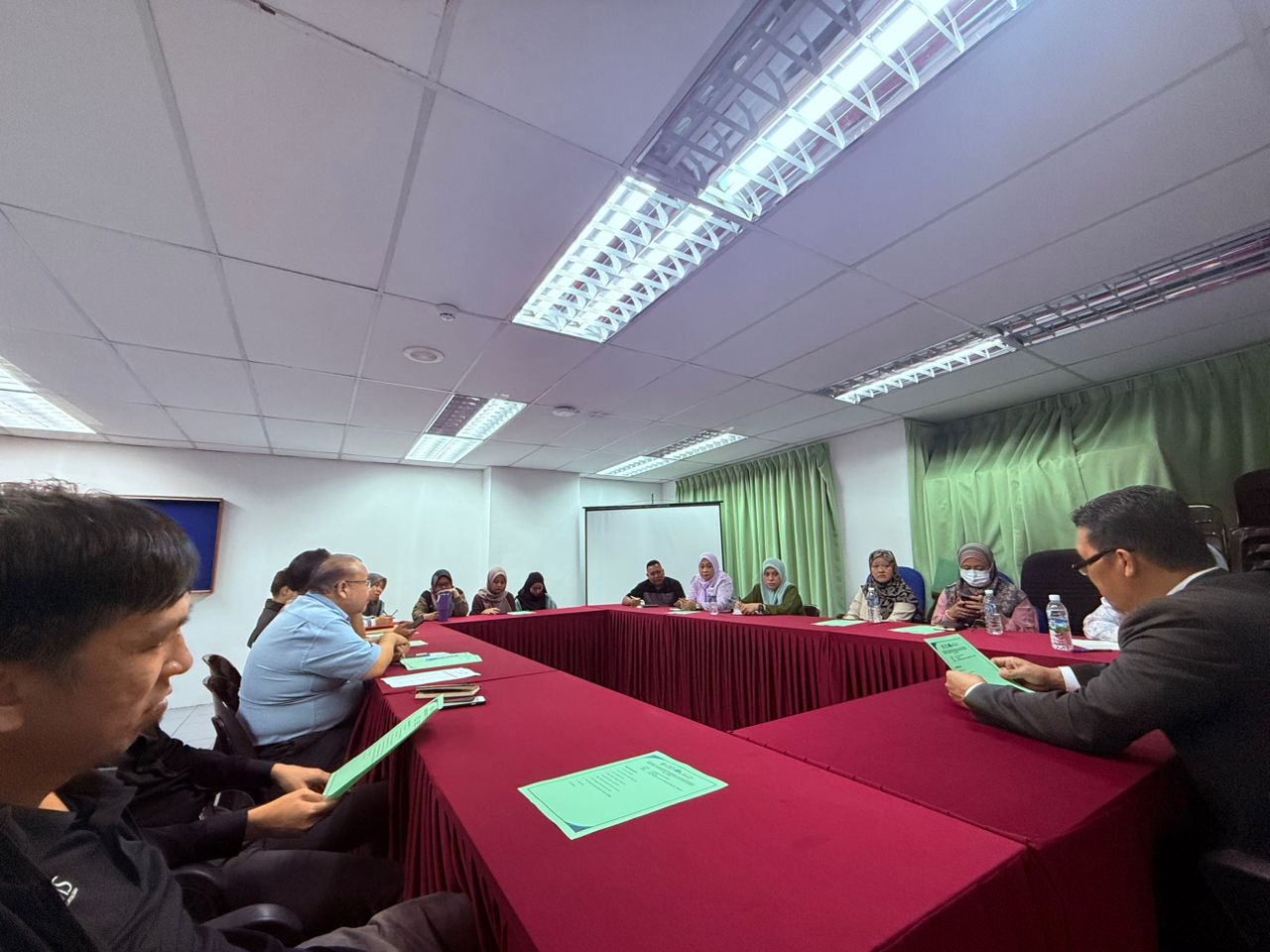
UMS Strengthens Divestment from Fossil Fuels and Expands Sustainable, Low-Carbon Investments
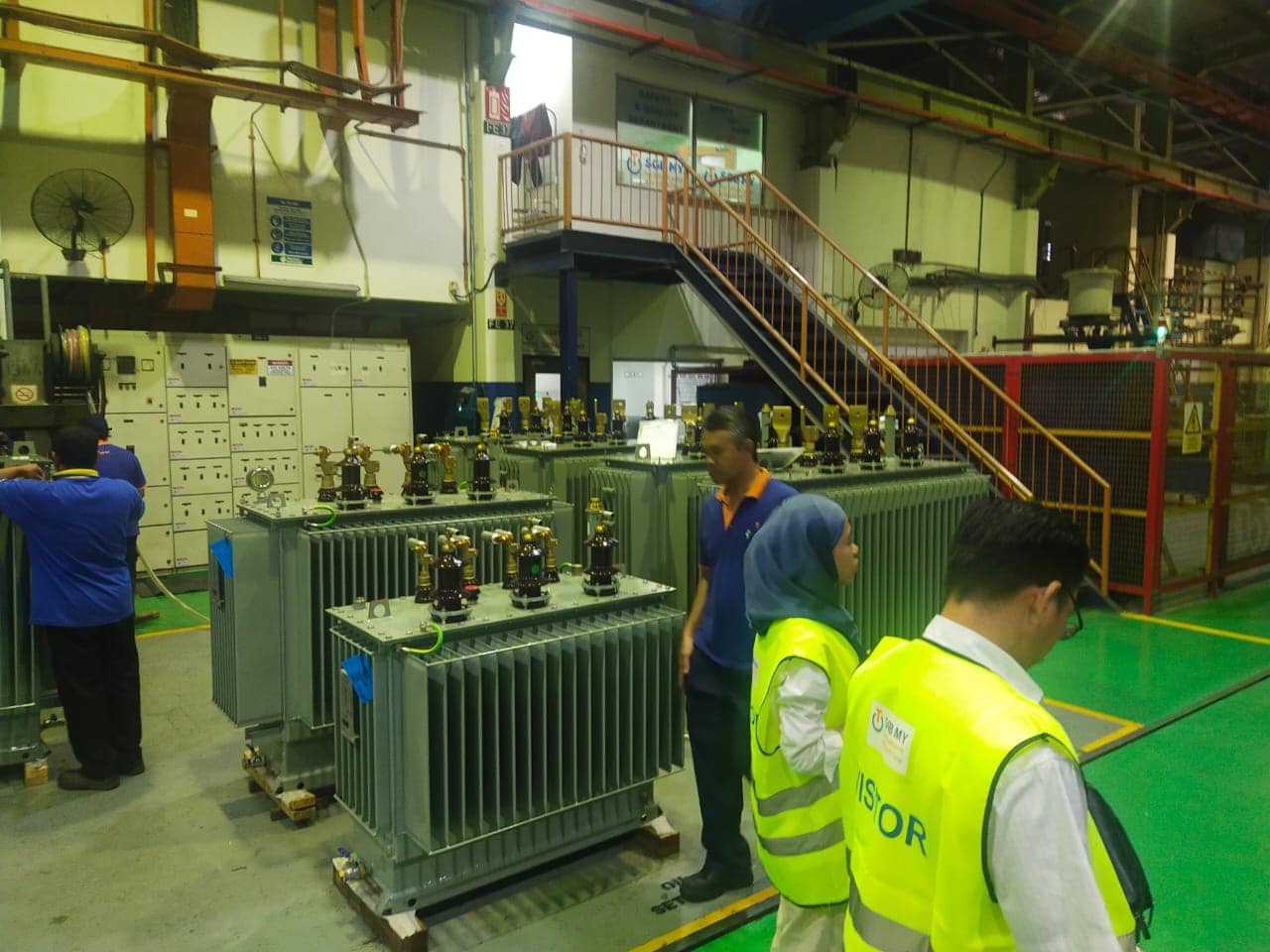
Universiti Malaysia Sabah (UMS) maintains a clear and proactive policy to divest from carbon-intensive energy industries, particularly coal and oil, through a comprehensive sustainability–driven investment framework. This commitment is articulated in three core governance instruments: the UMS Sustainable Investment Policy (2022), the Investment Policy for Sustainability Initiatives (2024), and the Government Green Procurement (GGP) Policy. Together, these policies explicitly restrict investment in fossil-fuel sectors and require that all university-managed portfolios undergo ESG screening, ensuring that capital does not support coal, crude oil, or non-renewable exploration industries. UMS Sustainable Investment Policy Here ! UMS Green Procurement (GGP) Policy Here ! UMS’s divestment approach is overseen by the Finance and Investment Committee, supported by the Energy and Climate Change Management Committee (ECCMC), to guarantee that financial decisions align with national sustainability priorities and UMS’s institutional climate commitments. Instead of investing in carbon-intensive sectors, UMS prioritises renewable energy, sustainable infrastructure, and low-carbon technology ventures. Evidence of this approach includes major institutional investments such as the 10.58 MWp Solar Photovoltaic (PV) Facility, developed under a RM45.05 million EPCC partnership in 2025. This initiative alone is expected to reduce grid electricity consumption by up to 30% and save RM65 million over its 25-year lifespan. Large faculty complexes such as the Faculty of Science and Technology (FST), Faculty of Business, Economics & Accountancy (FPEP), and other multi-storey academic blocks are also key audit targets. These buildings are monitored for lighting inefficiencies, poor chiller performance, excessive AC runtime, and building-envelope heat gain due to high occupant density and long operating hours. Findings from reviews have resulted in LED retrofits, inverter AC replacements, improved insulation, and installation of smart timers.
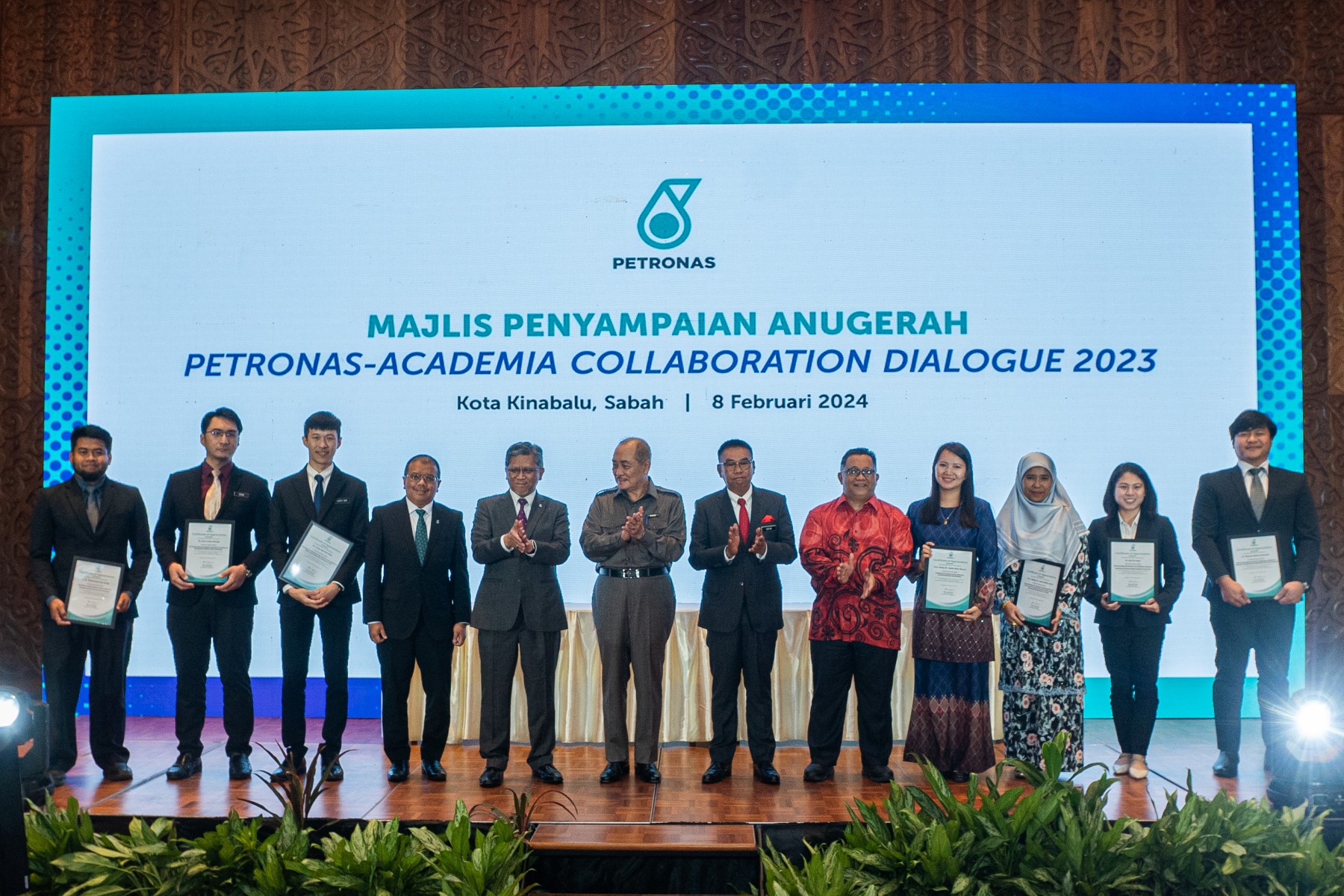
UNIVERSITI MALAYSIA SABAH
Empowering Communities, Energising Innovation, Illuminating Sabah
Universiti Malaysia Sabah (UMS) continues to solidify its position as Malaysia’s leading institution for clean energy transformation through large-scale solar innovation, rural microgrid deployment, high-impact community electrification projects, and youth-led green technology entrepreneurship. Guided by SDG 7 and the UMS Sustainability & Climate Action Policy, UMS integrates research excellence, industry partnerships, and grassroots empowerment to accelerate clean energy access across Sabah and beyond.
INSOLER: Turning Sunlight Into Strength for Farmers and Fishers
The INSOLER Solar Dryer Programme provides hands-on energy education to farmers and fishers, demonstrating how solar-powered drying technology improves post-harvest processes while eliminating reliance on diesel-based heat sources. Through workshops led by UMS and UMK researchers, participants learn the science behind solar thermal capture, airflow design, and controlled-temperature dehydration. These sessions introduce rural producers to modern food-processing methods that are cleaner, safer, and more cost-efficient. Evidence of the programme’s success is reflected in user demonstrations conducted in Sabah and Kelantan, where farmers directly compared solar-dried and traditionally sun-dried products. Participants observe improvements in colour, hygiene, moisture uniformity, and shelf life. The programme also highlights how solar drying reduces fuel expenditure, eliminates smoke contamination, and preserves the natural flavour of fish, fruits, and herbs. Rural families now understand how clean energy can increase their income, maintain product quality, and reduce operational costs. INSOLER becomes not only a tool for production, but a platform that teaches communities to embrace renewable energy as a pathway toward a more sustainable and resilient economy.Kampung Nusa-Nusa Hybrid Solar OGPV-1 System — Learning Renewable Energy Through Experience
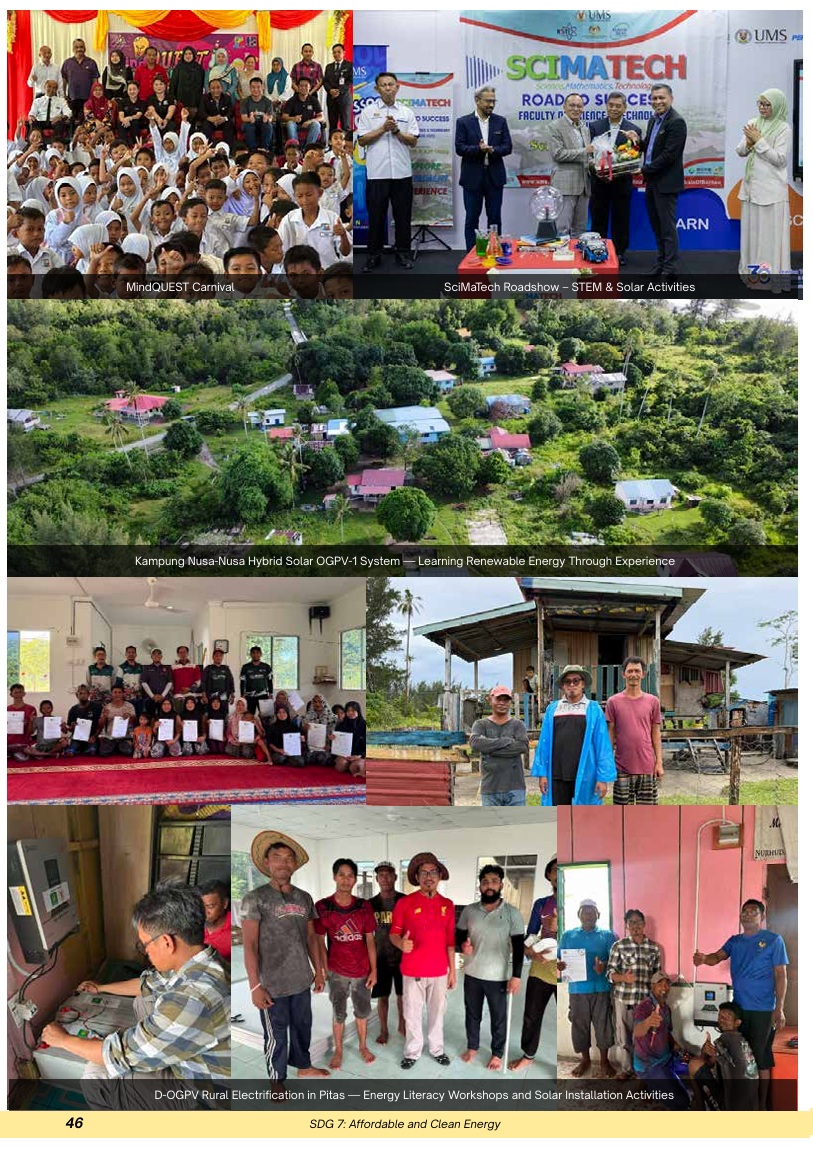
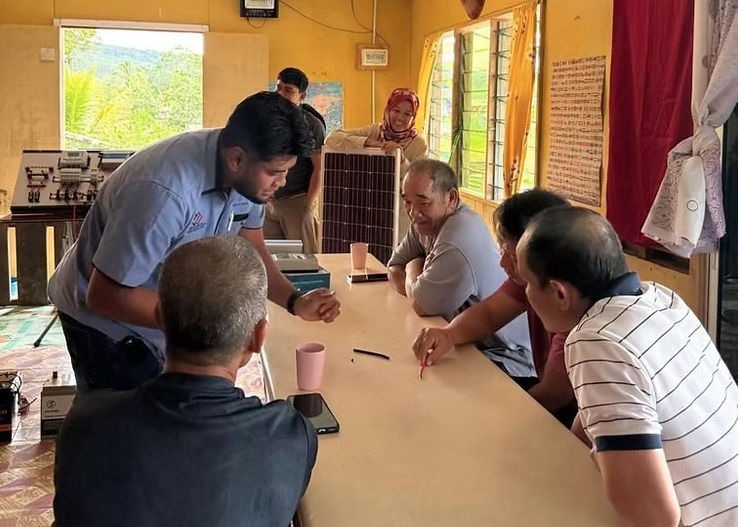
During the installation of the hybrid OGPV-1 solar system in Kampung Nusa-Nusa, UMS integrated community education sessions so villagers could learn how renewable energy works in real life. Trainers explained hybrid solar-diesel systems, battery capacity, inverter safety, and household power management. Practical demonstrations showed users how to calculate watt usage, avoid overload, and maximise battery lifespan through responsible energy consumption. Evidence of learning was observed through active participation from villagers, who asked questions about voltage safety, solar panel positioning, and nighttime energy supply. UMS engineers provided household checklists covering equipment care, electrical safety, and conservation habits such as switching off unused appliances and using LEDs. The impact was immediate and profound. For the first time, families understood how electricity is generated, stored, and distributed. Parents reported feeling more confident managing their home’s energy use, while students experienced firsthand the science behind renewable energy. This initiative transformed villagers from passive recipients of technology into informed and responsible energy users.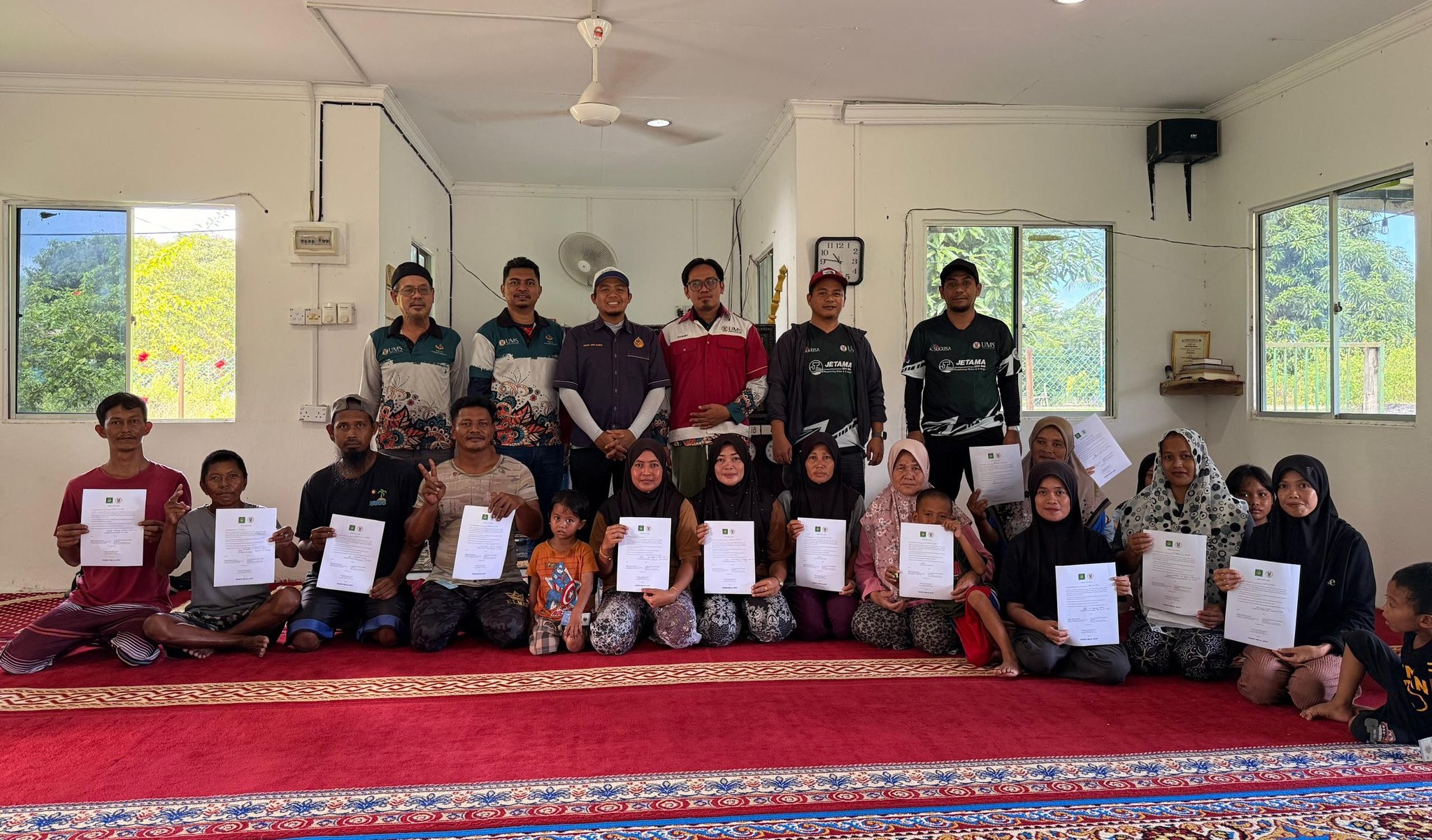
D-OGPV Rural Electrification in Pitas — Building a Culture of Renewable Energy Awareness
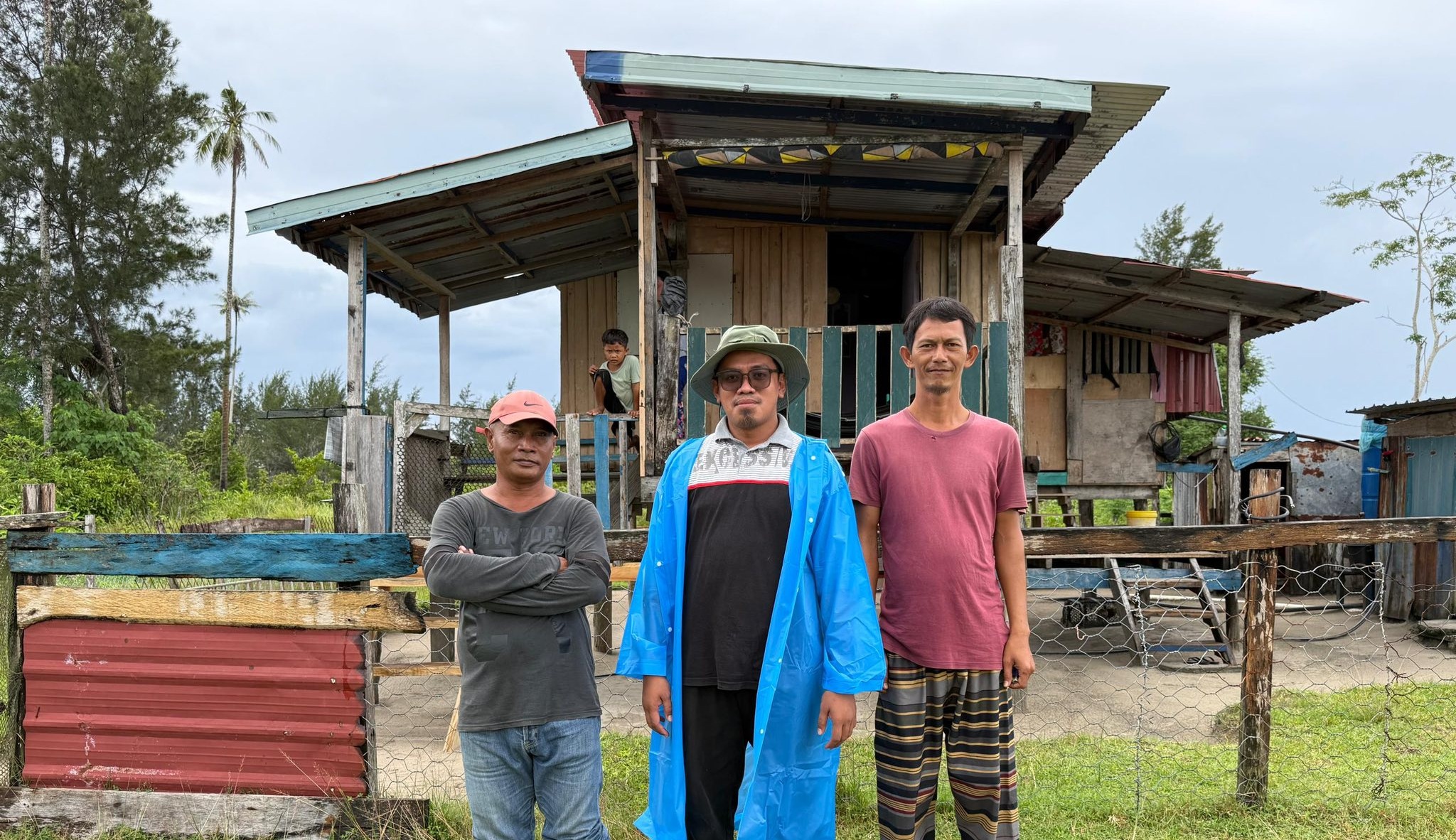
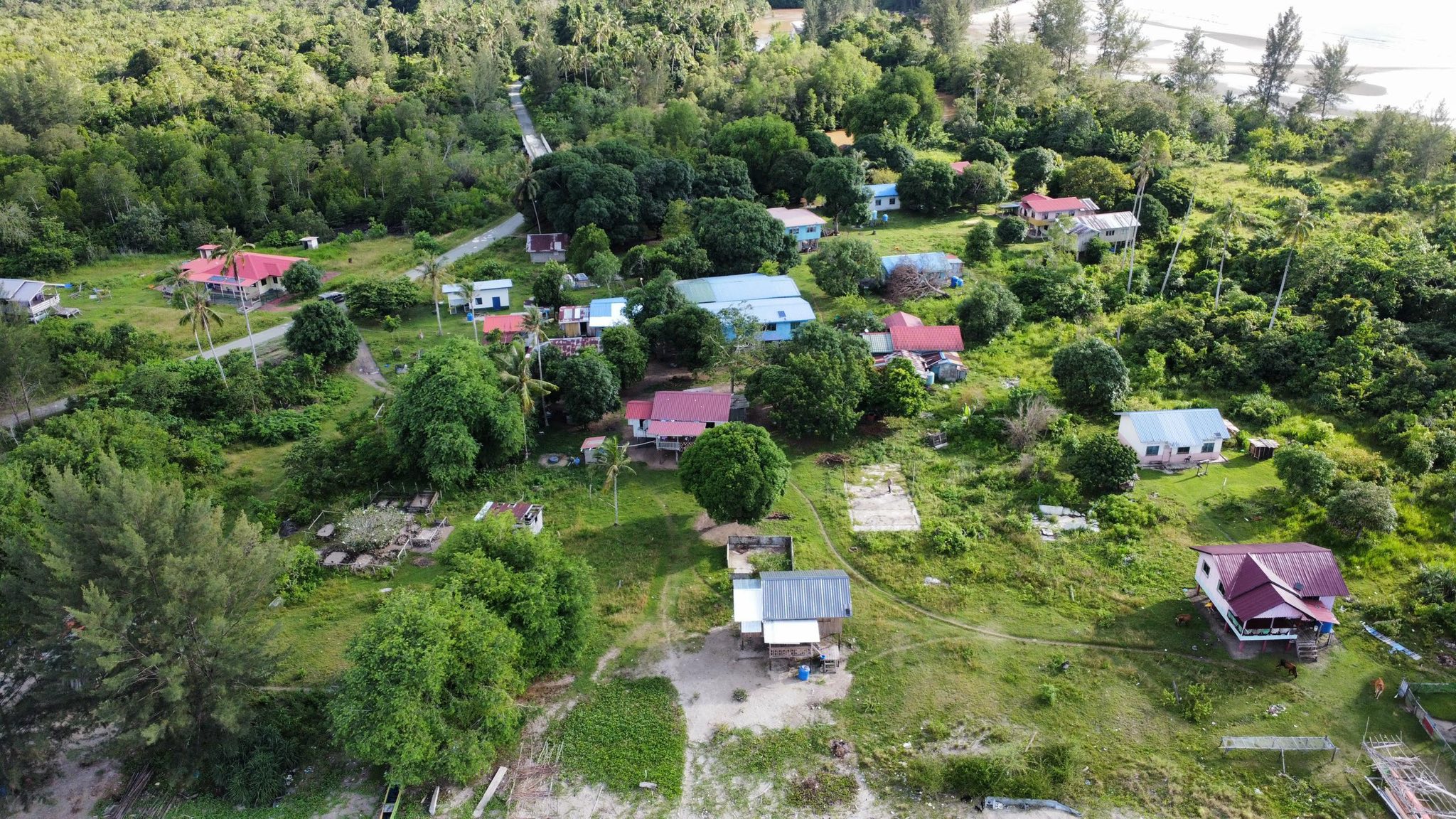
The RM300,000 D-OGPV project in Pitas includes structured energy literacy workshops conducted alongside solar installation activities. Trainers from UMS and PBNS taught villagers key concepts such as charging cycles, panel cleaning techniques, and household load prioritisation. These sessions emphasised sustainable habits and the importance of conserving stored solar energy during cloudy days. Evidence of community learning emerged as villagers practiced connecting charge controllers, checking battery health, and understanding how off-grid photovoltaic systems respond to changing sunlight conditions. Demonstrations also included hands-on troubleshooting to help community members recognise warning indicators or wiring issues. The impact extends beyond electrification—it builds a long-term culture of responsible energy use. Families now know how to maintain their systems without depending heavily on external technicians. The project empowers rural households with the confidence and knowledge to manage their own energy resources, reducing breakdowns and ensuring system longevity.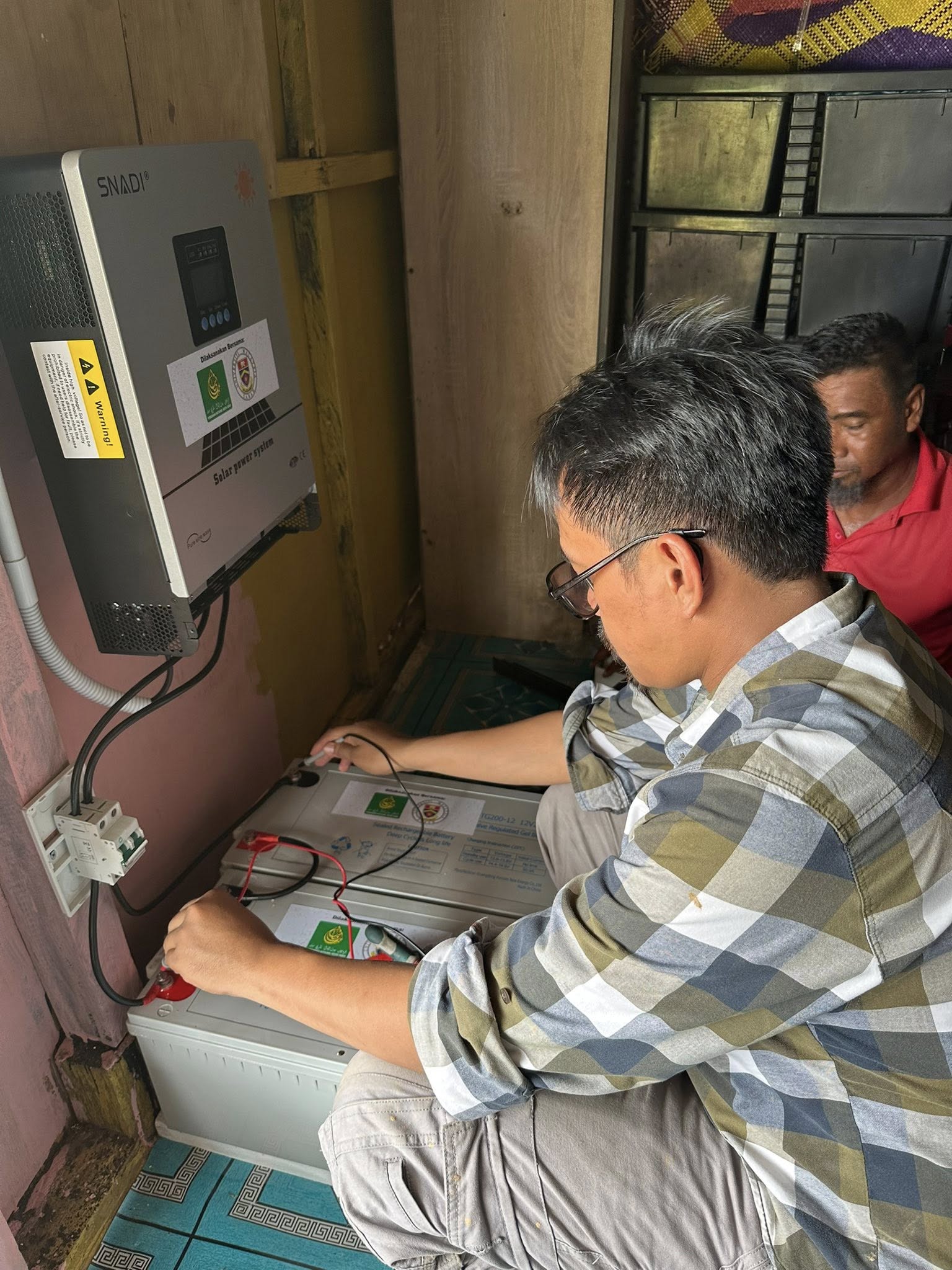
Lok Dangkaan Solar Training Programme — From Villagers to Technicians
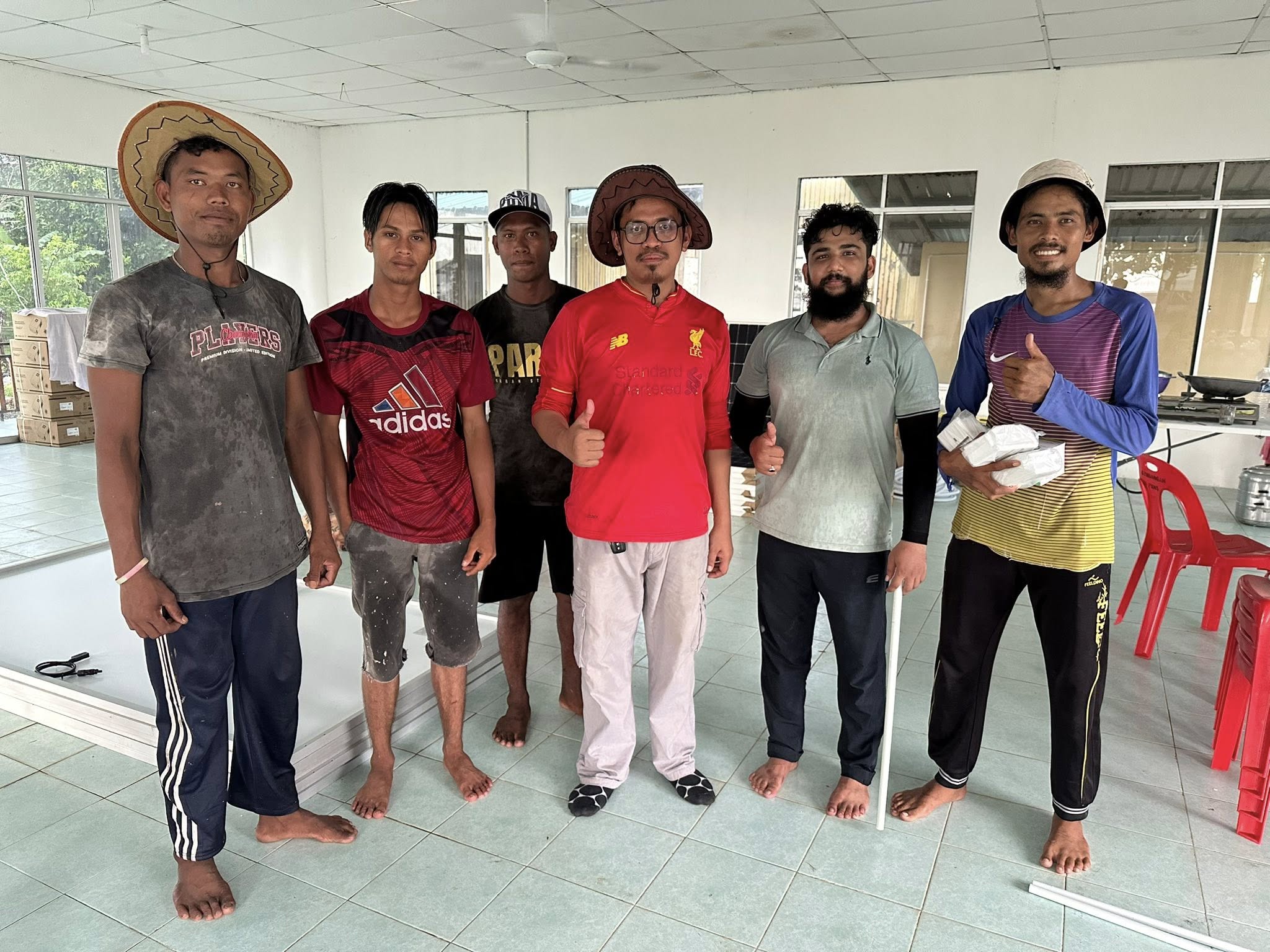
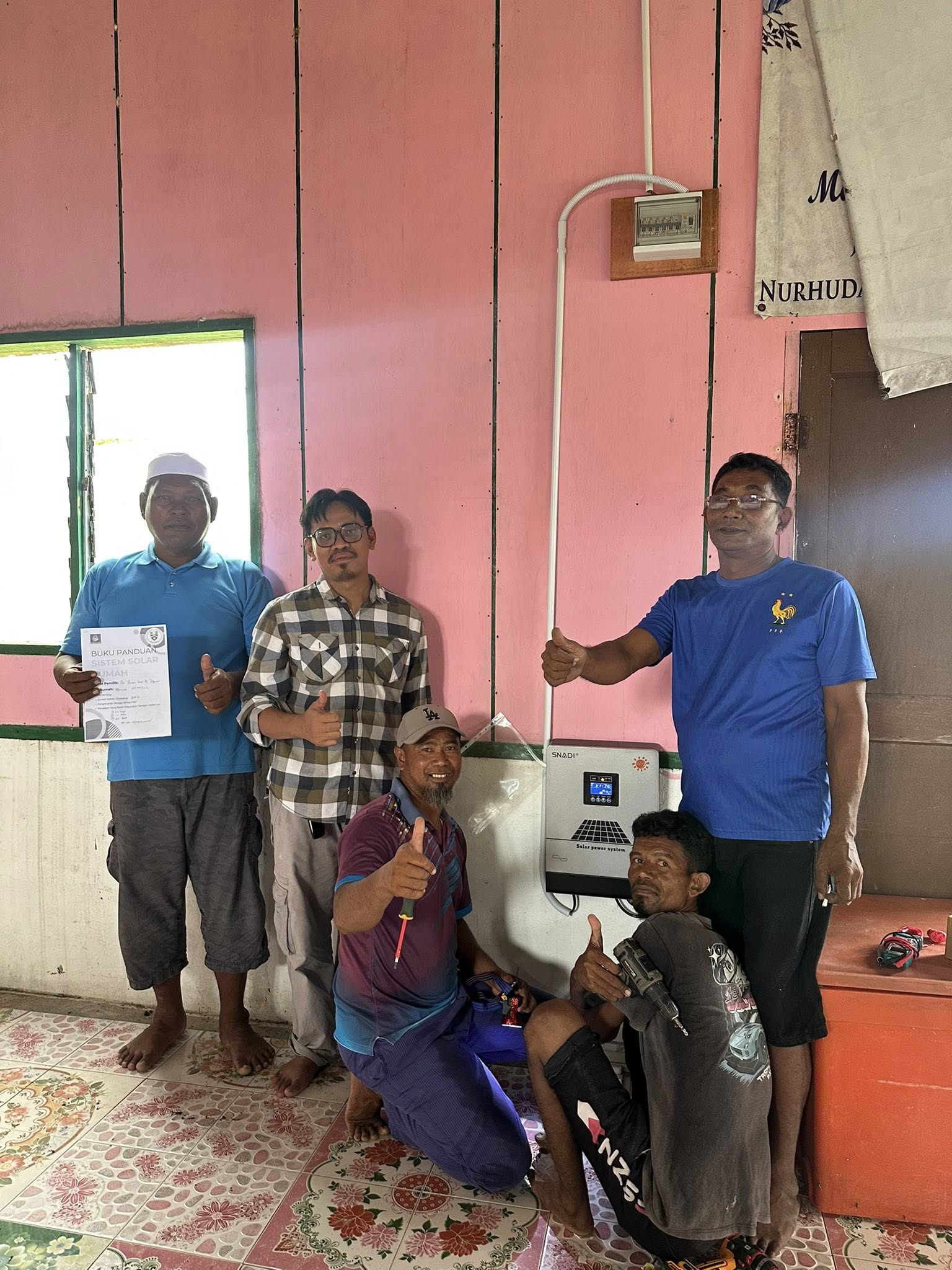
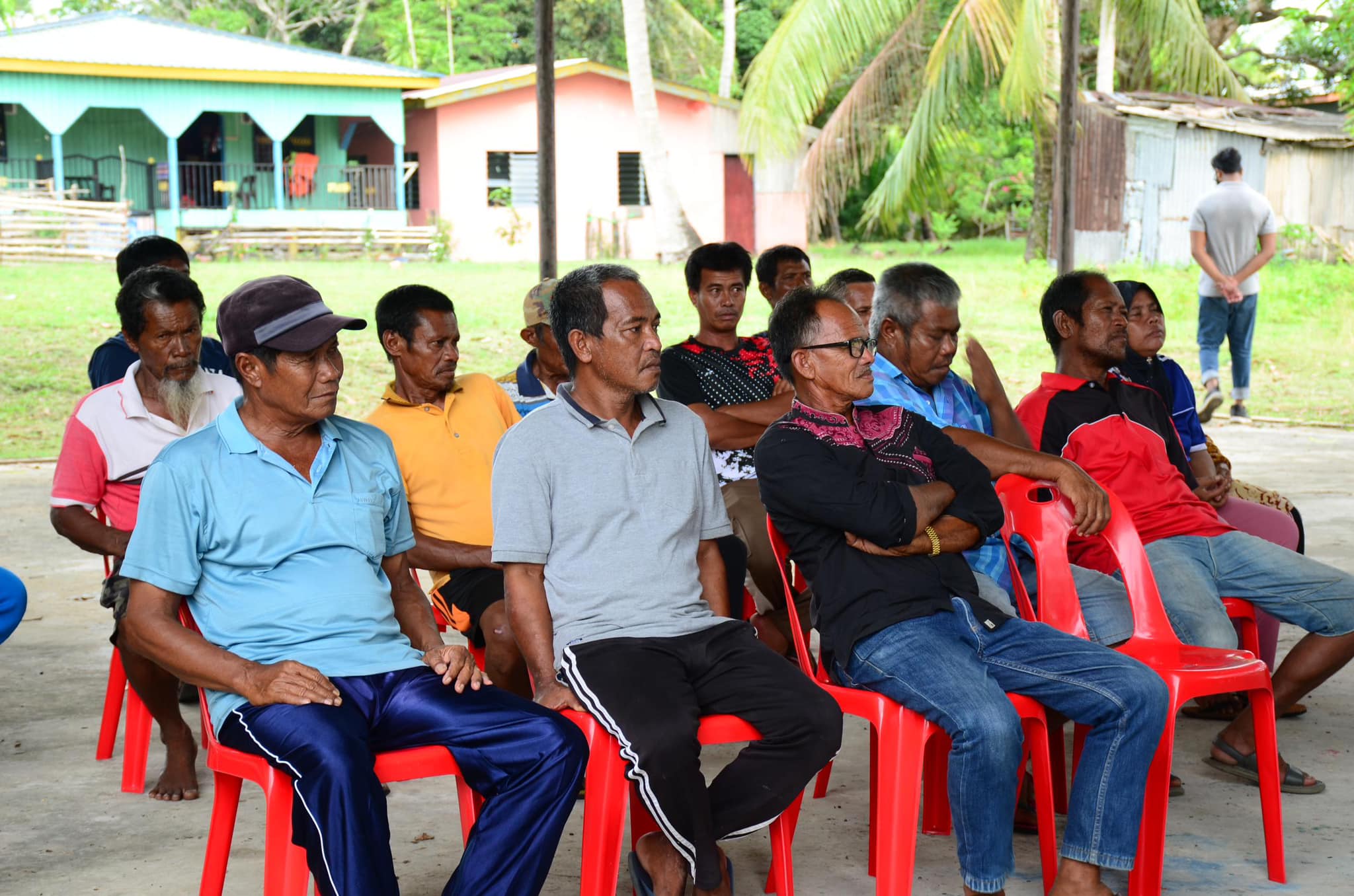
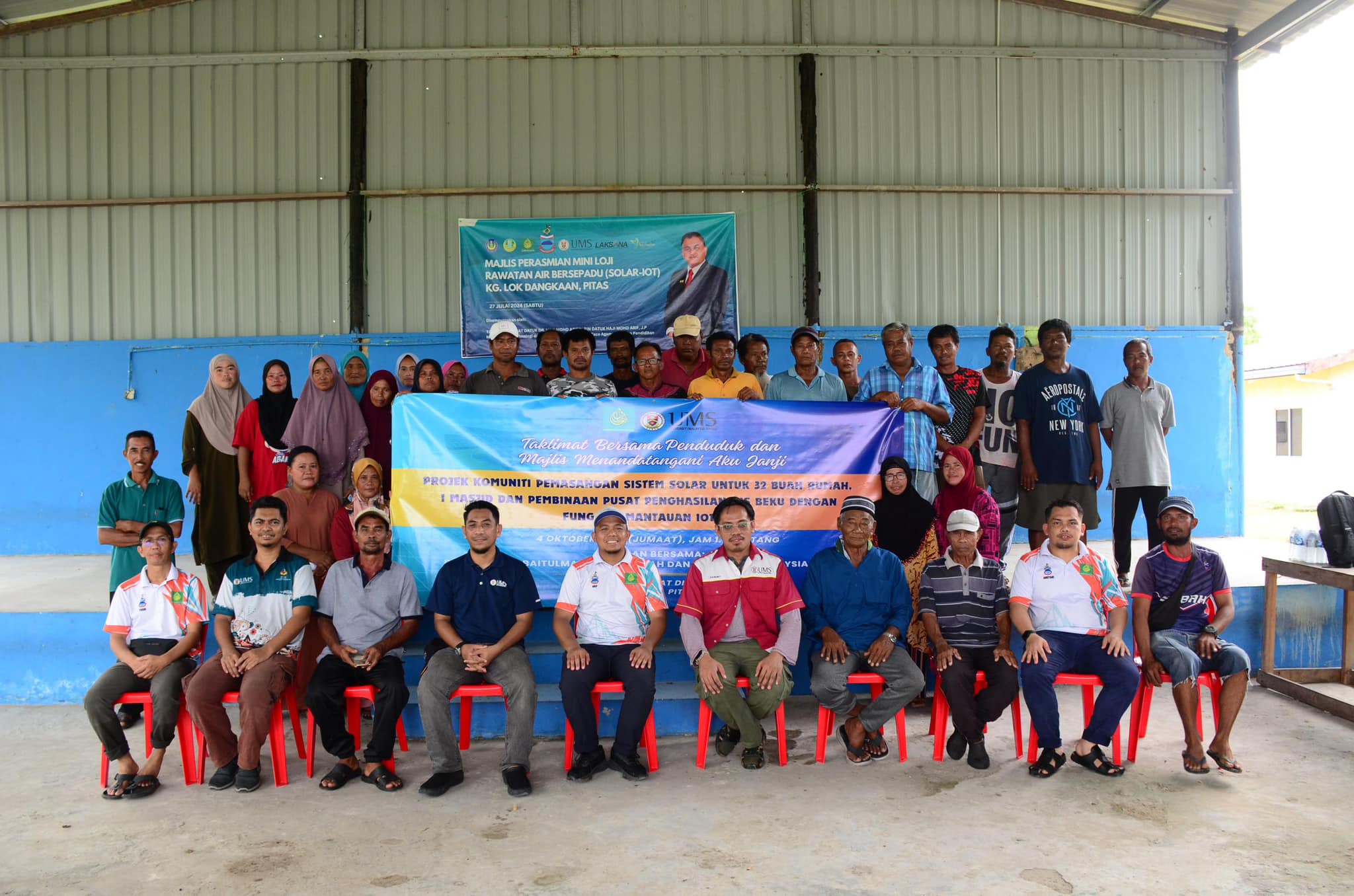
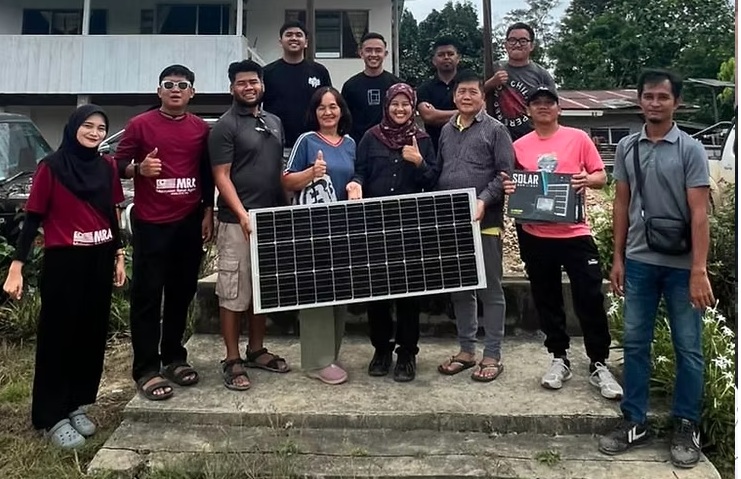
The Lok Dangkaan Solar Training Programme is one of UMS’s most empowering initiatives, transforming ordinary villagers into capable solar technicians. UMS academics conducted multi-day training covering wiring, load balancing, safety protocols, panel installation angles, battery management, and inverter operation. This training allowed villagers to fully understand the systems that would power their homes. Villagers successfully installed 32 home solar systems, a mosque system, and an ice-production hub under UMS supervision. Participants learned to handle tools, perform voltage checks, and troubleshoot basic faults. Many expressed pride in personally wiring their own homes—an achievement that strengthened confidence and ownership. The impact is remarkable. Lok Dangkaan now has local technicians who can maintain and repair solar systems without waiting weeks for external help. The programme enhances village resilience, grows technical capacity, and ensures long-term sustainability by embedding knowledge directly within the community.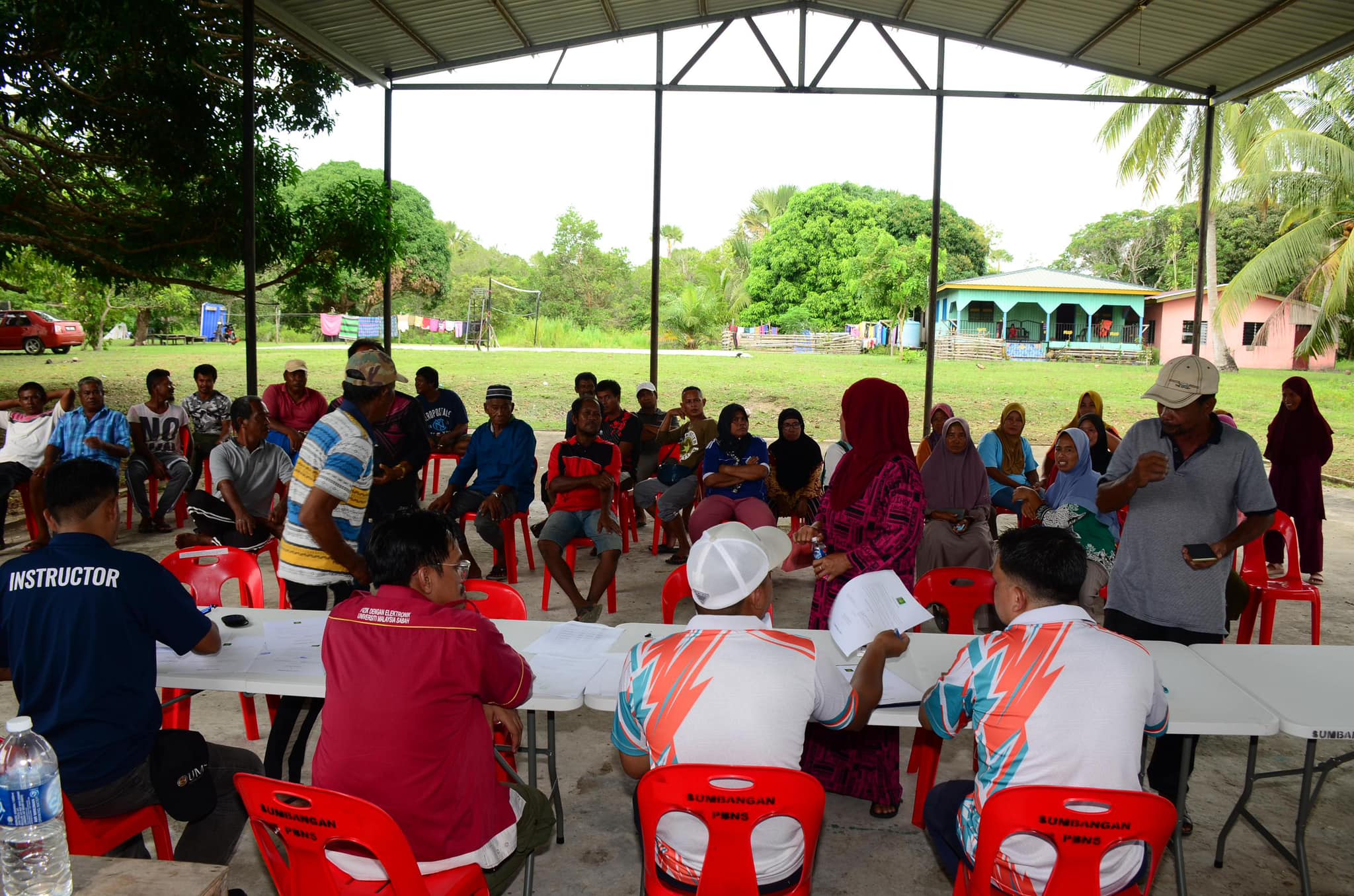
Solar-IoT Mini Water Treatment Plant Education — Clean Water Through Clean Energy
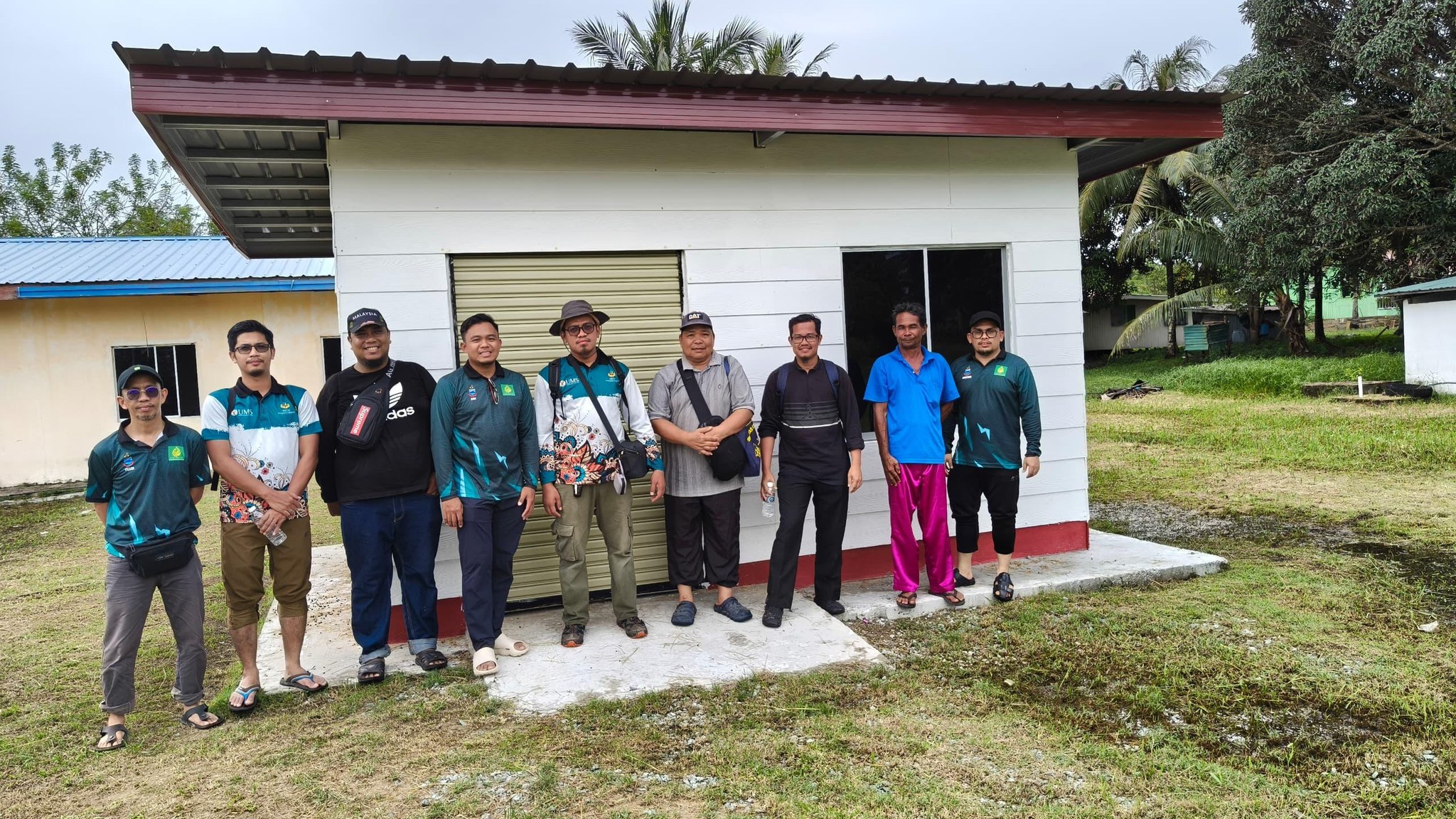
The Solar-IoT Mini Water Treatment Plant initiative integrates educational sessions that teach villagers how solar energy can power essential water systems. Participants learn how solar panels generate electricity for pumps, UV sterilisation, and filtration processes. Trainers explain the advantages of renewable power in rural water systems, including reduced diesel dependency, lower operational costs, and improved reliability. Hands-on demonstrations of water testing, real-time IoT monitoring, and guided explanations of flowrate sensors, turbidity systems, and water-quality dashboards. Villagers were taught how system usage affects energy consumption and how solar-powered pumps respond to weather variations. Families now understand not only how their water system works, but why solar power ensures safer, more affordable, and more consistent water access. This knowledge strengthens community trust in clean-energy solutions and improves health outcomes in remote settlements.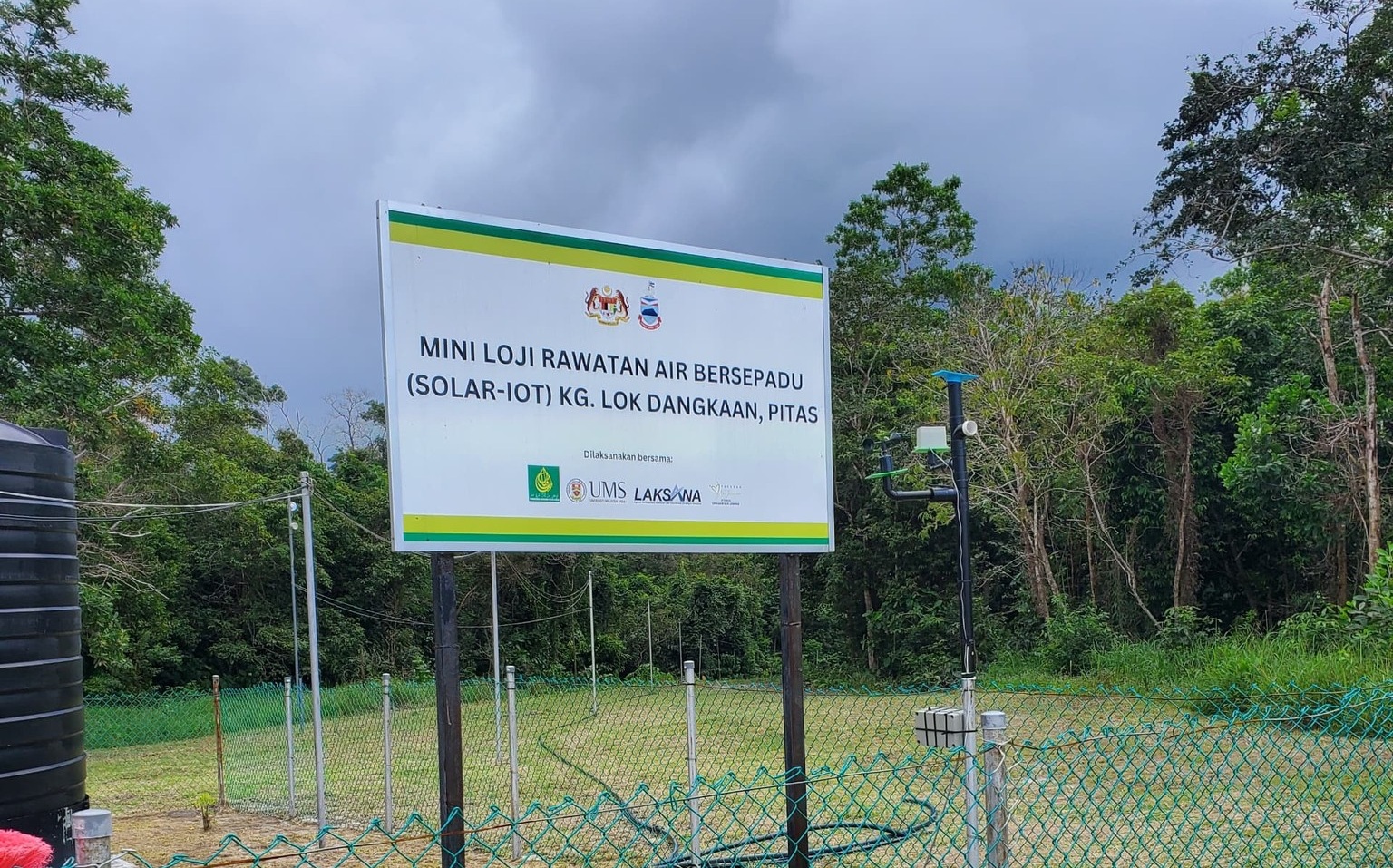
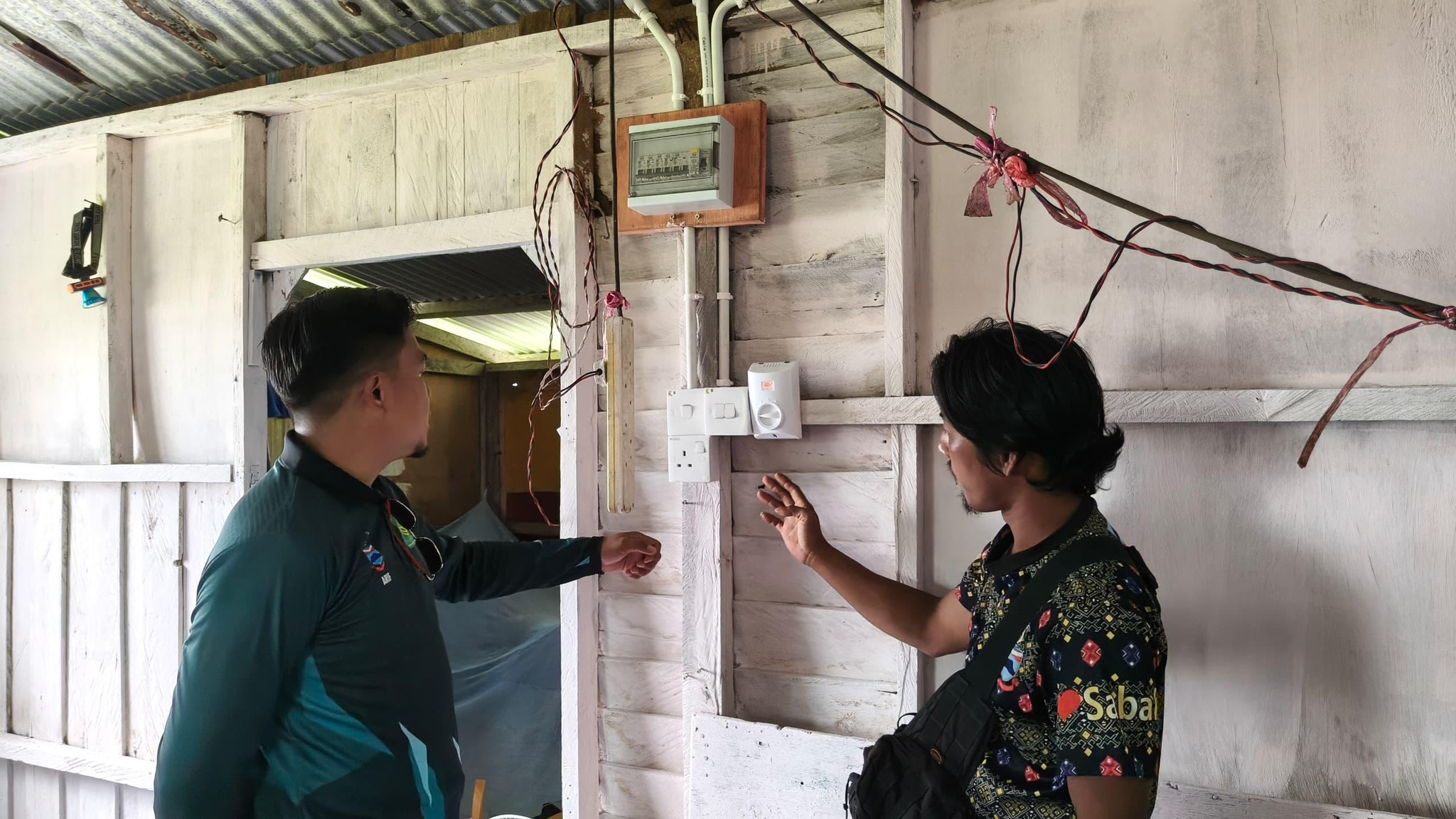
Ranau S.O.S Solar Lighting Project — Teaching Light, Safety and Energy Awareness
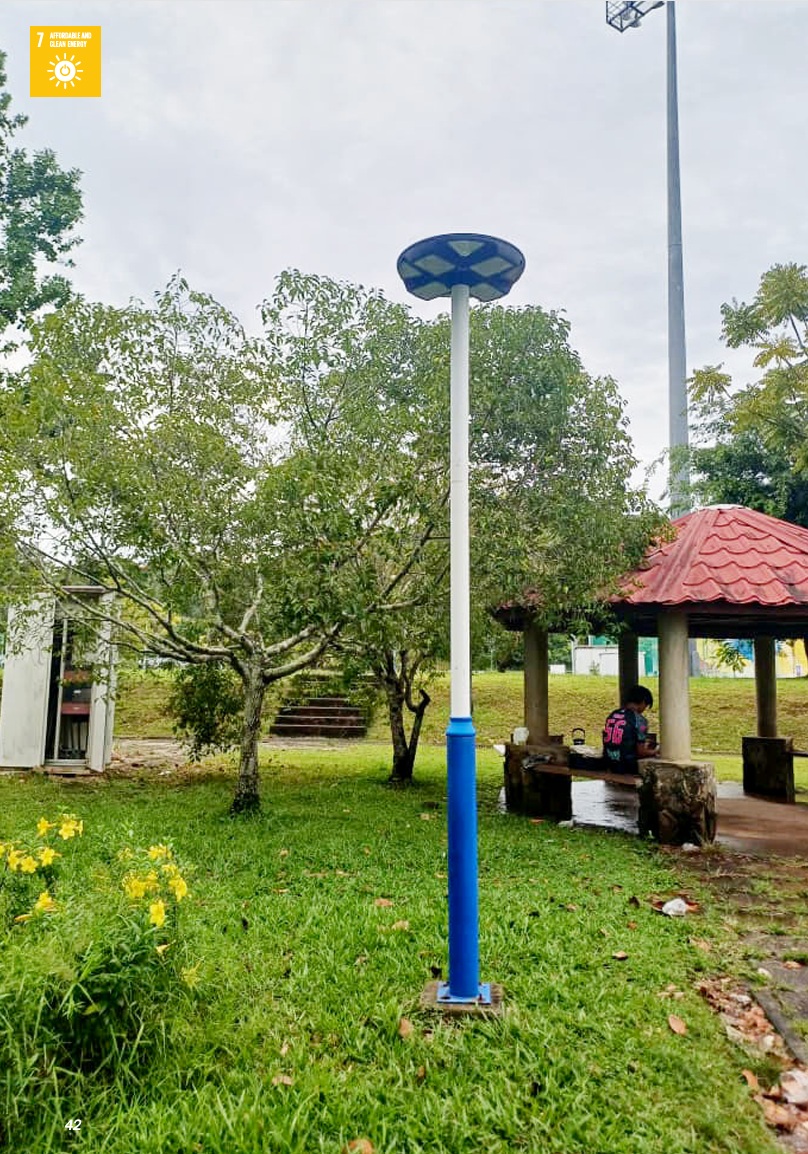
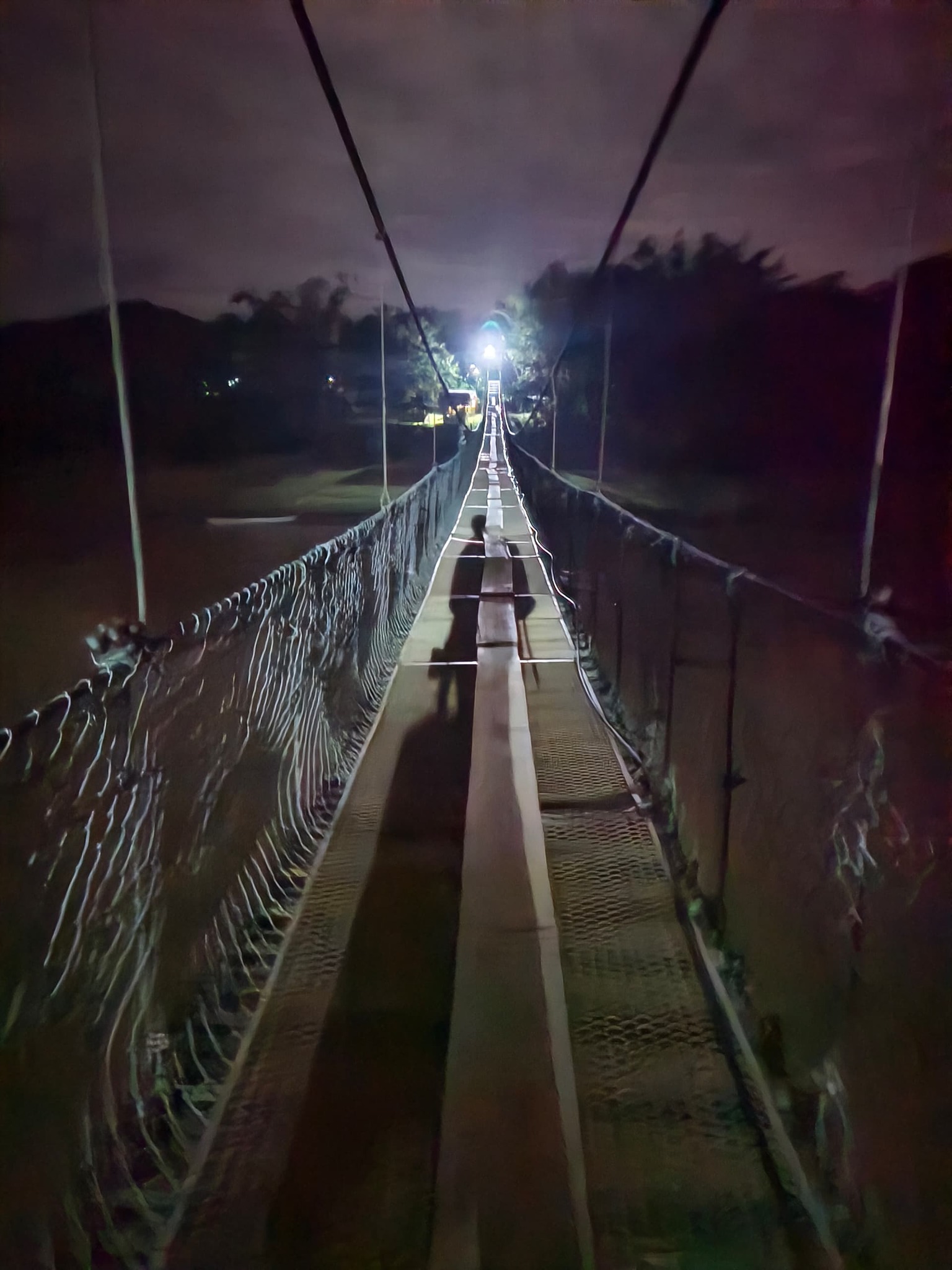
Through the S.O.S solar lighting project in Kampung Mangkapoh, UMS students not only installed solar lamps—they educated villagers about LED efficiency, battery behaviour, solar charging cycles, and nighttime safety benefits. Community members learned why LEDs consume less energy and how proper solar placement improves lighting hours. Evidence includes practical demonstrations during installation, where students guided residents in identifying optimal locations for lamps, checking wiring connections, and interpreting blinking light indicators on controllers. Villagers were also briefed on long-term care, such as cleaning panels and preventing moisture damage. Night-time movement became safer, children can walk home more comfortably, and the community now understands how solar lighting transforms safety without recurring fuel costs. It instils ownership and ensures that villagers can protect their new infrastructure with confidence.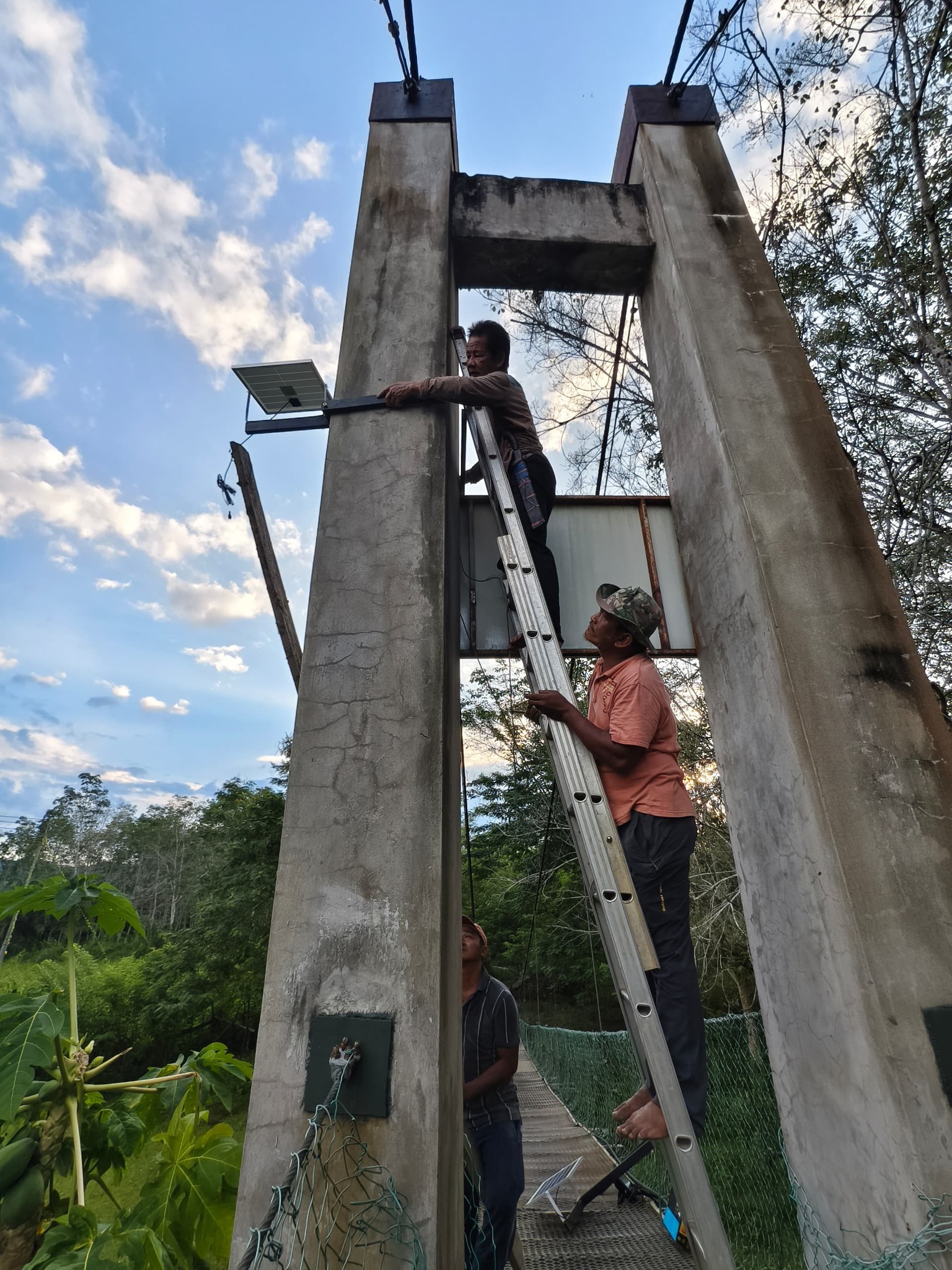
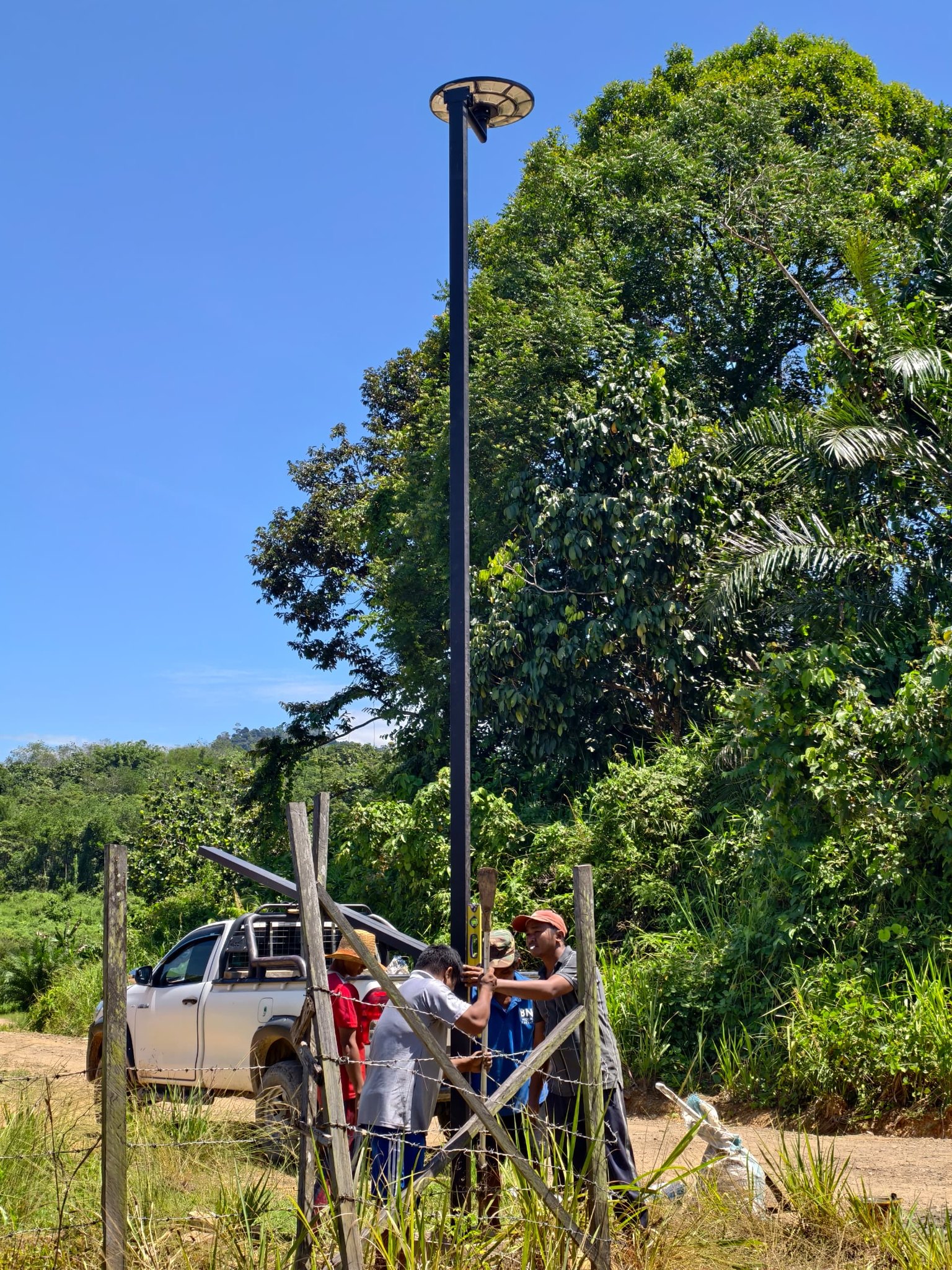
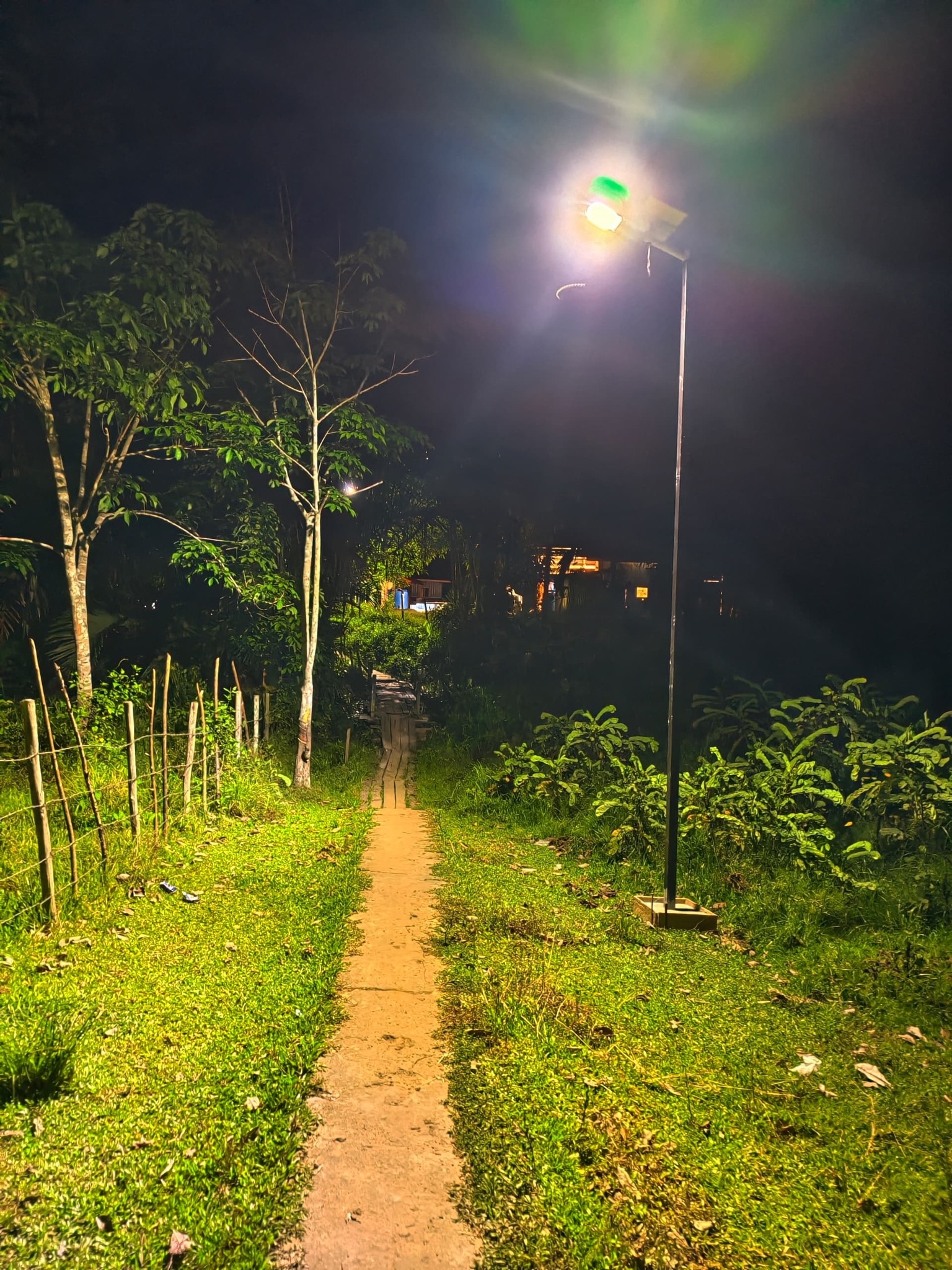
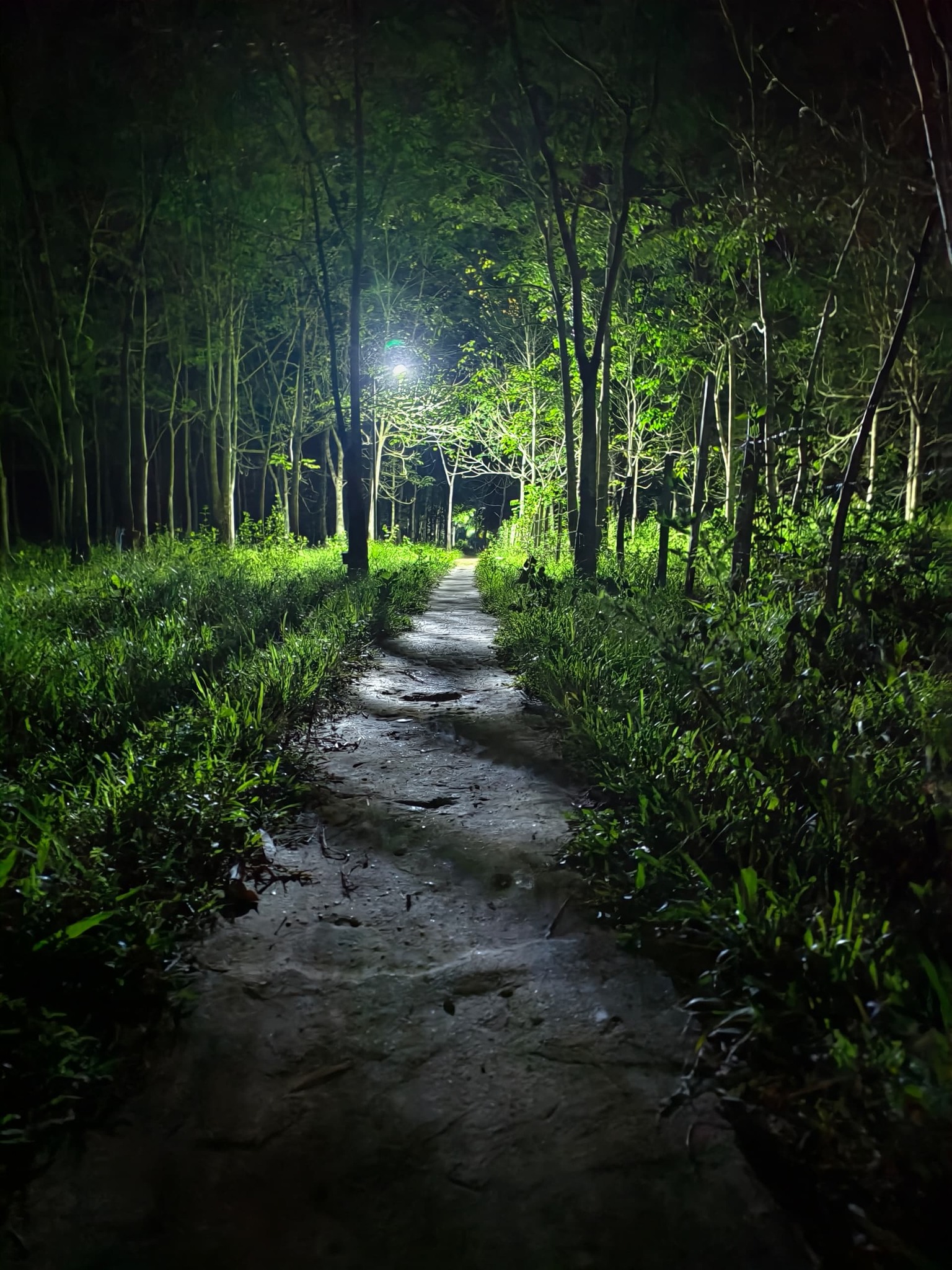
Empowering Remote Communities through Solar Energy: UMS Drives SDG 7 Action in Long Mio
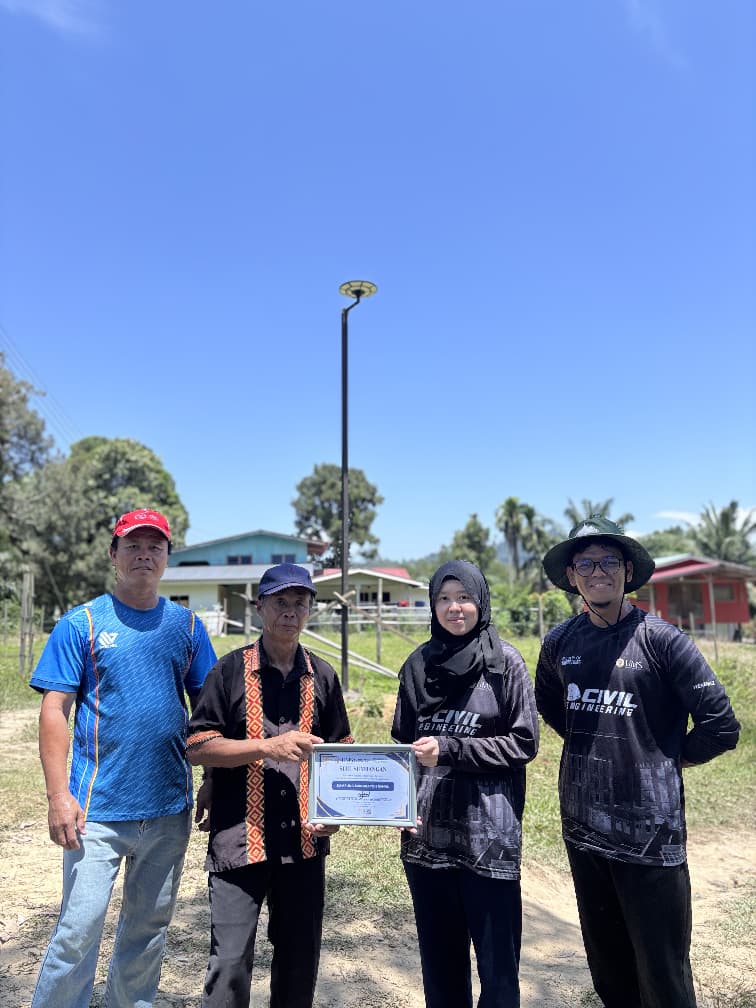
In a strong move to advance Sustainable Development Goal 7 (Affordable and Clean Energy), Universiti Malaysia Sabah (UMS), under the Projek Pendayaan Komuniti @UniMADANI initiative, has implemented a high-impact solar energy project in Kampung Long Mio, a remote village in Sipitang. The project, led by Associate Professor Ts. Dr. Nur Fadilah Darmansah, addresses the persistent issue of unstable electricity supply by installing decentralized solar systems, providing the local community with reliable, renewable, and sustainable energy access. Beyond infrastructure, the initiative places strong emphasis on capacity building and community empowerment. Through hands-on technical training sessions conducted by Dr. Mohd Azlan Ismail and the UMS technical team, local residents were equipped with knowledge on the operation and maintenance of their new solar systems. This ensures not only energy access, but also long-term sustainability, ownership, and resilience within the community. The project embodies the spirit of inclusive energy transition—bridging the energy divide in rural areas while promoting green technology adoption at the grassroots level. UMS’s initiative demonstrates a scalable model for universities engaging in community-based renewable energy deployment. By aligning academic expertise with national development goals, the project contributes directly to Malaysia’s Net Zero aspirations and strengthens local capacities to adapt to a low-carbon future.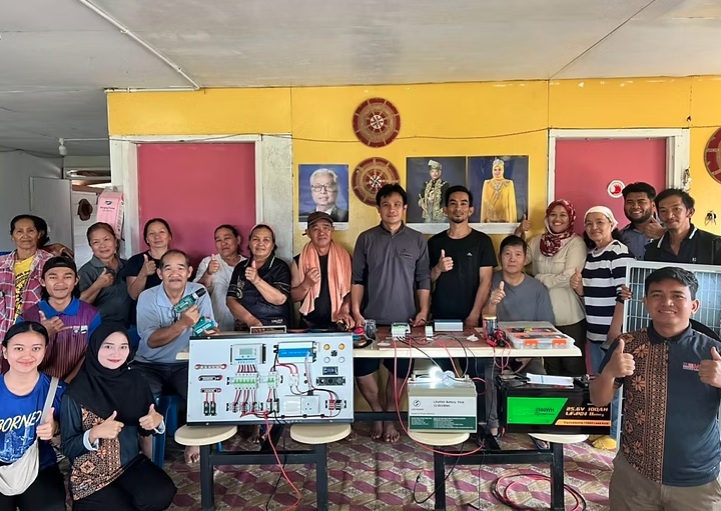
MindQUEST Carnival – Solar Car Challenge — Children Learning by Doing
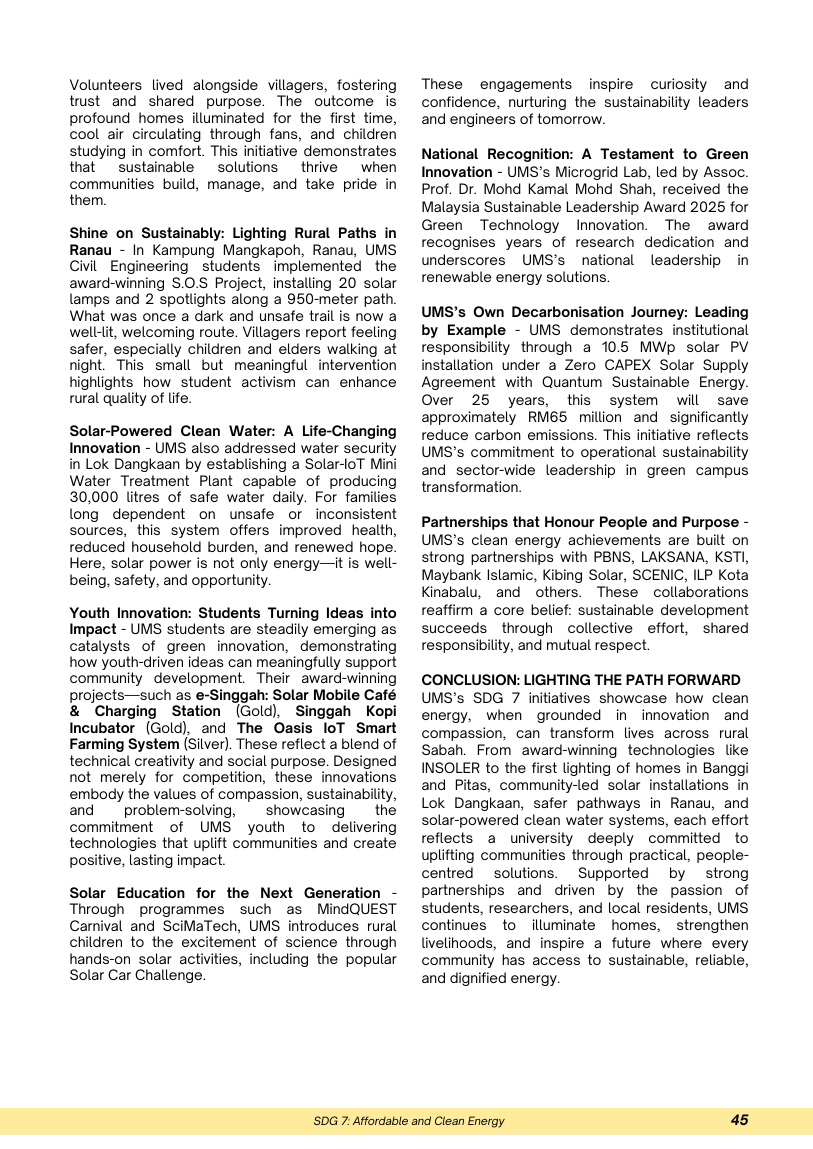
The Solar Car Challenge at MindQUEST Carnival introduces children to renewable energy through playful, hands-on engineering. Participants build miniature solar cars while learning how sunlight converts to electrical energy and powers small motors. These activities make clean energy tangible and exciting.
SciMaTech Roadshow – STEM & Solar Activities — Bringing Clean Energy Education Across Sabah
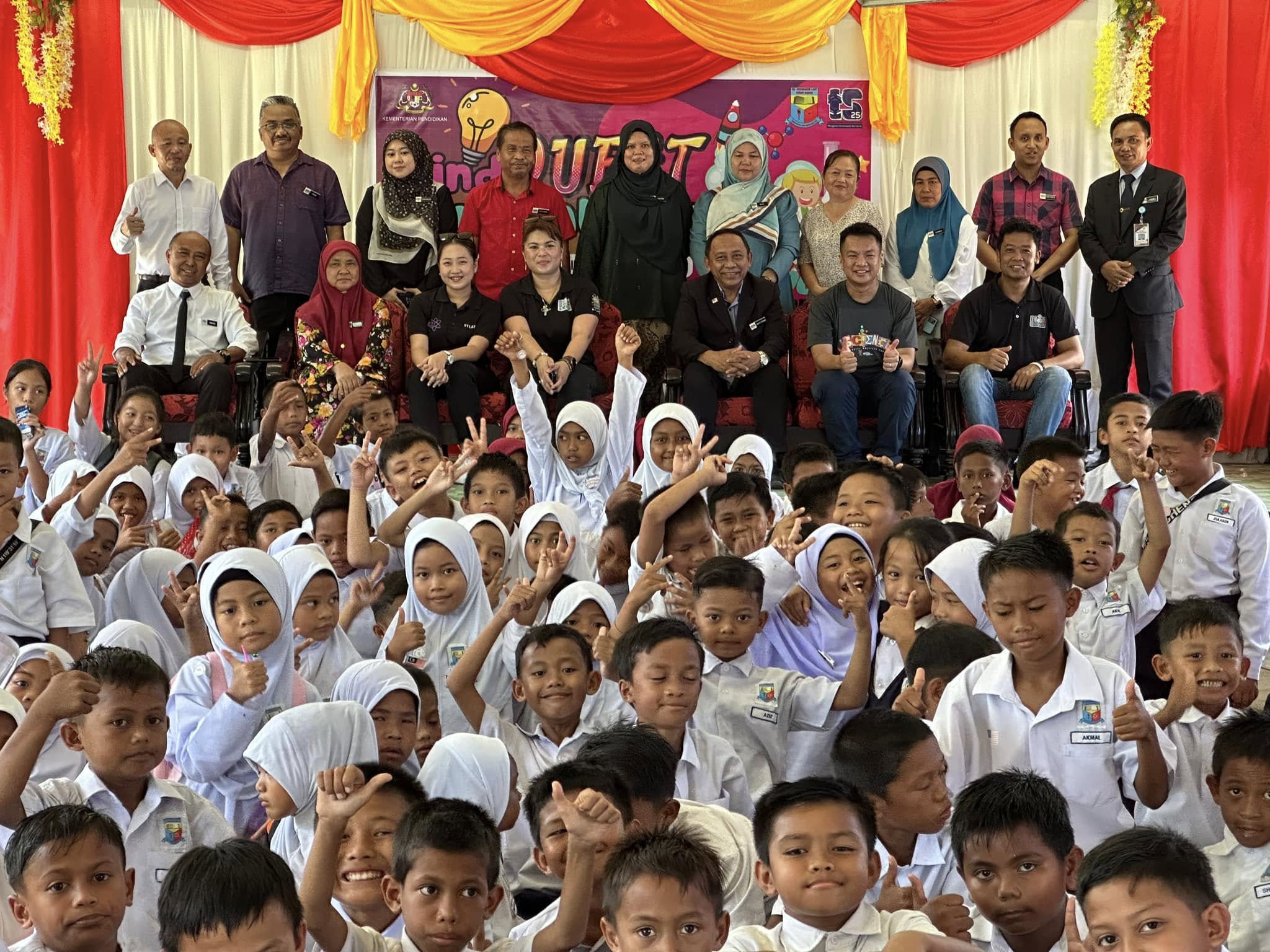
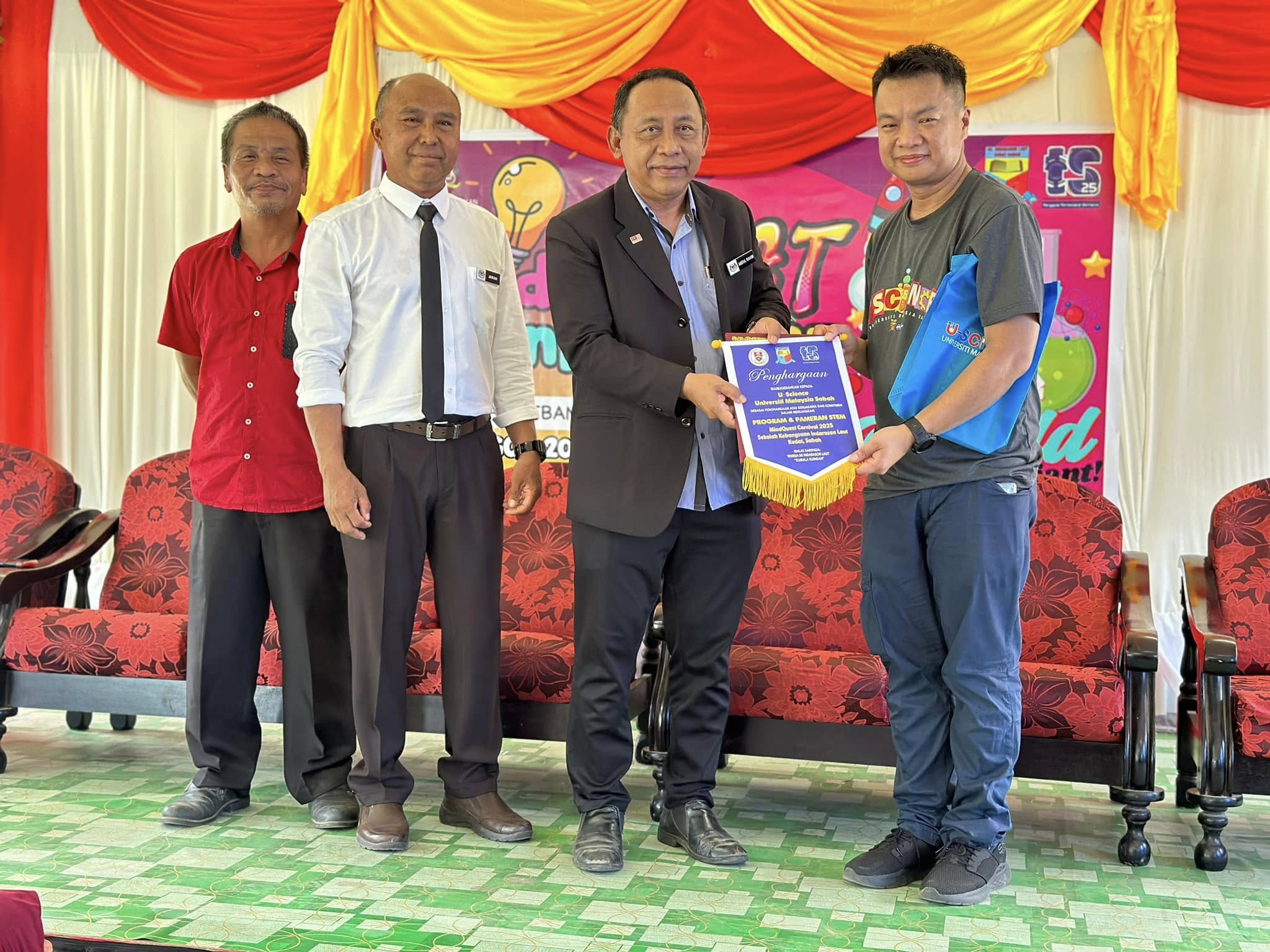
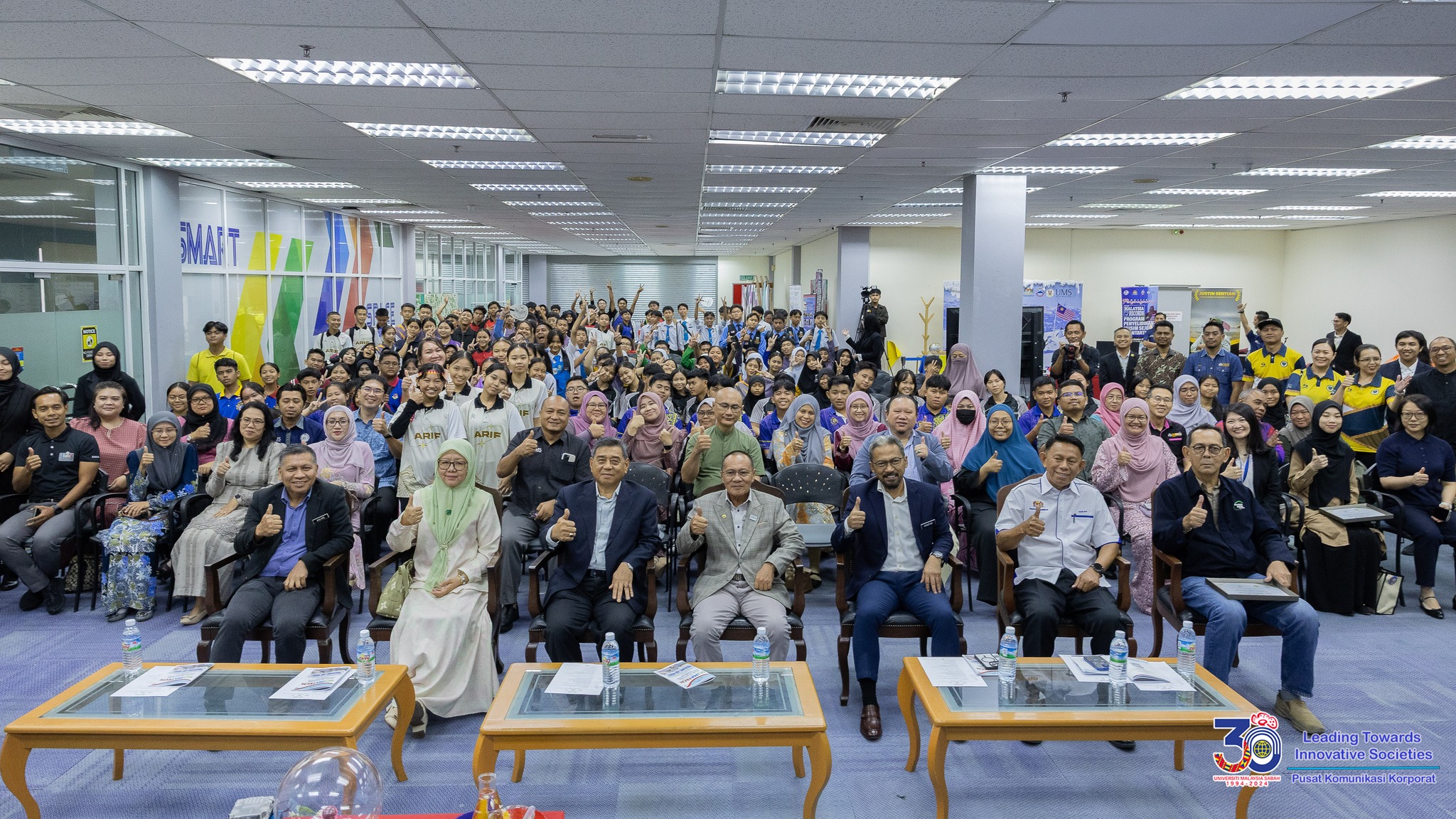
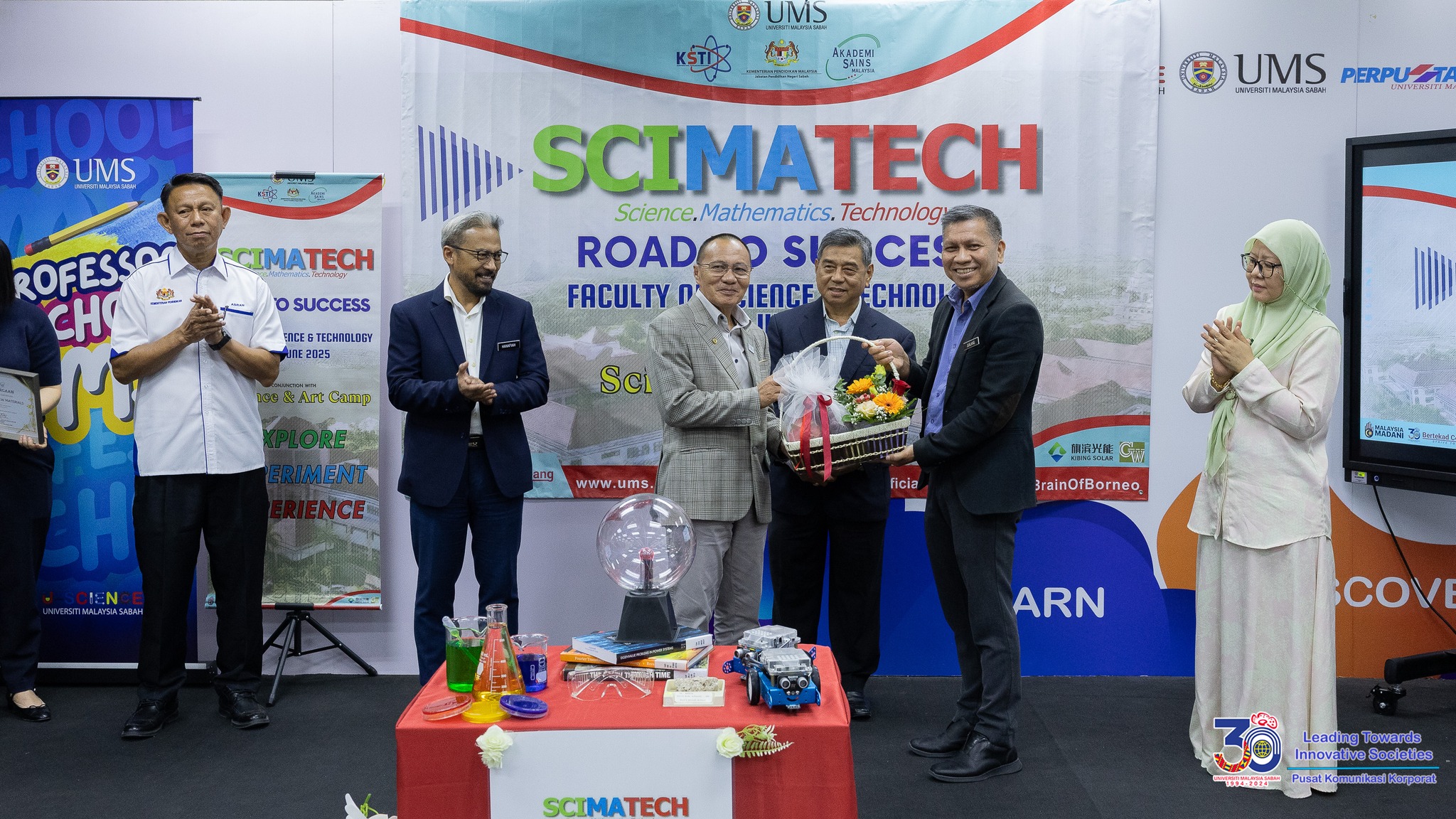
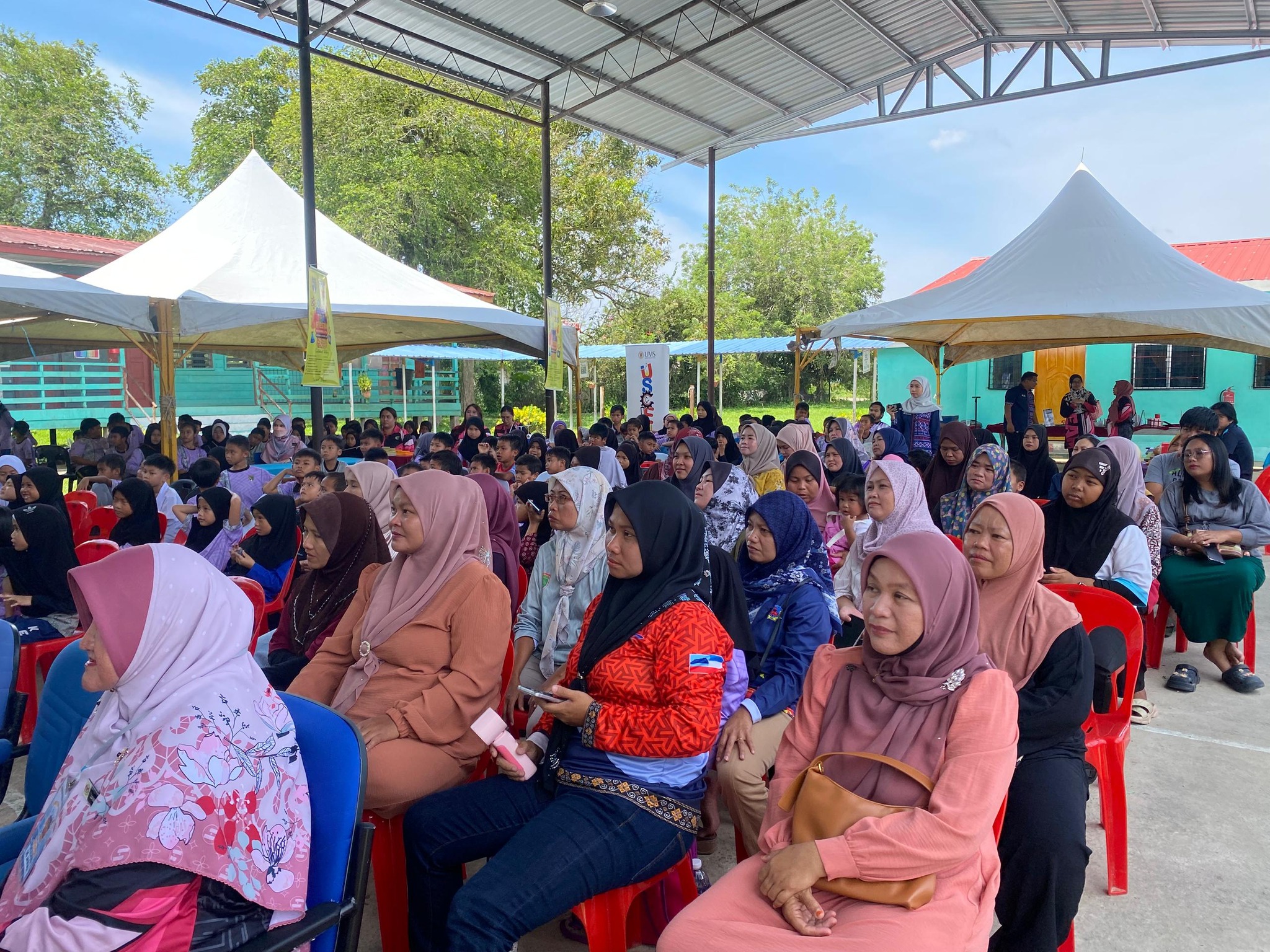
The SciMaTech Roadshow brings UMS’s clean-energy education directly into rural and semi-urban schools through exhibitions, laboratory-style workshops, and interactive solar demonstrations. Children learn about energy conversion, sustainable design, and the role of renewables in combating climate change. Evidence includes solar experiments such as water purification, solar-powered fans, pH indicator labs, and engineering challenges guided by UMS educators. Students engage actively by testing equipment, asking questions, and observing renewable energy in action. The impact is broad and long-lasting. SciMaTech nurtures scientific curiosity in regions where STEM resources are limited, helping young learners understand that solar energy is not abstract—it is accessible, empowering, and essential to Sabah’s future. These experiences create a strong foundation for the next generation of clean-energy champions.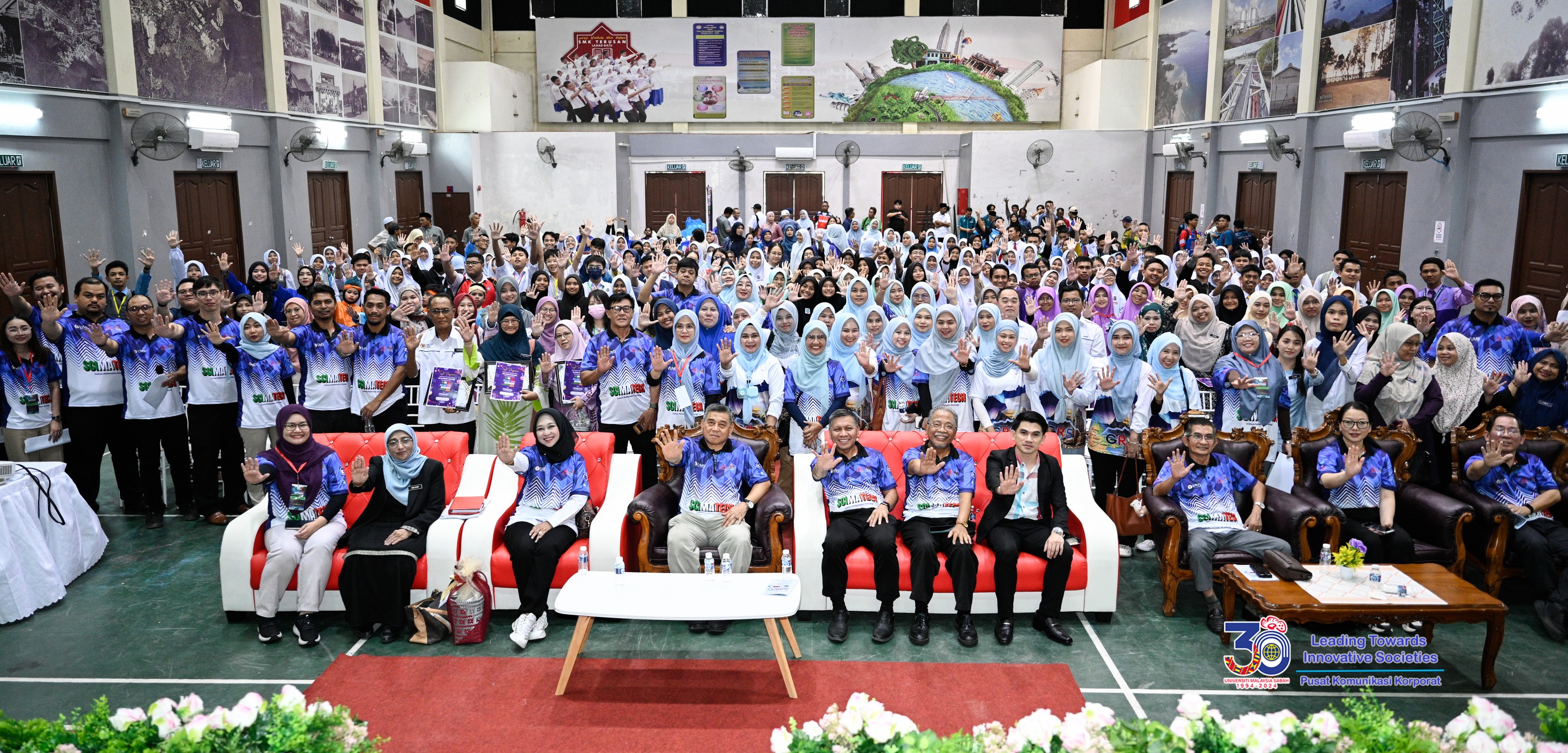
UNIVERSITI MALAYSIA SABAH
Inspiring Pledges, Igniting Action, Powering Malaysia’s Green Transition.
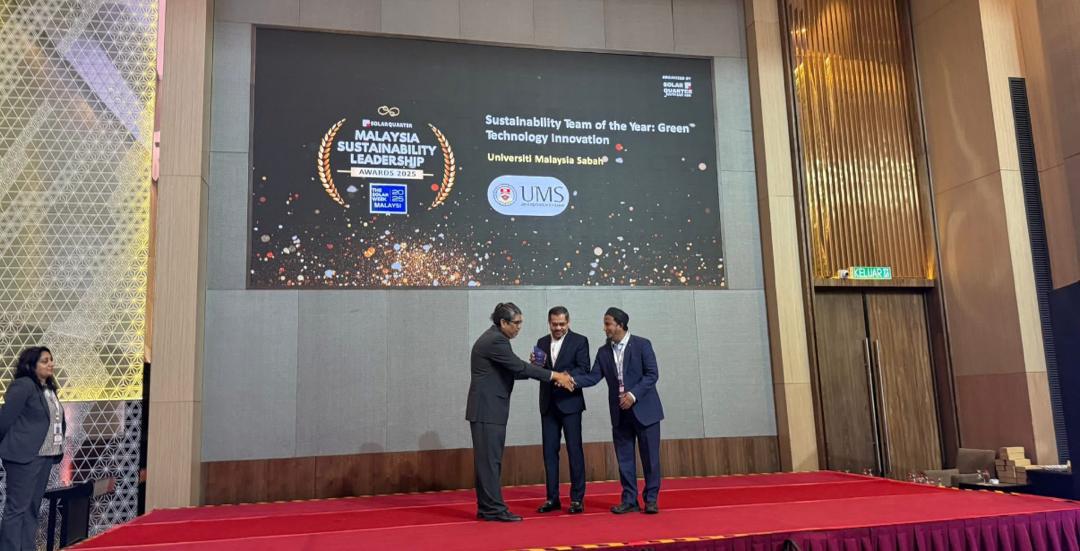
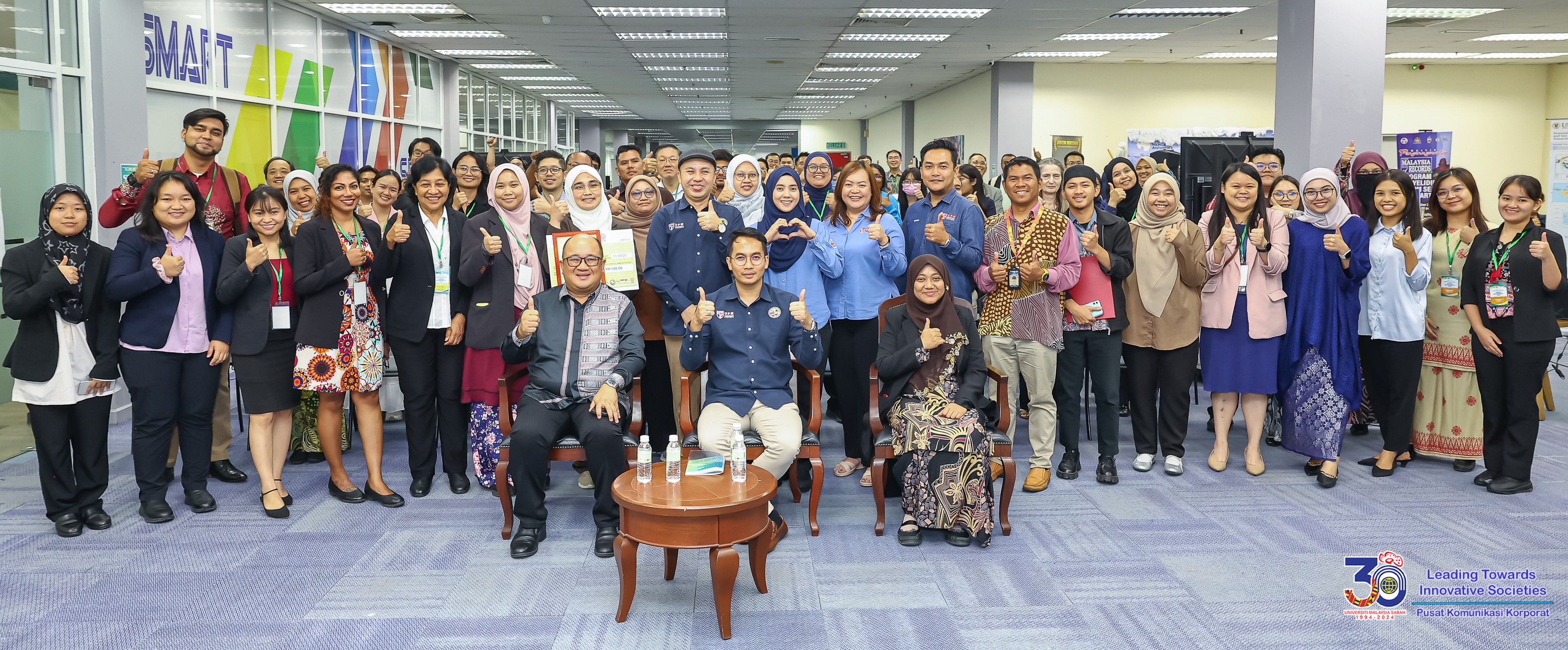
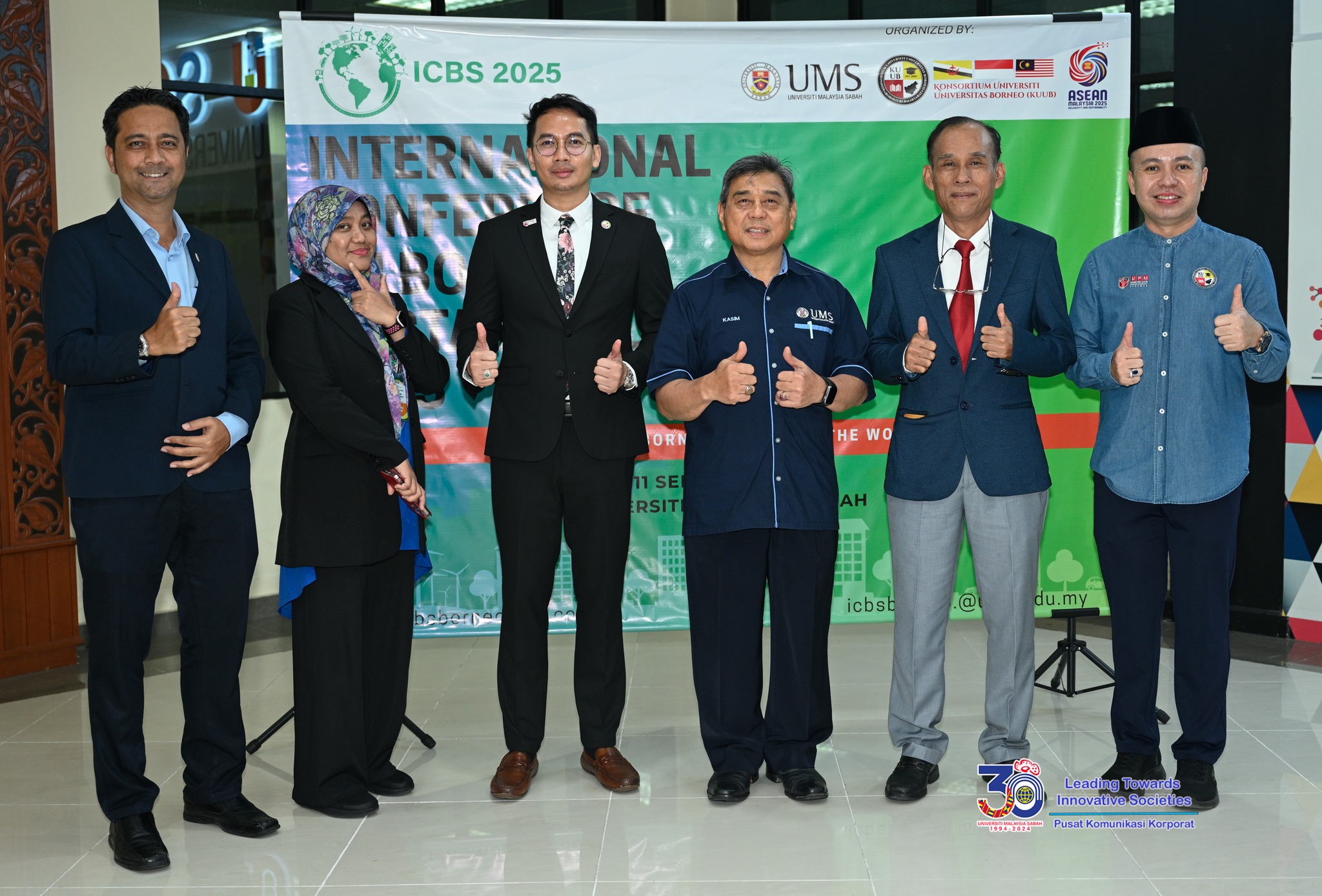
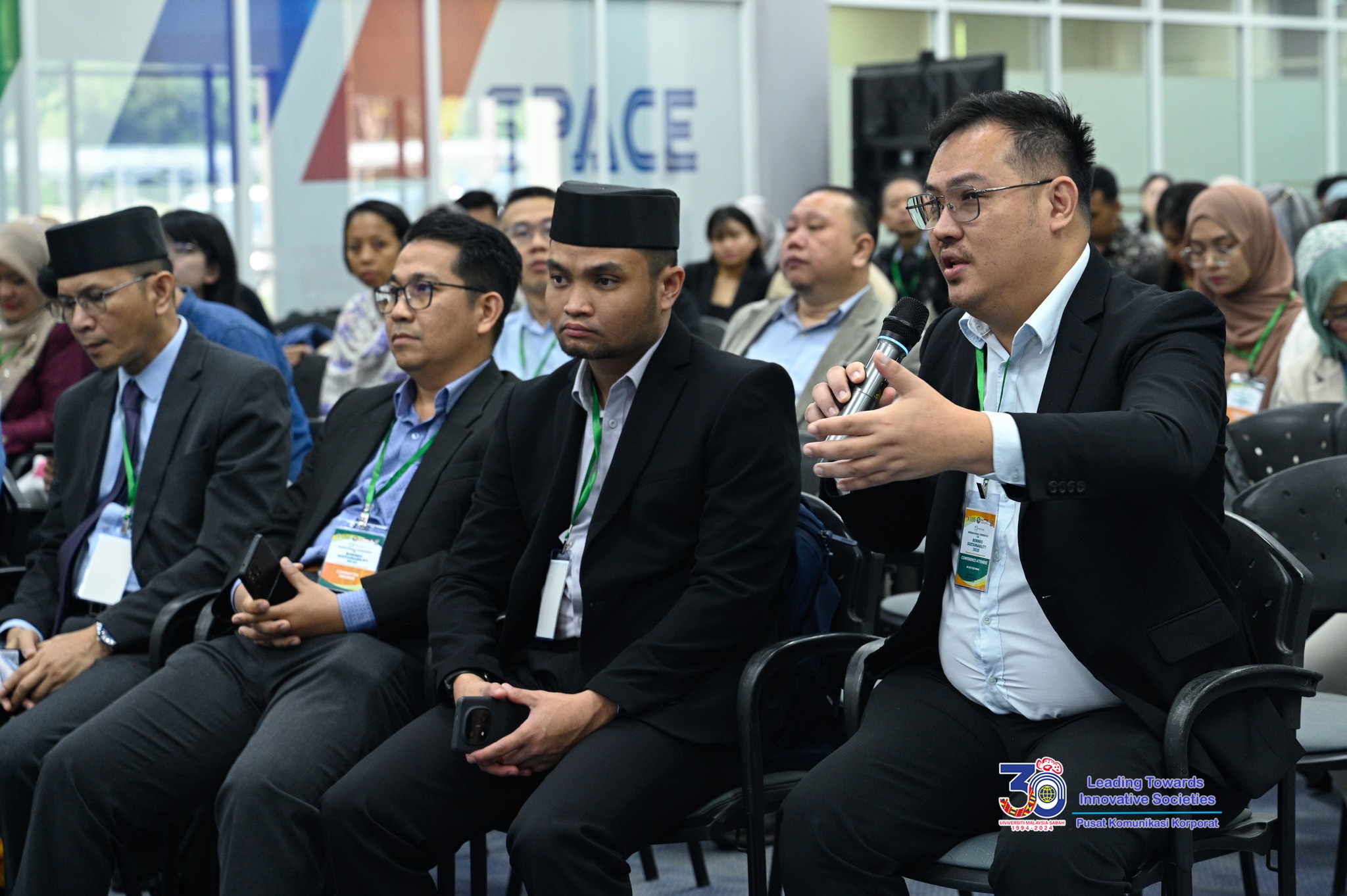
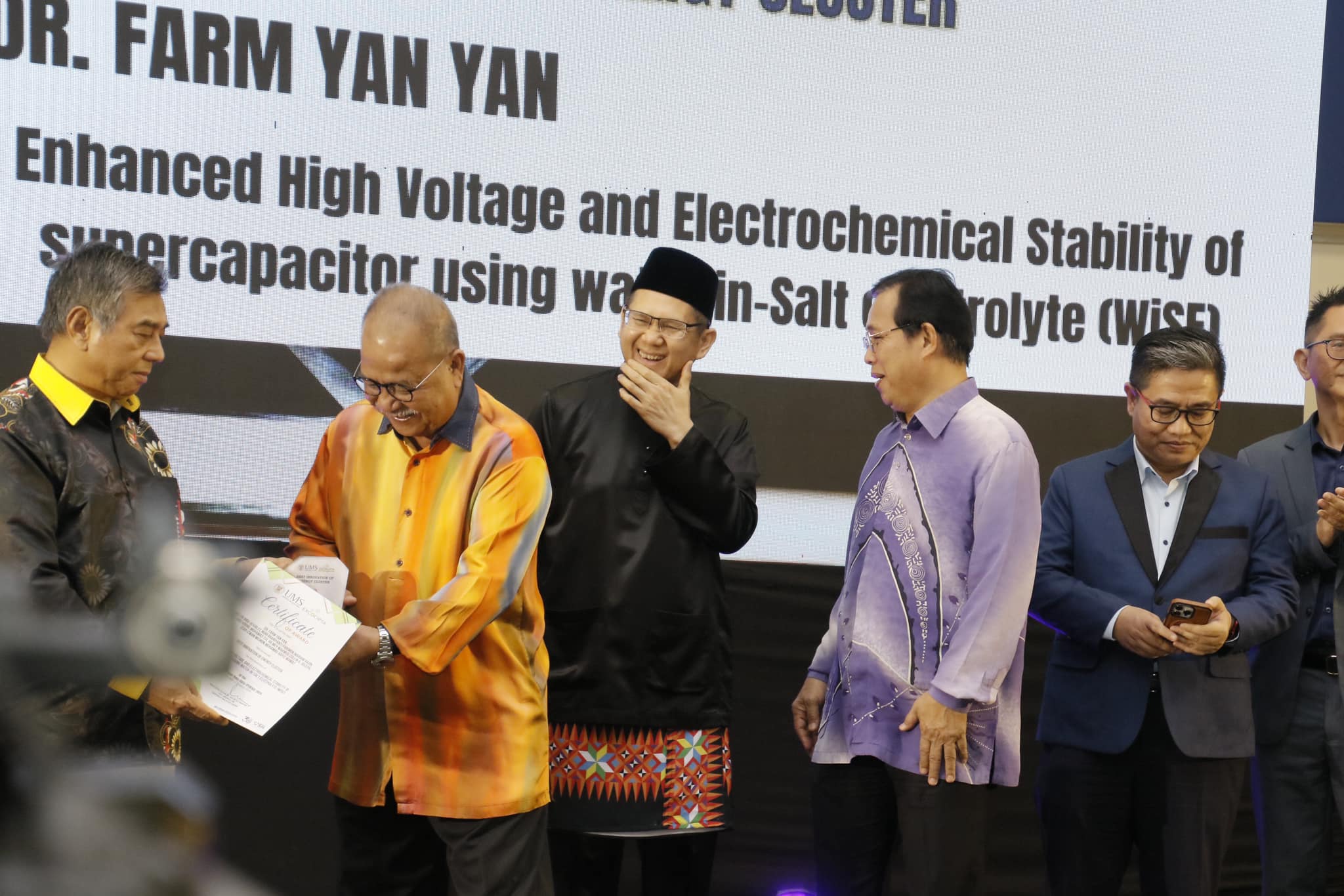
Universiti Malaysia Sabah (UMS) continues to solidify its position as Malaysia’s leading institution for clean energy transformation through large-scale solar innovation, rural microgrid deployment, high-impact community electrification projects, and youth-led green technology entrepreneurship. Guided by SDG 7 and the UMS Sustainability & Climate Action Policy, UMS integrates research excellence, industry partnerships, and grassroots empowerment to accelerate clean energy access across Sabah and beyond. Universiti Malaysia Sabah (UMS) actively promotes a public pledge toward 100% renewable energy by mobilising communities, government agencies, industries, and young people to engage in meaningful conversations, campaigns, and collaborative action. As one of Malaysia’s leading EcoCampus institutions, UMS channels its commitment through the EcoCampus Blueprint, the UMS Strategic Plan 2023–2027, and a university-wide sustainability governance system that emphasises clean energy as a moral responsibility, not just an operational target.
UNIVERSITI MALAYSIA SABAH
Industry Partnerships for Clean Energy Excellence
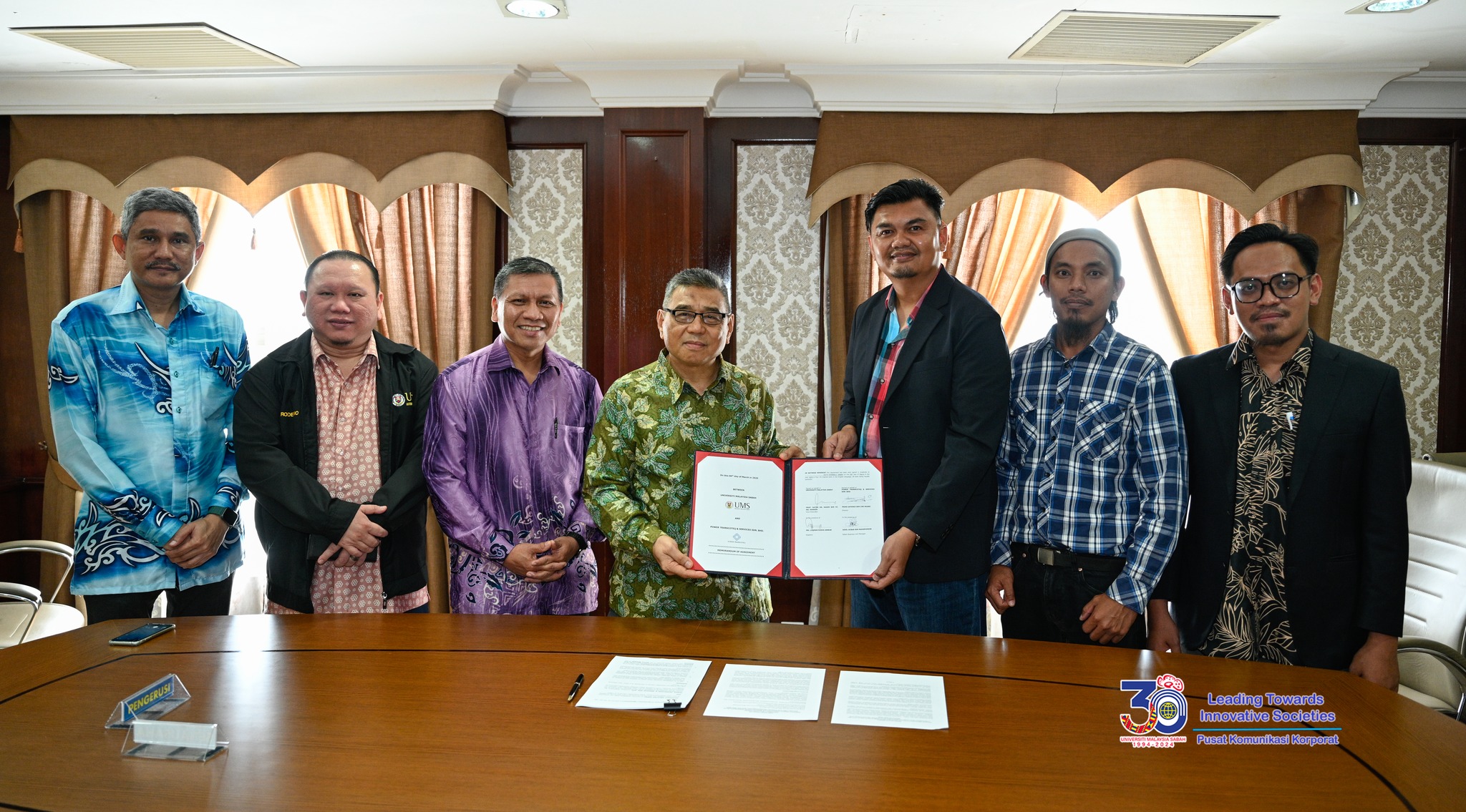
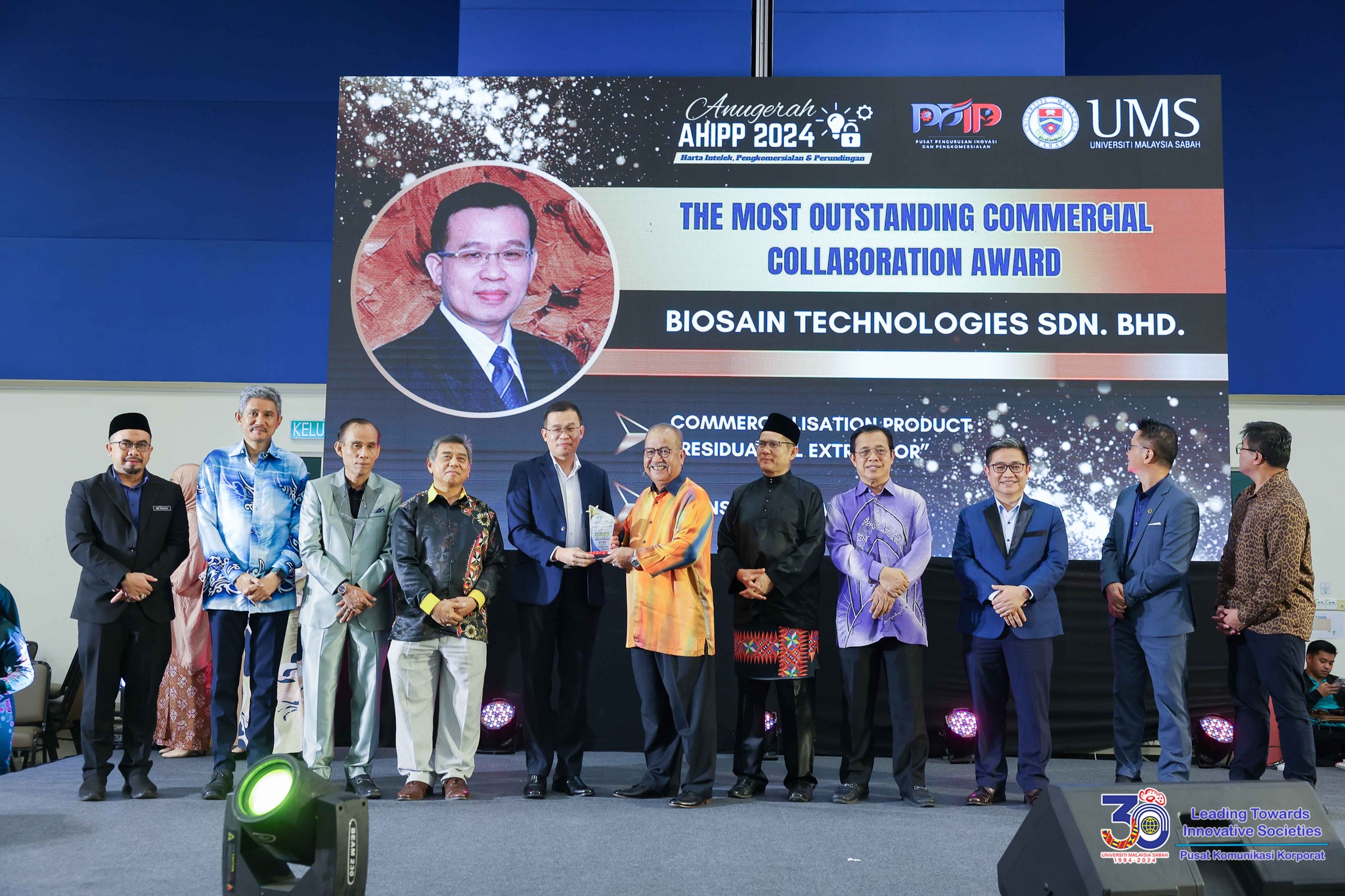
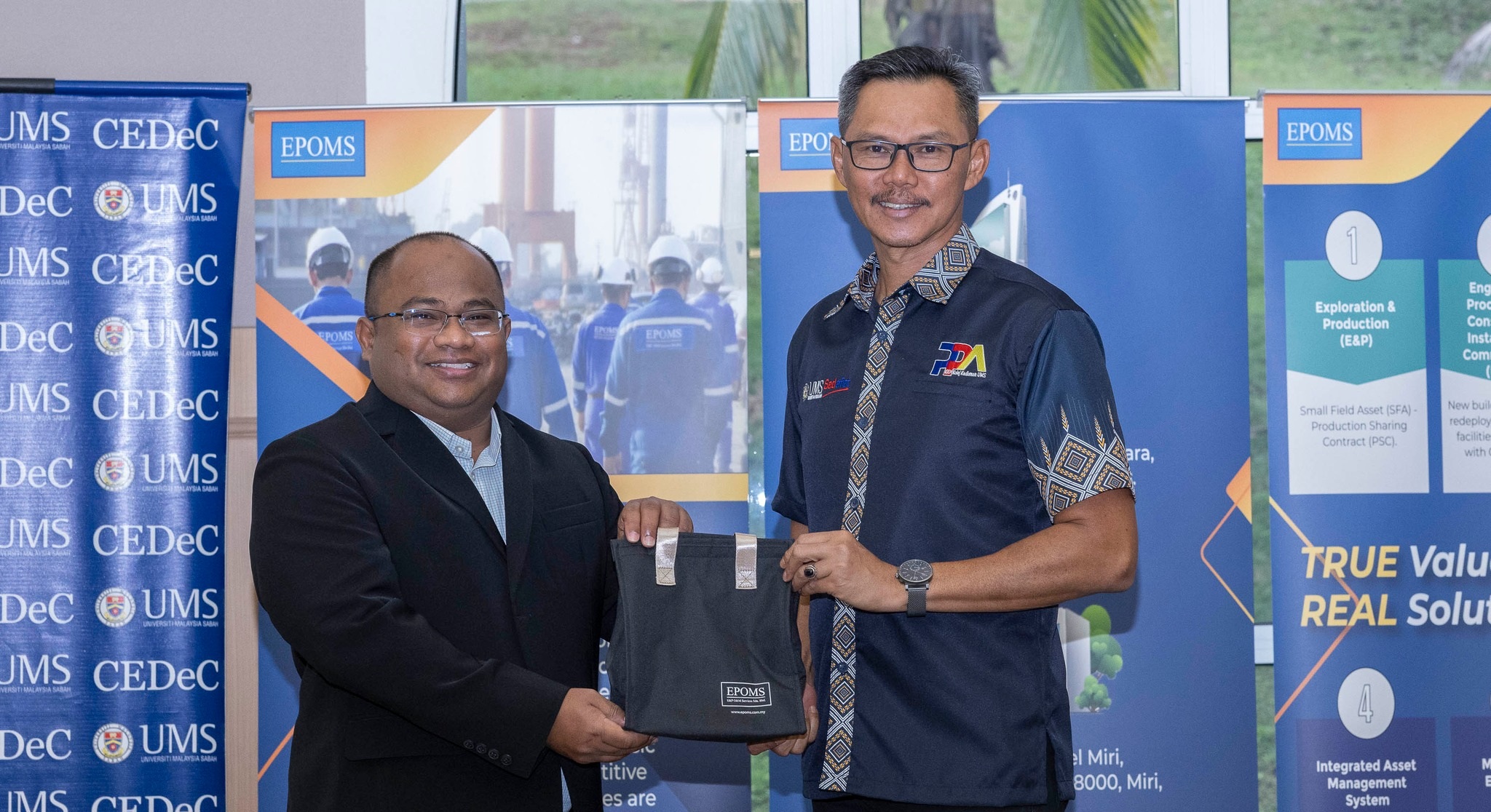
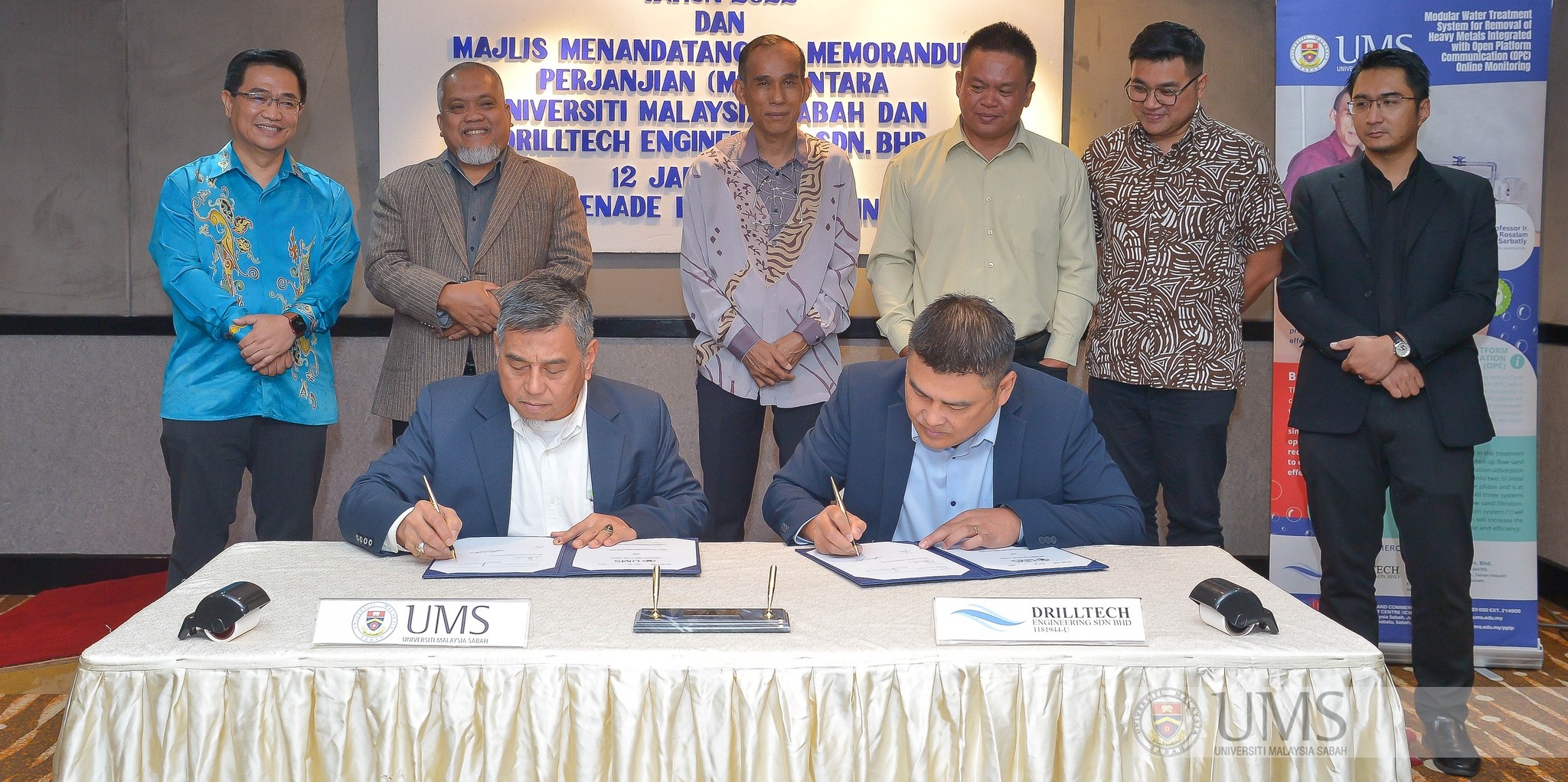
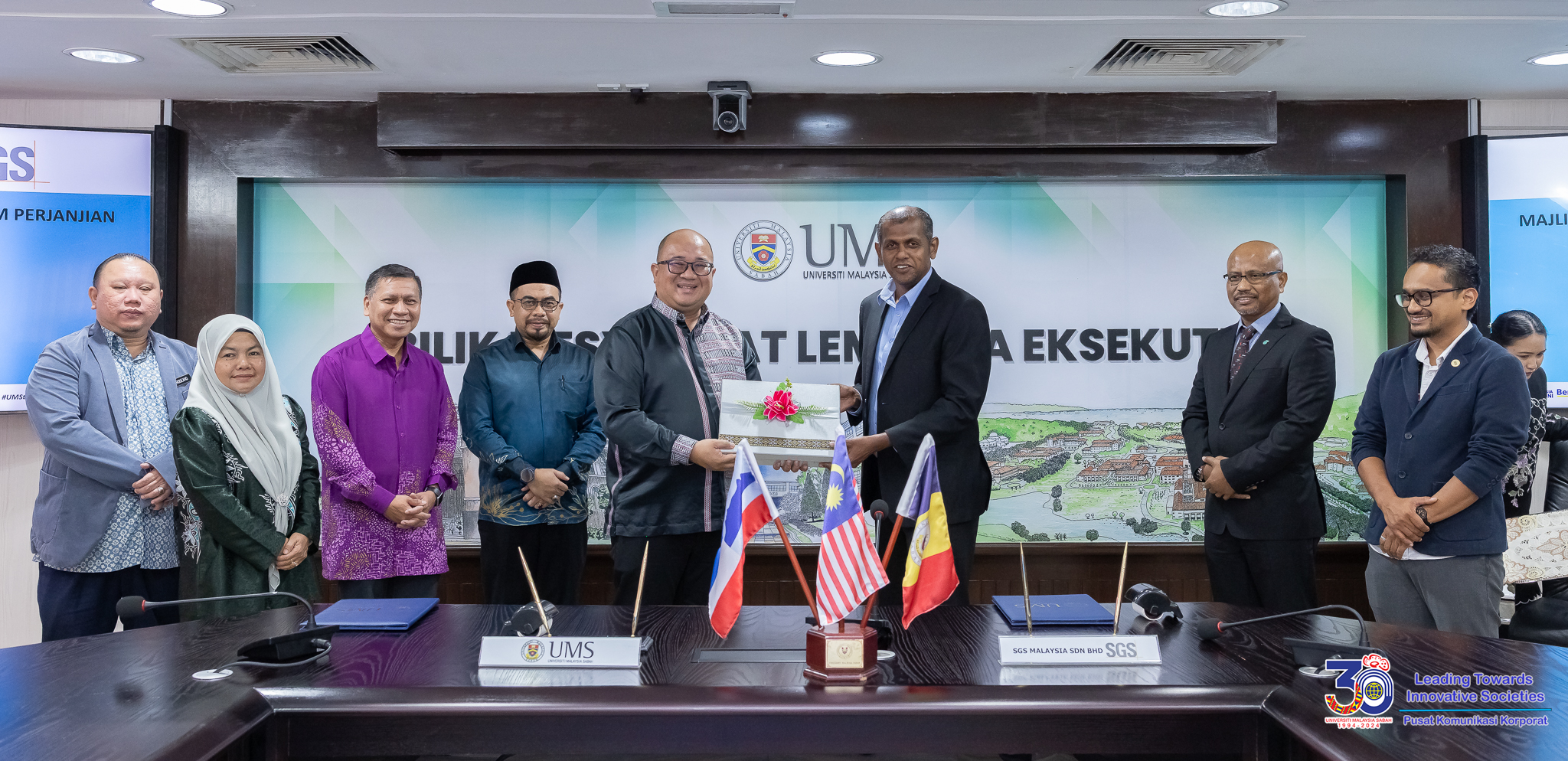
Universiti Malaysia Sabah (UMS) plays an increasingly strategic role in advancing Malaysia’s sustainable energy transition, particularly within Sabah, by actively providing direct technical services, research collaboration, consultancy, pilot development, capacity-building, and commercialization of clean-technology solutions to industries. In alignment with SDG 7: Affordable and Clean Energy, UMS bridges the knowledge-technology-industry gap through multidisciplinary expertise drawn from engineering, biotechnology, marine science, environmental science, computer science, economics, and sustainability management. Rather than only focusing on academic outputs, UMS functions as a solution provider, innovation partner, and technical service hub for industries pursuing energy-efficient systems, low-carbon production, and clean-energy commercialization. UMS’s engagement with industry reflects national, regional, and institutional priorities. At the global level, it aligns with UN SDG 7, SDG 9 (Innovation & Industry), and SDG 13 (Climate Action). Nationally, it supports Malaysia’s Low-Carbon Nation Pathway 2040, National Energy Transition Roadmap (NETR), and Sabah Energy Roadmap 2040, while locally ensuring that Sabah’s industrial and rural development benefits from applied clean-tech innovations. Within this context, UMS provides three primary categories of direct services to industry:
- (i) Technical R&D and Applied Technology Collaboration (e.g. electricity system monitoring, hydrogen & bioenergy development, process optimization, circular-waste valorisation)
- (ii) Consultancy, Pilot Testing and Knowledge Transfer (e.g. clean-energy workshops, energy-efficiency awareness & engineering testing)
- (iii)Commercialisation and Technology Licensing (e.g. industry-ready treatment systems, recovery systems, smart monitoring prototypes)
UNIVERSITI MALAYSIA SABAH
UMS Supporting Government in Clean Energy Policy
Universiti Malaysia Sabah (UMS) plays a significant national and state-level role in informing, advising, and supporting government agencies in the development of clean-energy and energy-efficient technology policies. Through formal partnerships, research contributions, data reporting, expert consultation, and participation in policy workshops, UMS actively strengthens Malaysia’s transition toward renewable energy and low-carbon development.
UMS–DOE Sabah Collaboration in Developing the Sabah Environmental Policy (SDP)
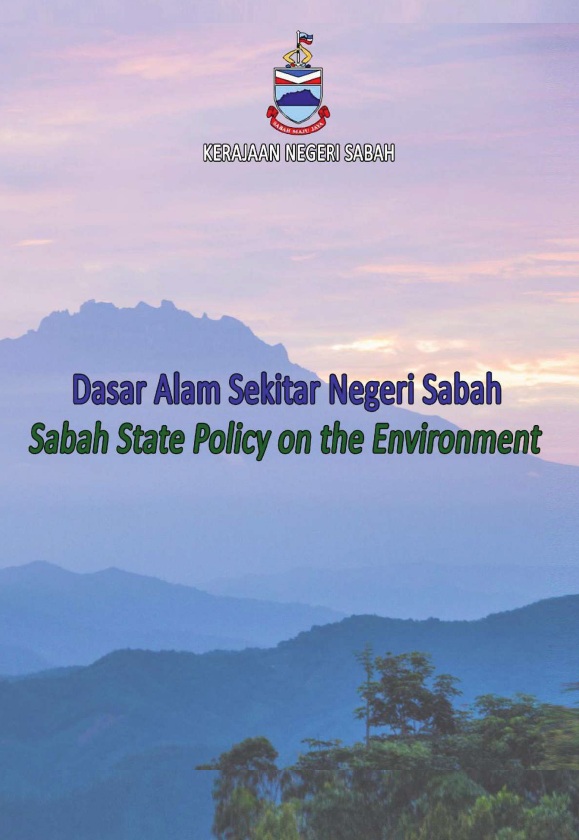
Universiti Malaysia Sabah (UMS) played a substantive role in supporting the Department of Environment (DOE Sabah) during the development, technical refinement, and early implementation of the Sabah Environmental Policy (Dasar Alam Sekitar Negeri Sabah), particularly in areas related to clean energy, carbon reduction, and energy-efficient technologies. Drawing on its research expertise in renewable energy, carbon accounting, environmental science, and climate resilience, UMS contributed scientific data, modelling outputs, and policy recommendations that strengthened the policy’s foundation in evidence-based decision-making. UMS provided DOE Sabah with carbon-emission baselines, energy-use data, and renewable-energy potential assessments derived from smart metering, building-level energy monitoring, and field studies. These datasets informed the policy’s chapters on low-carbon development, climate-change mitigation, and resource-efficiency strategies. UMS researchers also participated in DOE Sabah’s multi-stakeholder consultation workshops, delivering technical presentations on clean-energy transition pathways, building-efficiency standards (MS 1525:2014), and mitigation strategies that reduce reliance on fossil fuels. Through its Energy and Climate Change Management Committee (ECCMC), UMS supported DOE Sabah in drafting actionable approaches for:- • integrating solar adoption and microgrid solutions into rural electrification,
- • encouraging energy-efficient design in new and existing state buildings,
- • embedding carbon-monitoring systems into state environmental governance, and
- • strengthening public awareness on renewable energy through education and outreach.
Strengthening National Clean Energy Policy through Carbon Capture and Storage (CCS) Research
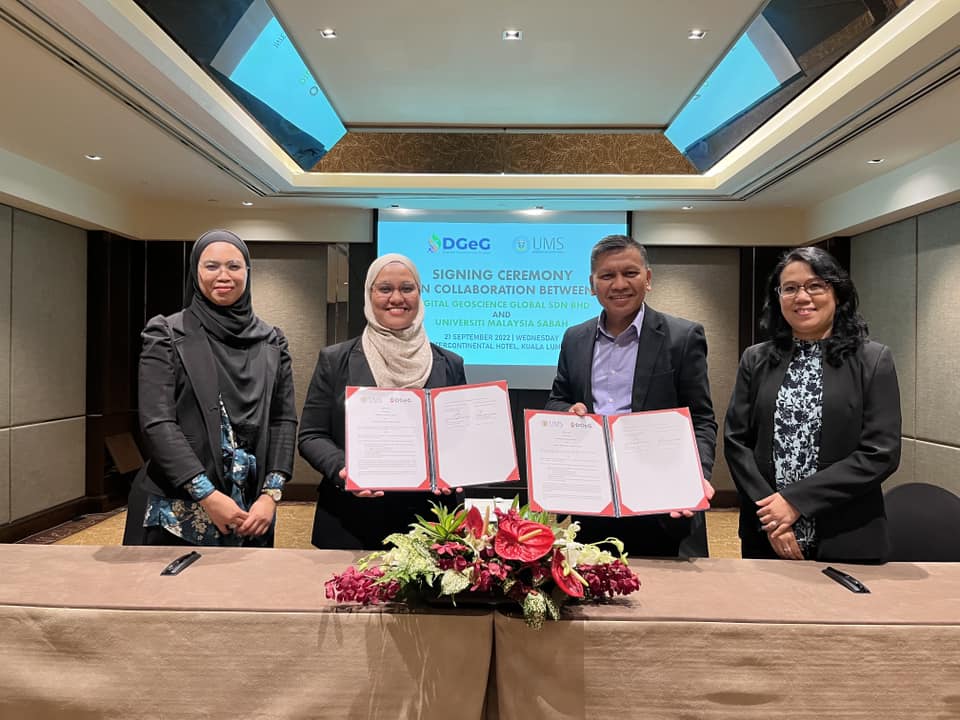
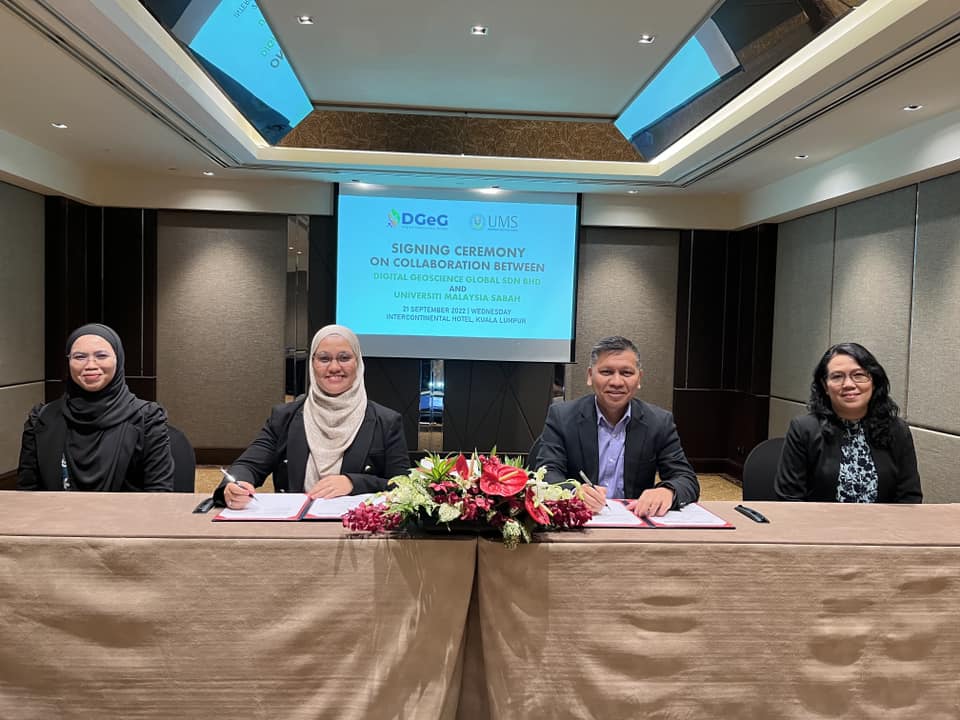
Universiti Malaysia Sabah (UMS) supports government decision-making in clean energy technology through its strategic collaboration with Digital Geoscience Global Sdn. Bhd. (DGeG). Through a Letter of Intent (LoI) signed on 21 September 2022, UMS and DGeG jointly established a national consortium to assess the potential of Carbon Capture and Storage (CCS) in Malaysia—an emerging energy-transition technology highlighted under the National Energy Transition Roadmap (NETR) and national GHG mitigation policies. UMS contributes scientific expertise in carbonate and clastic rock formations in Sabah, providing critical geological data that informs state and federal discussions on CCS feasibility, regulatory frameworks, and long-term carbon-reduction pathways. This research directly supports Malaysia’s efforts to decarbonise its industrial and energy sectors. Under the collaboration, UMS and DGeG expand joint academic and applied research activities, enabling UMS to supply the government with evidence-based insights on subsurface energy resources, seismic modelling, and digital geoscience technologies aligned with IR 4.0. These studies strengthen policy discussions related to clean-energy diversification, underground storage, and low-carbon energy systems. Through expert exchanges, professional training, staff attachments, and student internships, UMS ensures that government agencies and industry stakeholders have access to updated knowledge on sustainable geoscience practices, thereby informing future strategic directions in Malaysia’s energy-efficient and low-carbon development planning. The collaboration supports multiple SDGs—including SDG 7 (Clean Energy), SDG 11 (Sustainable Cities), SDG 13 (Climate Action), and SDG 17 (Partnerships)—by fostering a strong science–industry platform that feeds directly into policy conversations at state and national levels. Through joint consultations, publications, and technology-transfer activities, UMS provides the government with specialised expertise that guides cleaner, safer, and more efficient energy technologies. This partnership demonstrates UMS’s role as a national contributor in shaping the clean-energy policy landscape, enabling Malaysia to transition toward a more sustainable and climate-resilient energy future.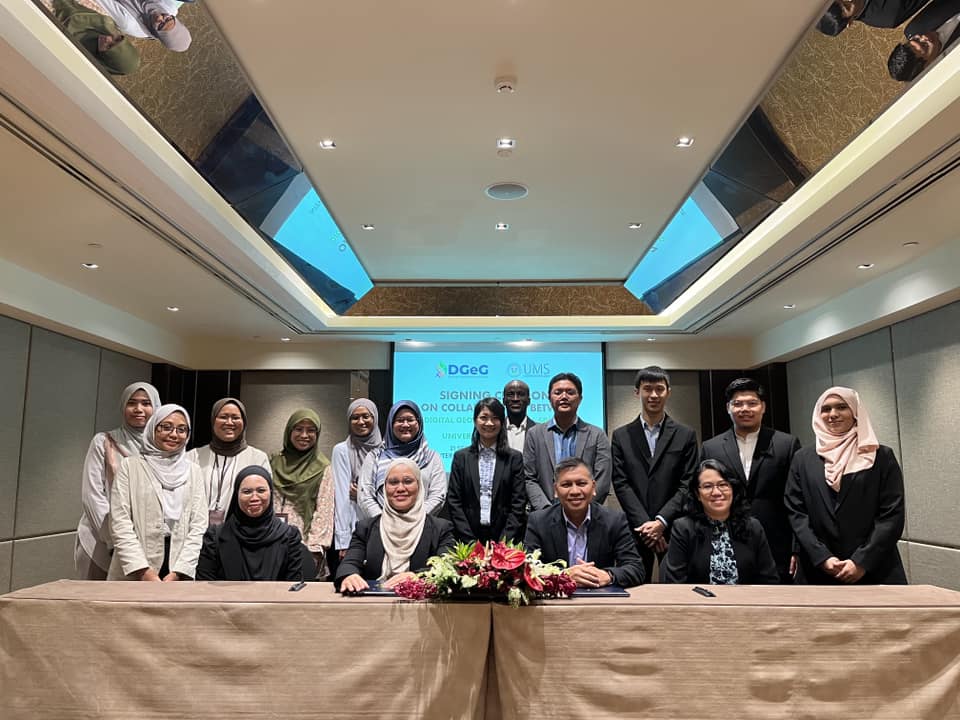
UMS–WWF Seminar on EU Deforestation Law Strengthens Sustainable Supply Chains and Global Energy Policy Alignment
Universiti Malaysia Sabah (UMS), in strategic collaboration with WWF-Malaysia, convened the EU Deforestation Regulation (EUDR) Seminar to deepen understanding of how Europe's new forest-risk commodity legislation will impact Malaysian supply chains. The event brought together key stakeholders—including representatives from the Sabah Forestry Department, WWF experts, and academic researchers—to explore critical issues such as traceability, sustainable sourcing, and legal compliance for key commodities like palm oil, cocoa, and timber. By fostering open dialogue, the seminar aimed to equip producers and policymakers in Sabah with the tools needed to meet international sustainability benchmarks while safeguarding local livelihoods and ecosystems. Beyond forest governance, the seminar also underscored the broader policy implications for Malaysia’s clean energy transition. Sustainable commodity sourcing, particularly in palm oil and timber, plays a crucial role in shaping responsible bioenergy markets and land-use strategies. By aligning local practices with global regulations like the EUDR, Sabah strengthens its contribution to SDG 7—ensuring energy systems are not only clean and affordable, but also free from deforestation-linked risks. The seminar’s outcomes support Malaysia’s broader commitment to climate-smart development and position Sabah as a leader in ethical trade and low-carbon energy pathways. Read MoreUMS–UN -UMS Leads Global Policy Collaboration for Clean Energy and Climate Resilience in Southeast Asia
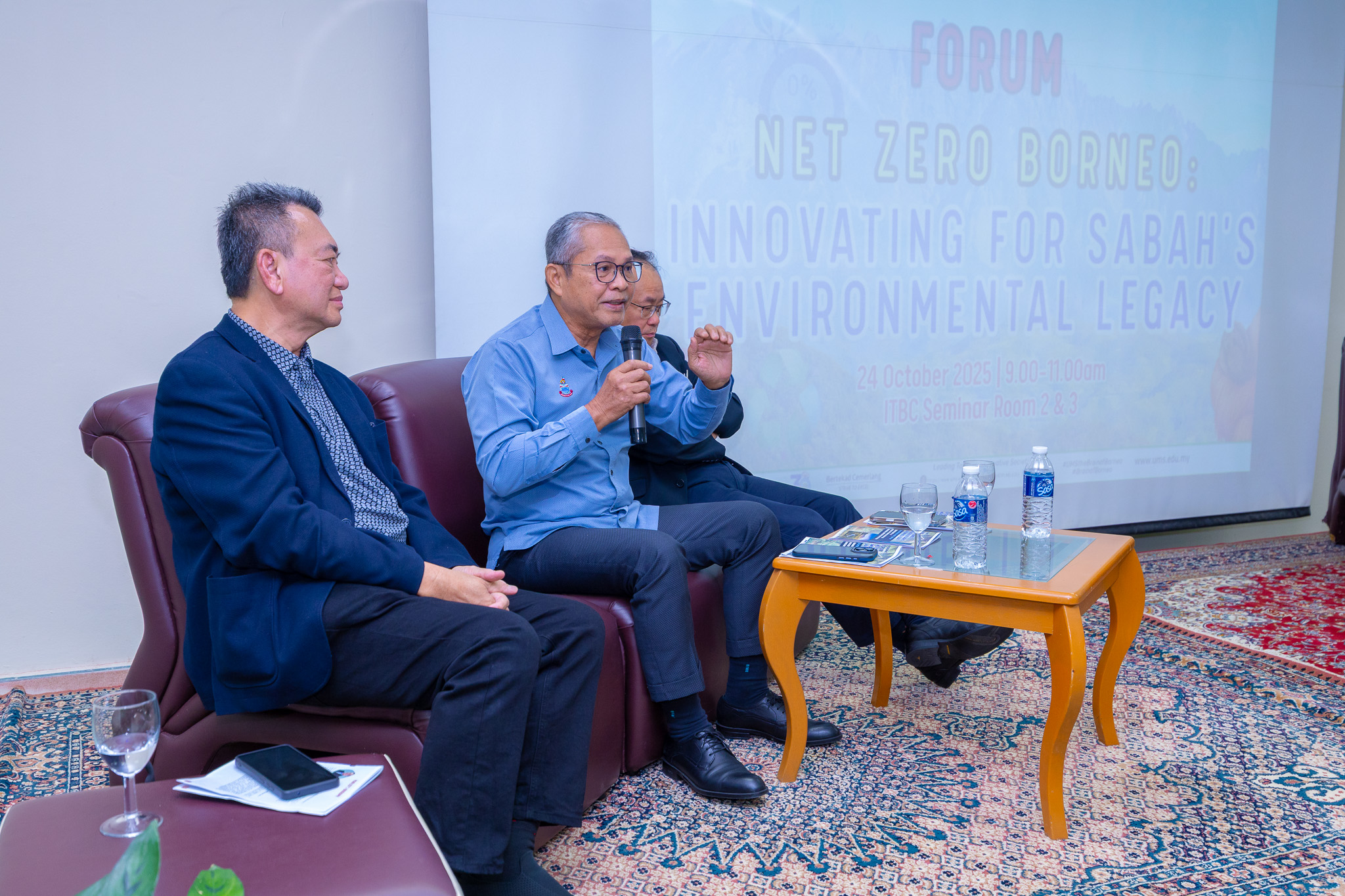
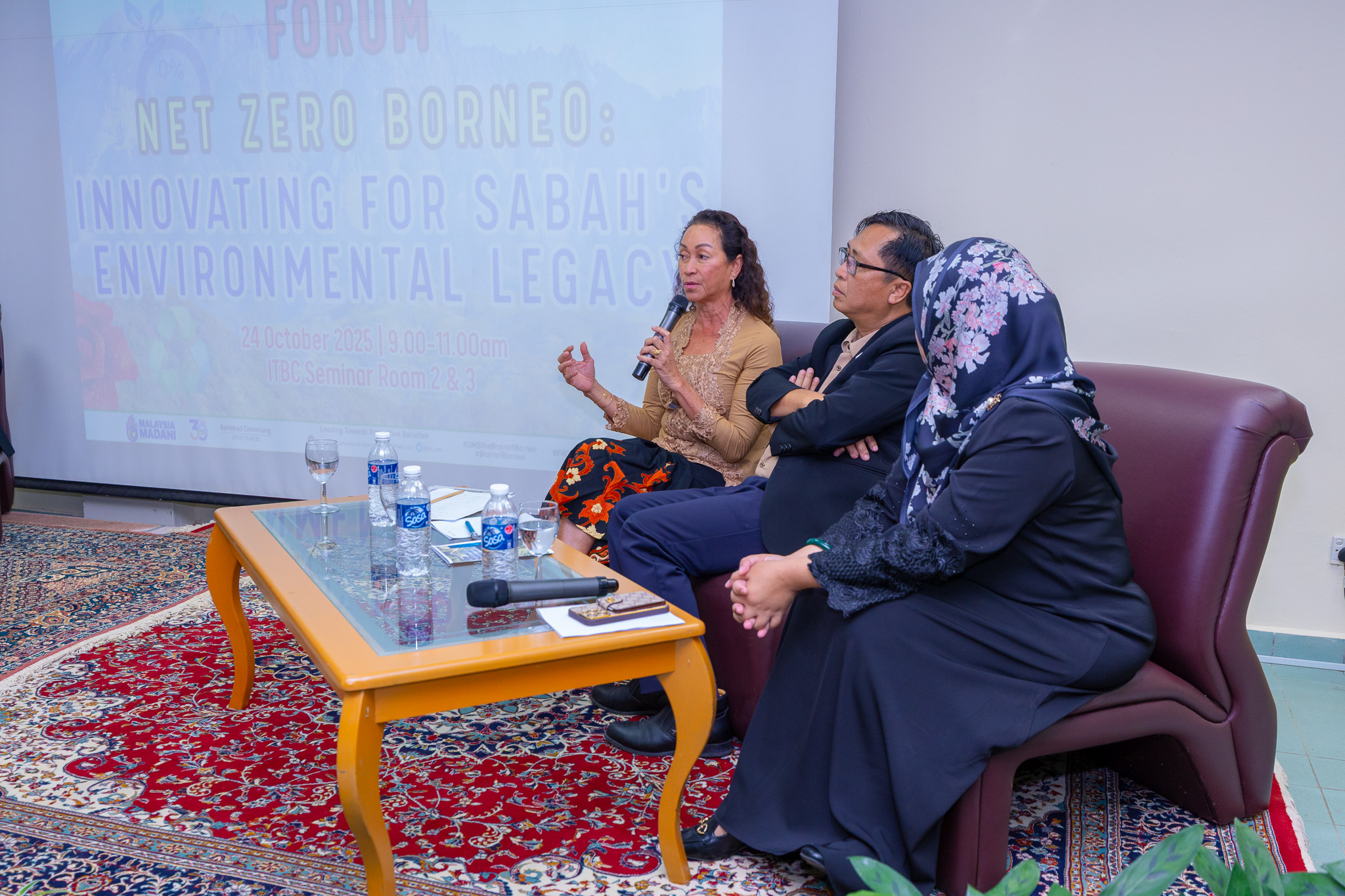
Organised by the Institute for Tropical Biology and Conservation (ITBC), Universiti Malaysia Sabah (UMS), the Net Zero Borneo Forum brought together international and regional stakeholders to accelerate Borneo’s transition toward climate-resilient, low-carbon development. With expert contributions from the UN Sustainable Development Solutions Network (SDSN) Asia, the Sabah Maju Jaya Secretariat, Sabah Forestry Department, and Kinabalu UNESCO Global Geopark, the forum explored blue economy opportunities, forest-based carbon solutions, and circular-economy innovations. The event positioned UMS as a key convener in global environmental and energy dialogues and aligned its efforts with UNESCO’s Education for Sustainable Development (ESD) and other multilateral climate-action frameworks. Crucially, the forum’s cross-sector dialogue underscored the importance of global partnerships in achieving SDG 7—ensuring access to affordable, reliable, sustainable, and modern energy. Participants discussed how integrated strategies—linking forest conservation, renewable energy, and sustainable infrastructure—can help Borneo decarbonise while protecting ecological and community resilience. By fostering alignment between regional energy planning and global climate policy, UMS is helping shape a clean energy future not only for Borneo, but as a model for tropical regions worldwide working toward Net Zero emissions and energy justice.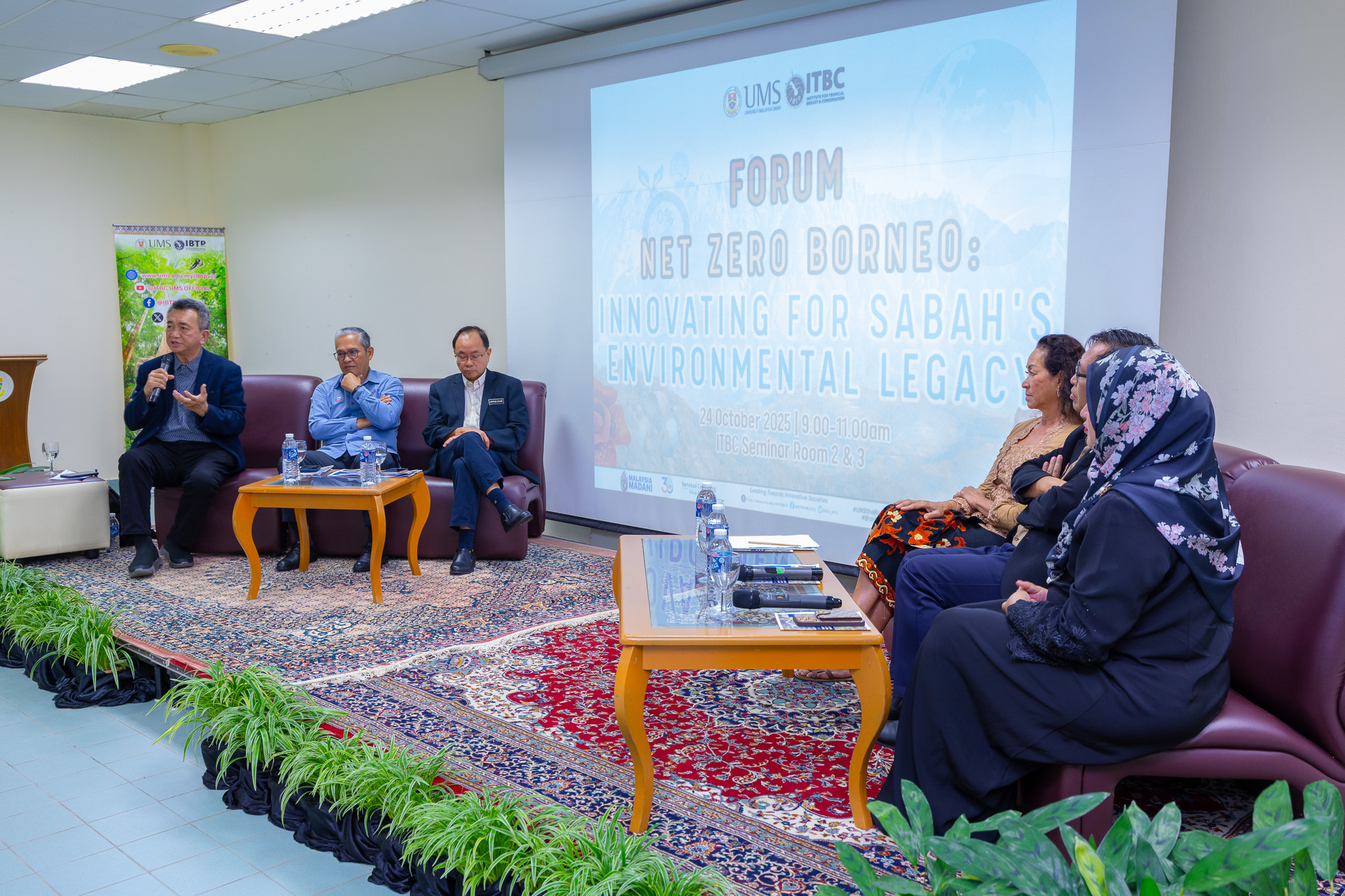
UMS–WWF Global Collaboration Driving Climate-Informed Energy Policy for SDG 7 in Malaysia’s Coastal Regions
Universiti Malaysia Sabah (UMS), in collaboration with WWF Global, plays a pivotal role in advancing climate-risk science to inform national and subnational energy policy aligned with Sustainable Development Goal 7 (Affordable and Clean Energy). A key milestone of this partnership is the Climate Change Vulnerability Assessment of Tun Mustapha Park (TMP)—Malaysia’s largest marine protected area—undertaken with federal and state agencies. This high-resolution study models sea-level rise, coastal erosion, temperature changes, and extreme weather impacts to generate actionable data for decision-makers. Government agencies including the Ministry of Natural Resources and Environmental Sustainability (NRECC), Sabah Parks, and the Department of Environment Sabah are leveraging these insights to guide climate-resilient coastal infrastructure, renewable energy deployment in island communities, and decentralised clean energy planning. The integration of robust climate data into policy ensures that energy development in vulnerable coastal and marine areas is both adaptive and sustainable. A companion study, the Climate Change Vulnerability Assessment of Lahad Datu’s Coastline, further supports evidence-based planning for energy-relevant infrastructure such as rural electrification systems, water treatment plants, and jetties. By mapping climate-exposed hotspots and identifying risks to grid stability and fossil-fuel reliance, the assessment informs strategic investments in solar hybrid systems, microgrids, and energy-efficient infrastructure across Sabah’s coastal regions. These science-based interventions are increasingly embedded into government planning documents, coastal zone guidelines, and climate adaptation strategies. They directly support national initiatives such as the National Energy Transition Roadmap (NETR), the Low Carbon Cities Framework, and Malaysia’s Net Zero 2050 target. Through its research partnership with WWF, UMS exemplifies how academic institutions can translate environmental science into policy pathways that future-proof Malaysia’s energy systems. This collaboration not only strengthens resilience in remote and vulnerable communities but also accelerates the country's clean energy transition in line with SDG 7—ensuring access to affordable, reliable, sustainable, and modern energy for all. Read More on Climate Change Vulnerability Assessment of Tun Mustapha Park (TMP) Here Read More on Climate Change Vulnerability Assessment of Lahad Datu’s Coastline in SabahInnovating a Low-Carbon Future
UMS’s Strategic Ecosystem for Clean-Tech Start-Ups and Sustainable Energy Solutions
Universiti Malaysia Sabah (UMS) plays a proactive and multi-faceted role in supporting start-ups that drive the transition toward a low-carbon economy and clean technology innovation. Through its strategic institutional framework—anchored by the Centre for Innovation and Commercialisation (PPIP), the Career and Entrepreneurship Development Centre (CEDEC), and UMS Holdings Sdn. Bhd.—UMS actively nurtures entrepreneurial ecosystems that integrate sustainability, innovation, and commercial viability. These efforts are further amplified through strategic partnerships, grant mechanisms, and flagship incubation programs that position UMS as a regional catalyst for green entrepreneurship and climate-smart technologies.
Institutional Ecosystem Supporting Green Innovation
UMS’s support for clean-tech and low-carbon start-ups is embedded within its broader mission of promoting sustainable development and economic transformation in East Malaysia, particularly in Sabah and Borneo. Three main entities spearhead this commitment:- The Centre for Innovation and Commercialisation (PPIP) is responsible for managing intellectual property (IP), technology transfer, and the commercialization of research outputs. PPIP ensures that university-generated innovations—particularly those in renewable energy, sustainable materials, and climate adaptation—are transferred to industry or developed into scalable start-ups.
- The Career and Entrepreneurship Development Centre (CEDEC) focuses on capacity-building for student entrepreneurs and local communities. It acts as an incubation hub for early-stage ventures focused on clean energy and circular economy models.
- UMS Holdings Sdn. Bhd., the university’s commercial arm, bridges the gap between academia and industry. It supports spin-offs and start-ups with business advisory services, access to funding networks, and strategic scaling pathways, especially in energy and climate innovation sectors.
Incubation of Clean-Tech and Climate Start-Ups
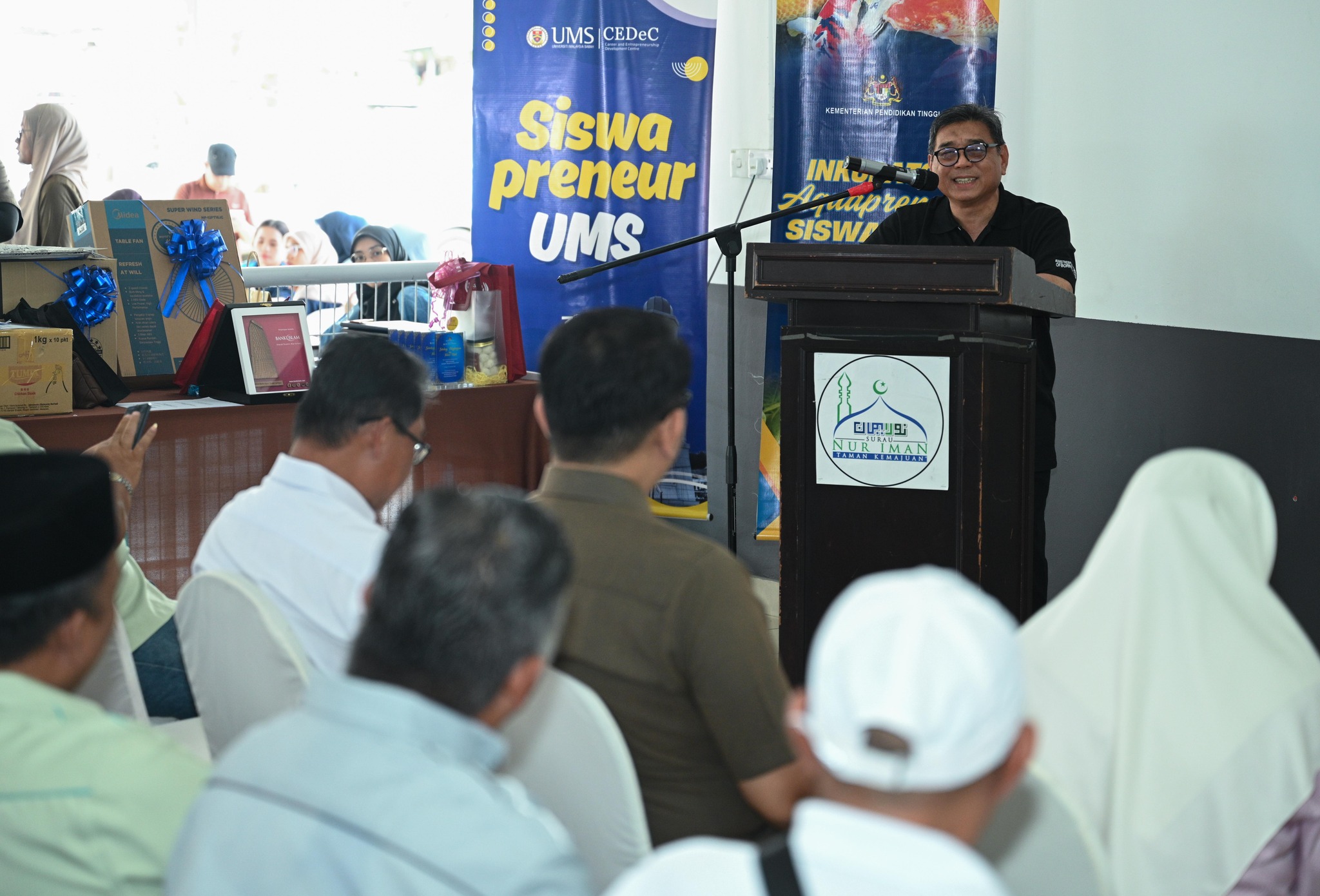
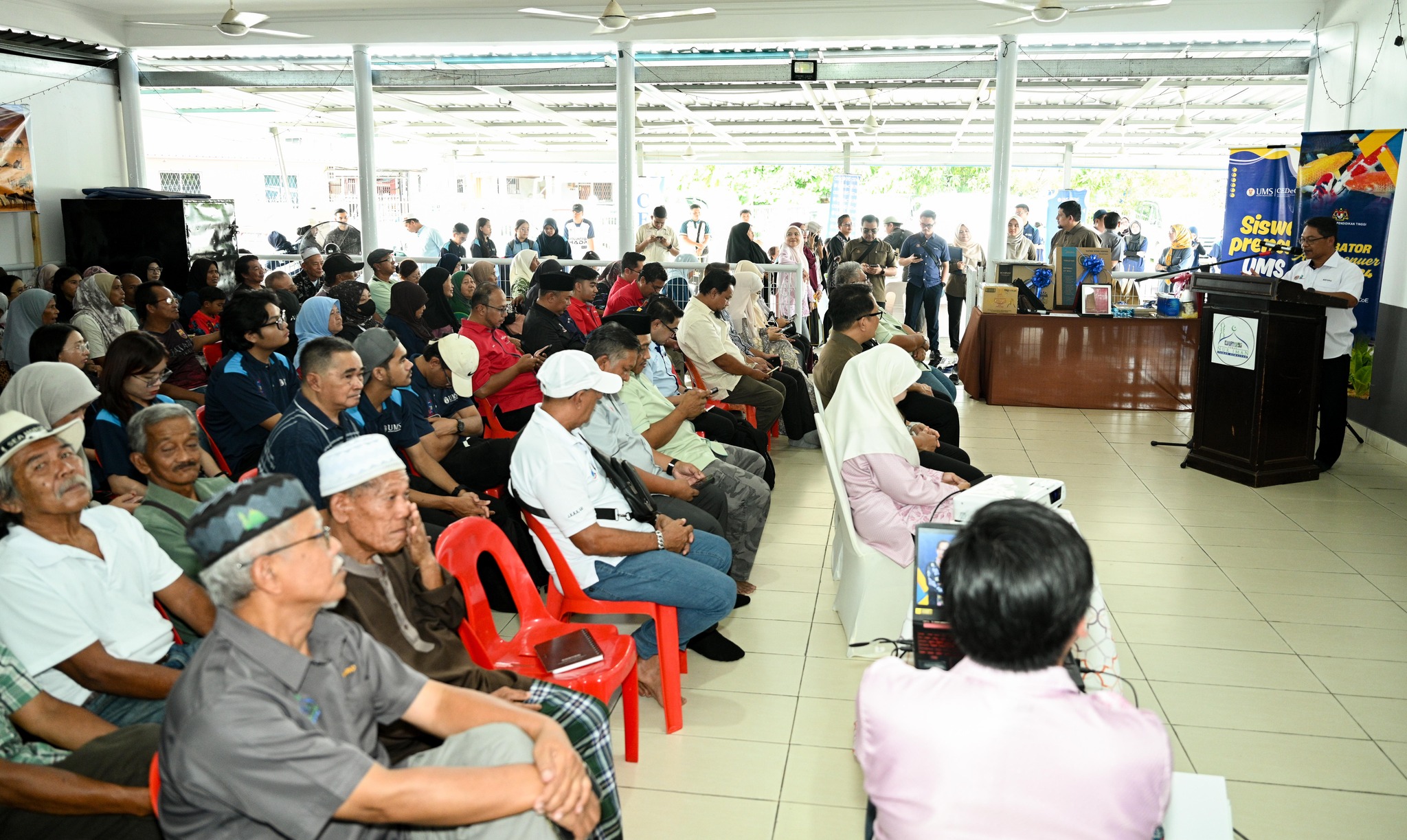
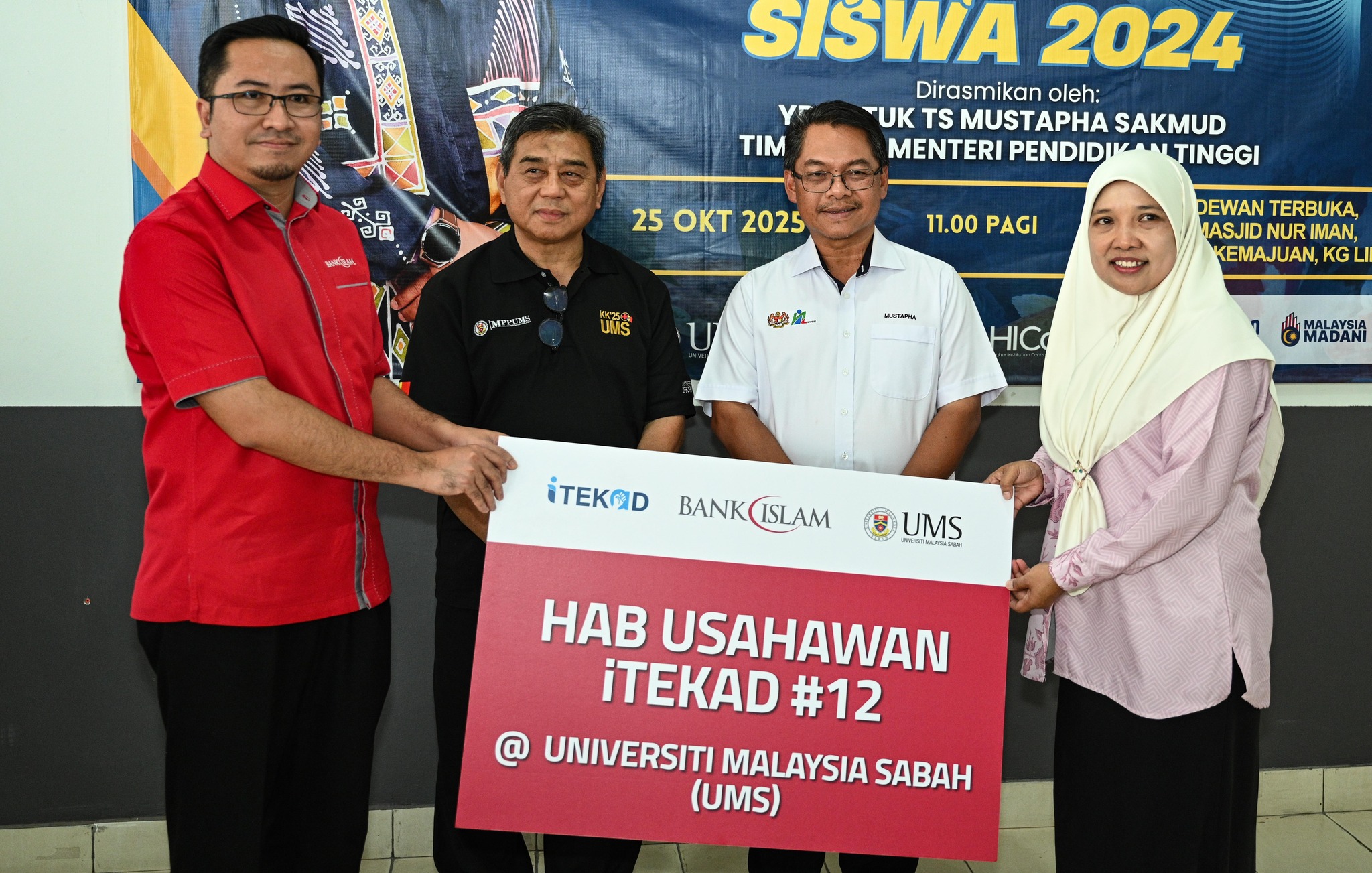
UMS, through CEDEC and its partner entities, incubates a variety of start-ups and community-based ventures that tackle key challenges of the low-carbon transition. These ventures are developed within a supportive environment that provides access to physical infrastructure, mentorship, seed funding, and research expertise. Examples of focus areas include:- Solar Technology: UMS supports innovations in solar-powered systems, such as efficient food and seafood drying solutions tailored to rural and coastal communities. The INSOLER Solar Dryer, a flagship project, exemplifies this approach by offering a low-cost, clean-energy alternative for post-harvest processing, reducing emissions from diesel-based drying systems.
- SolarBio-waste Upcycling: UMS promotes circular economy ventures that convert agricultural and organic waste into high-value products. Start-ups are developing bio-composites, organic fertilizers, and biodegradable packaging materials using palm waste, seaweed, and food waste, thereby reducing methane emissions from landfill disposal.
- SolarCarbon Capture and Sustainable Materials: University-led research is being commercialized into start-up ventures exploring low-cost carbon-capture technologies using natural adsorbents and nanomaterials. These innovations have potential applications in industry emissions mitigation and building materials.
- SolarSustainable Aquaculture: Recognizing the importance of food-energy-water nexus, UMS incubates ventures in eco-aquaculture using solar-powered systems, low-impact feeds, and closed-loop farming models that minimize carbon and nutrient footprints.
Grant Mechanisms and Strategic Partnerships
To provide funding and technical assistance, UMS leverages national and regional funding instruments aligned with Malaysia’s climate and innovation agendas. A major initiative is the Komuniti@UniMADANI Grant, with a total allocation of RM3.43 million (2023–2025), which supports community-based innovation aligned with low-carbon development. This grant empowers researchers, students, and local entrepreneurs to co-develop prototypes and solutions that address real-world environmental challenges.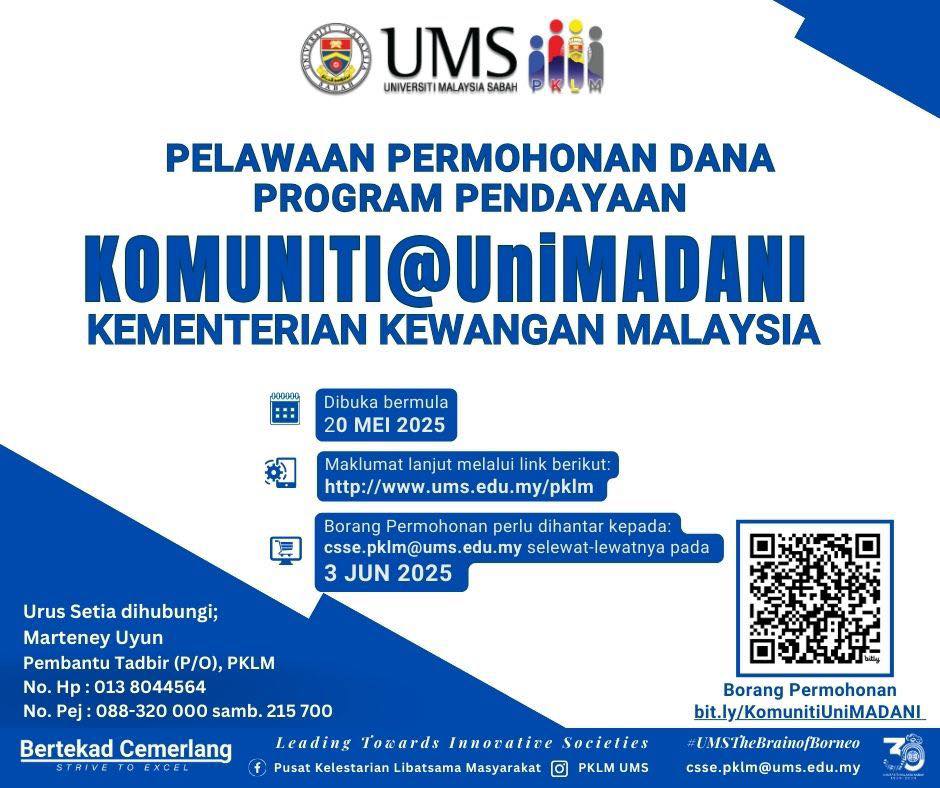
Flagship Ventures and Market Integration
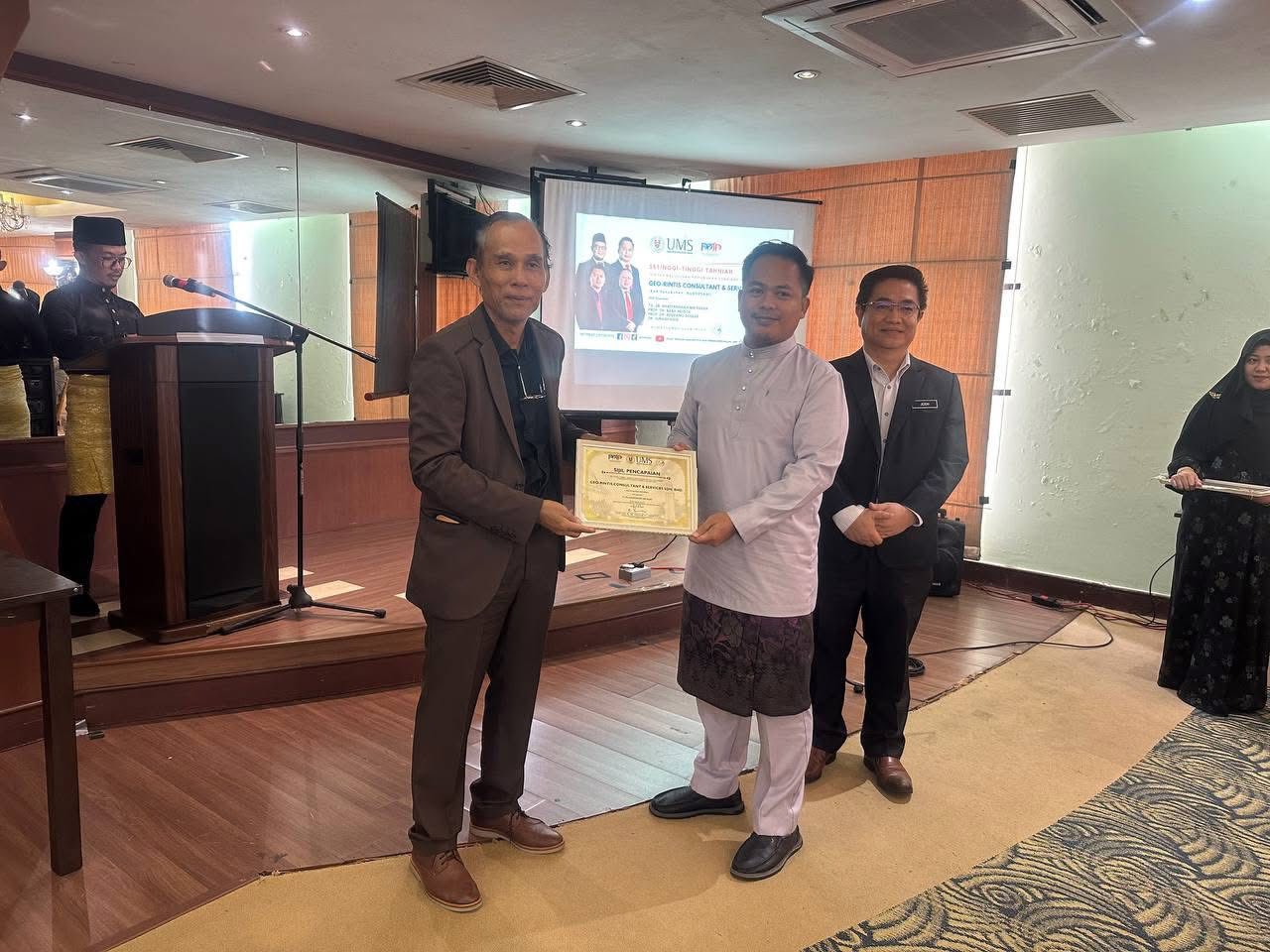
UMS has successfully supported several start-ups that have made significant progress toward commercialization and market impact. Two flagship examples include:- INSOLER Solar Dryer: Developed under UMS’s Sustainable Solutions (SUSO) Policy, INSOLER addresses post-harvest losses in fisheries and agriculture by offering decentralized, solar-powered drying systems. These systems reduce dependence on fuel-based methods, lower greenhouse gas emissions, and preserve nutritional value. The venture has gained interest from rural cooperatives and regional governments for widespread deployment in East Malaysia and potentially across ASEAN.
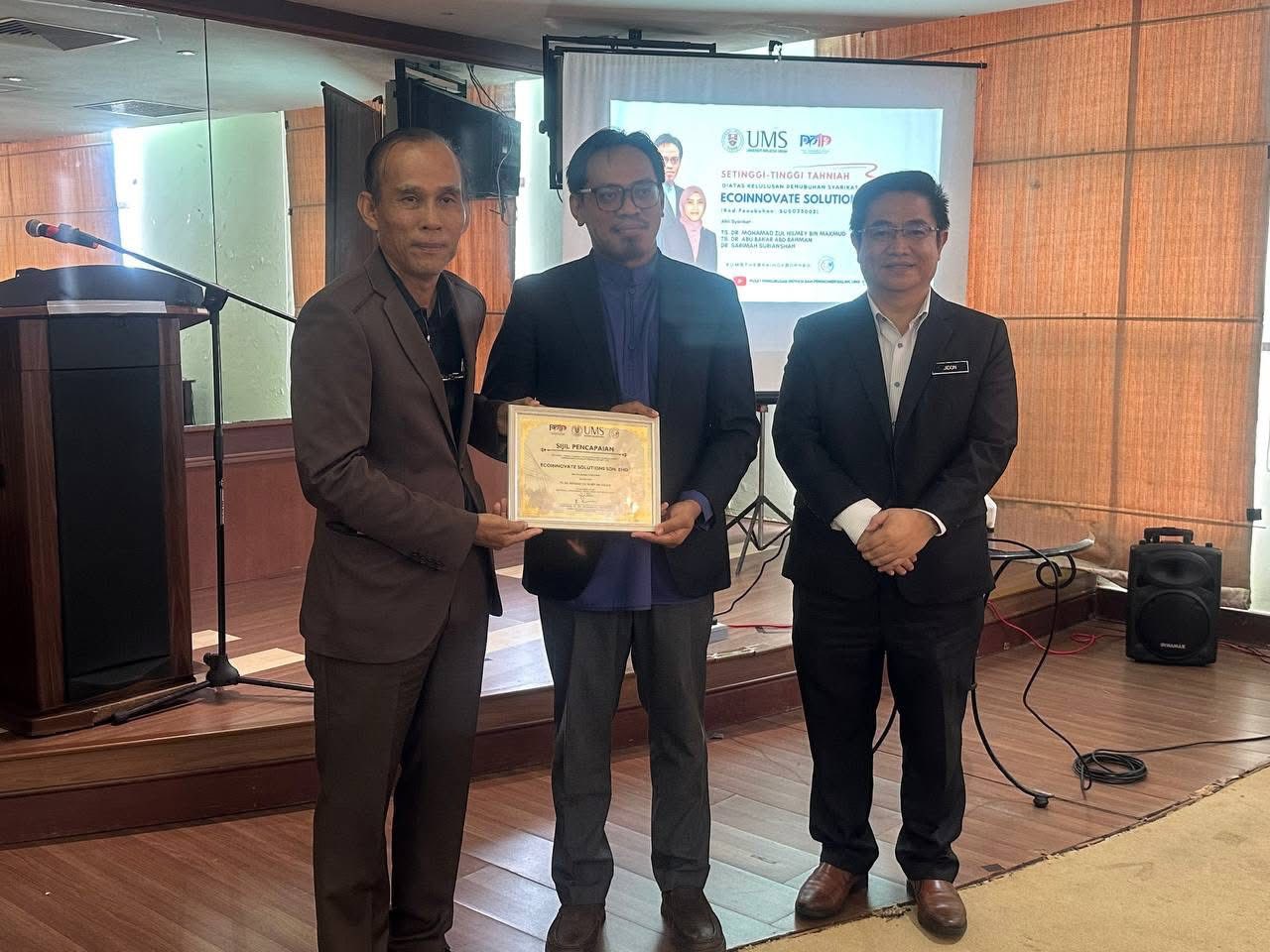
- EcoInnovate Solutions Sdn. Bhd.: A clean-tech company incubated under UMS’s green innovation ecosystem, this start-up specializes in energy-efficient industrial processes, carbon-reducing technologies for SMEs, and smart biomass systems. Its products are tailored for industries aiming to meet Malaysia’s carbon-reduction commitments under the Nationally Determined Contributions (NDCs).
- These start-ups demonstrate how UMS supports the full innovation pipeline—from R&D and prototyping to market testing and policy engagement.
SDG 7 Progress Report : Powering Change: Advancing Clean Energy Access, Innovation, and Education Across Borneo in 2024
In 2024, Universiti Malaysia Sabah (UMS) accelerated its leadership in clean energy through campus-wide solar integration, energy-efficient building upgrades, fossil fuel divestment, and rural electrification projects aligned with SDG 7. Flagship initiatives—including the 10.5 MWp solar PV project, community hybrid systems in Long Mio, and energy education programmes like INSOLER and SciMaTech—empowered local communities with sustainable access and skills. Guided by structured carbon governance and national policies, UMS achieved a 12% energy intensity reduction while building a low-carbon future grounded in innovation, education, and equity.