

30+
Years of Servicesince 1994
 Empowering Lives. Breaking Poverty. Building a Sustainable Future.
Financial Assistance for Education
The United Nations Sustainable Development Goal 1 (SDG 1) calls for an end to poverty in all its forms everywhere—ensuring equal access to resources, services, and opportunities. Universiti Malaysia Sabah (UMS) upholds this global mission by making higher education accessible, affordable, and empowering for students from B40 families, vulnerable communities, and disadvantaged backgrounds. UMS recognises that poverty is multidimensional: it affects learning opportunities, access to essential needs, digital readiness, and long-term resilience. Through a holistic financial support ecosystem, the university strengthens social mobility, uplifts rural communities, and ensures that every Sabahan youth—regardless of socioeconomic background—has the opportunity to learn, succeed, and thrive. UMS’s model integrates financial assistance, food security, transportation support, entrepreneurship development, welfare schemes, and external sponsorship facilitation, creating a sustainable and inclusive educational pathway that directly contributes to SDG 1, SDG 4, and SDG 10.Universiti Malaysia Sabah
Education Access & Financial Empowerment
Since its establishment, Universiti Malaysia Sabah (UMS) has championed the belief that education is the most powerful instrument to break the cycle of poverty. Guided by the principles of inclusivity, equality, and opportunity, UMS ensures that no qualified student is left behind due to financial limitations. Through a holistic support ecosystem encompassing tuition aid, food security, transportation, and mentorship, the university empowers B40 families, first-generation learners, and rural youth to pursue tertiary education with dignity and confidence. These initiatives, many of which began as early as 2018, have progressively expanded in scope and reach, demonstrating UMS’s unwavering commitment to SDG 1 — ending poverty in all forms and ensuring equal access to economic resources and education. Together, they create a sustainable pathway for vulnerable groups in Sabah to uplift themselves through higher education and social mobility.
- - Bantuan Sara Hidup (Living Allowance Assistance): provides basic financial support for daily expenses to students in hardship.
- - Bantuan Khairat Kematian (Bereavement Fund): offers compassionate financial assistance to affected students or their families.
- - Bantuan Kesihatan (Health Aid): supports students in covering medical or hospitalization costs.
- - Bantuan Kecemasan (Emergency Aid): provides rapid financial relief for unforeseen crises.
- - Insurans Pelajar (Student Insurance): ensures all students are covered under the university’s collective protection scheme.
UMS Financial Assistance and Cost-Sharing Scheme
Universiti Malaysia Sabah (UMS) upholds its commitment to inclusive and affordable education through a robust financial assistance and cost-sharing scheme designed to ease the financial burden on students from low-income and disadvantaged backgrounds. This initiative ensures that no qualified student is denied higher education due to economic hardship, aligning directly with SDG 4: Quality Education and SDG 10: Reduced Inequalities.
At the undergraduate level, the Malaysian Government subsidises between 86% and 95% of total programme costs, depending on the field of study. Students in Science and Information Technology programmes pay an average of RM 8,580, while the government covers RM 61,232 (87.7% of total cost). Similarly, Arts students contribute RM 6,930, with 86.2% of expenses funded by the government. More intensive programmes such as Engineering, Medicine, and Nursing receive even higher levels of support, where the government bears between 86% and 95% of total educational costs—covering tuition, laboratory usage, clinical training, and research supervision fees.
At the postgraduate level, UMS maintains strong financial accessibility. For Master’s students, the government subsidises between 79% and 90% of programme costs, while PhD candidates receive between 75% and 91% support. For example, a PhD student in Science and Information Technology contributes only RM 10,802, compared to RM 77,310 borne by the government.
This extensive subsidy framework—combined with additional support mechanisms such as the Program Siswa Sulung UMS, Bantuan Sara Hidup Mahasiswa, and Tabung Prihatin UMS—ensures equitable academic opportunity and progression. Through continuous collaboration with national agencies and private sponsors, UMS reinforces its mission to democratise education and foster upward social mobility. The scheme not only reduces financial inequality but also strengthens retention and graduation rates, particularly among students from B20 and B40 households.
UMS Undergraduate Program Cost Distribution (RM)
| Program | Cost Borne By Low-Income Student (RM) | Cost Borne By Government (RM) | Total Cost (RM) | Percentage of Cost Borne by Government (%) |
|---|---|---|---|---|
| Science and Information Technology | 8,580.00 | 61,232.00 | 69,812.00 | 87.7% |
| Arts | 6,930.00 | 43,348.00 | 50,278.00 | 86.2% |
| Engineering | 9,680.00 | 60,132.00 | 69,812.00 | 86.1% |
| Medicine | 13,330.00 | 233,590.00 | 246,920.00 | 94.6% |
| Nurse | 11,380.00 | 235,540.00 | 246,920.00 | 95.4% |
UMS Postgraduate (Master – Full Time, 2 Semesters) Cost Distribution (RM)
| Program | Cost Borne By Low-Income Student (RM) | Cost Borne By Government (RM) | Total Cost (RM) | Percentage of Cost Borne by Government (%) |
|---|---|---|---|---|
| Science and Information Technology | 5,771.00 | 38,285.00 | 44,056.00 | 86.9% |
| Arts | 5,221.00 | 19,744.00 | 24,965.00 | 79.1% |
| Engineering | 5,771.00 | 38,285.00 | 44,056.00 | 86.9% |
| Medicine | 5,771.00 | 52,096.00 | 57,867.00 | 90.0% |
UMS Postgraduate (PhD – Full Time, 4 Semesters) Cost Distribution (RM)
| Program | Cost Borne By Low-Income Student (RM) | Cost Borne By Government (RM) | Total Cost (RM) | Percentage of Cost Borne by Government (%) |
|---|---|---|---|---|
| Science and Information Technology | 10,802.00 | 77,310.00 | 88,112.00 | 87.7% |
| Arts | 9,702.00 | 40,228.00 | 49,930.00 | 80.6% |
| Engineering | 10,802.00 | 77,310.00 | 88,112.00 | 75.5% |
| Medicine | 10,802.00 | 104,932.00 | 115,734.00 | 90.7% |
UMS Program MENITI Kasih
Launched in 2013, Program MENITI Kasih is one of Universiti Malaysia Sabah’s (UMS) flagship initiatives dedicated to expanding access to higher education for students from B40 (Bottom 40%)households income groups and underprivileged families. The programme provides a second-chance pathway for deserving Sabah students who were not initially offered admission into public universities — ensuring that financial hardship or lack of opportunity never becomes a barrier to higher education. Through academic bridging, preparatory guidance, and socio-emotional support, the initiative empowers students to enter, adapt, and succeed in university life.
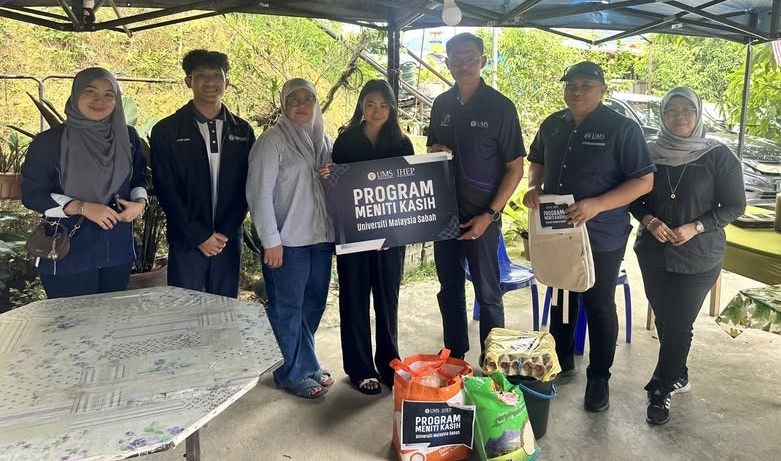
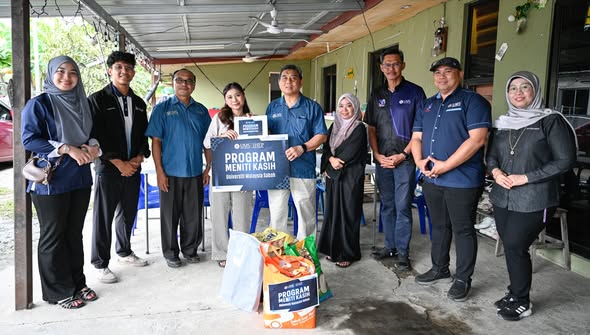
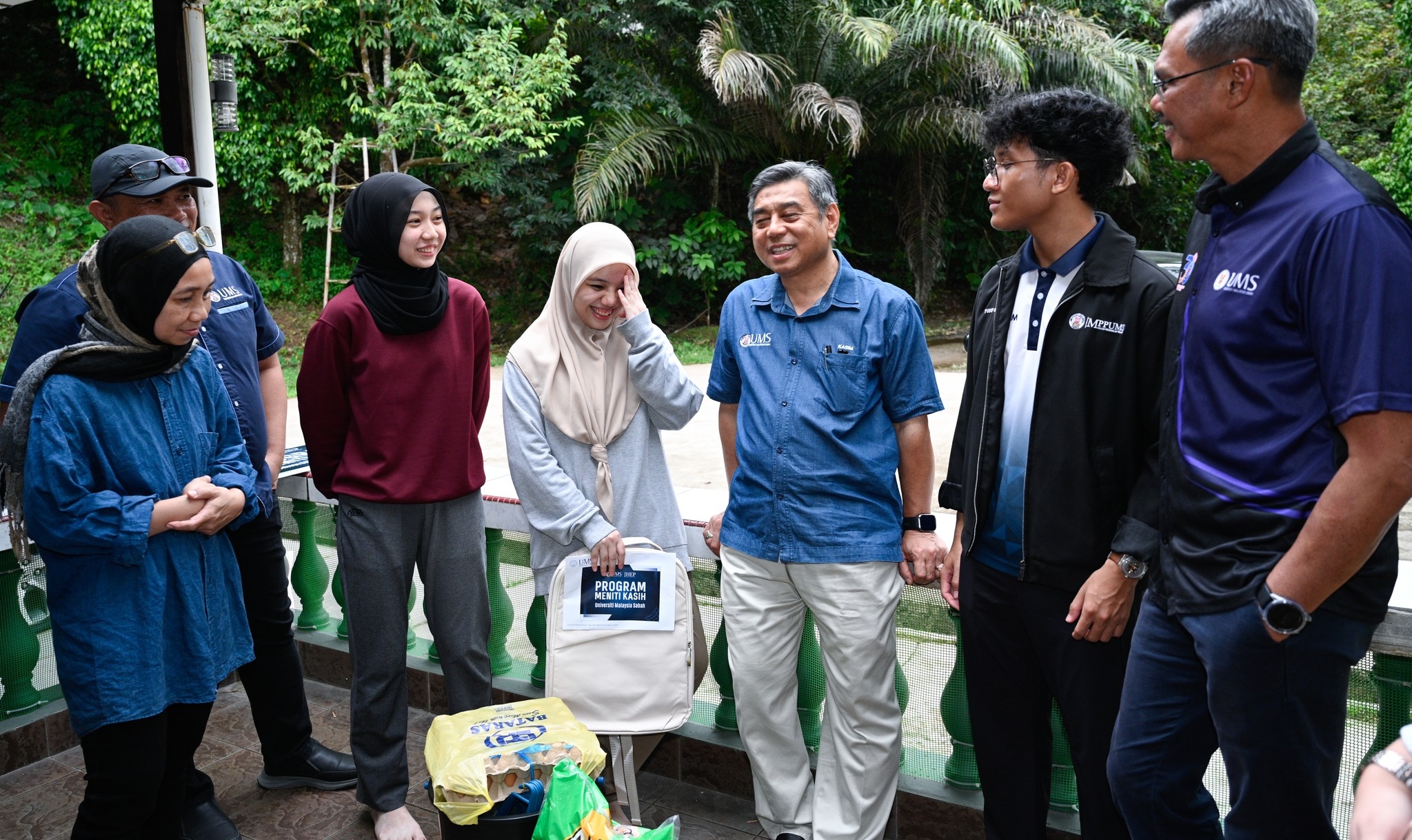
For more than a decade, Program MENITI Kasih has been implemented through the strong collaboration of UMS’s Student Affairs Division (HEPA) and Admissions Office, reflecting the university’s long-term institutional commitment to equitable access. The programme actively engages with rural schools and local communities across Sabah to identify potential students who show academic promise but face socioeconomic limitations. Since its inception, over 1,300 students have been successfully admitted through this programme — many as first-generation university entrants. To date, UMS has allocated and facilitated more than RM250 million in tuition sponsorships, living allowances, and educational support under MENITI Kasih and related access programmes. This sustained investment represents one of the largest university-led financial commitments to inclusive education in East Malaysia.
Program MENITI Kasih has evolved into a transformative vehicle for social mobility, directly addressing the structural roots of poverty through education. By converting missed opportunities into new beginnings, the programme uplifts entire families from B40 and rural communities, demonstrating the power of education as a sustainable poverty-reduction tool. Its long-term impact includes higher graduate employability, stronger community participation in higher education, and improved household income stability. The programme’s continuity over 12 years reflects UMS’s enduring leadership in turning educational access into real-world empowerment, and ensuring that every Sabahan youth, regardless of background, has the opportunity to learn, grow, and contribute to a more equitable and sustainable future.
Siswa Sulung 3.0
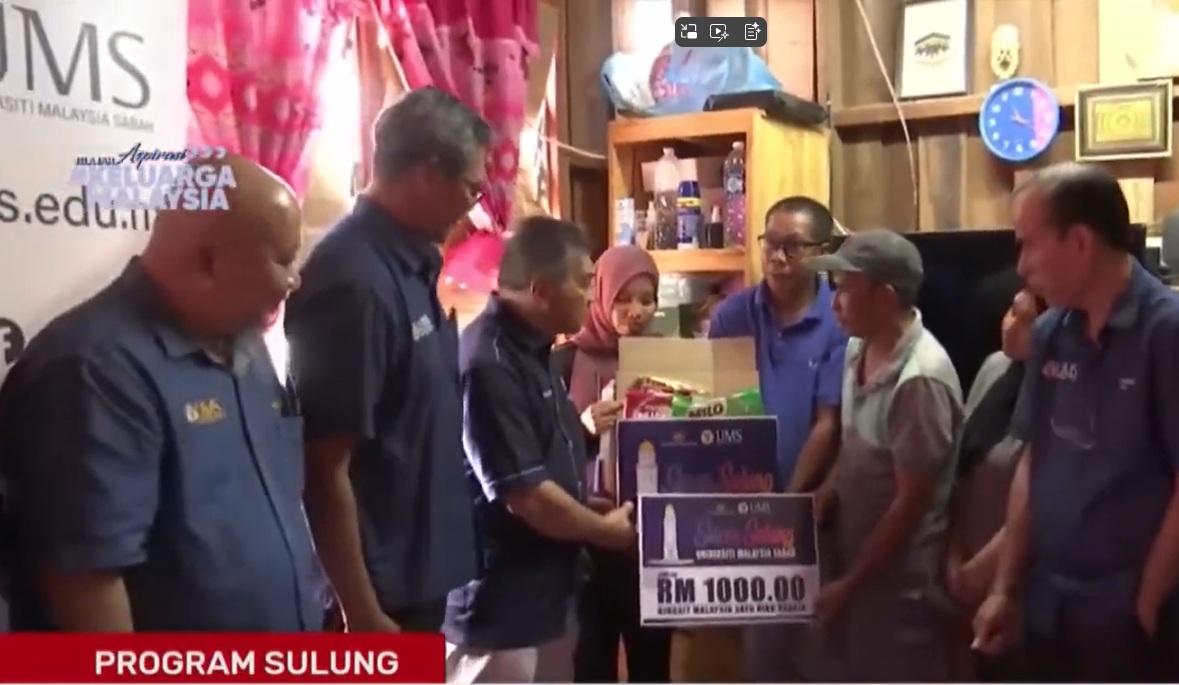
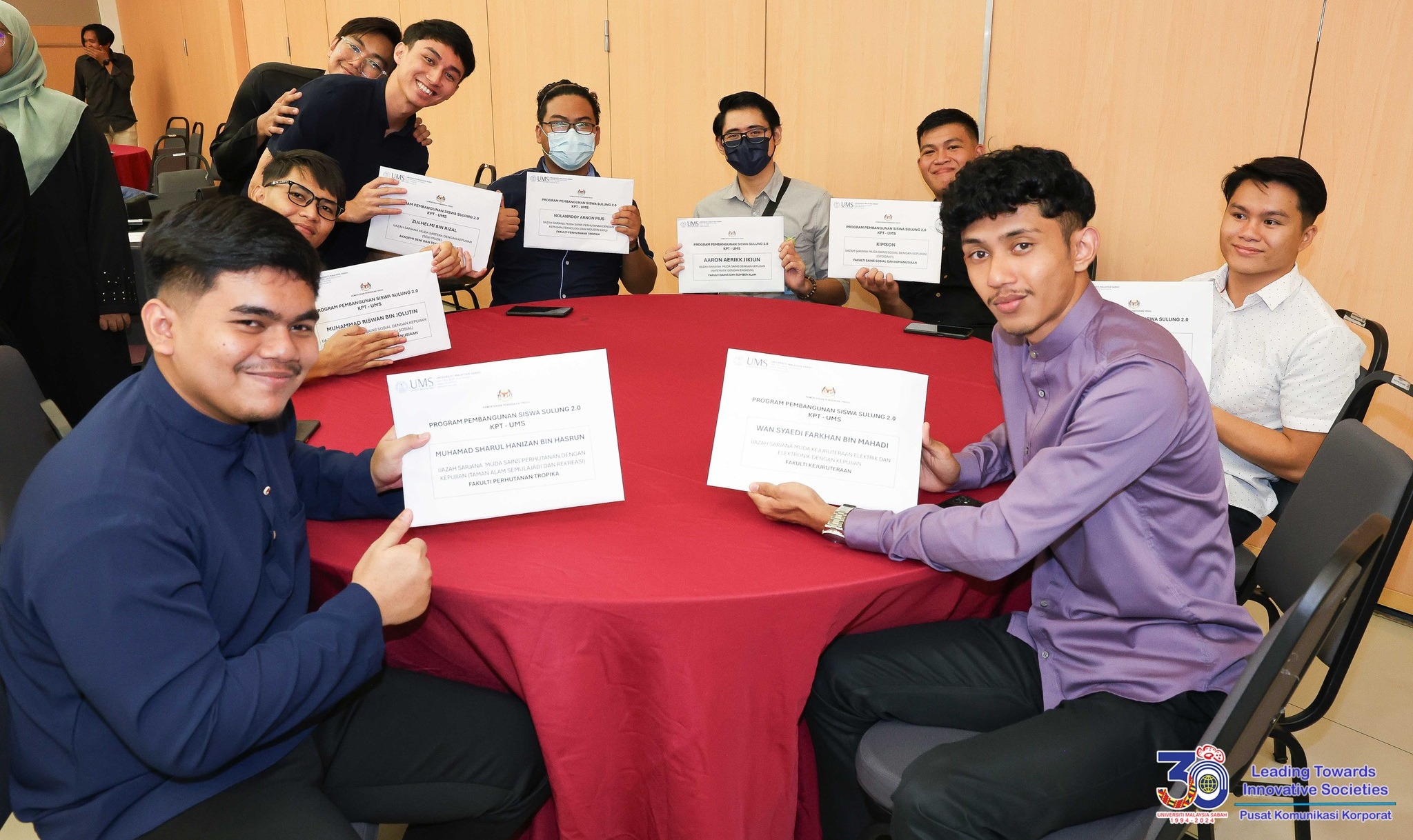
Introduced by the Ministry of Higher Education (MoHE) and implemented by UMS since 2021,Program Siswa Sulung UMS aimed to to uplift first-generation students from B40 (Bottom 40%) households who are the first in their families to pursue tertiary education. As one of Universiti Malaysia Sabah’s (UMS) key initiatives for inclusive growth, the programme removes economic barriers that often prevent talented students from continuing their studies. It offers comprehensive tuition sponsorships, academic mentoring, and personalised counselling, enabling participants to complete their degrees successfully while building the confidence and skills needed for long-term self-reliance.
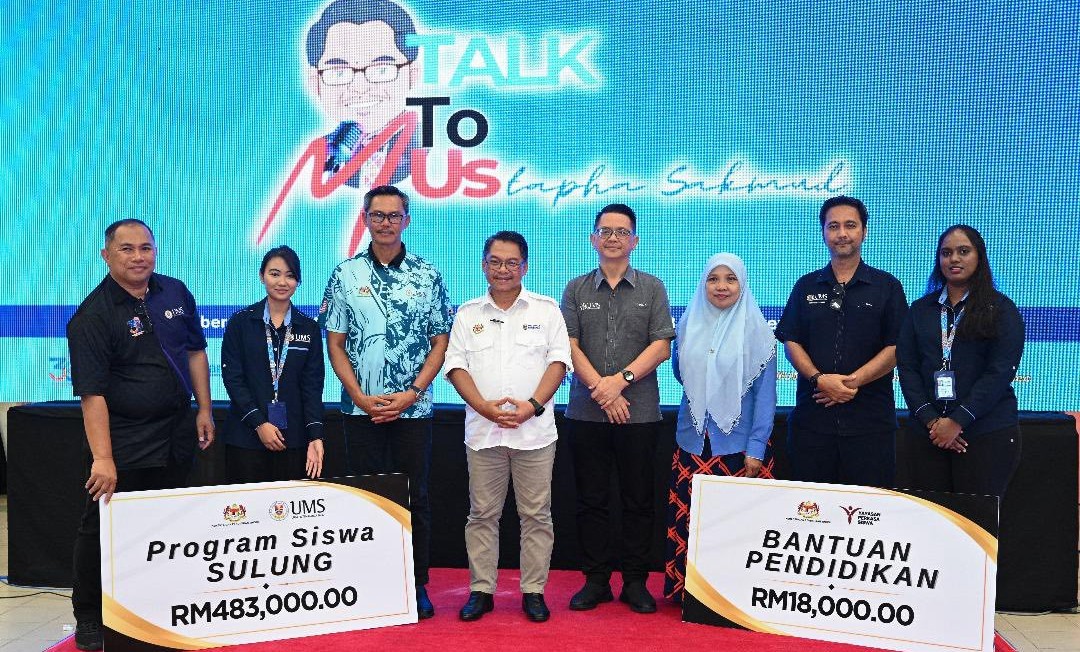
Since its launch, the programme has supported hundreds of first-generation university students, opening new pathways for academic and social mobility. In the 2025 cohort alone, 80 new students received financial assistance totalling RM 483,000, ensuring uninterrupted access to education. The university also extended the initiative’s inclusivity by awarding Bantuan Pendidikan Awal (BPA) worth RM 1,000 each to 18 students with special needs, reaffirming its deep concern for student welfare and equitable opportunity. These concrete measures demonstrate UMS’s proactive commitment to empowering underprivileged youth through sustained educational investment.
The Program Siswa Sulung UMS has become a catalyst for intergenerational transformation, directly addressing one of the root causes of poverty—limited access to higher education. By empowering first-generation students to obtain university degrees without financial hardship, the programme strengthens family resilience, raises household income potential, and contributes to a more skilled and equitable workforce in Sabah.
Provision of Free Transportation Facilities
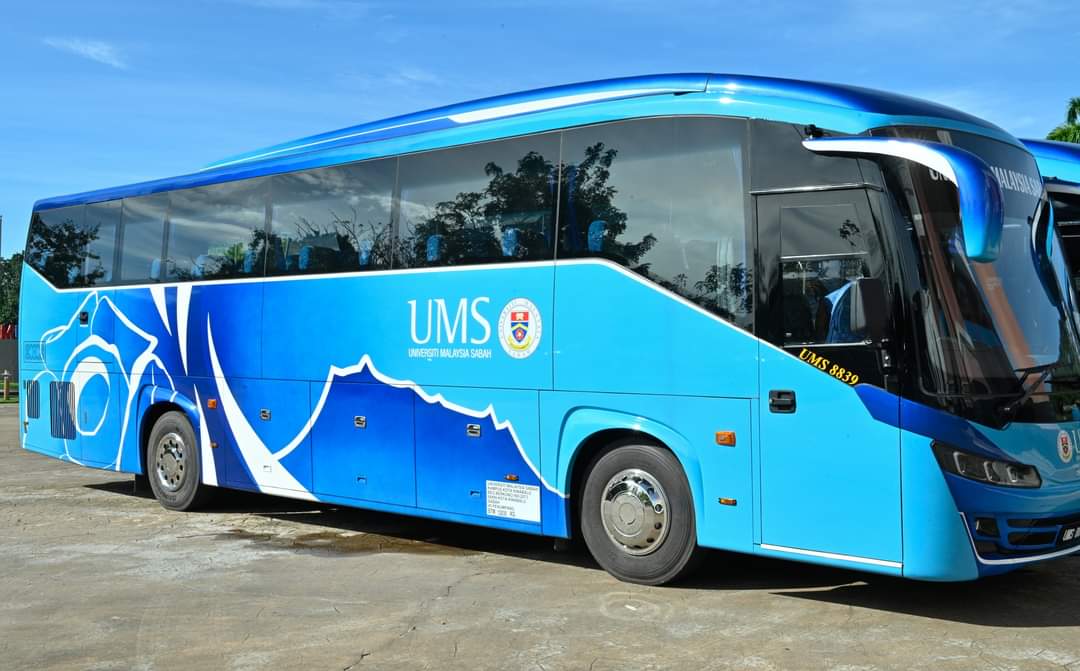
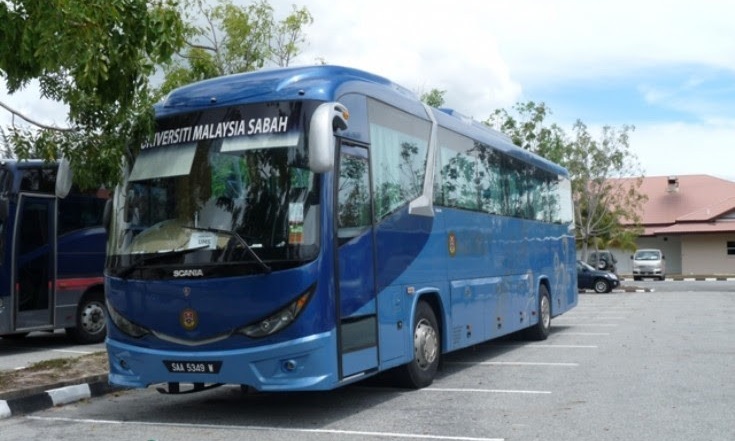
To promote equitable access to education, Universiti Malaysia Sabah (UMS) provides free campus transportation to ensure that mobility costs never become a barrier to learning. The initiative supports students—especially those from B40 (Bottom 40%) income households and rural backgrounds—by offering safe, reliable, and environmentally responsible transport options across the campus and nearby residential areas. This reflects UMS’s commitment to inclusivity, accessibility, and student welfare as part of its sustainable education ecosystem.
In 2023, UMS expanded its transportation service by adding eight new buses through an investment of RM4.9 million, significantly improving coverage and capacity. The enhanced fleet serves thousands of students daily, connecting residential colleges, lecture halls, and key university facilities. The initiative complements UMS’s broader student support framework, reducing out-of-pocket expenses for commuting and ensuring that all students—regardless of socioeconomic status—can participate fully in campus life and academic activities.
The Free Transportation Facilities initiative has reduced students’ financial burden, improved punctuality and attendance, and strengthened engagement in both academic and extracurricular programmes. For B40 students in particular, it has increased accessibility to education and reduced dropout risks associated with financial constraints. Beyond social equity, the initiative also supports sustainability goals by reducing carbon emissions through shared transport systems.
Integrated Sponsorship and Student Welfare Assistance
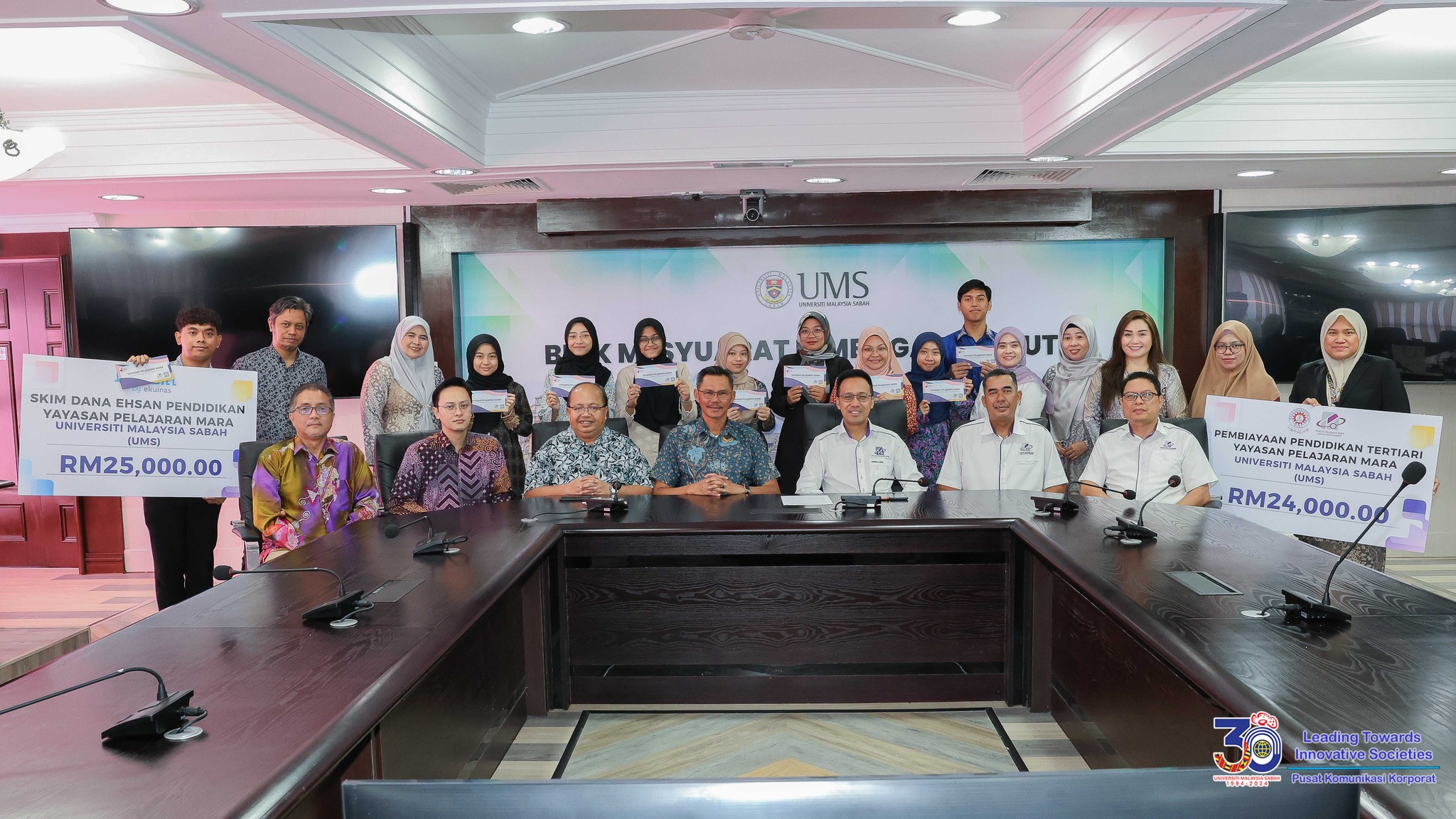
To complement internal financial-aid programmes, Universiti Malaysia Sabah (UMS)—through its Student Affairs Department (HEPA)—actively assists students in securing external sponsorships from major agencies such as PTPTN, Yayasan Sabah, and corporate foundations. These sponsorships extend tuition and living support to thousands of students each year, ensuring that no eligible learner is excluded from tertiary education due to financial hardship.
Beyond external sponsorships, UMS operates a comprehensive internal safety-net through the UMS Financial Aid Scheme, established in 2015, which provides direct scholarships and tuition coverage for self-funded students who do not qualify for other forms of aid. This internal mechanism guarantees uninterrupted access to education and equitable academic progression for students from low-income families.
Complementing these initiatives is the Bahagian Kebajikan dan Kewangan Pelajar (BKKP), which plays a crucial welfare role in managing and delivering direct student-assistance schemes. BKKP oversees the Sistem MyCare for living-allowance disbursement and administers a range of welfare supports including:
Together, these mechanisms—spanning external sponsorships, internal scholarships, and structured welfare assistance—reflect UMS’s systemic and sustainable approach to tackling educational poverty across three critical dimensions: access, affordability, and resilience. By integrating financial empowerment with compassionate welfare management, UMS ensures that every student, regardless of socioeconomic status, can pursue and complete their studies with dignity, stability, and hope for a better future.
Collectively, these initiatives form a comprehensive and resilient model of education-driven poverty alleviation, addressing both immediate needs (such as food security, health, and transport) and long-term empowerment (through education, employability, and entrepreneurship). Through sustained investment and strategic alignment with the UN Sustainable Development Goals, UMS has enabled thousands of Sabahan youth from low-income backgrounds to transform their lives and communities. This enduring commitment not only advances SDG 1: No Poverty by ensuring equal access to education and economic resources but also reaffirms UMS’s role as a catalyst for inclusive, equitable, and sustainable development in Malaysia’s Borneo region.
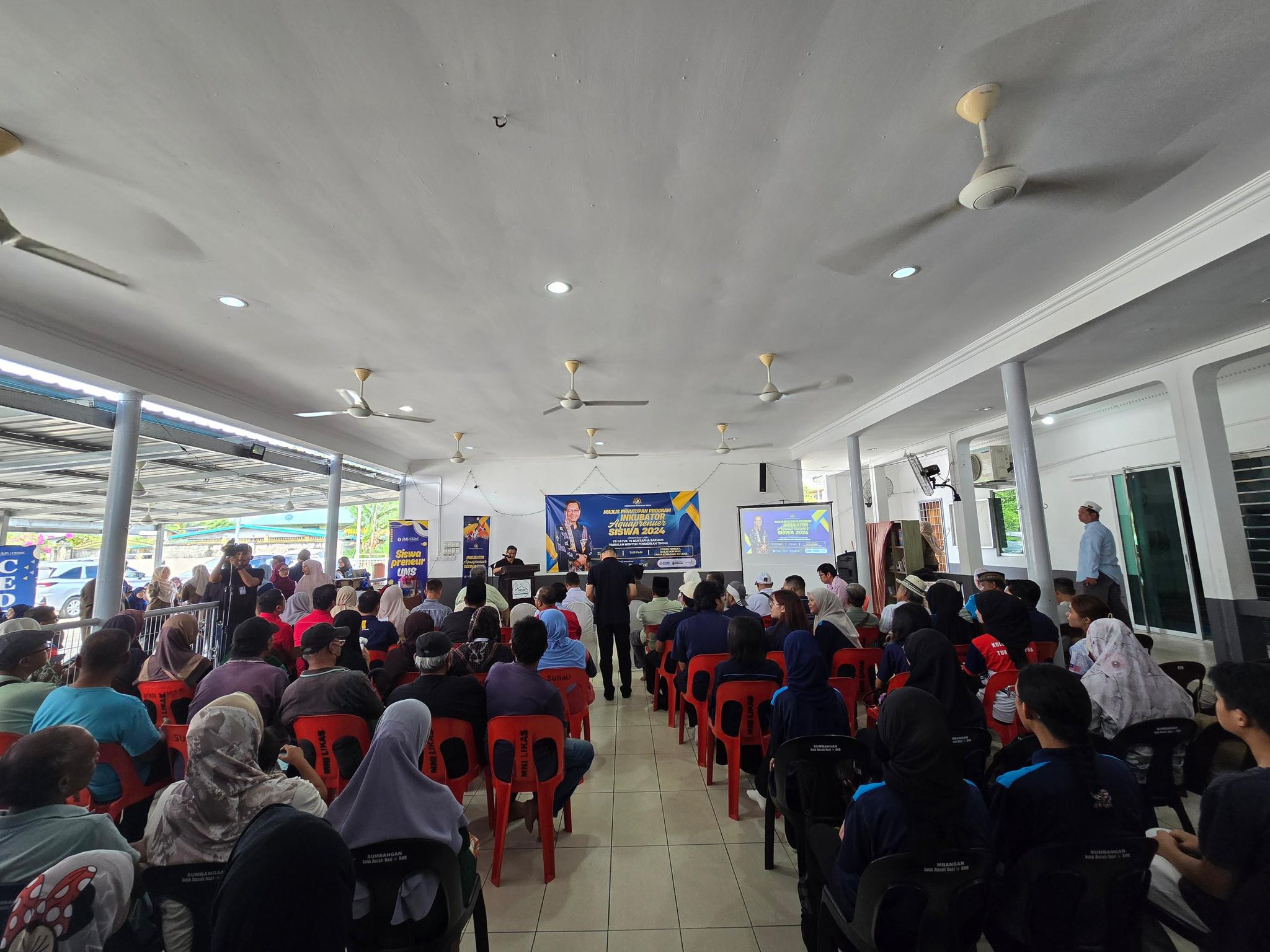
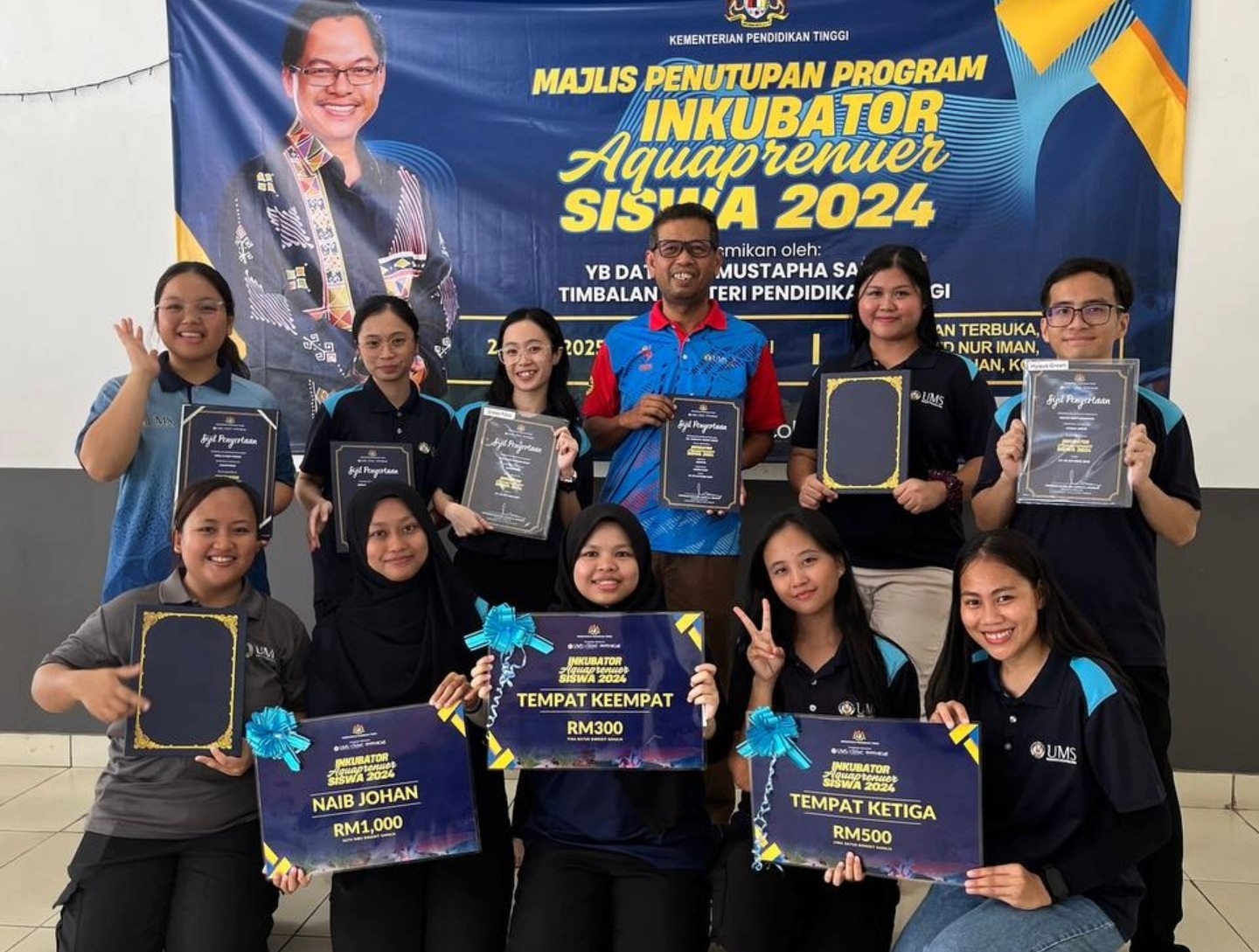
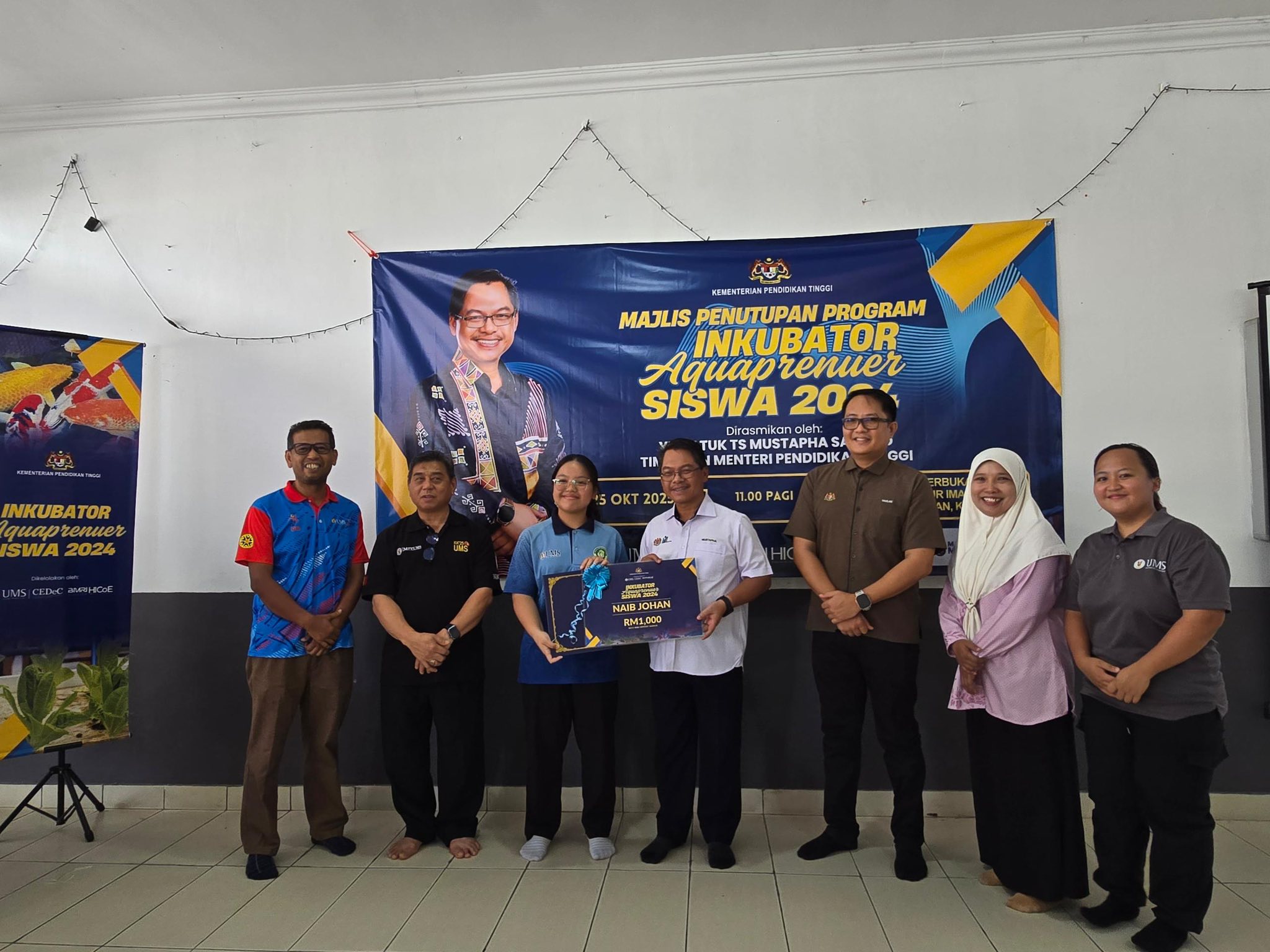
Inkubator Aquapreneur Siswa UMS 2024
The Aquapreneur Student Incubator Program, jointly implemented by the Ministry of Higher Education (KPT) and CEDeC UMS, goes beyond financial aid—it tackles the root causes of poverty by transforming students into innovators, entrepreneurs, and changemakers. Through a year-long journey in modern aquaculture entrepreneurship and smart IoT-based technology, students learn to design, operate, and scale sustainable aquatic enterprises that generate real income and community impact.
This programme is not charity—it is empowerment. It equips students from low-income families with hands-on technical expertise, business acumen, and digital innovation skills, enabling them to become job creators rather than job seekers. By cultivating entrepreneurial resilience, the initiative builds pathways for long-term economic independence, food security, and environmental sustainability.
Graduates of the programme have successfully established micro aquaponic ventures, eco-fish farms, and seaweed product enterprises, proving that education can directly lift individuals and communities out of poverty. These student entrepreneurs reinvest their knowledge and income back into their villages, creating a multiplier effect that strengthens Sabah’s rural economy.
By aligning technology, education, and livelihood creation, the Aquapreneur Student Incubator Program embodies the spirit of SDG 1: No Poverty—empowering youth to break generational poverty cycles through innovation, not dependence. It is a living model of how universities can solve poverty, not just study it.
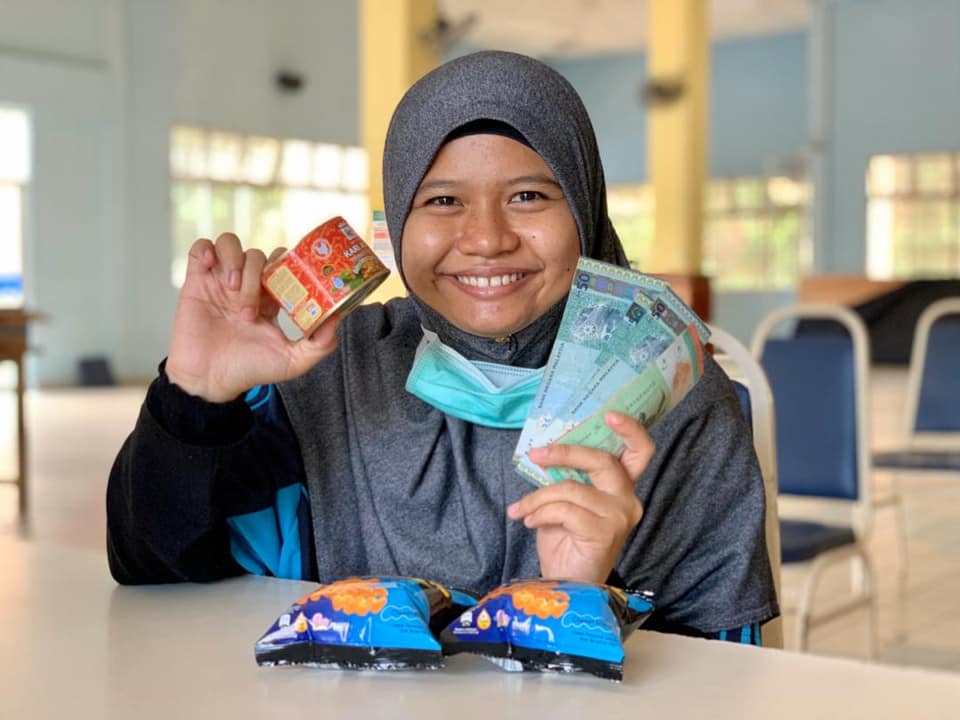
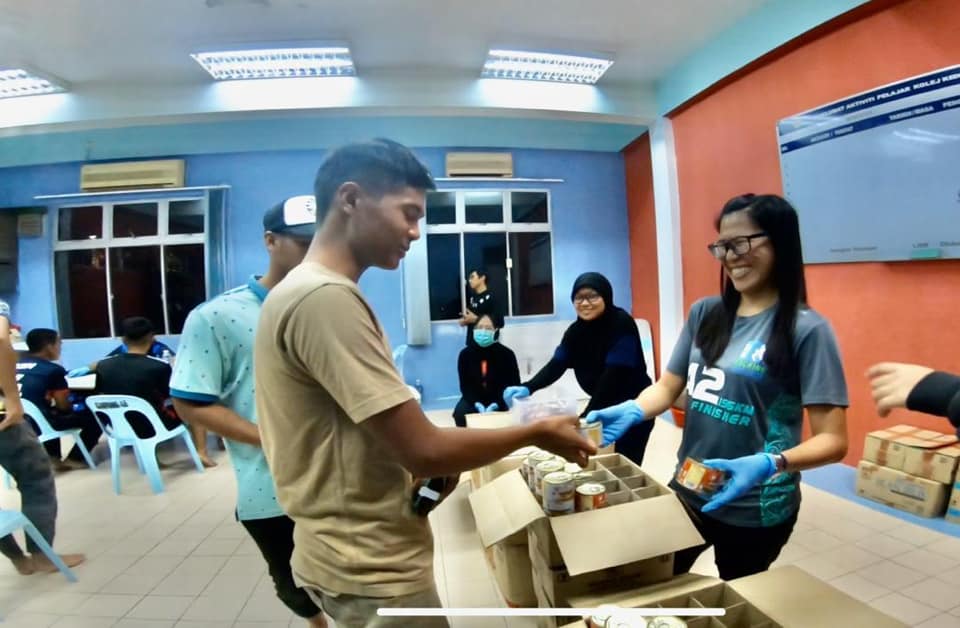
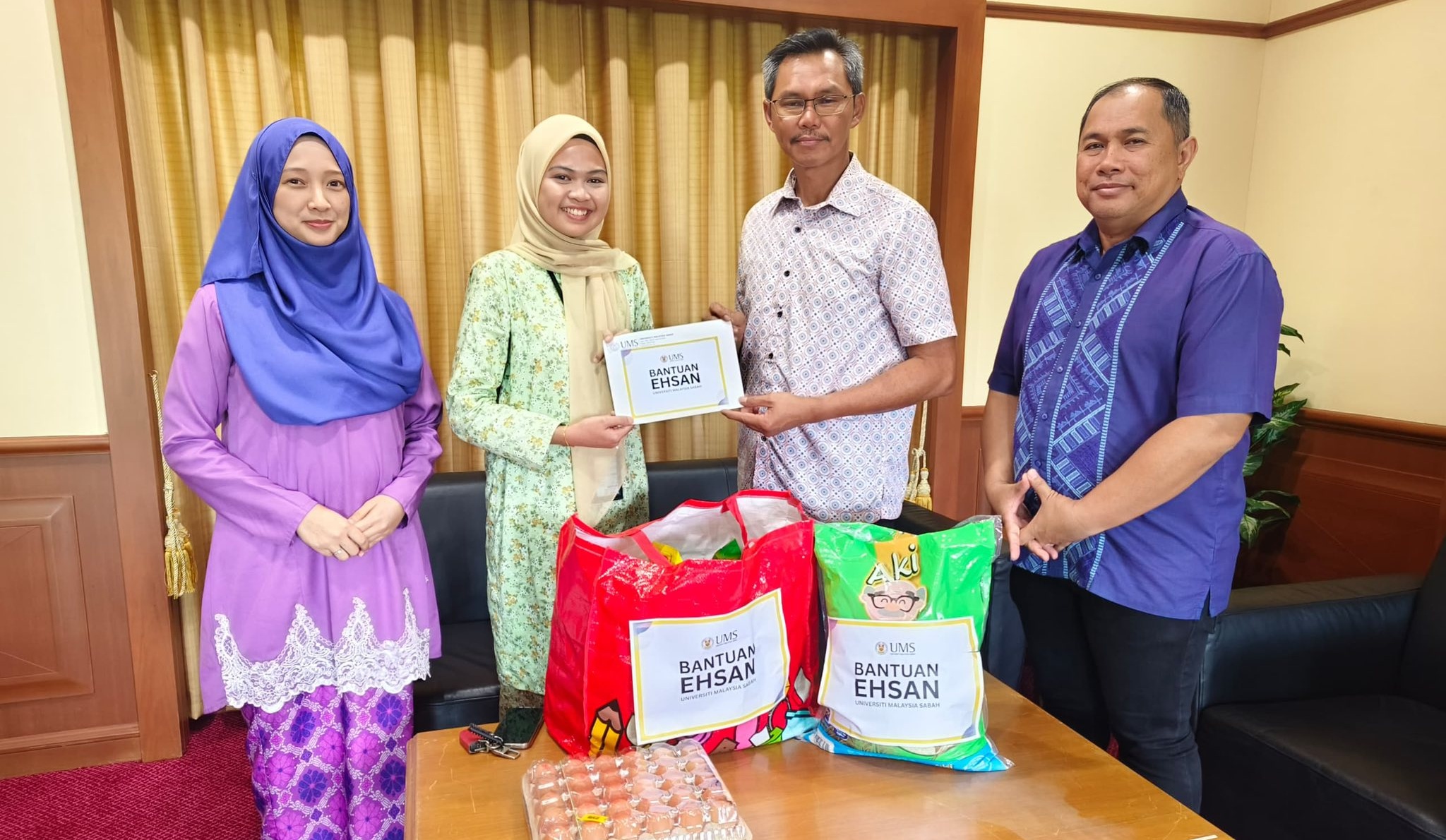
Bantuan Ehsan UMS
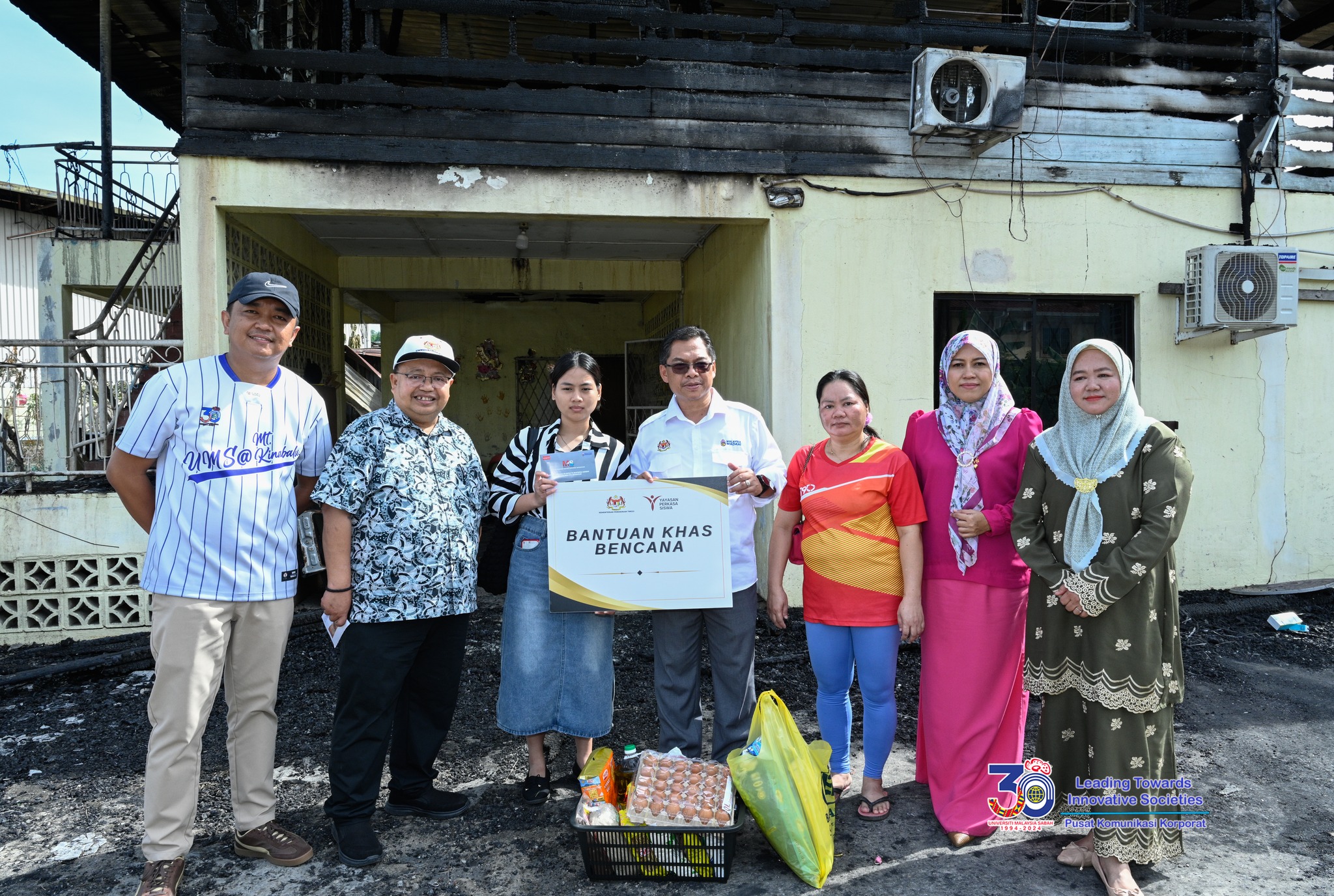
The Bantuan Ehsan UMS is a welfare assistance initiative that provides emergency financial and food support to students experiencing sudden economic hardship. This programme ensures that students affected by unforeseen circumstances — such as family income disruption, emergencies, or health-related issues — continue their studies without interruption.
The assistance covers daily meals, essential supplies, and short-term living expenses, helping students maintain stability and focus on their academic responsibilities. Administered by the Department of Student Affairs (HEP), Bantuan Ehsan UMS operates through a transparent, needs-based application process, ensuring fair access and immediate relief for those in genuine need.
Through this initiative, UMS reinforces its commitment to student welfare and inclusivity, ensuring that no student is left behind
Read More
Empowering Dreams, Changing Lives
Since 2013, Program Meniti Kasih UMS has opened doors for students from B40 (Bottom 40%) Income Group and underprivileged families to pursue higher education — transforming aspirations into achievements and breaking the cycle of poverty through opportunity.
Hope Begins HereA Bridge of Hope and Education
Rooted in compassion, Meniti Kasih connects disadvantaged youths to the power of learning. Each success story reflects UMS’s commitment to inclusivity, social mobility, and a future where no dream is left behind.
Together We Build Brighter FuturesFrom Struggles to Success
More than a scholarship, Meniti Kasih is a journey of care — nurturing resilience, dignity, and confidence among first-generation students, empowering them to rise and lead their communities forward.
Together We Build Brighter FuturesUMS’s Heart for Humanity
Through Program Meniti Kasih, UMS embodies its role as a university for society — creating real impact across Sabah and Malaysia by transforming education into a force for equality and sustainable change.
Compassion. Education. Real Impact