

Forests heal the earth—UMS defends their voice.

UMS - SDG 15 Life on Land
Guardians of Borneo’s wild heart.
 Restoring Nature, Revitalising Heritage
Protecting Forests, Empowering Communities, Preserving Life on Land
Universiti Malaysia Sabah (UMS) continues to lead Sabah and Borneo in terrestrial conservation, ecosystem restoration, and biodiversity innovation. Through high-impact research platforms, forest science collaborations, indigenous knowledge engagement, and community empowerment programmes, UMS strengthened Sustainable Development Goal 15 (Life on Land) by safeguarding critical habitats, accelerating ecological rehabilitation, and nurturing local stewardship. The university’s strategic partnerships with government agencies, industries, and rural communities advanced scientific discovery while ensuring that conservation efforts translate into lasting environmental resilience and socio-economic benefits for future generations.
Guardians of Borneo’s Green Heart
Science, Stewardship & Community Action for Borneo’s Biodiversity
Sustainable Development Goal 15 (Life on Land) calls for the protection, restoration, and sustainable use of terrestrial ecosystems—an urgent mandate at a time when biodiversity loss, land degradation, and climate-related disturbances pose unprecedented risks to human and environmental well-being. UMS, situated in one of the world’s most biodiverse regions, plays a critical role in advancing this global agenda by integrating science, indigenous knowledge, and community participation into conservation strategies. Through its living labs, research institutes, forestry expertise, and community-driven programmes, UMS contributes directly to safeguarding forests, enhancing ecological resilience, and promoting sustainable land stewardship. Throughout the year, UMS amplified its commitment to SDG 15 by launching transformative initiatives across Borneo’s landscapes—from highland ecosystems and river corridors to protected lowland rainforests and community-managed areas. These efforts included bioprospecting research, wildlife rehabilitation, forest science conferences, knowledge-transfer programmes, and large-scale public outreach. Together, they reflect UMS’s holistic approach to conservation: combining rigorous scientific inquiry with local empowerment, innovation, and long-term environmental responsibility.
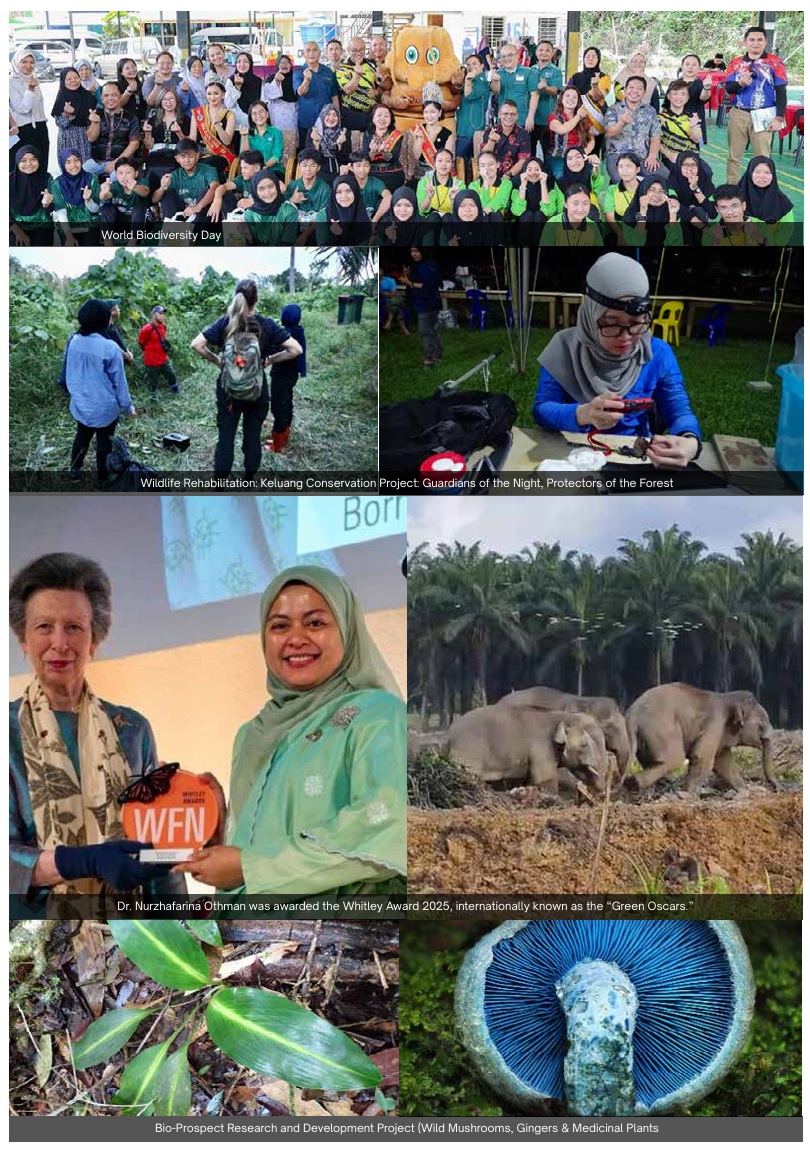
Bio-Prospect Research and Development Project (Wild Mushrooms, Gingers & Medicinal Plants): Unlocking Borneo’s Botanical Treasures Through Science and Partnership
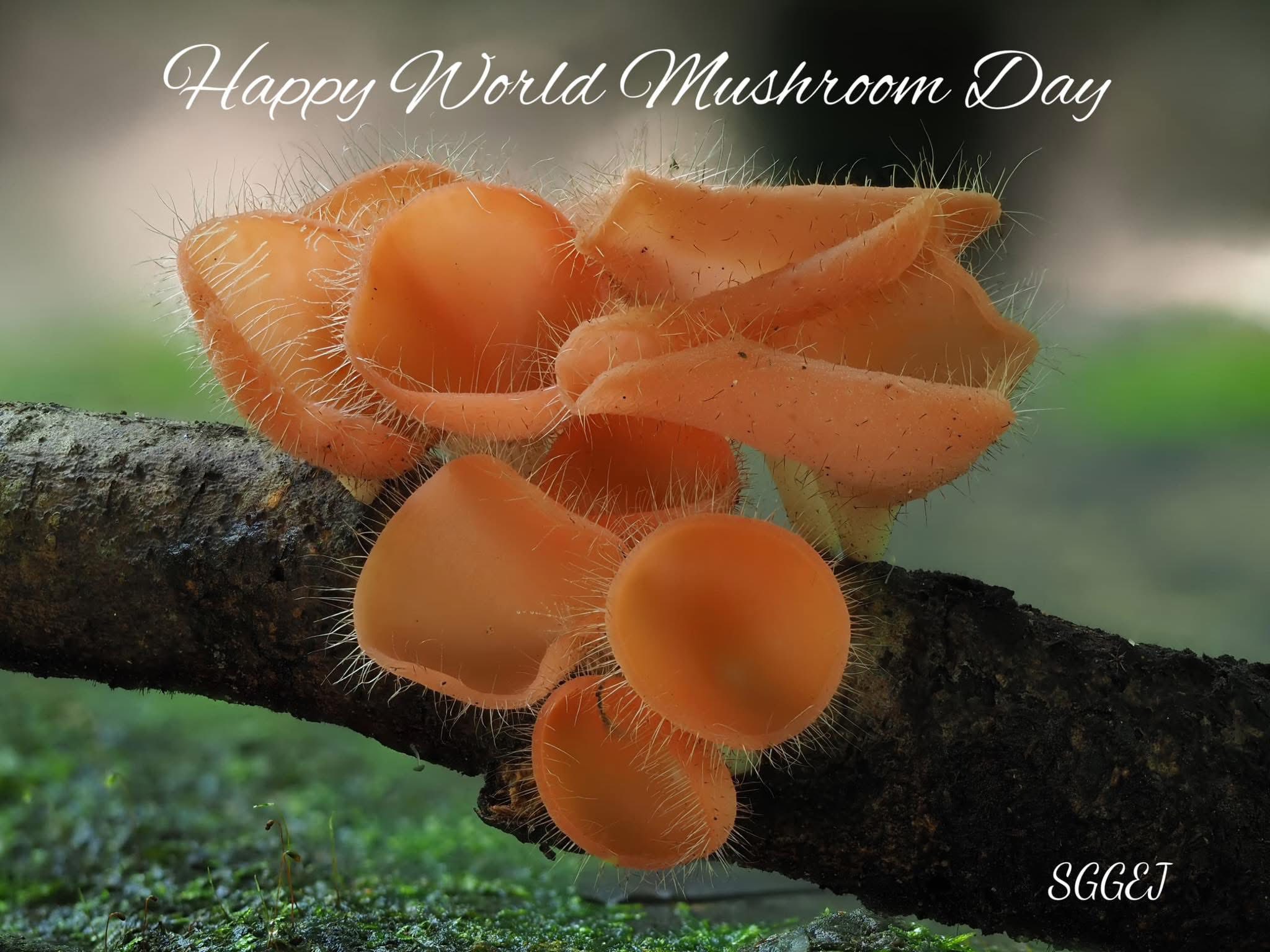
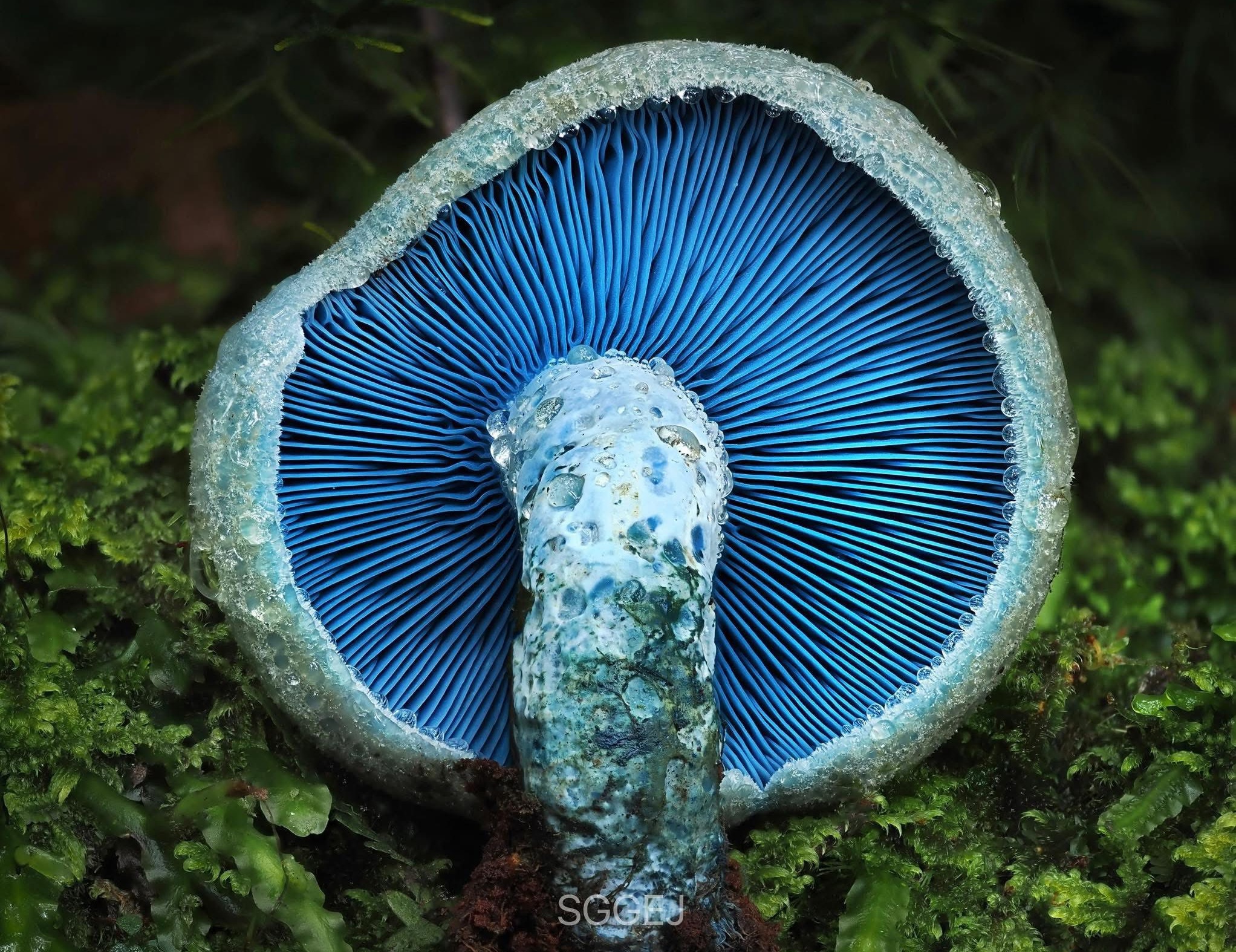
UMS, Yayasan Sabah, and the Sabah Forestry Department formalised a five-year research collaboration focusing on wild mushrooms, wild gingers, medicinal and aromatic plants. The agreement, signed at SICC and witnessed by the Sabah Minister of Science, Technology & Innovation, aims to build research capacity, develop conservation-based research sites, and foster community-driven bioresource entrepreneurship. This initiative positions UMS as a leading institution in tropical bioprospecting, supporting ecosystem preservation and sustainable utilisation of endemic flora.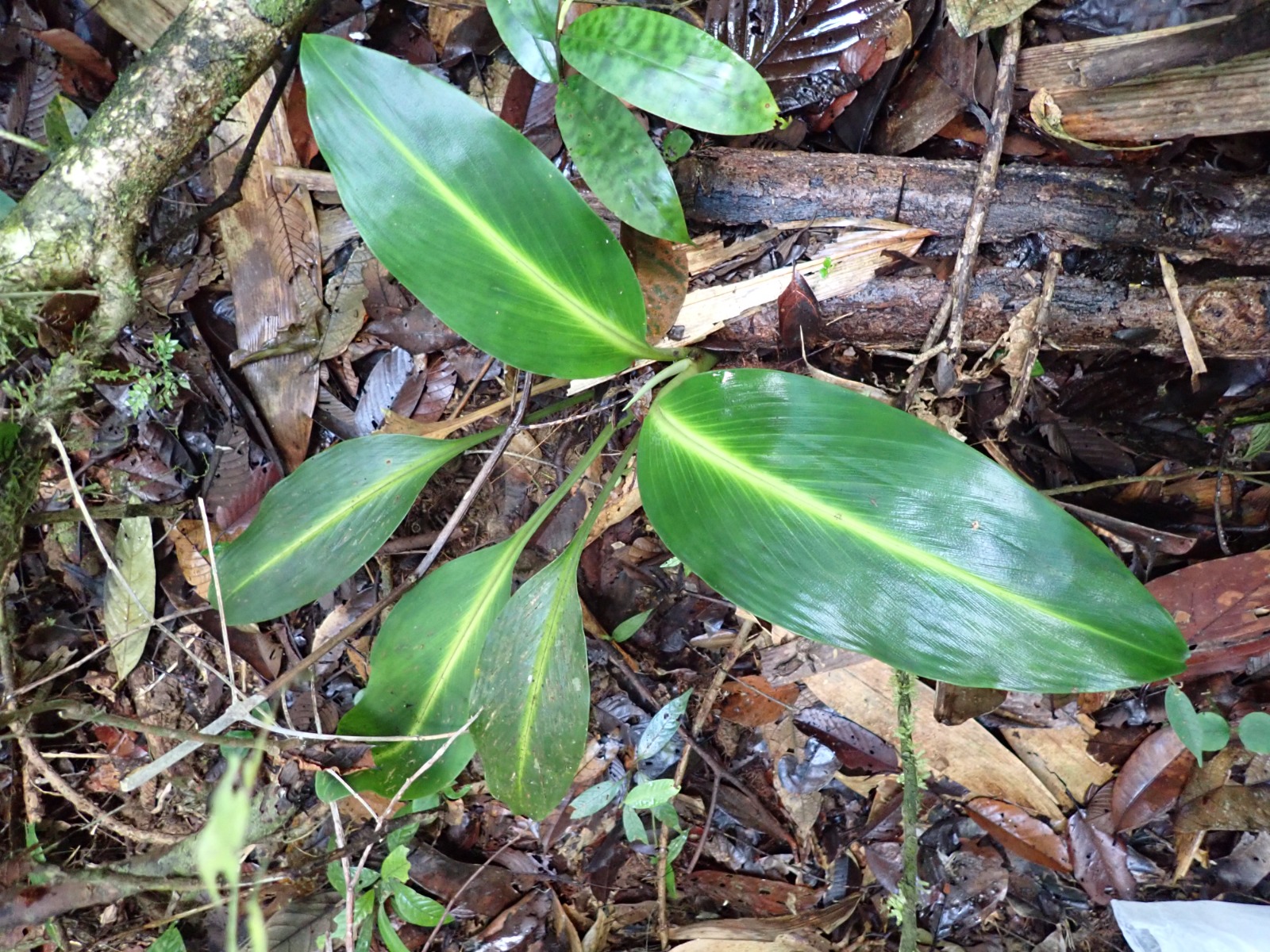
Wildlife Rehabilitation: Keluang Conservation Project: Guardians of the Night, Protectors of the Forest
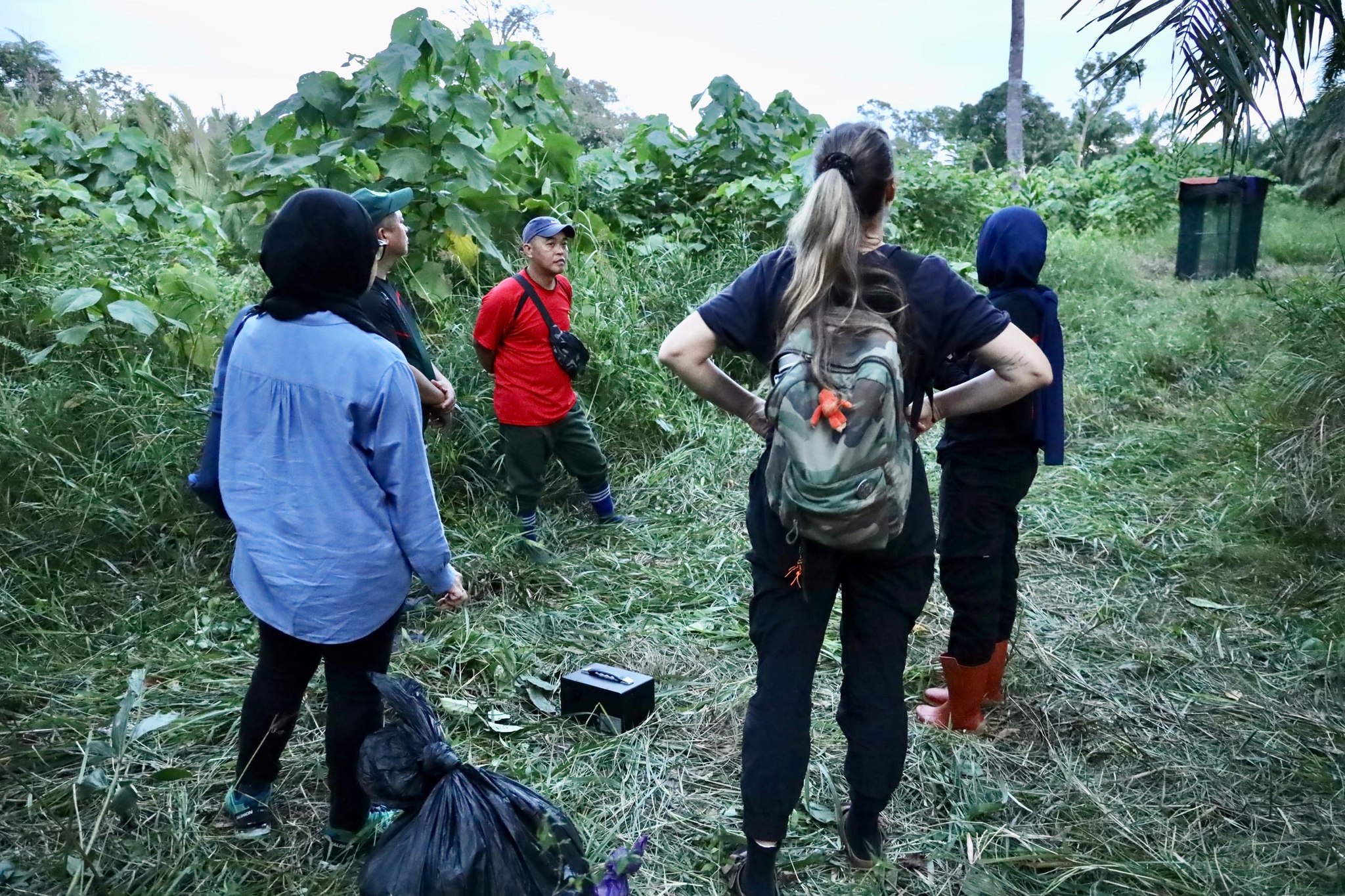
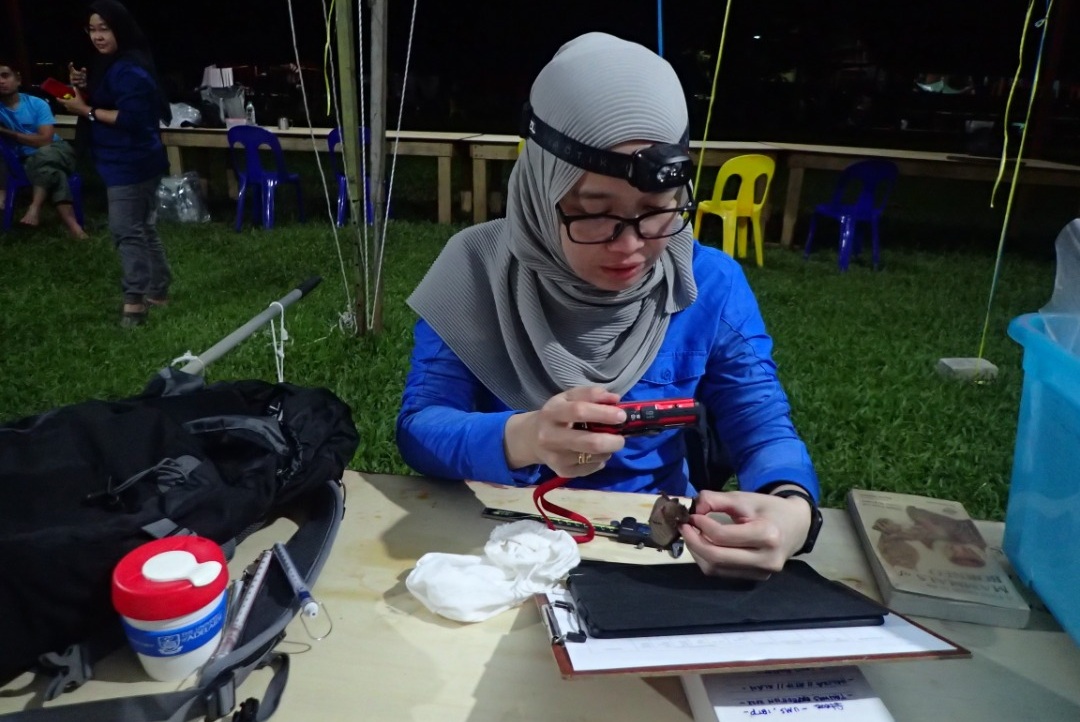
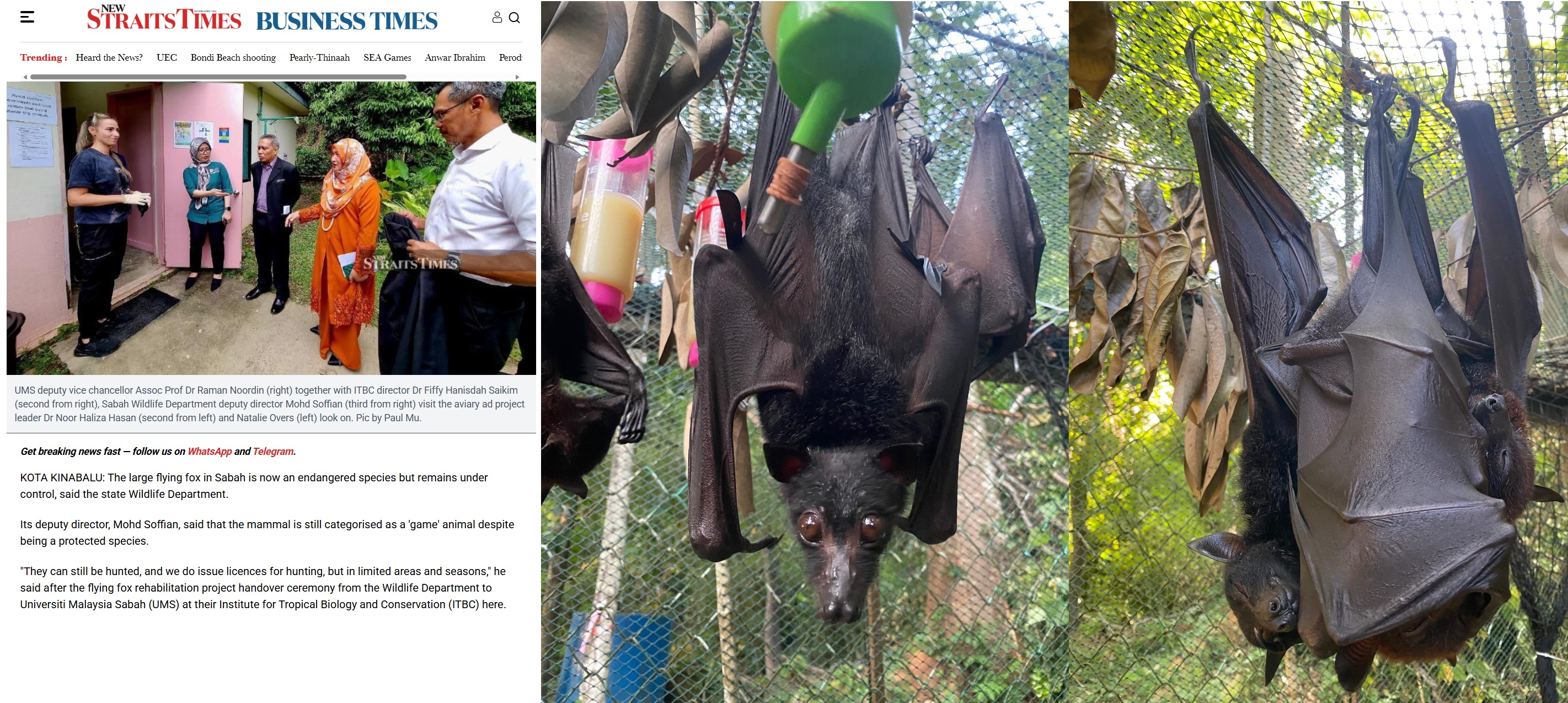
UMS, through IBTP, collaborated with the Sabah Wildlife Department to rehabilitate and conserve bat populations (keluang), recognising their critical ecological role in pollination and seed dispersal. The project supports wildlife recovery, research, and long-term monitoring, contributing directly to species protection under SDG 15.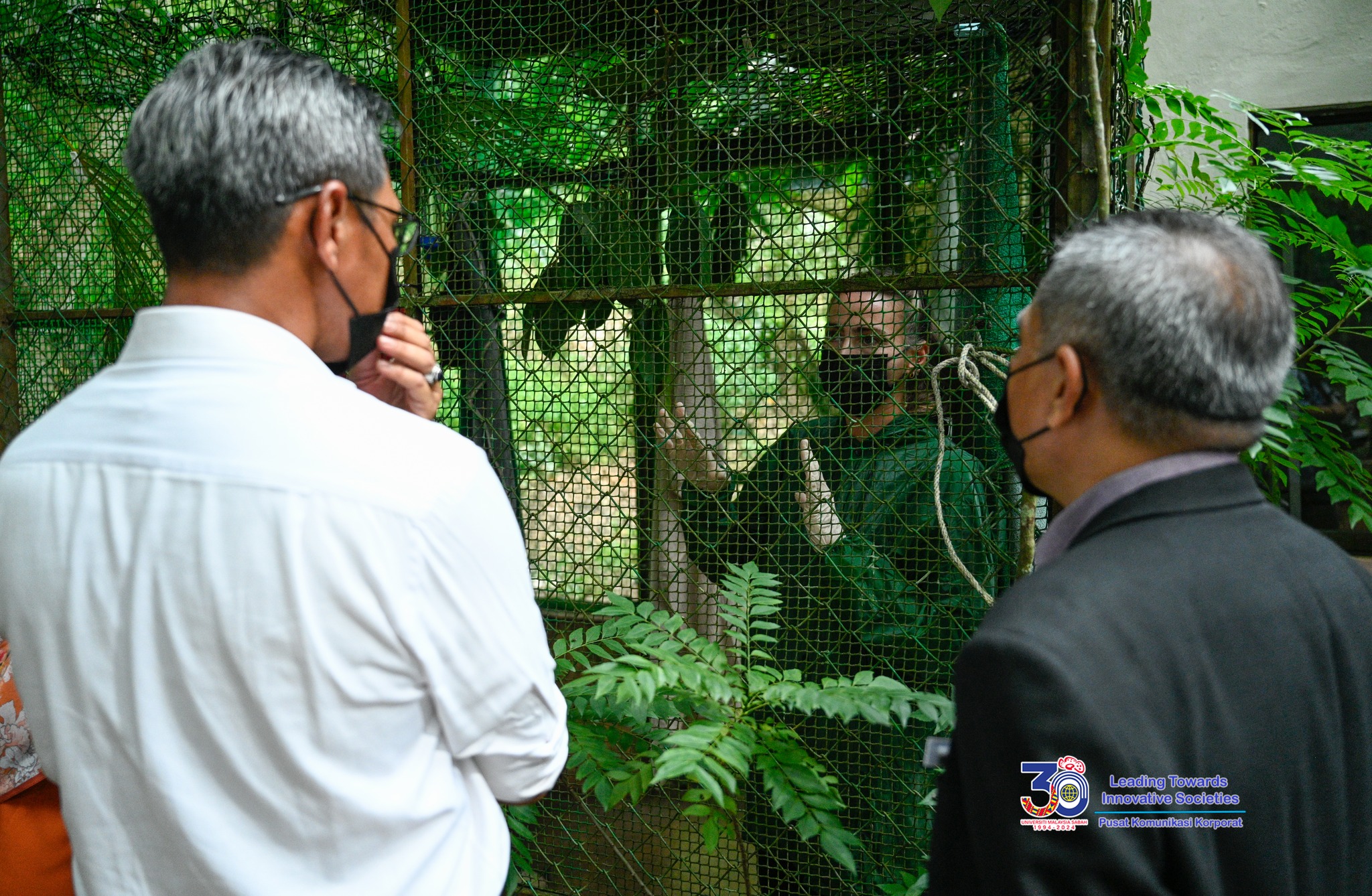
Champions of Borneo’s Wild Heritage
Protecting Endangered Species Through Science, Stewardship, and Faithful Care for God’s Creation
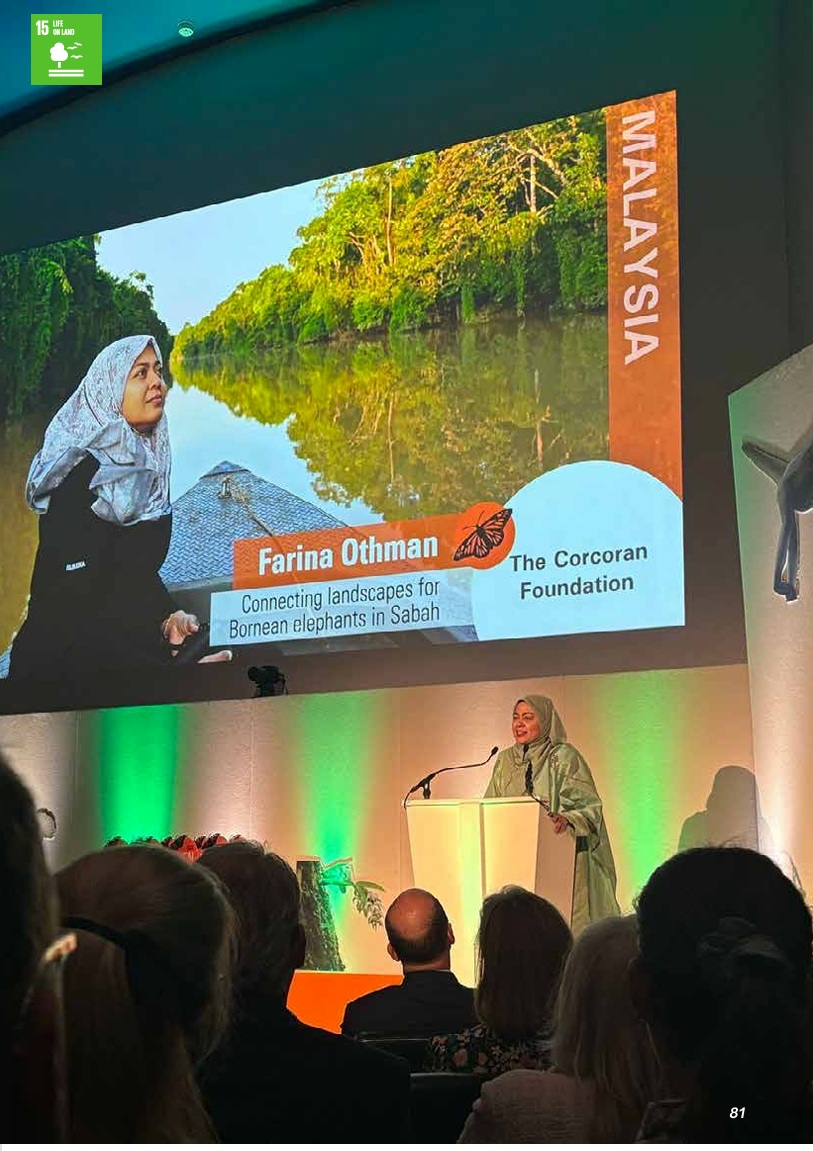
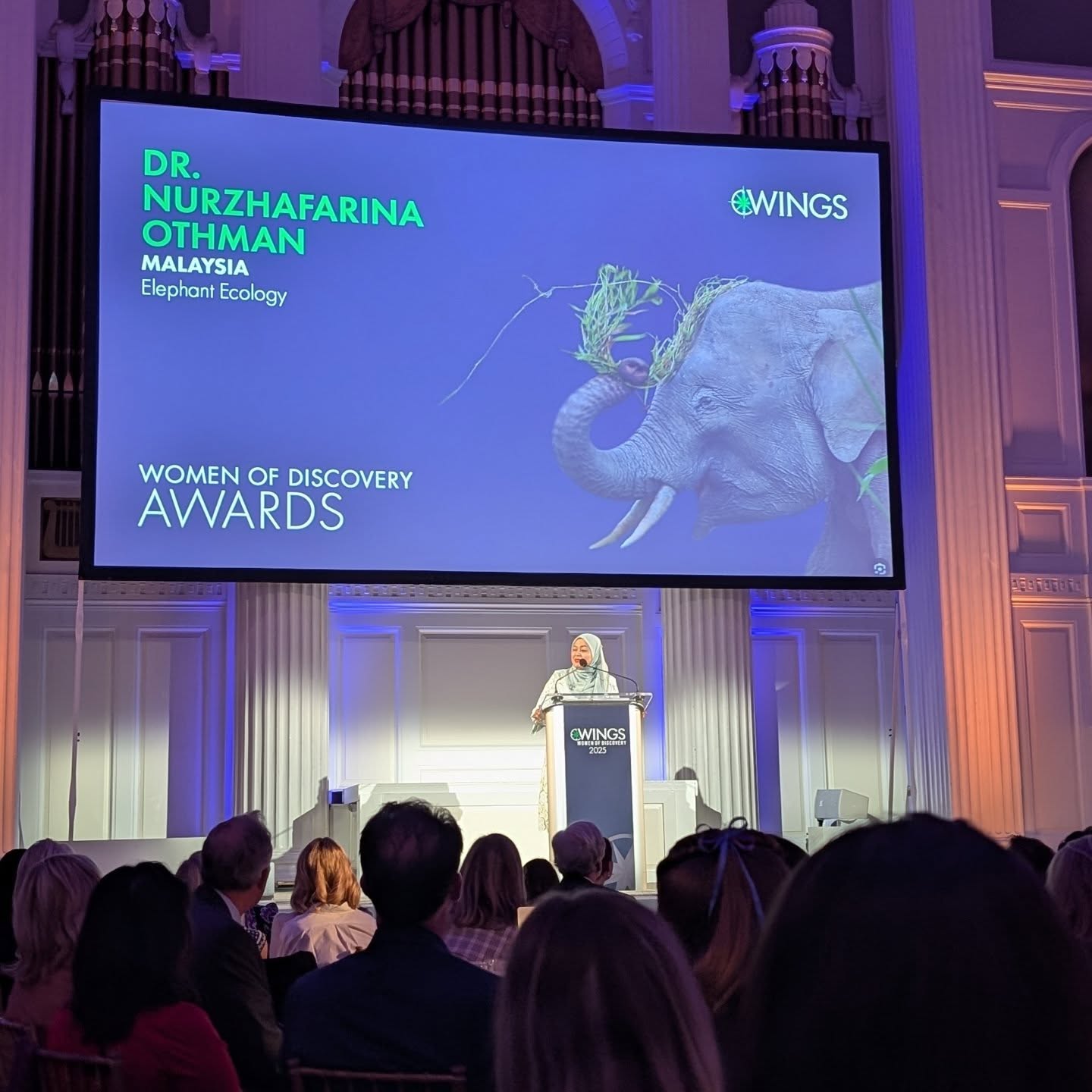
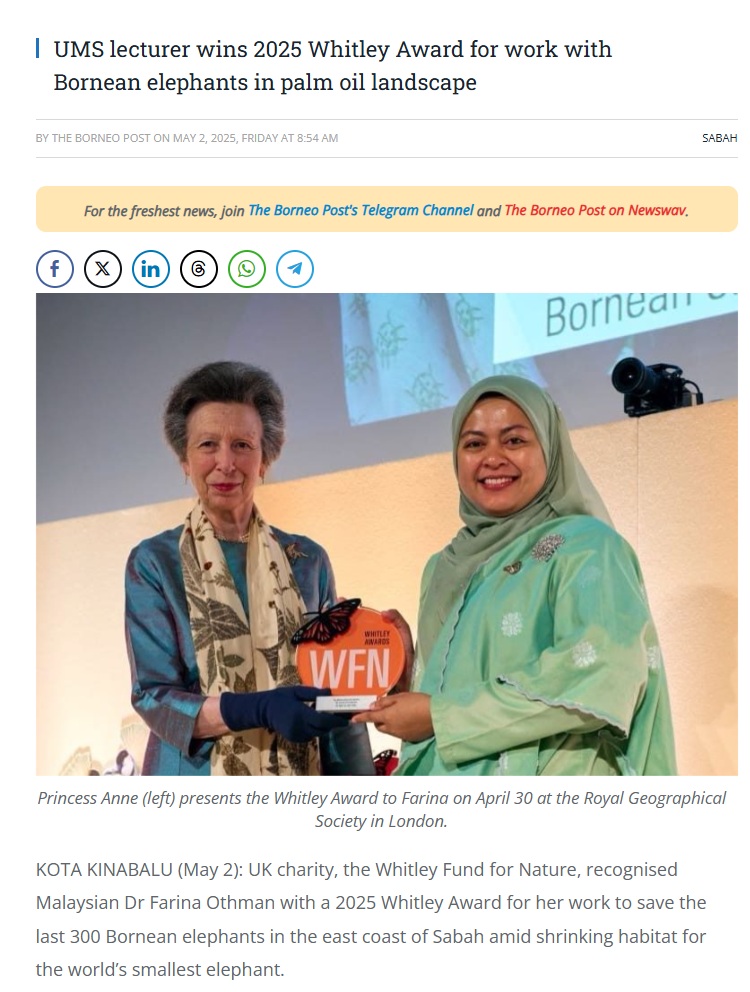
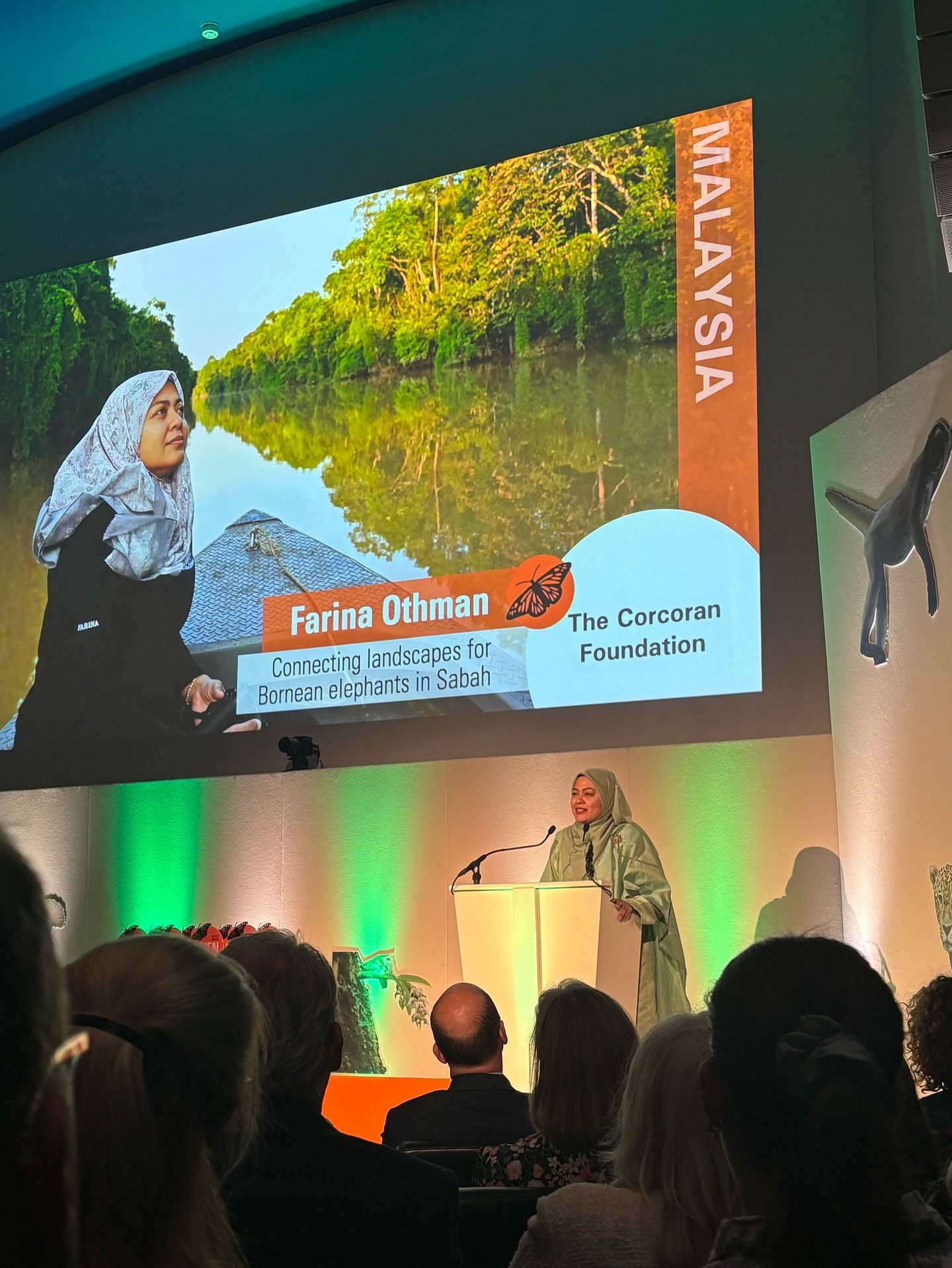
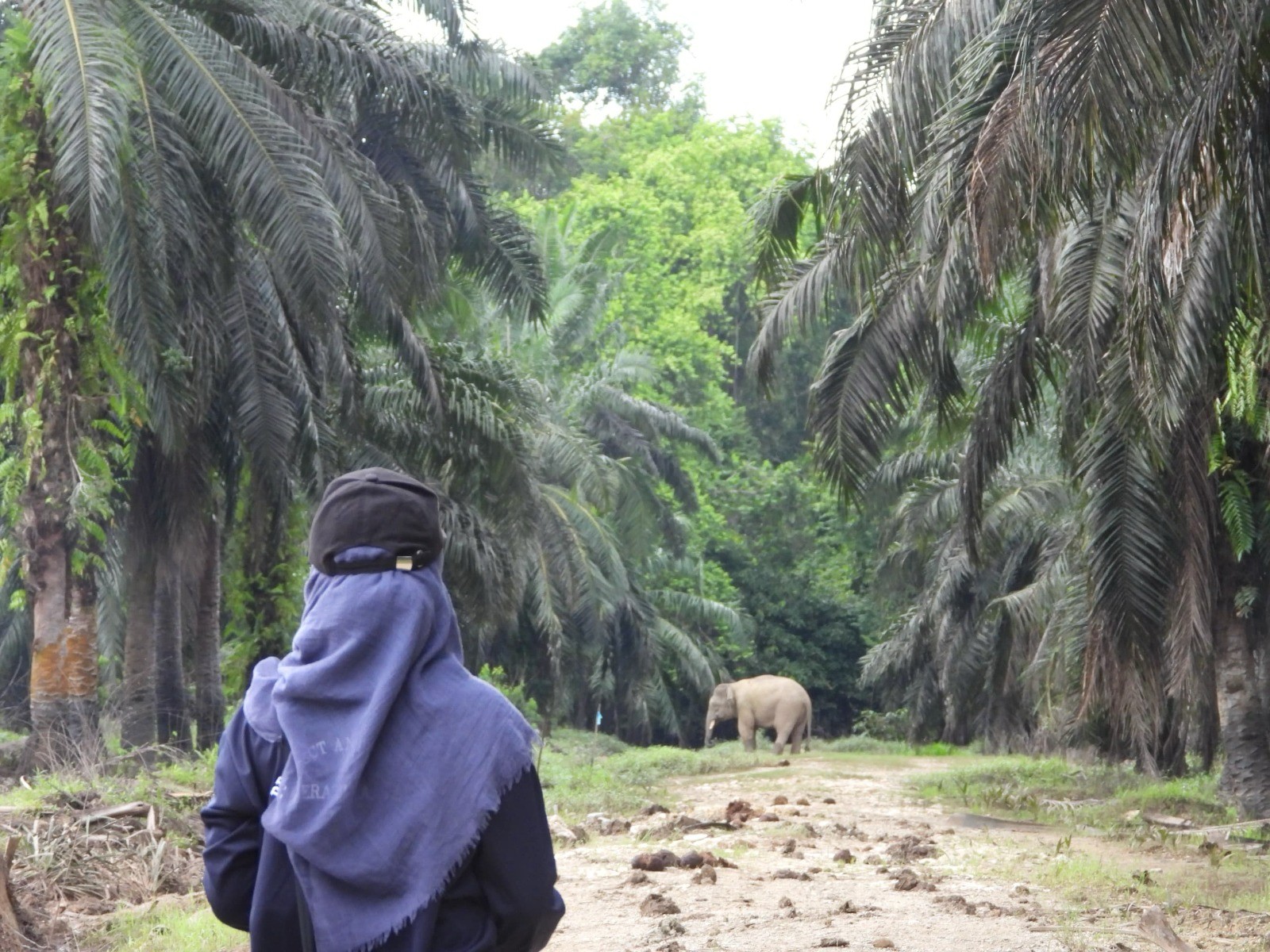
UMS proudly celebrates the global recognition of Dr. Nurzhafarina Othman—Malaysia’s foremost Bornean elephant conservationist—who was awarded the Whitley Award 2025, internationally known as the “Green Oscars.” This prestigious honour, presented by Princess Anne in London, acknowledges her unwavering dedication to protecting approximately 300 remaining Bornean elephants in eastern Sabah. As the founder of Seratu Aatai and a senior lecturer at UMS, her achievement reinforces UMS’s leadership in biodiversity conservation under SDG 15 (Life on Land). The award, valued at £50,000, will strengthen research, rehabilitation, and community-driven conservation efforts in one of Borneo’s most ecologically fragile regions. The Whitley Award recognises Dr. Farina’s innovative and inclusive conservation model, which brings together plantation industries, smallholders, government agencies, and rural communities to address escalating human–elephant conflict as habitats shrink. Her work in the Lower Kinabatangan landscape—where forest fragmentation is severe—has enabled the adoption of elephant-friendly practices across large agricultural estates. These include habitat restoration, safe movement corridors, monitoring systems, and community education programmes that reduce risks to both humans and elephants. Her science-driven and culturally sensitive approach embodies UMS’s belief that conservation must integrate rigorous research with meaningful local engagement. Under her leadership, Seratu Aatai—established in 2018—has become Sabah’s only organisation focused exclusively on Bornean elephant protection. The programme’s citizen-science initiatives empower local communities to document wildlife behaviour, report conflict incidents, and contribute directly to conservation solutions. These efforts also support broader ecosystem protection, benefiting other endangered species such as orangutans, Sunda clouded leopards, and sun bears. By aligning community livelihoods with ecological stewardship, Dr. Farina’s work strengthens UMS’s long-term mission to restore Borneo’s terrestrial biodiversity through holistic, inclusive, and science-based practices. Her achievement places Sabah and UMS on the world stage while highlighting the urgency of protecting a species that has lost 60% of its forest habitat in the last four decades, according to the International Union for Conservation of Nature (IUCN). The Whitley Fund for Nature itself is among the world’s most respected conservation institutions, having channelled £24 million to 220 conservation leaders in 80 countries. Being selected as one of only six global recipients reflects not only Dr. Farina’s excellence but also the strength of UMS’s research ecosystem, which nurtures impactful, globally recognised conservation leaders. Dr. Farina’s success serves as an inspiration to the UMS community and Malaysians at large. It reminds us that conservation is both a scientific duty and a spiritual responsibility—an amanah to protect the precious creations of God. Her work exemplifies the heart of SDG 15: restoring ecosystems, preventing species extinction, and ensuring that coming generations inherit a world rich with biodiversity and natural wonder. As UMS advances its conservation agenda—from living labs and wildlife research to indigenous knowledge platforms—the university stands united in honouring, supporting, and expanding the legacy of conservation champions like Dr. Farina. Also, Dr. Nurzhafarina Othman’s recognition as the Outstanding Malaysian Nature Conservationist 2025 and her honour under the Women of Discovery Awards mark a historic and deeply meaningful moment for UMS, Sabah, and the nation. These accolades celebrate her unwavering dedication to advancing conservation science and her leadership in nurturing coexistence between humans and wildlife. Her work reflects the compassion, resilience, and intellectual courage that define our university’s commitment to safeguarding Borneo’s natural heritage. At UMS, we believe that impactful research begins with purpose — with a devotion to community, to the environment, and to future generations. Dr. Nurzhafarina exemplifies this purpose through her transformative contributions to protecting the Bornean elephant, empowering local communities, and strengthening ecological stewardship across Sabah. Her achievements serve as an inspiration to all Malaysians, especially young women in science, showing how knowledge and heart can come together to defend God’s creation. Congratulations on this extraordinary and well-deserved honour.”
Protecting Forests, Restoring Landscapes, Sustaining Biodiversity
Land, Forest & Wild Ecosystem Conservation
Universiti Malaysia Sabah (UMS) actively supports and organises programmes that promote conservation and sustainable utilisation of land, forests, and wild ecosystems. Through its faculties, research institutes, and living laboratories, UMS integrates forest restoration, biodiversity protection, education, and community engagement to safeguard Sabah’s rich terrestrial ecosystems, many of which are ecologically sensitive and under threat. UMS’s approach combines hands-on conservation actions, scientific research, and multi-stakeholder collaboration involving government agencies, industries, schools, and local communities. These initiatives strengthen UMS’s role as an EcoCampus and biodiversity hub, ensuring long-term stewardship of forests, wetlands, and wild land.
International Day of Forests 2024@ UMS:Forests and Innovation for a Sustainable Future
Universiti Malaysia Sabah (UMS), through the Faculty of Tropical Forestry (FPT), successfully organised the International Day of Forests 2024 celebration on 16 October 2024 at SFERA@UMS, the university’s 62-acre Living Lab for teaching, research, and conservation. The event, themed “Forests and Innovation”, was officiated by the Vice-Chancellor of UMS, YBhg. Prof. Datuk Dr. Kasim Hj. Mansor, and marked the third consecutive year the celebration was held at the university level. The programme featured the signing of a Memorandum of Understanding (MoU) between UMS and Koshii Co. Ltd., a Letter of Intent with Darau Furniture, and the presentation of a RM50,000 research mock cheque from Sawit Kinabalu (UMS–Borneo Samudera Sdn. Bhd.). In conjunction with the celebration, UMS officially launched model agroforestry and forest plantation plots and conducted a tree-planting activity involving 300 seedlings around the plantation plots and Kantalan Trail. The three-day celebration (15–17 October 2024), organised in collaboration with Sabah Forestry Department (JPS), featured 20 sales booths, 9 exhibition booths, and various educational activities, reinforcing UMS’s commitment to sustainable forest utilisation, biodiversity conservation, and innovation-driven land stewardship.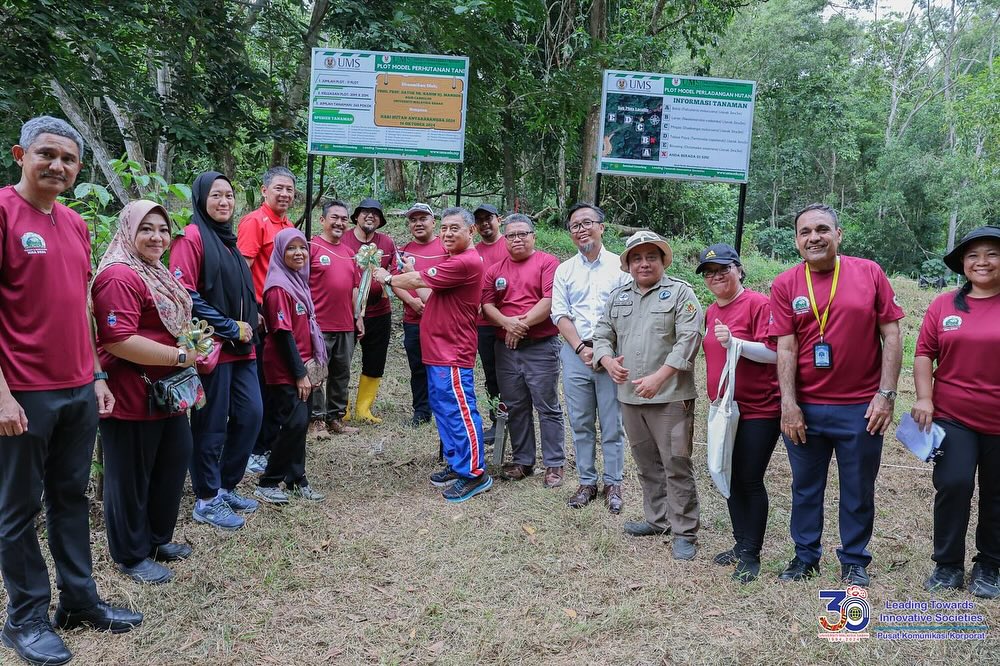
One Canon One Tree (OCOT) Initiative: Restoring Forests through University–Industry Partnership
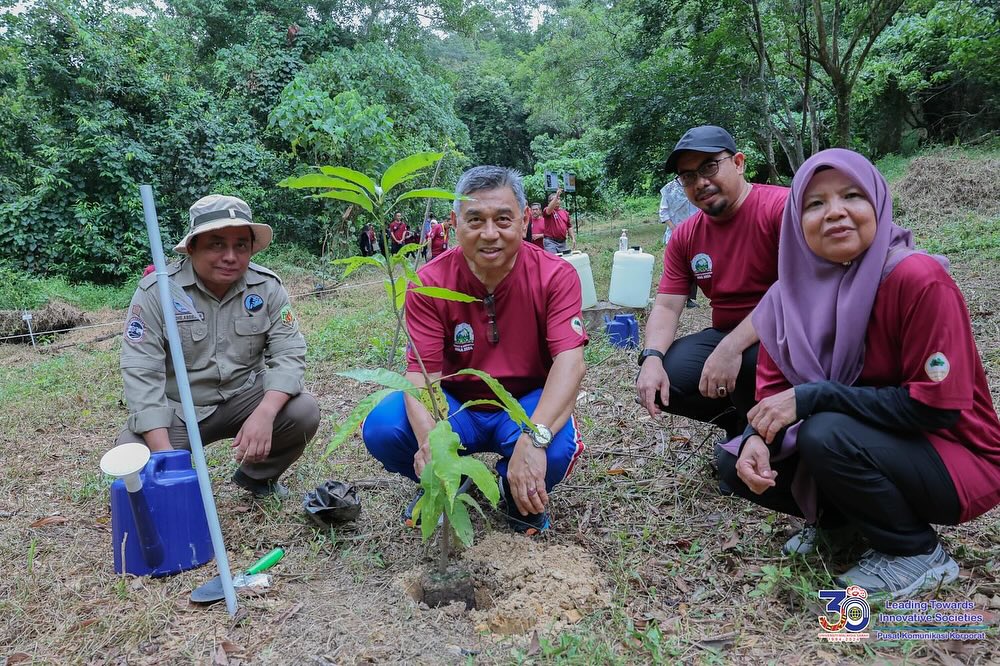
UMS collaborates with Canon Malaysia under the One Canon One Tree (OCOT) initiative to support forest restoration within campus forest areas and arboretums managed by the Faculty of Tropical Forestry. In 2024, the programme successfully planted 500 tree seedlings, involving academic staff, students, and corporate volunteers. OCOT strengthens biodiversity corridors, rehabilitates degraded land, and demonstrates how corporate social responsibility can directly support ecosystem recovery through university-led conservation efforts.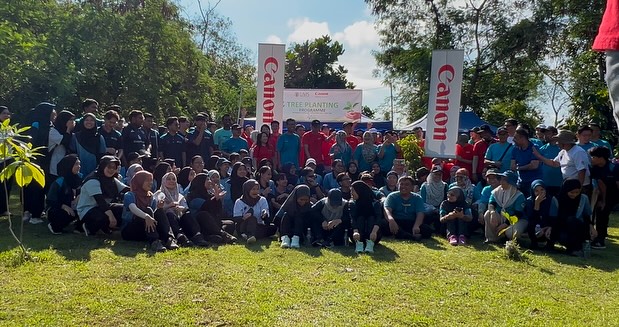
UMS Sprint ESG: PLANTASIA
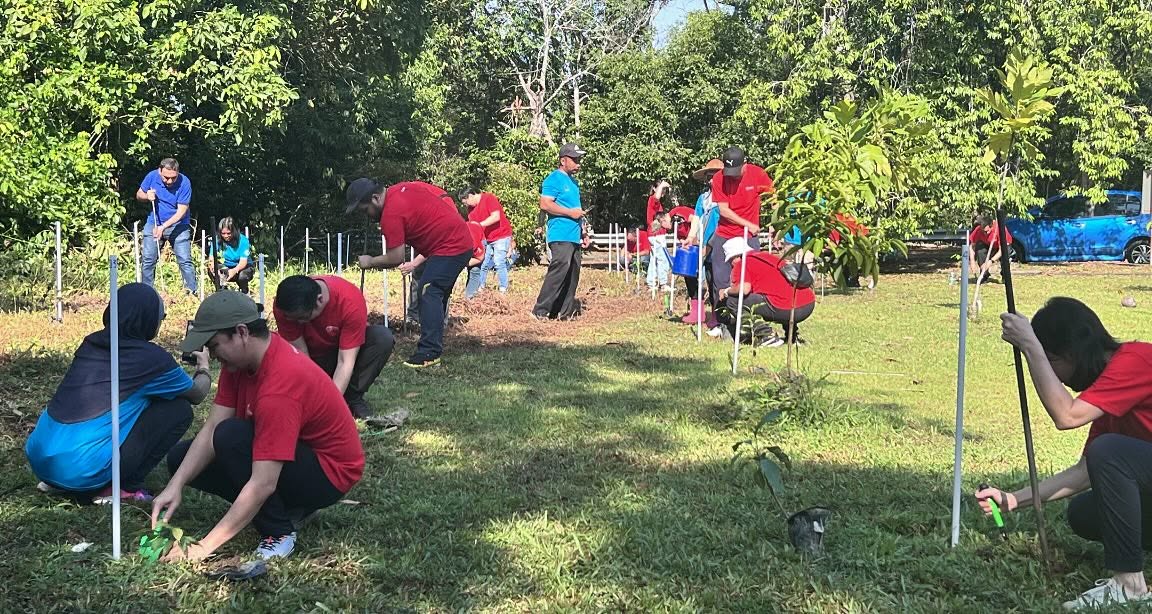
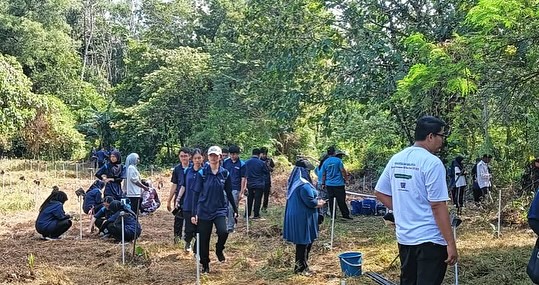
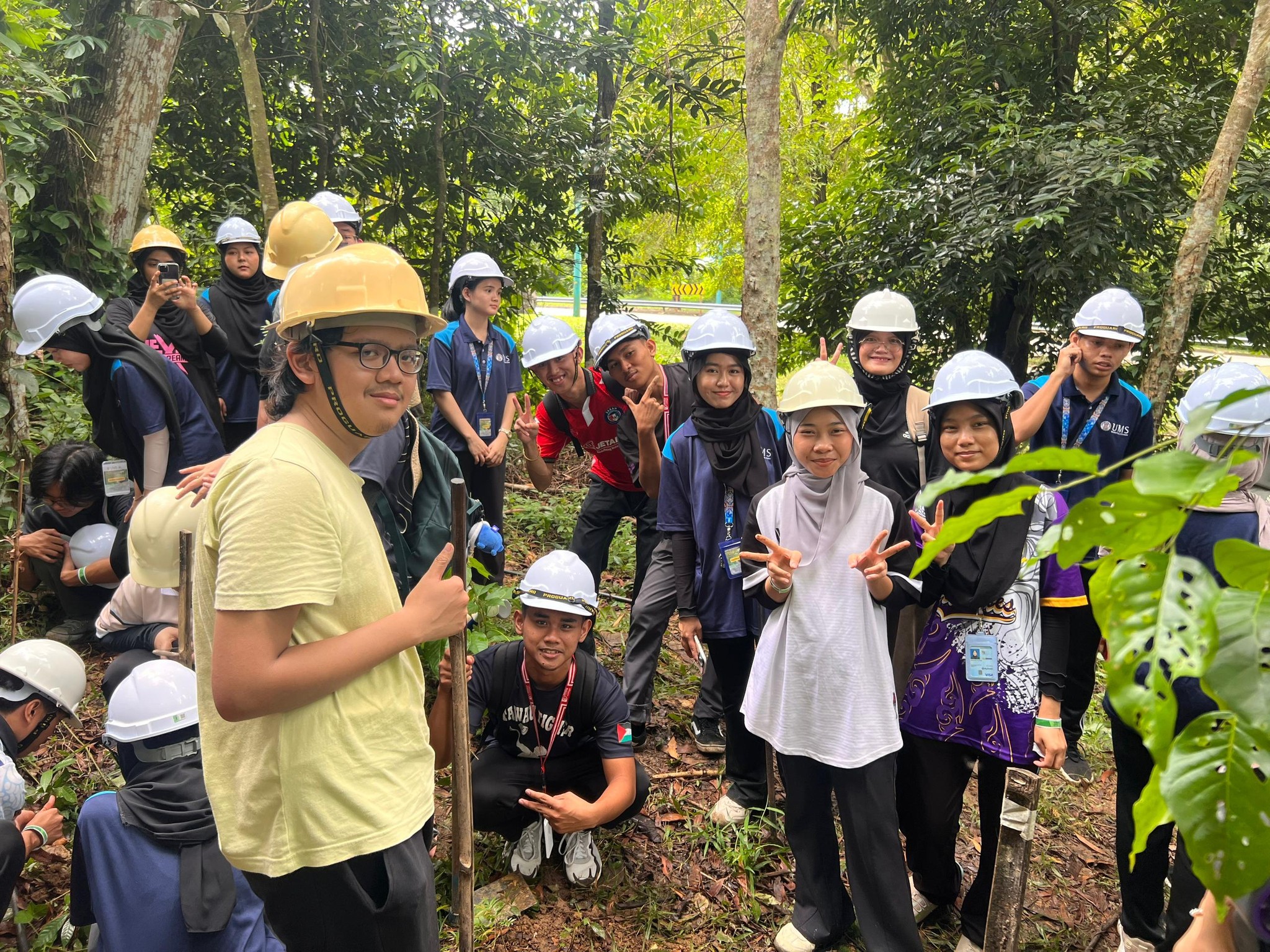
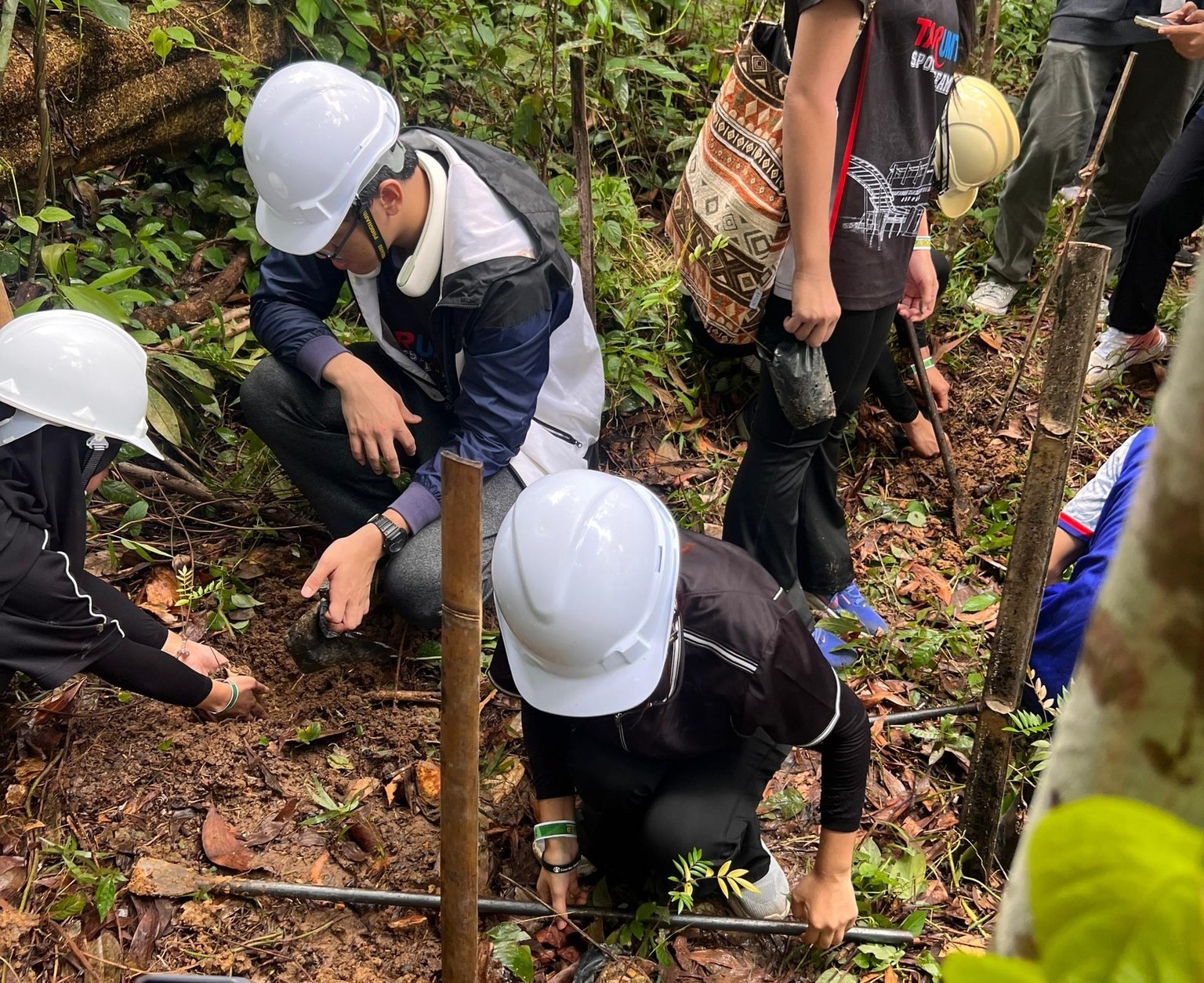
Universiti Malaysia Sabah (UMS) actively supports and organises events that promote the conservation and sustainable utilisation of land, forests, and wild areas through coordinated, university-wide initiatives. One such programme is UMS Sprint ESG: PLANTASIA, held on 5 May and 27 Nov 2024, which translated Environmental, Social and Governance (ESG) commitments into practical conservation action. The initiative mobilised students, staff, and partners to strengthen green spaces, rehabilitate degraded land, and enhance biodiversity within the university environment. By embedding conservation activities into institutional ESG programmes, UMS ensures that land stewardship, forest protection, and sustainable land use are not isolated efforts but part of a continuous, university-led approach. Programmes such as PLANTASIA reinforce UMS’s role as an EcoCampus and living laboratory, demonstrating how higher education institutions can actively safeguard forests and wild land through organised events, community engagement, and hands-on environmental action.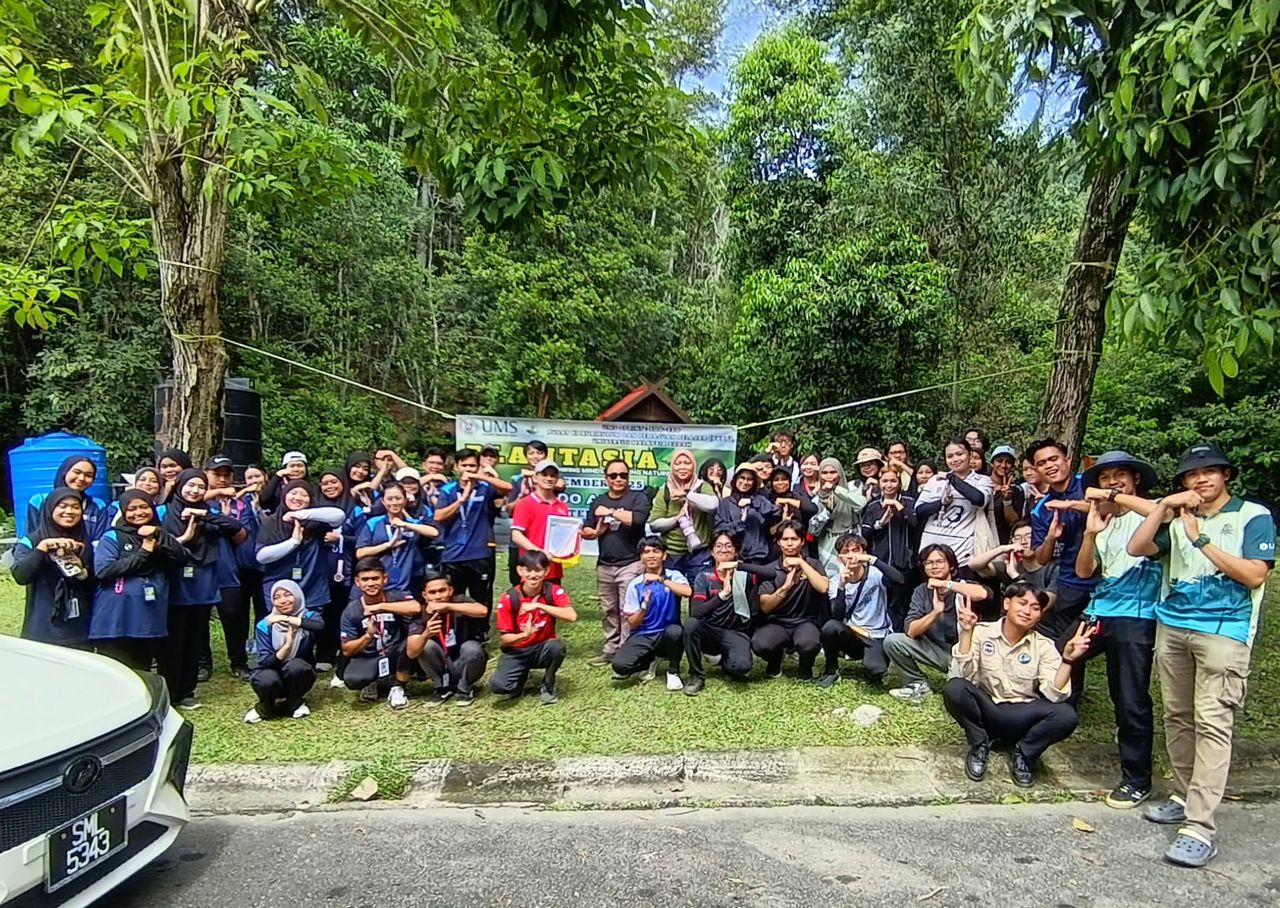
Mangrove & Wetland Conservation at Darau Wetland: Safeguarding Wetlands through Education and Action
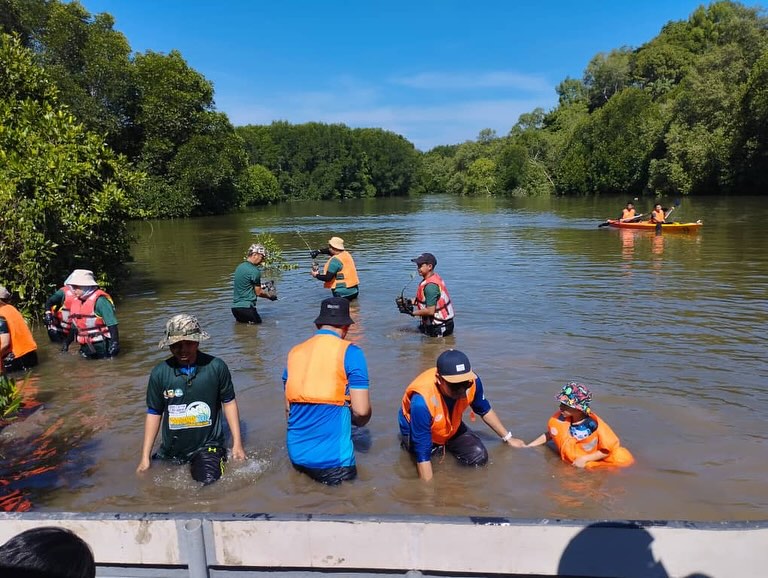
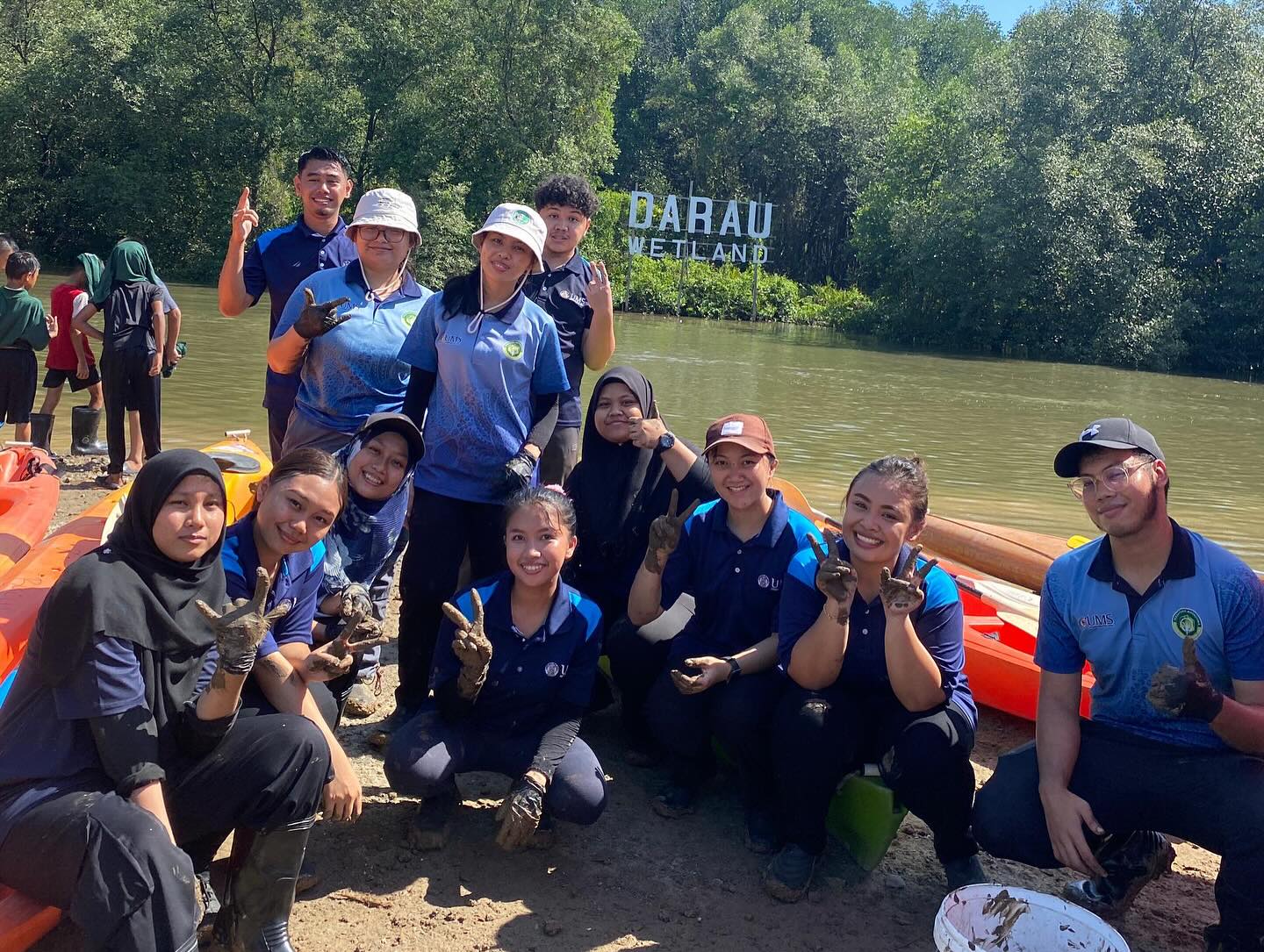
UMS actively supports wetland and mangrove conservation through participation in restoration programmes at Darau Wetland Eco-Tourism Site, in collaboration with Kota Kinabalu City Hall (Dewan Bandaraya Kota Kinabalu, DBKK) and conservation partners. The programme involved the planting of 2,000 mangrove trees, environmental education sessions, and hands-on demonstrations on mangrove nursery management. These activities enhance ecosystem resilience, protect coastal biodiversity, and promote sustainable land use through community-based conservation.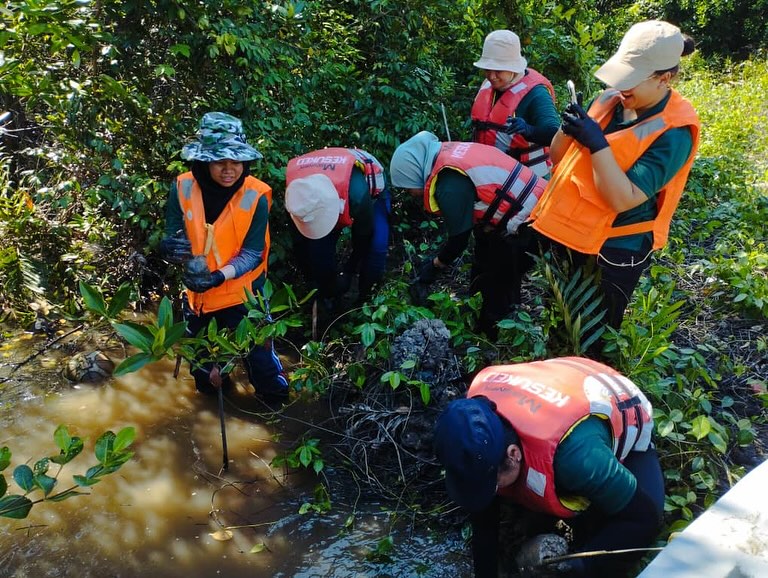
BORNEENSIS Gallery: Promoting Ecosystem Education and Conservation
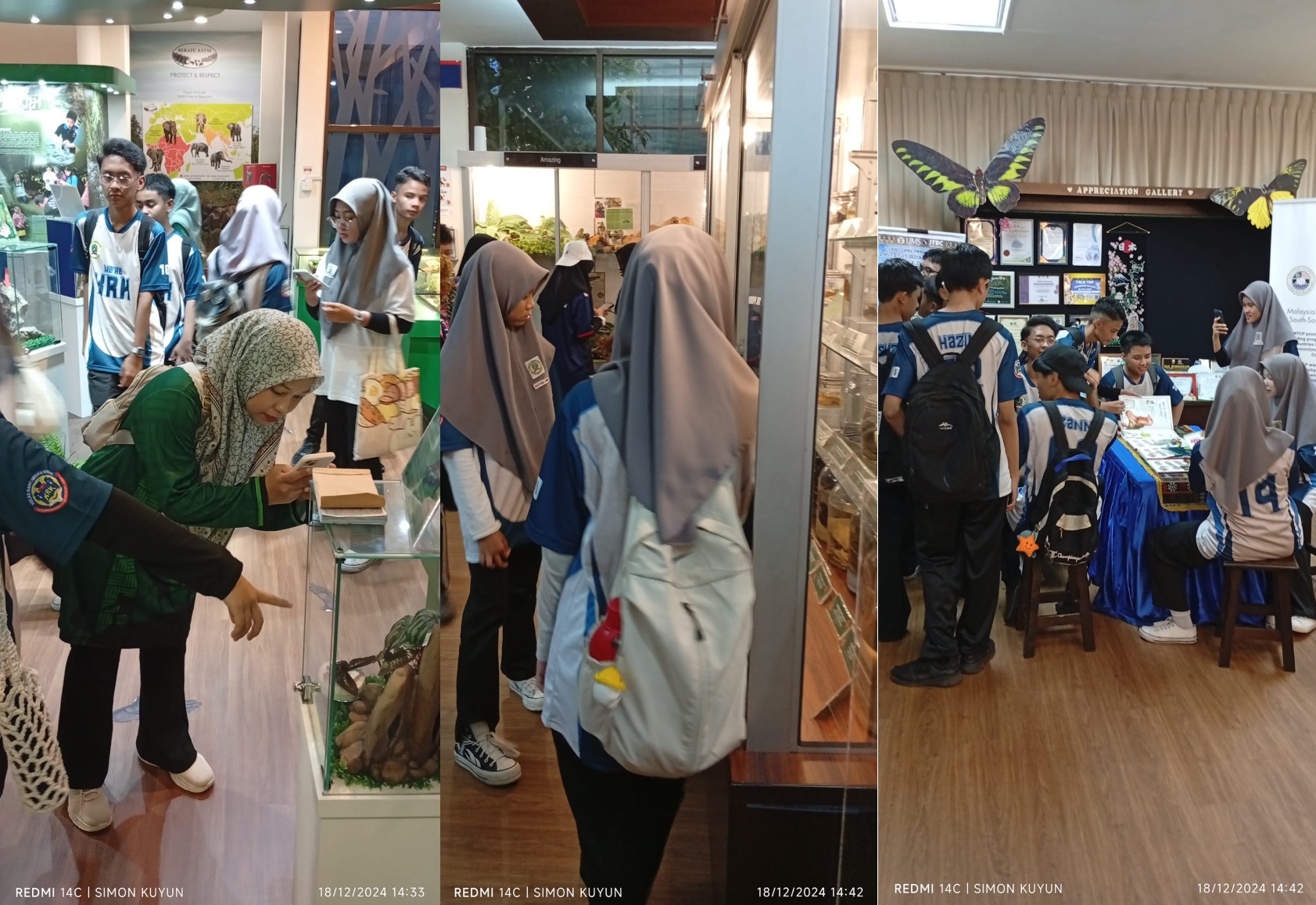
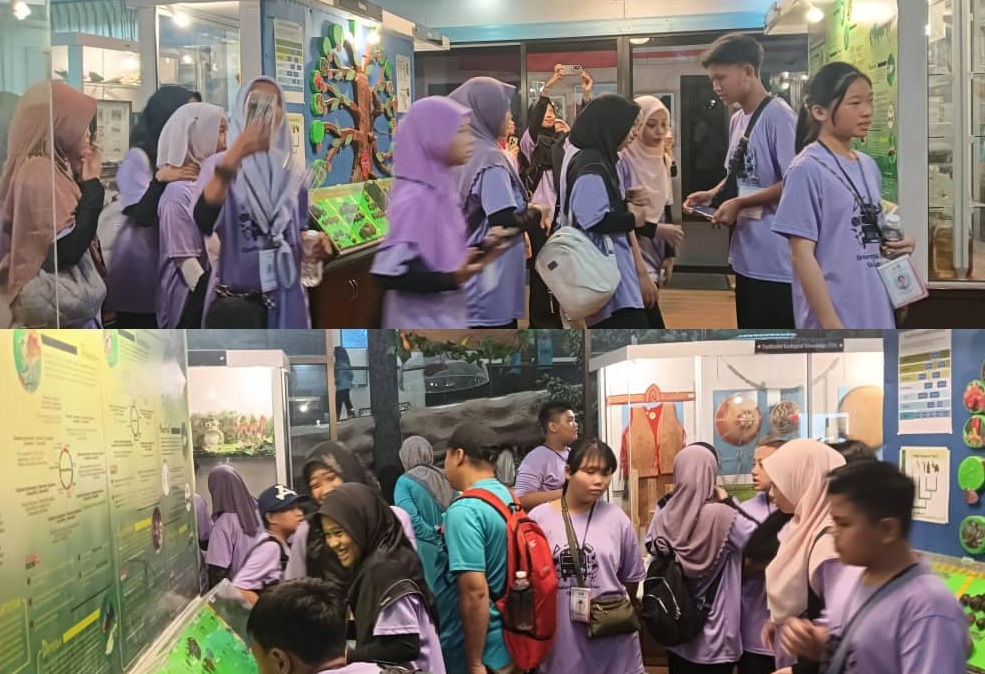
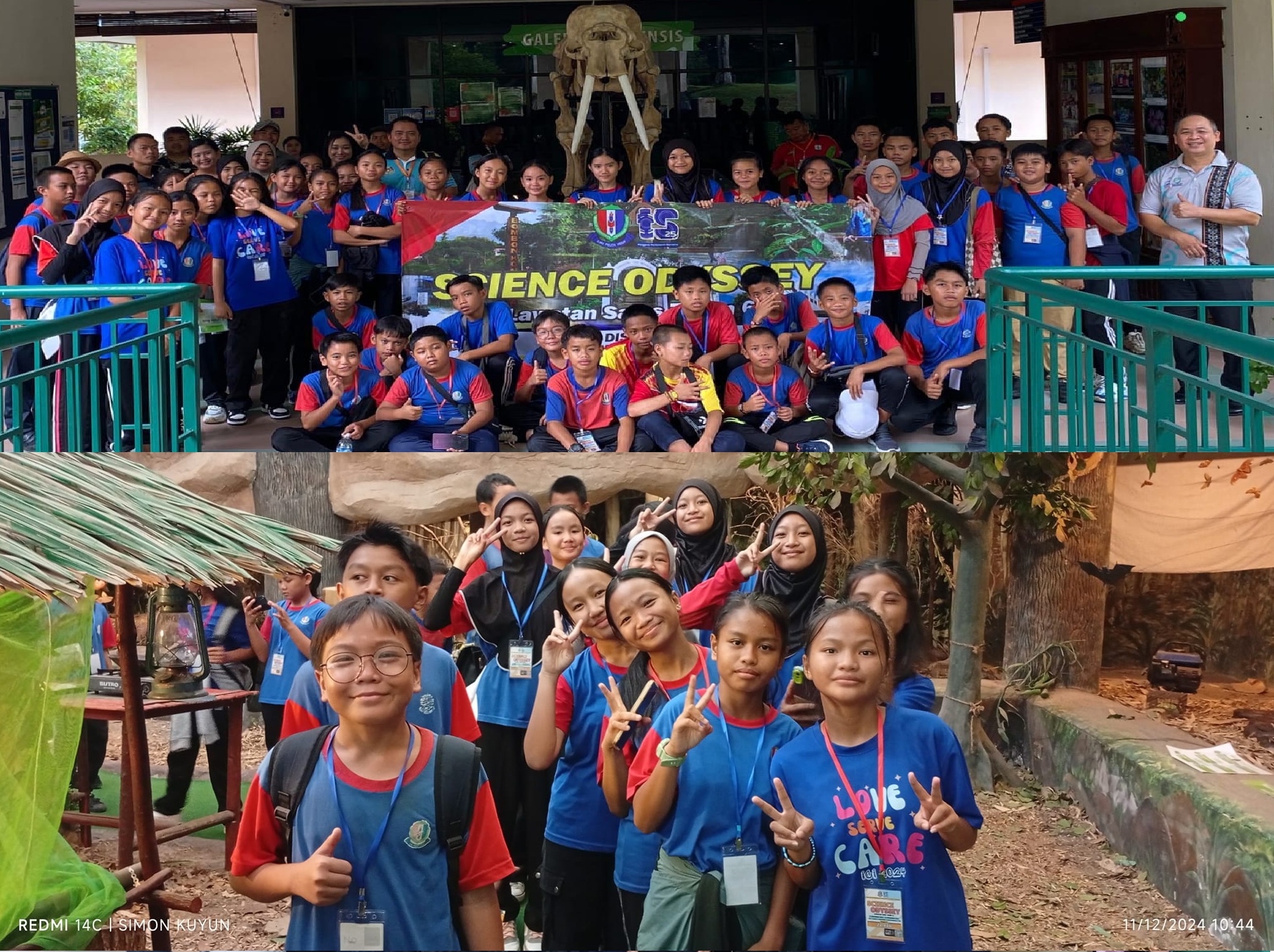
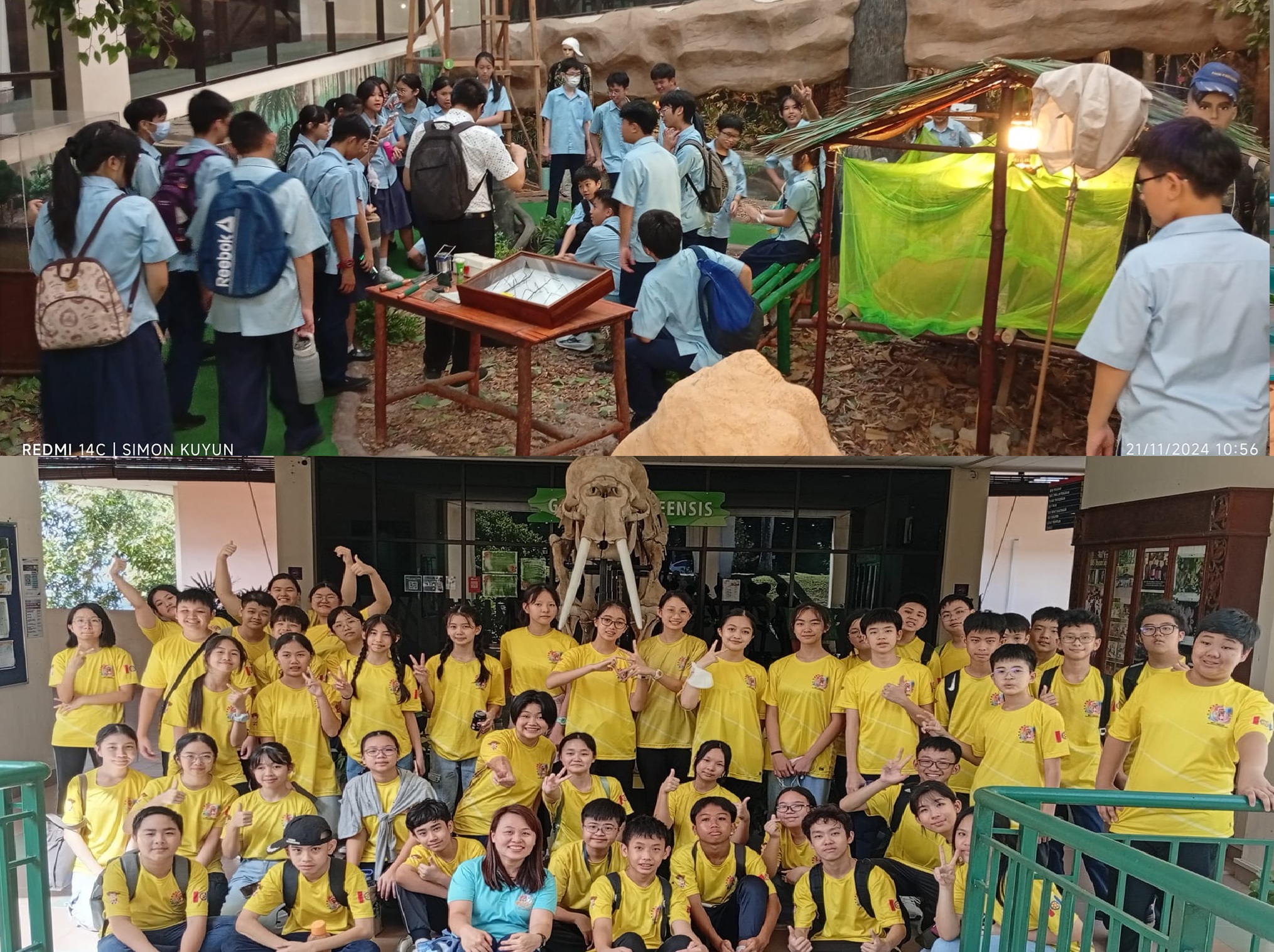
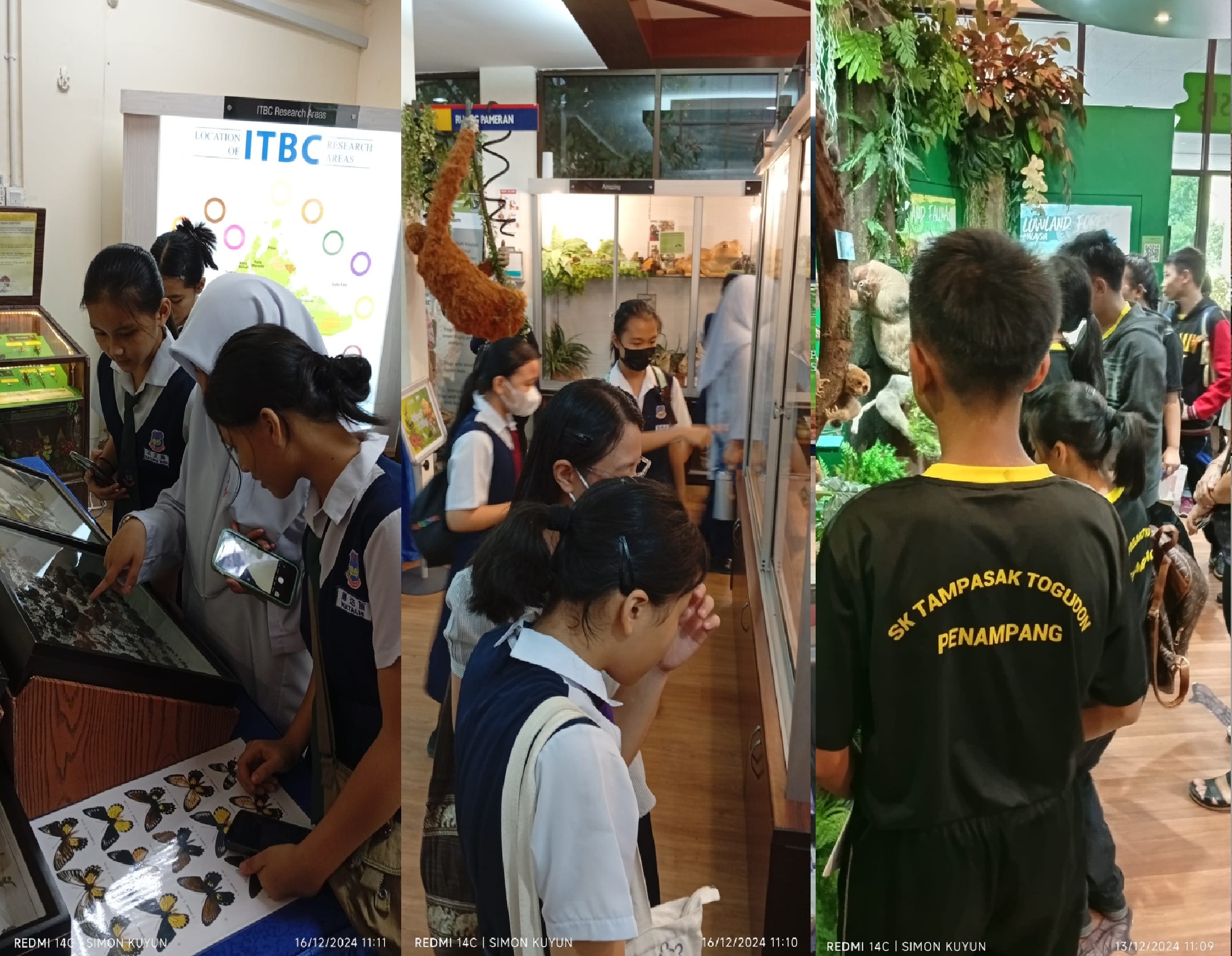
Educational visits from multiple schools were conducted throughout 2024 to the BORNEENSIS Gallery at the Institute of Tropical Biology and Conservation (IBTP), Universiti Malaysia Sabah, involving pre-school, primary, secondary and high schools, including SK Sungai Api (Tenom), SK Tungku (Lahad Datu) SMK Badin (Tuaran),SJKC Cheng Hwa (Papar), SK Tampasak Togudon(Penampang), SMK Sungai Badaun (Labuan), SMK Sungai Badaun(Labuan), SK Penangah (Telupid/Tongod), and SM Tshung Tsin Sabah. These visits provided students with guided exposure to biodiversity exhibits, conservation collections, and educational briefings, helping to raise awareness of forest ecosystems, wildlife conservation, and the importance of protecting natural heritage through experiential learning.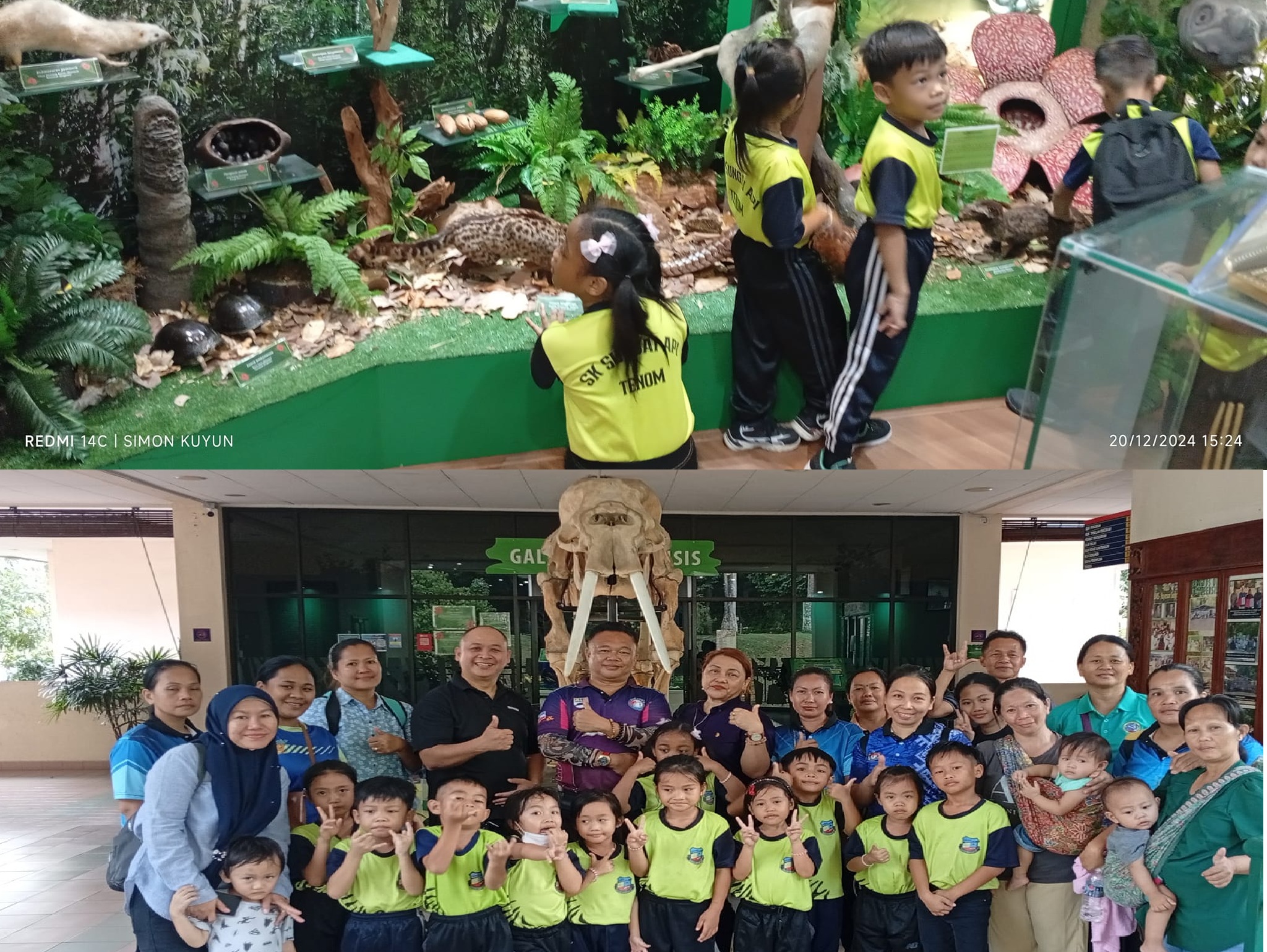
Forest Trail Conservation & Biodiversity Stewardship: Campus Forests as Living Classrooms
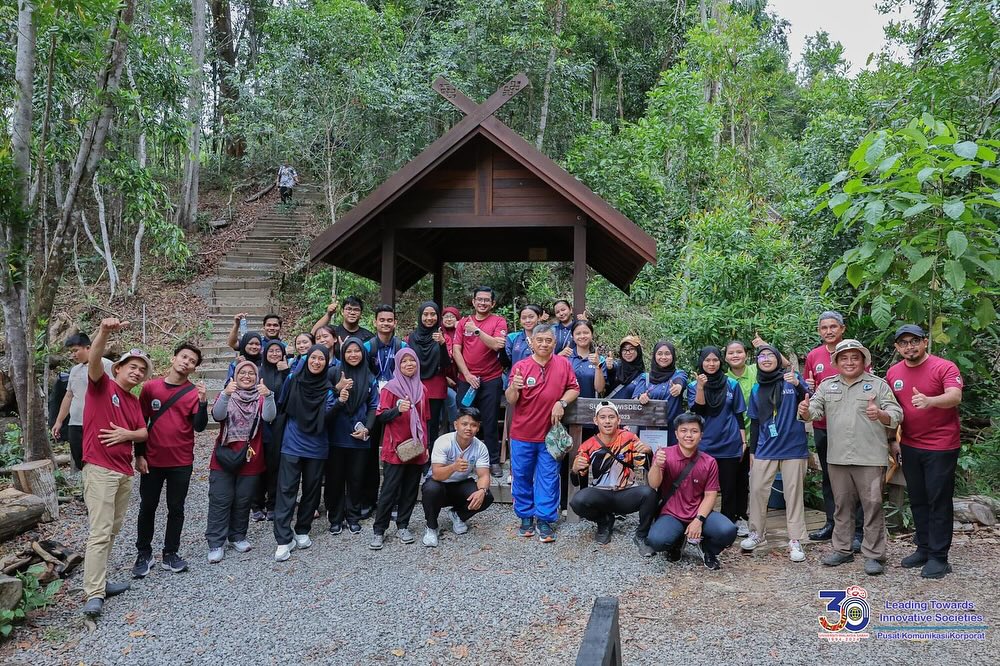
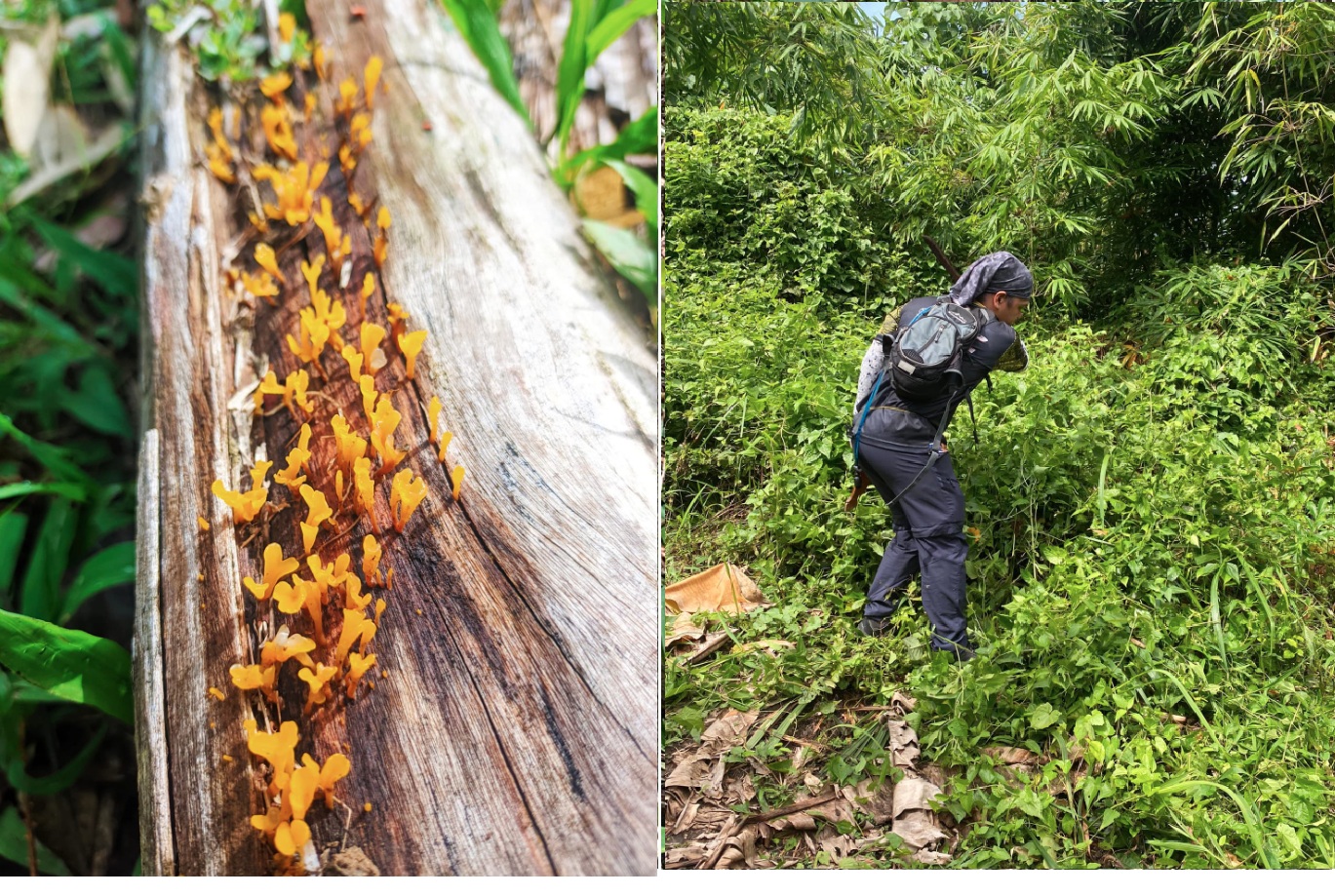
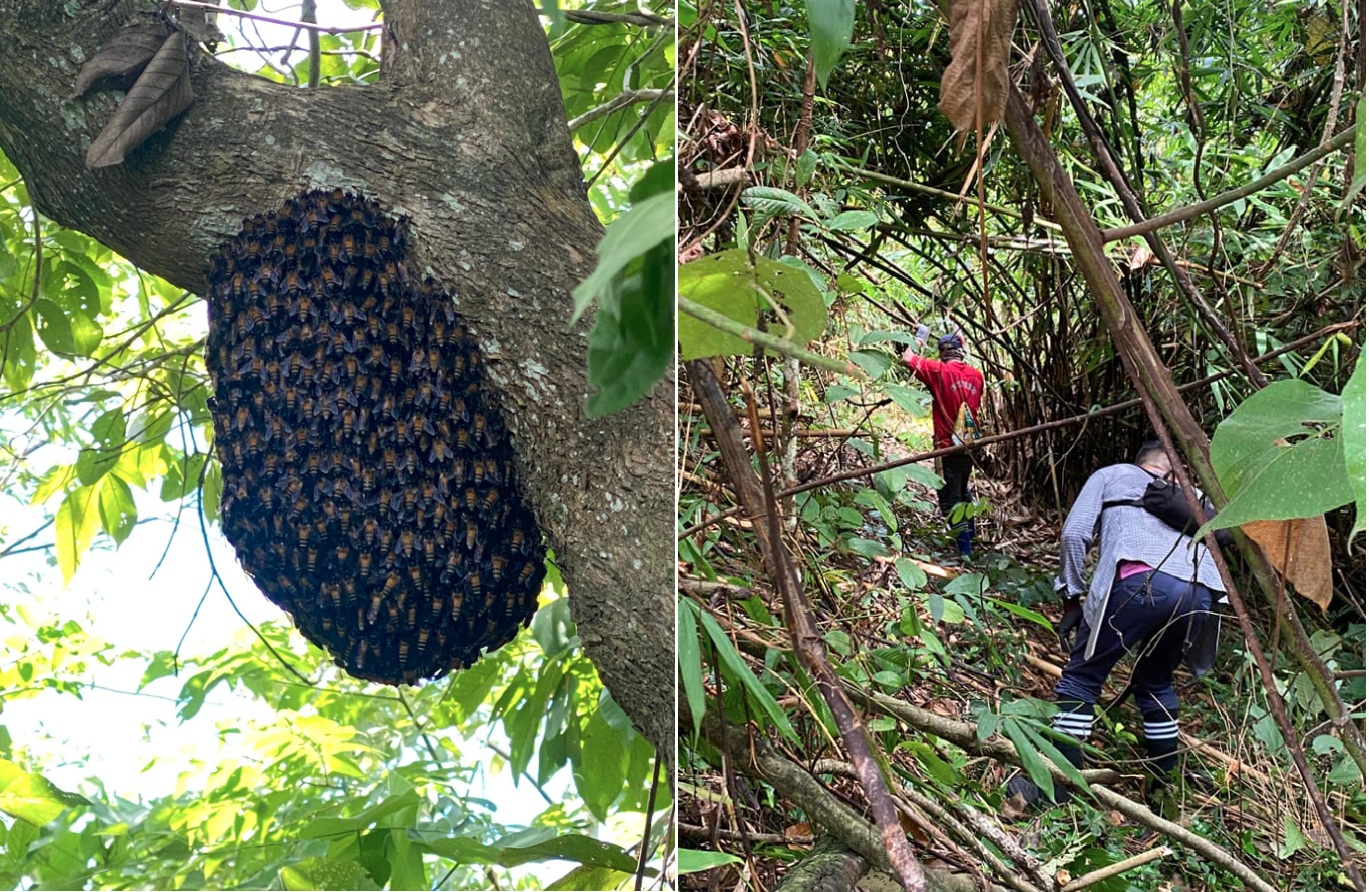
The Institute of Tropical Biology and Conservation (IBTP) regularly organises forest trail maintenance and conservation activities within the UMS campus forest. These efforts ensure that forest trails remain safe, accessible, and ecologically intact for research, education, and eco-tourism purposes. Through gotong-royong activities involving staff and researchers, IBTP promotes awareness of forest biodiversity while protecting flora and fauna habitats. The initiative reinforces UMS’s commitment to managing its forested land responsibly as a living laboratory for conservation science.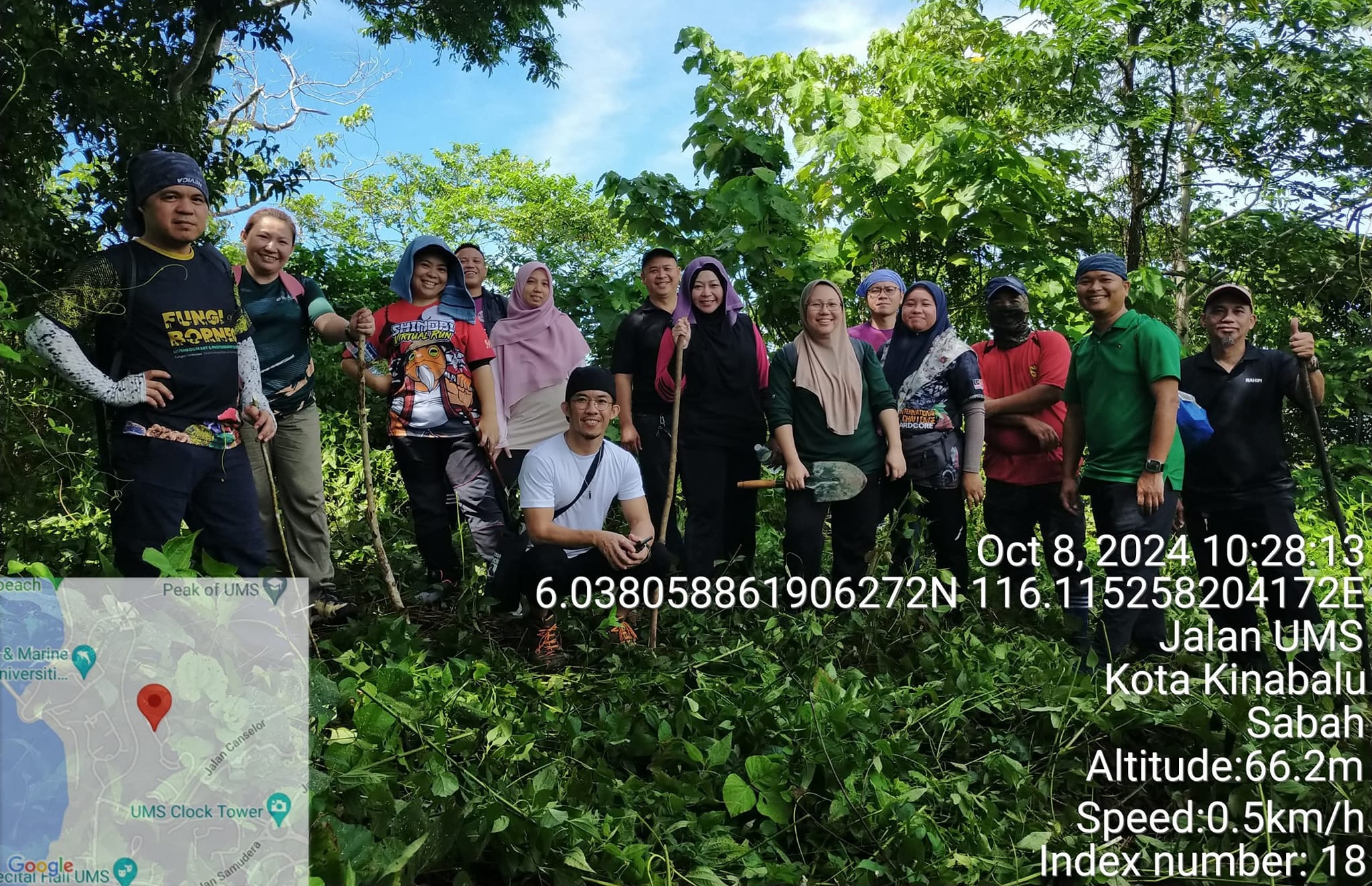
Protecting Life on Land Through Science, Action, and Stewardship
Ecosystem & Biodiversity Conservation at UMS
Universiti Malaysia Sabah (UMS) works directly to maintain, restore, and extend ecosystems and biodiversity of both plants and animals, particularly ecosystems and species under threat, through coordinated efforts led by the Faculty of Tropical Forestry (FPT) and Institute for Tropical Biology and Conservation (ITBC). UMS manages multiple Living Laboratories, including SFERA@UMS, Sapong (Tenom), and Darau Wetland, where more than 3,850 trees—including mangrove, fruit trees, and Tongkat Ali—were planted between 2024 and 2025 to rehabilitate degraded forest, wetland, and agroforestry landscapes. Beyond habitat restoration, UMS actively undertakes species conservation, monitoring, and rehabilitation programmes. Through ITBC and its partners, UMS supports the rehabilitation and release of endangered flying foxes (keluang) in collaboration with the Sabah Wildlife Department, addressing population decline caused by habitat loss and human–wildlife conflict. UMS researchers are also engaged in wildlife ecology and conservation research involving Bornean elephants, contributing scientific data to support landscape connectivity, human–elephant coexistence, and ecosystem protection in forest–agricultural interfaces. Together with long-term biodiversity inventories covering hornbills, orchids, mangroves, and endemic Bornean species, and partnerships with Sabah Forestry Department, DBKK, JPS, WWF-Malaysia, and UNESCO, these collective efforts strengthen ecosystem resilience, safeguard threatened species, and reinforce UMS’s role as a regional hub for biodiversity conservation and sustainable land stewardship.
Flying Fox (Keluang) Rehabilitation Programme: Safeguarding Keystone Species for Forest Regeneration
UMS actively supports the rehabilitation of endangered flying foxes (keluang) through ITBC in collaboration with the Sabah Wildlife Department. The programme focuses on the rescue, medical care, rehabilitation, and preparation for release of orphaned and injured flying foxes affected by habitat loss and human–wildlife conflict. Flying foxes are critical keystone species for forest ecosystems due to their role in pollination and seed dispersal. By rehabilitating and returning these animals to the wild, UMS directly contributes to forest regeneration, ecosystem balance, and biodiversity resilience in Sabah’s threatened landscapes.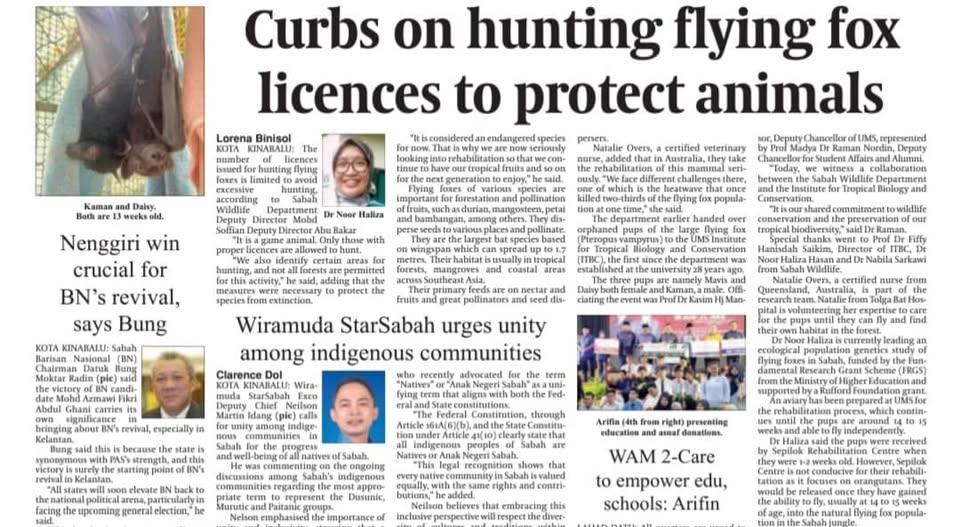
Bornean Elephant Conservation & Research Engagement: Science-Based Solutions for Human–Wildlife Coexistence
UMS researchers are actively involved in wildlife ecology and conservation research, including studies related to Bornean elephants, particularly in landscapes where forest habitats intersect with agricultural development. These efforts contribute scientific evidence to support habitat connectivity, ecosystem protection, and human–wildlife coexistence strategies. Through long-term research, field studies, and collaboration with conservation authorities, UMS supports informed decision-making for the protection of large mammals that depend on intact forest ecosystems, reinforcing the university’s role in safeguarding threatened terrestrial biodiversity.lying foxes are critical keystone species for forest ecosystems due to their role in pollination and seed dispersal. By rehabilitating and returning these animals to the wild, UMS directly contributes to forest regeneration, ecosystem balance, and biodiversity resilience in Sabah’s threatened landscapes.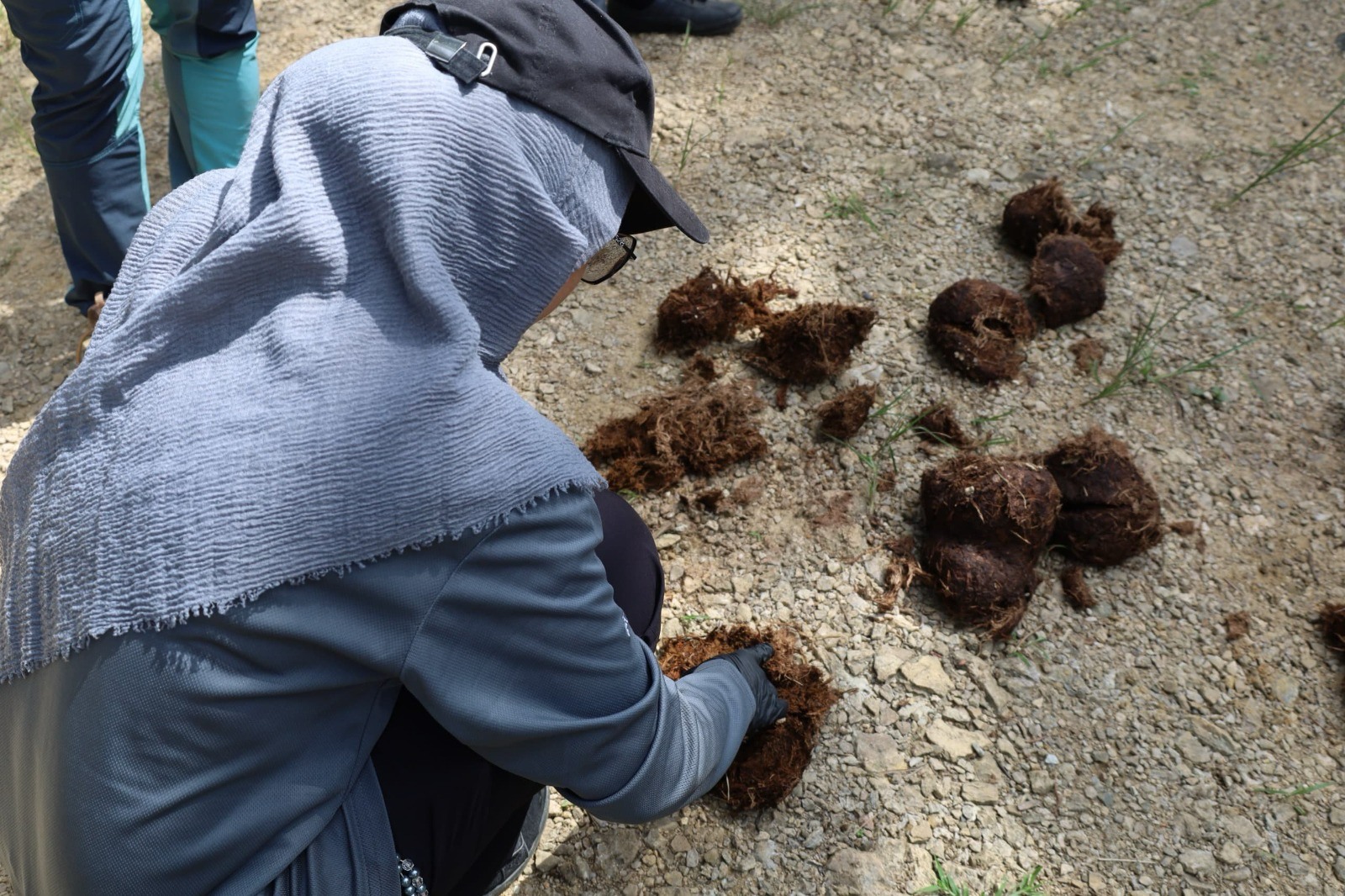
Forest, Agroforestry & Wetland Habitat Restoration: Rebuilding Ecosystems Through Living Laboratories
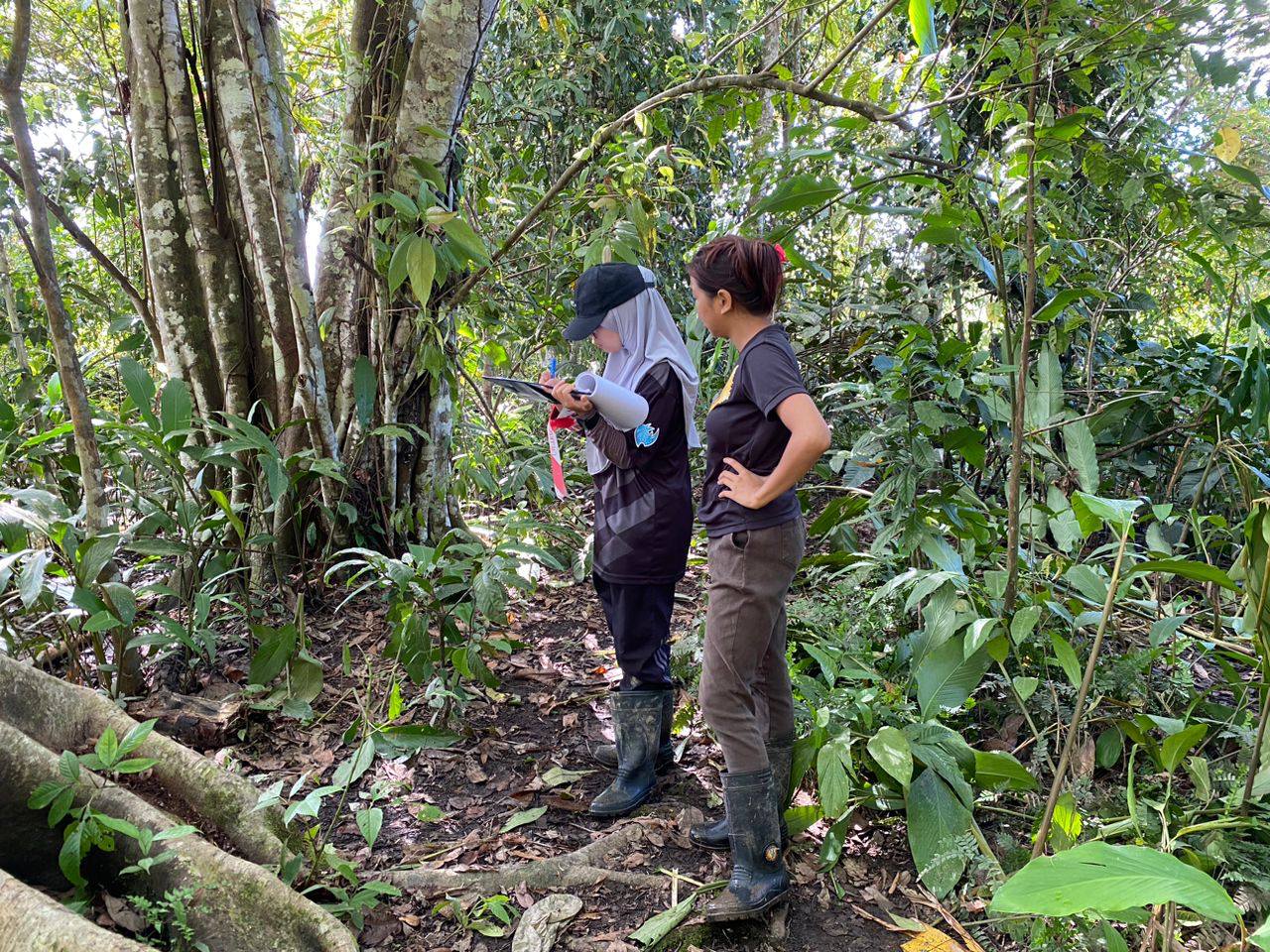
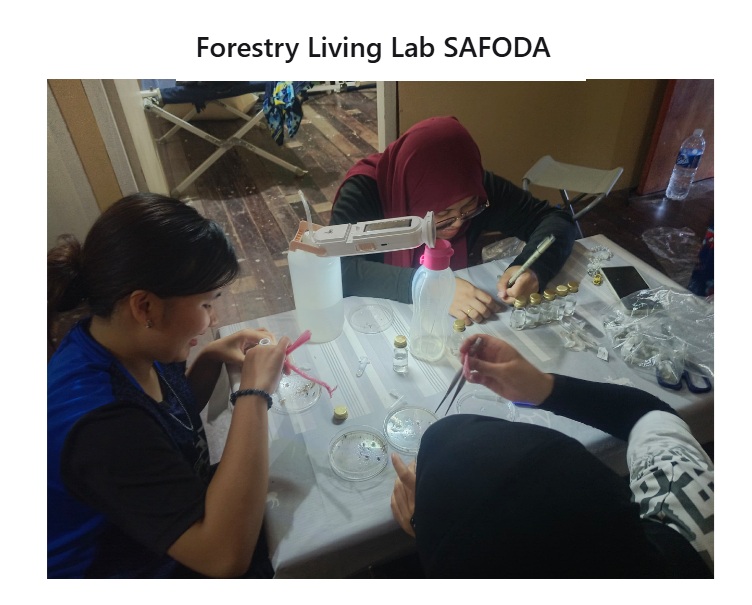
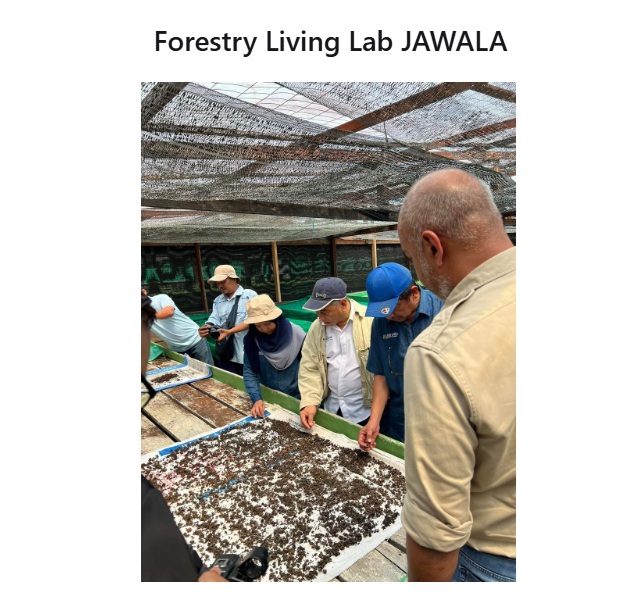
Universiti Malaysia Sabah (UMS) manages multiple Forestry and Biodiversity Living Laboratories where ecosystem restoration is carried out directly on university-managed and partner-managed landscapes. Key sites include the Forestry Living Lab SFERA@UMS, Forestry Living Lab SAFODA, and Forestry Living Lab JAWALA, complemented by restoration activities at Sapong (Tenom) and Darau Wetland. These living labs integrate teaching, research, and conservation to address forest degradation, land-use change, and habitat loss. In 2024, more than 3,850 trees—including mangrove species, fruit trees, and Tongkat Ali—were planted across these sites to restore degraded forest, wetland, and agroforestry ecosystems. The restoration efforts enhance habitat quality, soil stability, carbon sequestration, and biodiversity recovery, while serving as hands-on learning platforms for students and communities. Through these coordinated living labs, UMS demonstrates direct institutional responsibility in maintaining and extending ecosystems under threat, reinforcing its role as a regional hub for sustainable land stewardship and biodiversity conservation.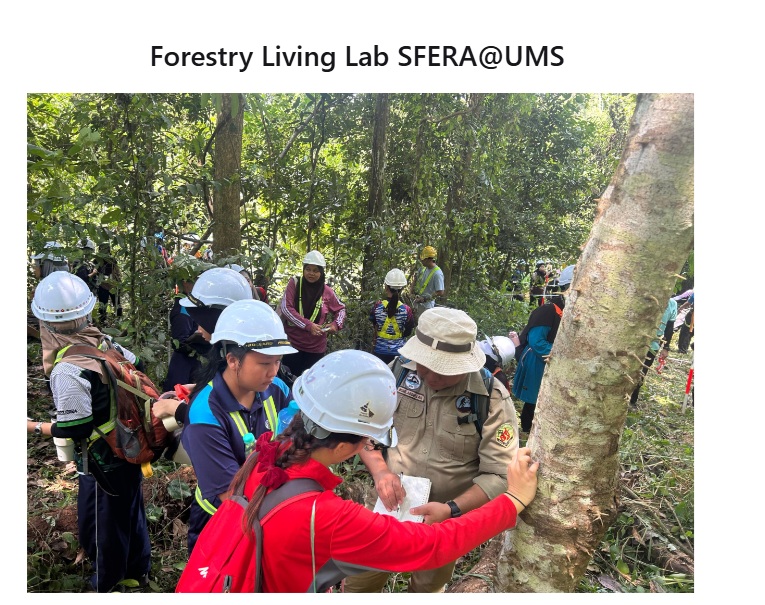
Learning from Nature, Protecting Biodiversity Together
UMS Educationcational Programmes on Ecosystems, Wild Flora & Fauna
Universiti Malaysia Sabah (UMS), Malaysia’s first eco-tourism university, offers structured educational programmes on ecosystems, wild flora, and fauna for local and national communities, anchored in strong academic foundations, living laboratories, and community outreach. Through its faculties, research institutes, and public-facing platforms, UMS advances environmental stewardship by combining formal education, experiential learning, and conservation practice. UMS delivers accredited academic training through programmes such as the Bachelor of Science (Environmental Science) (UH6422001), which provides students with comprehensive knowledge in climate systems, sustainability strategies, and conservation management. Complementing this flagship programme, UMS offers credit-bearing courses including Meteorology & Climate Change, Environmental Law and Ethics, Forest Hydrology, and Evolutionary Ecology and Biodiversity Conservation. These courses equip learners with the scientific, legal, and applied skills needed to address environmental degradation, biodiversity loss, and ecosystem resilience. Beyond the classroom, UMS extends ecosystem education to the wider community through its Living Labs, marine and forest reserves, and biodiversity facilities such as the Institute of Tropical Biology and Conservation (ITBC) and BORNEENSIS Gallery. Educational activities include guided biodiversity visits, ecosystem talks, school and community programmes, mangrove and forest education initiatives, and hands-on conservation activities involving wild flora and fauna. By integrating theory with real-world application, UMS empowers students, educators, and local communities to actively conserve biodiversity, promote sustainable tourism, and protect ecosystems under threat—reinforcing its role as a national leader in environmental and ecosystem education.
National Mangrove Education & Ecosystem Conservation Programme
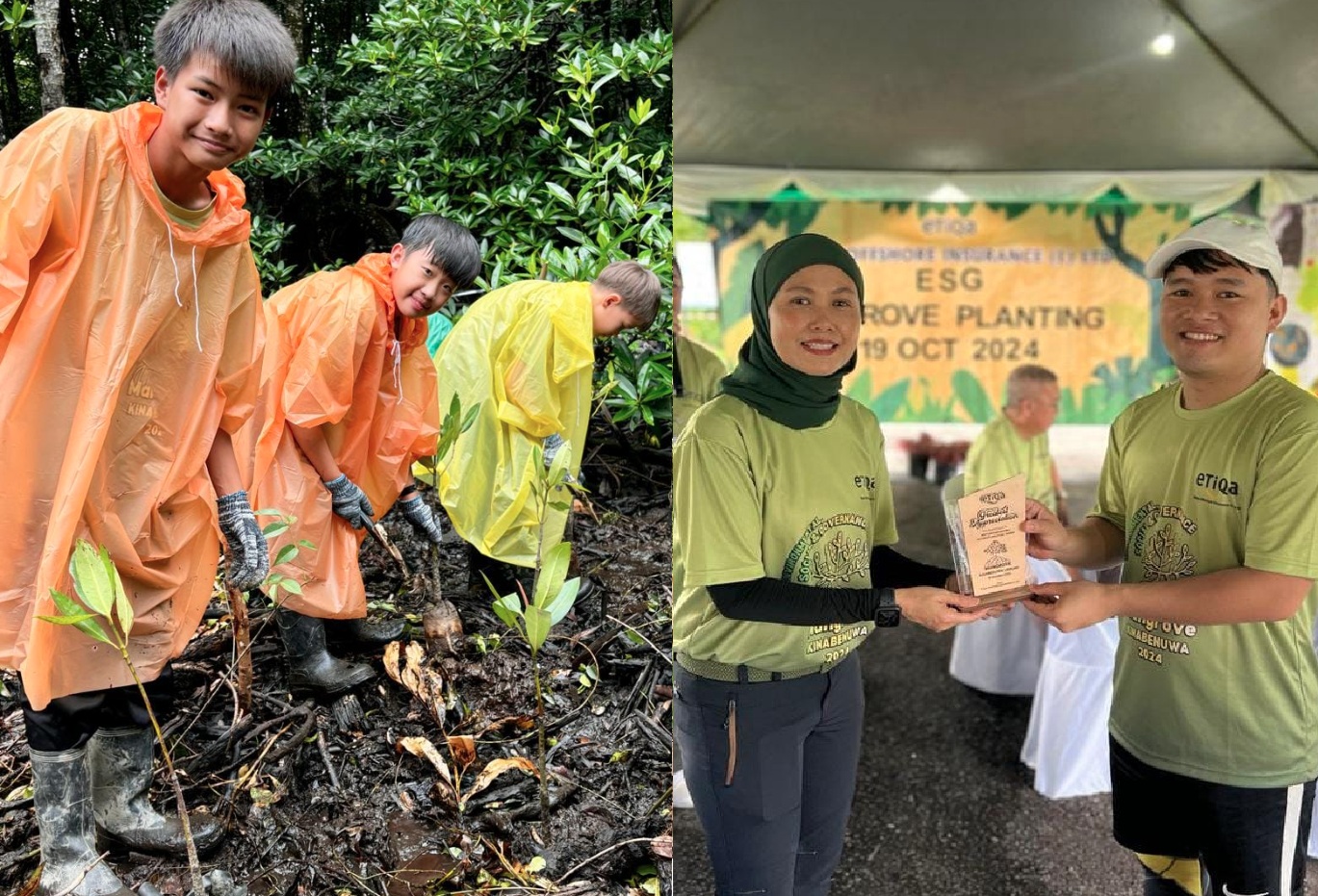
On 20 October 2024, a Mangrove Education and Planting Programme was successfully conducted at Kinabenuwa, involving the planting of 200 mangrove seedlings by primary school students. The programme aimed to promote early awareness of mangrove conservation, wetland protection, and the importance of coastal ecosystems in biodiversity preservation and climate resilience. The programme was organised by Etiqa Offshore Insurance Ltd (EOIL) in collaboration with Perbadanan Labuan, Universiti Malaysia Sabah Alumni Association, the Institute for Tropical Biology and Conservation (IBTP), UMS, and the Sabah Wetlands Conservation Society. The educational session and planting activities were delivered by Assoc. Prof. Ts. Dr. Noor Haliza Hasan @ Ahmad, engaging 40 students from Labuan International School, Sekolah Kebangsaan Pekan Dua, SJKC Chi Wen, and Sekolah Kebangsaan Sungai Bedaun. Through hands-on learning and guided planting, the programme strengthened environmental literacy among young participants while contributing directly to the restoration and sustainable management of mangrove ecosystems.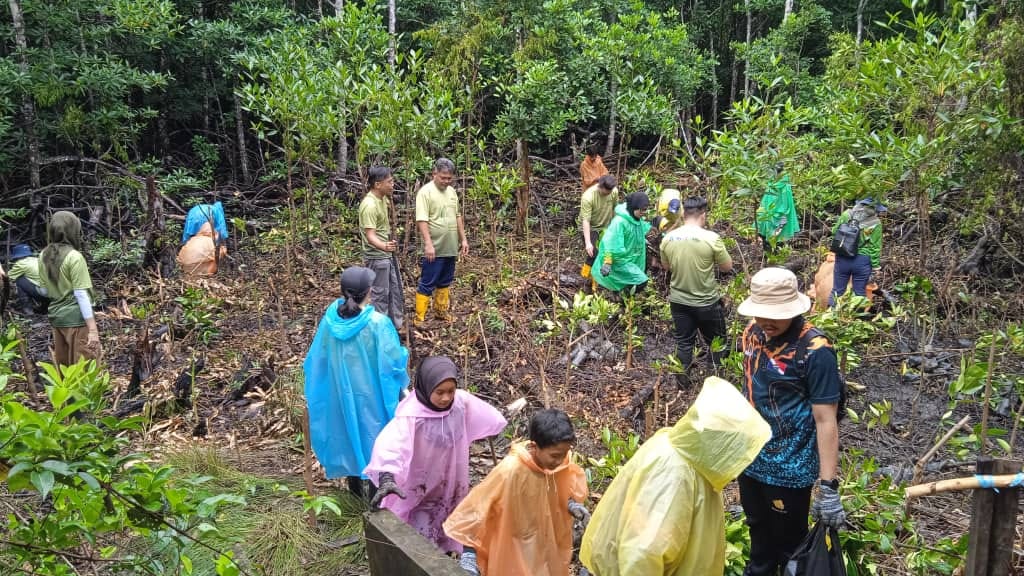
International School-Based Forest Education: Nurturing Future Guardians of the Forest Worldwide
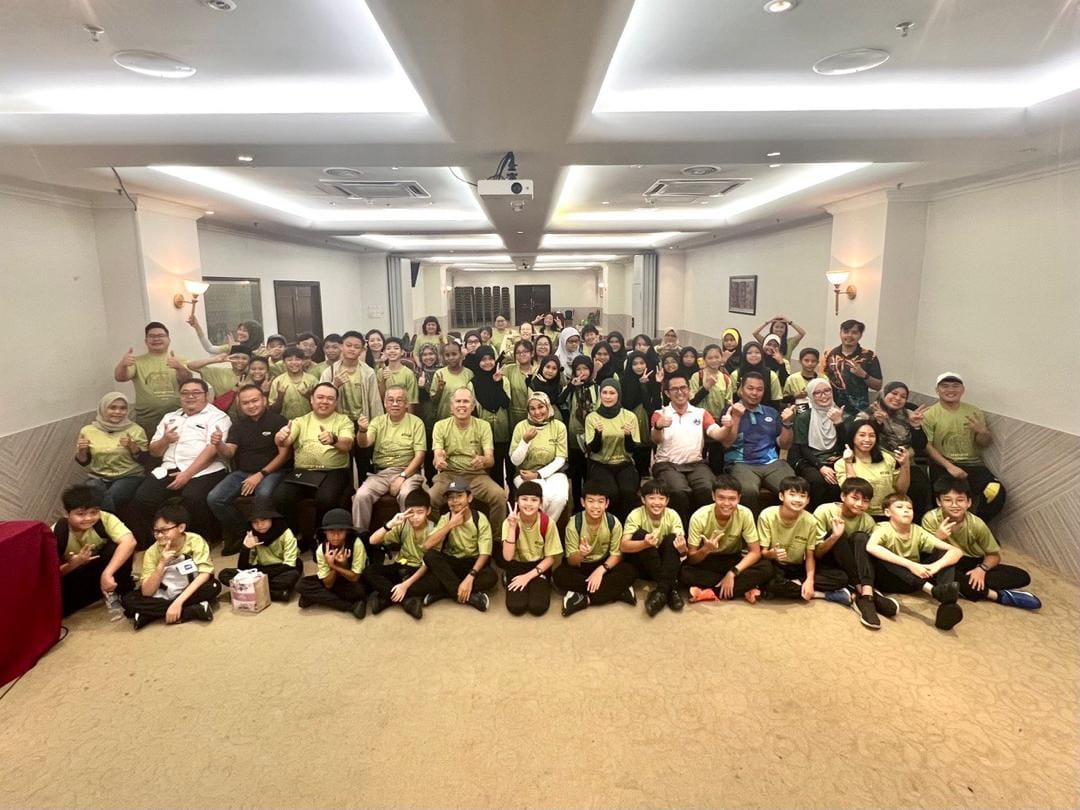
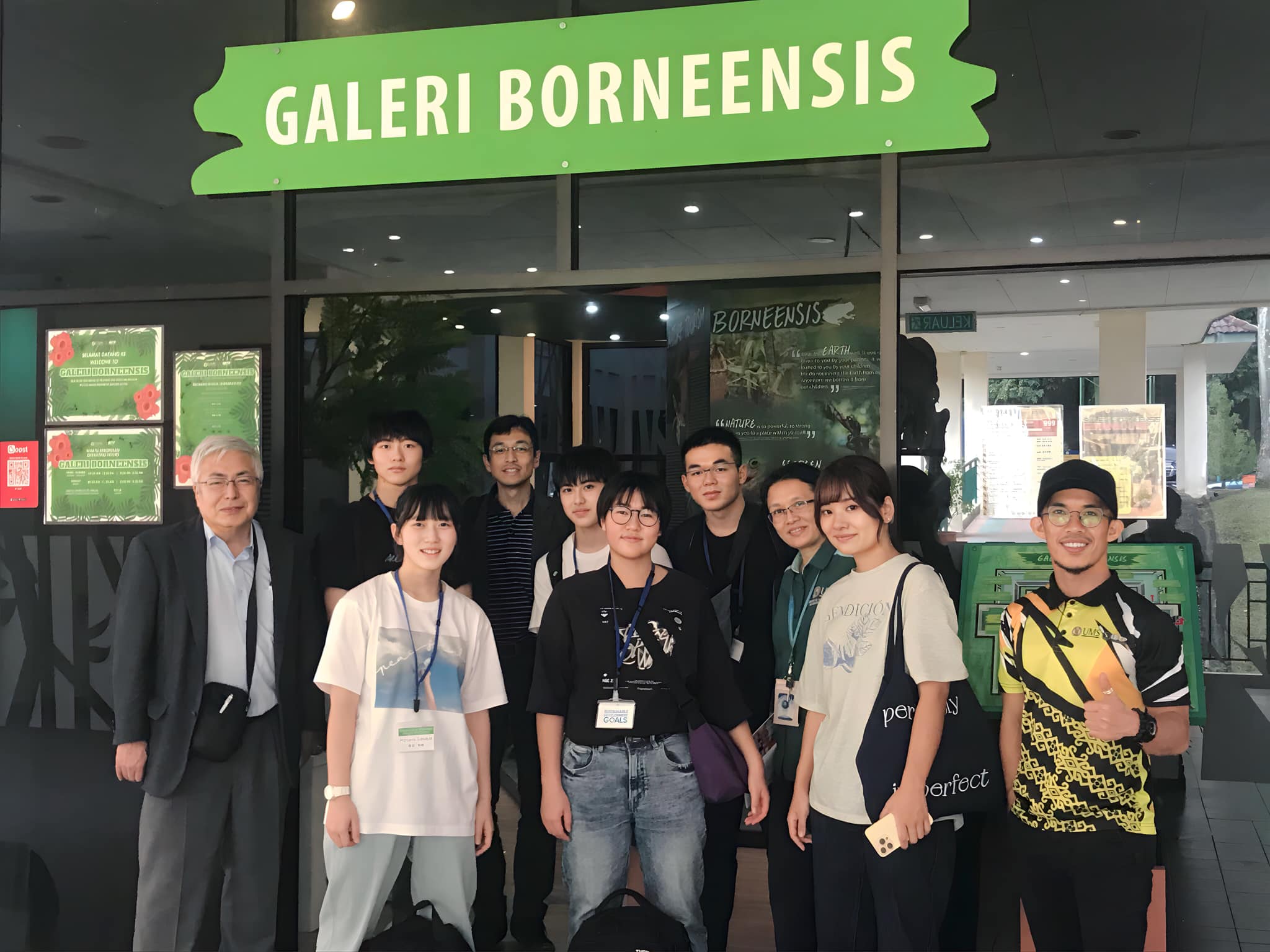
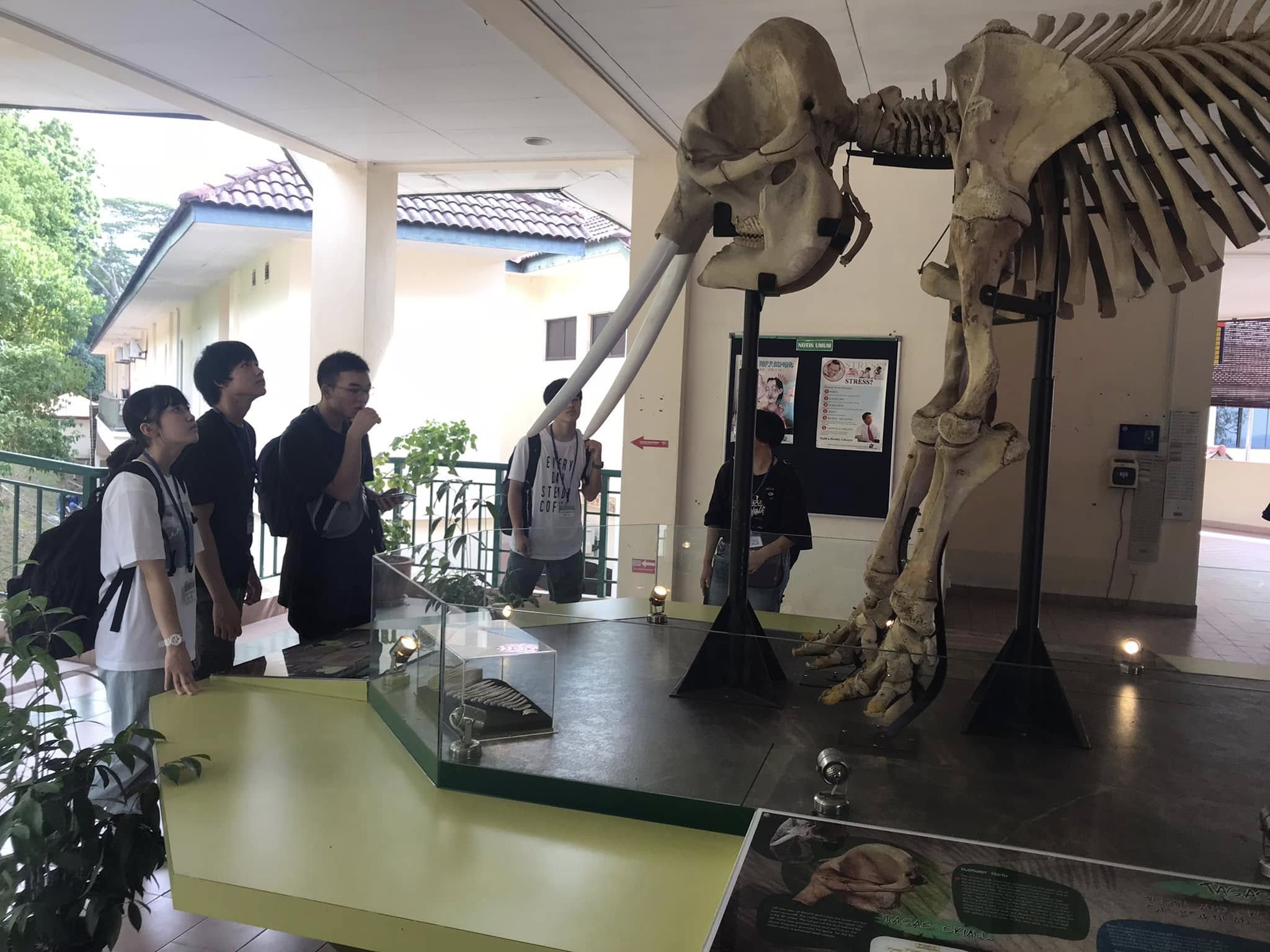
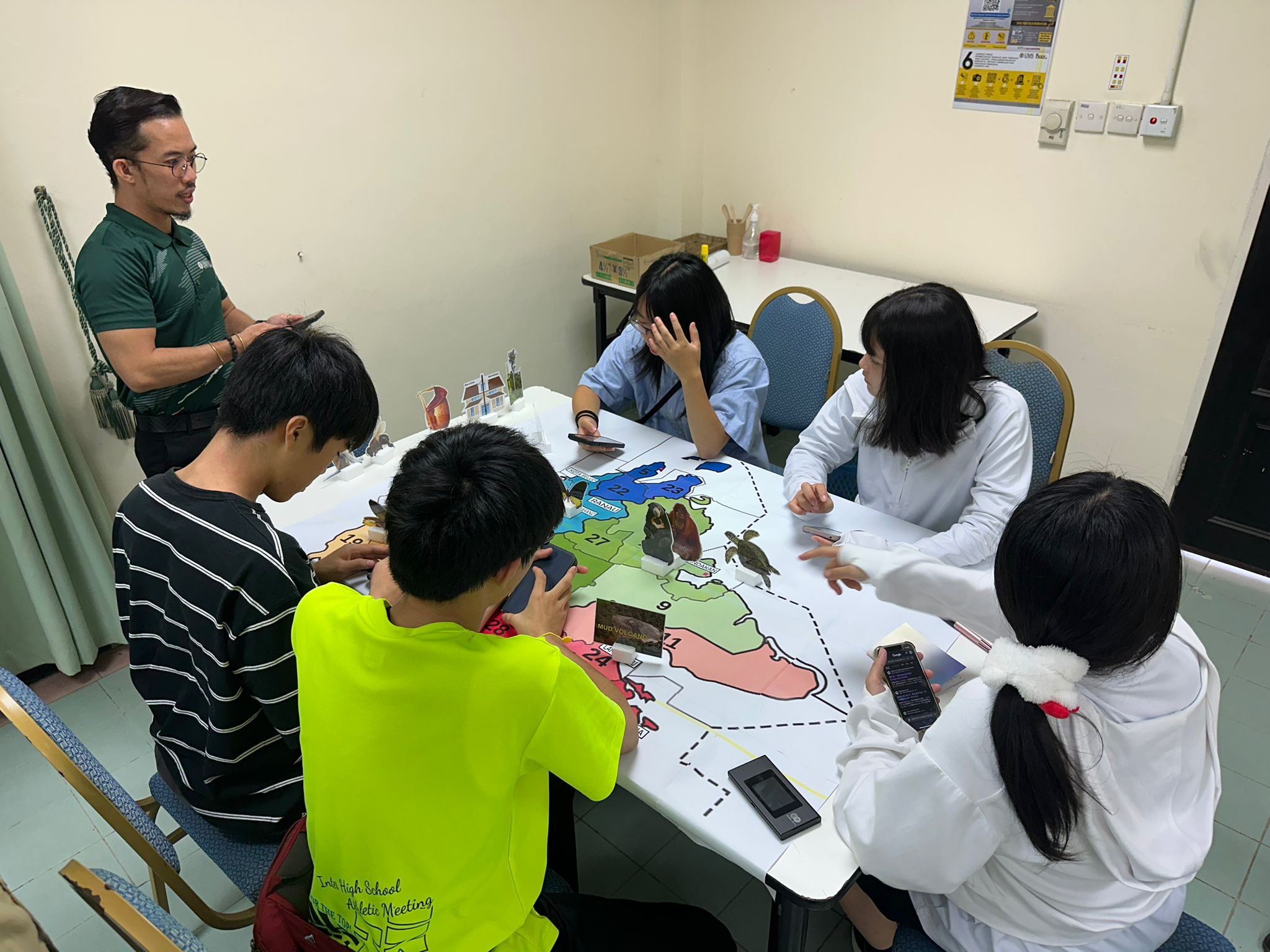
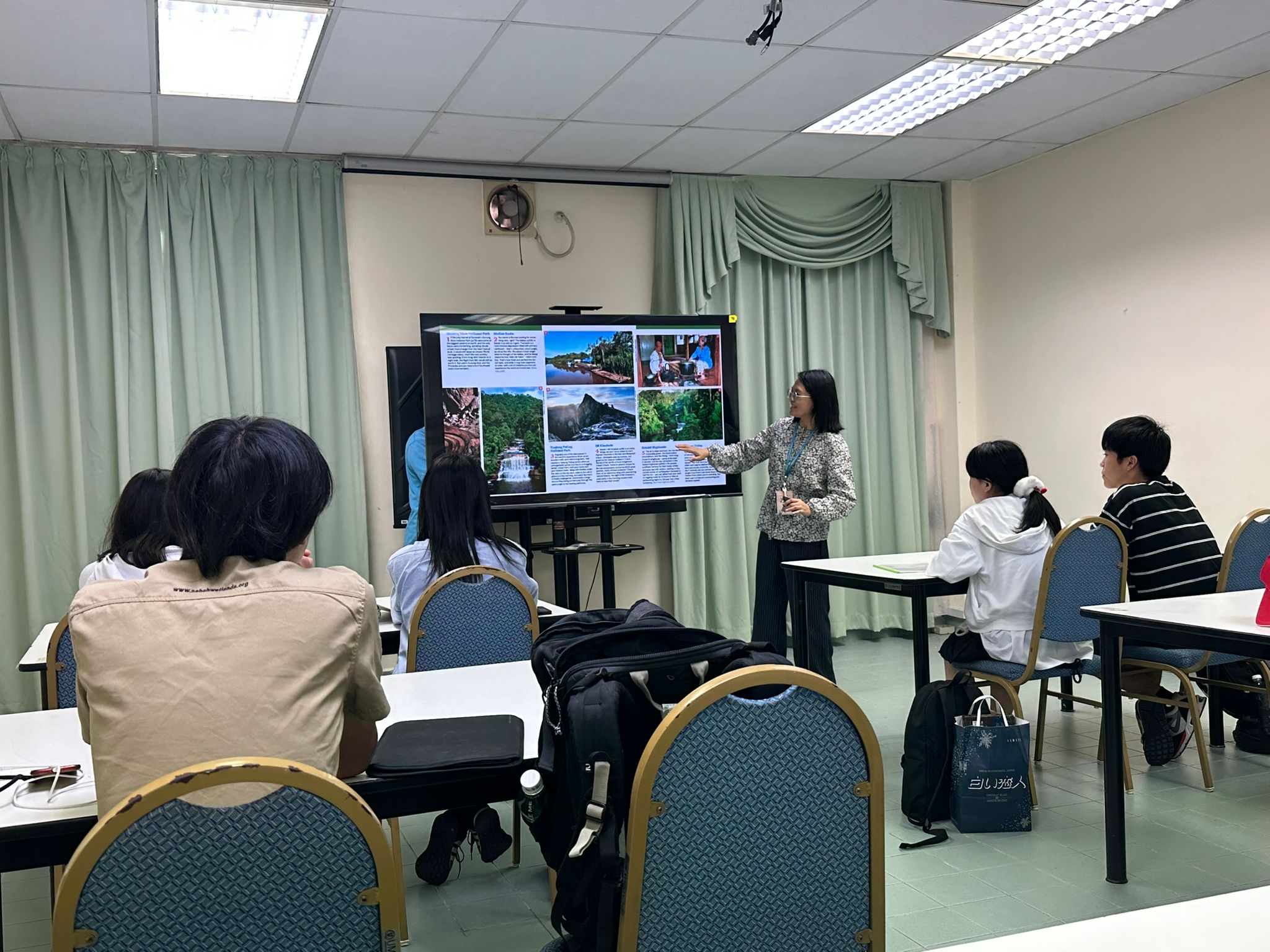
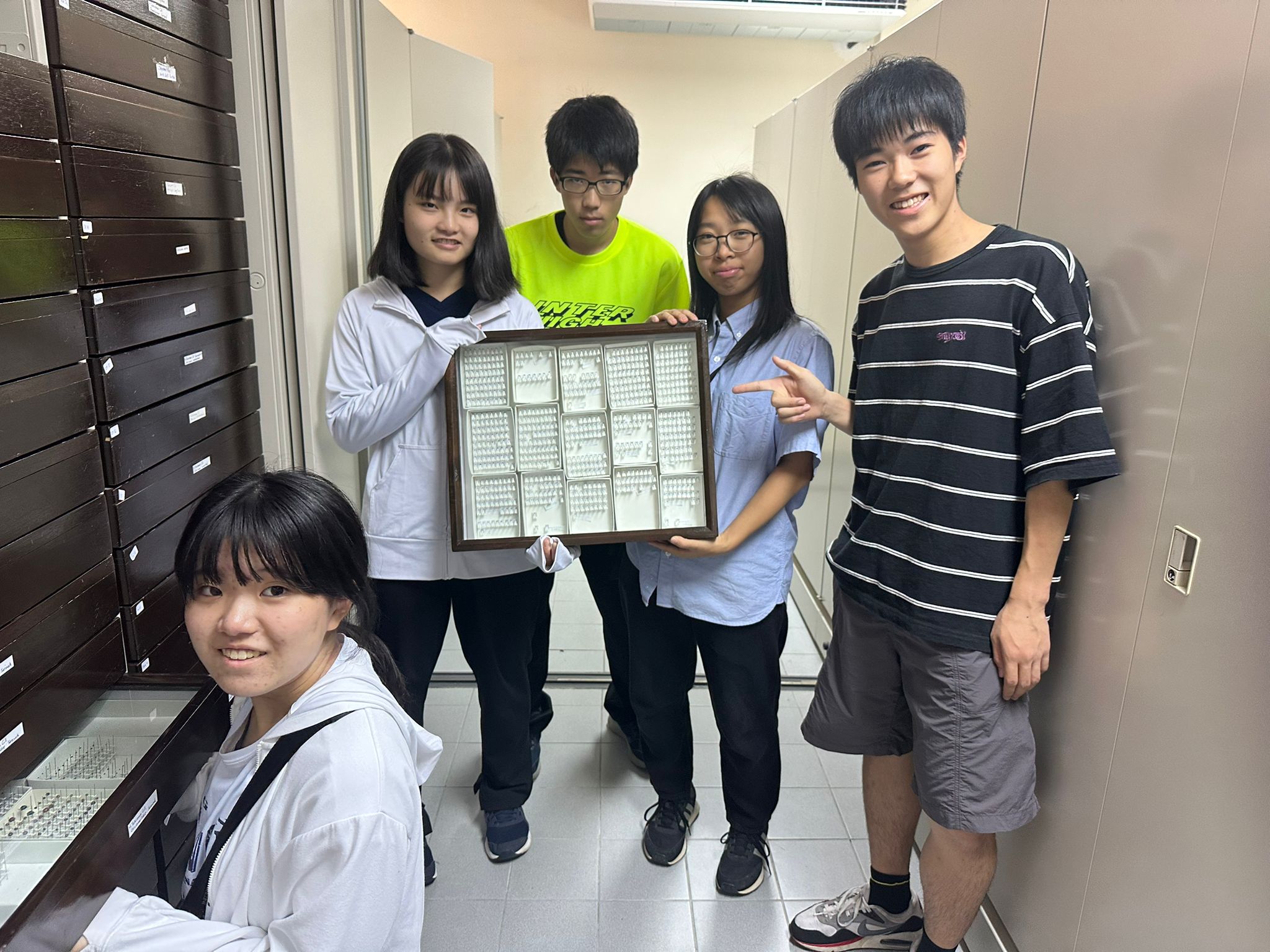
UMS extends forest and land conservation awareness beyond campus through school outreach programmes, public exhibitions, and educational visits at the BORNEENSIS Gallery, IBTP. These programmes introduce students and communities to forest ecosystems, wildlife conservation, and sustainable land practices. By engaging schools, local communities, and visitors, UMS fosters environmental stewardship and strengthens public understanding of the importance of protecting forests and wild land for future generations. A study visit from Sapporo Keisei High School, Japan was held on 9 January 2024 at the Institute of Tropical Biology and Conservation (IBTP) and BORNEENSIS Gallery, involving five students and two accompanying teachers. The visit included an introductory briefing, guided tours of the biodiversity gallery and insect collection room, as well as interactive activities such as simple games and quizzes, providing participants with an engaging learning experience on biodiversity, conservation, and tropical ecosystems through hands-on and educational exposure.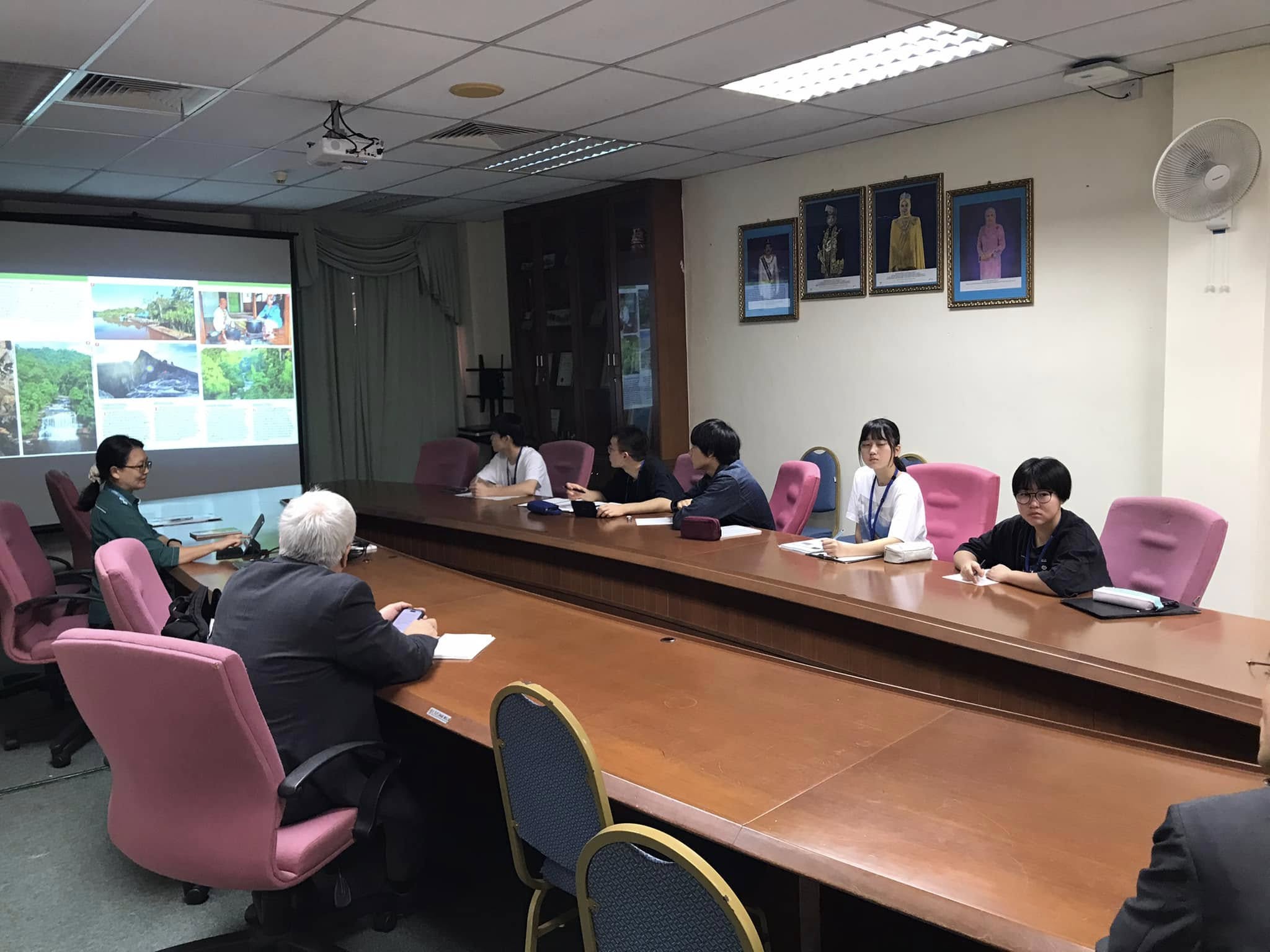
Local Community Artificial Intelligence (AI) in Biodiversity Research Course :Harnessing Digital Innovation to Understand and Protect Nature
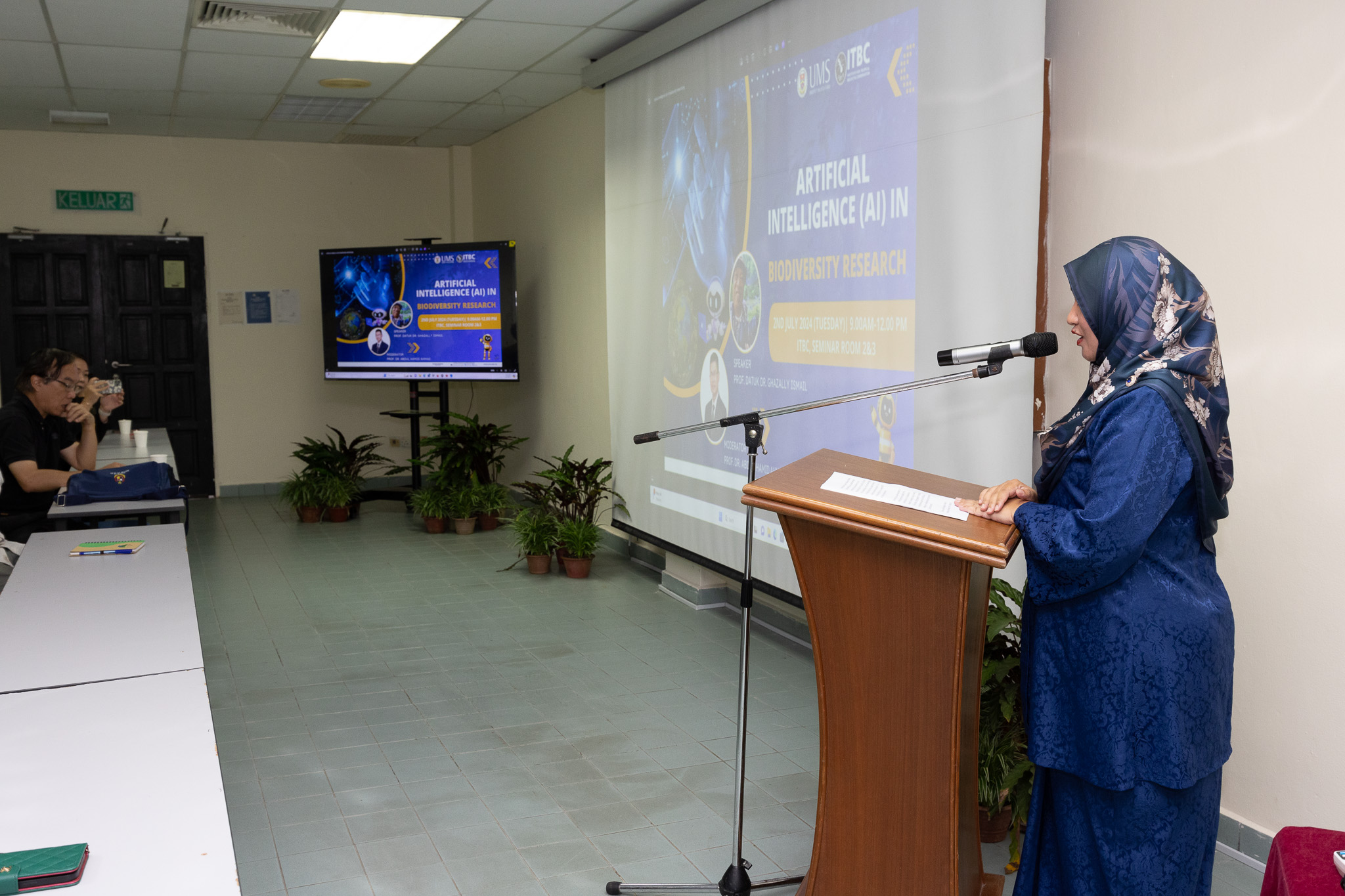
On 2 July 2024, Universiti Malaysia Sabah (UMS) organised a public academic lecture titled “Artificial Intelligence (AI) in Biodiversity Research”, delivered by Prof. Datuk Dr. Ghazally bin Ismail. The programme introduced participants to the application of artificial intelligence and data-driven technologies in studying ecosystems, wildlife, and biodiversity patterns. The session highlighted how AI tools can enhance species identification, biodiversity monitoring, ecological modelling, and conservation decision-making. By translating advanced research into accessible knowledge, the programme supported ecosystem education for students, researchers, and the wider community, reinforcing UMS’s role in promoting innovative approaches to biodiversity conservation.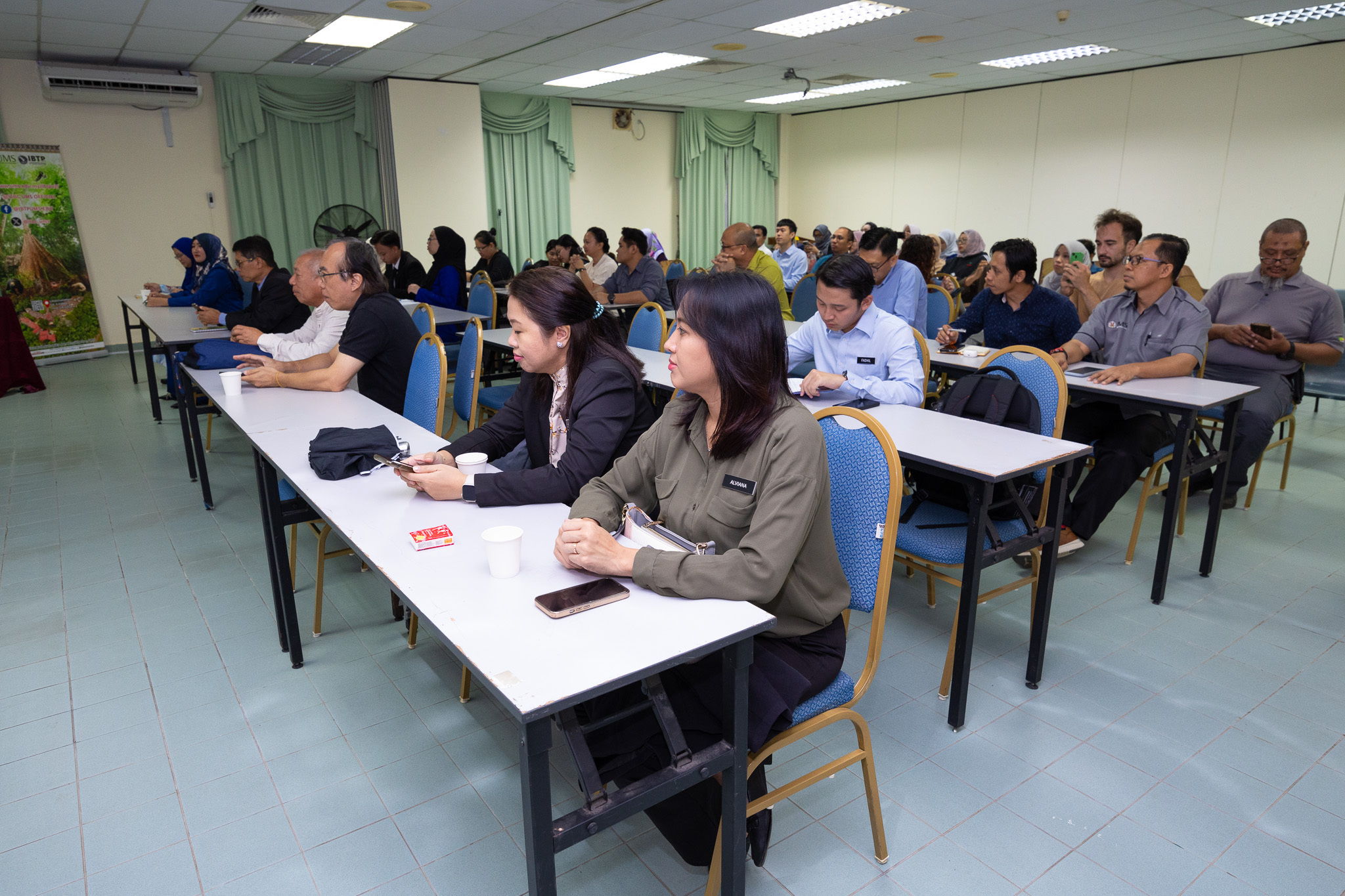
Local Community Biodiversity Database & Data Analysis Workshop: Strengthening Ecosystem Knowledge through Data Management
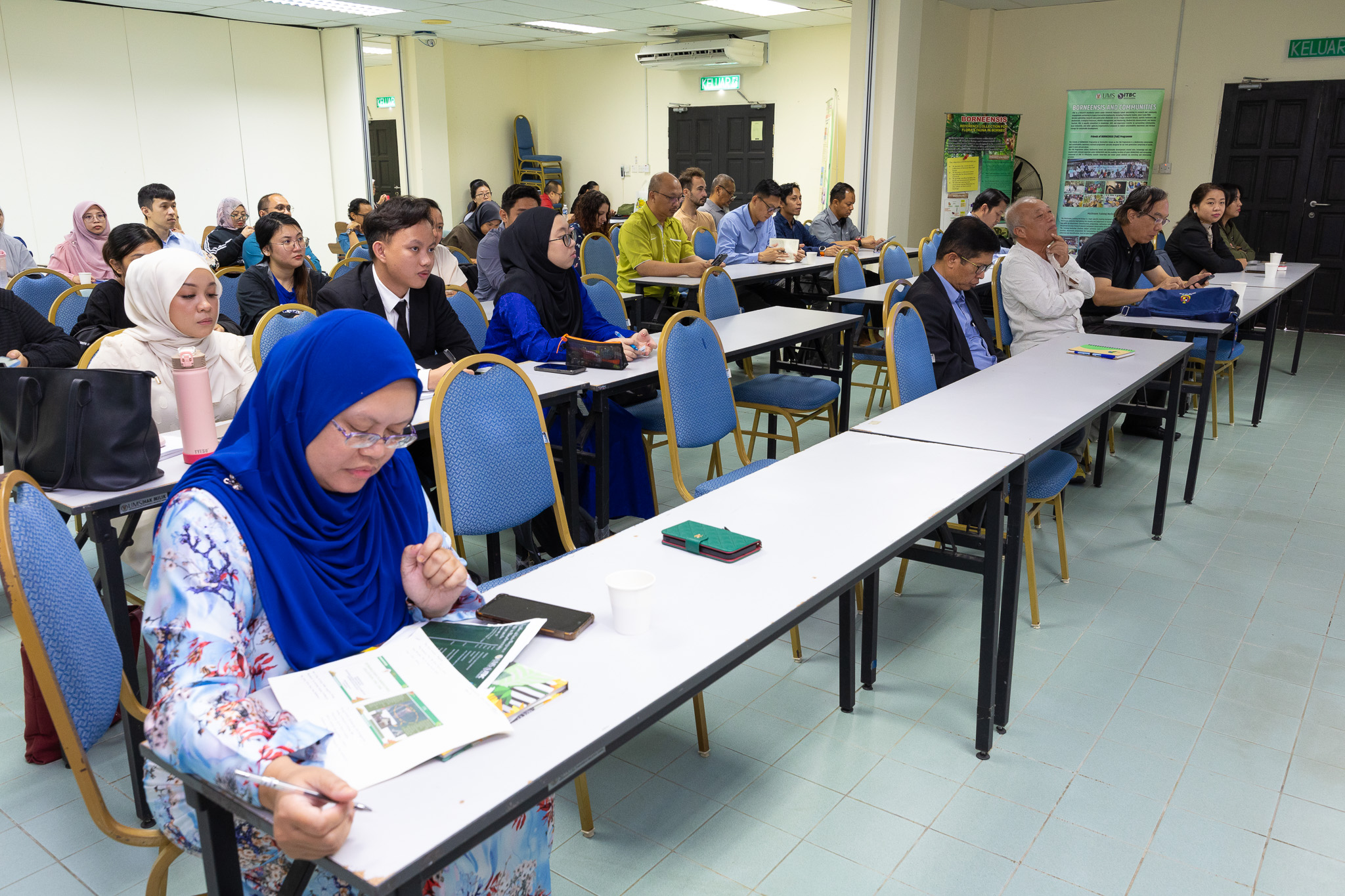
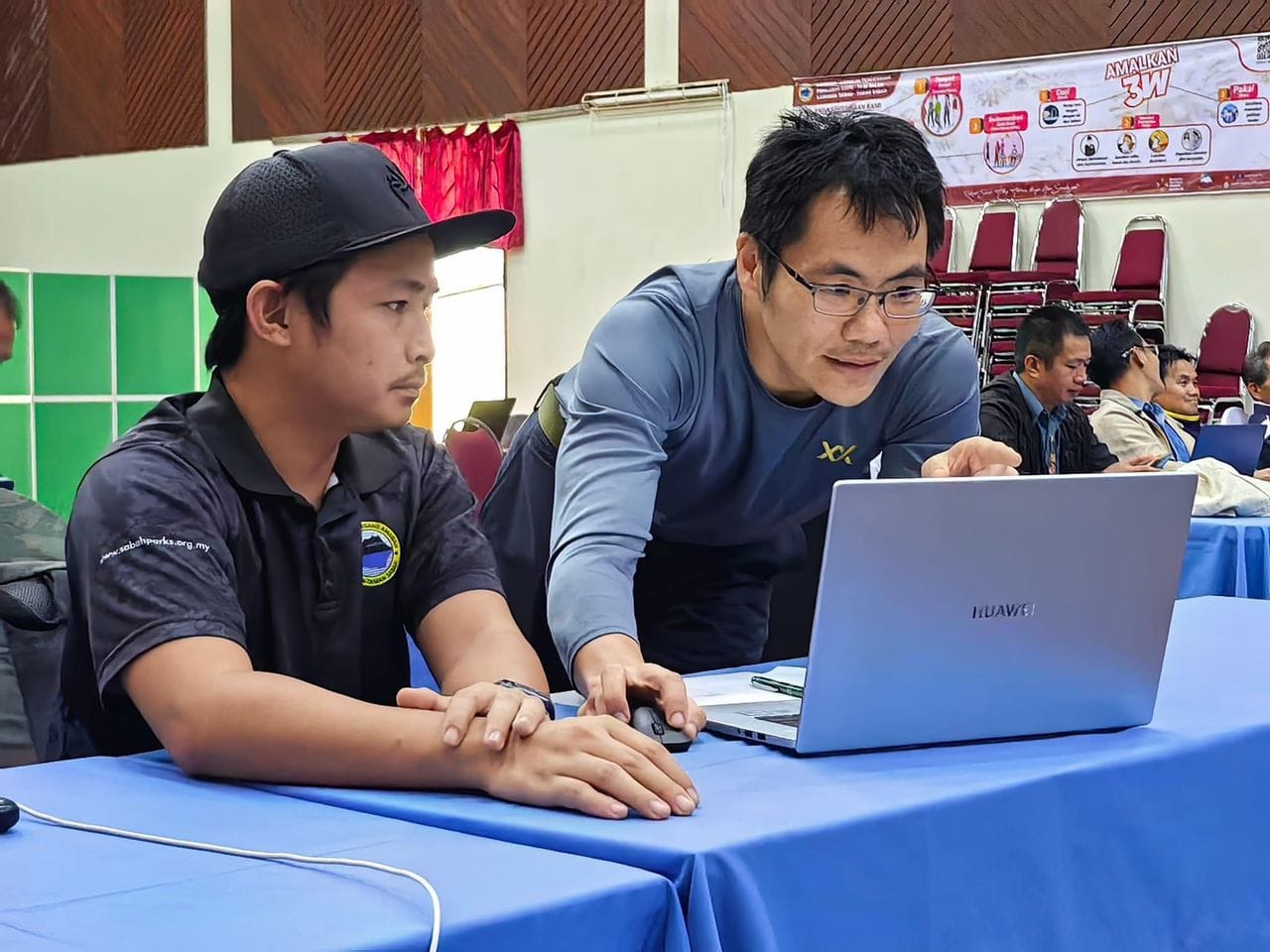
From 18–21 March 2024, UMS supported a Database and Data Analysis Workshop (Microsoft Access) held at Dewan Kinabalu, Taman Kinabalu, organised by the Research and Education Division, Sabah Parks and facilitated by Assoc. Prof. Dr. Liew Thor Seng. The workshop focused on strengthening capacity in biodiversity data management and ecosystem documentation. The programme involved 35 staff members responsible for biodiversity research and conservation, equipping them with skills to manage ecological datasets, species records, and ecosystem information systematically. By enhancing data literacy and analytical capacity, the workshop contributed directly to improved monitoring and protection of wild flora and fauna in protected areas.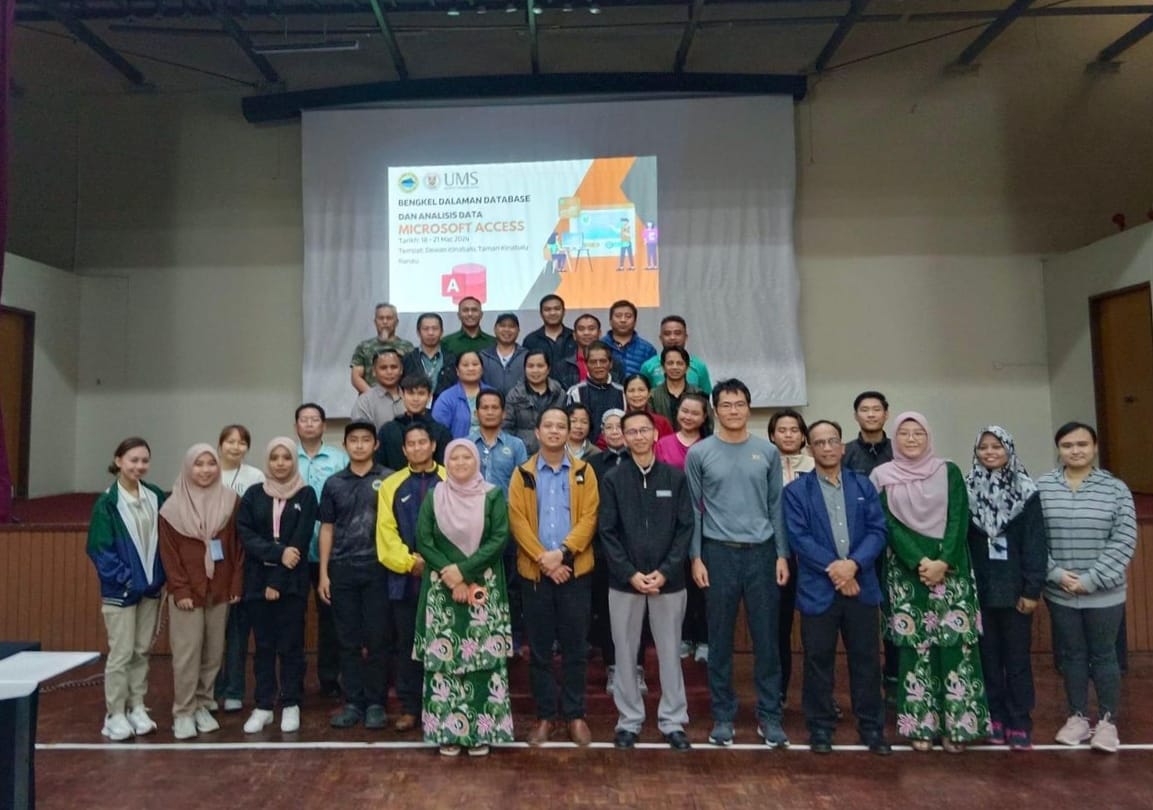
International Mushroom Field Course Training (KEW Gardens – INFAPRO) :Building Expertise in Fungal Diversity and Forest Ecosystems
From 3–6 March 2024, UMS hosted a Mushroom Field Course Training conducted from KEW Gardens, London, to INFAPRO KM58, involving 20 participants and three coordinators from KEW Gardens, led by Dr. Kalsum Mohd. Yusah. The course was delivered by Assoc. Prof. Dr. Jaya Seelan Sathiya Seelan, a specialist in mycology and biodiversity research. The training provided hands-on exposure to fungal identification, field sampling, and ecosystem roles of fungi within forest environments. By strengthening technical knowledge of wild fungi and their ecological importance, the programme supported ecosystem education and conservation capacity-building for researchers and practitioners at national and international levels.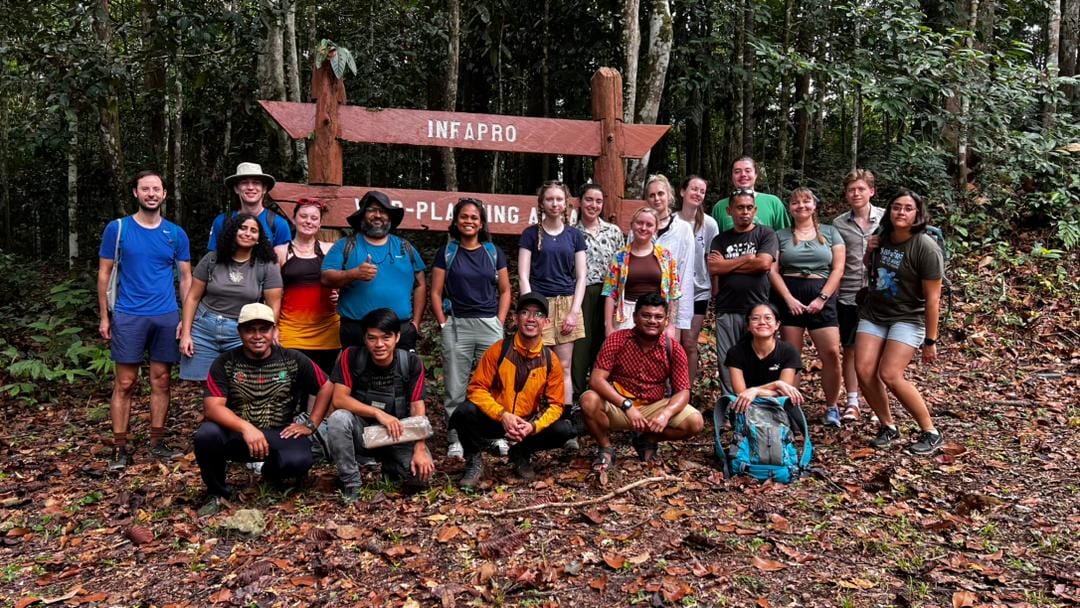
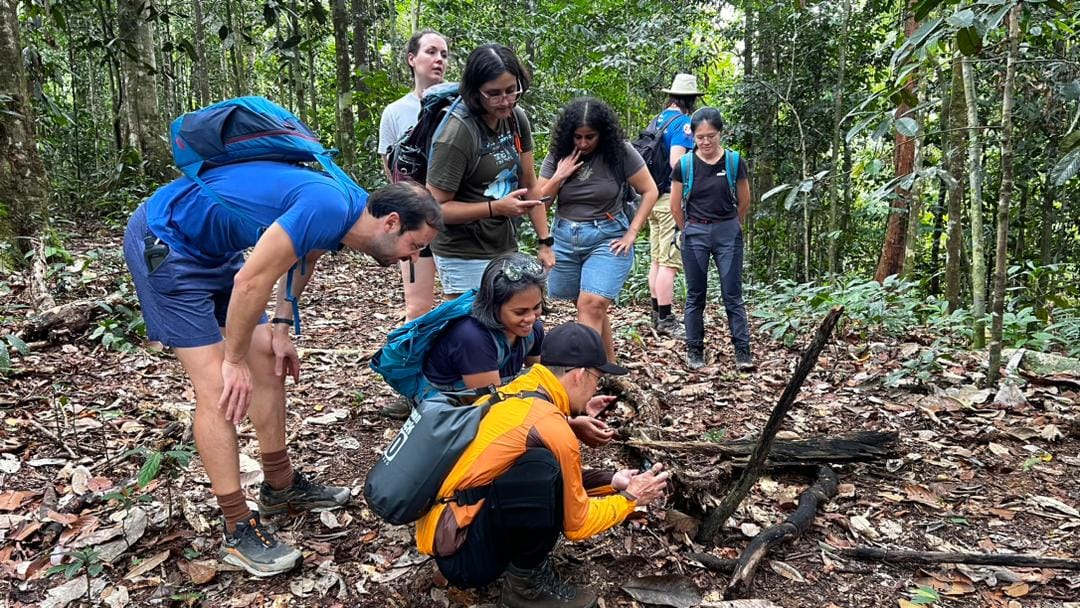
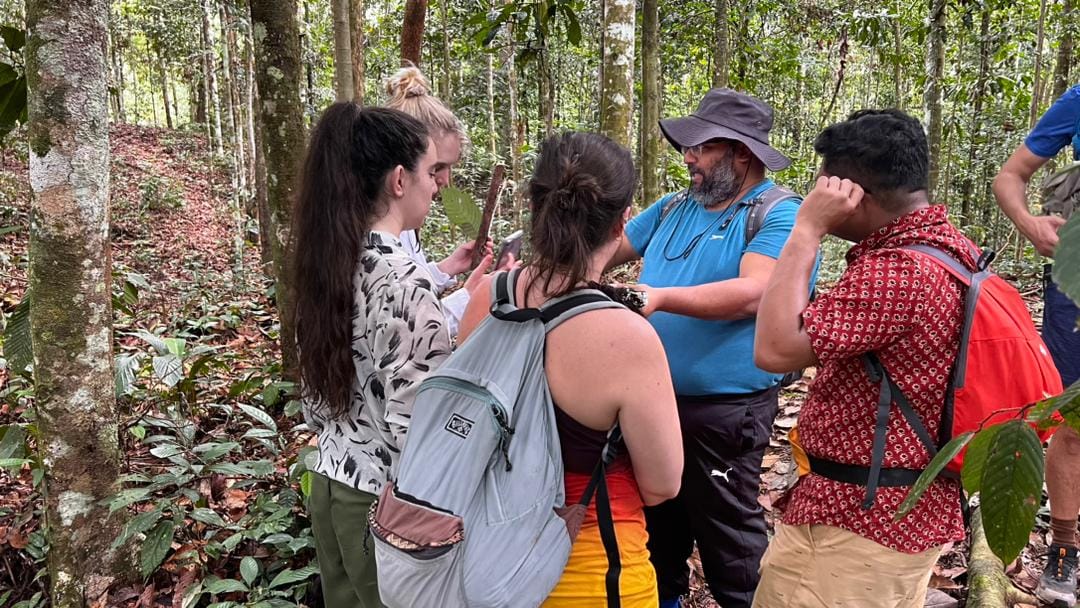
National Basic Land Snail Identification Course 2024: Understanding Terrestrial Biodiversity through Hands-on Learning
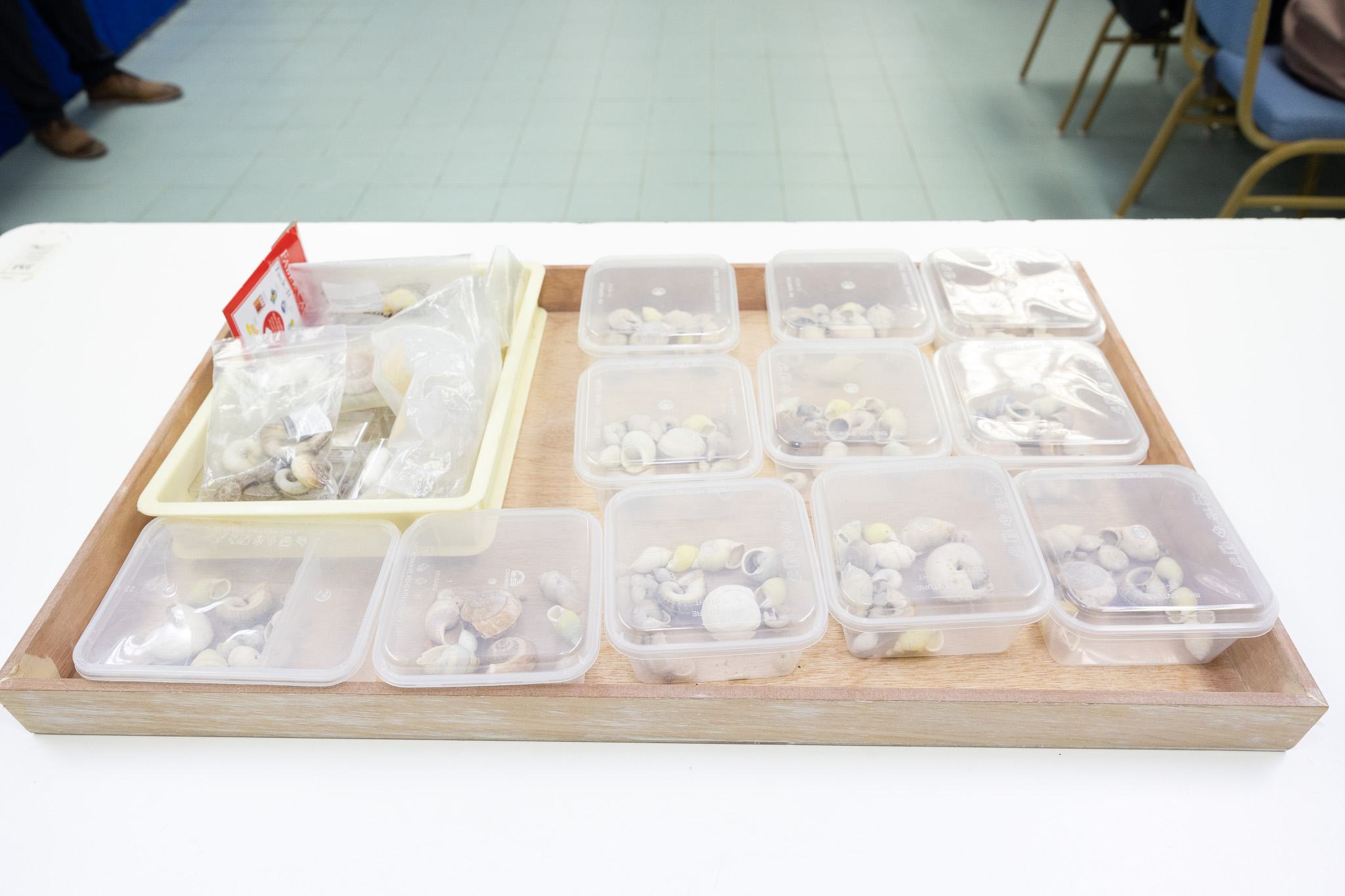
From 13–15 August 2024, Universiti Malaysia Sabah (UMS), through the Institute of Tropical Biology and Conservation (ITBC), conducted the Basic Land Snail Identification Course 2024. The course welcomed participants to ITBC for focused training on the identification and classification of terrestrial land snails, an important but often overlooked component of forest and soil ecosystems. The programme provided participants with practical exposure to morphological identification, specimen observation, and ecological roles of land snails within tropical environments. By strengthening taxonomic skills and ecological understanding, the course contributed to ecosystem education on wild fauna and supported biodiversity documentation, conservation research, and sustainable ecosystem management.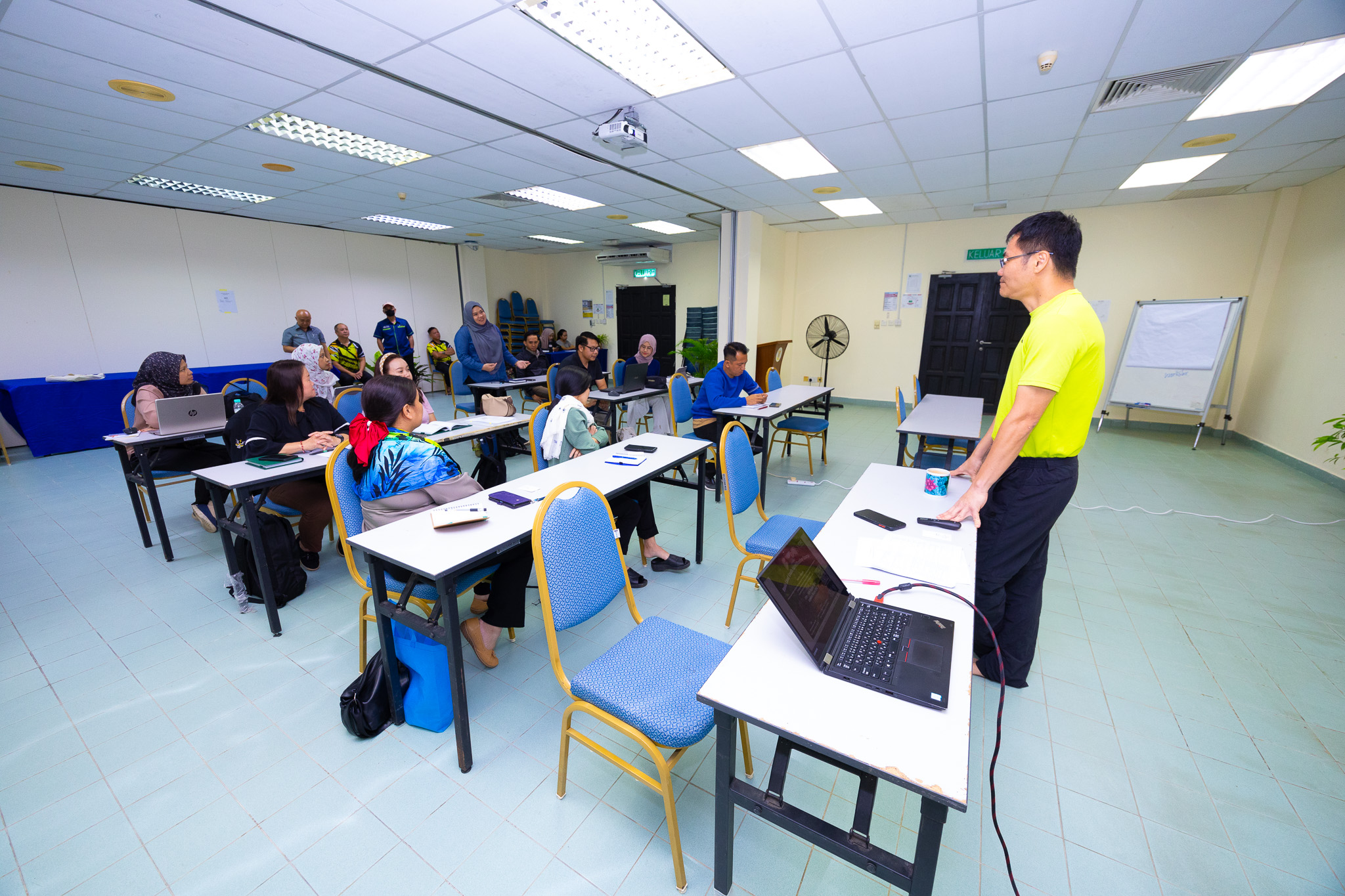
National Scientific Specimen Preservation Workshop : Preserving Biodiversity for Education and Conservation
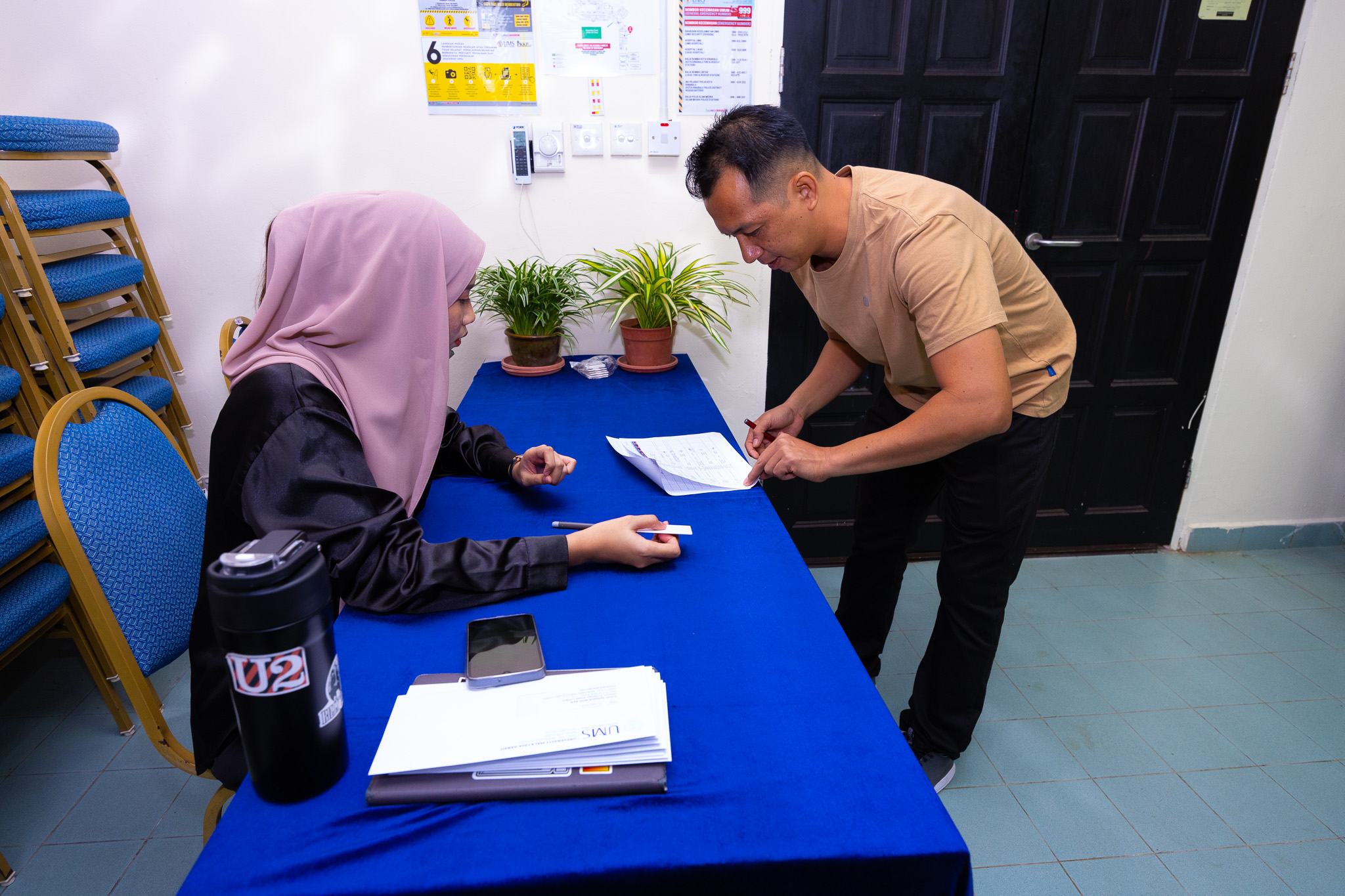
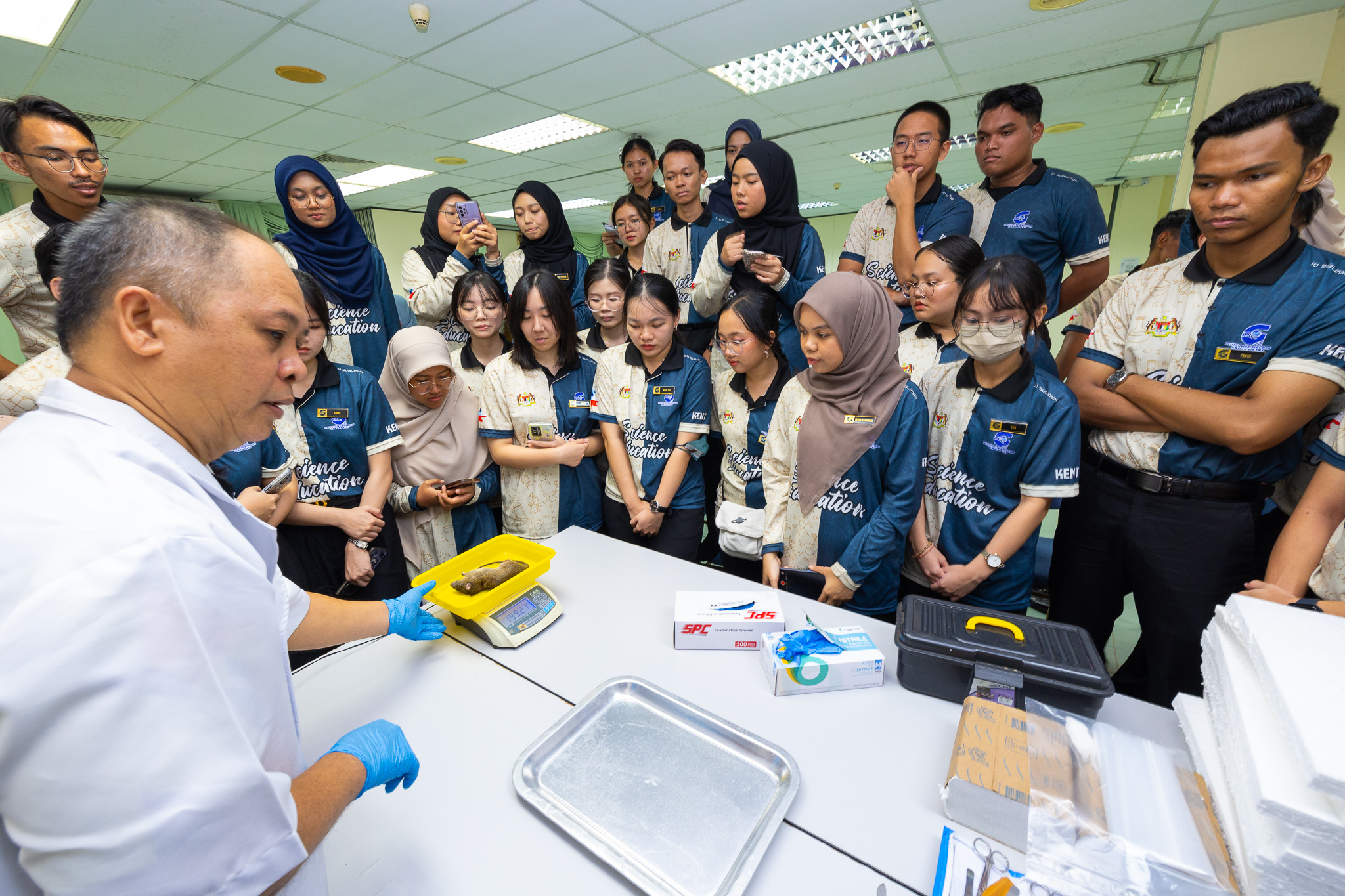
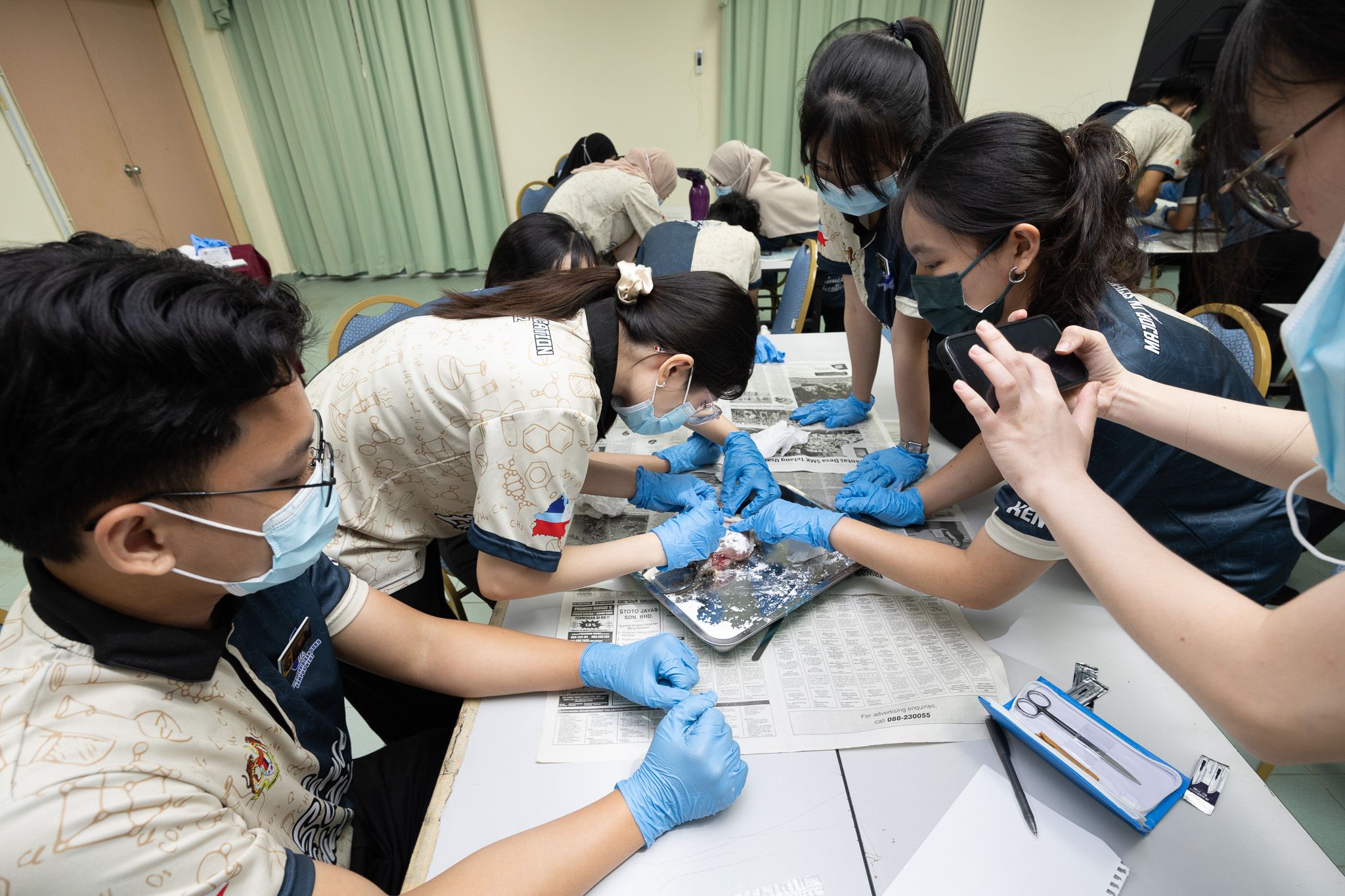
On 4 March 2024, UMS, through the Institute of Tropical Biology and Conservation (IBTP), collaborated with the STEM Department of IPGM Kampus Kent to organise a Scientific Specimen Preservation Workshop. The programme was held at the IBTP Seminar Room and involved 45 trainee teachers from Institut Pendidikan Guru KENT. Participants received demonstrations and hands-on training in scientific preservation techniques for mammal specimens, conducted by the BORNEENSIS sector of IBTP. The workshop enhanced understanding of biodiversity documentation, specimen curation, and the role of scientific collections in ecosystem education, enabling future educators to transfer conservation knowledge to schools and communities.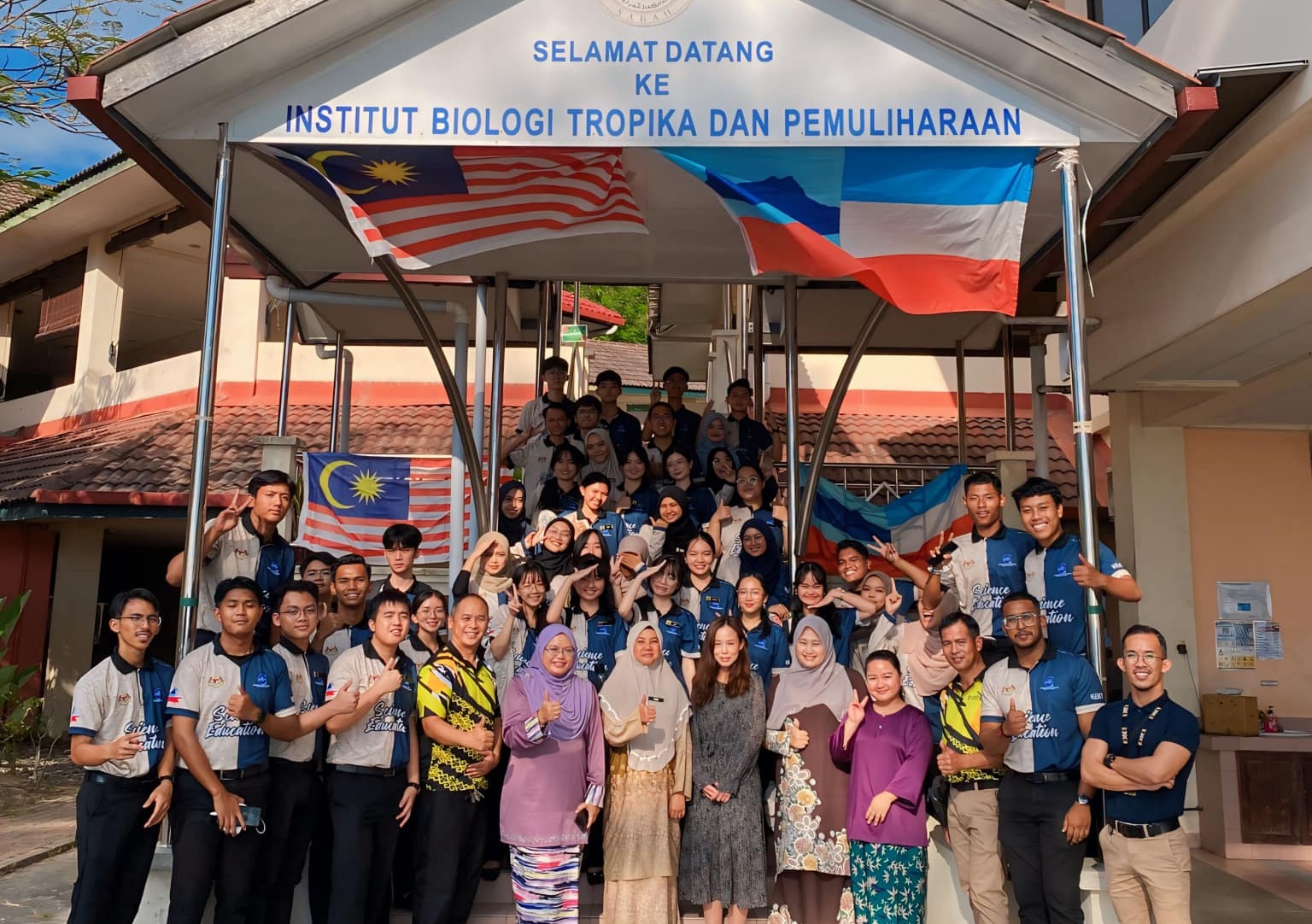
Officially accredited degree programs
UMS offers a Bachelor of Science (Environmental Science) under the accredited program UH6422001, which provides a comprehensive education in environmental science, climate systems, sustainability strategies, and conservation management.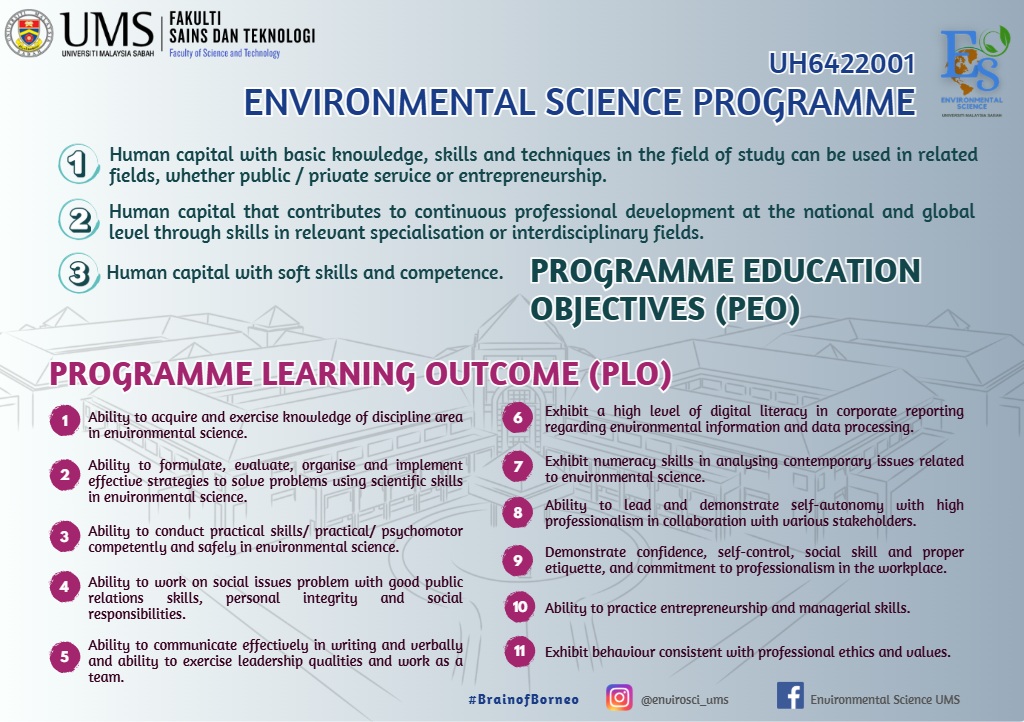
Credit-bearing courses on Ecosystems, Climate, and Biodiversity
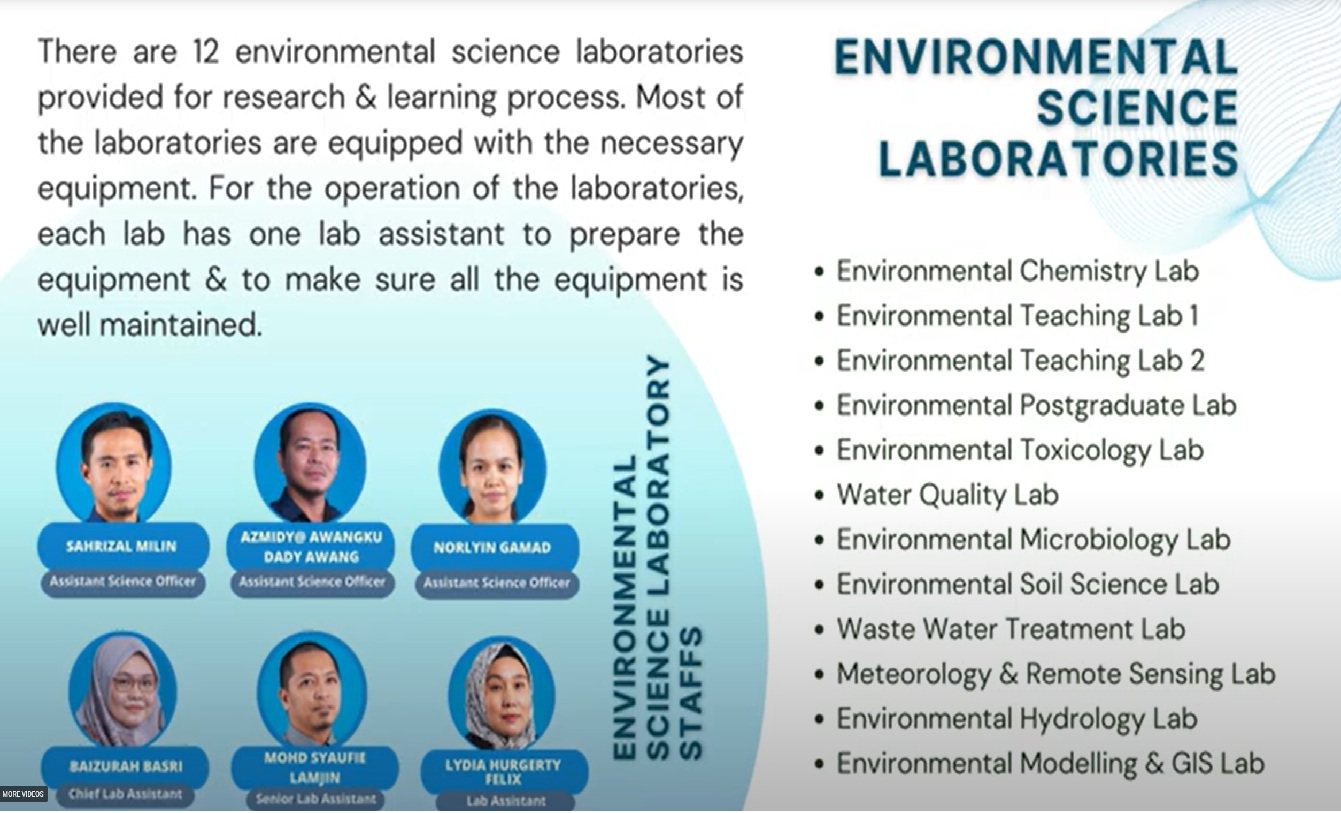
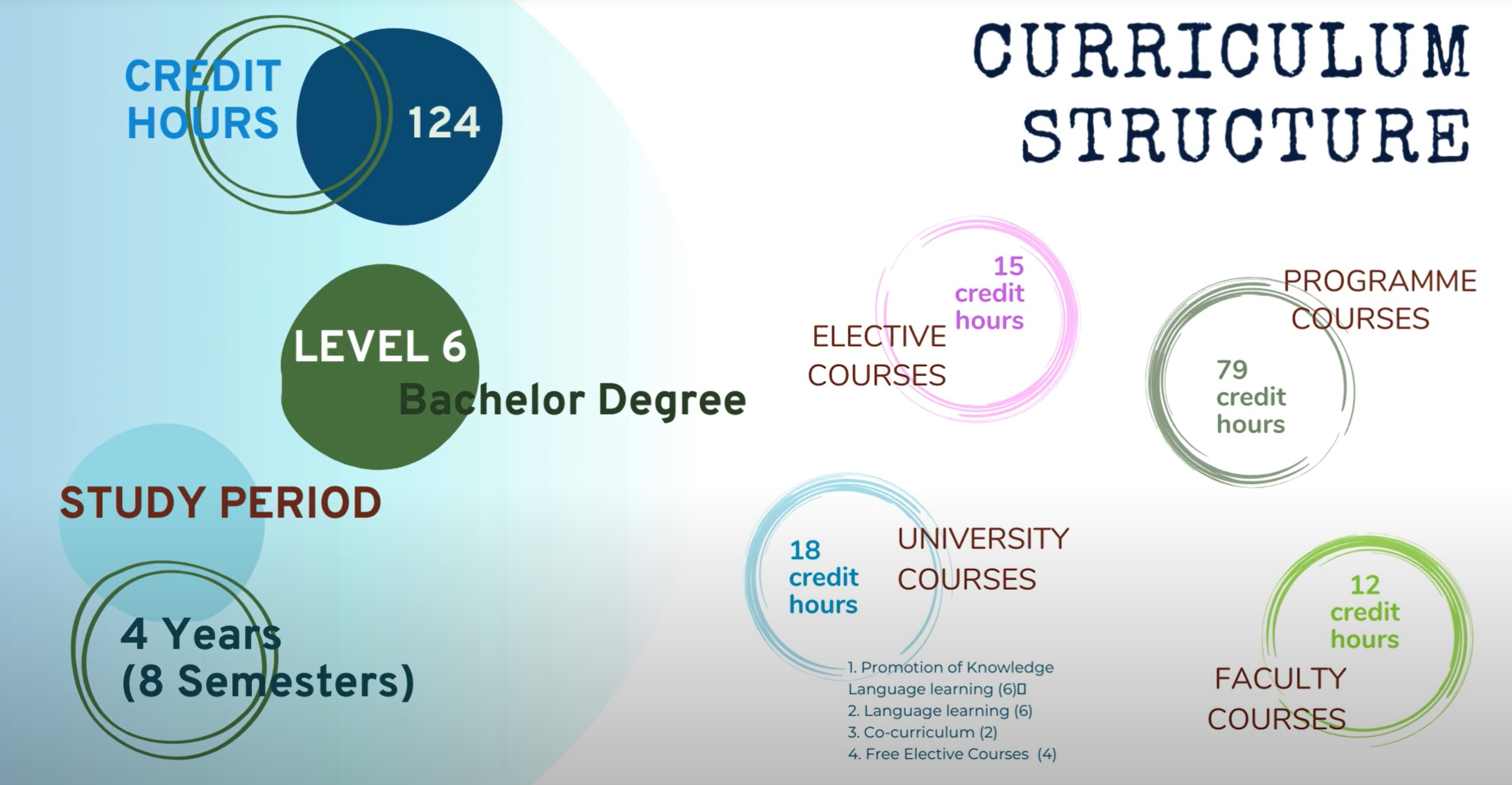
Universiti Malaysia Sabah (UMS) offers the Bachelor of Science (Environmental Science) under the officially accredited programme UH6422001, which provides comprehensive education in ecosystem science, wild flora and fauna, climate systems, sustainability strategies, and conservation management. The programme equips students with strong scientific foundations and practical competencies to understand, monitor, and protect natural ecosystems. Through this accredited degree, UMS extends ecosystem education beyond the classroom by integrating field-based learning, living laboratories, biodiversity sites, and community engagement activities. Students apply their knowledge directly within forests, wetlands, and conservation areas, while also participating in outreach programmes with schools and local communities. These efforts demonstrate that UMS, as a university body, offers structured educational programmes on ecosystems for local and national communities, reinforcing its role in biodiversity conservation and environmental stewardship.-
Meteorology & Climate Change (2 credit hours)
Introduces atmospheric processes and climate systems, with emphasis on global climate change and environmental impacts.Read More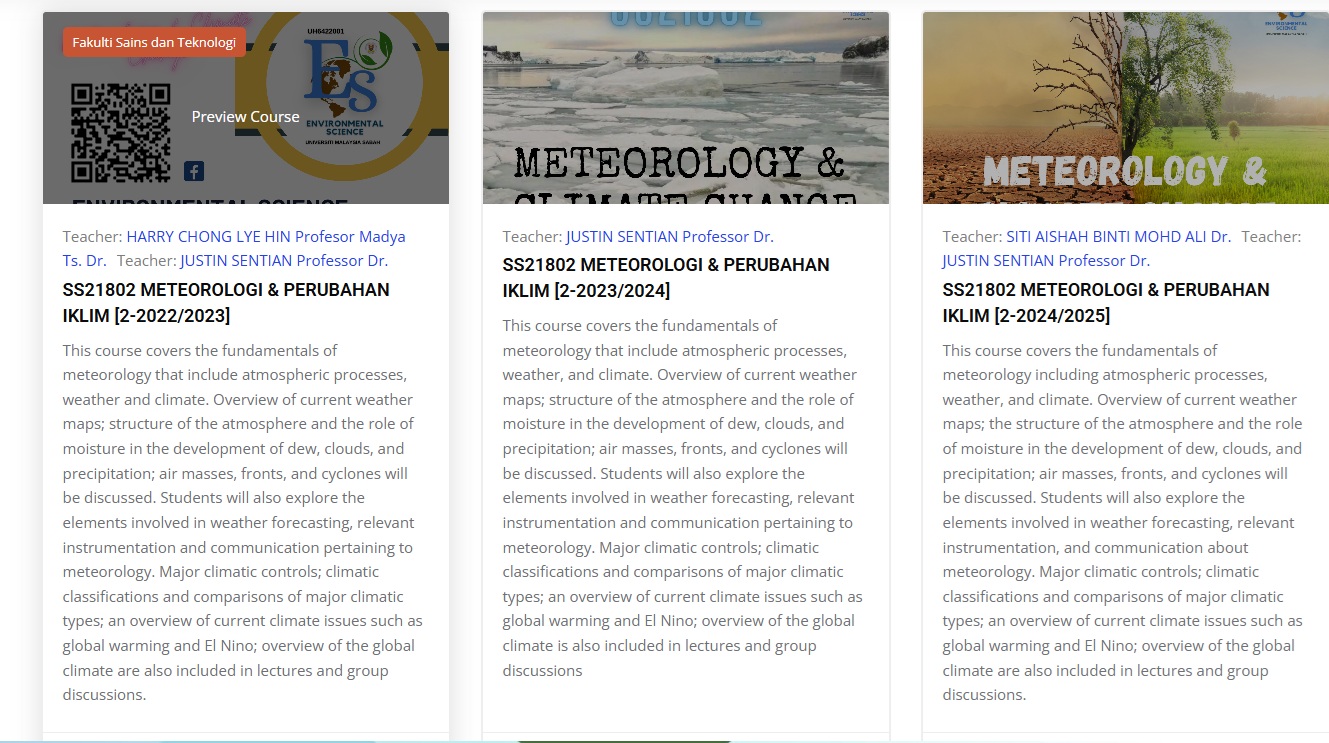
-
Plant Physiology (3 credit hours)
Examines plant functions and responses to environmental conditions, supporting ecological sustainability and conservation of flora.Read More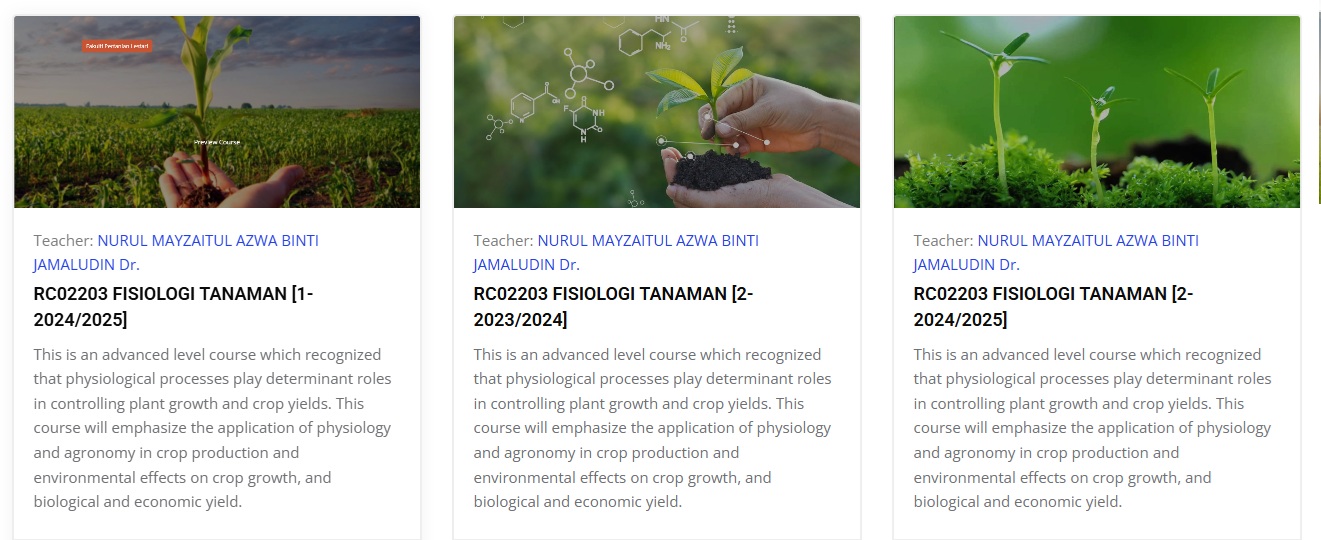
-
Environmental Law and Ethics (3 credit hours)
Explores legal frameworks, policies, and ethical principles governing environmental protection and biodiversity conservation.Read More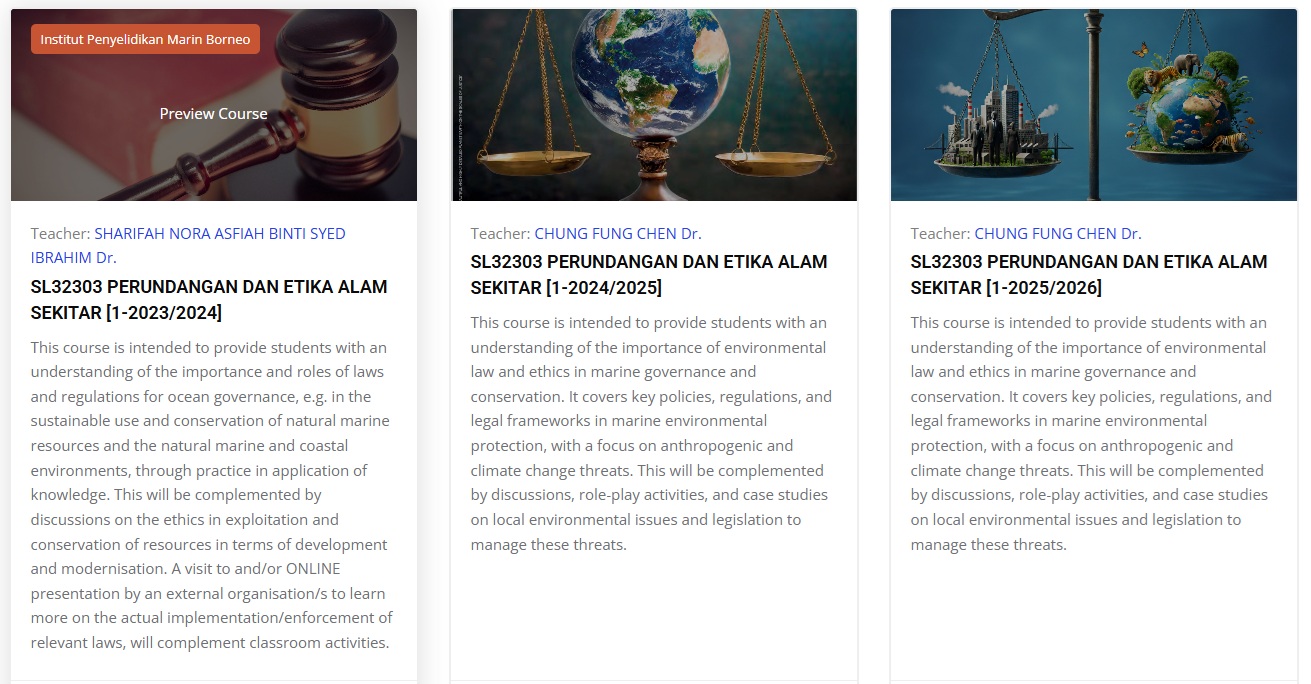
-
Biogeography (2 credit hours)
Studies the spatial distribution of species and ecosystems in relation to environmental and evolutionary processes.Read More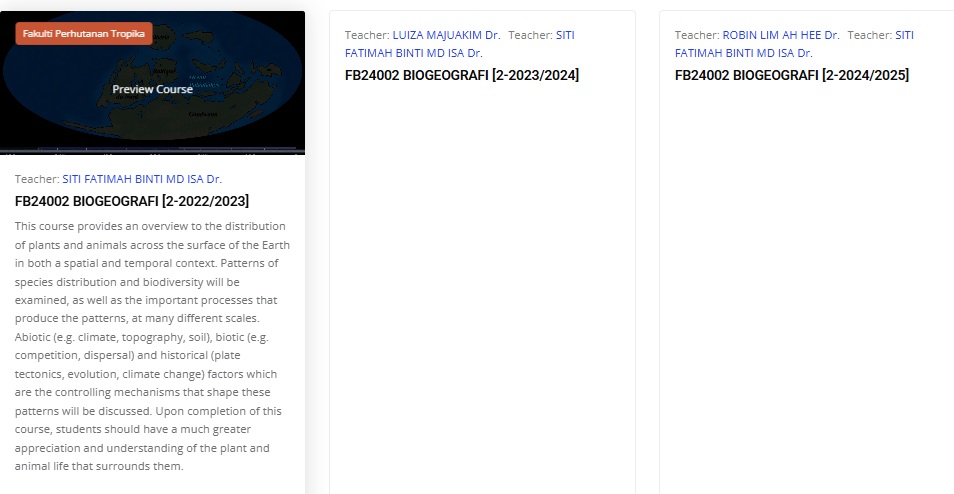
-
Evolutionary Ecology and Biodiversity Conservation (3 credit hours)
Focuses on ecological dynamics, species interactions, and strategies for biodiversity preservation.Read More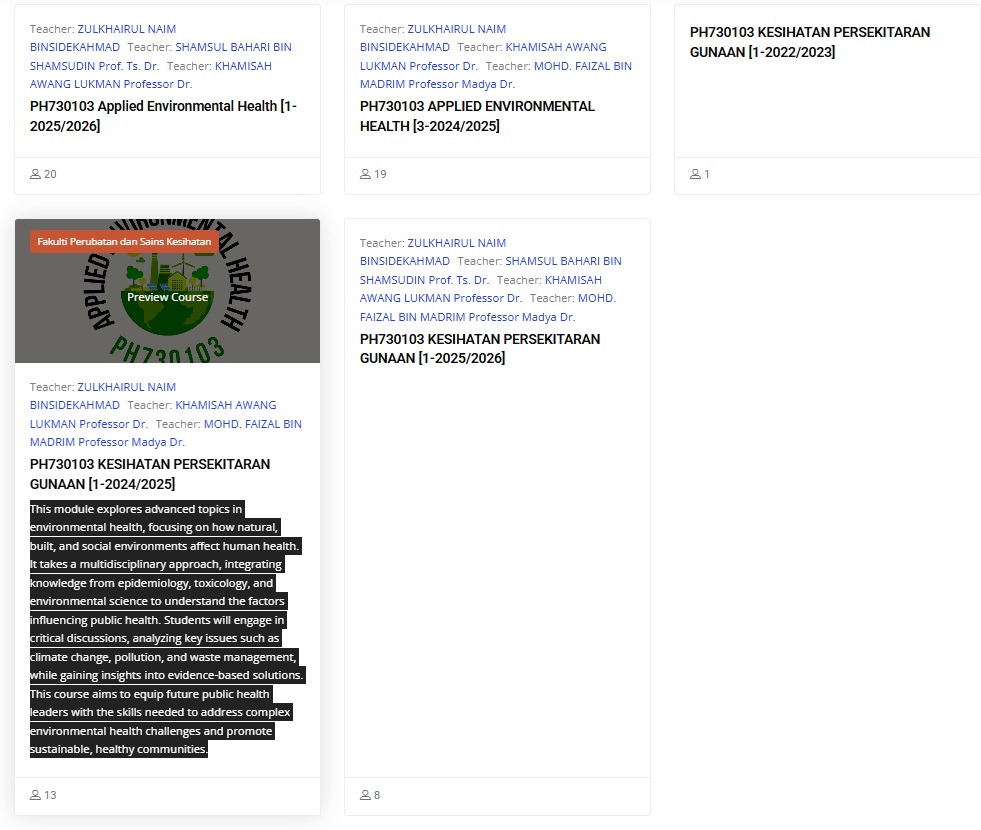
Applied Environmental Health (3 credit hours)
This module explores advanced topics in environmental health, focusing on how natural, built, and social environments affect human health. It takes a multidisciplinary approach, integrating knowledge from epidemiology, toxicology, and environmental science to understand the factors influencing public health. Students will engage in critical discussions, analyzing key issues such as climate change, pollution, and waste management, while gaining insights into evidence-based solutions. This course aims to equip future public health leaders with the skills needed to address complex environmental health challenges and promote sustainable, healthy communities.Read More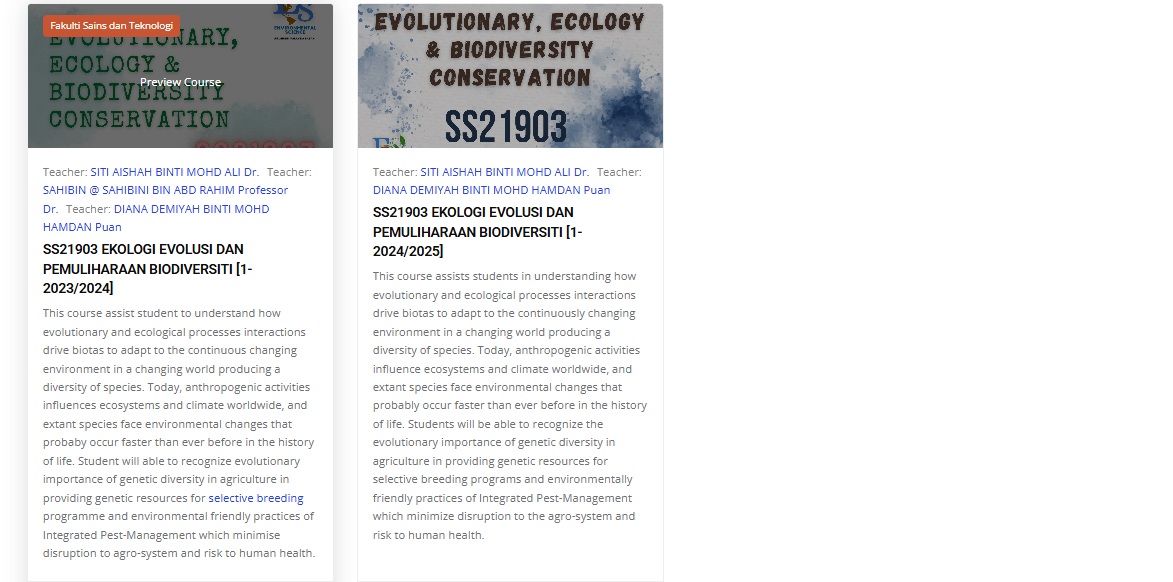
-
Food Production Ecosystem (3 credit hours)
This course will provide technical knowledge on the interlinked and intensifying problems of climate change, ecosystem services degradation, and the need to double food production to sustain a growing global population. It describes the dominant influence of food production on ecosystems and the associated risk of ecosystems reaching tipping points beyond which they lose the ability to provide people with food and other vital services. It then offers two approaches to help conserve ecosystem services in a changing climate - a tool for integrating climate change and ecosystem service risks into decision making and a framework for reconciling food production and conservation goals. The course focus on how to meet food security and conservation goals for us to move from managing ecosystems for food at the expense of other ecosystem services to managing ecosystems for food plus other nature-based services.Read More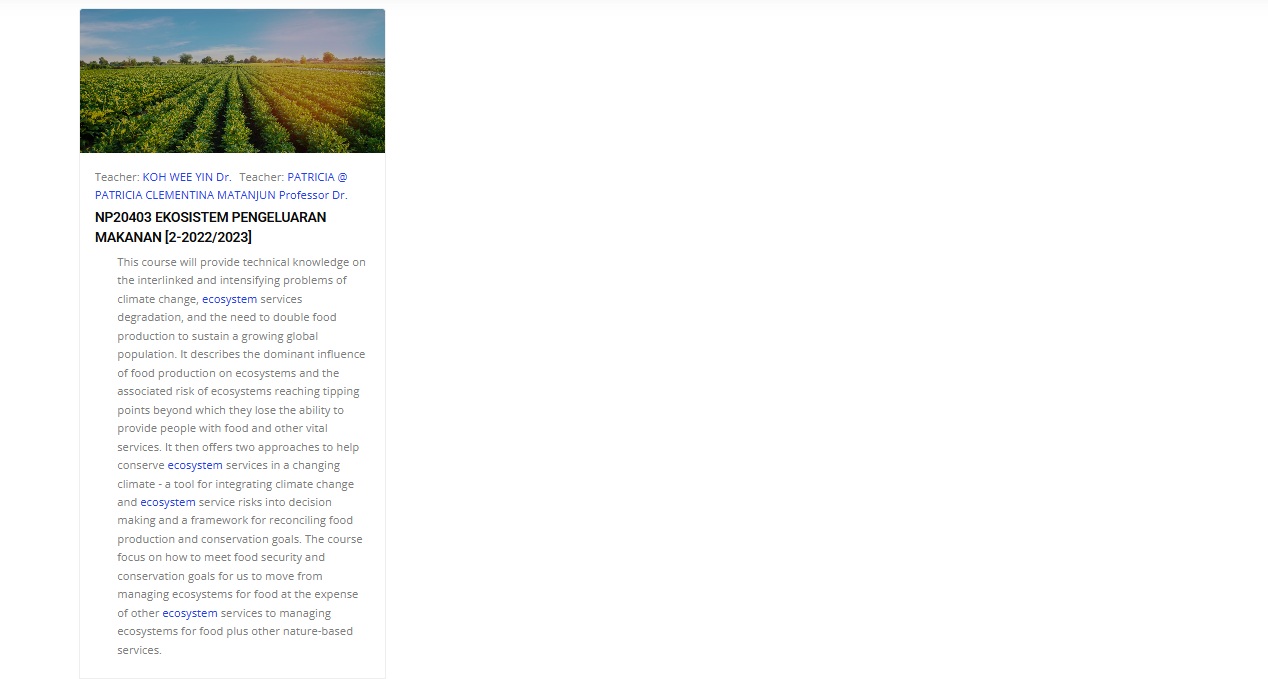
-
Forest Hydrology/Forest Management Courses (3 credit hours)
Read More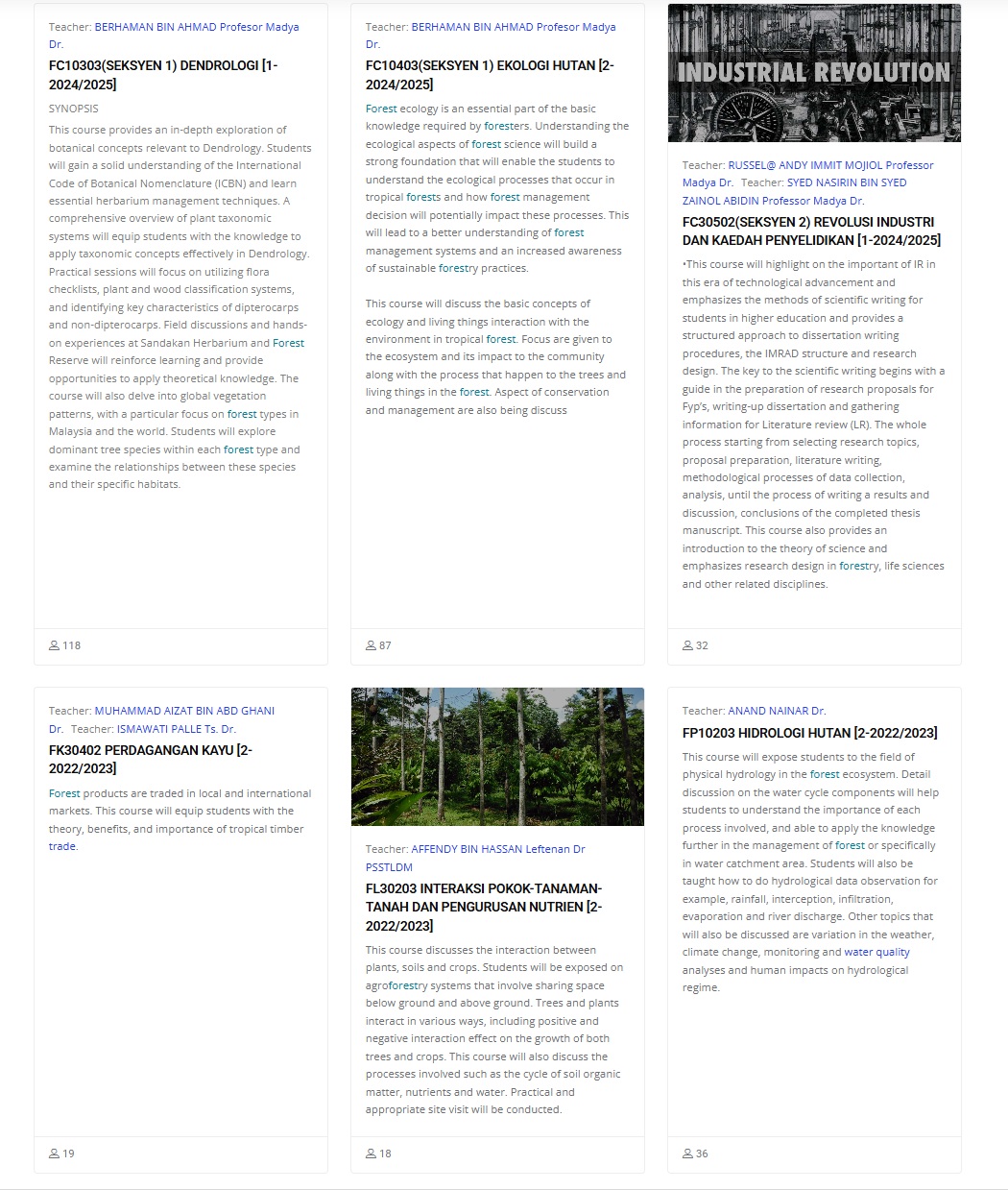
Empowering Communities through Climate-Smart Farming
Sustainable Land Management for Agriculture
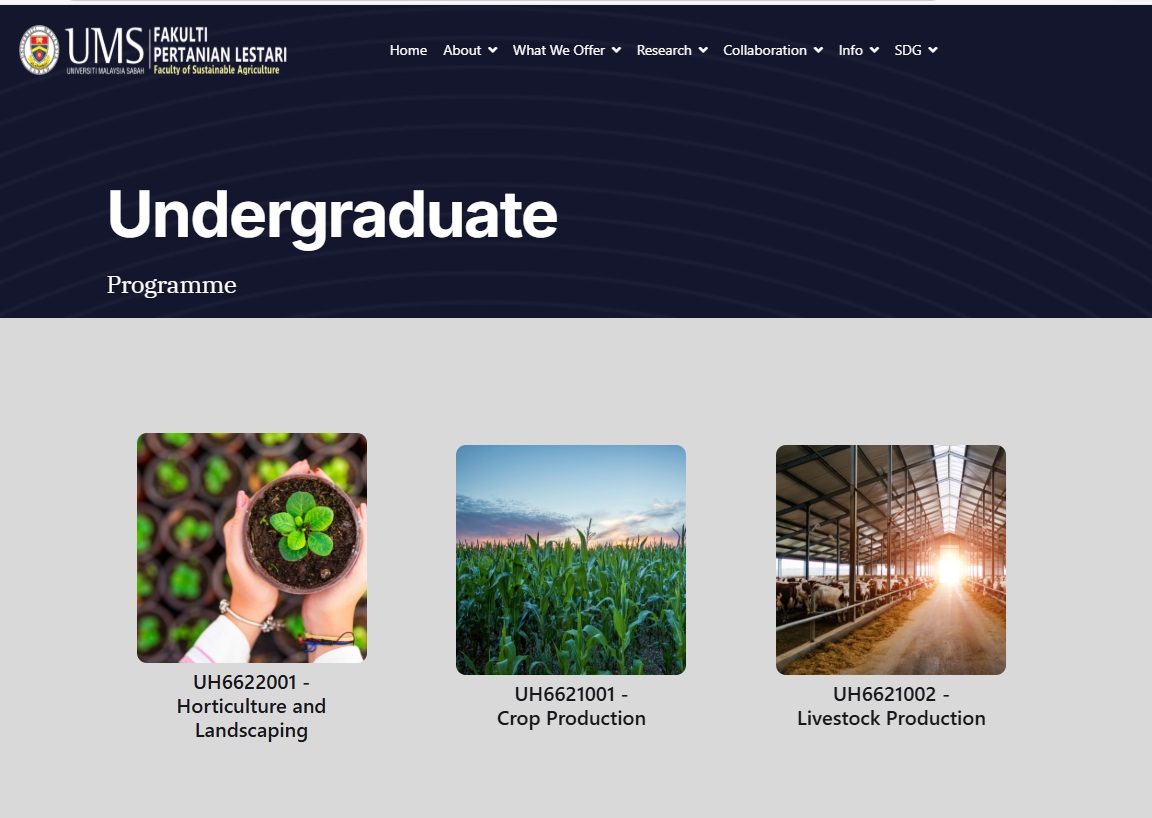
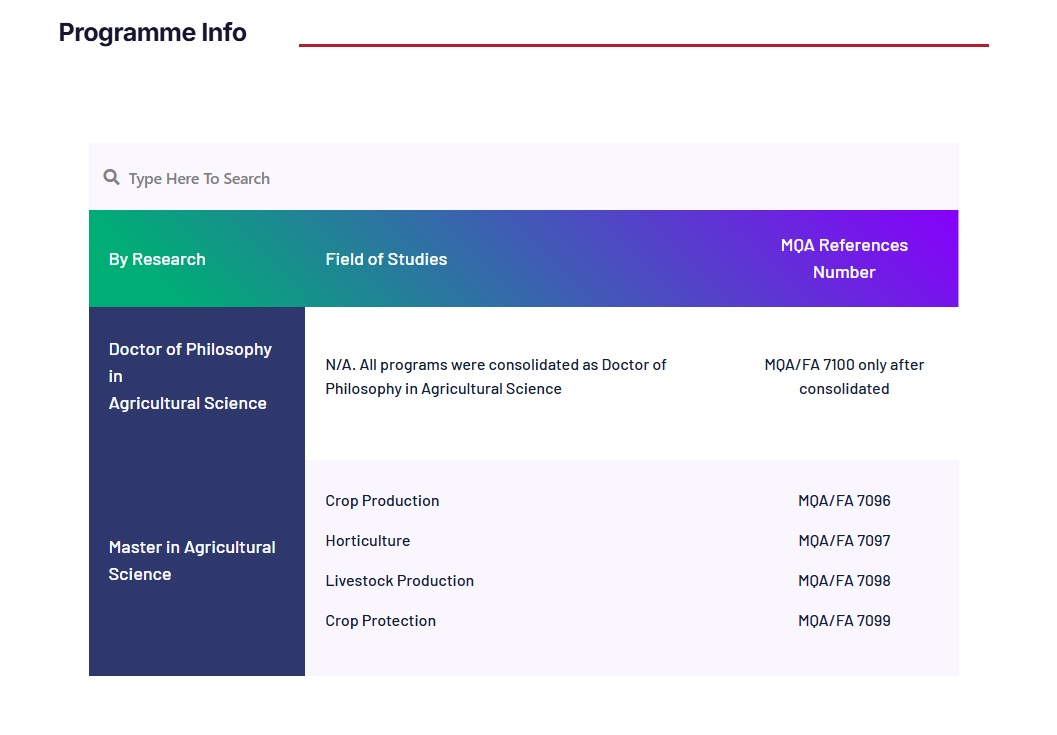
Universiti Malaysia Sabah (UMS), as a university body, offers educational programmes and community outreach focused on the sustainable management of land for agriculture through the Faculty of Sustainable Agriculture (FPL), the EcoFarm Management Centre, and the Pusat Kelestarian Libatsama Masyarakat (PKLM). These efforts integrate academic training, applied research, and hands-on community engagement to promote responsible land use, agroecology, and long-term food system resilience. UMS delivers structured education through academic programmes such as the Bachelor of Agricultural Science (Crop Production), Horticulture and Landscaping, and Livestock Production (Hons), supported by postgraduate research in sustainable agriculture, soil health, and agroecology. These programmes equip students with scientific, technical, and environmental competencies to manage agricultural land sustainably while minimising ecological impact.
Program Highlight
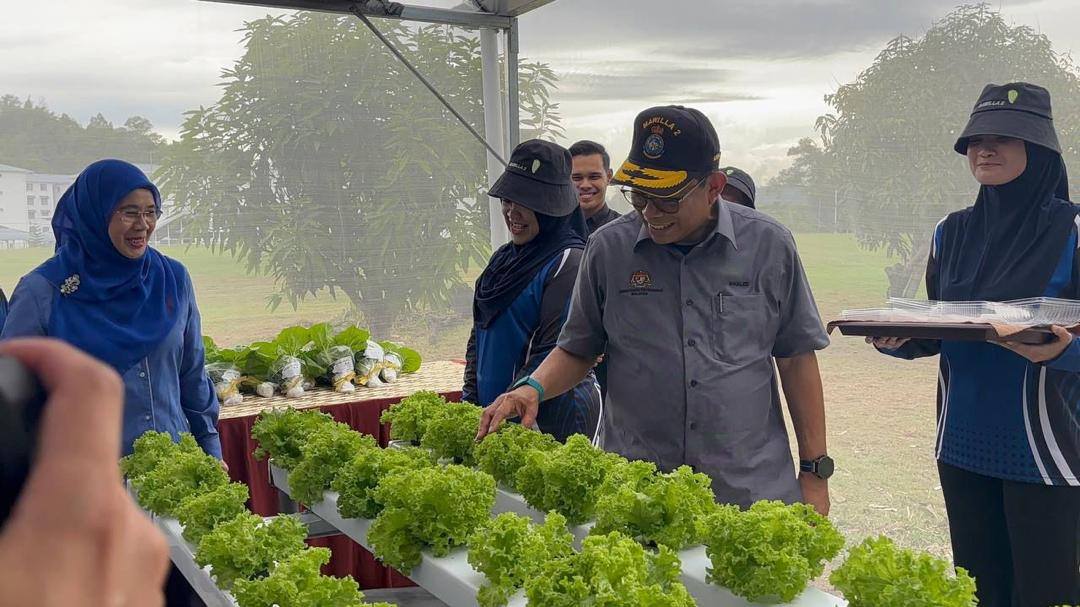
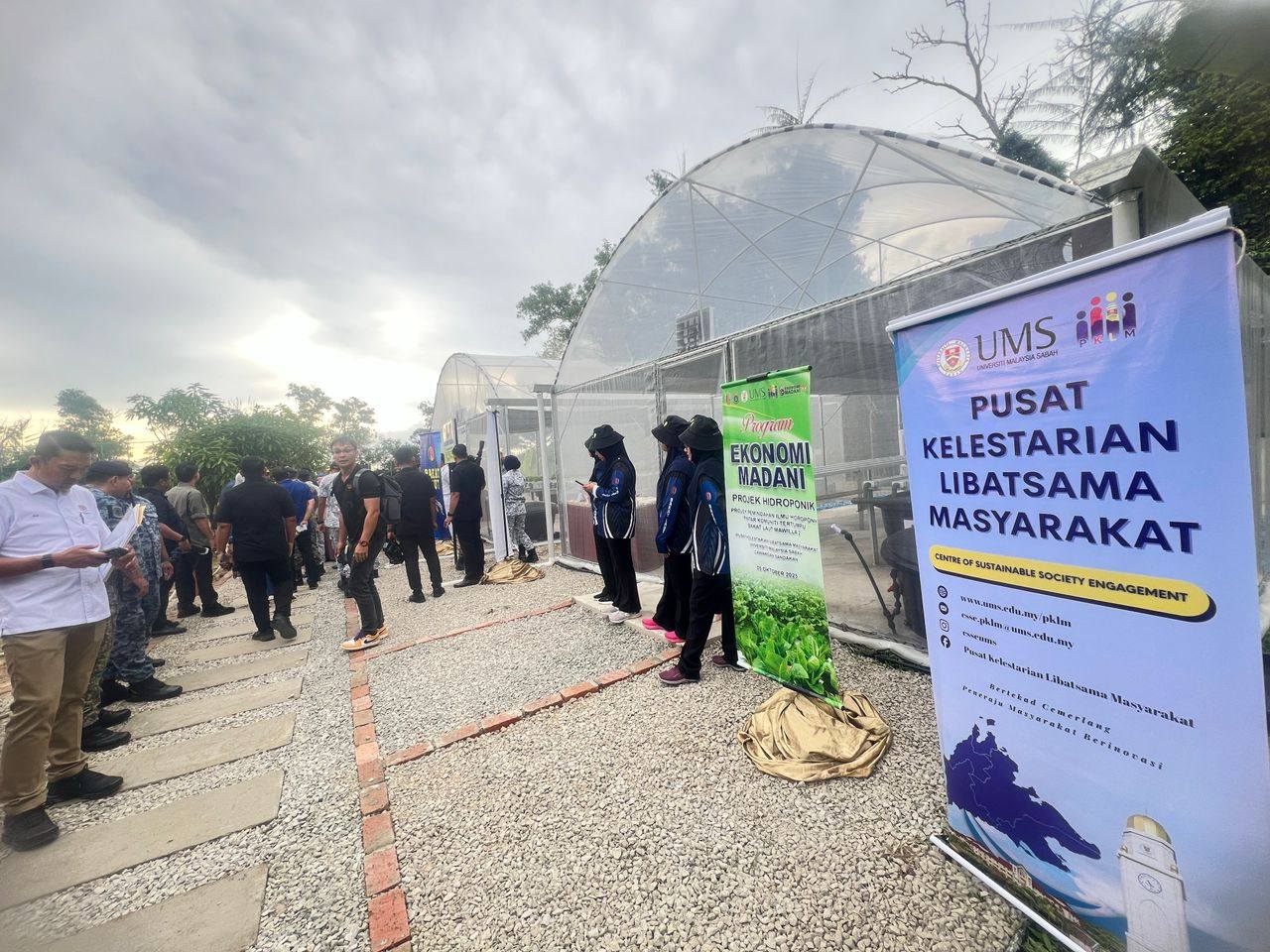
Smart Hydroponics for Sustainable Agriculture (BAKAT Programme)
-
Greener Growth, Smarter Harvests.
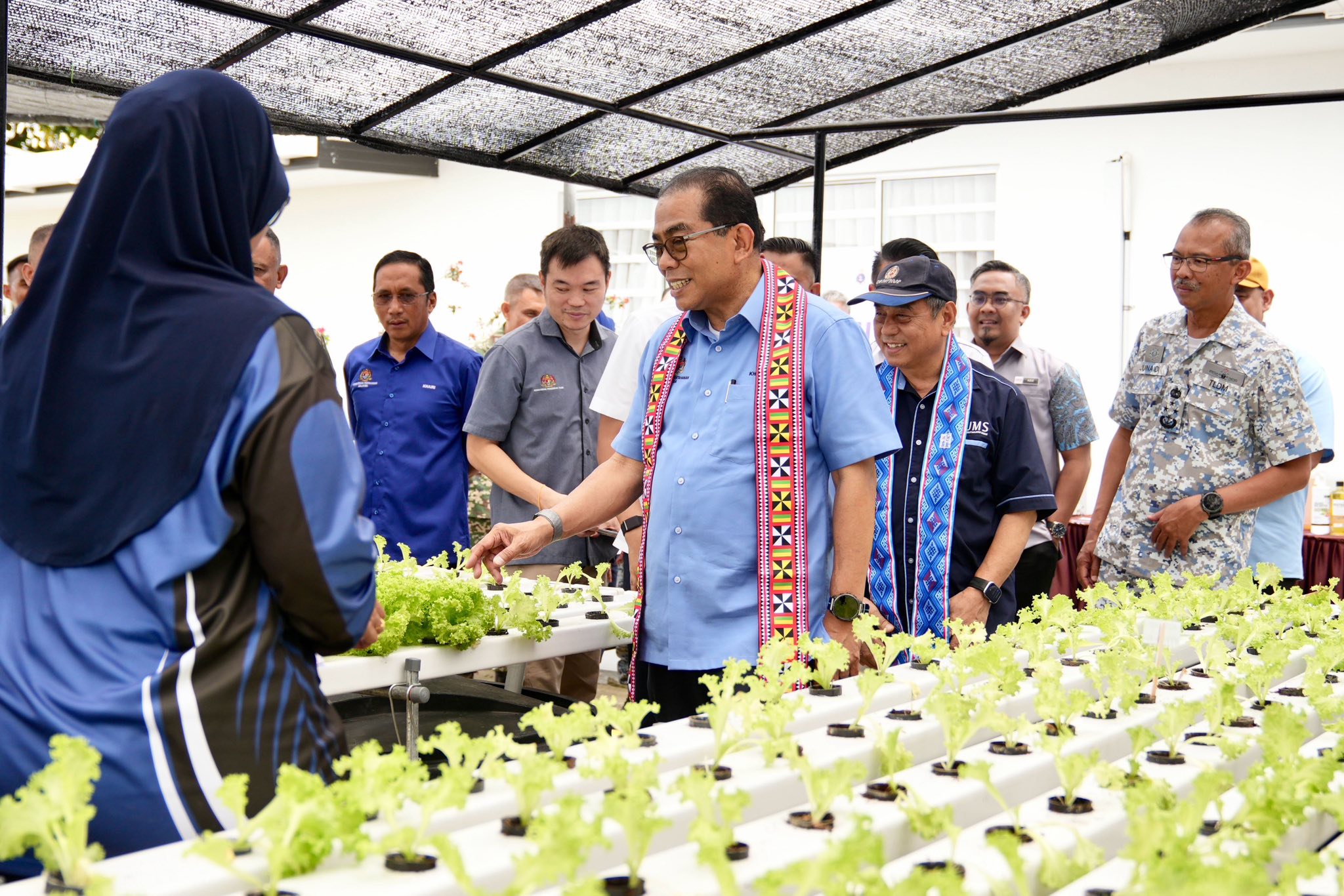
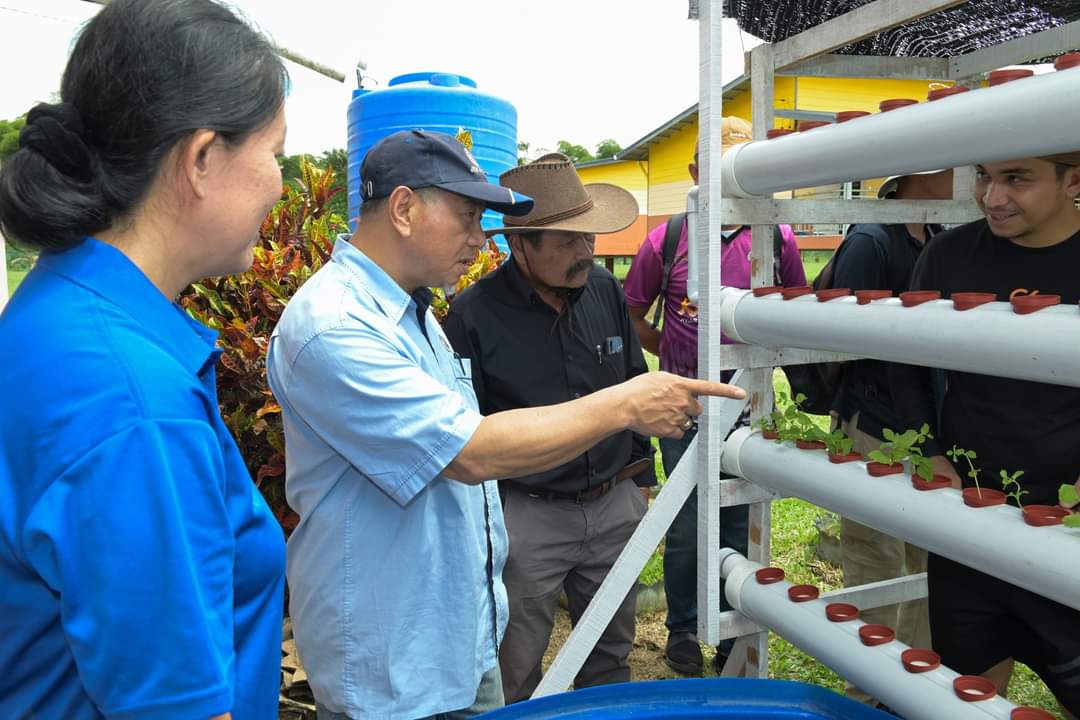
The Smart Hydroponics Community Project stands as a model of innovation, partnership, and sustainable empowerment in action. Officially launched and inaugurated during the Program Ekonomi MADANI visit by YB Dato’ Seri Haji Mohamed Khaled bin Nordin, Minister of Defence, at the Rumah Keluarga Angkatan Tentera (RKAT), Markas Wilayah Laut 2 (MAWILLA 2), Sandakan, the project reflects a new chapter of collaboration between Universiti Malaysia Sabah (UMS) and the Ministry of Defence.
Coordinated by the Pusat Kelestarian Libatsama Masyarakat (PKLM) and led by Assoc. Prof. Dr. Abd. Aziz bin Rekan, the project is implemented through the Faculty of Sustainable Agriculture (UMS Sandakan Campus) under the guidance of Dr. Siti Suliza binti Salamat, who heads the Smart Hydroponics initiative. This transformative effort introduces BAKAT members and local youth to hydroponic farming systems that save water, space, and energy — equipping them with modern, climate-smart agricultural skills that generate income and reduce food dependency.
More than a technology transfer, the project nurtures self-reliance, confidence, and unity among the Badan Kebajikan Keluarga Angkatan Tentera (BAKAT), MAWILLA 2 community. Each hydroponic harvest symbolizes a step toward food security, sustainable living, and inter-agency collaboration that embodies the nation’s Ekonomi MADANI vision — people-centered, innovative, and future-ready.
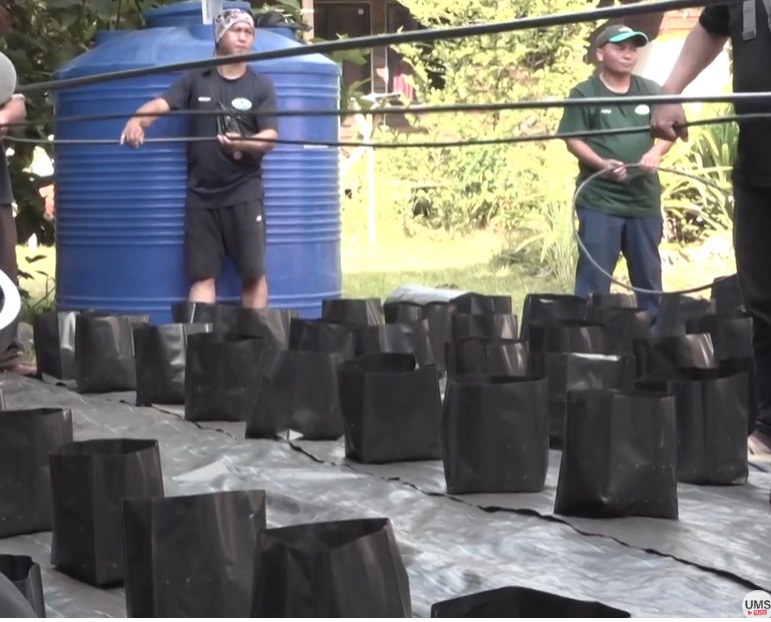
Komuniti Tertumpu Bombon, Kg. Marakau Ranau – DaMaI Initiative
-
From Nature to Nurture.
Nestled in the cool highlands of Ranau, the DaMaI (Dana Amanah Malaysia Madani) Initiative empowers villagers of Kg. Marakau Bombon to transform their environment into a living classroom for sustainability. Through eco-tourism, agro-based entrepreneurship, and community cooperatives, the project weaves livelihoods with stewardship of nature.
Here, every seed planted, every trail preserved, and every visitor welcomed contributes to both income resilience and biodiversity conservation, ensuring that progress never comes at the expense of the environment.
-
Community
Bombon, Kg. Marakau Ranau
-
+
Google Map
Smart Carbon-Free Hydroponics Project (BAKAT Programme)
-
Empowering Communities, Growing Futures.
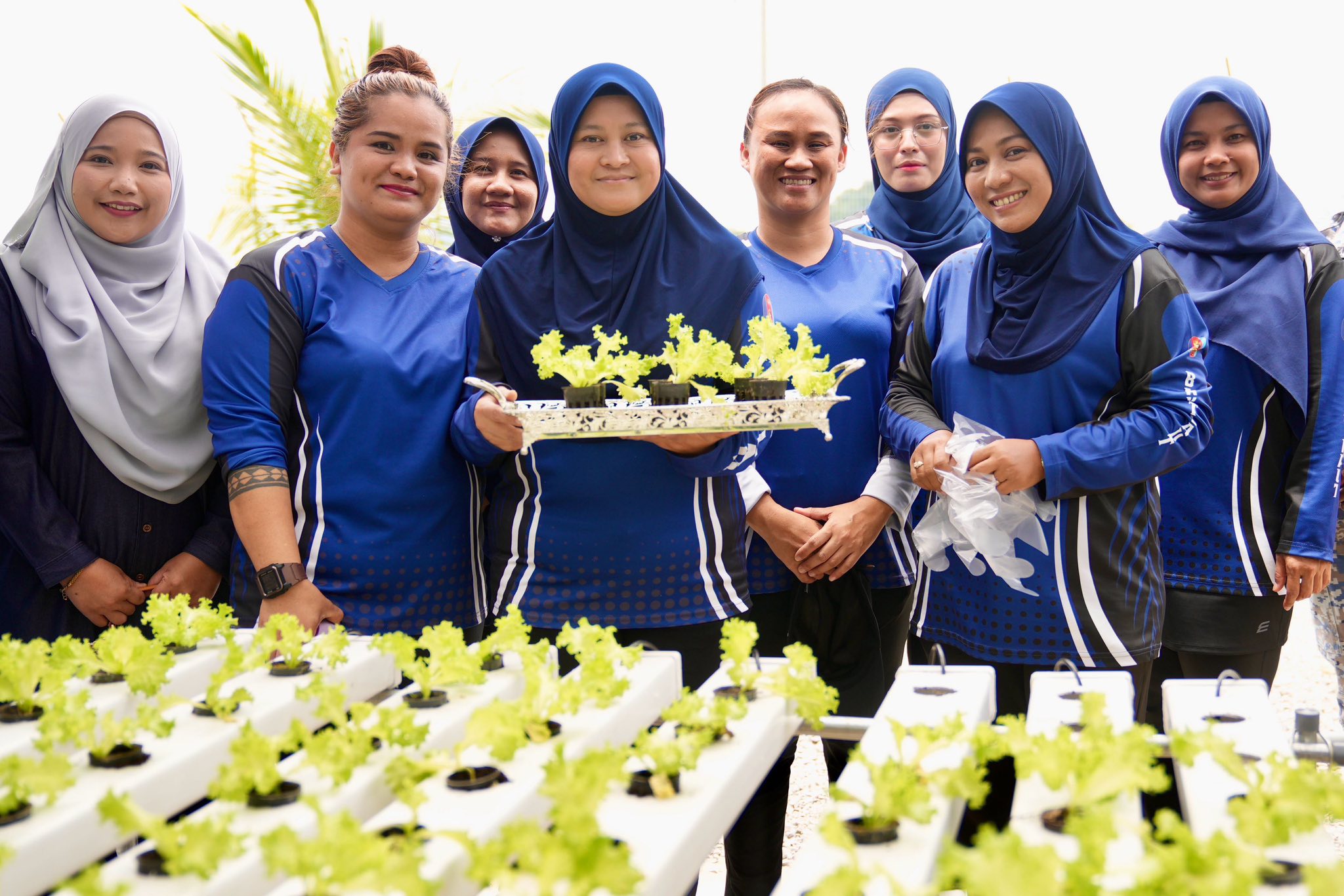
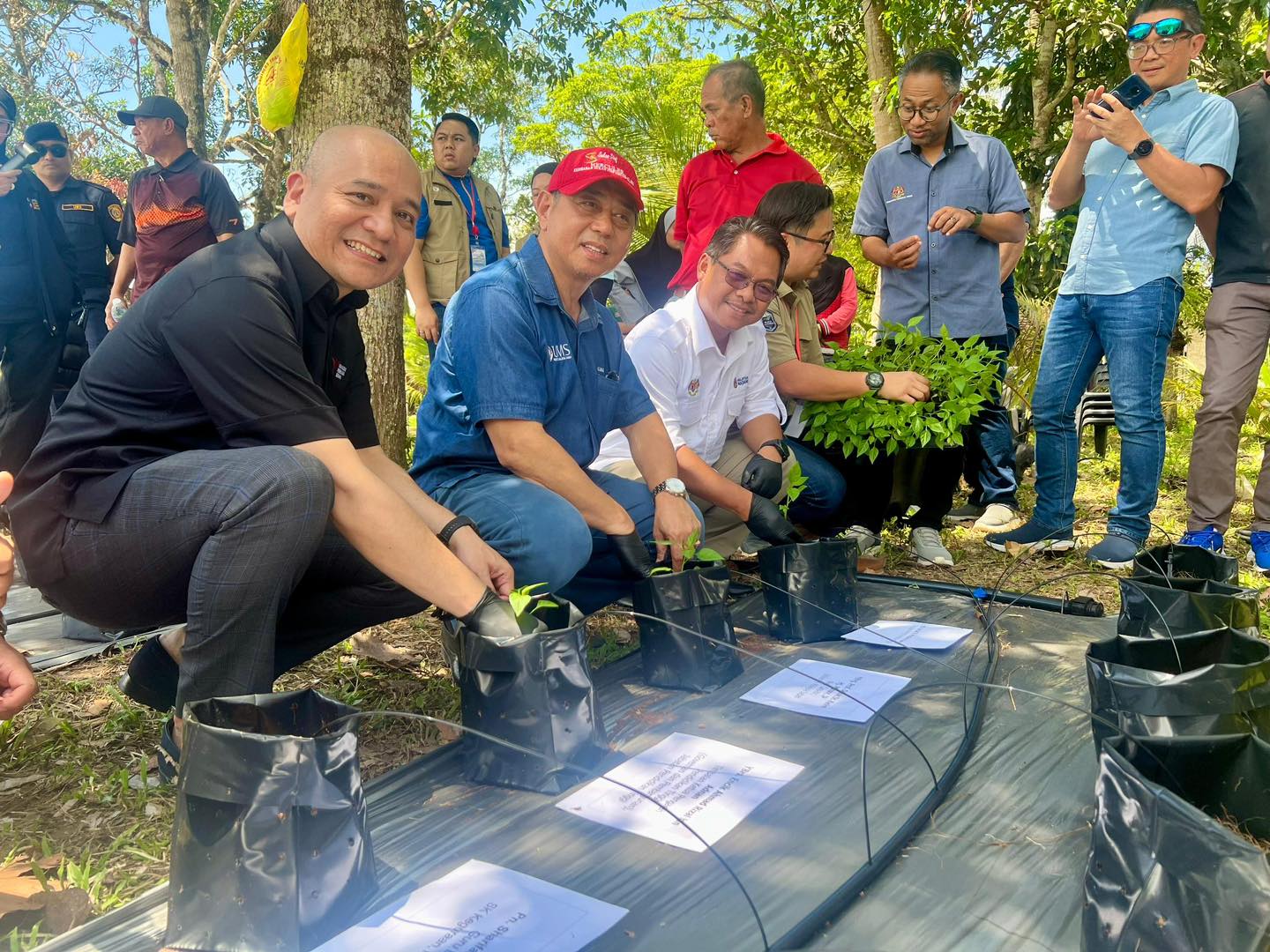
The Smart Carbon-Free Hydroponics Project, an innovative entrepreneurship initiative under the Program Ekonomi MADANI, was developed through collaboration between the Badan Kebajikan Keluarga Angkatan Tentera (BAKAT) and Universiti Malaysia Sabah (UMS) via the Knowledge Transfer Programme (KTP).
This project empowers communities to embrace modern, sustainable agriculture by introducing automated hydroponic systems that use minimal water, land, and energy. Through comprehensive hands-on training led by experts from UMS’s Faculty of Sustainable Agriculture, participants gain technical knowledge, business acumen, and environmental awareness — transforming small urban spaces into productive, eco-friendly gardens.
Beyond cultivating crops, the initiative cultivates confidence, innovation, and resilience among families and youth. It enhances household food security, creates opportunities for supplementary income, and fosters a culture of sustainability and self-reliance within the armed forces community. As a model of inclusive progress, the project embodies the MADANI values of care, partnership, and shared prosperity — proving that when knowledge is transferred with purpose, communities thrive together.
Fertigation, Mushroom Cultivation & Solar Energy Integration
-
Smart Skills, Sustainable Futures.
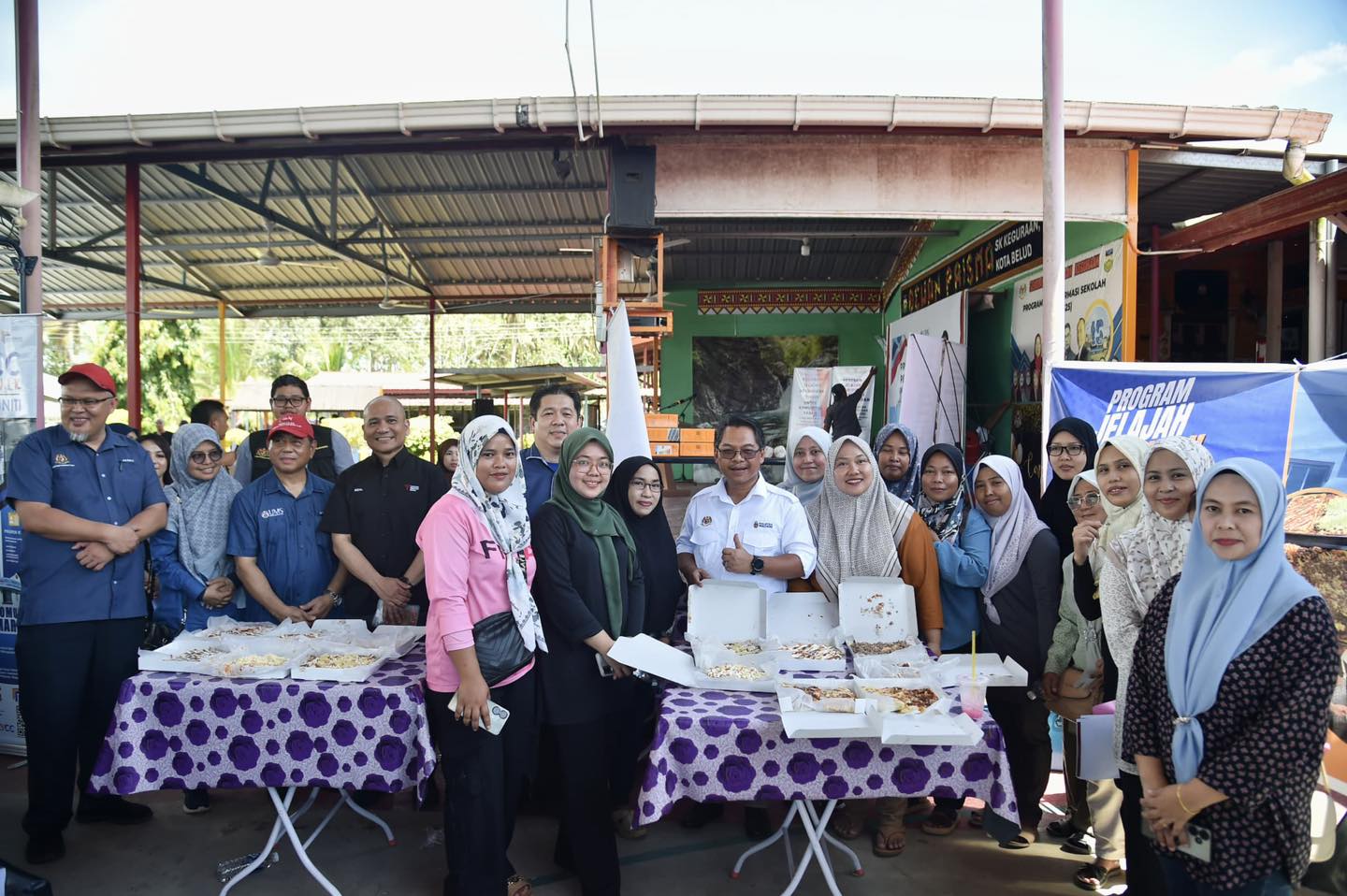
The Fertigation, Mushroom Cultivation & Solar Energy Integration Project is one of Universiti Malaysia Sabah’s most comprehensive community knowledge-transfer initiatives — designed to empower rural communities through a combination of agricultural innovation, renewable energy, and food entrepreneurship. Spearheaded by the Pusat Kelestarian Libatsama Masyarakat (PKLM UMS), this project equips participants with practical, future-ready skills that link sustainability with self-sufficiency.
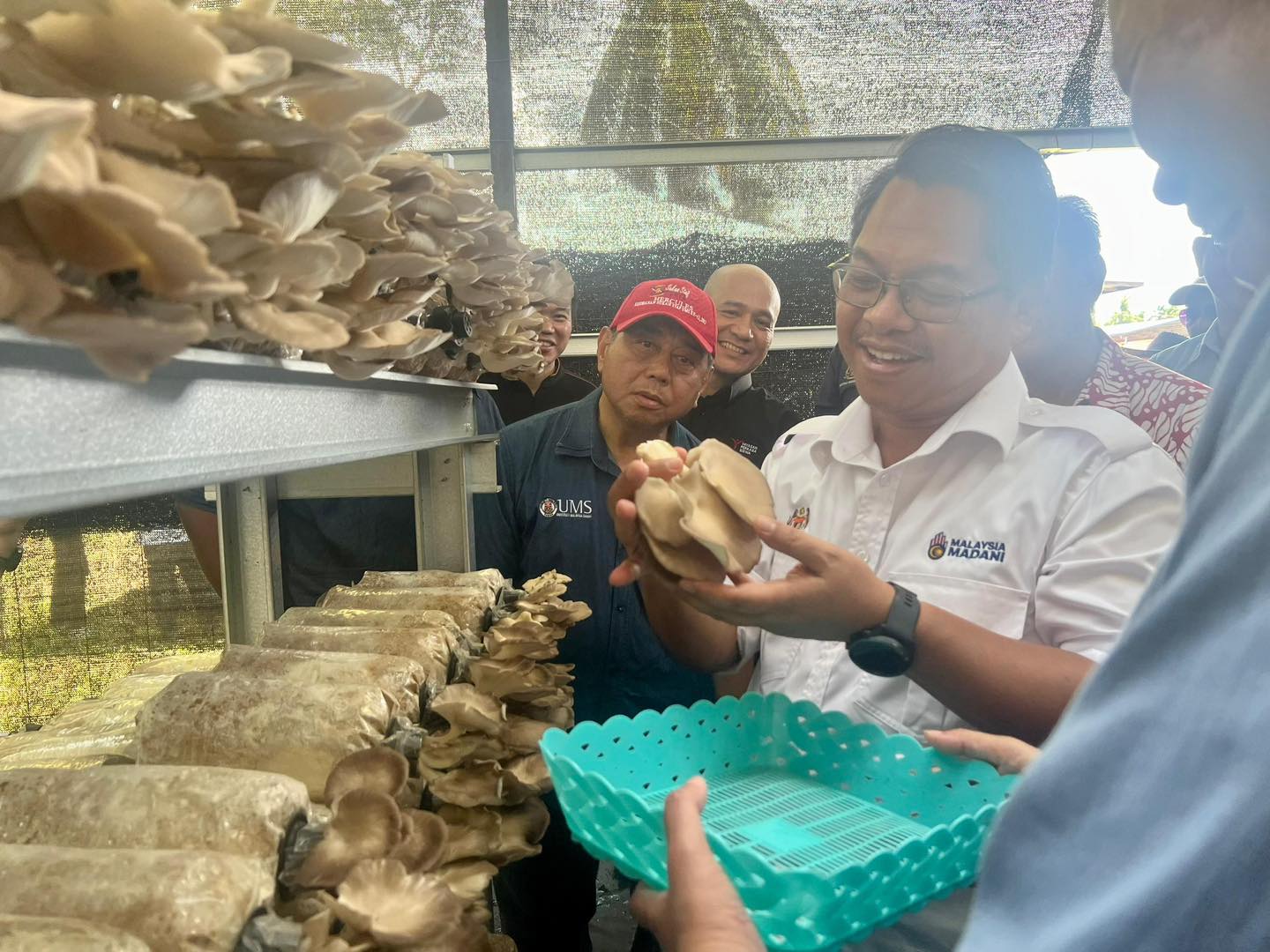
Through hands-on training, villagers and youth learn how to apply fertigation technology — a smart irrigation system that delivers water and nutrients directly to crops, reducing waste and improving yields. Alongside this, participants gain expertise in mushroom cultivation using eco-friendly methods that recycle organic materials such as sawdust or paddy husks, turning agricultural by-products into profitable resources. Complementing these efforts, the project also introduces solar-energy installation workshops, helping communities reduce dependence on non-renewable electricity while lowering operational costs for small enterprises.
Beyond farming and energy, the initiative encourages local food innovation, guiding participants to create value-added products such as yellow noodles and pizza talam using locally sourced ingredients. These activities promote food security, circular economy principles, and low-carbon lifestyles, while strengthening community entrepreneurship.
At its heart, the project represents UMS’s belief that sustainability begins with skill — that by empowering people with knowledge, innovation, and green technology, we build communities that can grow, adapt, and sustain themselves for generations.
-
Community
SK Keguraan, Kota Belud
-
+
Google Map
Composting for Circular Agriculture
-
Turning Waste into Worth.
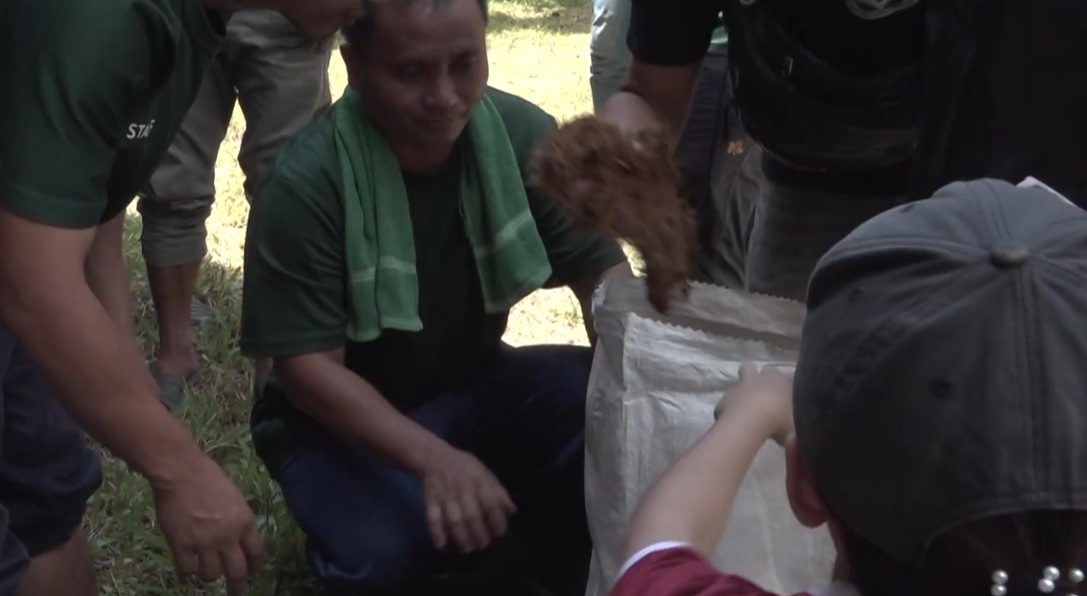
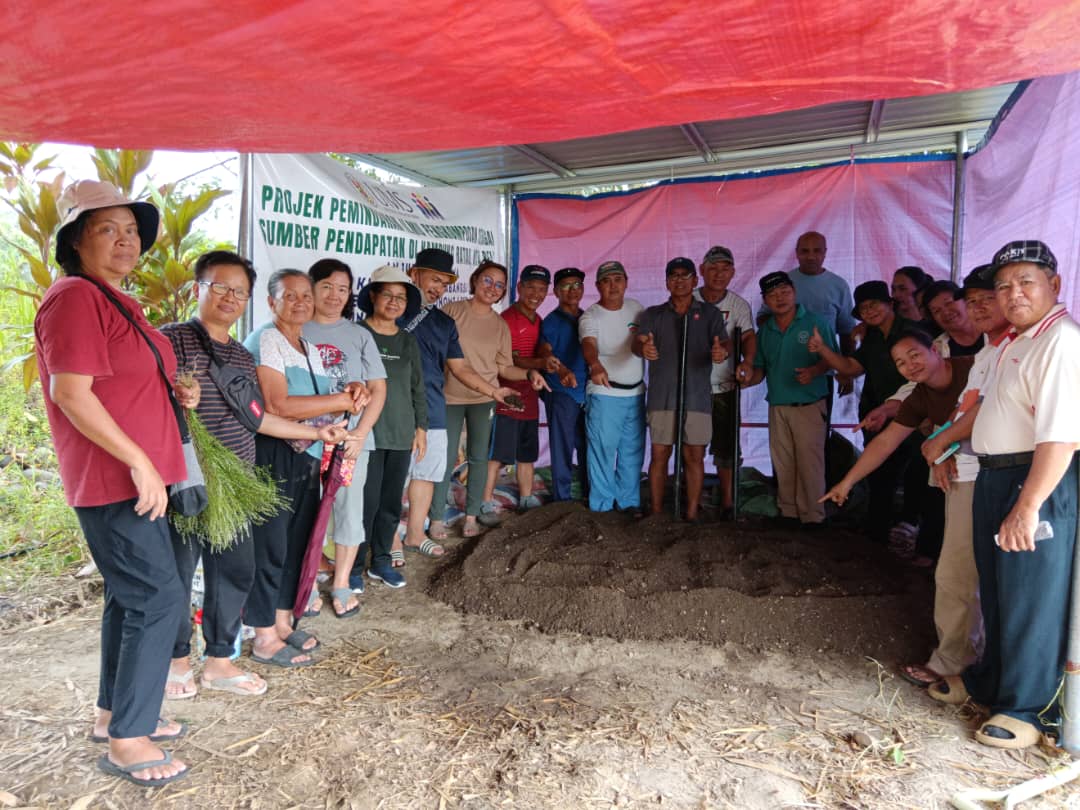
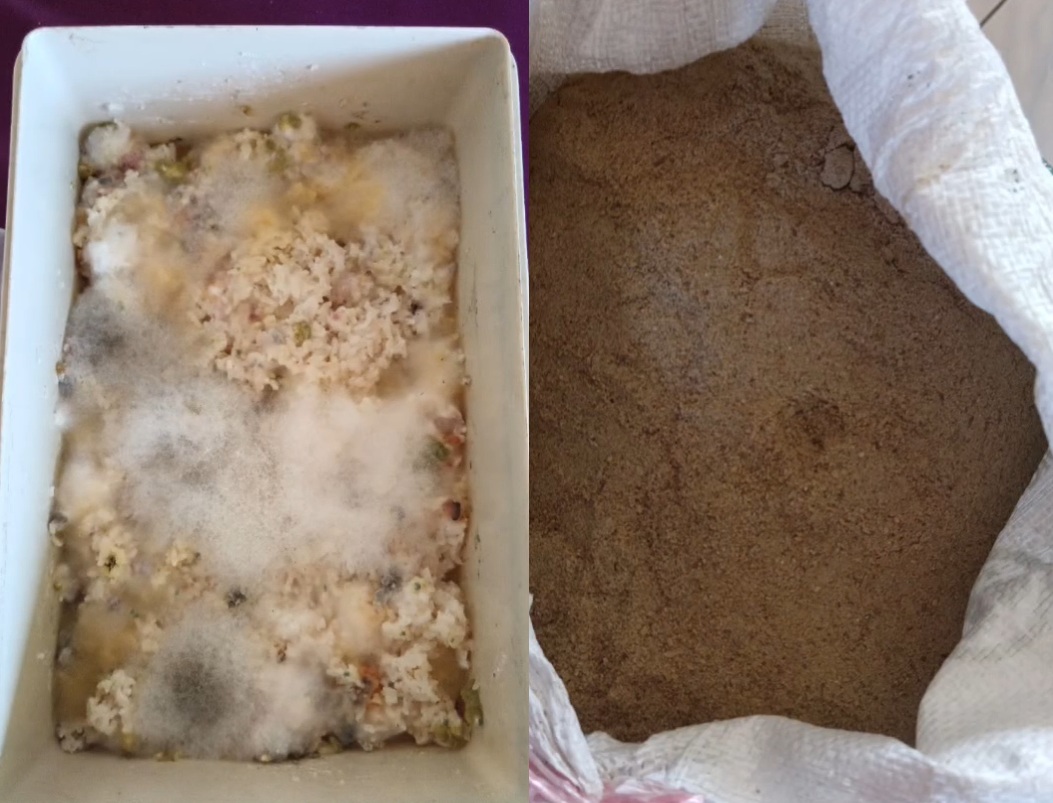
The Composting Knowledge-Transfer Project in Kg. Ratau, Kota Belud, empowers local farmers and families to transform their everyday organic waste into a valuable resource — nutrient-rich natural fertilizer. Led by Universiti Malaysia Sabah (UMS) through the Pusat Kelestarian Libatsama Masyarakat (PKLM), the project teaches participants practical composting methods using household and agricultural residues such as food scraps, leaves, and crop waste. This initiative not only reduces the community’s dependence on chemical fertilizers but also helps to restore soil health, improve productivity, and encourage more sustainable farming systems rooted in circular economy principles.
Beyond its technical outcomes, the project cultivates a mindset of environmental stewardship and shared responsibility. Each compost bin becomes a classroom of change — where villagers learn that even waste holds potential when guided by knowledge and care. The process symbolizes regeneration and resilience: turning what was once discarded into new growth, bridging scarcity with innovation, and nurturing a zero-waste culture that supports climate-smart agriculture. The Kg. Ratau community now stands as an inspiring example of how small rural actions can ripple into a larger movement for sustainability and ecological balance.
-
Community
Kg. Ratau, Kota Belud
-
+
Google Map
Mushroom Cultivation Project
-
Cultivating Growth, Harvesting Hope.
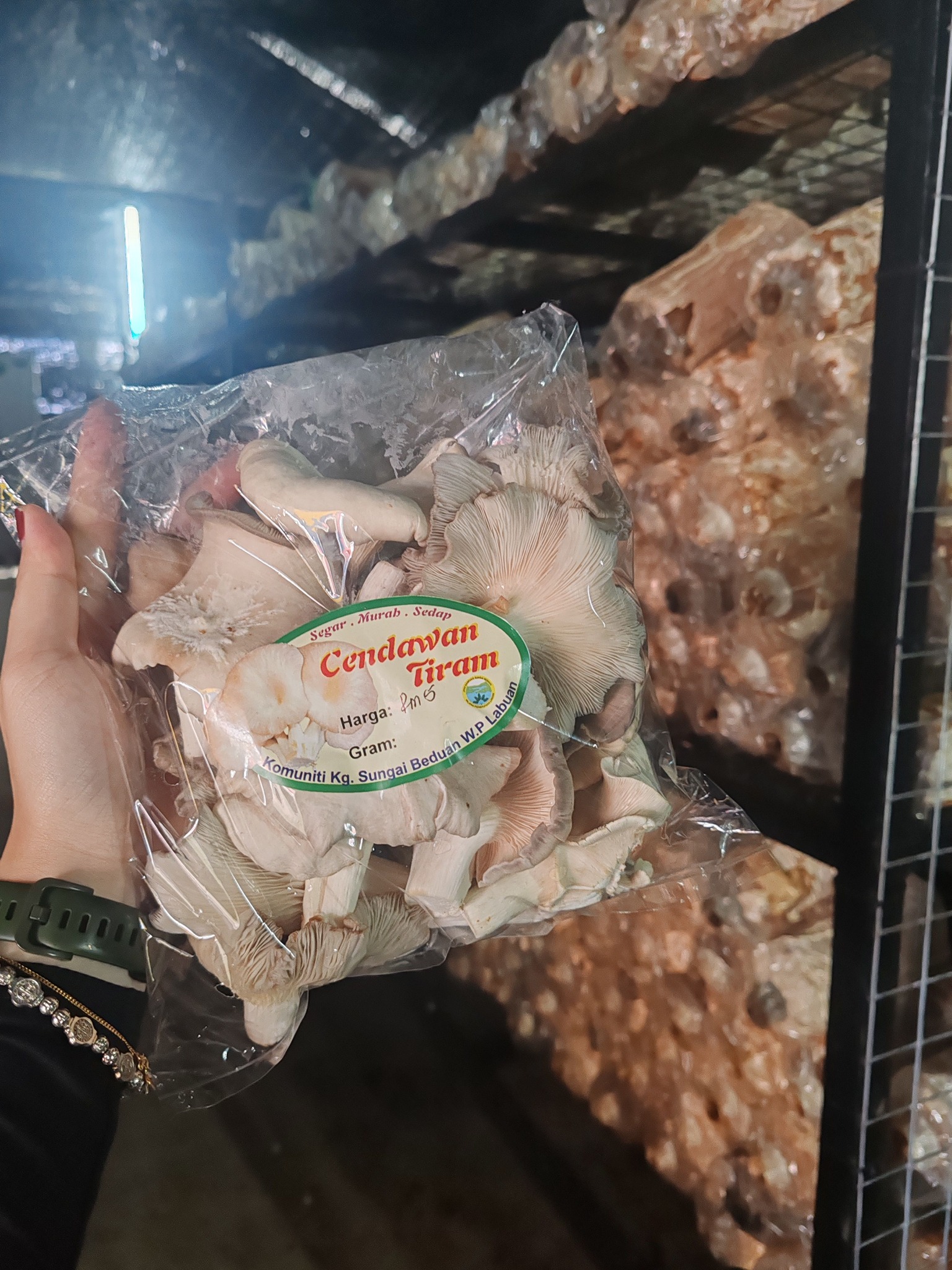
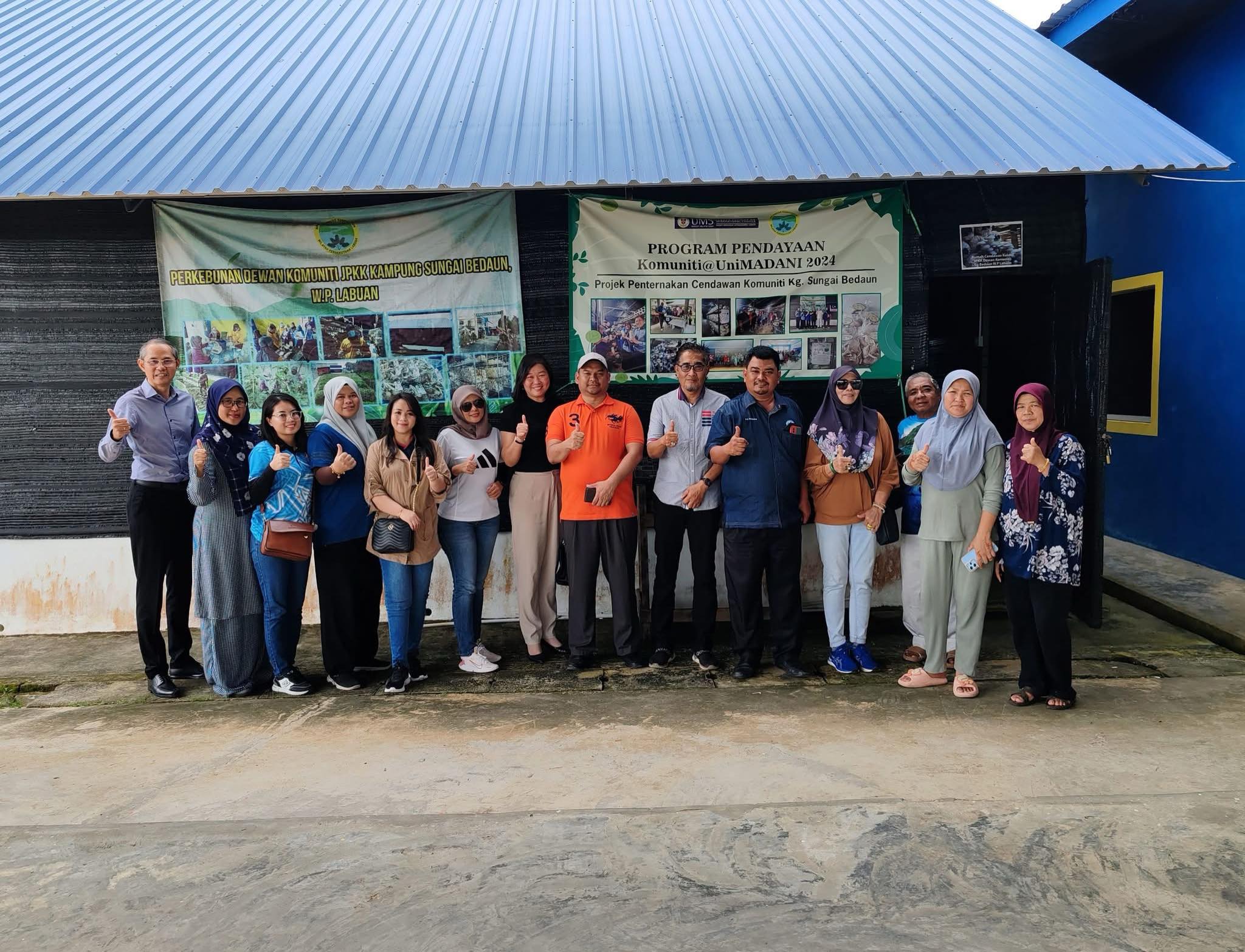
The Mushroom Cultivation Project in Kg. Sungai Bedaun, Labuan, exemplifies how knowledge transfer can transform small communities into sustainable, income-generating ecosystems. Implemented under the Program Pendayaan Komuniti @ UniMADANI 2024, funded by the Ministry of Finance Malaysia, and led by Dr. Emily Yapp Hon Tshin from the Faculty of International Finance Labuan (FKAL) alongside Dr. Nazarina Jamil, Dr. Sharinah Puasa, and Assoc. Prof. Lee Hock Ann, this initiative brought together innovation, community participation, and environmental awareness.
The project introduced modern mushroom farming techniques using 1,500 cultivation blocks integrated with automatic irrigation systems, block-stacking methods for efficient space use, and lime-layered caps to simplify operations compared to traditional methods. Infrastructure upgrades — including water tanks, chillers, pumps, and packaging equipment — helped maintain product quality and streamline operations. In just three months, the project produced 150 kg of fresh mushrooms, generating RM3,000 in revenue per season, with two harvests expected annually.
Beyond the numbers, the project’s heart lies in empowering 15 community members with practical agricultural and marketing skills. The combination of attractive packaging and digital promotion has expanded the market reach and improved local demand. By blending modern agrotechnology with community entrepreneurship, the initiative not only enhanced local income but also built a foundation for resilient, climate-smart rural economies that can thrive sustainably across generations.
-
Community
Kg. Sungai Bedaun, Labuan
-
+
Google Map
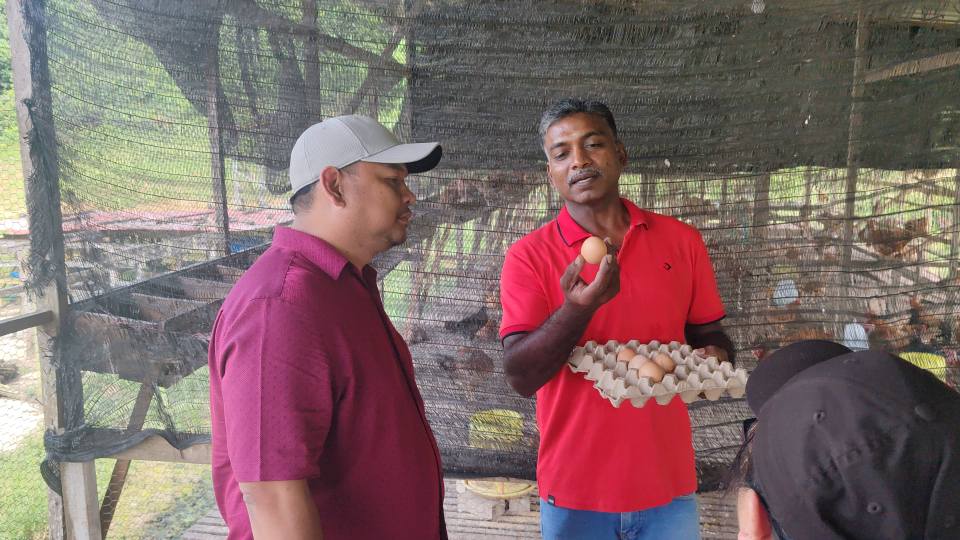
Sustainable Poultry Farming
-
Nurturing Livelihoods, Sustaining Growth.
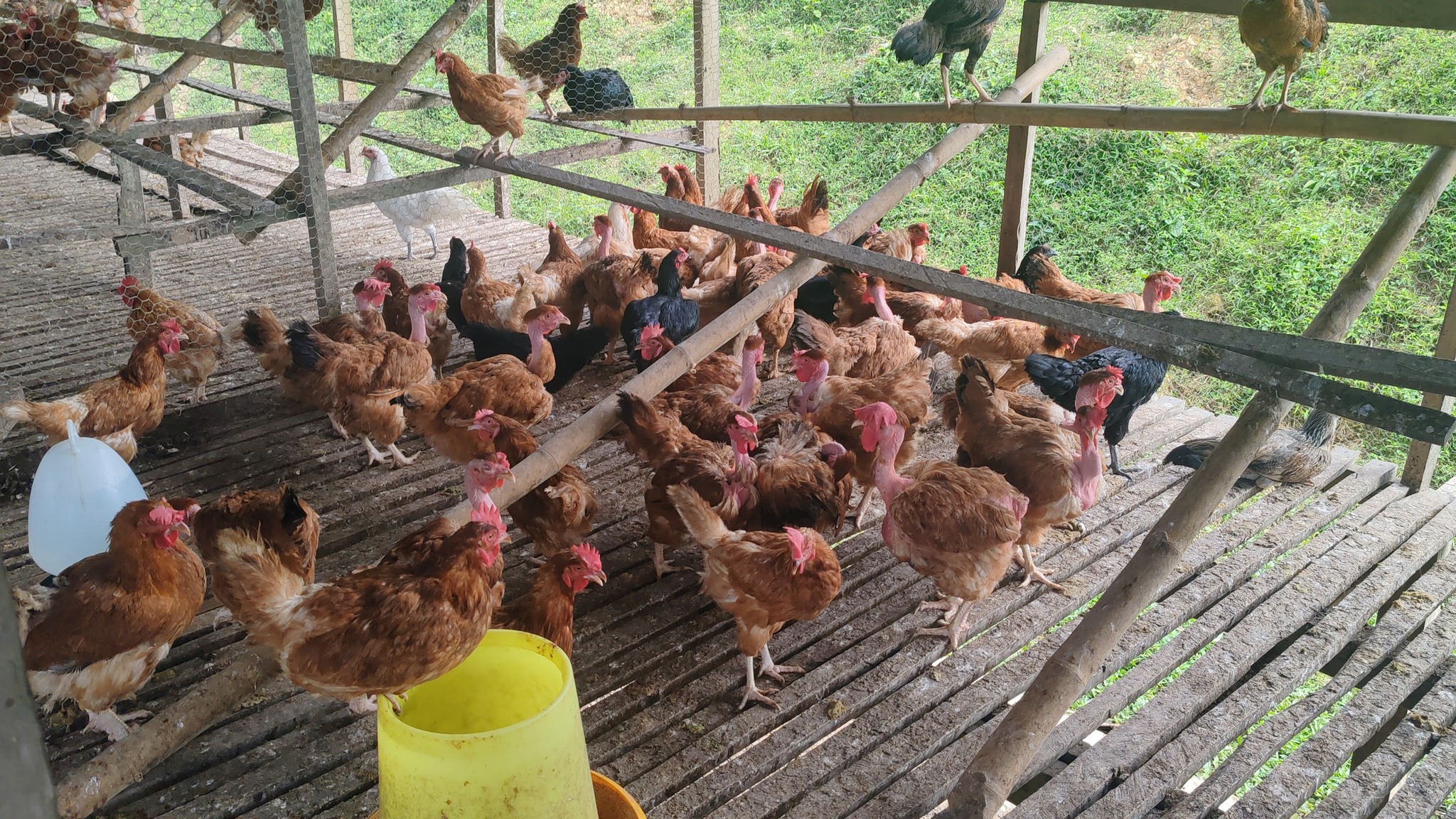
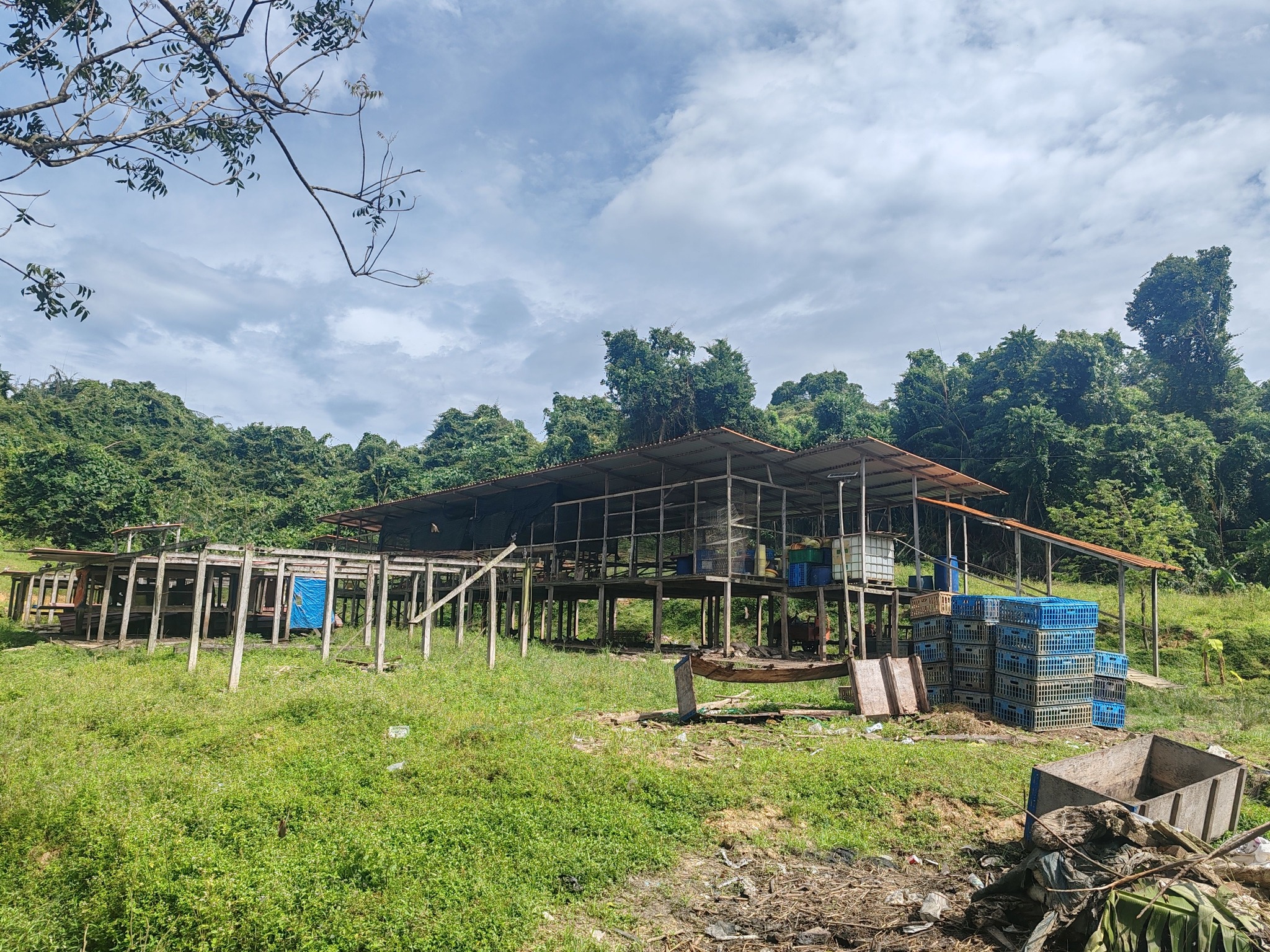
The Layer Chicken Farming Knowledge-Transfer Project in Kg. Bukit Kuda, Labuan, demonstrates how collaboration between academia and local communities can foster sustainable rural entrepreneurship. Implemented by the Faculty of International Finance Labuan (FKAL) under the Pusat Kelestarian Libatsama Masyarakat (PKLM UMS), and funded by the Program Pendayaan Uni@MADANI 2024 from the Ministry of Finance Malaysia, this RM10,000 initiative has successfully empowered 20 active participants from the Northern Labuan Farmers’ Association to strengthen their economic resilience through sustainable poultry farming.
Led by Dr. Ooi Ai Yee (FKAL) with En. Sittha as the community leader, the project has expanded its flock from 100 to 130 chickens, producing 90–120 eggs daily. Innovation lies at the heart of its success — participants have formulated nutritious, low-cost chicken feed from local ingredients and adopted organic waste recycling by turning chicken manure into fertilizer for multi-livestock farms involving goats, cattle, deer, and quail. These efforts have reduced production costs while promoting zero-waste agricultural practices and integrated farm management.
Supported by Assoc. Prof. Dr. Geoffrey Harvey Tanakinjal, Dr. Siti Nur Aqilah Ab Wahab, and Minah Anak Japang, the project team provided expertise in microfinance management, vaccination programs, and training module development. Strategic collaboration with the Department of Veterinary Services Labuan and Sabah Prisons Department further enhanced animal health, logistics, and technical support. During the monitoring visit by Ts. Dr. Ag Sufiyan Abd Hamid, Director of PKLM, on 24 February 2025, the initiative was praised as a model of effective university–community collaboration, blending academic knowledge with grassroots innovation.
With plans to expand its chicken coops and digitalize its financial management, the project continues to evolve as a beacon of sustainable social enterprise, proving that when knowledge meets community, prosperity grows from the ground up.
-
Community
Kg. Bukit Kuda, Labuan
-
+
Google Map
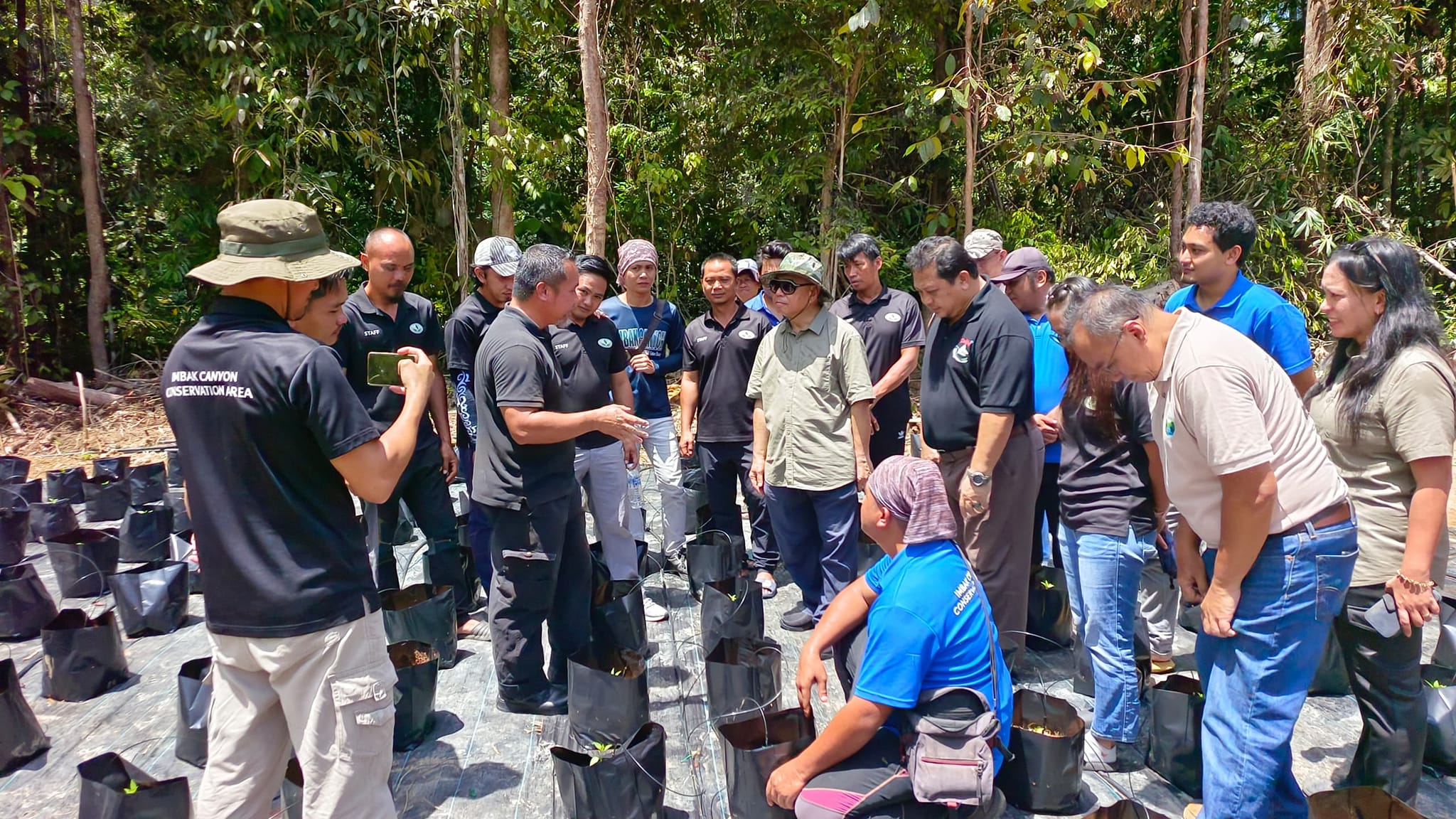
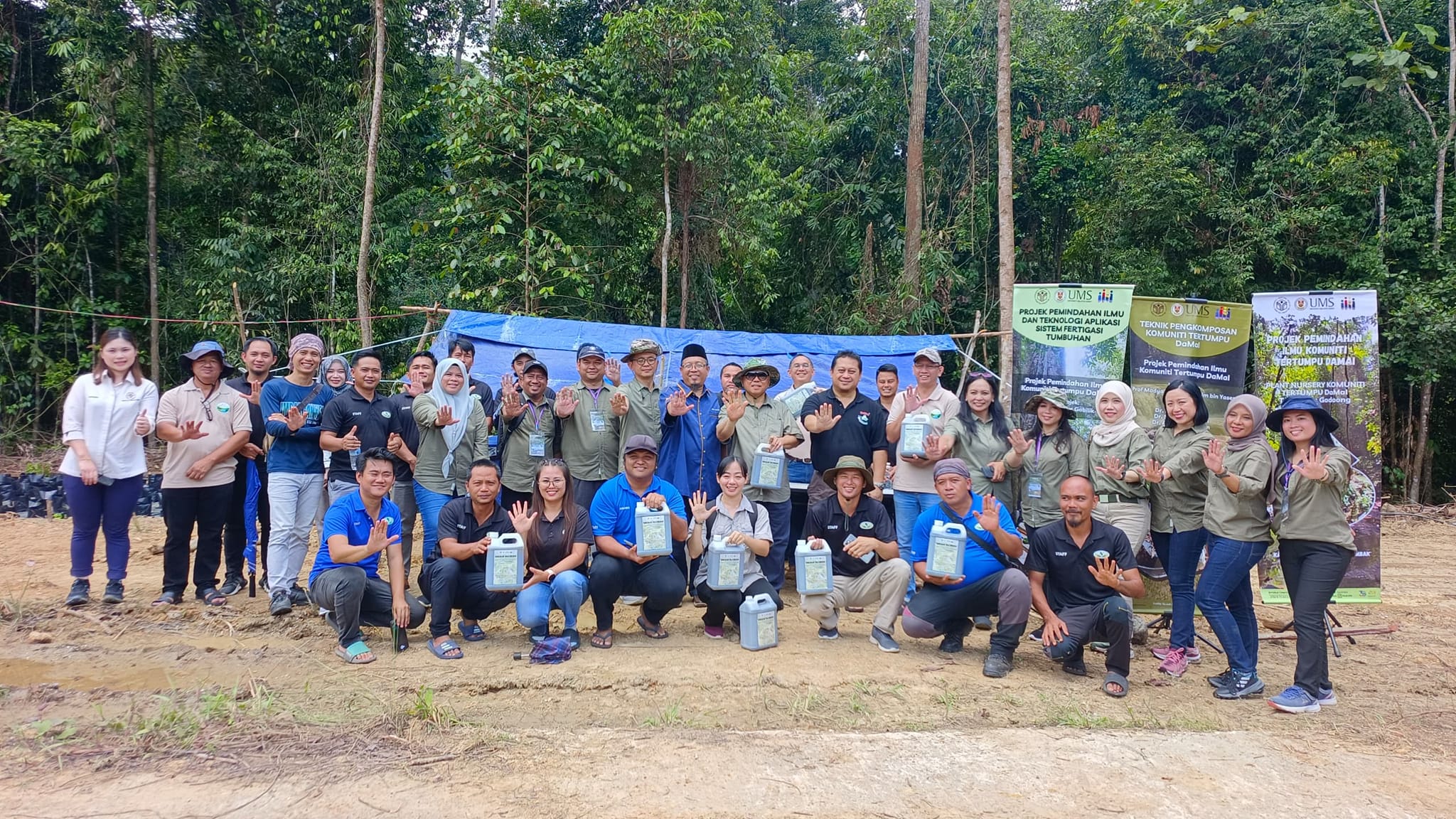
Community Knowledge-Transfer Project at Imbak Canyon Conservation Centre
-
From Roots to Resilience.
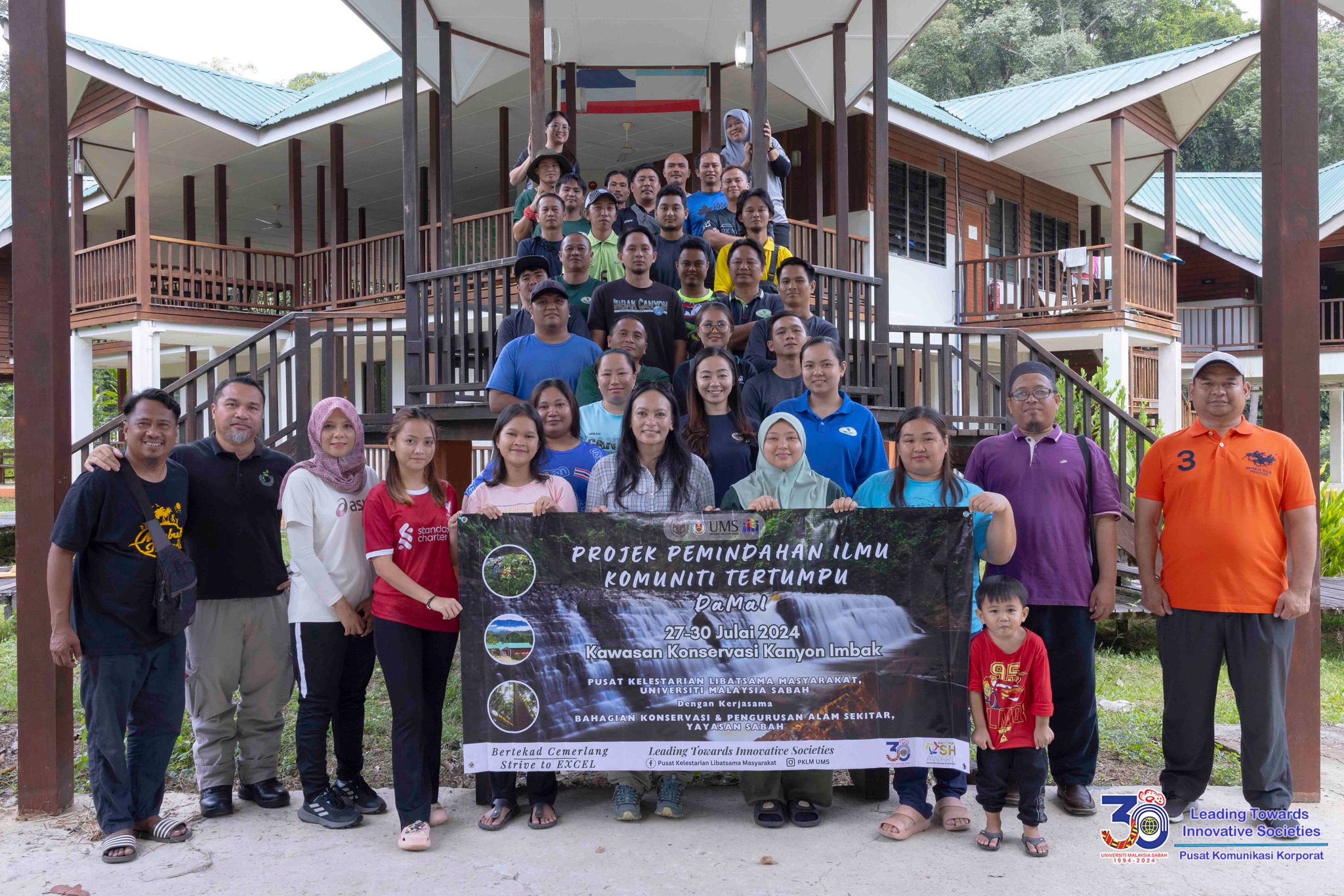
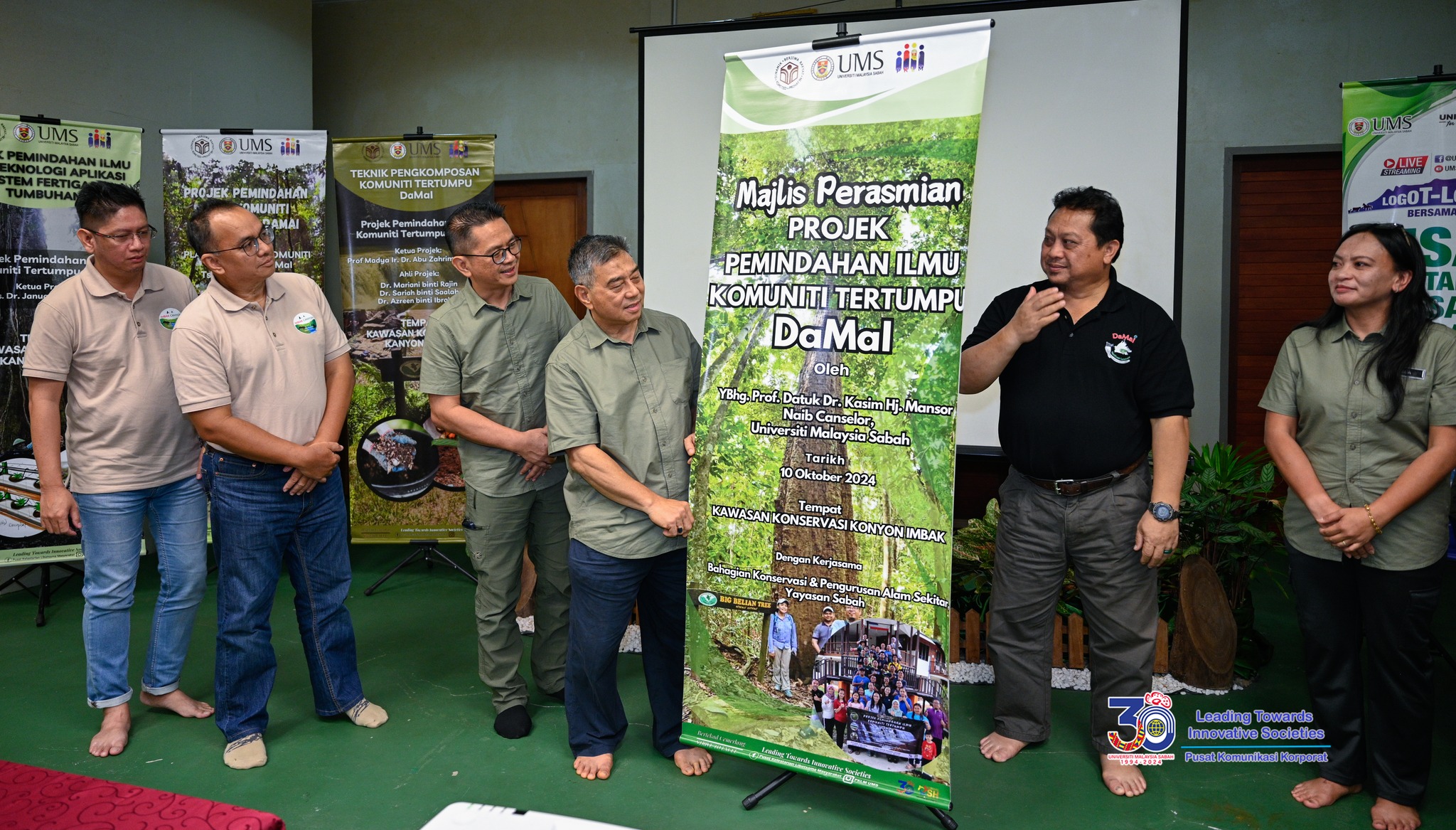
The Community Knowledge-Transfer Project at Imbak Canyon Conservation Centre reflects Universiti Malaysia Sabah’s enduring commitment to advancing sustainability through education, conservation, and community empowerment. Organized by the Pusat Kelestarian Libatsama Masyarakat (PKLM UMS), this annual programme unites researchers, conservationists, and the Yayasan Sabah community within the DaMaI (Danum–Maliau–Imbak) Triangle — one of Malaysia’s most biodiverse conservation landscapes.
Through immersive, hands-on activities, participants engage in the exchange of indigenous knowledge, scientific expertise, and practical sustainability practices. Among the key initiatives are organic fertilizer production, pepper cultivation technology, and forest-based biodiversity awareness modules, all aimed at supporting sustainable livelihoods and responsible resource management. Beyond training, the experience deepens appreciation for nature’s interconnectedness — from observing flying squirrels and rare birds to learning about medicinal plants and ecological balance.
This collaboration stands as a living model of how universities can bridge academia with the heart of nature — empowering conservation workers and local communities alike to become guardians of Sabah’s natural heritage. It is a journey of shared learning, mutual respect, and hope for a sustainable tomorrow where knowledge nurtures both people and the planet.
-
Community
Imbak Canyon Conservation Centre
-
+
Google Map
Trans Borneo 2023 Knowledge Transfer Program
-
Cultivating Growth, Harvesting Hope.
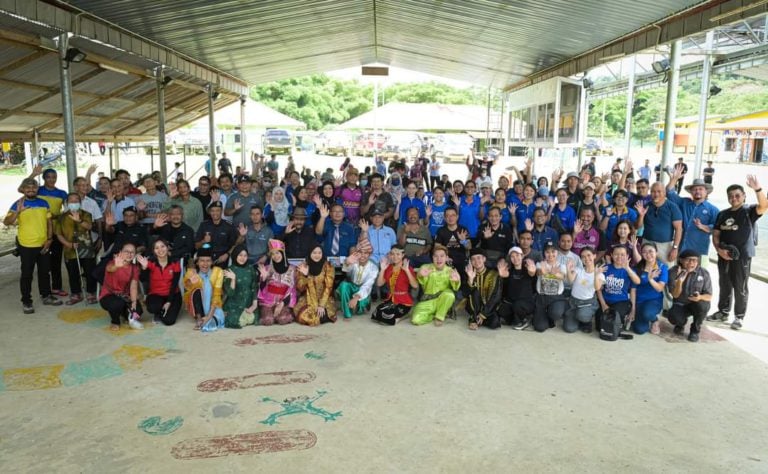
Under the Ministry of Higher Education’s Knowledge Transfer Initiative (KRIS), Universiti Malaysia Sabah (UMS) spearheaded ten multidisciplinary community projects in Kampung Long Pasia, Sipitang—a remote highland village located near the Sabah–Sarawak border. The programme mobilised over 90 UMS academics, researchers, and students, working directly with more than 200 local residents across sectors such as health education, aquaculture, smart solar e-Desa systems, ICT literacy, composting, and biodiversity conservation.
By integrating scientific expertise with local wisdom, the initiative enhanced livelihood opportunities through sustainable fish-farming, organic fertiliser production, and eco-tourism potential, while also improving access to clean energy and digital communication. Environmental awareness campaigns and health outreach activities strengthened community wellbeing and self-reliance, especially among women and youth.
Through this holistic approach, the Long Pasia community gained both economic resilience and ecological literacy, reducing dependency on external aid and vulnerability to socio-economic and environmental shocks. The project exemplifies UMS’s model of community-based sustainability, where education and technology become enablers for rural transformation
-
Community
Kampung Long Pasia,Sipitang
-
+
Google Map
Smart Hydroponics for Sustainable Agriculture (BAKAT Programme)
-
Greener Growth, Smarter Harvests.
The Smart Hydroponics Community Project stands as a model of innovation, partnership, and sustainable empowerment in action. Officially launched and inaugurated during the Program Ekonomi MADANI visit by YB Dato’ Seri Haji Mohamed Khaled bin Nordin, Minister of Defence, at the Rumah Keluarga Angkatan Tentera (RKAT), Markas Wilayah Laut 2 (MAWILLA 2), Sandakan, the project reflects a new chapter of collaboration between Universiti Malaysia Sabah (UMS) and the Ministry of Defence. Coordinated by the Pusat Kelestarian Libatsama Masyarakat (PKLM) and led by Assoc. Prof. Dr. Abd. Aziz bin Rekan, the project is implemented through the Faculty of Sustainable Agriculture (UMS Sandakan Campus) under the guidance of Dr. Siti Suliza binti Salamat, who heads the Smart Hydroponics initiative. This transformative effort introduces BAKAT members and local youth to hydroponic farming systems that save water, space, and energy — equipping them with modern, climate-smart agricultural skills that generate income and reduce food dependency. More than a technology transfer, the project nurtures self-reliance, confidence, and unity among the Badan Kebajikan Keluarga Angkatan Tentera (BAKAT), MAWILLA 2 community. Each hydroponic harvest symbolizes a step toward food security, sustainable living, and inter-agency collaboration that embodies the nation’s Ekonomi MADANI vision — people-centered, innovative, and future-ready.
Komuniti Tertumpu Bombon, Kg. Marakau Ranau – DaMaI Initiative
-
From Nature to Nurture.
Nestled in the cool highlands of Ranau, the DaMaI (Dana Amanah Malaysia Madani) Initiative empowers villagers of Kg. Marakau Bombon to transform their environment into a living classroom for sustainability. Through eco-tourism, agro-based entrepreneurship, and community cooperatives, the project weaves livelihoods with stewardship of nature. Here, every seed planted, every trail preserved, and every visitor welcomed contributes to both income resilience and biodiversity conservation, ensuring that progress never comes at the expense of the environment.
-
Community
Bombon, Kg. Marakau Ranau - + Google Map
Smart Carbon-Free Hydroponics Project (BAKAT Programme)
-
Empowering Communities, Growing Futures.
The Smart Carbon-Free Hydroponics Project, an innovative entrepreneurship initiative under the Program Ekonomi MADANI, was developed through collaboration between the Badan Kebajikan Keluarga Angkatan Tentera (BAKAT) and Universiti Malaysia Sabah (UMS) via the Knowledge Transfer Programme (KTP). This project empowers communities to embrace modern, sustainable agriculture by introducing automated hydroponic systems that use minimal water, land, and energy. Through comprehensive hands-on training led by experts from UMS’s Faculty of Sustainable Agriculture, participants gain technical knowledge, business acumen, and environmental awareness — transforming small urban spaces into productive, eco-friendly gardens. Beyond cultivating crops, the initiative cultivates confidence, innovation, and resilience among families and youth. It enhances household food security, creates opportunities for supplementary income, and fosters a culture of sustainability and self-reliance within the armed forces community. As a model of inclusive progress, the project embodies the MADANI values of care, partnership, and shared prosperity — proving that when knowledge is transferred with purpose, communities thrive together.
Fertigation, Mushroom Cultivation & Solar Energy Integration
-
Smart Skills, Sustainable Futures.
The Fertigation, Mushroom Cultivation & Solar Energy Integration Project is one of Universiti Malaysia Sabah’s most comprehensive community knowledge-transfer initiatives — designed to empower rural communities through a combination of agricultural innovation, renewable energy, and food entrepreneurship. Spearheaded by the Pusat Kelestarian Libatsama Masyarakat (PKLM UMS), this project equips participants with practical, future-ready skills that link sustainability with self-sufficiency. Through hands-on training, villagers and youth learn how to apply fertigation technology — a smart irrigation system that delivers water and nutrients directly to crops, reducing waste and improving yields. Alongside this, participants gain expertise in mushroom cultivation using eco-friendly methods that recycle organic materials such as sawdust or paddy husks, turning agricultural by-products into profitable resources. Complementing these efforts, the project also introduces solar-energy installation workshops, helping communities reduce dependence on non-renewable electricity while lowering operational costs for small enterprises. Beyond farming and energy, the initiative encourages local food innovation, guiding participants to create value-added products such as yellow noodles and pizza talam using locally sourced ingredients. These activities promote food security, circular economy principles, and low-carbon lifestyles, while strengthening community entrepreneurship. At its heart, the project represents UMS’s belief that sustainability begins with skill — that by empowering people with knowledge, innovation, and green technology, we build communities that can grow, adapt, and sustain themselves for generations.
-
Community
SK Keguraan, Kota Belud - + Google Map
Composting for Circular Agriculture
-
Turning Waste into Worth.
The Composting Knowledge-Transfer Project in Kg. Ratau, Kota Belud, empowers local farmers and families to transform their everyday organic waste into a valuable resource — nutrient-rich natural fertilizer. Led by Universiti Malaysia Sabah (UMS) through the Pusat Kelestarian Libatsama Masyarakat (PKLM), the project teaches participants practical composting methods using household and agricultural residues such as food scraps, leaves, and crop waste. This initiative not only reduces the community’s dependence on chemical fertilizers but also helps to restore soil health, improve productivity, and encourage more sustainable farming systems rooted in circular economy principles. Beyond its technical outcomes, the project cultivates a mindset of environmental stewardship and shared responsibility. Each compost bin becomes a classroom of change — where villagers learn that even waste holds potential when guided by knowledge and care. The process symbolizes regeneration and resilience: turning what was once discarded into new growth, bridging scarcity with innovation, and nurturing a zero-waste culture that supports climate-smart agriculture. The Kg. Ratau community now stands as an inspiring example of how small rural actions can ripple into a larger movement for sustainability and ecological balance.
-
Community
Kg. Ratau, Kota Belud - + Google Map
Mushroom Cultivation Project
-
Cultivating Growth, Harvesting Hope.
The Mushroom Cultivation Project in Kg. Sungai Bedaun, Labuan, exemplifies how knowledge transfer can transform small communities into sustainable, income-generating ecosystems. Implemented under the Program Pendayaan Komuniti @ UniMADANI 2024, funded by the Ministry of Finance Malaysia, and led by Dr. Emily Yapp Hon Tshin from the Faculty of International Finance Labuan (FKAL) alongside Dr. Nazarina Jamil, Dr. Sharinah Puasa, and Assoc. Prof. Lee Hock Ann, this initiative brought together innovation, community participation, and environmental awareness. The project introduced modern mushroom farming techniques using 1,500 cultivation blocks integrated with automatic irrigation systems, block-stacking methods for efficient space use, and lime-layered caps to simplify operations compared to traditional methods. Infrastructure upgrades — including water tanks, chillers, pumps, and packaging equipment — helped maintain product quality and streamline operations. In just three months, the project produced 150 kg of fresh mushrooms, generating RM3,000 in revenue per season, with two harvests expected annually. Beyond the numbers, the project’s heart lies in empowering 15 community members with practical agricultural and marketing skills. The combination of attractive packaging and digital promotion has expanded the market reach and improved local demand. By blending modern agrotechnology with community entrepreneurship, the initiative not only enhanced local income but also built a foundation for resilient, climate-smart rural economies that can thrive sustainably across generations.
-
Community
Kg. Sungai Bedaun, Labuan - + Google Map
Sustainable Poultry Farming
-
Nurturing Livelihoods, Sustaining Growth.
The Layer Chicken Farming Knowledge-Transfer Project in Kg. Bukit Kuda, Labuan, demonstrates how collaboration between academia and local communities can foster sustainable rural entrepreneurship. Implemented by the Faculty of International Finance Labuan (FKAL) under the Pusat Kelestarian Libatsama Masyarakat (PKLM UMS), and funded by the Program Pendayaan Uni@MADANI 2024 from the Ministry of Finance Malaysia, this RM10,000 initiative has successfully empowered 20 active participants from the Northern Labuan Farmers’ Association to strengthen their economic resilience through sustainable poultry farming. Led by Dr. Ooi Ai Yee (FKAL) with En. Sittha as the community leader, the project has expanded its flock from 100 to 130 chickens, producing 90–120 eggs daily. Innovation lies at the heart of its success — participants have formulated nutritious, low-cost chicken feed from local ingredients and adopted organic waste recycling by turning chicken manure into fertilizer for multi-livestock farms involving goats, cattle, deer, and quail. These efforts have reduced production costs while promoting zero-waste agricultural practices and integrated farm management. Supported by Assoc. Prof. Dr. Geoffrey Harvey Tanakinjal, Dr. Siti Nur Aqilah Ab Wahab, and Minah Anak Japang, the project team provided expertise in microfinance management, vaccination programs, and training module development. Strategic collaboration with the Department of Veterinary Services Labuan and Sabah Prisons Department further enhanced animal health, logistics, and technical support. During the monitoring visit by Ts. Dr. Ag Sufiyan Abd Hamid, Director of PKLM, on 24 February 2025, the initiative was praised as a model of effective university–community collaboration, blending academic knowledge with grassroots innovation. With plans to expand its chicken coops and digitalize its financial management, the project continues to evolve as a beacon of sustainable social enterprise, proving that when knowledge meets community, prosperity grows from the ground up.
-
Community
Kg. Bukit Kuda, Labuan - + Google Map
Community Knowledge-Transfer Project at Imbak Canyon Conservation Centre
-
From Roots to Resilience.
The Community Knowledge-Transfer Project at Imbak Canyon Conservation Centre reflects Universiti Malaysia Sabah’s enduring commitment to advancing sustainability through education, conservation, and community empowerment. Organized by the Pusat Kelestarian Libatsama Masyarakat (PKLM UMS), this annual programme unites researchers, conservationists, and the Yayasan Sabah community within the DaMaI (Danum–Maliau–Imbak) Triangle — one of Malaysia’s most biodiverse conservation landscapes. Through immersive, hands-on activities, participants engage in the exchange of indigenous knowledge, scientific expertise, and practical sustainability practices. Among the key initiatives are organic fertilizer production, pepper cultivation technology, and forest-based biodiversity awareness modules, all aimed at supporting sustainable livelihoods and responsible resource management. Beyond training, the experience deepens appreciation for nature’s interconnectedness — from observing flying squirrels and rare birds to learning about medicinal plants and ecological balance. This collaboration stands as a living model of how universities can bridge academia with the heart of nature — empowering conservation workers and local communities alike to become guardians of Sabah’s natural heritage. It is a journey of shared learning, mutual respect, and hope for a sustainable tomorrow where knowledge nurtures both people and the planet.
-
Community
Imbak Canyon Conservation Centre - + Google Map
Trans Borneo 2023 Knowledge Transfer Program
-
Cultivating Growth, Harvesting Hope.
Under the Ministry of Higher Education’s Knowledge Transfer Initiative (KRIS), Universiti Malaysia Sabah (UMS) spearheaded ten multidisciplinary community projects in Kampung Long Pasia, Sipitang—a remote highland village located near the Sabah–Sarawak border. The programme mobilised over 90 UMS academics, researchers, and students, working directly with more than 200 local residents across sectors such as health education, aquaculture, smart solar e-Desa systems, ICT literacy, composting, and biodiversity conservation. By integrating scientific expertise with local wisdom, the initiative enhanced livelihood opportunities through sustainable fish-farming, organic fertiliser production, and eco-tourism potential, while also improving access to clean energy and digital communication. Environmental awareness campaigns and health outreach activities strengthened community wellbeing and self-reliance, especially among women and youth. Through this holistic approach, the Long Pasia community gained both economic resilience and ecological literacy, reducing dependency on external aid and vulnerability to socio-economic and environmental shocks. The project exemplifies UMS’s model of community-based sustainability, where education and technology become enablers for rural transformation
-
Community
Kampung Long Pasia,Sipitang - + Google Map
Empowering Communities through Climate-Smart Farming
Advancing Responsible Tourism through Education and Community Engagement
Universiti Malaysia Sabah (UMS), Malaysia’s first eco-tourism university, offers structured educational programmes and outreach that promote the sustainable management of land for tourism. Through university-wide platforms, living laboratories, and community partnerships, UMS integrates environmental education, biodiversity conservation, and sustainable tourism practices to ensure that tourism development supports ecosystem protection and local livelihoods.
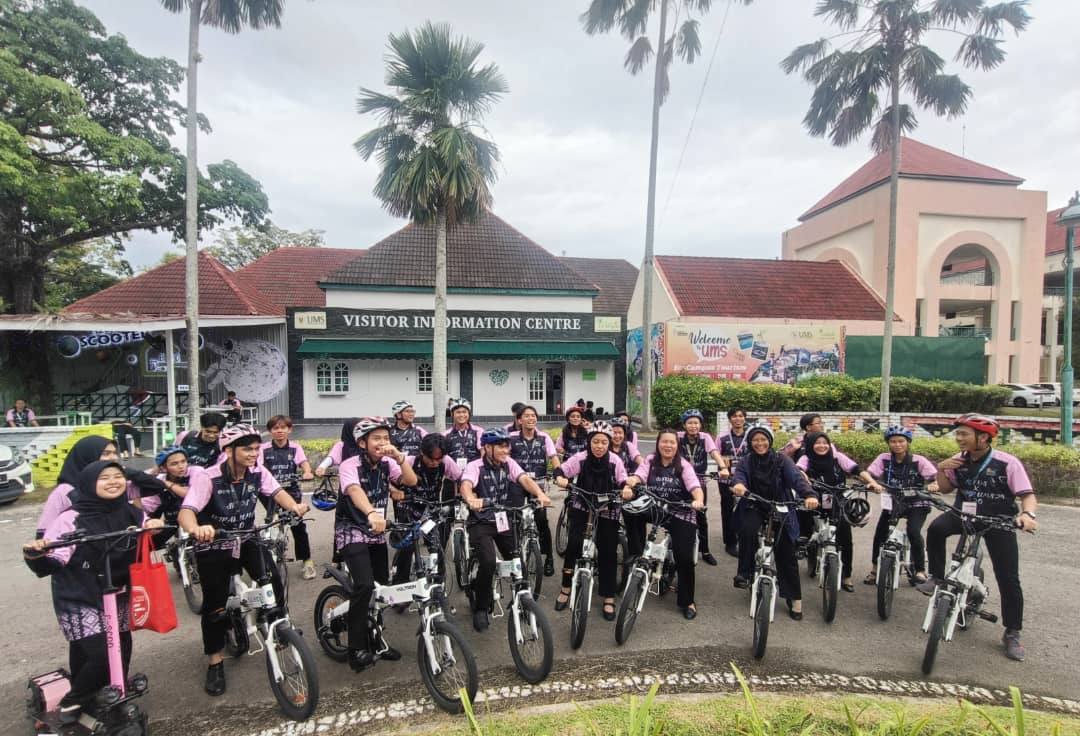
EcoCampus Visitor Information Centre (EVIC):Gateway to Sustainable Tourism Learning
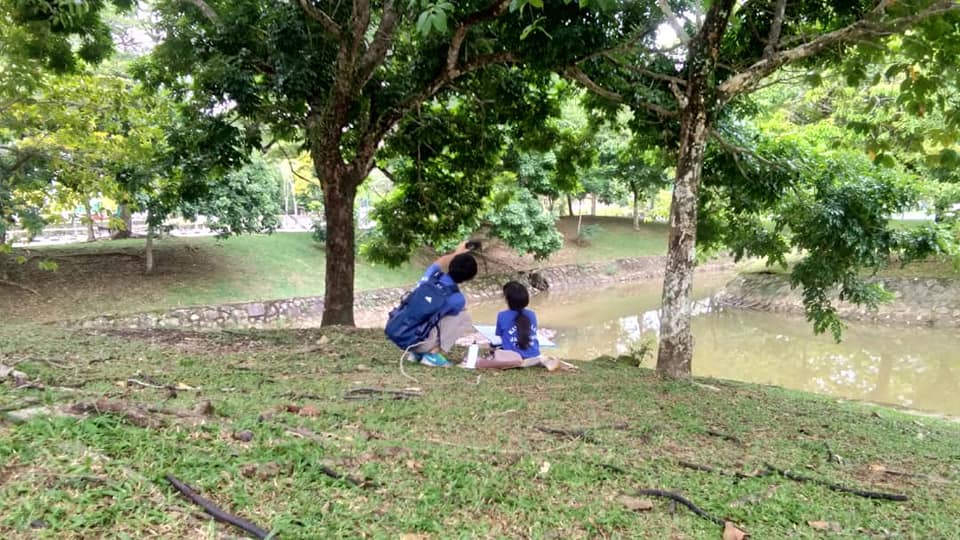
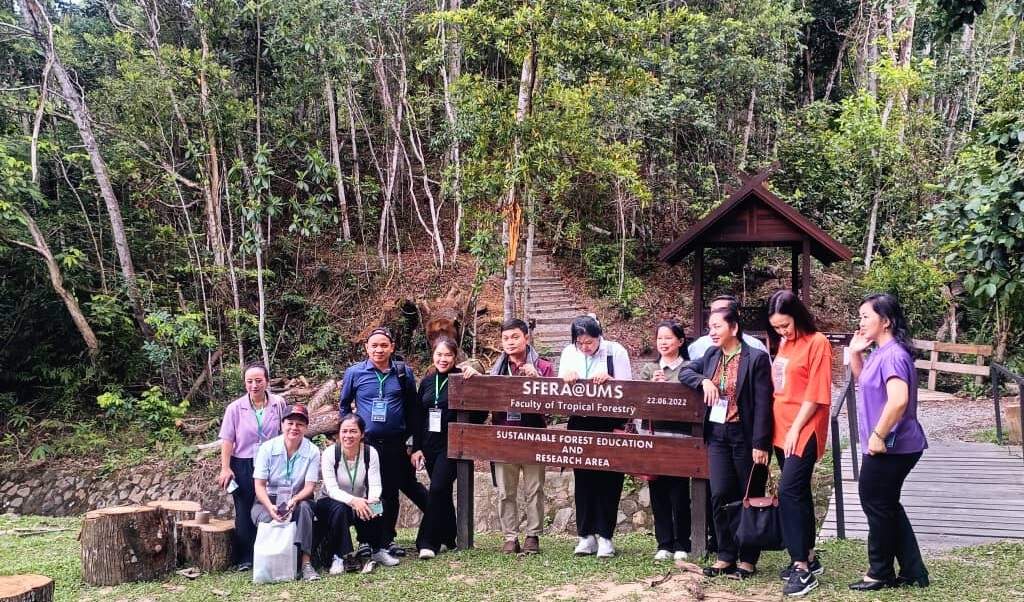
The EcoCampus Visitor Information Centre (EVIC) serves as a central hub for public education on sustainable land use and tourism within the UMS EcoCampus. Visitors, students, and communities engage with interactive learning spaces, including the Gallery BORNEENSIS, which showcases biodiversity, cultural heritage, and eco-innovation initiatives linked to sustainable tourism and land stewardship.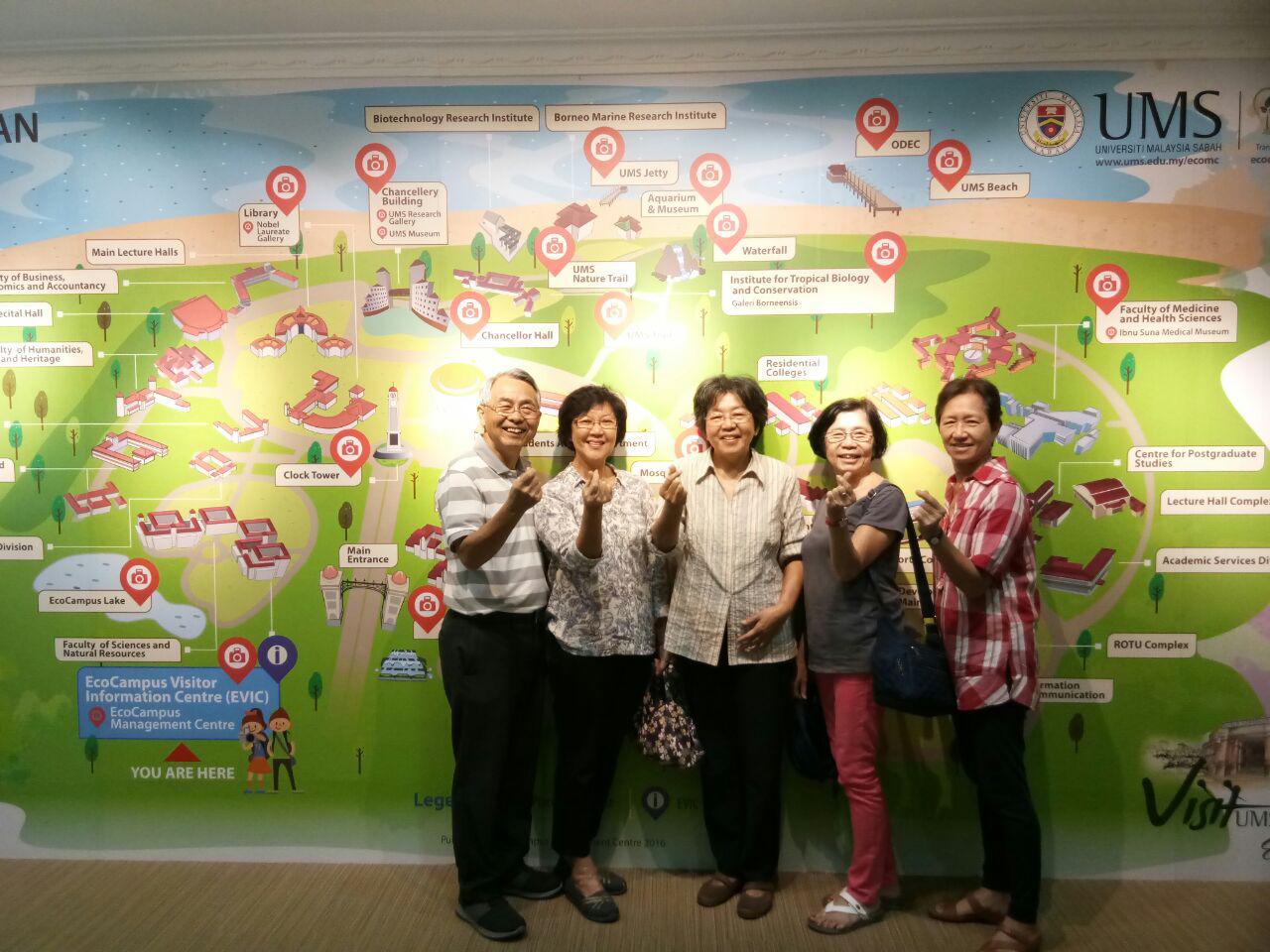
Community-Based Eco-Tourism Outreach: Tourism that Protects Nature and Empowers Communities
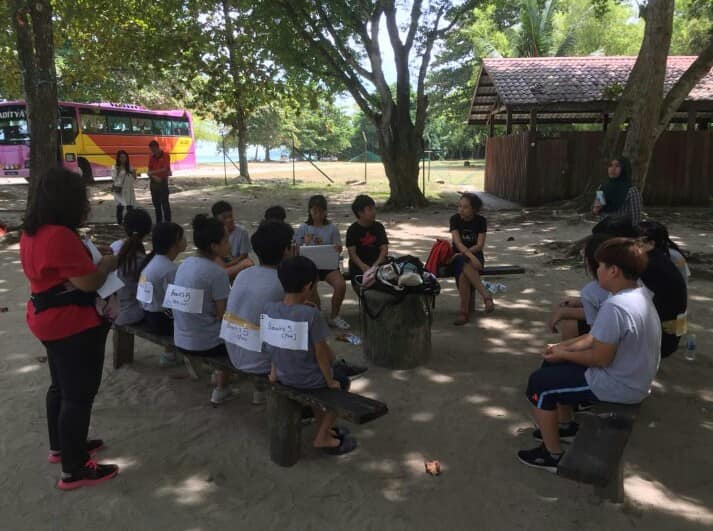
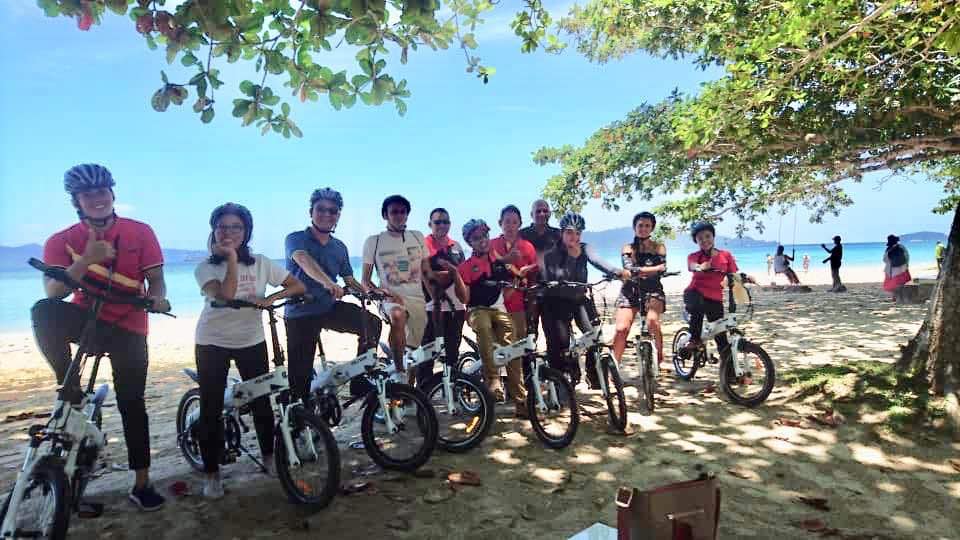
UMS extends sustainable tourism education beyond campus through community-based outreach programmes coordinated by the Pusat Kelestarian Libatsama Masyarakat (PKLM). Key initiatives include the DaMaI Initiative in Kg. Marakau Bombon, Ranau, which integrates agro-ecotourism, conservation education, and community capacity-building to support sustainable land use while enhancing local livelihoods. UMS also contributes to conservation-linked tourism education through outreach activities associated with the Imbak Canyon Conservation Centre, where ecosystem protection, nature-based tourism, and community involvement are aligned. These programmes promote responsible tourism practices that safeguard sensitive landscapes while generating socio-economic benefits for local communities.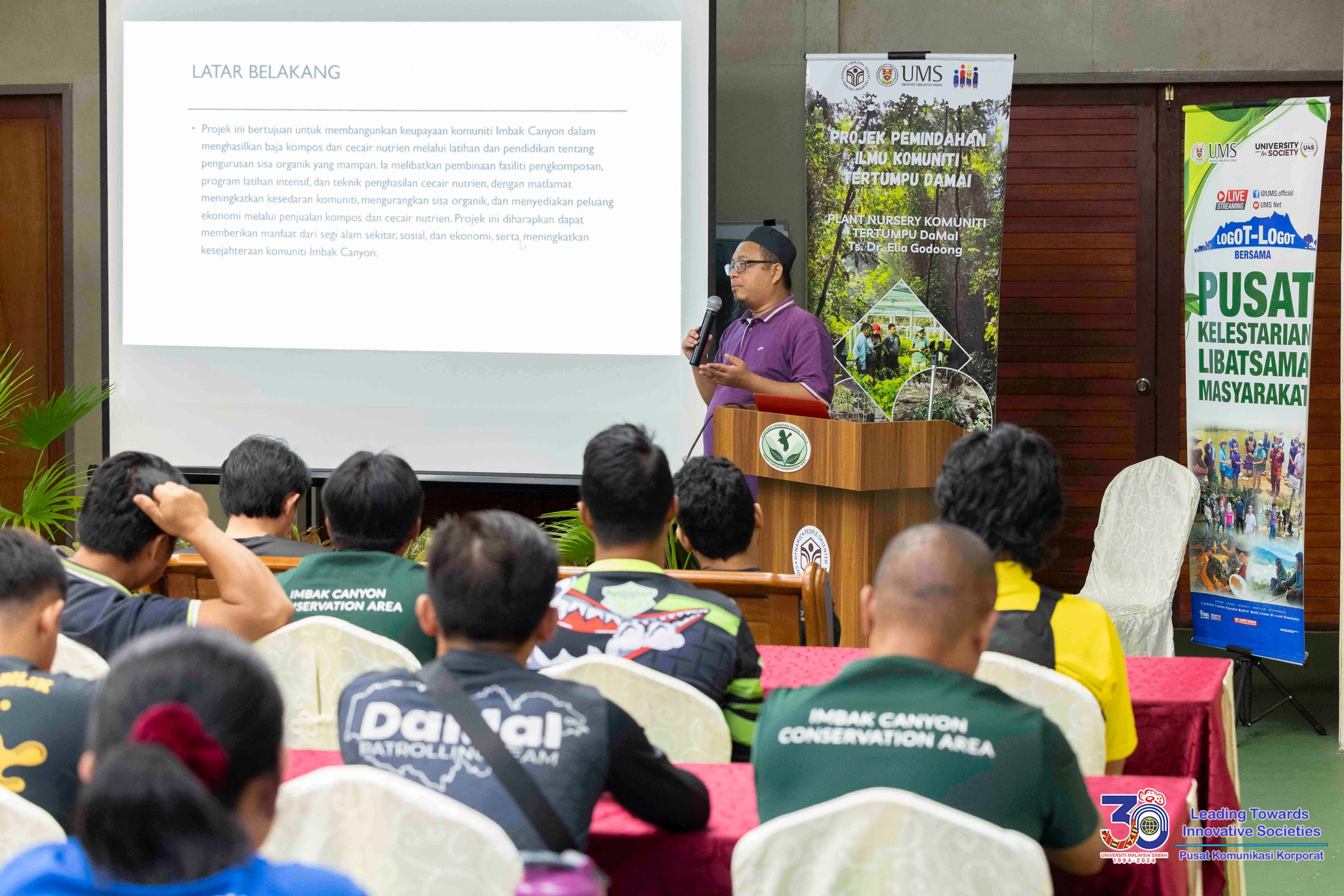
UMS–DBKK Sustainability & Tourism Training Programme: Strengthening Sustainable Tourism through ESG Awareness
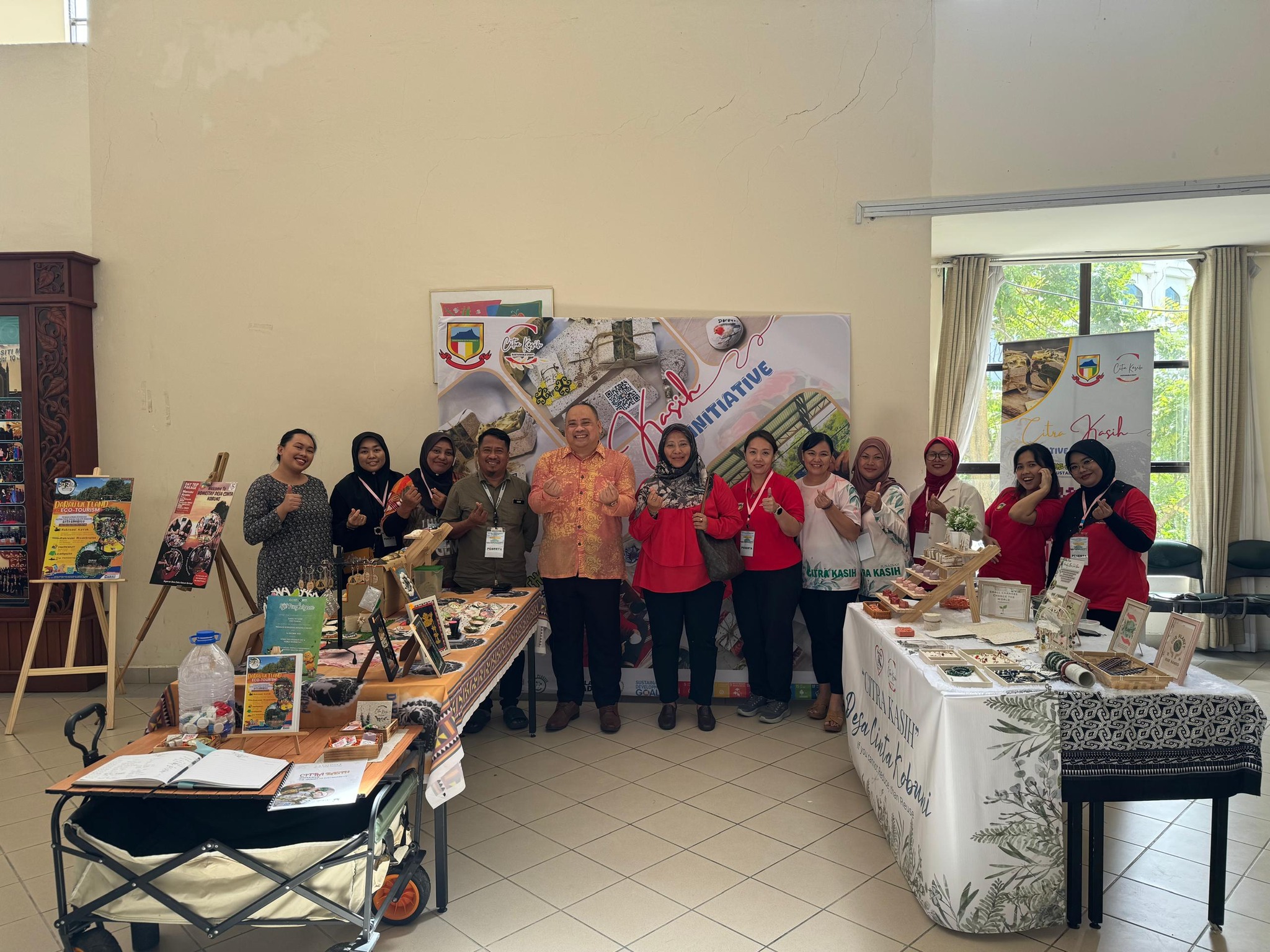
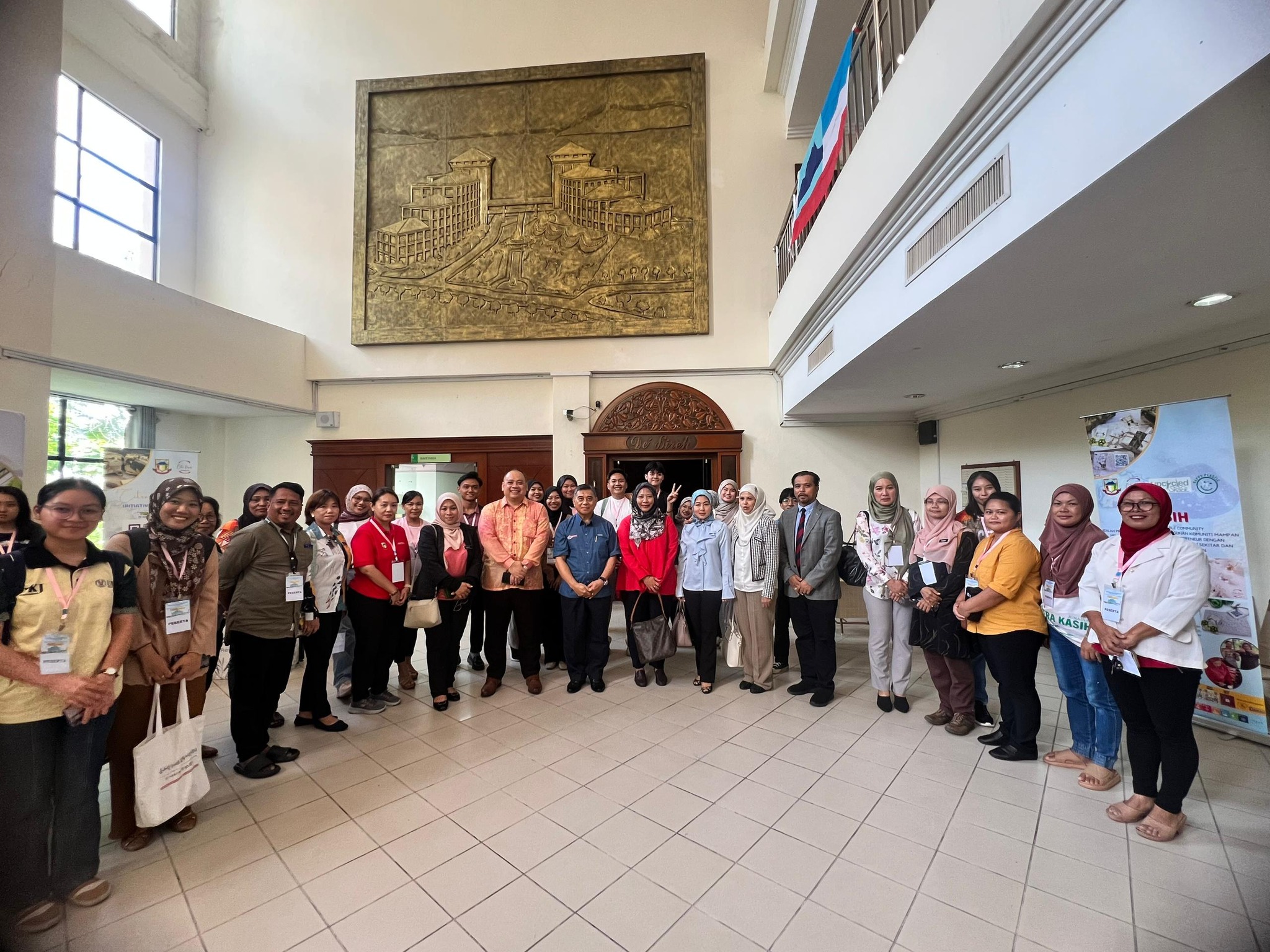
On 18 October 2024, UMS, through the Eco-Campus Centre, collaborated with Dewan Bandaraya Kota Kinabalu (DBKK) to organise the UMS Sustainability Enhancement Training Programme in conjunction with World Sustainability Day and World Tourism Day. The programme was held at De’Sireh, the Chancellery, and BORNEENSIS Gallery, ITBC, UMS, and officiated by the Vice-Chancellor of UMS. Approximately 50 participants, including UMS students, alumni, PUSPANITA members, and community-based tourism practitioners, participated in ESG briefings, guided gallery visits, and demonstrations of sustainable craft practices. The programme raised public awareness on environmental stewardship, sustainable tourism management, and responsible land use in urban and natural tourism settings.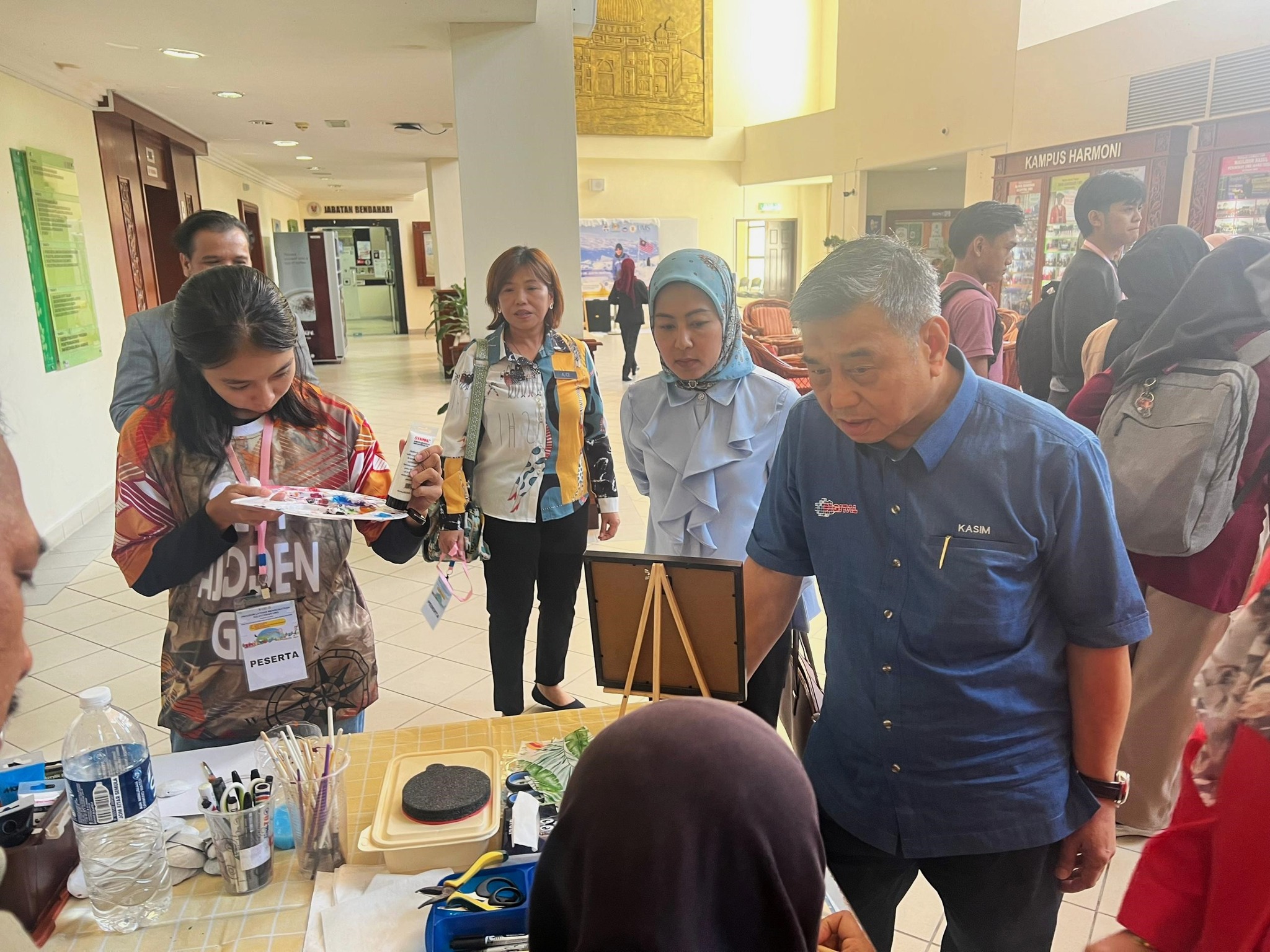
Turtle Sustainability & Edu-Tourism Programme: Protecting Marine Life through Education and Eco-Tourism
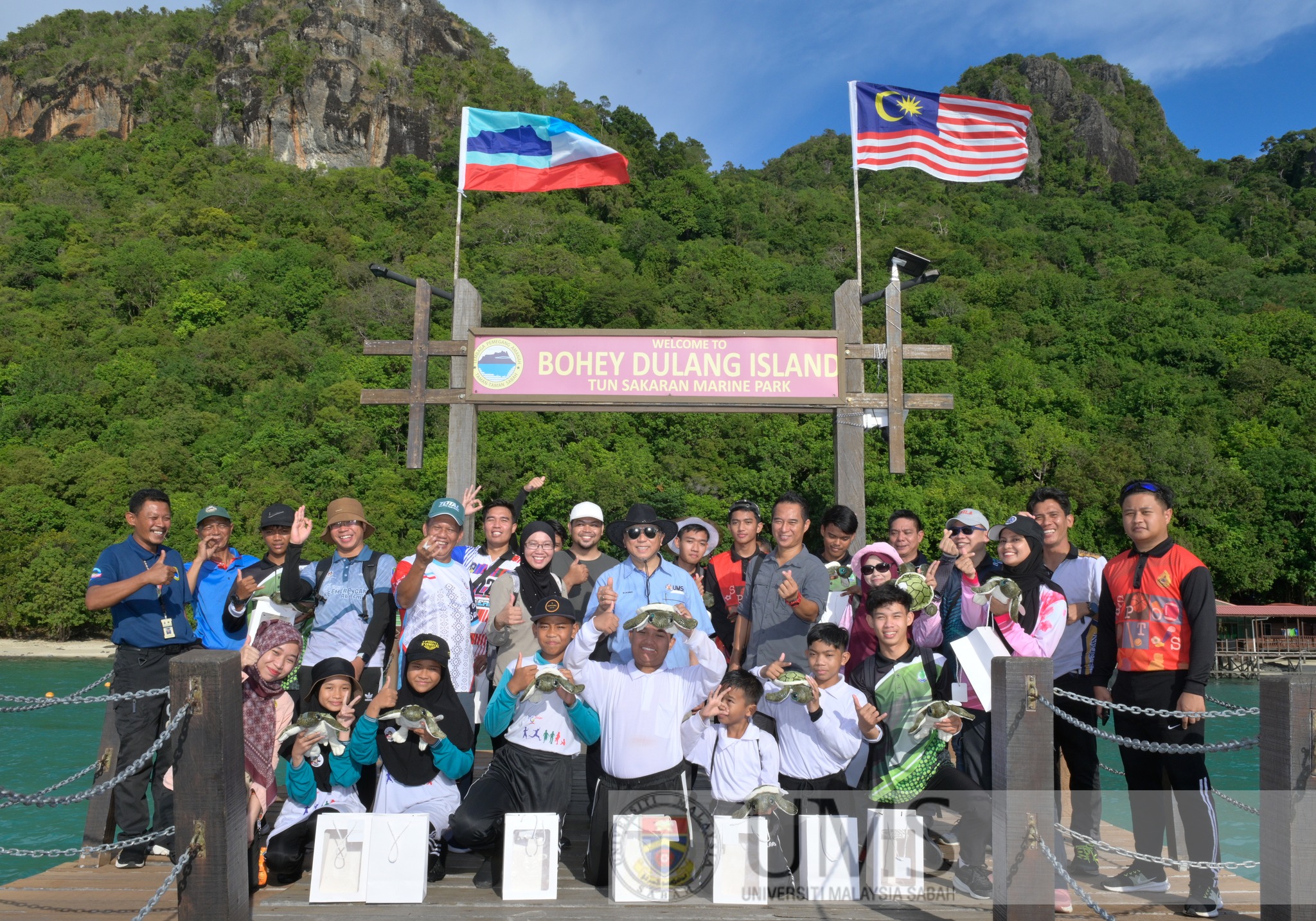
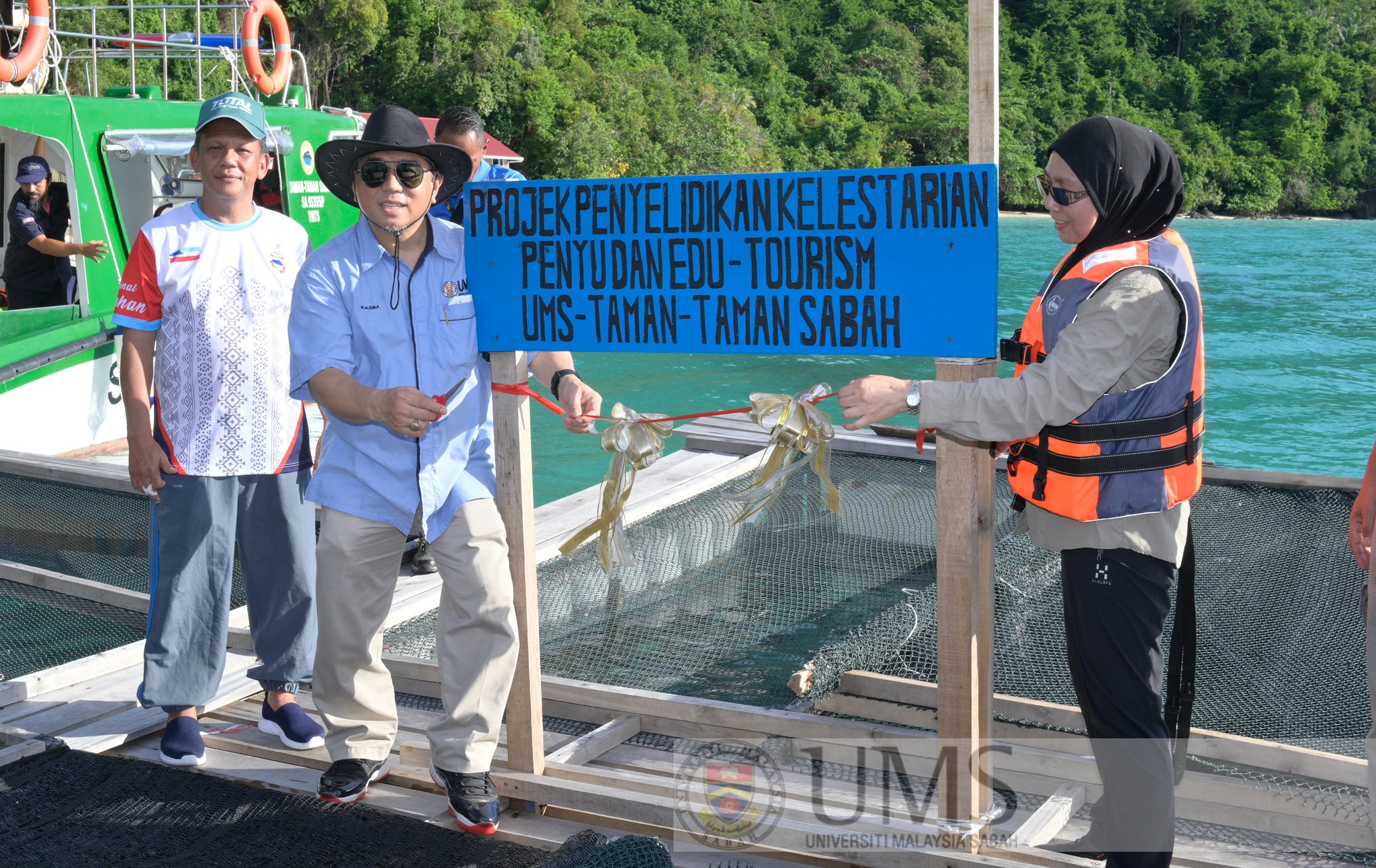
UMS, through the Faculty of Social Sciences and Humanities (FSSK), collaborates with Taman-Taman Sabah on the Turtle Sustainability and Edu-Tourism Project at Pulau Bohey Dulang, Semporna. The programme integrates conservation research, community education, and eco-tourism practices to protect marine biodiversity. Educational activities for schools, tourists, and communities, including turtle hatchling releases, promote awareness of marine ecosystem protection and responsible tourism behaviour, positioning conservation areas as sustainable tourism destinations.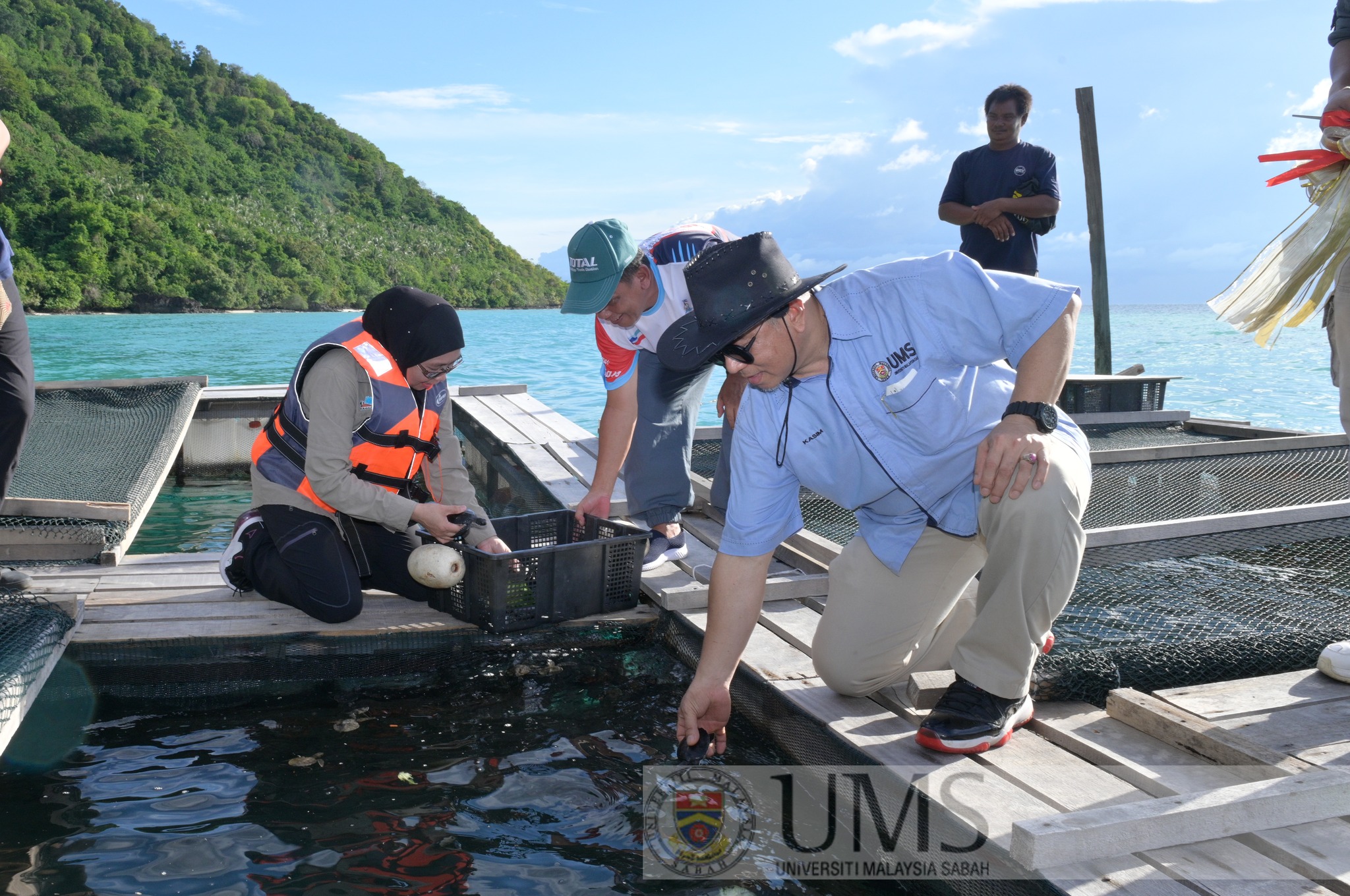
Darau Wetland Eco-Tourism: Strengthening Sustainable Eco-Tourism and Wetland Stewardship through Community Engagement
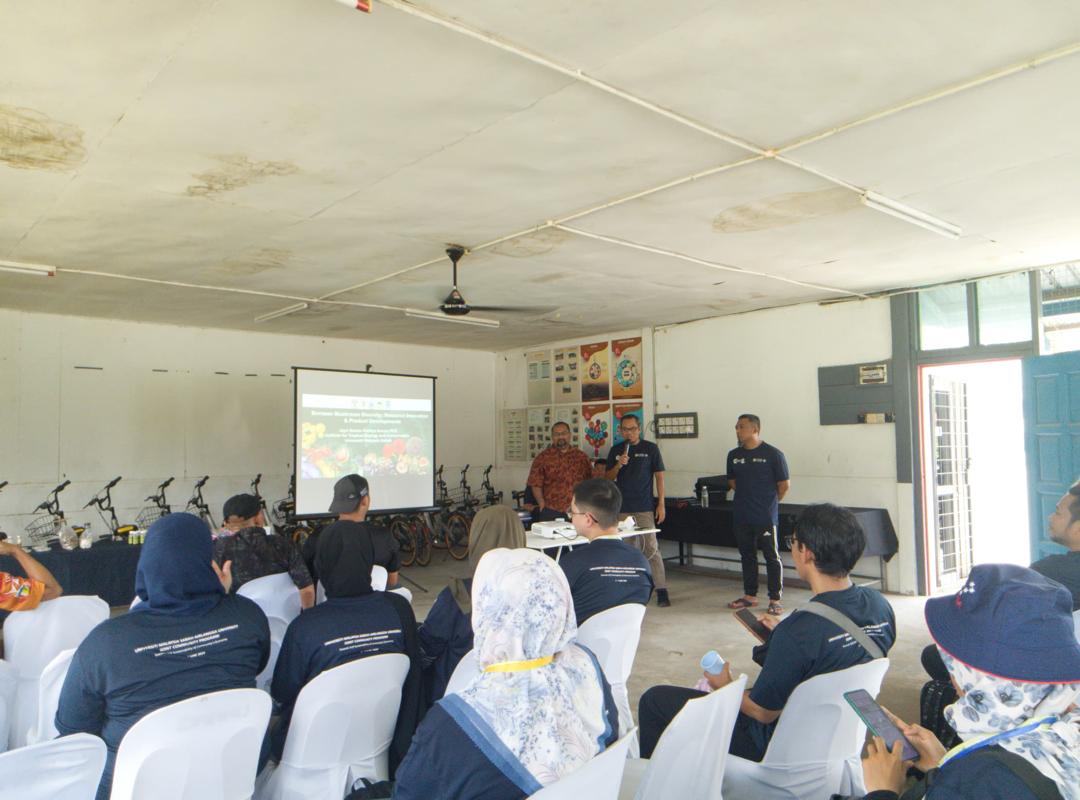
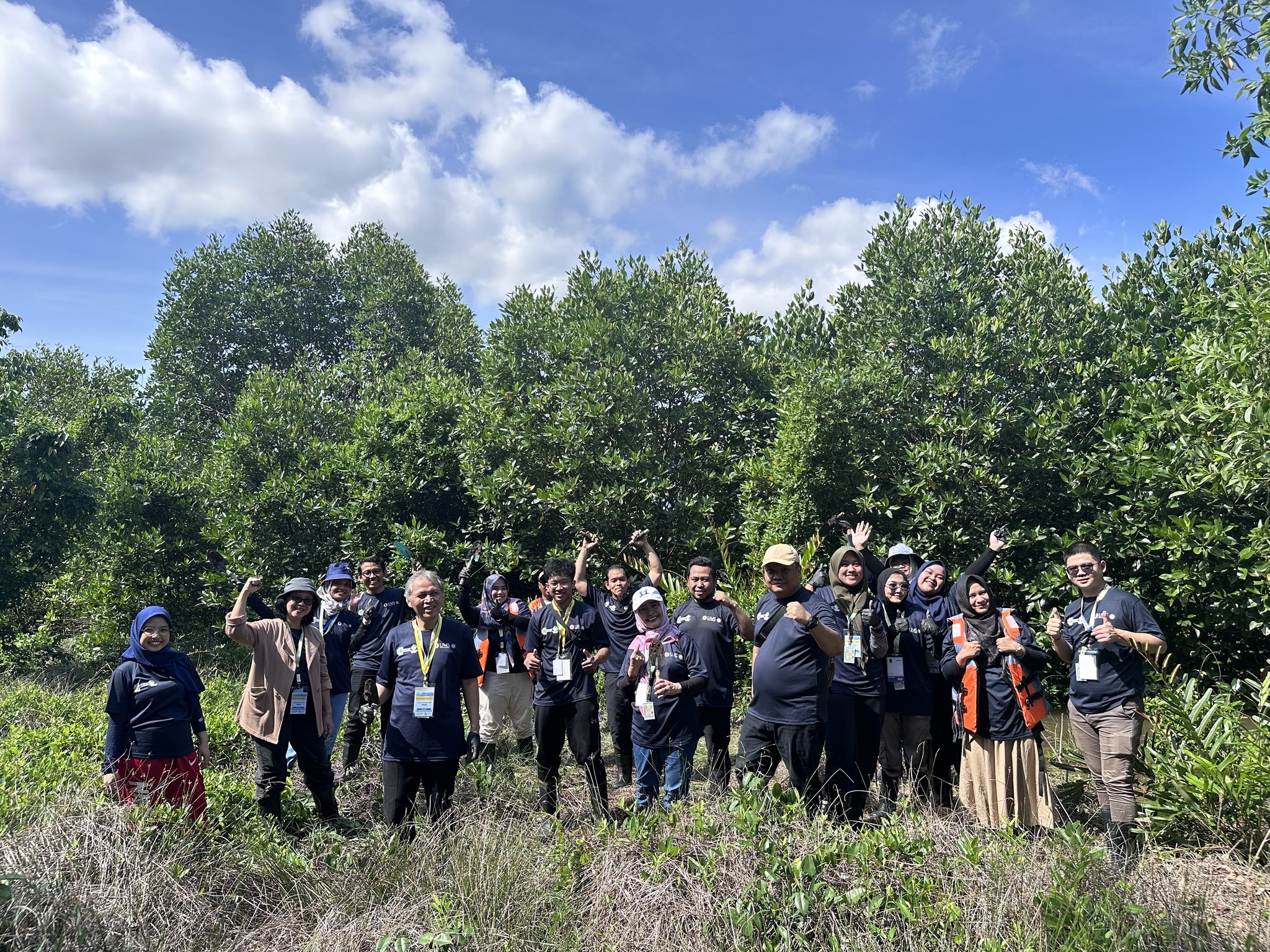
On 5 June 2024, Universiti Malaysia Sabah (UMS) and Universitas Airlangga (UNAIR), Indonesia, jointly organised a community-based outreach programme at Darau Wetland Eco-Tourism, Kampung Darau, Menggatal. The programme reflected UMS’s commitment, as a university body, to provide education and outreach on sustainable land and ecosystem management, particularly within eco-tourism landscapes and wetland environments. The programme involved the Institute for Biotechnology Research, UMS, together with a UNAIR delegation, and featured a series of educational talks, knowledge-sharing sessions, and hands-on practical activities with the local community. These included sharing sessions on Innovation from Aquaculture (UNAIR), Oral Health Care (UNAIR), The Importance of Mangroves in Medicine and Scientific Research (UMS), and Mushroom Cultivation (UMS). In addition, a session on digital marketing was delivered to empower the Darau Wetland Eco-Tourism community to promote sustainable tourism through online platforms. As part of ecosystem-based learning, participants and community members took part in symbolic mangrove tree planting, reinforcing awareness of wetland conservation and sustainable land use. The programme also included a guided boat tour along the Darau River and mangrove forest, cultural performances, and traditional food demonstrations by the local community. The programme concluded with the handover of a “Darau Wetland Eco-Tourism” directional signboard to the community, symbolising long-term collaboration and UMS’s role in integrating education, conservation, and sustainable tourism development for local communities.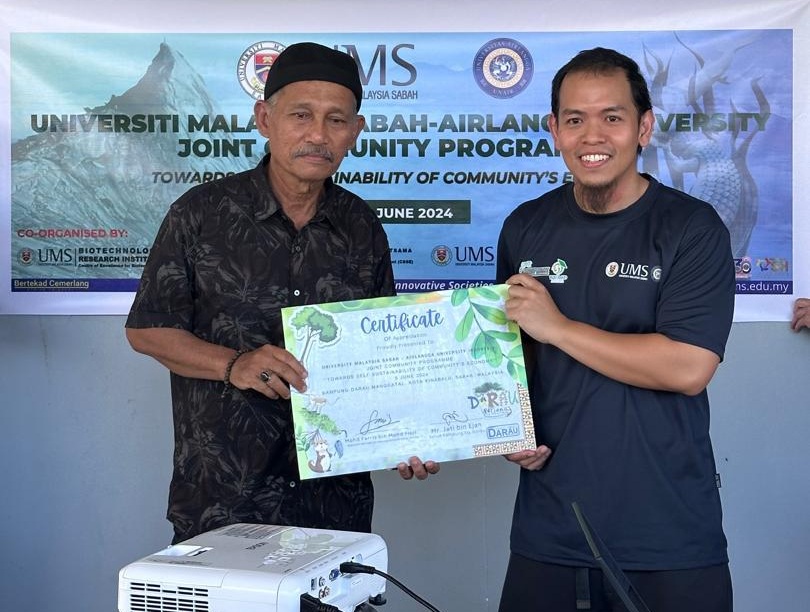
MTCP Tourism Training 2024: Sustainable & Resilient Tourism Beyond Frontiers: Advancing Biodiversity Conservation through Regional Collaboration
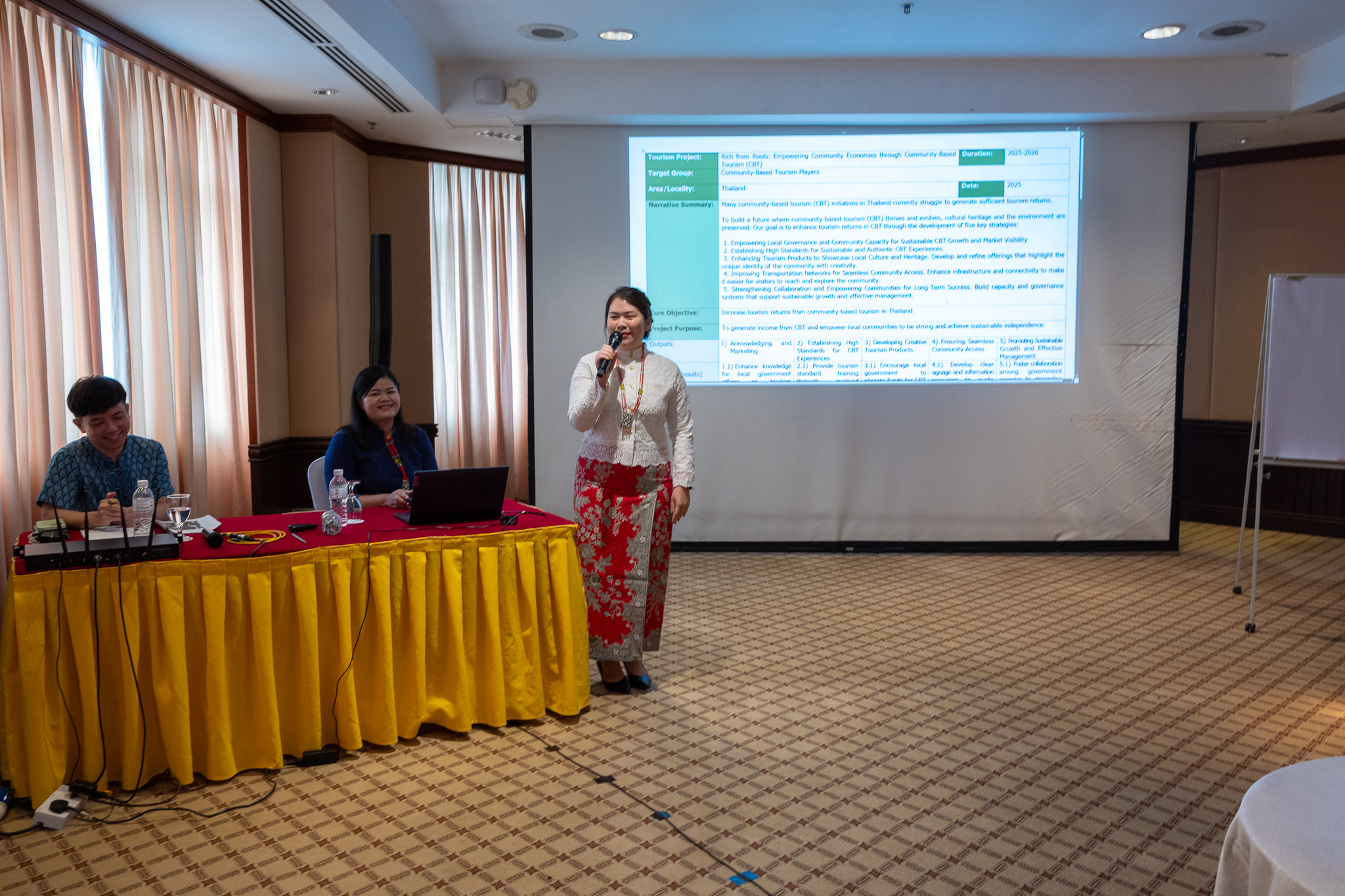
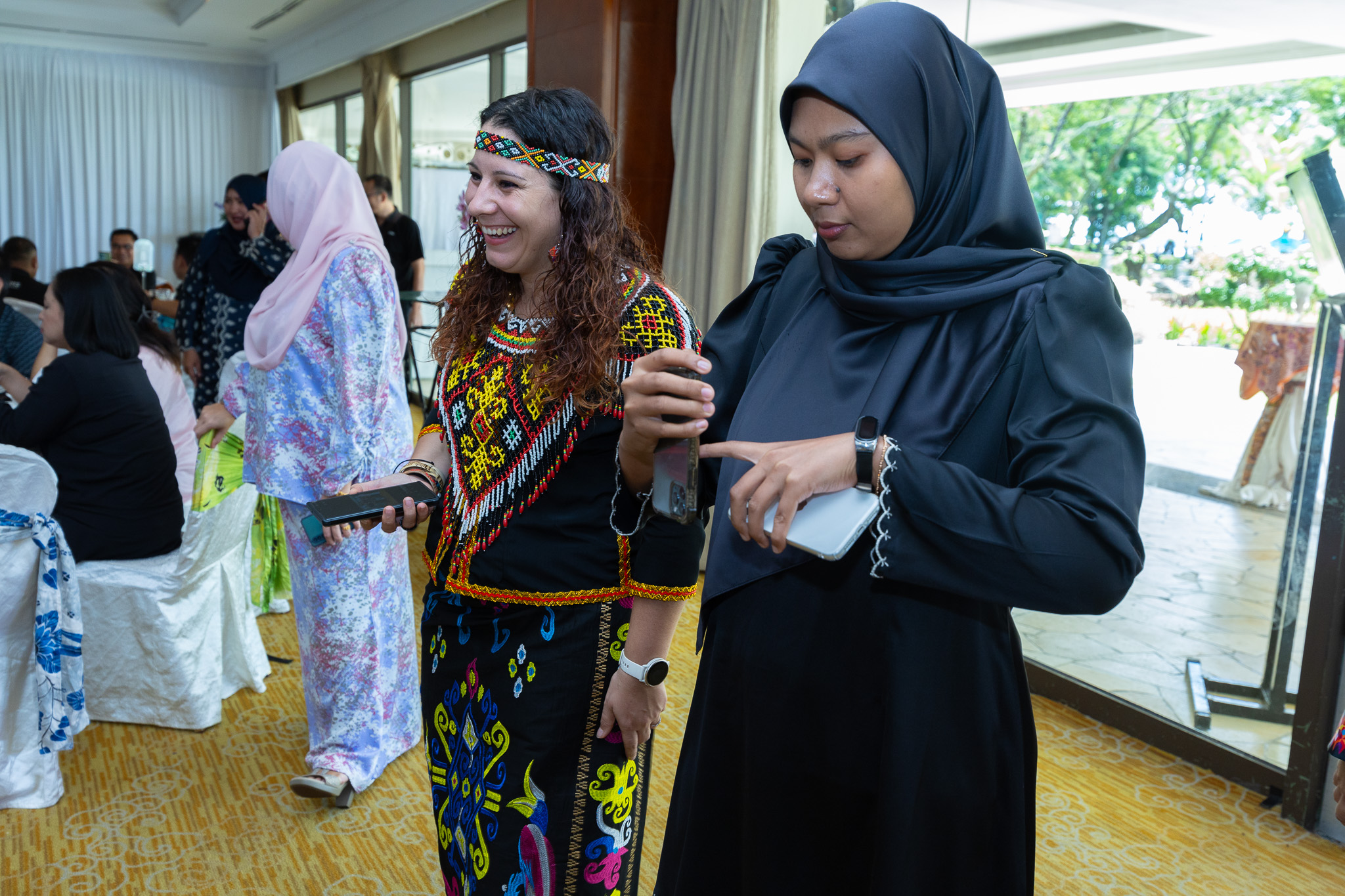
The Malaysian Technical Cooperation Programme (MTCP) Tourism Training 2024, titled “Sustainable and Resilient Tourism Beyond Frontiers: The Malaysian Borneo Essence”, was conducted by the Institute of Tropical Biology and Conservation (ITBC), Universiti Malaysia Sabah (UMS) as an advanced capacity-building programme on sustainable tourism. The course focused on strengthening understanding of biodiversity conservation, ecosystem stewardship, and responsible tourism practices, particularly within ecologically sensitive destinations in Malaysian Borneo. A key outcome of the programme was the establishment of a collaboration with the Ministry of Primary Resources and Tourism, Brunei Darussalam, reflecting the impact of shared knowledge and regional cooperation fostered through the course. This partnership aims to advance cross-border initiatives in biodiversity protection, sustainability, and responsible tourism, leveraging collective expertise to safeguard natural heritage while supporting resilient tourism development. Through this programme, UMS demonstrates its role as a regional leader in ecosystem education and sustainable tourism outreach, benefiting both the environment and local communities. br>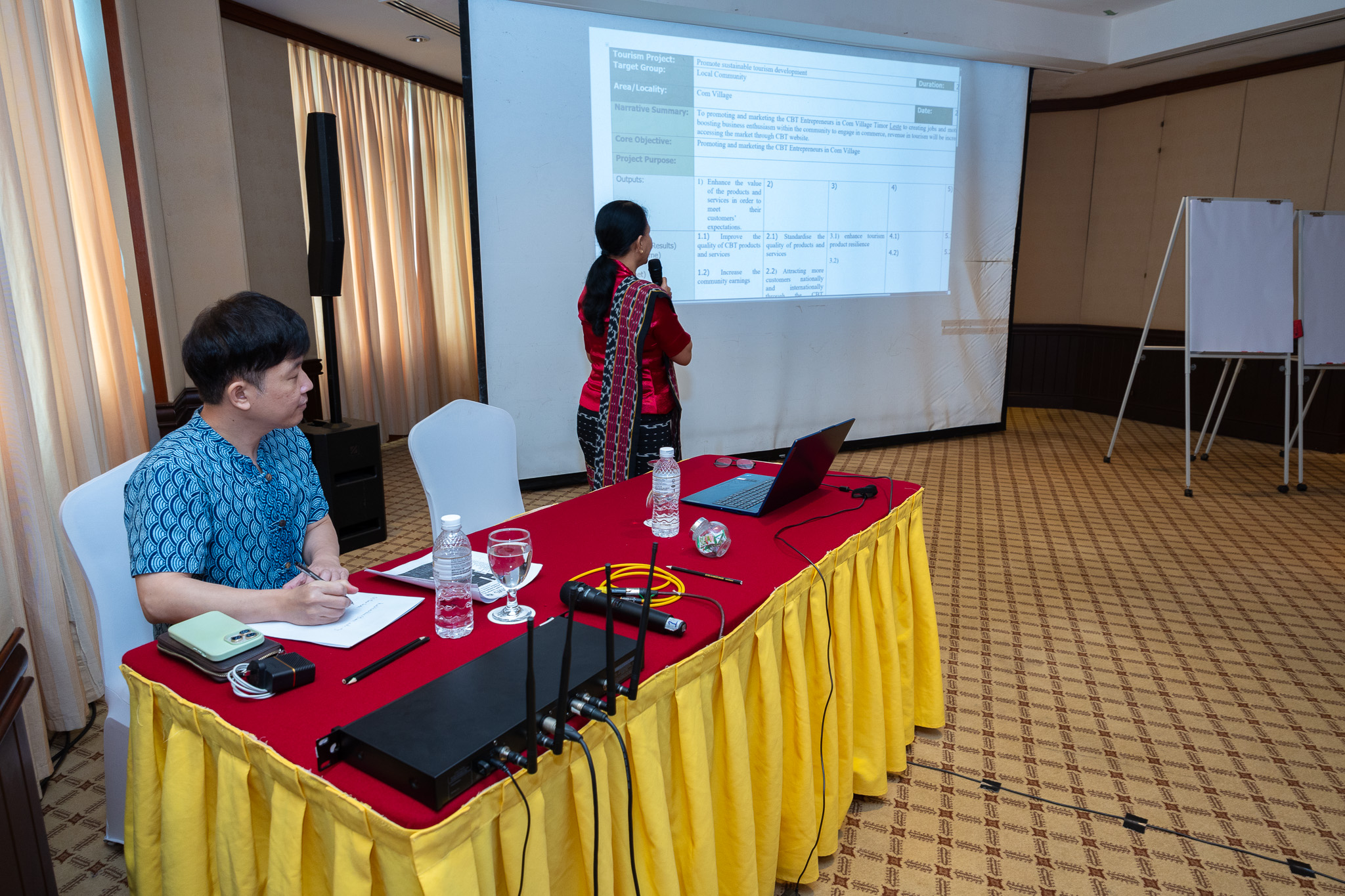
Safeguarding Forests, Mountains, and Landscapes through Living Laboratories
Terrestrial Ecosystem Conservation & Sustainable Land Stewardship Policy
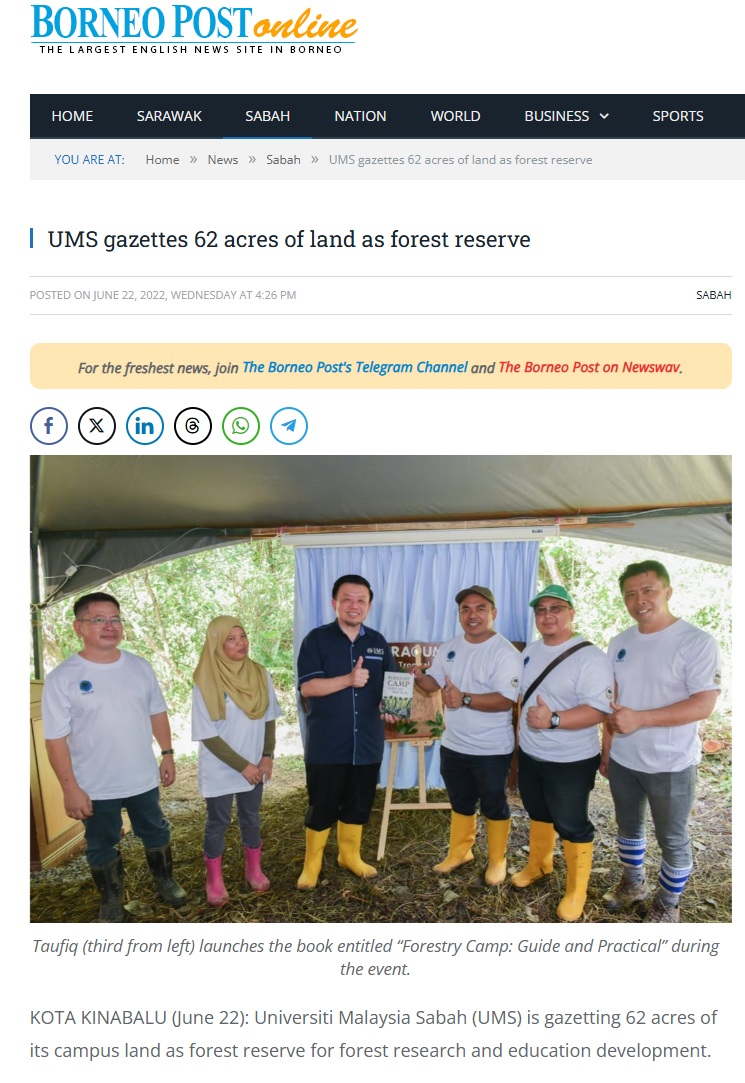
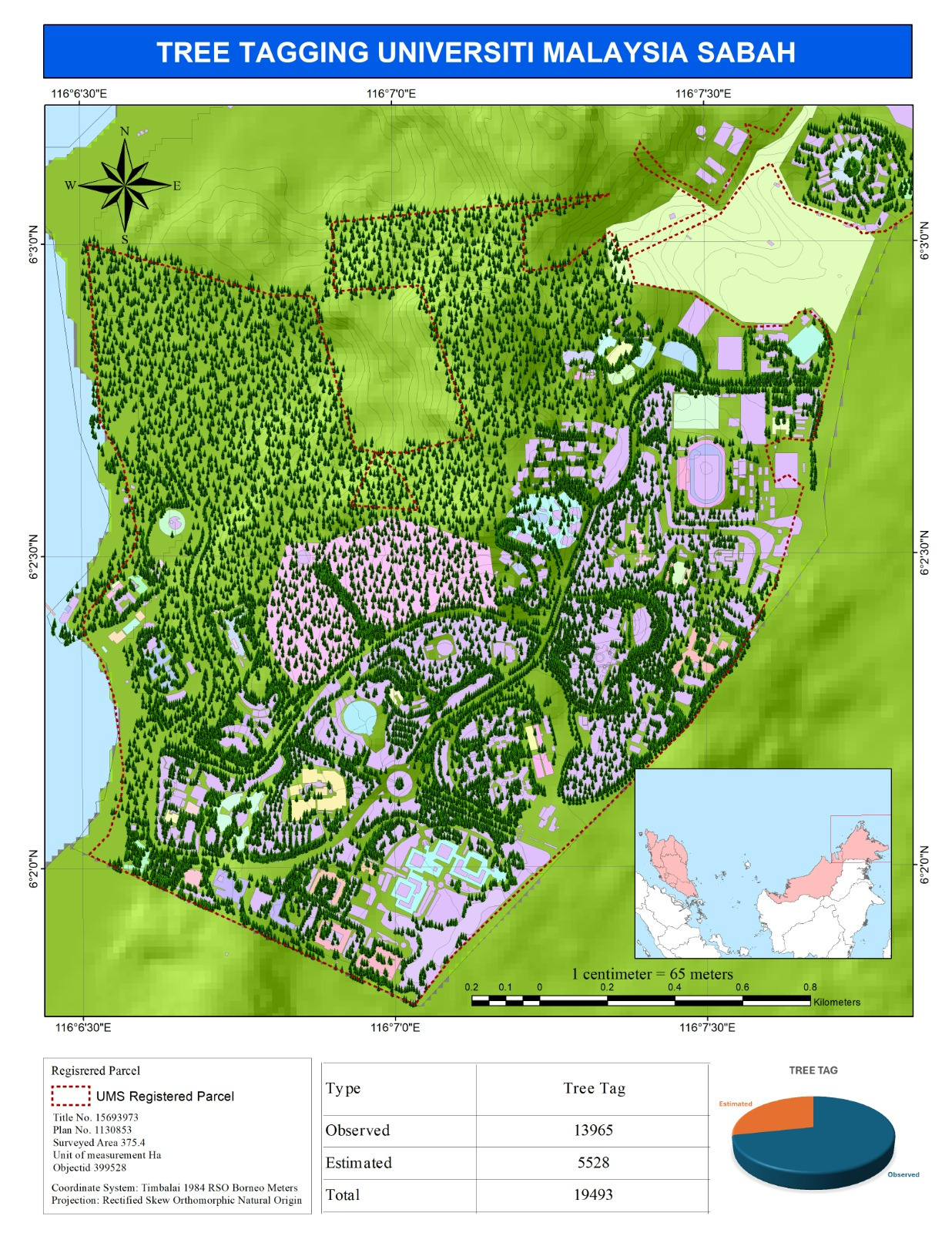
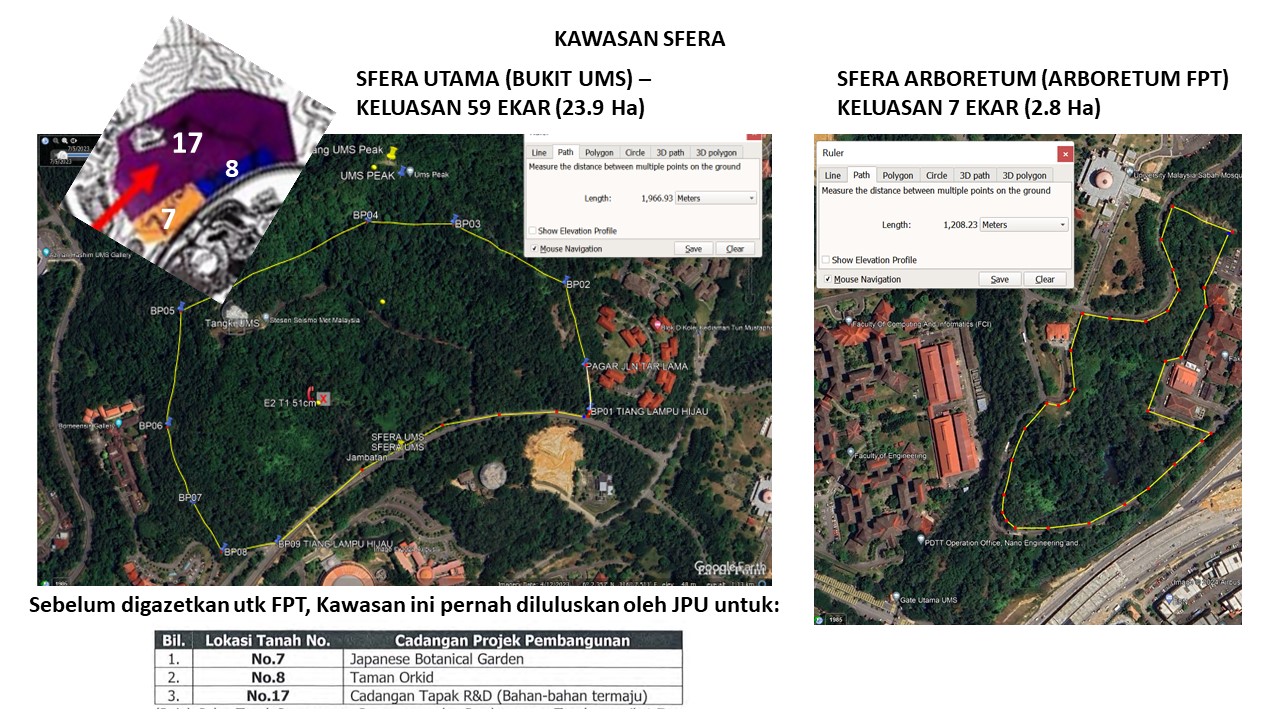
Universiti Malaysia Sabah (UMS) has established a formal institutional framework to ensure the conservation, restoration, and sustainable use of terrestrial ecosystems associated with the university, particularly forests, mountainous areas, and drylands, through the UMS Sustainability and Climate Action Policy under its EcoCampus Framework. A key policy commitment is the gazettement of 62 acres of UMS campus land as a dedicated forest reserve, managed by the Faculty of Tropical Forestry (FPT) as SFERA@UMS (Sustainable Forest for Education, Research and Advancement). This gazetted forest area is protected for long-term forest research, education, biodiversity conservation, and ecosystem restoration, serving as a permanent living laboratory aligned with the university’s Living Labs Policy.
Embedding Biodiversity Safeguards into University Governance
Policy Framework for Protection of Threatened and Protected Species
Universiti Malaysia Sabah (UMS) enforces its Sustainability and Climate Action Policy under the EcoCampus Framework to systematically identify, monitor, and protect IUCN Red-Listed species and nationally protected species occurring within or affected by university operations. This policy aligns with the Sabah Biodiversity Strategy 2012–2022, particularly Activity 4.1 (Biodiversity Inventory and Monitoring) and Action 3.32 (Protection of Sensitive and Threatened Species). Implementation is led by the Institute for Tropical Biology and Conservation (ITBC) and the Faculty of Tropical Forestry (FPT) through the Living Labs Policy, ensuring that campus forests, wetlands, and surrounding ecosystems are managed as conservation-controlled landscapes rather than development land.
Avifauna Monitoring in Mangrove and Wetland Ecosystems: Bird Species : Protecting IUCN-Listed Bird Species through Field Research
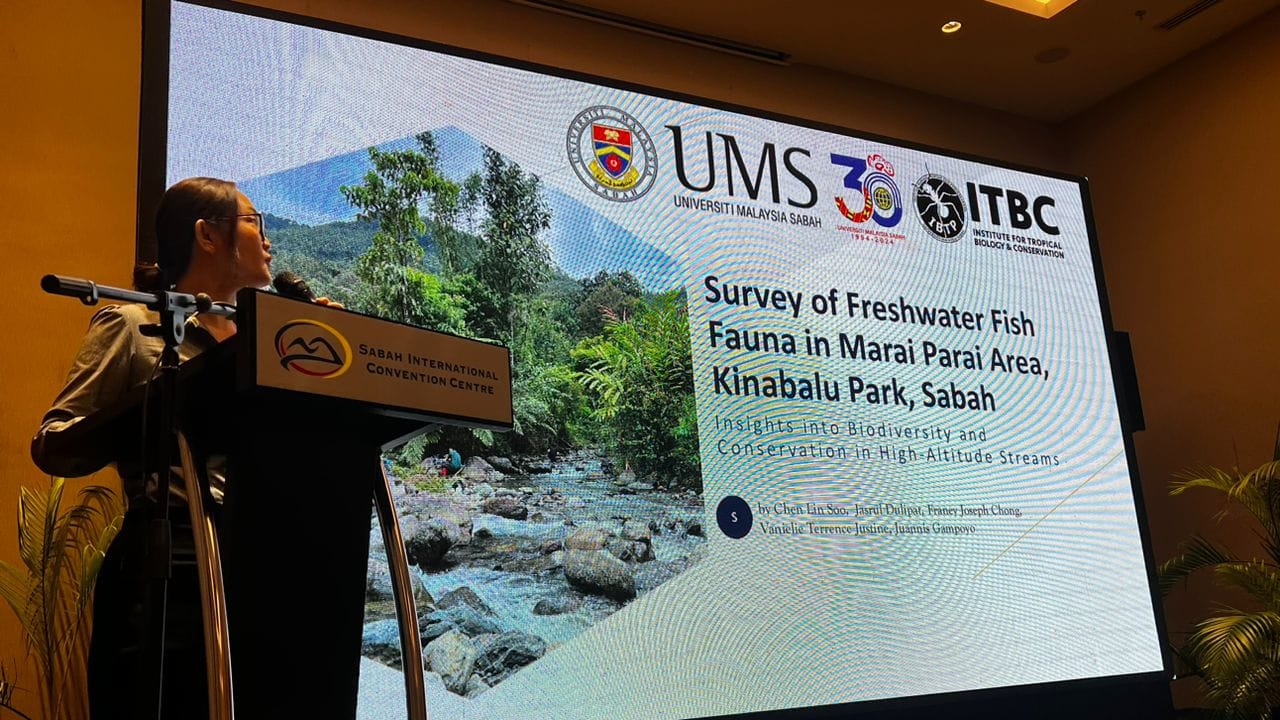
UMS actively monitors bird species associated with coastal and wetland ecosystems through structured field expeditions. The Darau River Basin Expedition, led by UMS researchers, documented 31 mangrove-associated bird species, including the Near Threatened Green Imperial Pigeon (Ducula aenea), an IUCN Red-Listed species. These findings inform habitat protection strategies for mangrove and estuarine zones affected by tourism and urban development, reinforcing UMS’s role in safeguarding critical avian habitats through evidence-based conservation.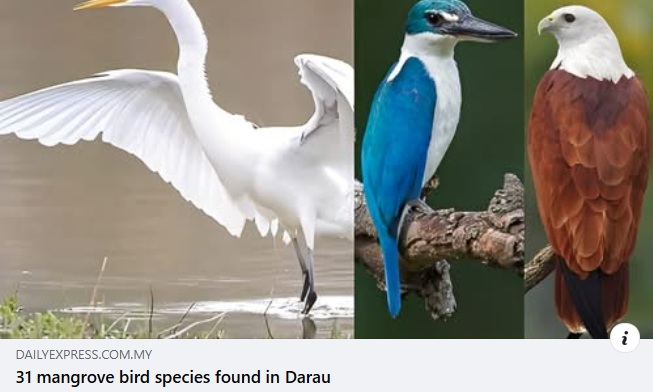
Wildlife Conservation and Megafauna Research (Elephants & Mammals): Science-Based Protection of Threatened Terrestrial Fauna
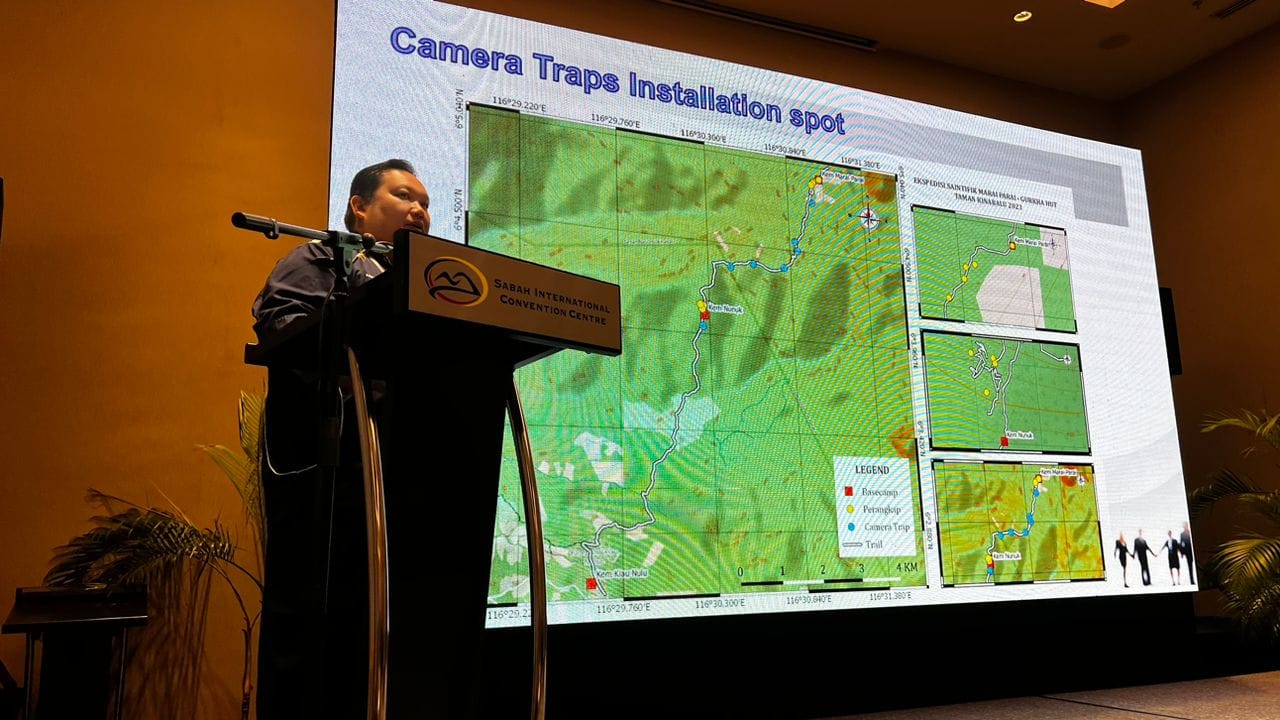
Through ITBC and partner agencies, UMS conducts research and monitoring on large mammals and threatened wildlife, including Bornean elephants (Elephas maximus borneensis) and other forest-dependent species. These studies contribute to understanding habitat fragmentation, human–wildlife interactions, and conservation planning in Sabah’s forest landscapes. UMS researchers collaborate closely with the Sabah Wildlife Department and Sabah Parks to ensure compliance with national wildlife protection laws and to support mitigation strategies for species affected by land-use change.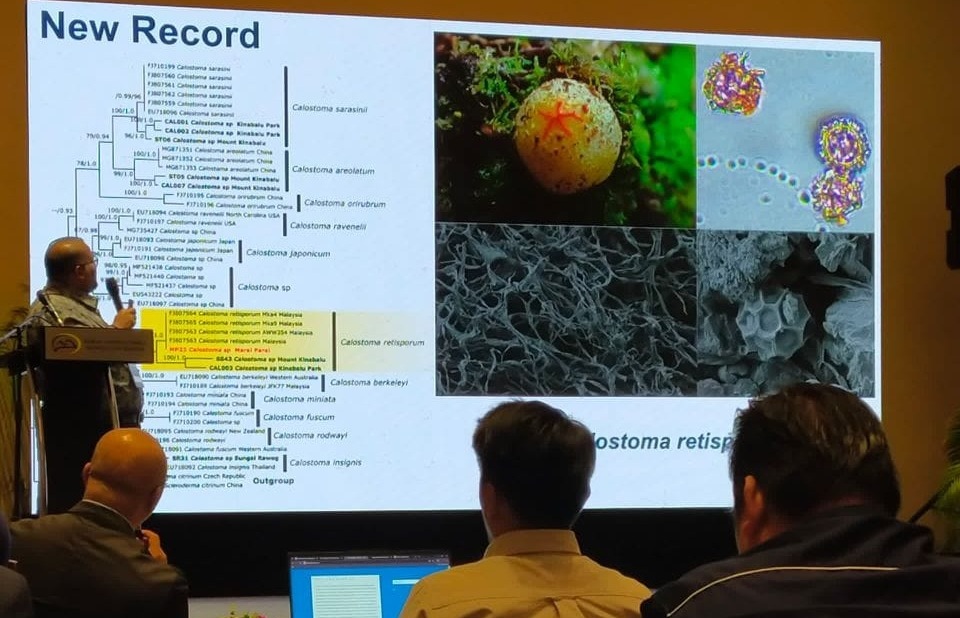
Flying Fox (Bat) Rehabilitation and Species Protection : Safeguarding Nationally Protected Mammals
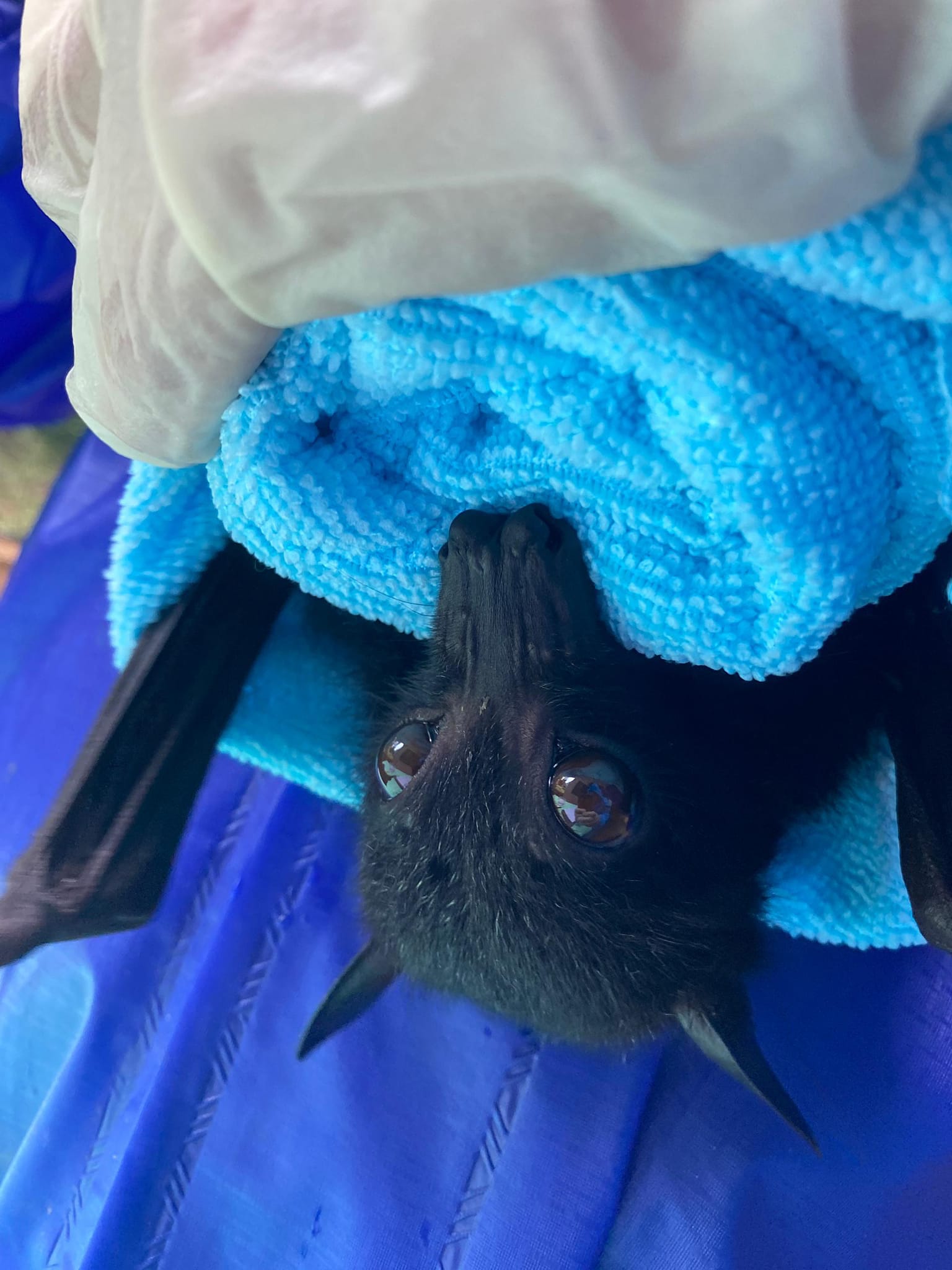
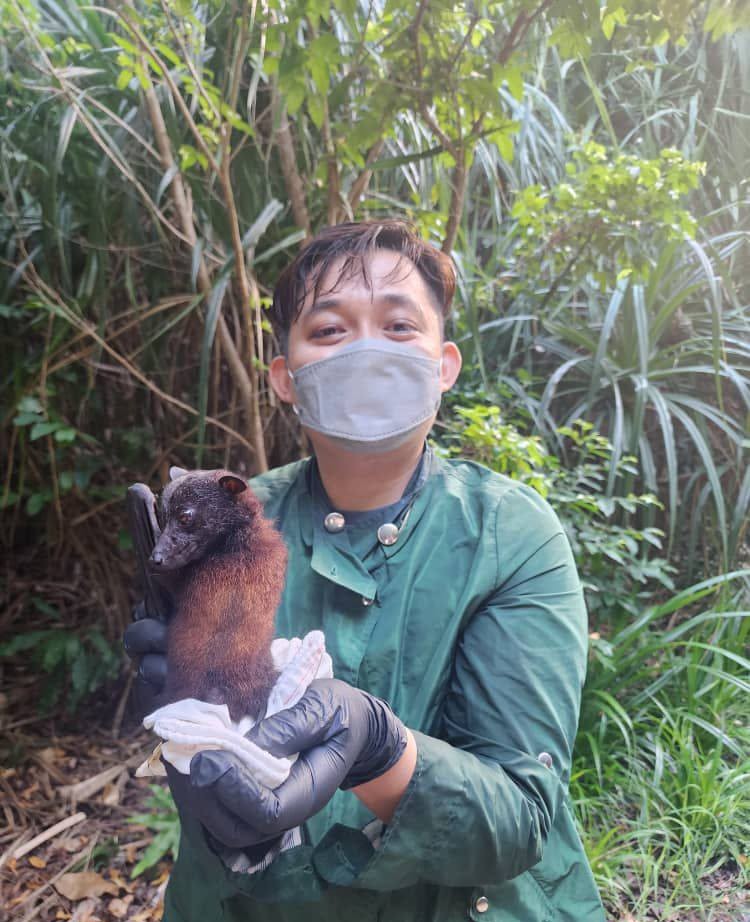
UMS, through ITBC, actively undertakes flying fox (Pteropus spp.) rehabilitation and release programmes, addressing a nationally protected species that is also listed as Near Threatened on the IUCN Red List. The programme involves rescue, veterinary care, enrichment, and planned reintroduction to suitable habitats. This initiative directly mitigates risks posed by urban expansion, habitat loss, and human disturbance, demonstrating UMS’s hands-on role in species-level conservation.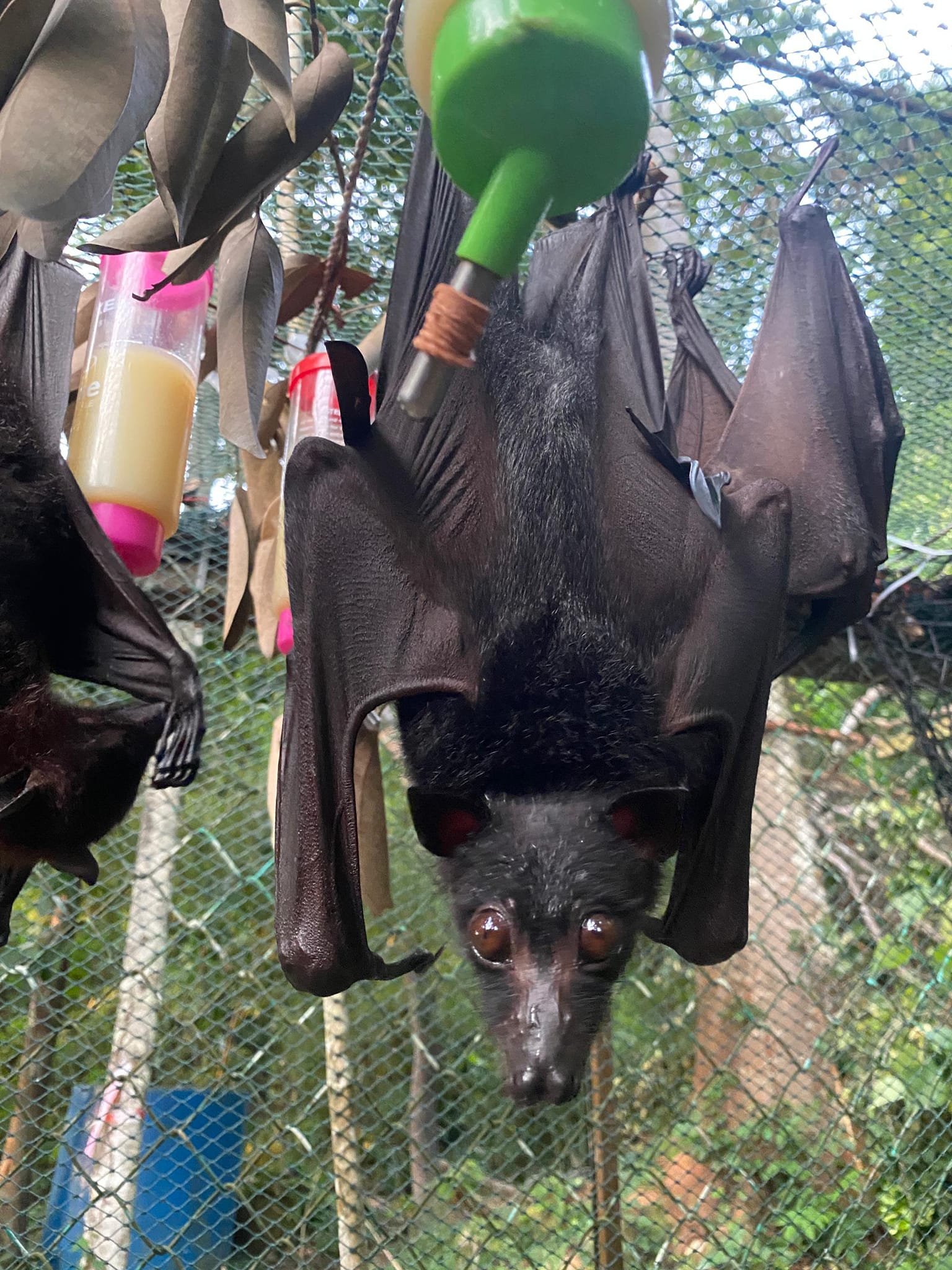
Flora Protection and Invasive Species Management: Early Detection to Protect Native Plant Communities
UMS leads scientific efforts to protect native flora through invasive species research and monitoring. A landmark study in Kinabalu Park, led by PhD researcher Vanielie Terrence Justine under Assoc. Prof. Dr. Monica Suleiman, documented 98 alien plant species, of which 65 were classified as invasive, including Lantana camara and Miconia crenata. These findings support ecosystem protection by informing early intervention, habitat restoration, and long-term forest resilience strategies.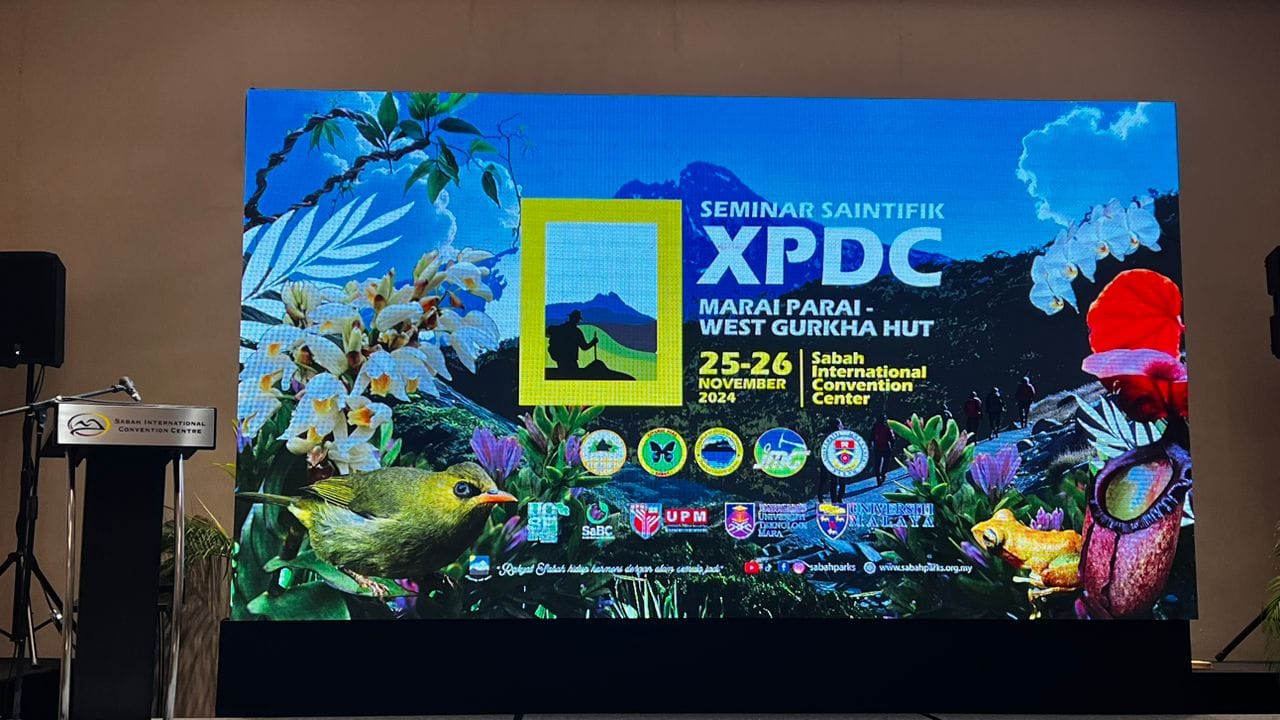
Fungi and Mushroom Conservation : Documenting Hidden Biodiversity for Ecosystem Health
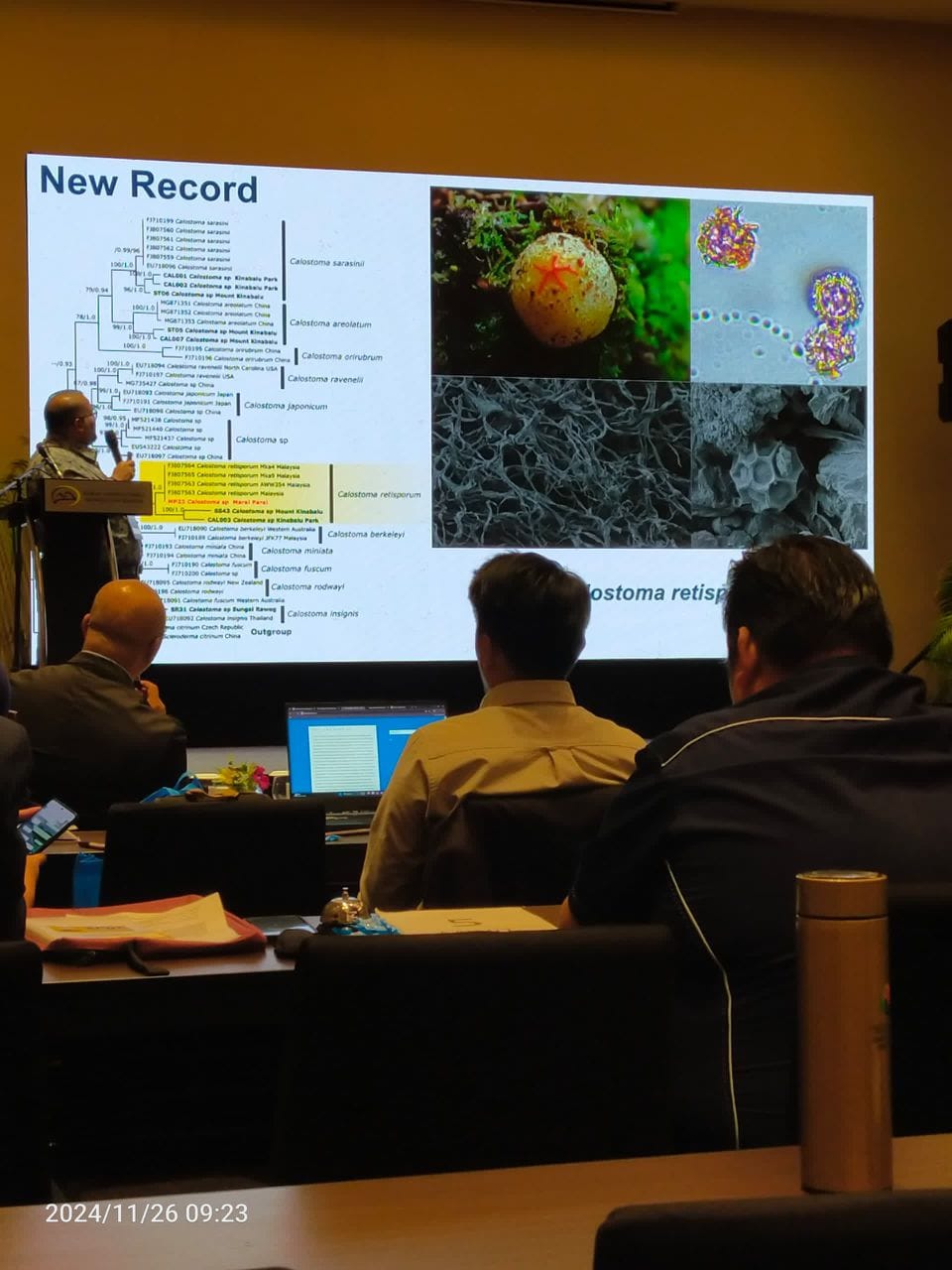
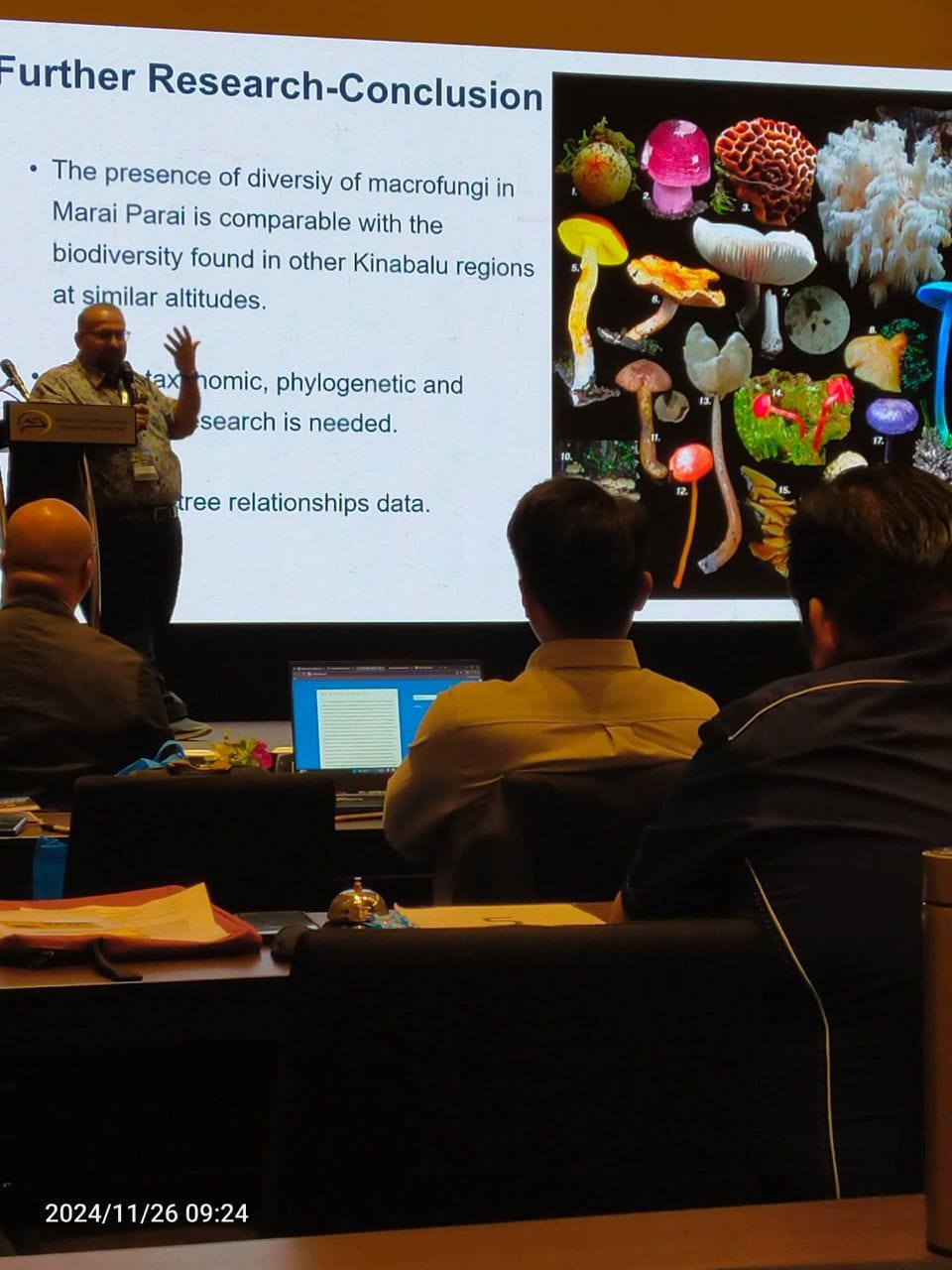
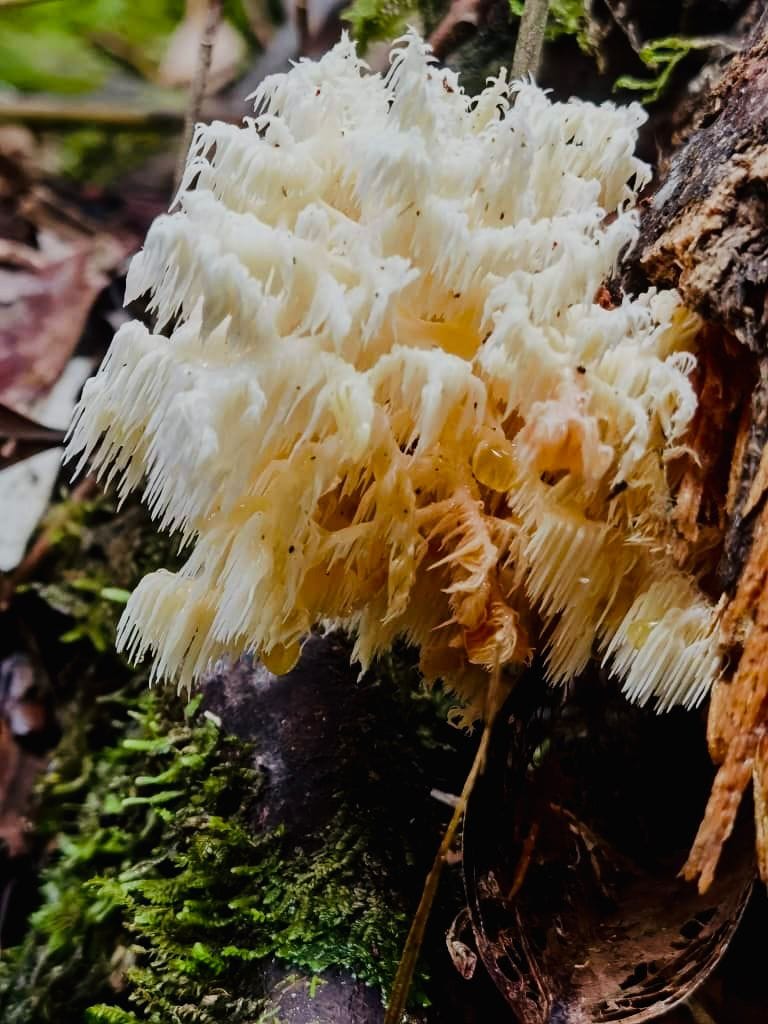
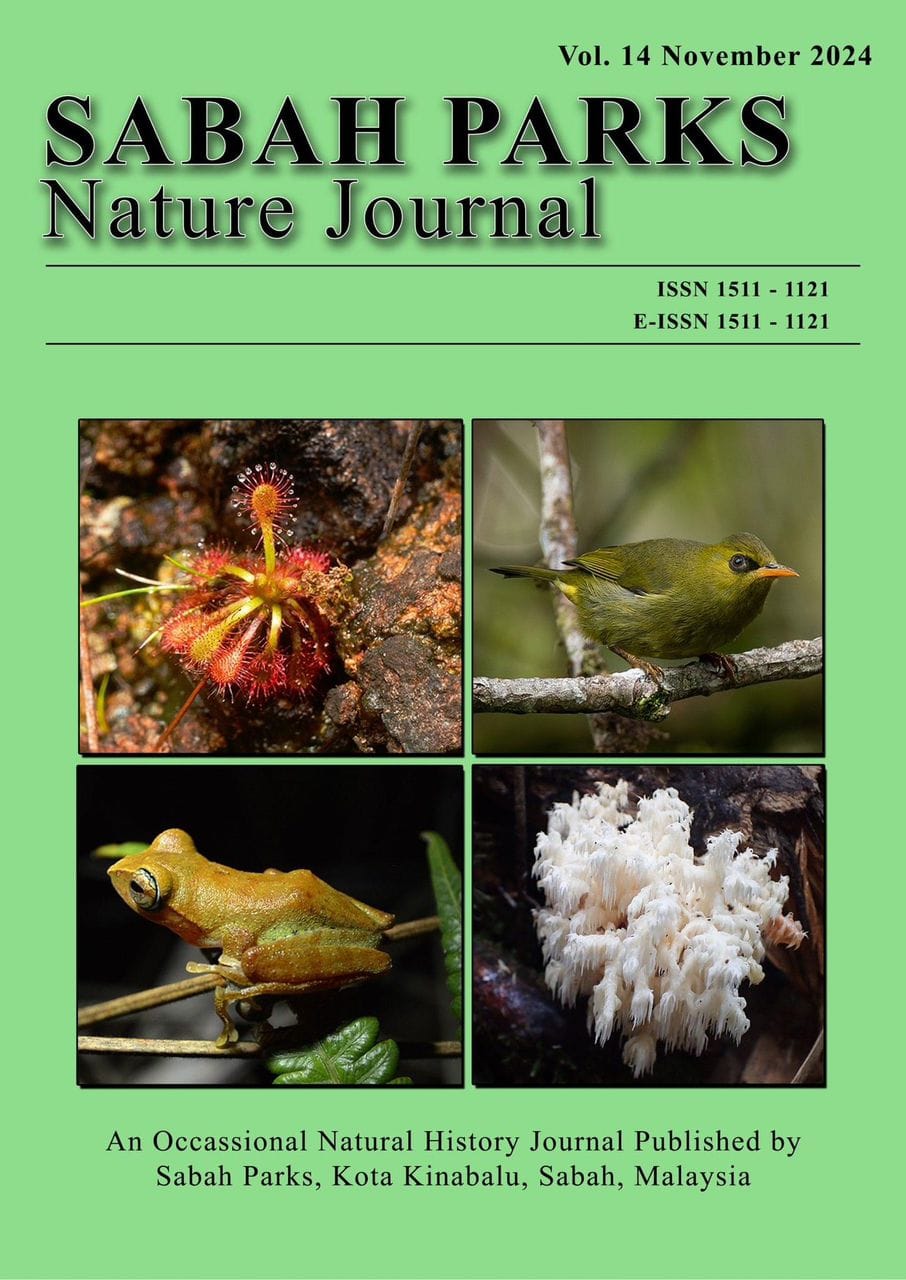
UMS is a national leader in fungal biodiversity research, particularly through ITBC’s mycology programmes. Significant discoveries include new national records of fungi species, such as Hericium coralloides and Marasmius elegans, identified through expeditions and community science programmes like Friends of BORNEENSIS (FoB). Fungi play a critical role in nutrient cycling and forest health, and their documentation strengthens ecosystem-level conservation and biodiversity inventories.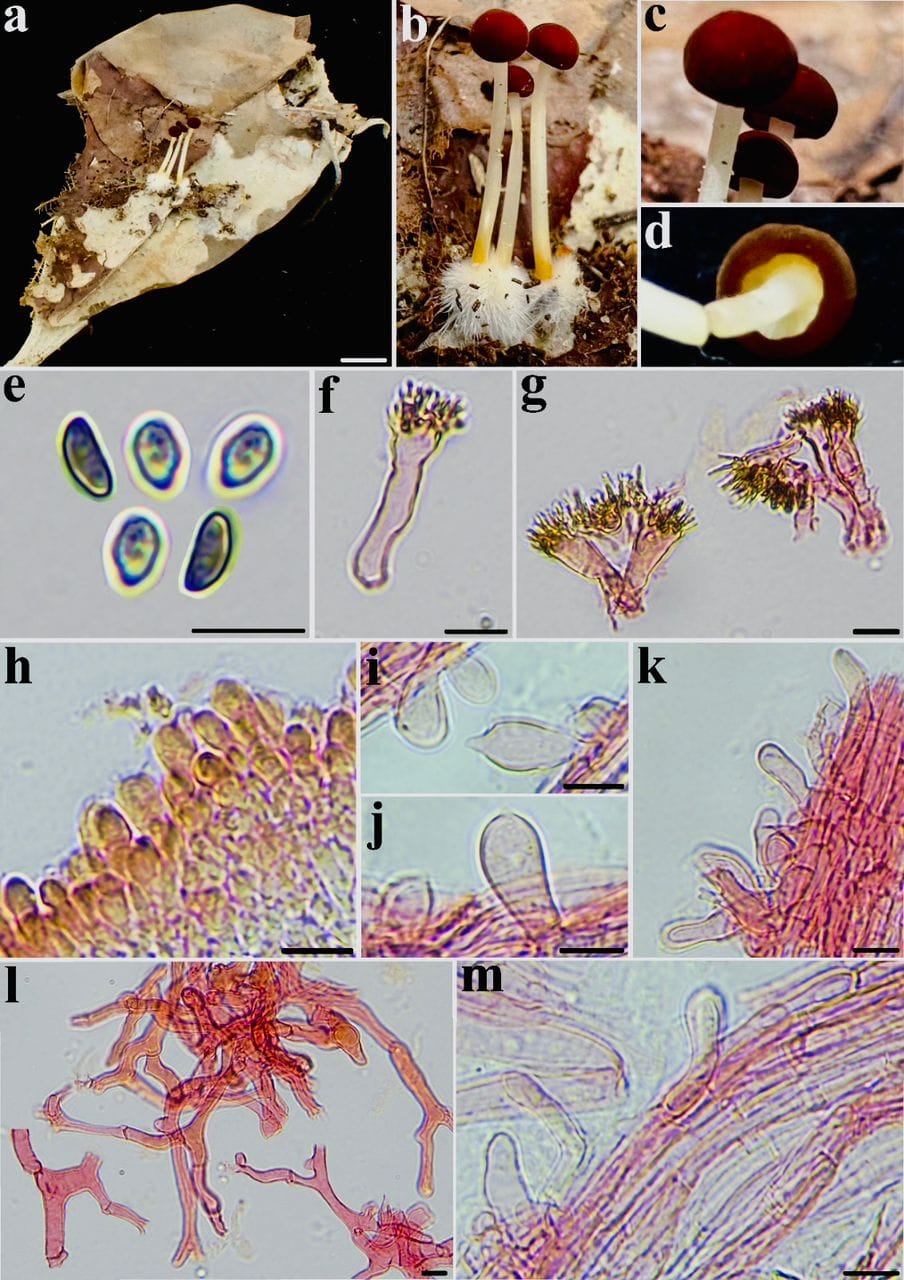
Co-creating Resilient Landscapes through Research, Livelihoods, and Local Action
Community Partnerships for Shared Land Ecosystem Stewardship
Universiti Malaysia Sabah (UMS) works closely with local communities, government agencies, and civil society organisations to maintain and restore shared land ecosystems, guided by its EcoCampus Framework and Sustainability and Climate Action Policy, and coordinated through the Pusat Kelestarian Libatsama Masyarakat (PKLM). These partnerships recognise that long-term ecosystem health depends on inclusive, place-based collaboration where communities are co-stewards of the land.
DaMaI Initiative (Kampung Marakau Bombon, Ranau): Integrating Agroforestry, Eco-Tourism, and Biodiversity Conservation
Through the DaMaI Initiative, UMS partners with the local community of Kampung Marakau Bombon to promote agroforestry, eco-tourism, and biodiversity stewardship. The programme combines academic expertise with local knowledge to develop sustainable land-use practices that protect forest ecosystems while generating community income through nature-based tourism. Community members receive training, demonstrations, and continuous engagement, enabling them to manage shared landscapes responsibly and strengthen their role as custodians of biodiversity-rich areas.


Composting for Circular Agriculture (Kampung Ratau, Kota Belud): Enhancing Soil Health through Community-Led Circular Practices
UMS collaborates with villagers in Kampung Ratau on the Composting for Circular Agriculture Project, which trains communities to convert organic waste into bio-fertiliser. This initiative improves soil fertility, reduces waste sent to landfills, and supports sustainable land management practices at the local level. By embedding circular economy principles into everyday agricultural activities, the programme strengthens ecosystem resilience while empowering communities with practical, low-cost solutions.


Fertigation, Mushroom & Solar Integration Project: Climate-Smart Farming for Sustainable Rural Landscapes
The Fertigation, Mushroom & Solar Integration Project exemplifies UMS’s commitment to climate-smart land use, combining sustainable agriculture, renewable energy, and livelihood development. Local farmers are trained in fertigation systems, mushroom cultivation, and the use of solar energy to reduce carbon emissions and increase productivity. This collaboration enhances sustainable land management while improving household incomes and long-term food security in rural communities.


Darau Wetland Collaboration with Communities and Agencies: Restoring Shared Wetland Ecosystems through Collective Action
UMS works jointly with local communities, the Sabah Forestry Department, WWF-Malaysia, and Dewan Bandaraya Kota Kinabalu (DBKK) to maintain and restore the Darau Wetland, a shared ecosystem critical for flood mitigation, biodiversity protection, and coastal resilience. Activities include tree planting, mangrove restoration, environmental education, and community participation in conservation actions. These partnerships ensure that wetland conservation is grounded in both scientific research and community ownership, supporting long-term ecosystem protection.


SDG 15 Progress Report: Safeguarding Life on Land — Conserving Ecosystems, Biodiversity & Sustainable Land Use in 2024
In 2024, UMS advanced its commitment to SDG 15 by strengthening biodiversity conservation, ecosystem restoration, and sustainable land-use practices across Sabah. The university expanded research on forest ecology, wetlands, wildlife protection, and habitat restoration, generating vital knowledge for conserving terrestrial ecosystems and preventing land degradation. Sustainable campus governance supported these efforts through green procurement, responsible development, and environmentally conscious operational practices that minimise ecological impact.
UMS also deepened environmental education and community engagement by integrating conservation values into academic programmes and outreach activities. Through collaborations with local communities, UMS promoted participatory conservation, habitat protection, and ecosystem stewardship that honour both scientific insights and indigenous knowledge.
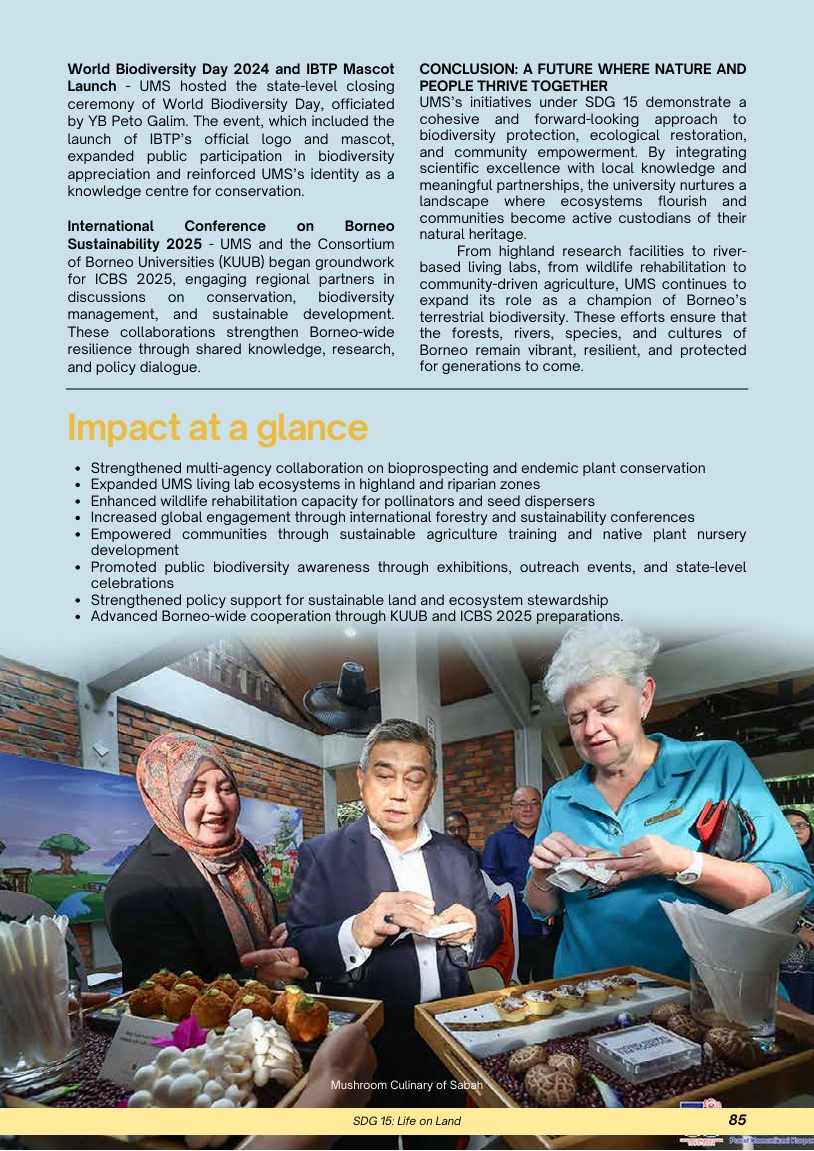
Collectively, UMS’s 2024 initiatives under SDG 15 strengthen terrestrial ecosystem resilience, safeguard biodiversity, and reinforce the university’s role as a regional leader in sustainable land and environmental management.