

 Universiti Malaysia Sabah
Student Representation in University Governance
Universiti Malaysia Sabah (UMS) upholds the principle of inclusive and participatory governance by recognising structured student representation through three key bodies:
- 1. Majlis Perwakilan Pelajar (MPP) – Student Representative Council
- 2. Jawatankuasa Kolej Mahasiswa (JAKMAS) – Residential College Student Committee
- 3. Persatuan Mahasiswa Fakulti – Faculty-based Student Associations (e.g., Mahasiswa FKI)
1. Majlis Perwakilan Pelajar (MPP)
- Roles and Responsibilities:
- i. Represent student interests at the university level.
- ii. Participate in high-level discussions, including selected university's student affairs and alumni committees, student disciplinary boards (as observers), and strategic consultations with university management.
- iii. Advocate for student welfare, academic affairs, and campus policy improvements.
- iv. Organise university-wide student activities and awareness campaigns on issues such as inclusivity, integrity, environmental sustainability, and public health.
- Governance Involvement:
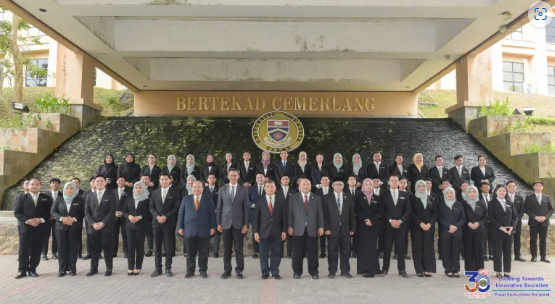
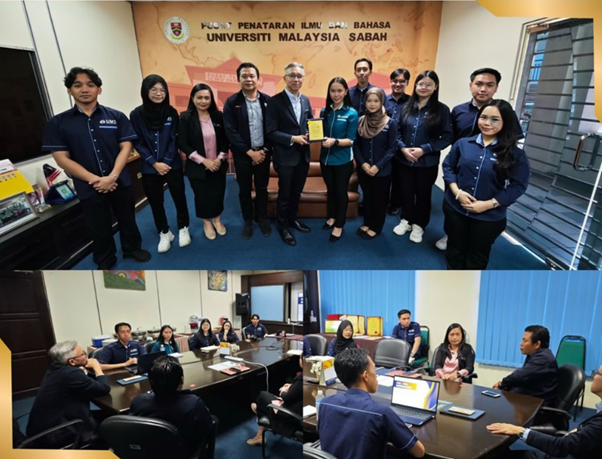
- i. MPP representatives are formally invited to participate in key University Management and Governance Committees, including university town hall sessions, ensuring that student voices are actively represented in institutional decision-making and strategic discussions.
- ii. Their contributions ensure that student perspectives are systematically integrated into the policy-making process, enhancing inclusivity, transparency, and the relevance of institutional decisions..
2. Jawatankuasa Kolej Mahasiswa (JAKMAS)
- Roles and Responsibilities:
- i. Work closely with the Bahagian Hal Ehwal Pelajar (HEP) and college administration to address student welfare and residential life.
- ii. Plan and implement residential-based co-curricular programmes and leadership activities.
- iii. Serve as the first point of contact for resolving issues related to accommodation, discipline, and student development at the college level.
- iv. Promote a sense of community and inclusivity within their respective colleges.
- Governance Involvement:
- i. MPP representatives are invited to sit on relevant University Management and Governance Committees.
- ii. Their contributions ensure that student perspectives are incorporated into the policy-making process.

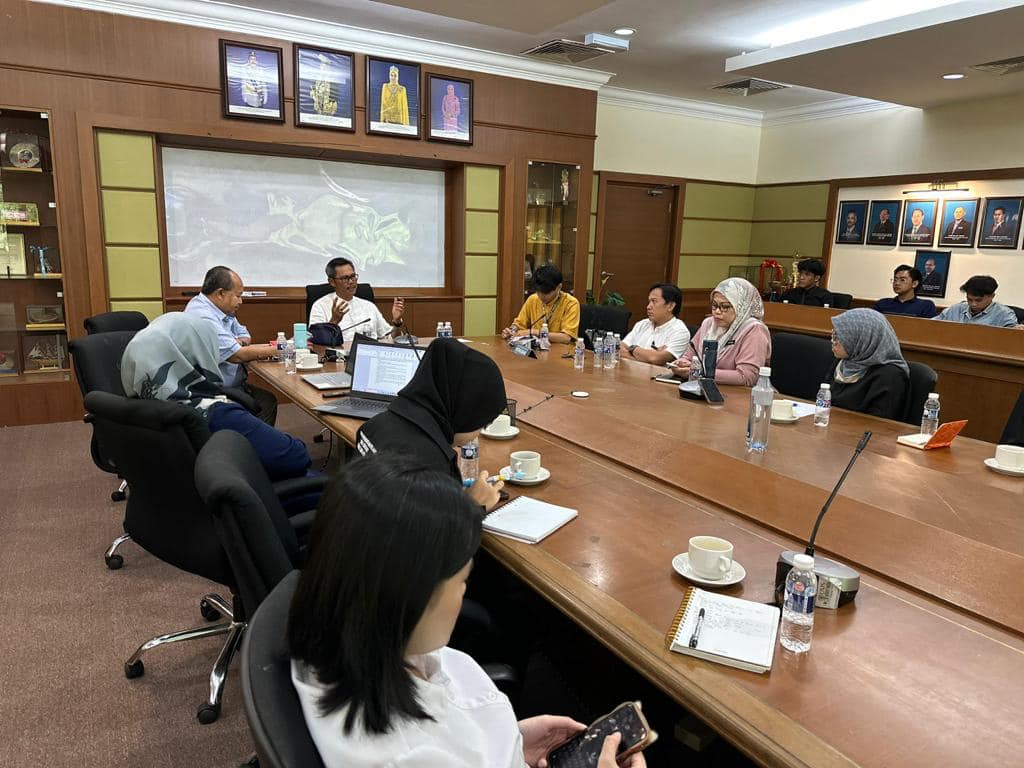
3. Persatuan Mahasiswa Fakulti (Faculty Student Associations)
Student leaders from Faculty Student Associations (e.g., Mahasiswa FKI) are invited to be active members of this committee, reinforcing the university's commitment to participatory governance and student empowerment.
- i. Persatuan Mahasiswa FKI(Faculty of Computing and Informatics )
- ii.Persatuan Mahasiswa FSSA (Faculty of Science and Natural Resources)
- iii. Persatuan Mahasiswa FPL (Faculty of Sustainable Agriculture)
- iv. Persatuan Mahasiswa FPP (Faculty of Psychology and Education)
- v. Persatuan Mahasiswa FSMP (Faculty of Food Science and Nutrition)
- vi. Persatuan Mahasiswa FKJ (Faculty of Engineering)
Student representatives on JK HEPA are entrusted with the following roles and responsibilities that reflect their involvement in faculty-level governance: Governance Involvement: - i. Participate actively in decision-making processes as part of the Faculty Committee of Student Affairs and Alumni
- ii. Coordinate and monitor student development programmes under the faculty’s purview
- iii. Facilitate alumni relations, including engagement in student mentoring and career development initiatives.
- iv. Review and advise on student-related issues, including academic progress, welfare, and campus life.
- v. Ensure alignment of faculty-level student activities with UMS’s strategic goals, core values, and co-curricular framework.
- vi. Raise and advocate for pressing welfare issues affecting students (e.g., financial assistance, access to learning resources, classroom facilities).
- vii. Contribute to the development of solutions or formal recommendations for action by the Dean’s Office or the Division of Student Affairs.
- viii. Convey feedback, concerns, and suggestions from the broader student community to the faculty leadership.
- ix. Ensure student voices are reflected in decisions related to academic support, co-curricular activities, and welfare provisions.
- x. Disseminate important decisions, updates, and initiatives from the faculty administration back to the student body.
- xi. Promote a transparent, accountable, and inclusive governance culture within the faculty.

Universiti Malaysia Sabah
Student Union Election Process (UMS)
The student union at Universiti Malaysia Sabah (UMS), known as the Majlis Perwakilan Pelajar (MPP) , is part of the formal national student governance framework across Malaysian public universities , established under the Universities and University Colleges Act 1971 (AUKU) and the respective university constitutions. As a statutory student body, MPP serves as the official representative platform for the student community, acting as a key liaison between students and university management. MPP plays a critical role in advocating student welfare, academic interests, and campus development, while also contributing to institutional governance through participation in relevant committees, consultations, and decision-making processes. Its structure ensures that student voices are systematically incorporated into university policies, aligning with principles of participatory governance, accountability, and inclusivity. Members of the MPP are democratically elected by the student body through the Campus Election (Pilihan Raya Kampus,PRK) , ensuring legitimacy, transparency, and broad-based representation across faculties and campuses.
Key Election Process
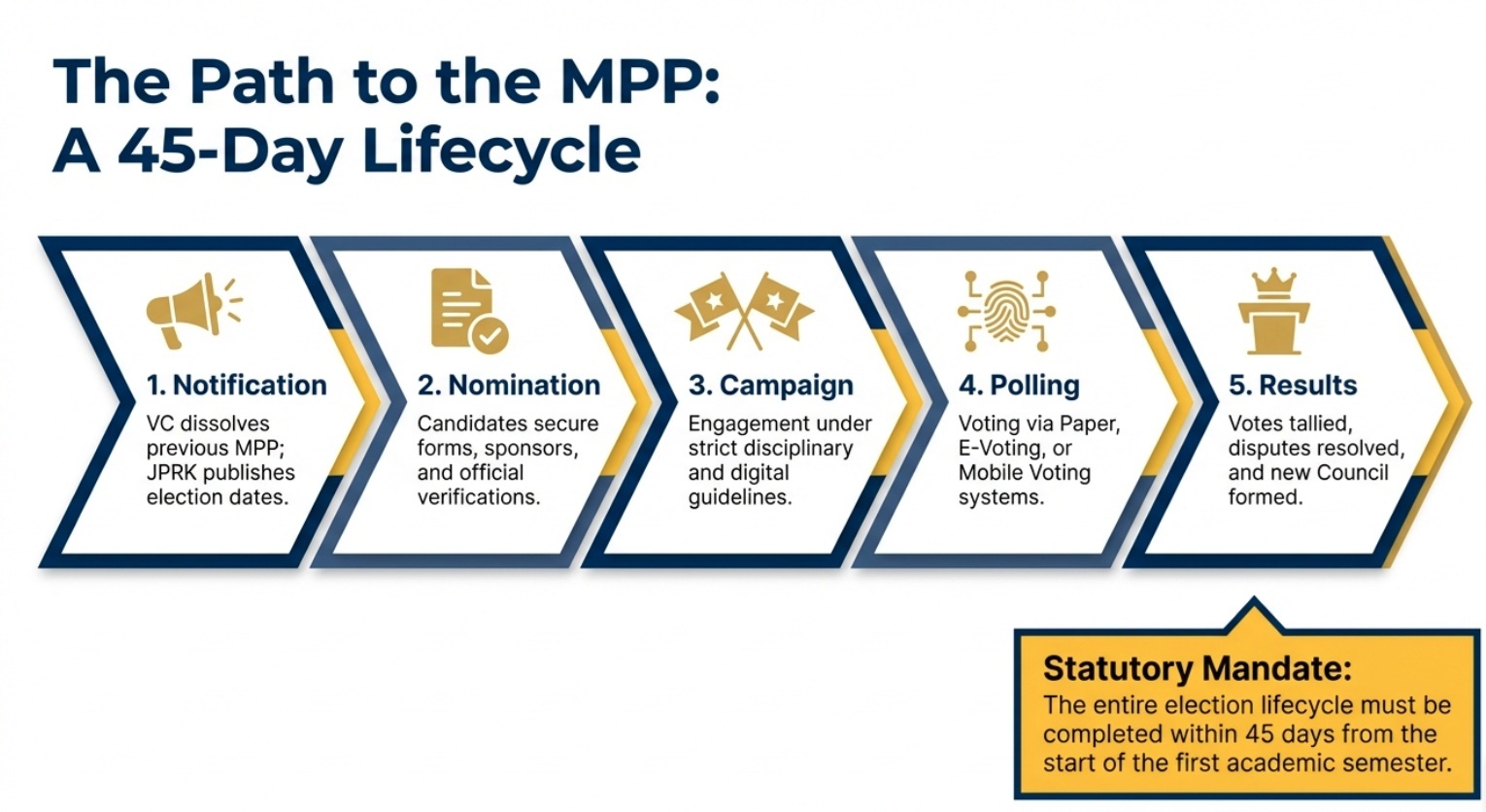
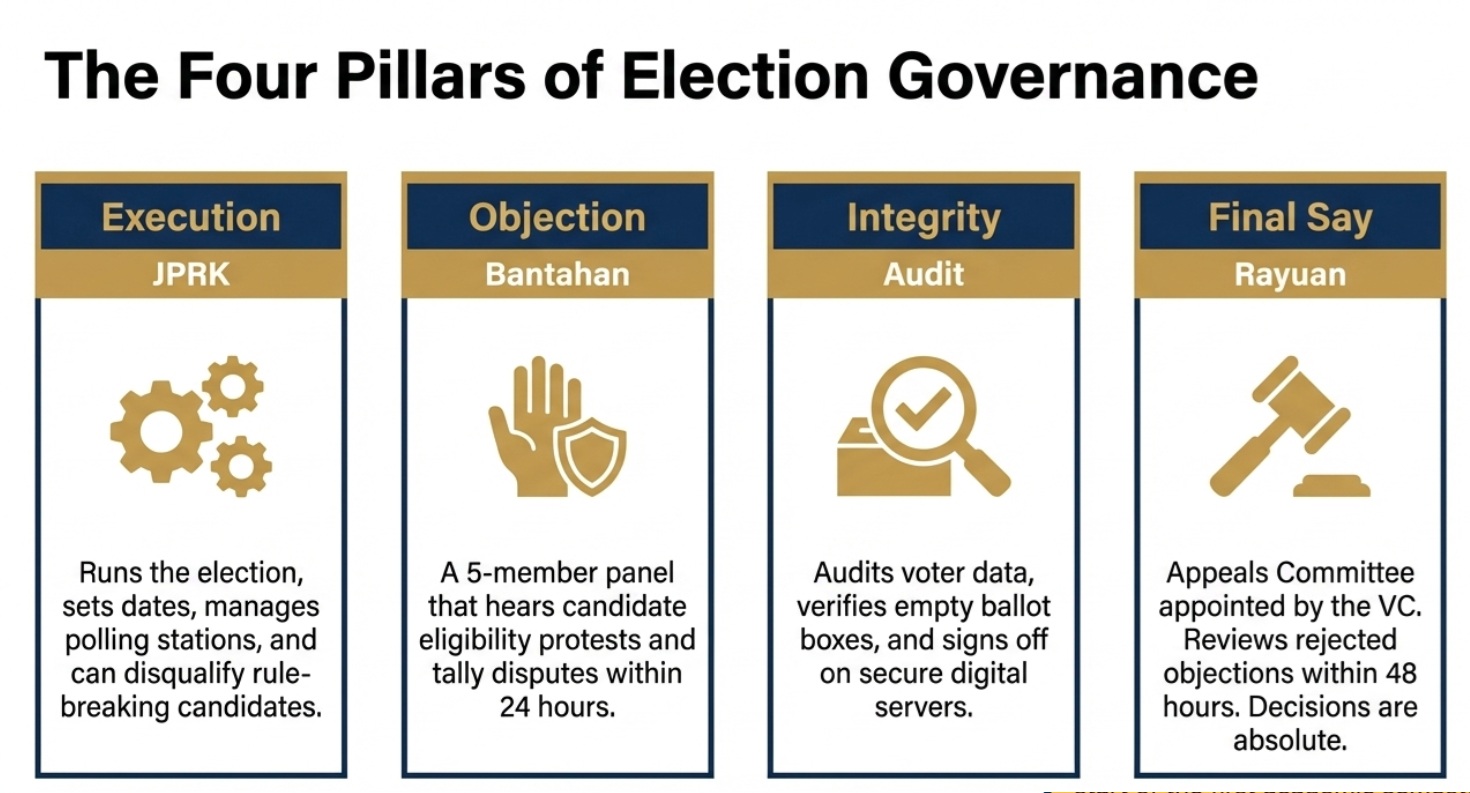
- 1. Official Announcement The Jawatankuasa Pilihan Raya Kampus (JPRK) announces the election timeline, including nomination, campaigning, and voting dates. The existing MPP is dissolved prior to elections.
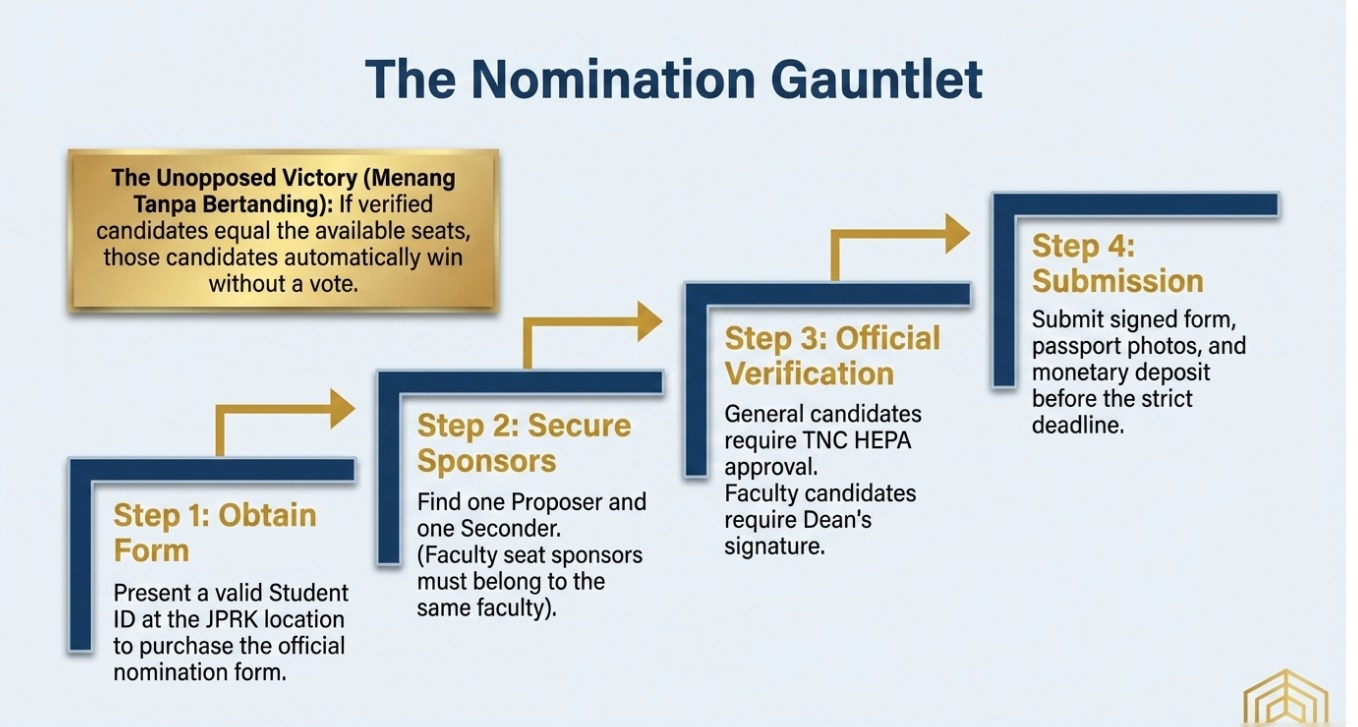
- 2. Candidate Nomination Eligible students submit nomination forms with proposer and seconder, subject to academic and disciplinary requirements. Candidate lists are verified and published, with provisions for objections and appeals.
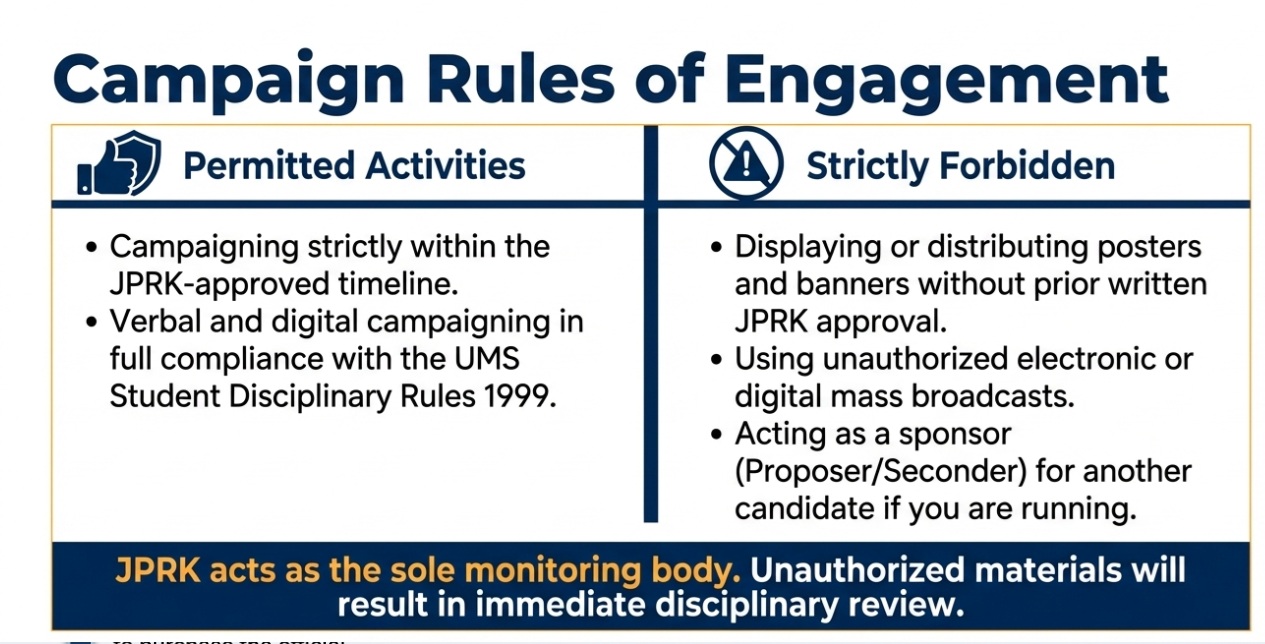
- 3. Campaign Period Candidates campaign within regulated guidelines set by the university to ensure fair and ethical engagement with voters.
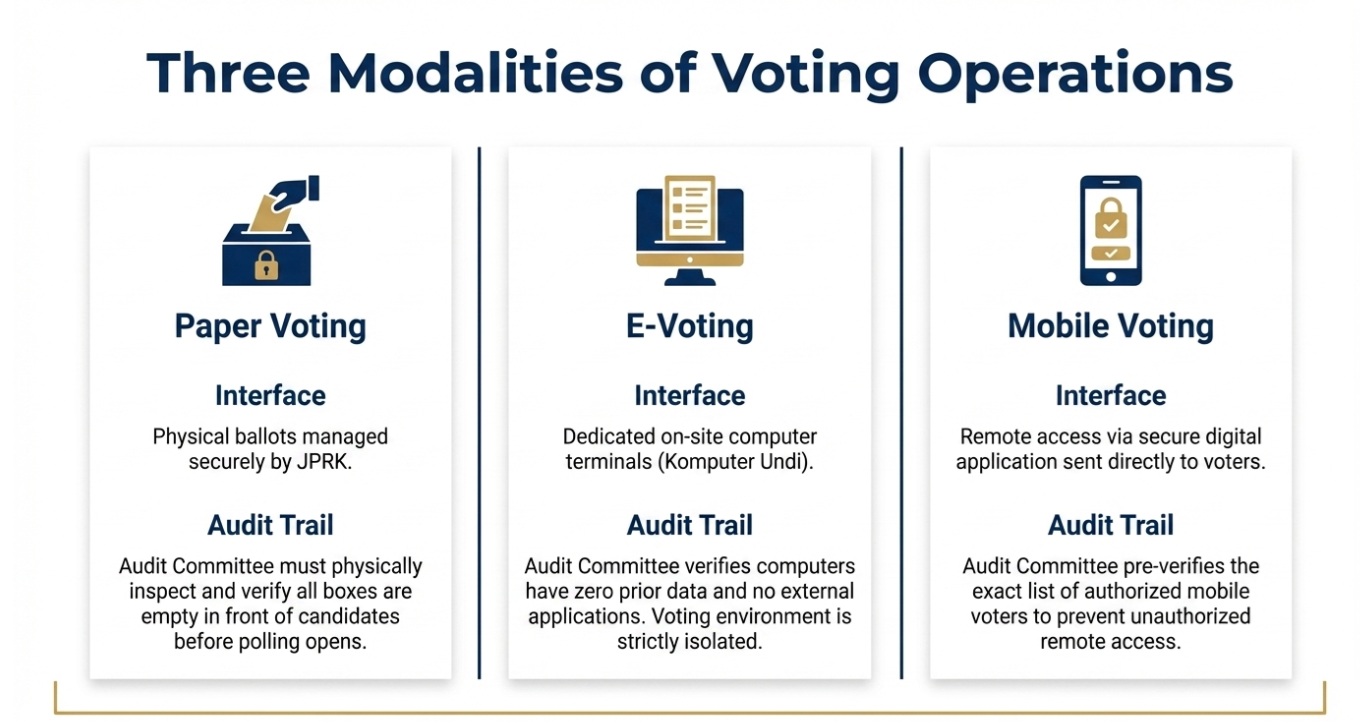
- 4. Voting by Students All registered students participate in the election by casting votes through e-voting, physical polling stations, or mobile voting systems, ensuring accessibility and inclusivity.
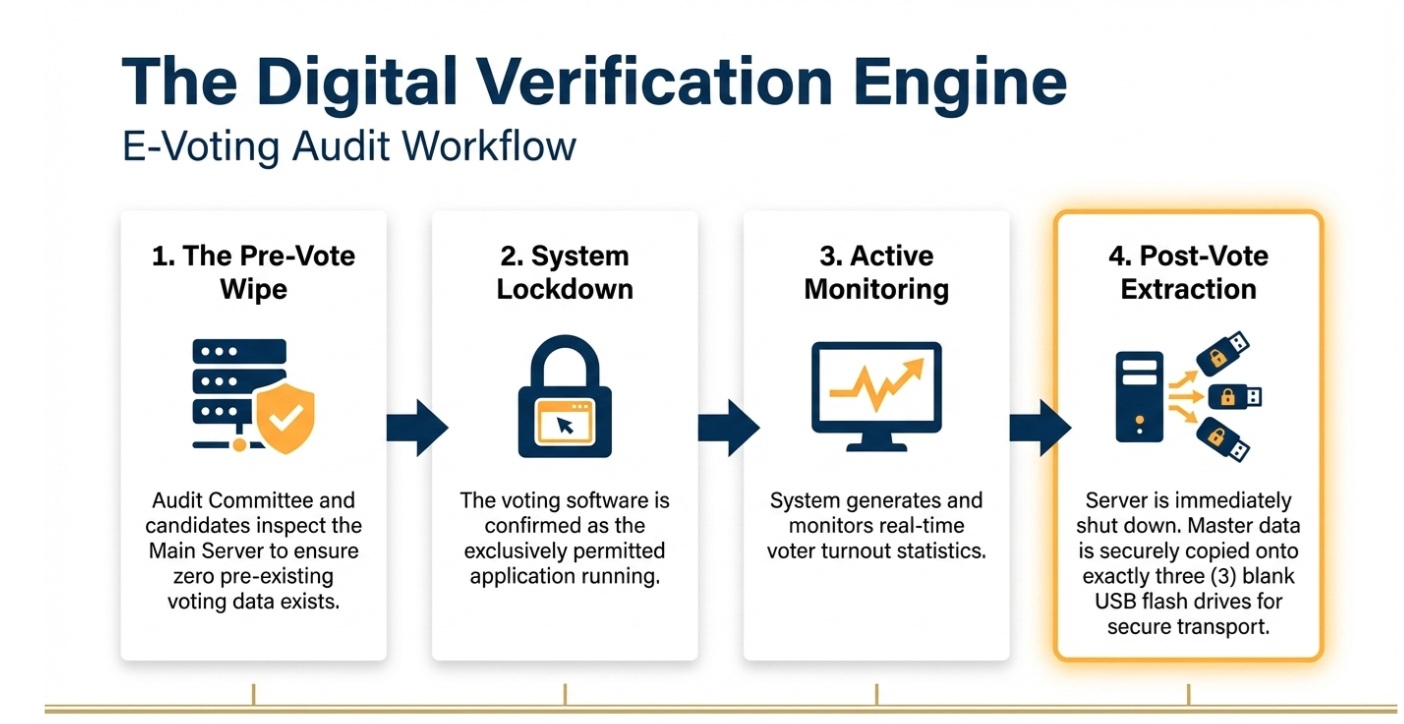
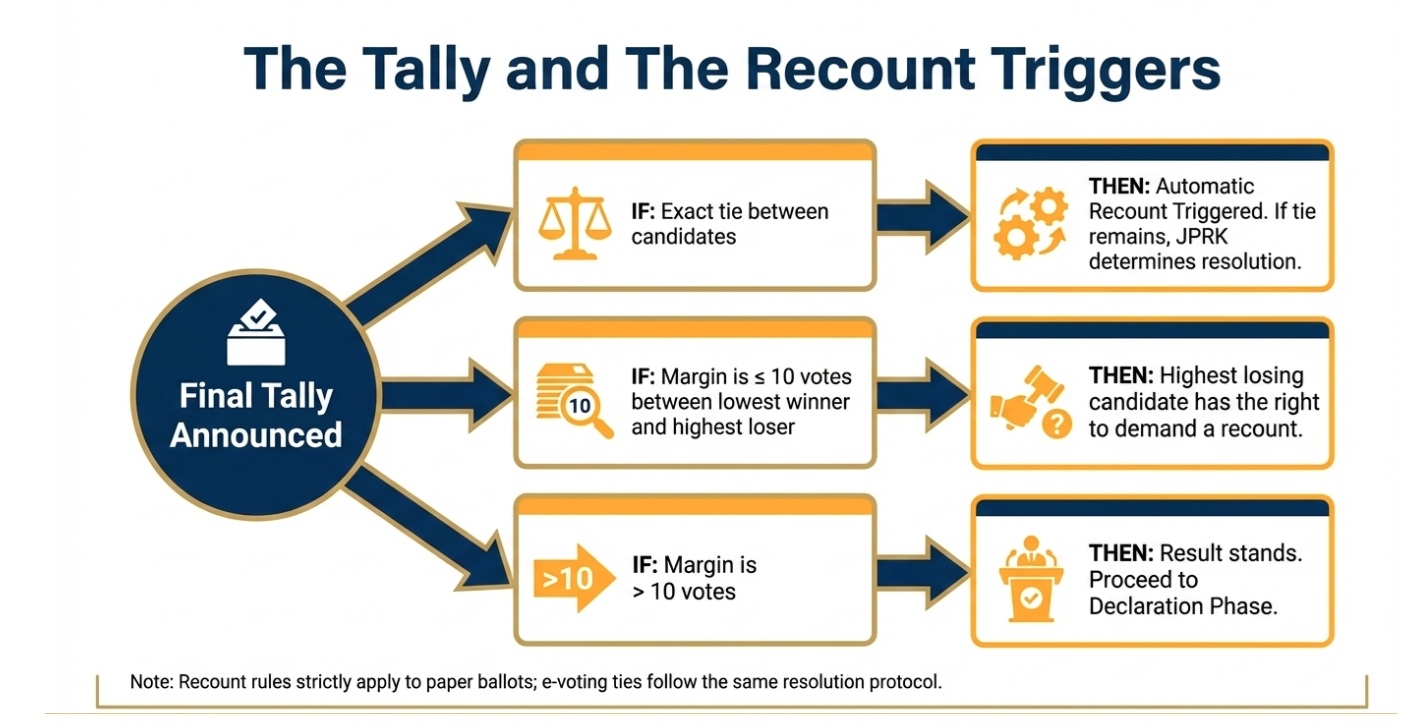
- 5. Vote Counting & Verification Votes are securely counted and verified by appointed committees, including an audit mechanism to ensure transparency and integrity.
- 6. Results & Representation Successful candidates are declared elected as MPP representatives. These representatives subsequently form the student council and appoint internal leadership positions.
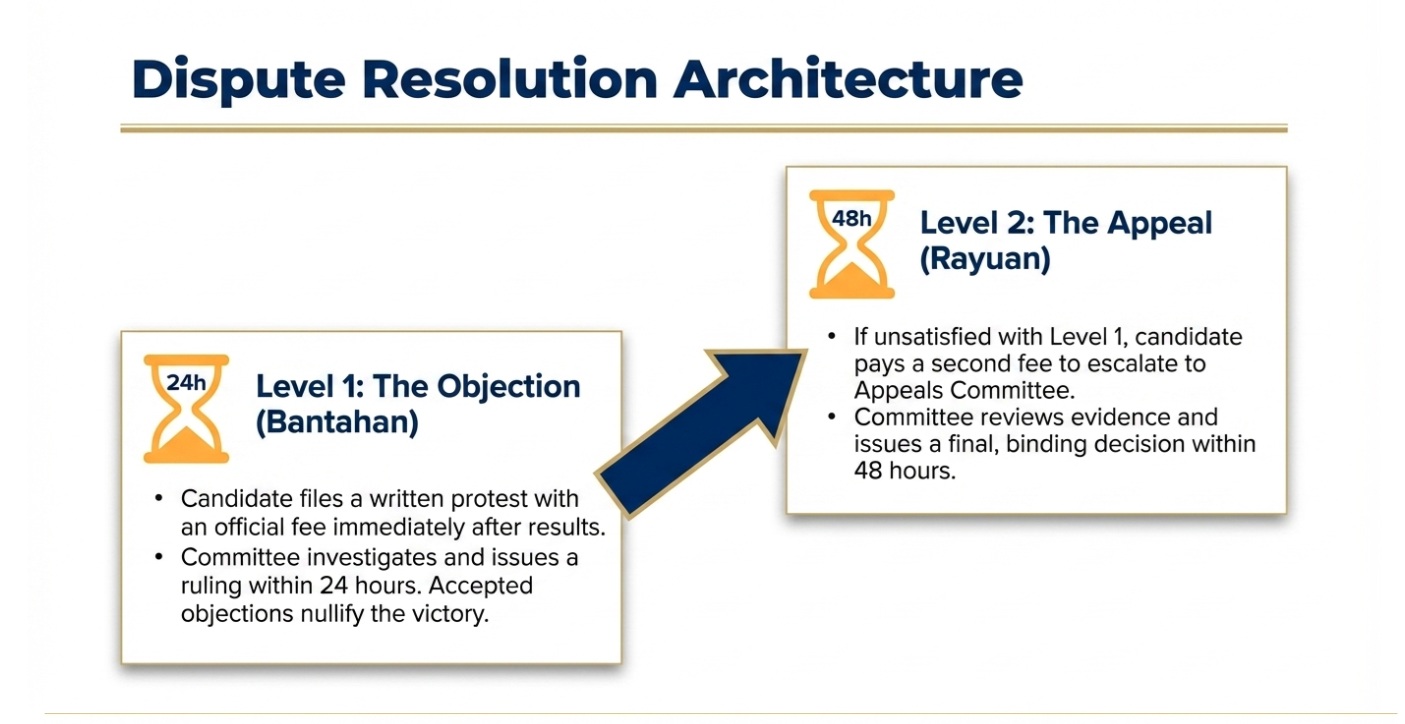
- 7. Appeal Mechanism Any disputes or objections are handled through formal bantahan and rayuan committees, ensuring due process and fairness.
Eligibility Requirements
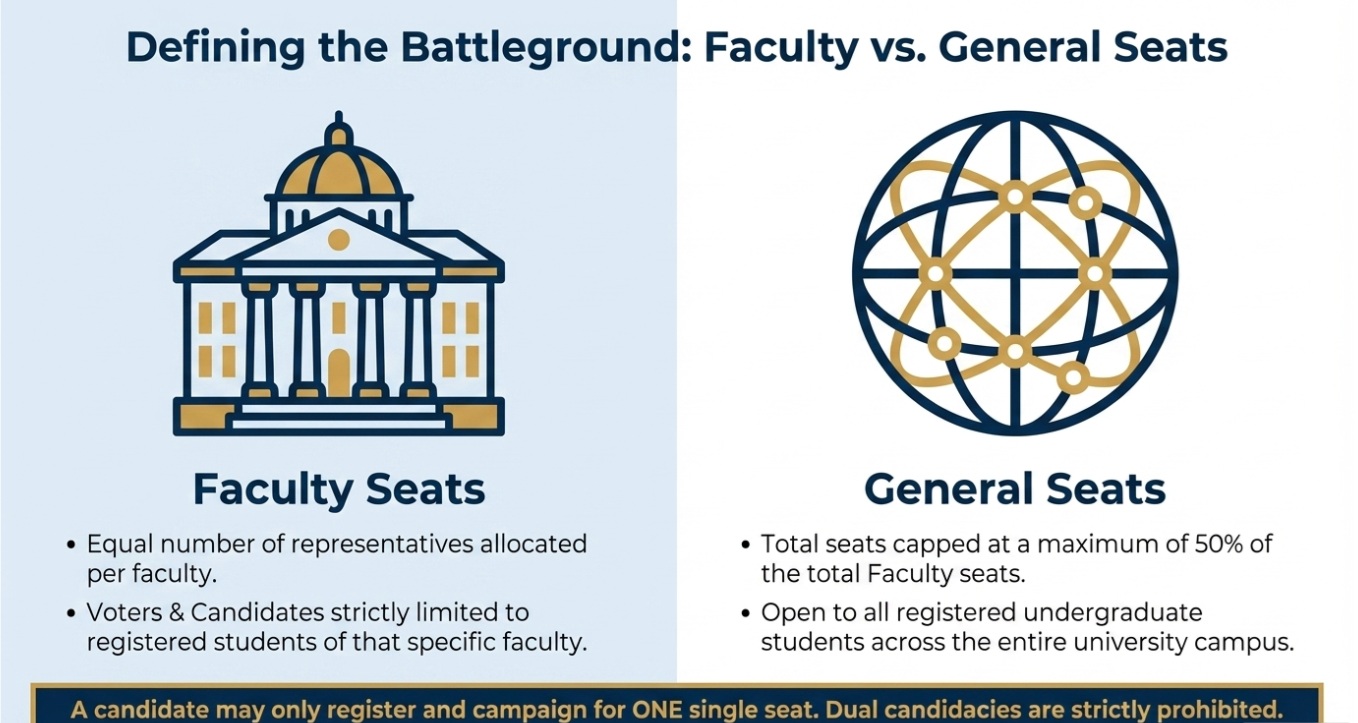
To participate as a candidate in the Universiti Malaysia Sabah Campus Election, students must meet specific eligibility requirements and be free of any disqualifying academic or disciplinary issues. A candidate must be a registered student who is not disqualified under the University Constitution. Candidates can choose to contest in an individual capacity or represent an approved student group, as long as that group is not defined as a student body under Section 58(1) of the University Constitution.Furthermore, the following conditions apply:- i. A candidate can only contest in one election zone
- ii. Faculty Zone Candidates: Must be a registered student belonging to that specific Faculty
- iii. General Zone Candidates : Must be a registered undergraduate student at the University
- iv. Candidates cannot act as a proposer or seconder for any other candidate running in the election
- v. Candidates cannot serve as members of any election-related committees , which includes the Campus Election Committee, Objection Committee, Audit Committee, or Appeal Committee
Disqualification Criteria
A student is strictly disqualified from running as a candidate if they meet any of the following conditions:- i. They are currently awaiting the results of a student disciplinary proceeding, unless they have obtained written permission from the Vice-Chancellor
- ii. They have been found guilty of a disciplinary offense
- iii.They have not yet taken their first examination for their course of study at the university
- iv. They have failed their course of study immediately prior to the election being held
- v. They failed to attend their most recent university examination for their course
- vi. They have an academic standing with a CGPA of less than 2.75 , or specifically for Faculty of Medicine and Health Sciences students, a CGPA of less than 3.25
- vii. Their official nomination form fails to receive the required endorsement from the Deputy Vice-Chancellor (Student Affairs and Alumni) or their respective Faculty Dean
- viii. Their student status has been terminated or cut ("Dipotong")
- x. They have a remaining study period of less than two (2) semesters left in their enrolled program