30+
Years of Service
since 1994
What Are Living Labs at UMS?
Real Places, Real People, Real Impact
Living labs at UMS are open, collaborative platforms where universities, communities, government, and industry work together to design, test, and refine sustainability solutions in real-life contexts. They are not just research sites, but shared spaces for experimentation, learning, and innovation.
Through these living labs, students gain hands-on experience, academics gather real-world data, and communities benefit from evidence-based interventions. Each lab is linked to specific Sustainable Development Goals (SDGs) and supports interdisciplinary projects that bridge science, technology, culture, and local wisdom.
Marine & Coastal Living Labs
Guardians of the Blue Frontier
UMS’s marine and coastal living labs, led primarily by the Borneo Marine Research Institute (BMRI) and faculty partners, support cutting-edge work in coral restoration, turtle conservation, seagrass monitoring, seaweed cultivation, and blue carbon research. These sites serve as test beds for marine conservation methods, sustainable fisheries, and climate adaptation measures for coastal communities.
Students and researchers collaborate with local fishers, coastal families, and agencies such as Sabah Parks to develop and trial solutions that protect marine biodiversity while sustaining livelihoods. These living labs help translate science into practice, ensuring that conservation strategies are socially accepted, economically viable, and ecologically sound.
Tropical Forestry & Highland Living Labs
Protecting the Green Heart of Borneo
UMS’s highland and forest living labs, including stations such as Mesilou, focus on biodiversity conservation, reforestation, climate research, and sustainable land management. These sites offer a natural classroom for understanding forest ecology, watershed protection, ecosystem services, and the impacts of climate change on upland environments.
Through large-scale tree-planting programmes, biodiversity mapping, and long-term ecological monitoring, UMS living labs contribute to forest restoration efforts and climate mitigation. Students, researchers, and community partners work together to design nature-based solutions that protect Borneo’s forests while supporting local communities who depend on them.
Energy, Smart Campus & Eco-Innovation Labs
Designing the Low-Carbon Campus of the Future
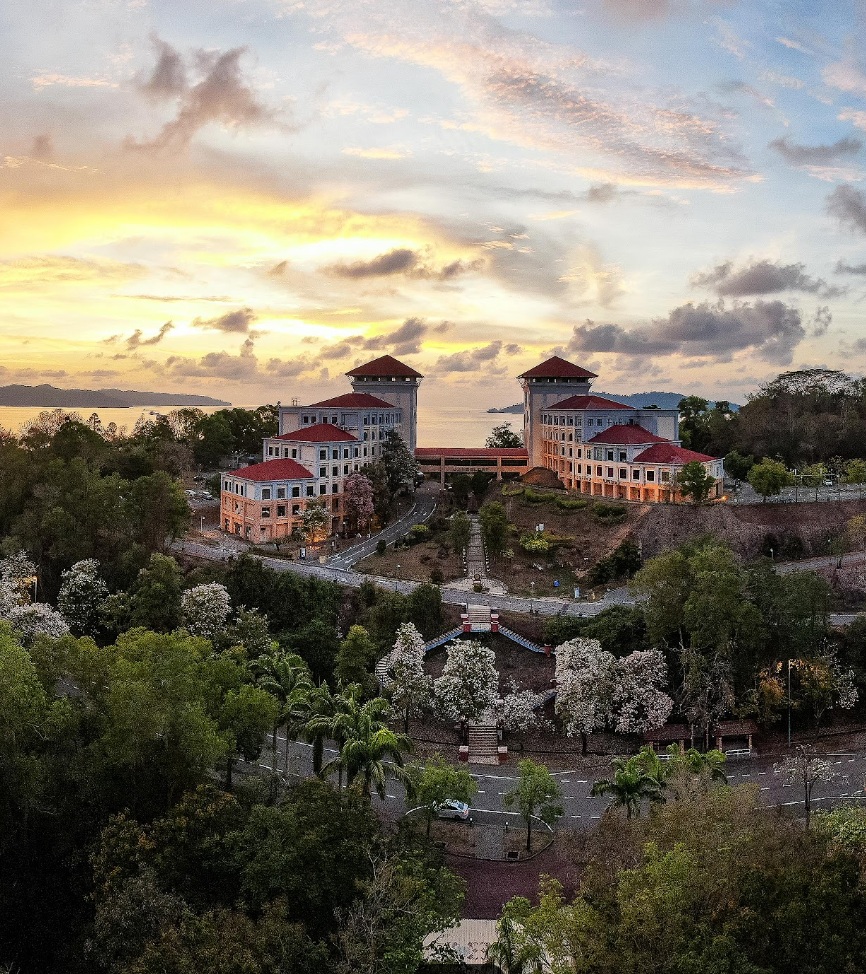
Within the UMS campus, energy and smart-campus living labs explore renewable energy, energy efficiency, and digital innovation for sustainability. Solar PV installations, smart meters, and building energy management systems are used not only to operate the campus more efficiently, but also to support teaching, research, and student projects in engineering, computing, and environmental science.
These labs support innovation in clean energy systems, IoT-based monitoring, low-carbon mobility, and green infrastructure. Students gain real-time access to data from the campus environment, enabling them to develop prototypes, algorithms, and solutions that can be applied in other universities, cities, and communities.
Indigenous Knowledge & Social Innovation Labs
Honouring Heritage, Co-Creating Solutions
UMS also hosts living labs that centre on indigenous knowledge, cultural heritage, and social innovation. These initiatives, driven by institutes and faculties working with indigenous communities across Sabah, document oral traditions, languages, customary practices, and local ecological knowledge while co-developing solutions for education, livelihoods, and wellbeing.
Through participatory research, community workshops, and co-designed projects, UMS ensures that innovation respects and incorporates traditional wisdom. These living labs provide space for dialogue between science and culture, helping shape more inclusive, just, and culturally grounded approaches to sustainability.
Student Innovation & SDG-Aligned Projects
From Ideas to Impact
Living labs at UMS are closely linked to student learning and innovation. Final Year Projects (FYPs), capstone projects, hackathons, and student innovation challenges are often anchored in living lab sites or real community settings. Students work on themes such as climate adaptation, circular economy, sustainable food systems, green technology, digital inclusion, and public health.
By working directly with real data, real communities, and real constraints, students learn how to design solutions that are both technically sound and socially meaningful. Many of these projects develop into prototypes, startups, or long-term programmes in partnership with industry and community organisations.
Partnerships & Impact Pathways
From Local Experiments to Global Solutions
Living labs and innovation projects at UMS are strengthened by partnerships with government agencies, NGOs, industry players, and international institutions. These collaborations help scale successful pilots, inform public policies, and attract funding for larger impact-driven programmes.
Outcomes from living labs feed into reports, policy papers, training modules, community toolkits, and technology demonstrations. In doing so, UMS turns local experiments into replicable models that benefit Sabah, Malaysia, and the wider region—contributing to global efforts under the SDGs.
Get Involved:Learn. Innovate. Co-Create.
Students, staff, industry partners, and community organisations are invited to participate in UMS Living Labs and innovation projects—whether through research collaboration, student supervision, community engagement, internships, or sponsorship.
Together, we can transform UMS into a vibrant ecosystem of ideas and action—where living labs and innovation projects not only study the world, but actively change it for the better.



 Turning Campus, Communities, and Ecosystems into Real-World Classrooms