1. Green Campus Operations & EcoCampus Management
UMS embeds sustainability in daily campus operations through energy conservation, waste reduction, and campus-wide resource optimisation. Key efforts include:
-
- Sustainable Solar Energy – implemented across key buildings under the Quantum Sustainable Energy partnership.
-
- Campus-wide LED retrofitting – sto reduce electricity consumption.
-
- Smart building operations – iintegrating IoT sensors, automation, and real-time data dashboards.
-
- Rainwater harvesting systems – to reduce freshwater dependency.archers.
-
- UMS Water Conservation Policy - ensuring responsible water usage.
These initiatives demonstrate UMS’s dedication to implementing innovative, data-driven strategies for a low-carbon and resource-efficient campus.
2. Renewable Energy & Low-Carbon Transition
UMS is transitioning towards a greener energy future through:
-
- Large-Scale Renewable Energy Integration– A major strategy in reducing building electricity consumption is the integration of renewable energy through the RM45.05 million Sunview EPCC solar project (2025). This 10.5 MWp solar PV system, implemented under a Zero CAPEX model, will offset a substantial portion of campus electricity use—particularly energy-intensive HVAC and chiller systems—while contributing to UMS’s long-term transition toward a low-carbon, energy-efficient campus.
-
- Electric mobility adoption – including e-bikes, e-scooters, and electric campus buggies.
-
- Low-carbon commuting initiatives – through shuttle bus services, vehicle entry control systems, and carpool-friendly policies.
These efforts align with SDG 7, SDG 11, and SDG 13, placing UMS among Malaysia’s leaders in sustainable campus energy.
3. Sustainable Waste Management & Zero-Waste Initiatives
UMS champions responsible consumption and waste reduction through:
-
- UMS Zero Waste Campaign – – focusing on the 5R principles (Refuse, Reduce, Reuse, Recycle, Repurpose).
-
- Campus Recycling bins and Hubs – for plastics, paper, aluminium, and e-waste.
-
- Food Waste Reduction Programme – – through composting and Food Bank UMS initiatives for B40 students.
-
- UMS No Single-Use Plastic Policy – targeting campus events and cafeterias.
-
- Green Procurement Guidelines – prioritising eco-friendly suppliers and sustainable products.
- Green Procurement Guidelines – prioritising eco-friendly suppliers and sustainable products.
4. Sustainable Water, Sanitation & Blue Economy Initiatives
UMS advances sustainable water management through:
-
- River restoration projects – – in collaboration with local communities
-
- Smart water metering systems – for improved monitoring.
-
- Blue Economy projects – – including seaweed farming, mangrove restoration, and coastal ecosystem conservation.
-
- World Oceans Day & Blue Carbon Awareness Campaigns – to educate students and the public on marine sustainability.
These initiatives protect freshwater and coastal ecosystems while enhancing climate resilience.
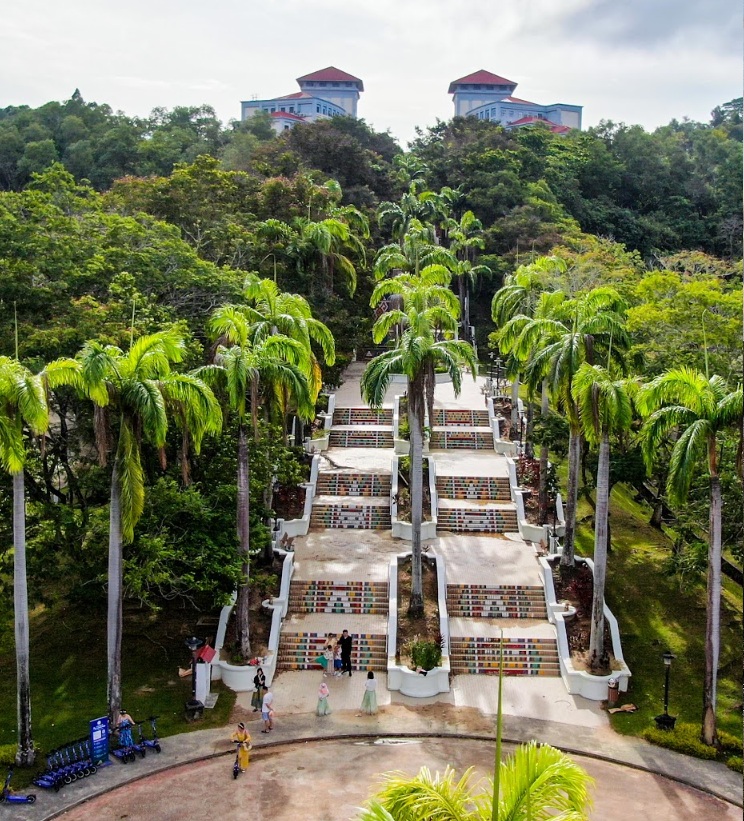
Together, we build a campus that nurtures minds, protects nature, and empowers future generations — truly embodying UMS as “The Brain of Borneo.”
UMS’s campus sustainability initiatives reflect a holistic and forward-looking approach rooted in research, innovation, and community spirit. Through its EcoCampus identity, living labs, green infrastructure, and student-driven innovation, UMS continues to make significant strides toward becoming a model sustainable university in Malaysia and the region.



 Creating a Greener, Smarter, and More Resilient University for the Future