

From open repositories to geopark research — transforming education and environment through partnership.
UMS–UNESCO
Empowering inclusive education and protecting cultural-natural legacies for a resilient tomorrow
 HOW WE WORK
UMS × UNESCO: Empowering minds, preserving heritage, sustaining the planet.
Universiti Malaysia Sabah (UMS) has established a strategic and multi-faceted collaboration with United Nations Educational, Scientific and Cultural Organization (UNESCO) across education, open resources, heritage conservation and sustainable development. From developing national policy frameworks for inclusive Open Educational Resources (iOER), to leading national showcases and digital repositories, and engaging in geopark, biodiversity and cultural-heritage initiatives, UMS is leveraging UNESCO platforms to advance inclusive, accessible, lifelong learning and sustainable ecosystems in the Asia-Pacific.
Universiti Malaysia Sabah
UMS × UNESCO: Empowering artisans and ecosystems alike — sustainability through education and tradition
Universiti Malaysia Sabah (UMS) has cultivated a strategic and multi-faceted collaboration with the United Nations Educational, Scientific and Cultural Organization (UNESCO), encompassing education, open learning, cultural heritage, biodiversity conservation, and sustainable development. This partnership reflects UMS’s commitment to UNESCO’s holistic mission — to build peace and sustainability through knowledge, culture, and science. In the education and digital learning sphere, UMS plays a leading national role in advancing the Inclusive Open Educational Resources (iOER) movement in Malaysia. Through close collaboration with UNESCO and the Ministry of Higher Education (MOHE), UMS has contributed to the development of national policies and frameworks aligned with the UNESCO OER Recommendation (2019). The university coordinated a multi-phase “Design & Development of iOER” project and developed the national iOER repository (ioercop.ums.edu.my), enabling educators to create, adapt, and share open, inclusive learning materials under Creative Commons licences. By embedding accessibility and Universal Design for Learning (UDL) principles, this initiative ensures that quality educational content is available to all learners — including those in rural and marginalised communities, persons with disabilities, and lifelong learners beyond formal institutions. Beyond open learning, UMS’s collaboration with UNESCO extends into heritage and environmental sustainability through its long-standing involvement with the Kinabalu UNESCO Global Geopark (KUGGp) and the emerging Sulaman Geopark initiatives. UMS researchers and postgraduate students have undertaken extensive field studies on biodiversity, ecosystem health, carbon absorption, and cultural linkages within geopark territories. These efforts are exemplified by the Seminar Saintifik Ekspedisi Geopark Sulaman (EGOS 2025), which gathered scientists, conservationists, and community representatives to share new findings and strategies for balancing conservation with community livelihoods. Through such platforms, UMS supports UNESCO’s Global Geopark objectives — promoting Earth heritage conservation, environmental education, and sustainable socio-economic development through geotourism and community empowerment. At the intersection of culture and community development, UMS partners with the Suruhanjaya Kebangsaan UNESCO Malaysia (SKUM) in initiatives that link traditional knowledge and creative industries to sustainable livelihoods. The Batik Warna Alami (Natural Dye Batik) programme, supported by SKUM grants, exemplifies this approach by integrating scientific innovation with local craftsmanship and student engagement. This initiative not only preserves Malaysia’s intangible cultural heritage but also enhances local economic resilience, especially among women and rural artisans.
Universiti Malaysia Sabah x WWF Malaysia
Major Initiatives & Impact
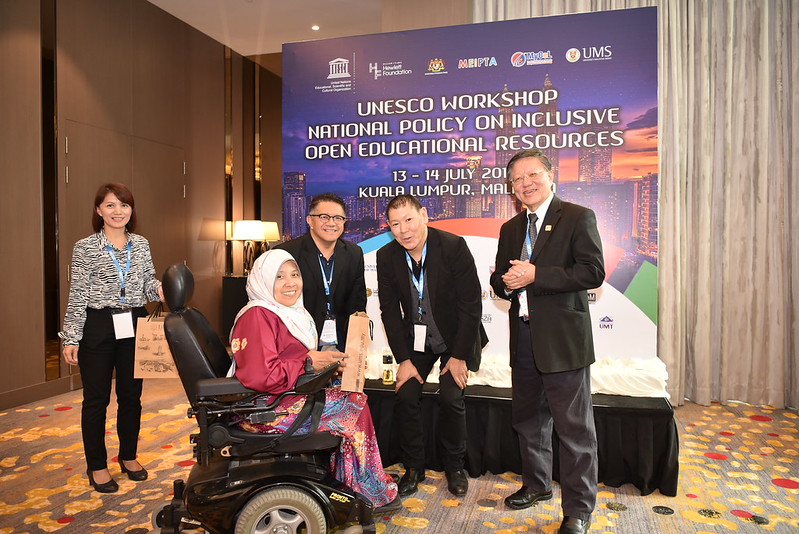
- i. UNESCO iOER Workshop UMS participated in UNESCO’s national workshop to develop Malaysia’s Inclusive OER policy framework, aligning higher education with UNESCO’s 2019 OER Recommendation. The workshop laid the foundation for inclusive, open-access learning across Malaysian universities. Read More
- ii. Design & Development of iOER Led by UMS and supported by UNESCO and the Hewlett Foundation, this three-phase project built national capacity in creating inclusive OER through workshops, mentoring, and a showcase. It positioned UMS as the coordinating hub for Malaysia’s iOER ecosystem. Read More on ICCC Report Summary
- iii. Malaysia Inclusive OER Showcase 2023 Hosted by UMS in partnership with UNESCO and MOHE, the Malaysia Inclusive OER Showcase 2023 was a landmark event that highlighted national achievements in open education. Bringing together over 80 academics from 20 public and private universities, the event served as a platform to share successful OER implementations, digital inclusion initiatives, and innovations in accessible learning design. The showcase also reinforced Malaysia’s commitment to the UNESCO OER Recommendation’s five objectives — particularly in capacity building and fostering international cooperation for inclusive education. Read More
- iv. UMS iOER Portal / Repository Developed and maintained by UMS, the Inclusive Open Educational Resources Portal (ioercop.ums.edu.my) serves as Malaysia’s central repository for open, inclusive learning materials. It provides educators and learners with access to digital content licensed under Creative Commons, allowing free adaptation and redistribution. The portal integrates accessibility features such as screen-reader compatibility, captioned videos, and inclusive design templates — ensuring that learning resources are usable by all. The iOER repository exemplifies UNESCO’s goal of making education a universal public good through open knowledge systems. Read More
- v. SKUM-Funded “Batik Warna Alami” (Natural Dye Batik Project) Supported by the Suruhanjaya Kebangsaan UNESCO Malaysia (SKUM), this hybrid community-based initiative reflects UMS’s integration of cultural heritage and sustainability. The Batik Warna Alami programme combines scientific research on natural dye extraction with traditional batik-making skills, promoting eco-friendly practices while empowering local artisans. Conducted through a “Latih & Bimbing” (Train and Guide) model, the programme involves UMS students and lecturers transferring classroom knowledge to community contexts. The project enhances cultural sustainability, supports creative economy development, and aligns with UNESCO’s objectives on safeguarding intangible cultural heritage and promoting sustainable livelihoods. Read More
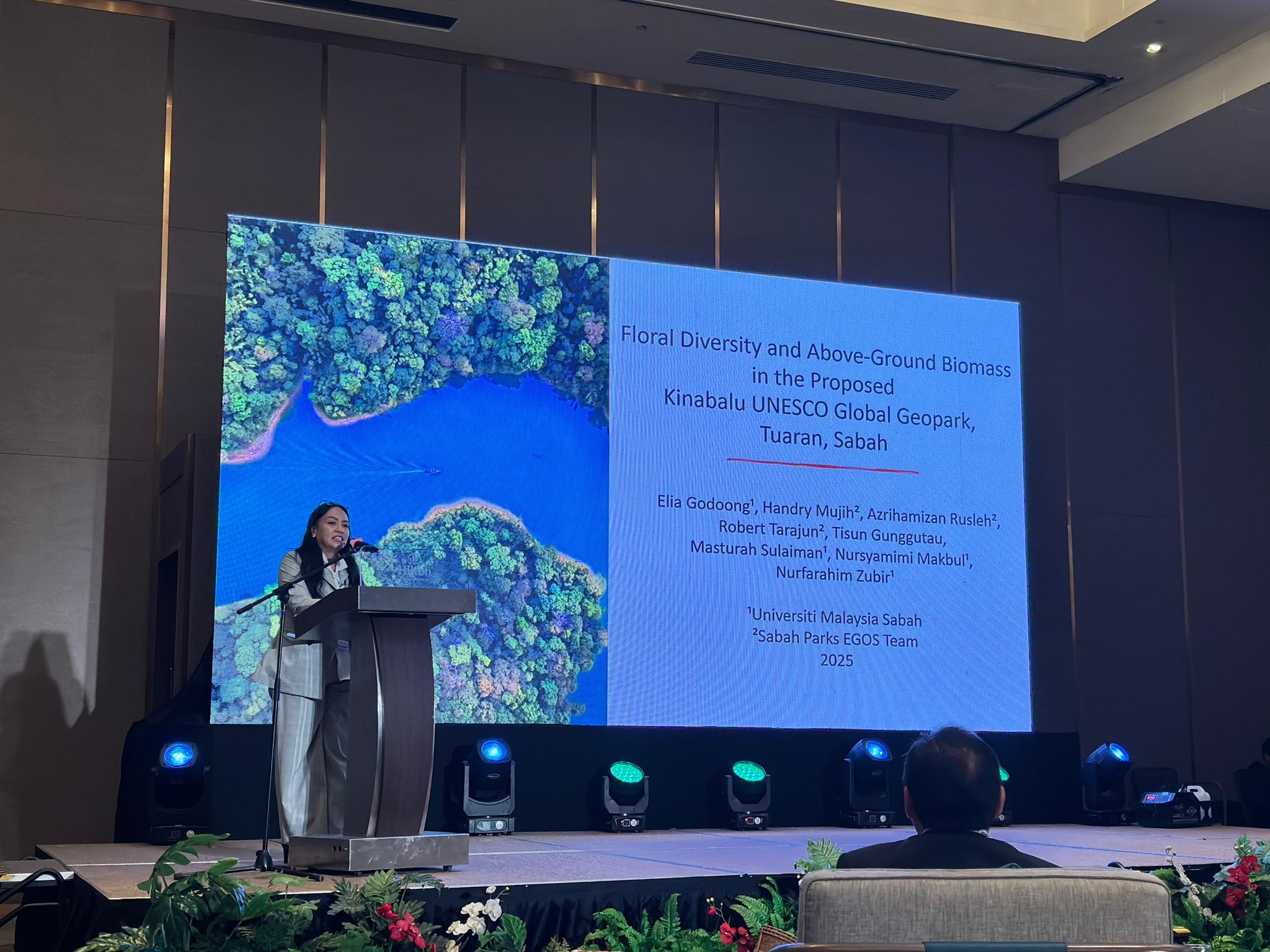
- vi. Seminar Saintifik Ekspedisi Geopark Sulaman (EGOS 2025) The EGOS 2025 Seminar marked a major milestone in UMS’s scientific engagement with the Kinabalu UNESCO Global Geopark (KUGGp) and its proposed Sulaman Geopark extension. Organised at the Hilton Hotel, Kota Kinabalu, the event featured oral and poster presentations by researchers from the Faculty of Tropical Forestry (FPT), covering biodiversity inventories, ecosystem health, carbon sequestration, and community ethnobotany. Ts. Dr. Elia Godoong of UMS also served as a panelist in the expert discussion session organised by Sabah Parks. EGOS 2025 not only disseminated new scientific findings but also strengthened the link between geopark research and UNESCO’s mission to integrate conservation, education, and sustainable development. Read More
- vii. Seminar Saintifik Ekspedisi Geopark Sulaman (EGOS 2025) The EGOS 2025 Seminar marked a major milestone in UMS’s scientific engagement with the Kinabalu UNESCO Global Geopark (KUGGp) and its proposed Sulaman Geopark extension. Organised at the Hilton Hotel, Kota Kinabalu, the event featured oral and poster presentations by researchers from the Faculty of Tropical Forestry (FPT), covering biodiversity inventories, ecosystem health, carbon sequestration, and community ethnobotany. Ts. Dr. Elia Godoong of UMS also served as a panelist in the expert discussion session organised by Sabah Parks. EGOS 2025 not only disseminated new scientific findings but also strengthened the link between geopark research and UNESCO’s mission to integrate conservation, education, and sustainable development. Read More
- viii. Net Zero Borneo Forum Organised by the Institute for Tropical Biology and Conservation (ITBC), UMS, this high-level forum convened government leaders, scientists, and industry experts to explore climate resilience and sustainability pathways for Borneo. The event featured speakers from UN SDSN Asia, Sabah Maju Jaya Secretariat, Sabah Forestry Department, and the Kinabalu UNESCO Global Geopark. Discussions centered on blue economy strategies, forest conservation, and circular-economy solutions. The forum reinforced UMS’s leadership in regional environmental sustainability and demonstrated its alignment with UNESCO’s Education for Sustainable Development (ESD) and climate-action frameworks. Read More
- ix. Cultural Heritage Safeguarding Collaboration UMS is also part of a broader cultural-heritage safeguarding partnership involving the Sabah State Cultural Board (LKNS) and the Sabah Arts and Anthropology Society (SAANS), with the aim of obtaining recognition under UNESCO’s “Good Safeguarding Practices” listing. This collaboration focuses on documenting, conserving, and revitalising indigenous cultural expressions and community traditions across Sabah. Through this initiative, UMS contributes to preserving intangible cultural heritage while empowering local communities to sustain their traditions within the framework of sustainable development and cultural resilience. Read More
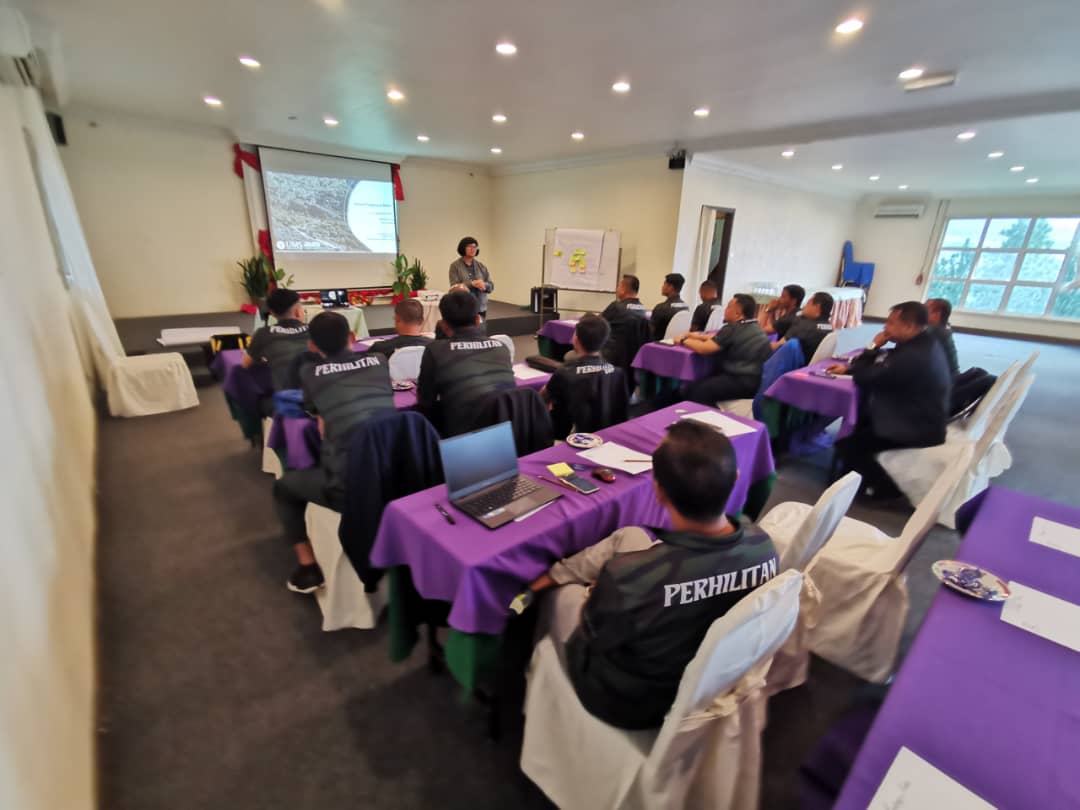
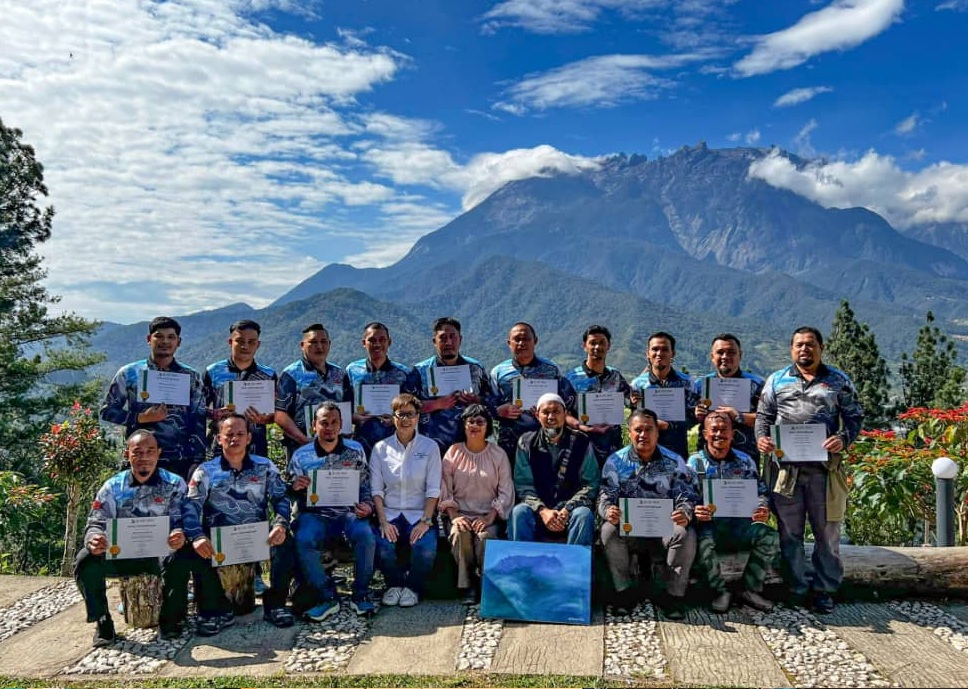
- x. Risk Management Course – Kinabalu Global Geopark Institute for Biodiversity and Environmental Management (IPMB) conducted a course for 15 rangers and officers from Jabatan Perhilitan and the Institute of Biodiversity at Kinabalu Global Geopark. The training focused on climate-induced risks affecting protected-area ecosystems and heritage sites, featuring sessions on Kinabalu Park management and the 2015 Ranau earthquake, and concluded with a study visit to UMS’s aquarium and hatcheries. Read More
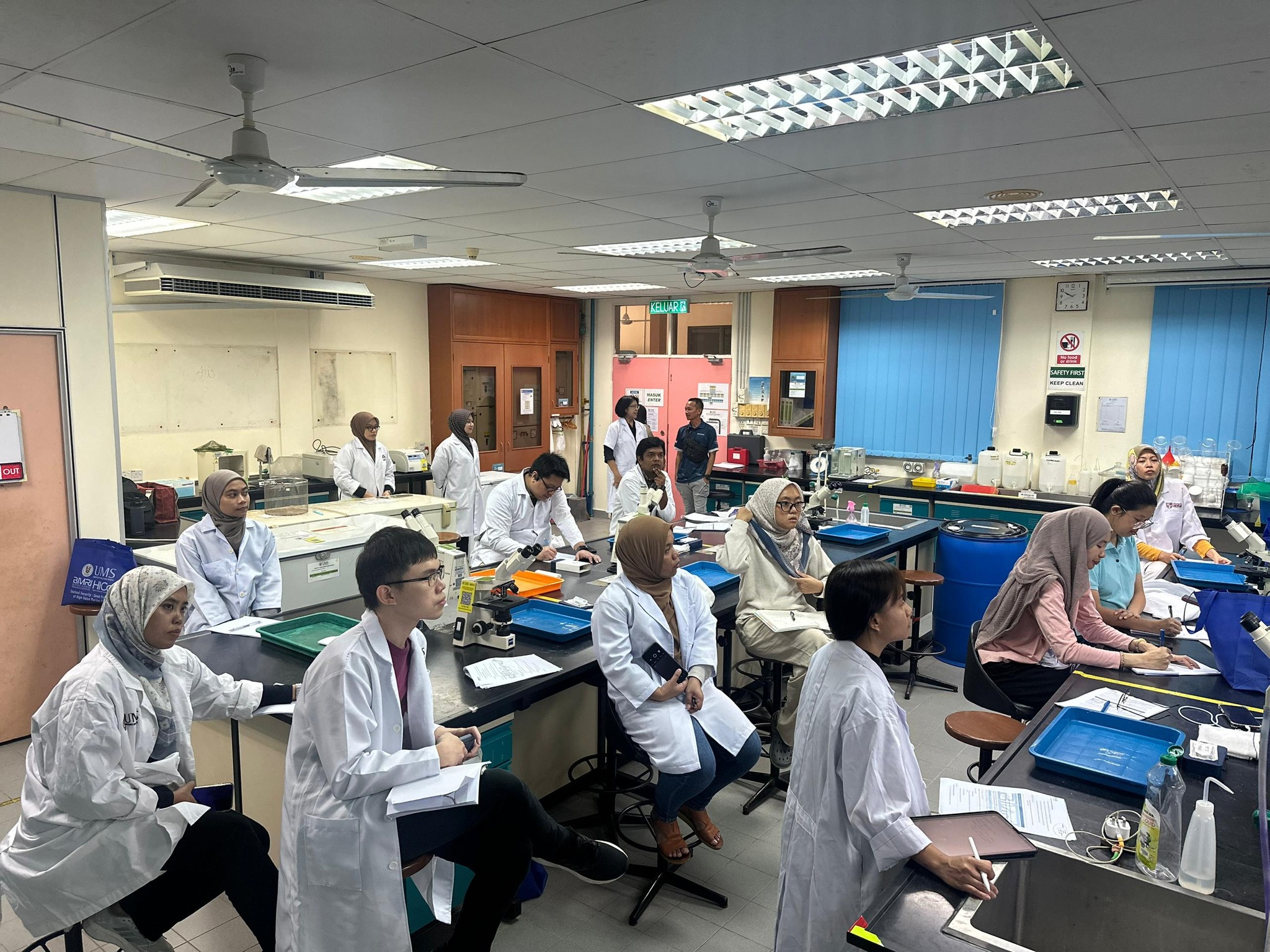
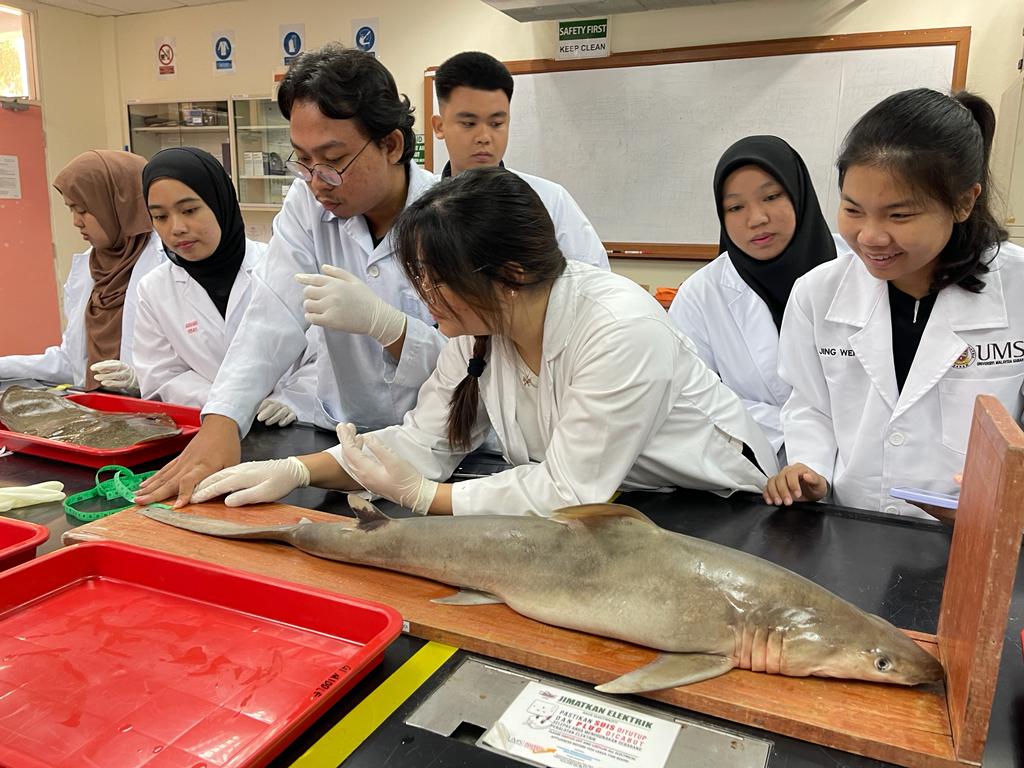
- xi. Coastal Connections Living Lab – Introductory Elasmobranch Conservation Workshop Borneo Marine Research Institute (BMRI), in collaboration with WWF-Malaysia, launched its first Coastal Connections Living Lab activity through a 3-day workshop on elasmobranch (shark and ray) conservation. Sixty-three UMS students participated in lectures, field surveys, and laboratory work focused on identifying and studying elasmobranch biodiversity in Tun Mustapha Park, contributing to a WWF-funded research project supporting sustainable marine resource management in Sabah. Read More
- xii. Coastal Connections Living Lab – Introductory Elasmobranch Conservation Workshop Borneo Marine Research Institute (BMRI), in collaboration with WWF-Malaysia, launched its first Coastal Connections Living Lab activity through a 3-day workshop on elasmobranch (shark and ray) conservation. Sixty-three UMS students participated in lectures, field surveys, and laboratory work focused on identifying and studying elasmobranch biodiversity in Tun Mustapha Park, contributing to a WWF-funded research project supporting sustainable marine resource management in Sabah. Read More
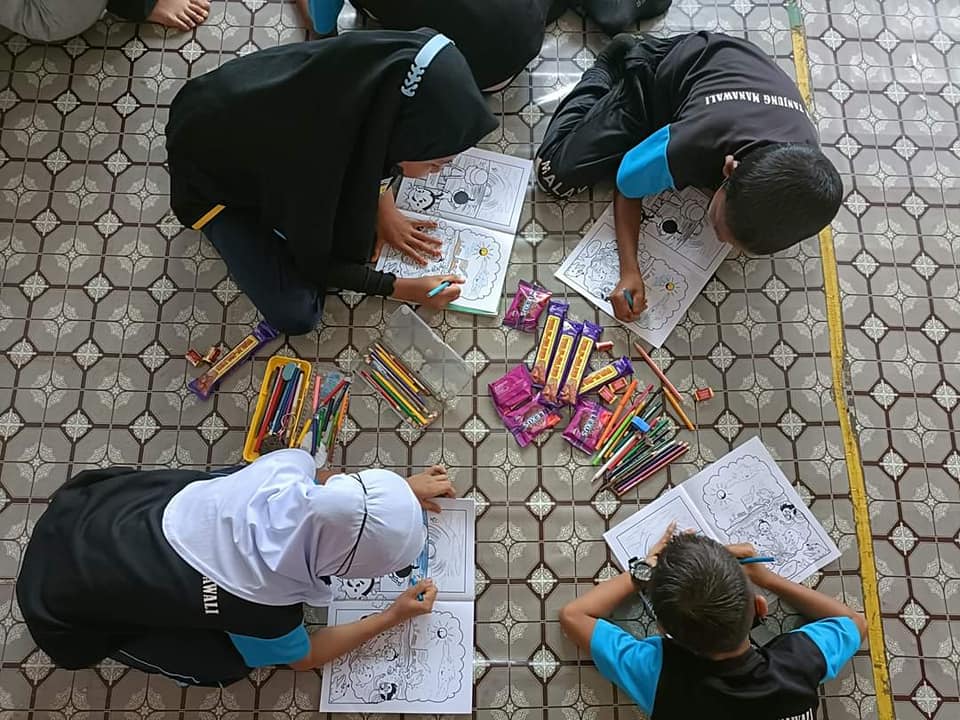
- xiii. Community Engagement with SK Tanjung Manawali Borneo Marine Research Institute (BMRI), in collaboration with WWF-Malaysia and the Kudat Turtle Conservation Society (KTCS), conducted a marine awareness programme for students of SK Tanjung Manawali. The session featured educational comics on the dangers of fish bombing, interactive videos on marine life, quizzes, and a colouring contest — inspiring young learners to appreciate marine biodiversity and discourage illegal fishing practices in Sabah’s coastal waters. Read More
UMS’s collaboration with UNESCO is therefore not limited to academic projects; it is an ecosystem of education, culture, and science working together for societal transformation. By connecting open knowledge systems with living heritage and biodiversity conservation, UMS demonstrates how universities can operationalise the Sustainable Development Goals (SDGs) in practical, locally relevant ways.
SDGs :
SDG 4 – Quality Education: Inclusive open learning and digital accessibility SDG 10 – Reduced Inequalities: Empowering underserved and differently-abled communities SDG 11 – Sustainable Cities & Communities: Safeguarding culture and heritage through education SDG 15 – Life on Land : Protecting biodiversity through Geopark research SDG 17 – Partnerships for the Goals: Strengthening global collaboration for sustainability