

Leading with Equity, Governing with Balance

UMS - SDG 6 Clean Water and Sanitation
Water for Life, Knowledge for Sustainability
 From campus to community—safeguarding clean water, promoting equity, and sustaining life.
Every Drop Counts: UMS Commitment to Water Security
Water is more than a resource; it is the lifeline that connects people, nature, and knowledge. At Universiti Malaysia Sabah (UMS), every drop reflects our shared responsibility to protect the environment and ensure that clean, safe water flows for generations to come. Guided by science, compassion, and innovation, UMS transforms its campus into a living laboratory of sustainability—measuring, conserving, and reusing water with care. From digital metering systems to rural community projects, our commitment extends beyond the university gates, empowering others to value what sustains all life. Because when every drop counts, every action matters
Universiti Malaysia Sabah
HydroSense UMS: Tracking Water for Tomorrow
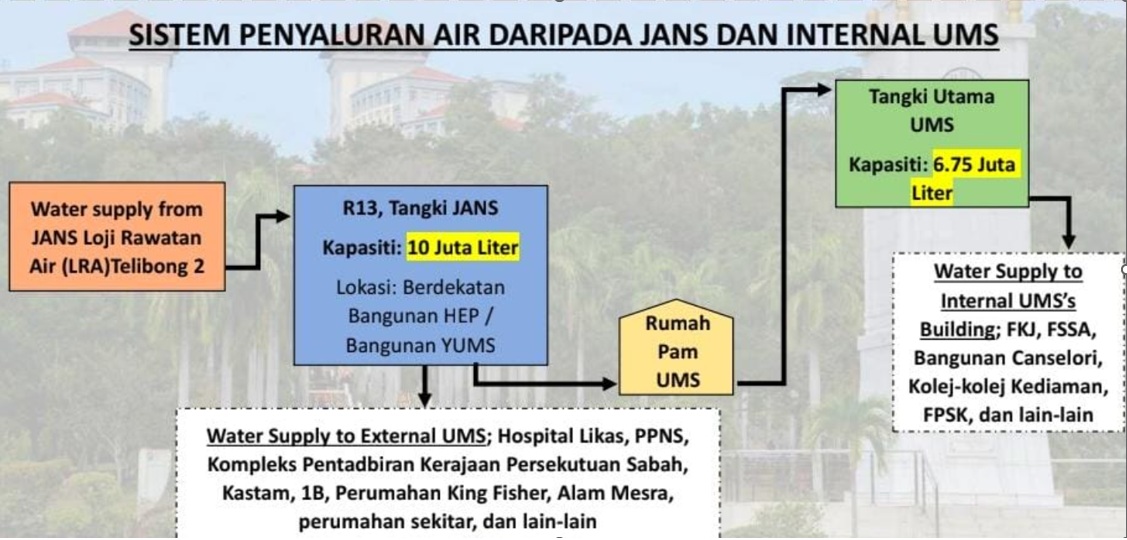
Water is the most precious element sustaining life, ecosystems, and human progress. For a leading EcoCampus such as Universiti Malaysia Sabah (UMS), responsible water management is both a moral duty and a scientific necessity. Measuring every litre of water consumed on campus allows the university to safeguard resources, optimise infrastructure, and model sustainable behaviour for society. Guided by the UMS Sustainability and Climate Action Policy (2023–2030) and aligned with SDG 6 – Clean Water and Sanitation, UMS has developed a comprehensive water-measurement system that accounts for all treated, extracted, and harvested water sources. The integrated system—jointly managed by the Development and Maintenance Office (Jabatan Pembangunan dan Penyelenggaraan, JPP) and the EcoCampus Management Centre—combines digital metering, real-time dashboards, and analytical reporting to track total campus water use accurately. The main water supply originates from Jabatan Air Negeri Sabah (JANS) Telibong 2, channelled through the R13 Tank with a storage capacity of 10 million litres (ML) into the UMS Main Tank (6.75 ML). Complementing the treated mains are nine active tubewell systems, which collectively provide around 30 percent of total campus demand, mainly for irrigation, sanitation, and non-potable use. Additionally, UMS implements rainwater-harvesting systems across selected buildings—including the Faculty of Engineering, Faculty of Science and Natural Resources, and Masjid UMS—where runoff water is captured, filtered, and reused for landscaping and toilet flushing. This hybrid infrastructure—integrating treated, extracted, and harvested sources—ensures operational resilience while minimising dependence on external supply networks. The system’s success lies in its precision: each inflow and outflow is measured through digital sub-meters that transmit monthly data to the UMS Utility Dashboard and the EcoCampus Sustainability Dashboard. These data underpin utility reports and policy decisions, enabling the university to conserve water, control costs, and uphold environmental transparency.
Daily Water Monitoring and Operational Governance at UMS
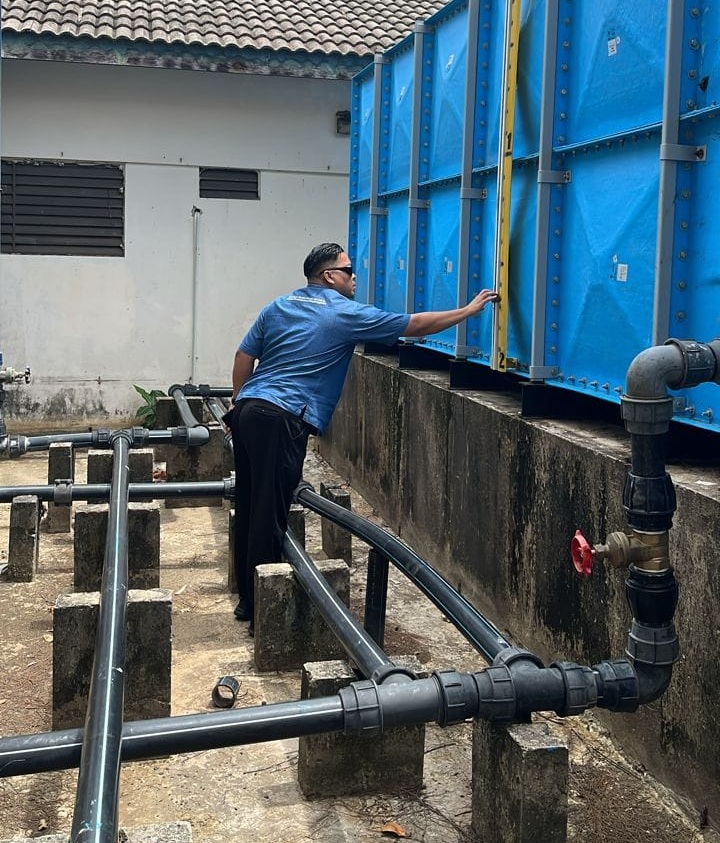
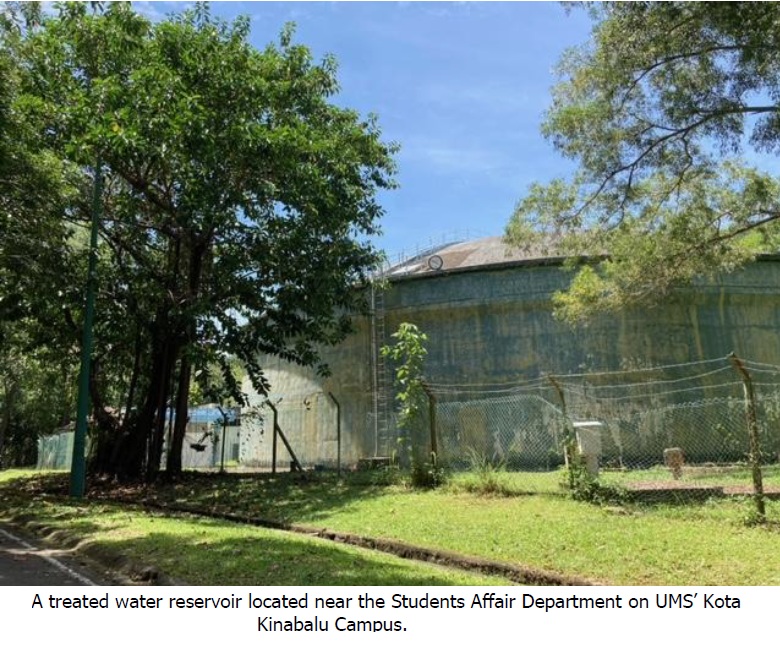
The Development and Maintenance Department (Jabatan Pembangunan dan Penyelenggaraan, JPP) plays a central role in ensuring uninterrupted water availability and efficient resource management across Universiti Malaysia Sabah (UMS). As part of its daily operational routine, JPP conducts systematic monitoring of water-tank levels twice a day—at 8:00 a.m. and 4:00 p.m.—covering major tanks such as the R13 JANS Tank (10 million litres) and the UMS Main Tank (6.75 million litres), along with auxiliary storage facilities serving student residences, laboratories, and faculty buildings. This monitoring process enables early detection of fluctuations in supply pressure or sudden drops in water level, which could indicate pipe leaks, pump malfunctions, or supply interruptions from the municipal mains (JANS Telibong 2). Real-time observations are cross-checked with digital sub-meter readings recorded in the UMS Utility Dashboard, ensuring that manual field data align with automated system analytics. By combining on-site inspections with data-driven reporting, JPP strengthens accuracy and reliability in overall water-consumption measurement. In addition to routine monitoring, the Mechanical Engineering Sector of JPP serves as the dedicated coordination unit for all water-supply matters. The sector manages emergency response protocols—such as activation of backup pumps, switching to tubewell supply, or redistributing stored water to critical areas like the hospital block and residential colleges—during periods of low pressure or maintenance shutdowns. Any enquiries, complaints, or technical alerts regarding water supply are channelled directly to this sector, which mobilises rapid on-ground action and maintenance crews. Through this dual approach of preventive monitoring and responsive management, JPP ensures that the UMS campus operates within safe water-storage levels, maintaining sufficient reserves for daily academic, residential, and research needs. The department’s structured monitoring routine also contributes valuable field data to the EcoCampus Monitoring Report (2024) and the Development and Maintenance Utility Reports (2023–2024), forming part of the evidence base for sustainability performance assessment under SDG 6 – Clean Water and Sanitation.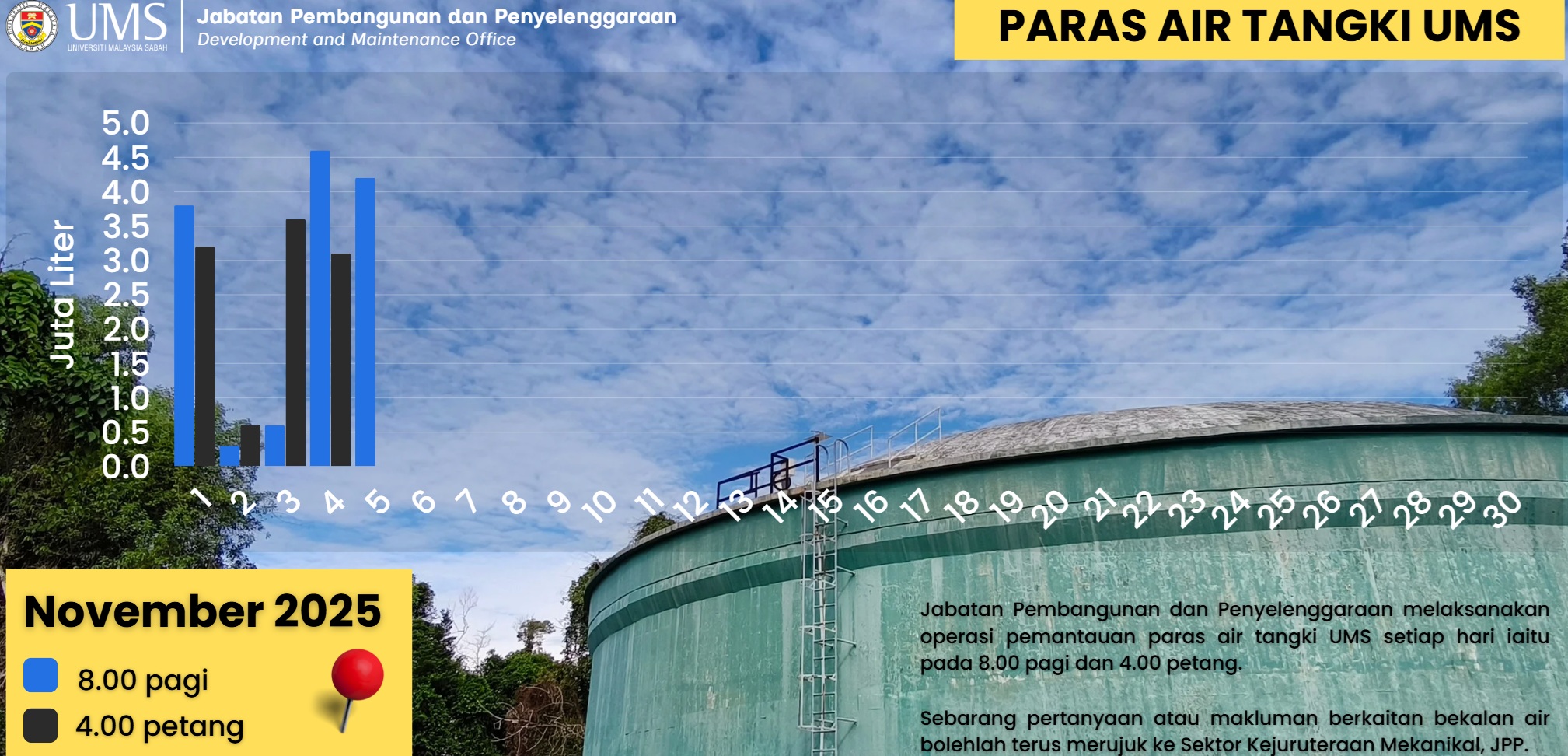
Measurement of Total Inbound Water (treated/extracted water) at Universiti Malaysia Sabah (UMS)
UMS sources its water primarily from two major supplies — treated mains water from Jabatan Air Negeri Sabah (JANS) Telibong 2 and groundwater extracted from nine operational tubewells, which collectively meet the university’s total water demand. To complement these, rainwater harvesting systems located at the Faculty of Engineering, the Faculty of Science and Natural Resources, and Masjid UMS contribute additional supply for landscape and non-potable use. All inbound water from these three sources is monitored through a network of digital sub-meters managed by the Development and Maintenance Department (Jabatan Pembangunan dan Penyelenggaraan, JPP) in collaboration with the EcoCampus Centre. Each meter records daily inflow readings that are verified and uploaded into the UMS Utility Dashboard for analysis, reporting, and decision-making. This integrated metering and dashboard system allows precise tracking of inflow volume, supports leak detection, and informs water-efficiency planning under the university’s sustainability framework. Daily manual verification by JPP complements the digital system. Water-tank levels — particularly in the R13 JANS Tank (10 million litres) and UMS Main Tank (6.75 million litres) — are inspected twice daily (8:00 a.m. and 4:00 p.m.) to ensure supply stability, safety, and continuity. Any deviations in tank levels or pressure are immediately reported to the Mechanical Engineering Sector of JPP, which coordinates corrective action and activates backup tubewell pumps if necessary. Through these continuous monitoring mechanisms, UMS ensures that total inbound water — treated, extracted, and harvested — is measured comprehensively. This robust data foundation enables effective water governance and strengthens UMS’s leadership in sustainable resource management within Malaysian higher education.Verified Inbound Water Volumes (2024)
Based on the 2024 Development and Maintenance Utility Report and EcoCampus Monitoring Report, UMS recorded a total inbound water volume of approximately 3.23 million cubic metres (m³). The composition is as follows: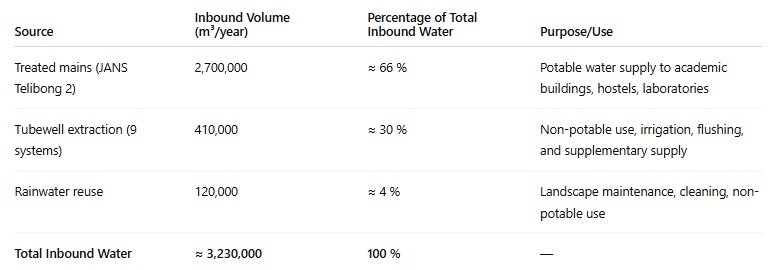
Infrastructure and Digital Monitoring System
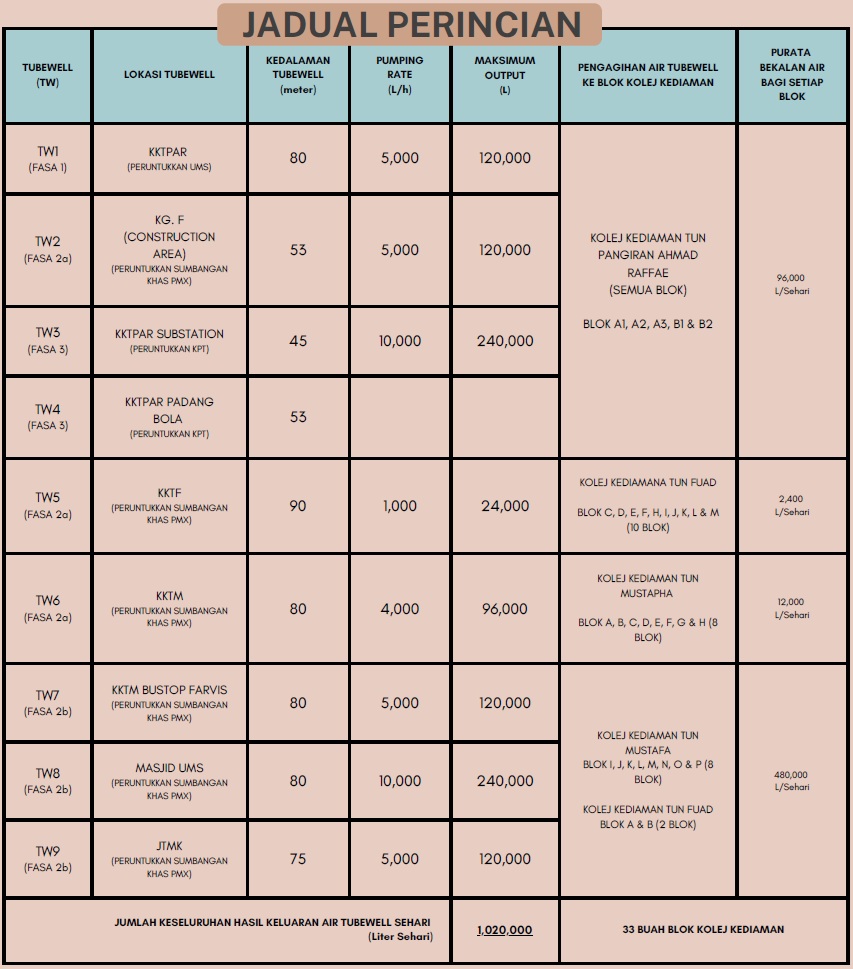
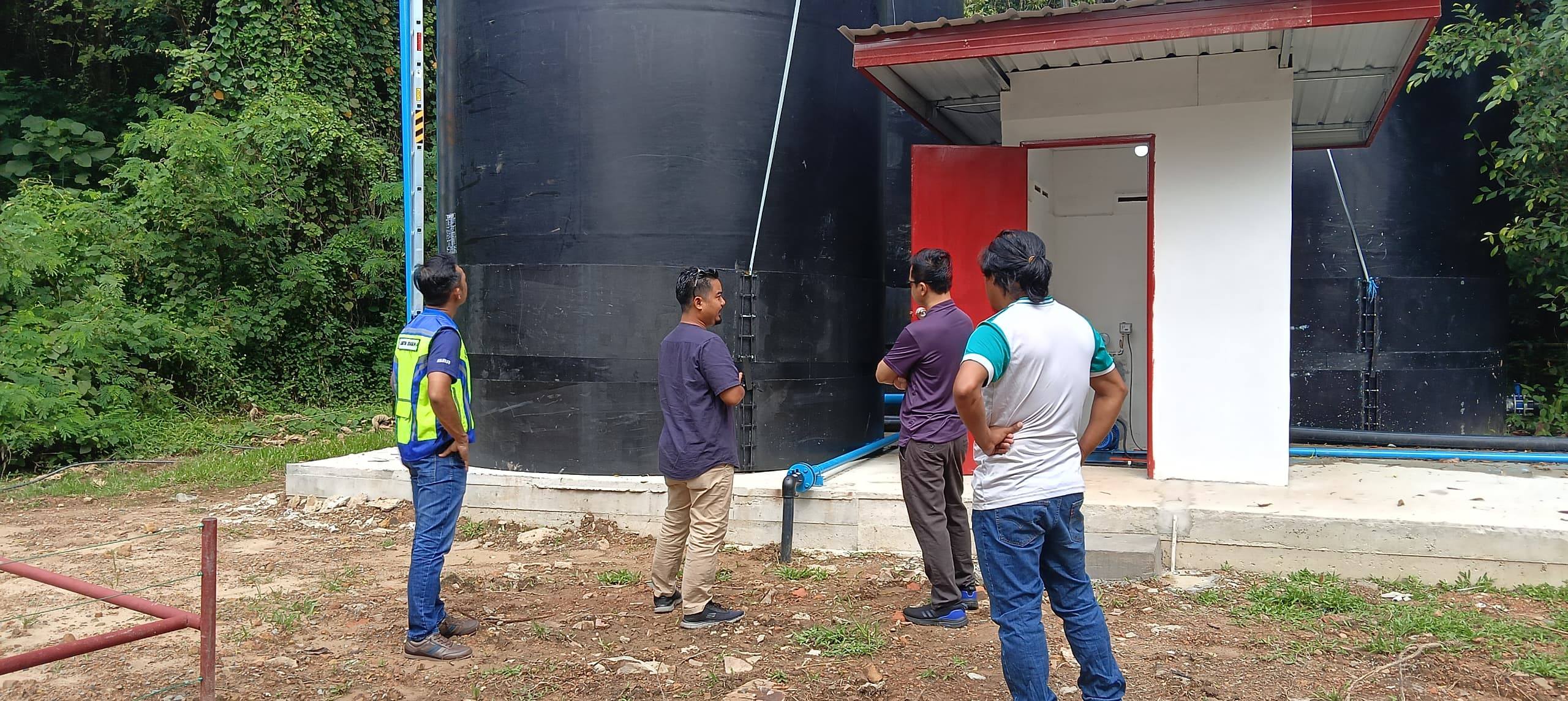
The UMS water-supply infrastructure operates through a closed distribution loop connecting external and internal inflows. Water from JANS Telibong 2 flows into the R13 Tank, then into the Main Tank before being distributed across the university’s faculties, residential colleges, and facilities. Simultaneously, groundwater from the nine tubewells is extracted and pumped into secondary tanks where it is filtered, stored, and distributed for non-potable applications. All inflow points are fitted with digital flow meters capable of recording precise volumes and pressure data. The HydroFlow UMS System integrates this information into the UMS Utility Dashboard for monthly reporting and comparison with historical inflow trends. Each day, JPP personnel conduct physical inspections at 8:00 a.m. and 4:00 p.m. to cross-check the dashboard data, ensuring that fluctuations detected digitally correspond with real-world measurements. This combination of automation and human oversight provides the university with redundant verification, improving accuracy and operational resilience.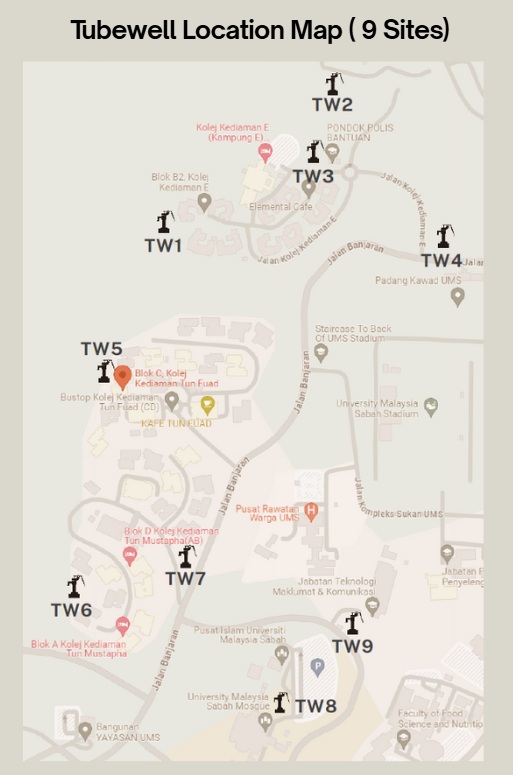
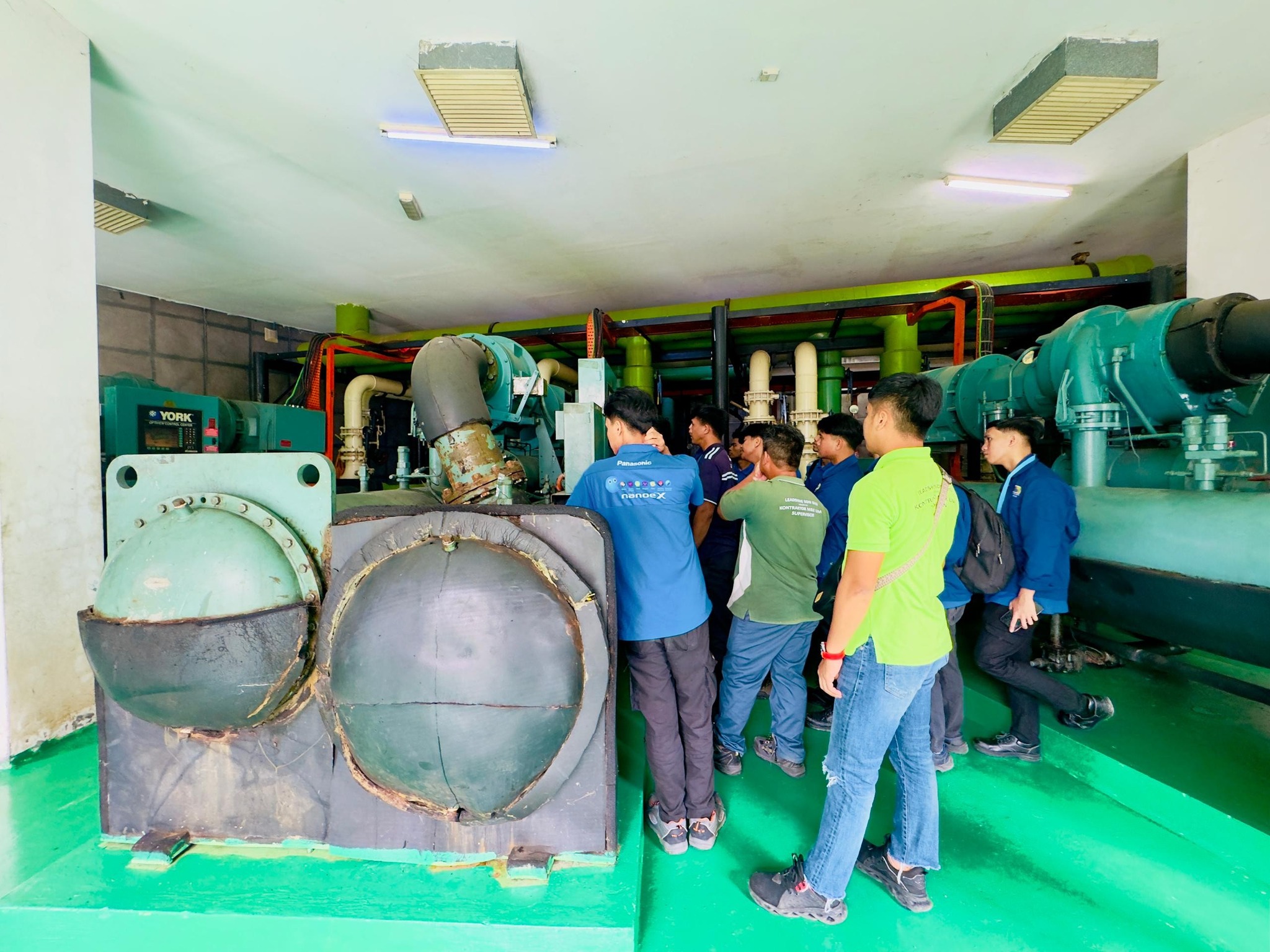
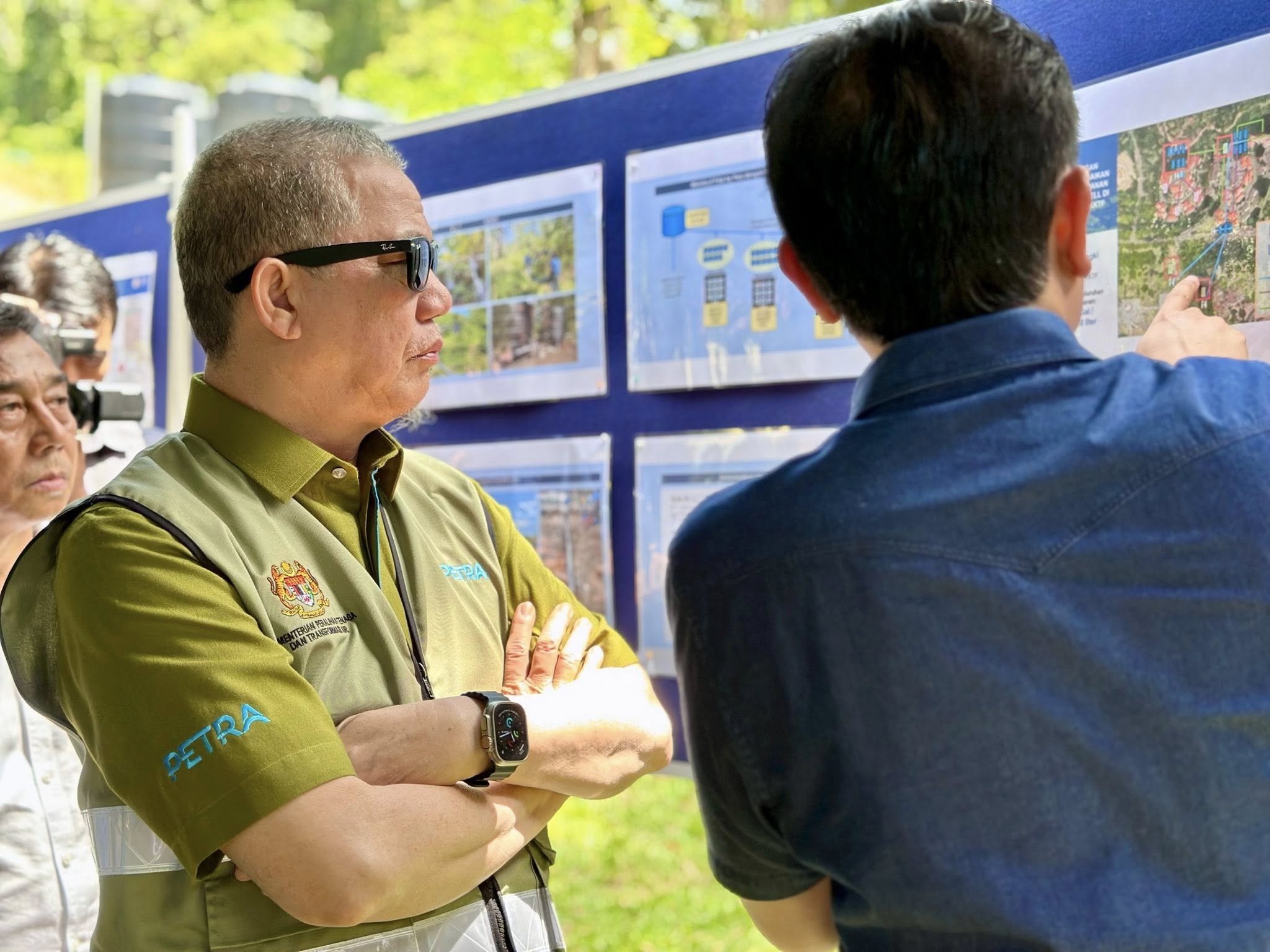
Wastewater Treatment and Recycling System at Universiti Malaysia Sabah (UMS)
As a leading EcoCampus and sustainability-driven institution, Universiti Malaysia Sabah (UMS) recognises that managing wastewater responsibly is essential to protecting ecosystems, human health, and community well-being. Guided by the UMS Sustainability and Climate Action Policy (2023–2030), the university operates a comprehensive wastewater treatment and recycling system that integrates centralised treatment, laboratory pre-treatment, and water reuse initiatives to ensure minimal environmental impact. UMS demonstrates strong environmental stewardship by ensuring that all wastewater is safely collected, treated, and reused wherever feasible, or discharged responsibly into water bodies. All sewage and effluent from academic buildings, residential colleges, cafeterias, and laboratories are channeled to the university's Sewage Treatment Plant (STP), which is managed by the Department of Maintenance (JPP). At this facility, wastewater undergoes a treatment process involving fine screening and aeration. With a capacity of 20,000 Population Equivalent (PE), the STP is fully equipped to support the campus population. Furthermore, internal safeguards including grease traps, sedimentation chambers, and chemical-neutralization systems are utilized to pre-treat wastewater at the source before it enters the main system. The process begins at the source: in kitchens and cafeterias, grease traps prevent fats, oils, and solids from entering drainage systems; in engineering and science facilities, sedimentation tanks allow particles to settle, ensuring cleaner outflow; while in research laboratories, acid–base neutralisation systems and containment tanks prevent hazardous materials from contaminating sewage lines. All laboratory waste management procedures adhere strictly to the Panduan Pengurusan Institusi Pengajian Sisa (PIPS) Guidelines 2023, developed under Malaysia’s Higher Education Circular on sustainable waste governance. In addition to treatment and containment, UMS has advanced rainwater harvesting, recycled water for experiments, and grey-water reuse programmes that collectively recycle over 50 % of total campus water resources, contributing to a 10 % reduction in treated-water use. This integrated wastewater management and recycling framework embodies the principle of “reduce, reclaim, and reuse,” supporting UMS’s commitment to the EcoCampus Blueprint and its ISO 14001:2015 Environmental Management System certification.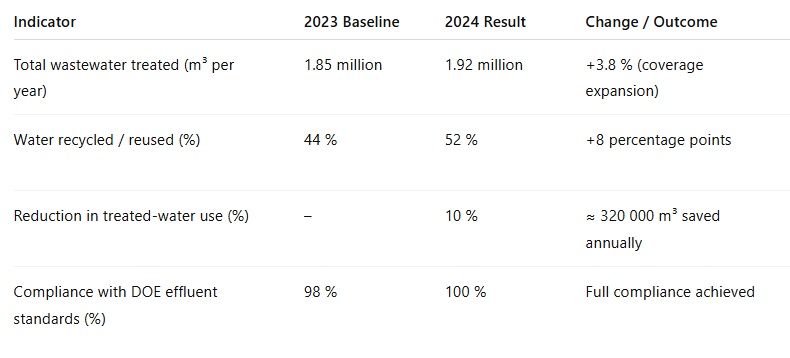
Recycling and Reuse Initiatives
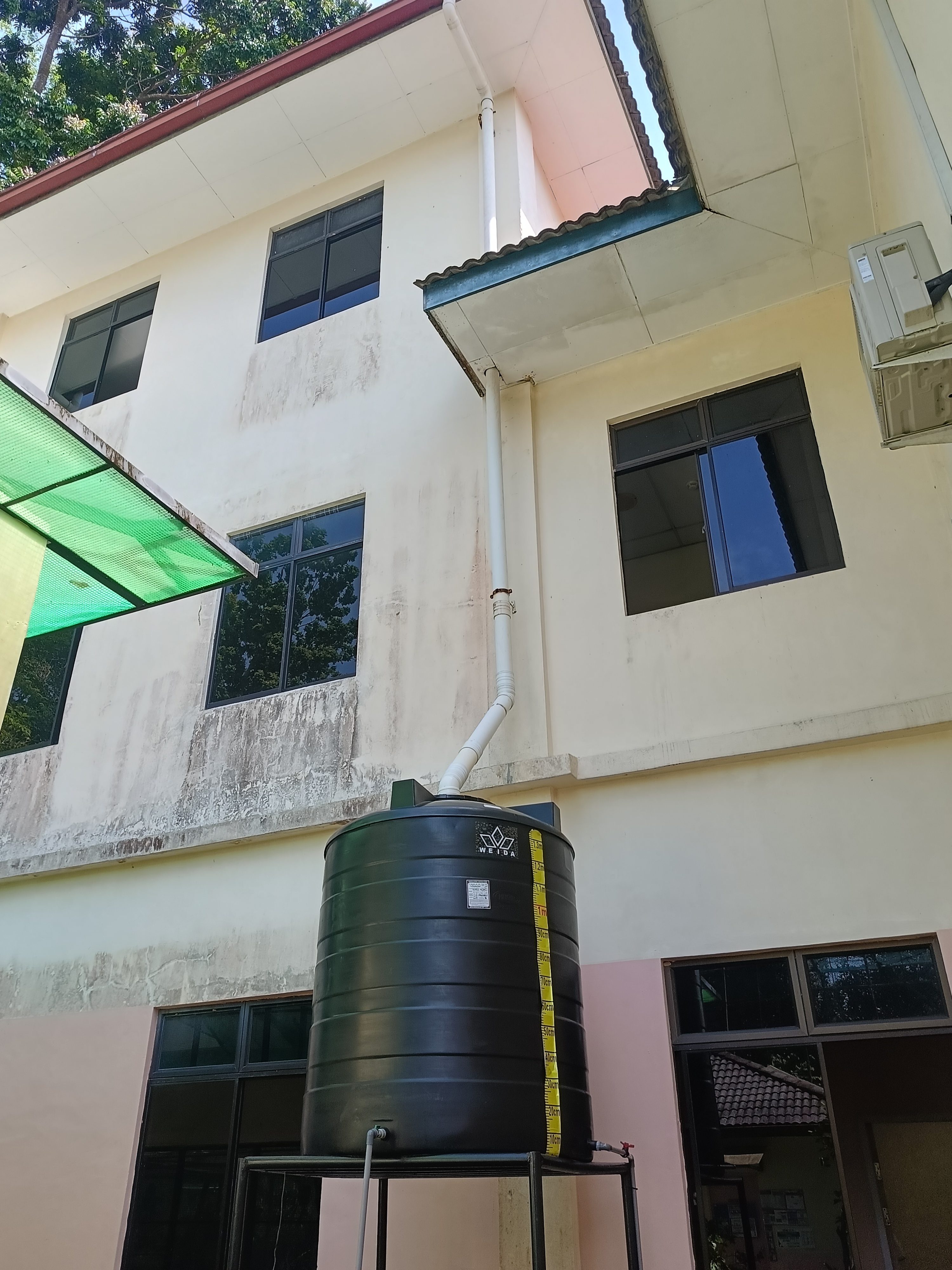
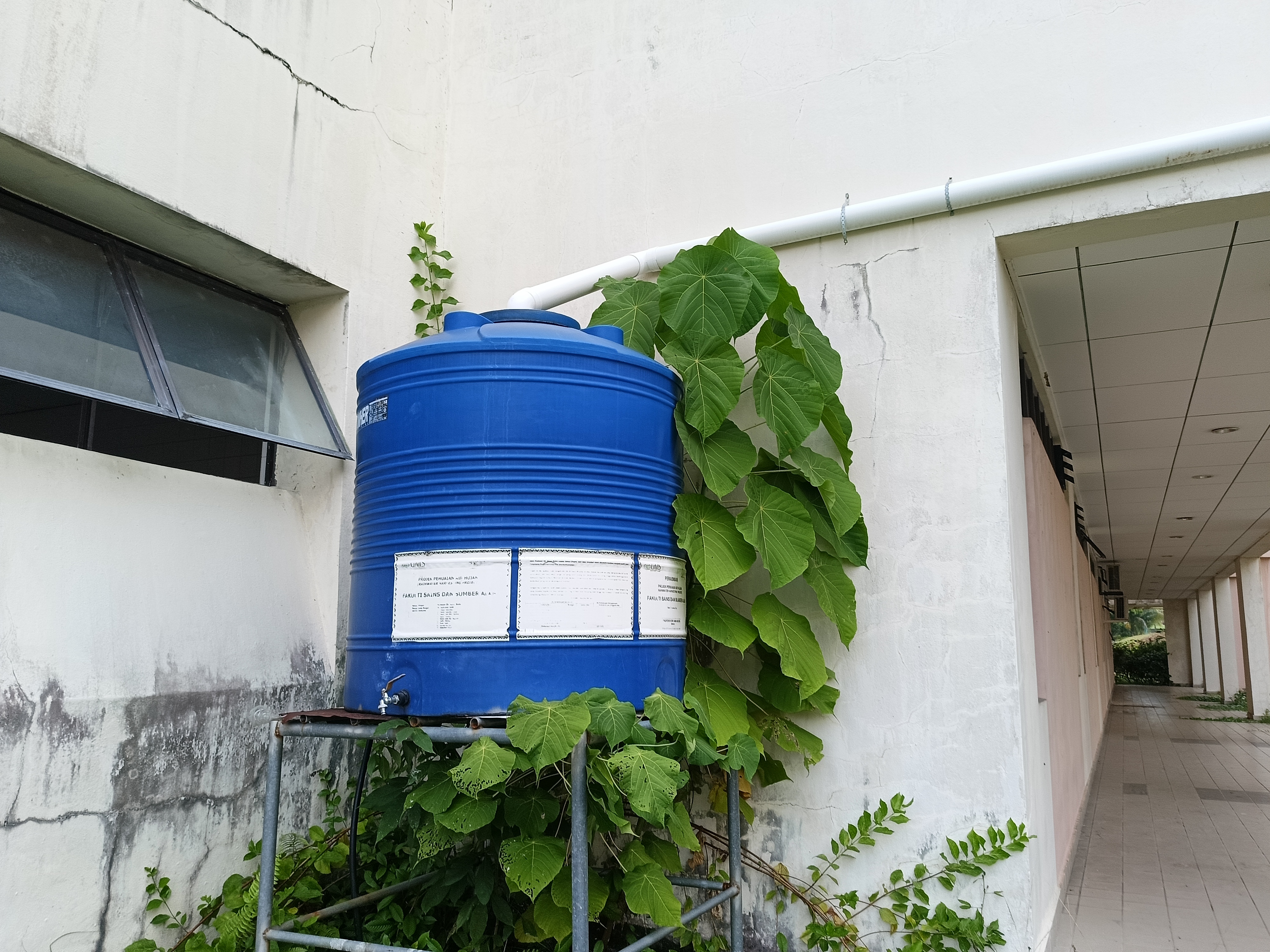
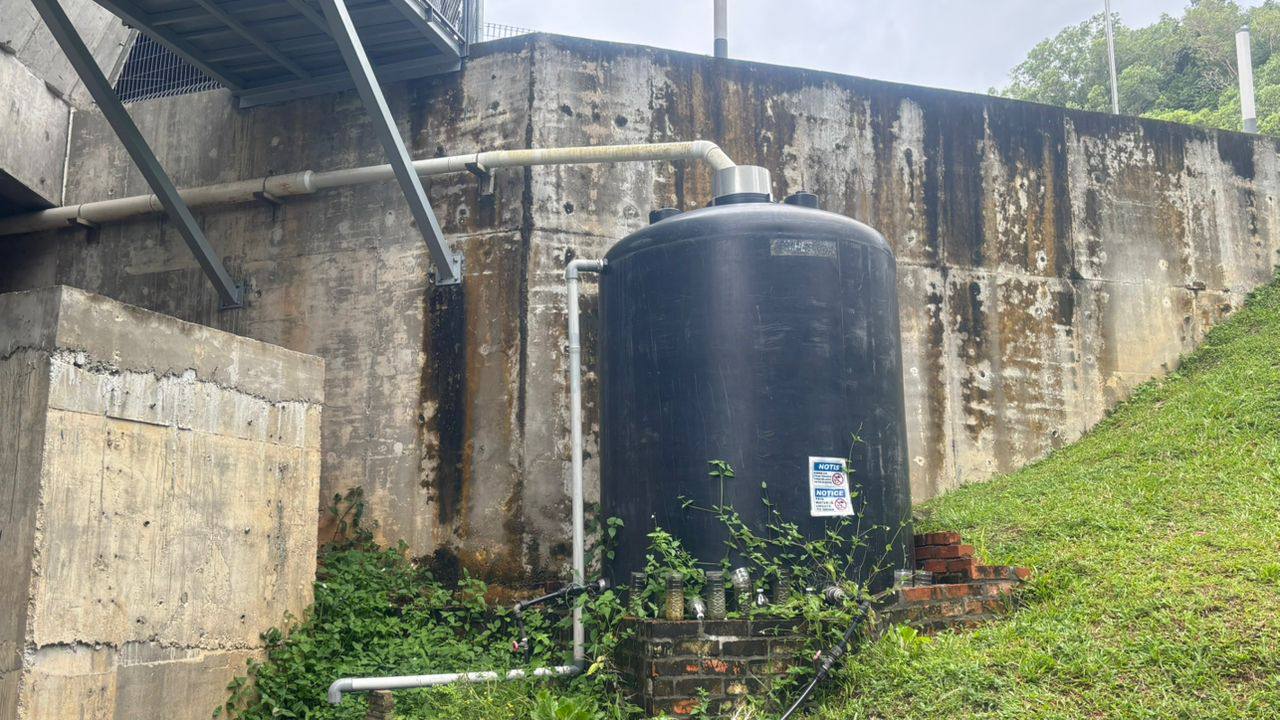
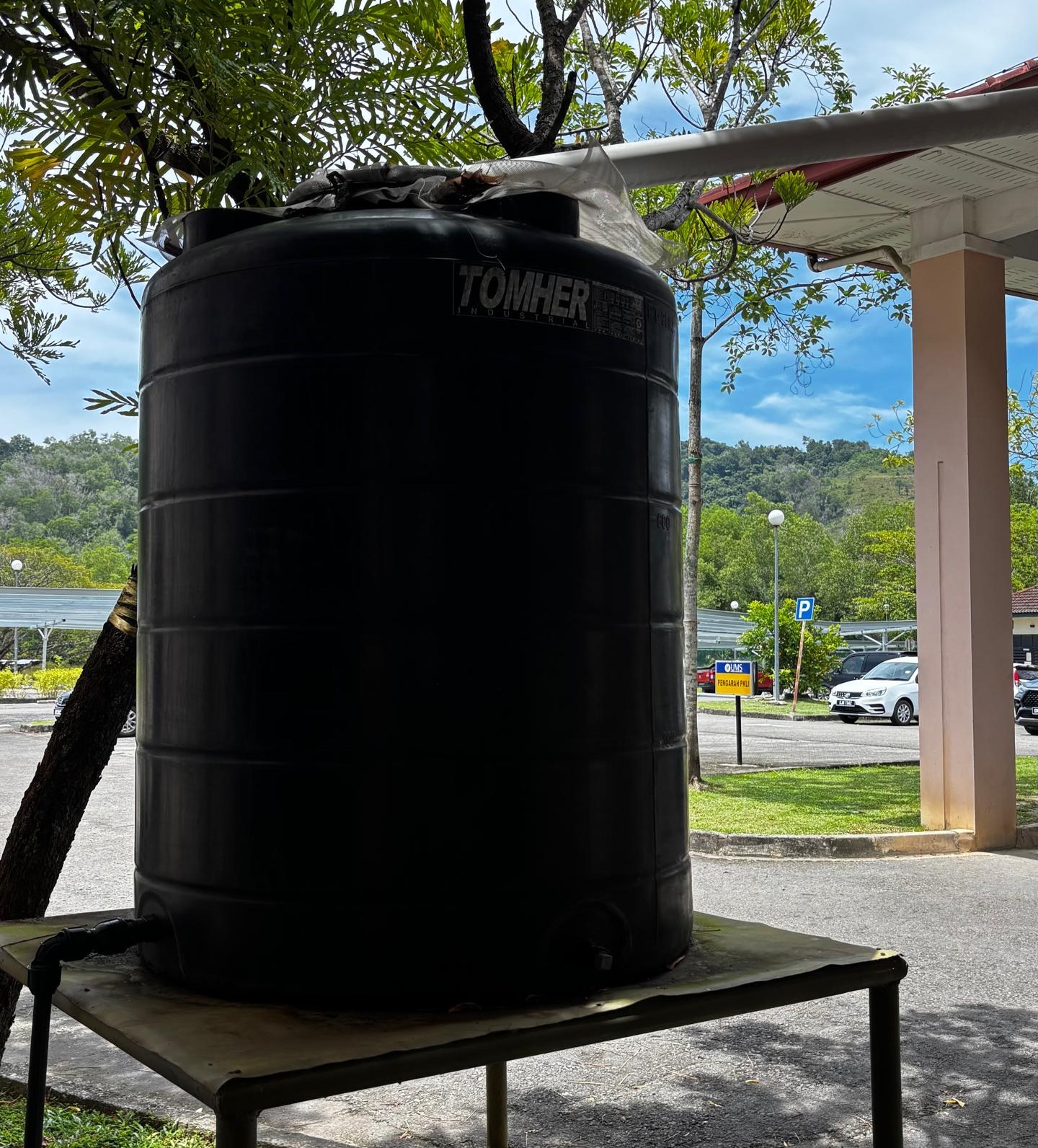
UMS’s water-reuse ecosystem transforms treated wastewater and runoff into secondary water resources for daily operations. Three flagship initiatives anchor this effort:- Rainwater Harvesting Programme – Rooftop catchment systems at the Faculty of Engineering, Faculty of Science and Natural Resources, and Masjid UMS collect rainfall into storage tanks (10 000–20 000 L each) for landscape irrigation and toilet flushing.
- Sedimentation Chambers : Used in laboratories and workshops to remove suspended solids before discharge.
- Chemical Neutralisation Systems : Laboratories, especially at the Faculty of Science and Natural Resources and Faculty of Engineering, employ neutralisation tanks that stabilise pH and remove hazardous residues.
- Hazardous Waste Containment : Research units including the Centre for Instrumental Analysis (CIA) and Faculty Safety Units ensure proper segregation and neutralisation of chemical effluent prior to disposal, in line with the PIPS 2023 requirements.
Universiti Malaysia Sabah
AquaShield UMS – Preventing Pollution at the Source
Preventing pollution before it starts—protecting every drop, every ecosystem
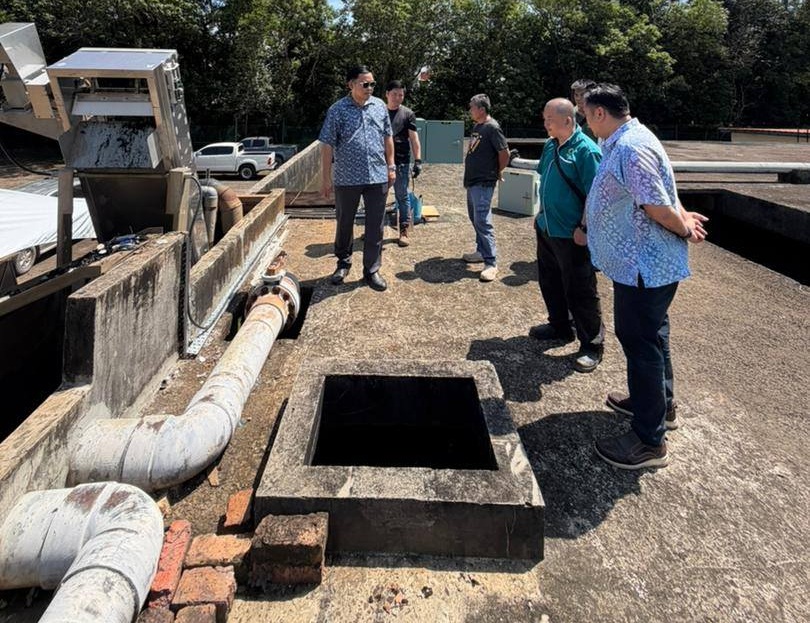
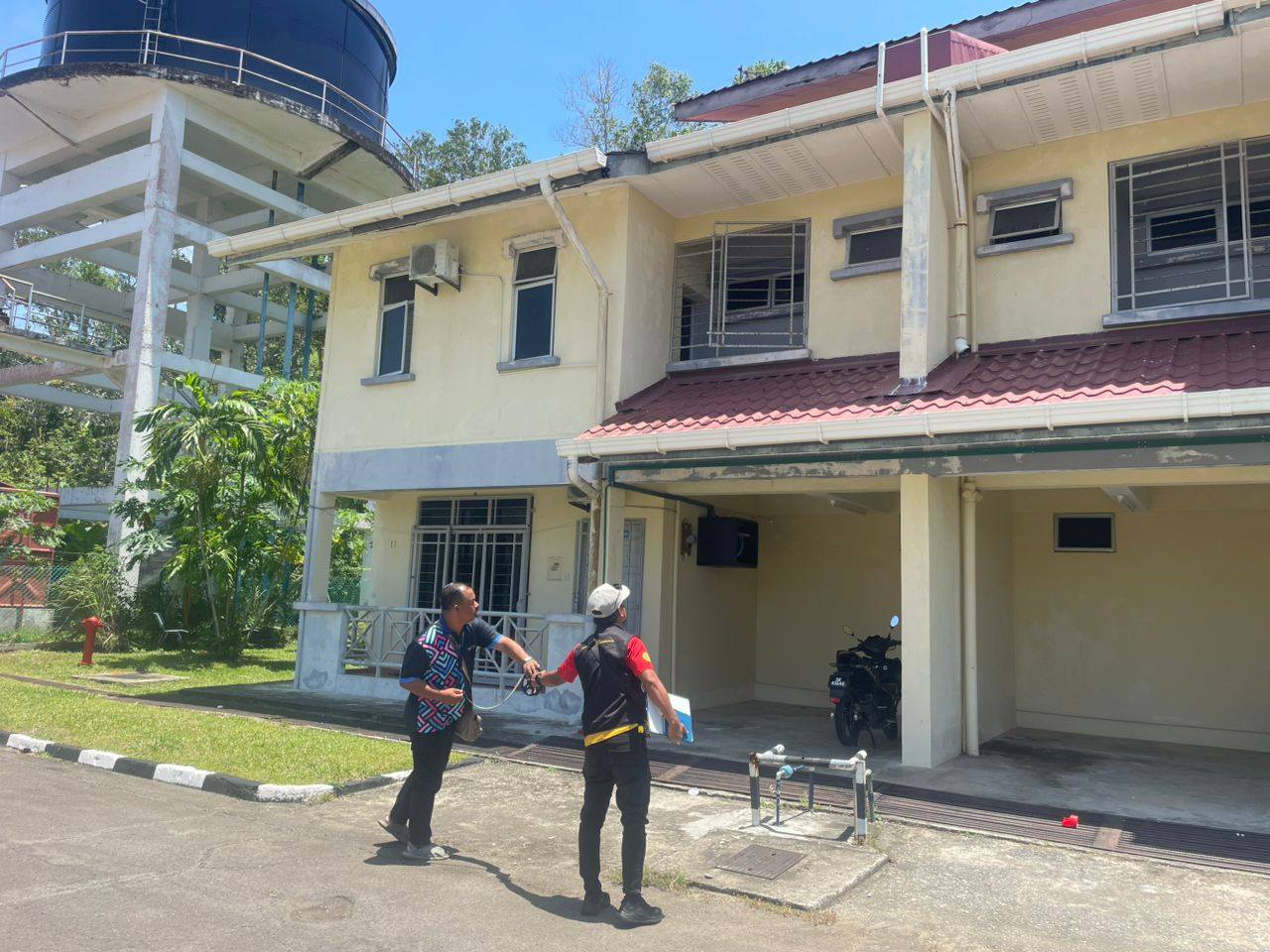
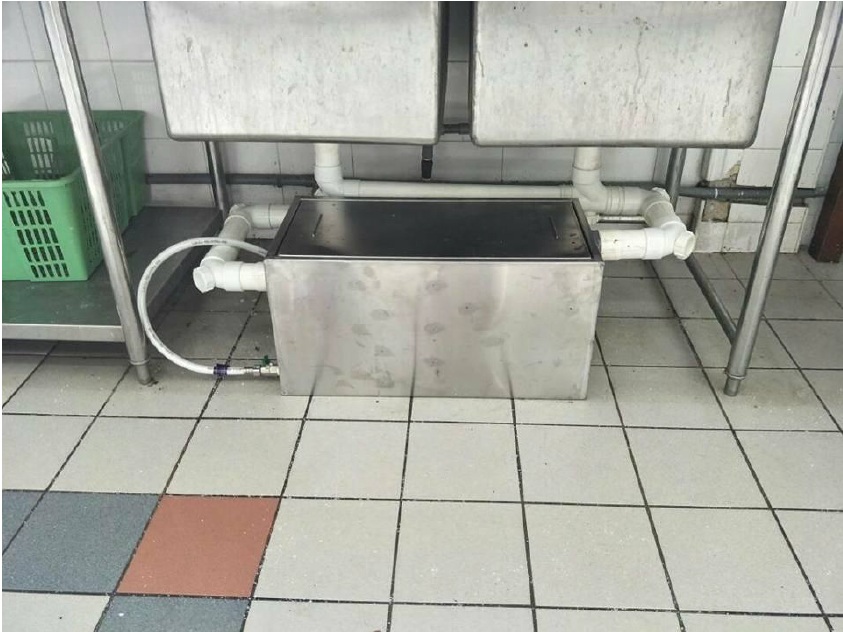
Preventing water pollution is one of the core responsibilities of a sustainable university. Universiti Malaysia Sabah (UMS), guided by its EcoCampus Framework and Environmental Sustainability and Climate Action Policy (2023–2030), enforces a comprehensive pollution-prevention system to protect freshwater resources and coastal ecosystems surrounding the campus, including Sepanggar Bay. The prevention process ensures that no contaminated or untreated water enters the drainage or municipal network under any circumstances. UMS applies a multi-layered protection mechanism that includes infrastructure safeguards, monitoring, regulatory enforcement, and emergency-response training. All campus facilities that could potentially release wastewater — including cafeterias, science laboratories, workshops, and maintenance areas — are equipped with grease traps, sedimentation chambers, and chemical pre-treatment units to capture pollutants before discharge. These units filter oils, solids, and chemical residues to prevent downstream contamination. The Development and Maintenance Department (Jabatan Pembangunan dan Penyelenggaraan, JPP) oversees water-quality monitoring and maintenance, ensuring that both domestic and laboratory effluents are treated or neutralised before entering the sewer system. Meanwhile, the Security Department and EcoCampus Centre work together to enforce waste-disposal compliance, control access to high-risk zones (e.g., chemical stores, maintenance workshops), and ensure compliance with national environmental standards. In addition, UMS integrates ISO 14001:2015 (Environmental Management System) principles into its daily operations, supported by periodic HAZMAT emergency-response training for laboratory and maintenance staff. These measures collectively form a robust system for preventing polluted water from entering natural or municipal waterways, effectively protecting both campus and surrounding ecosystems.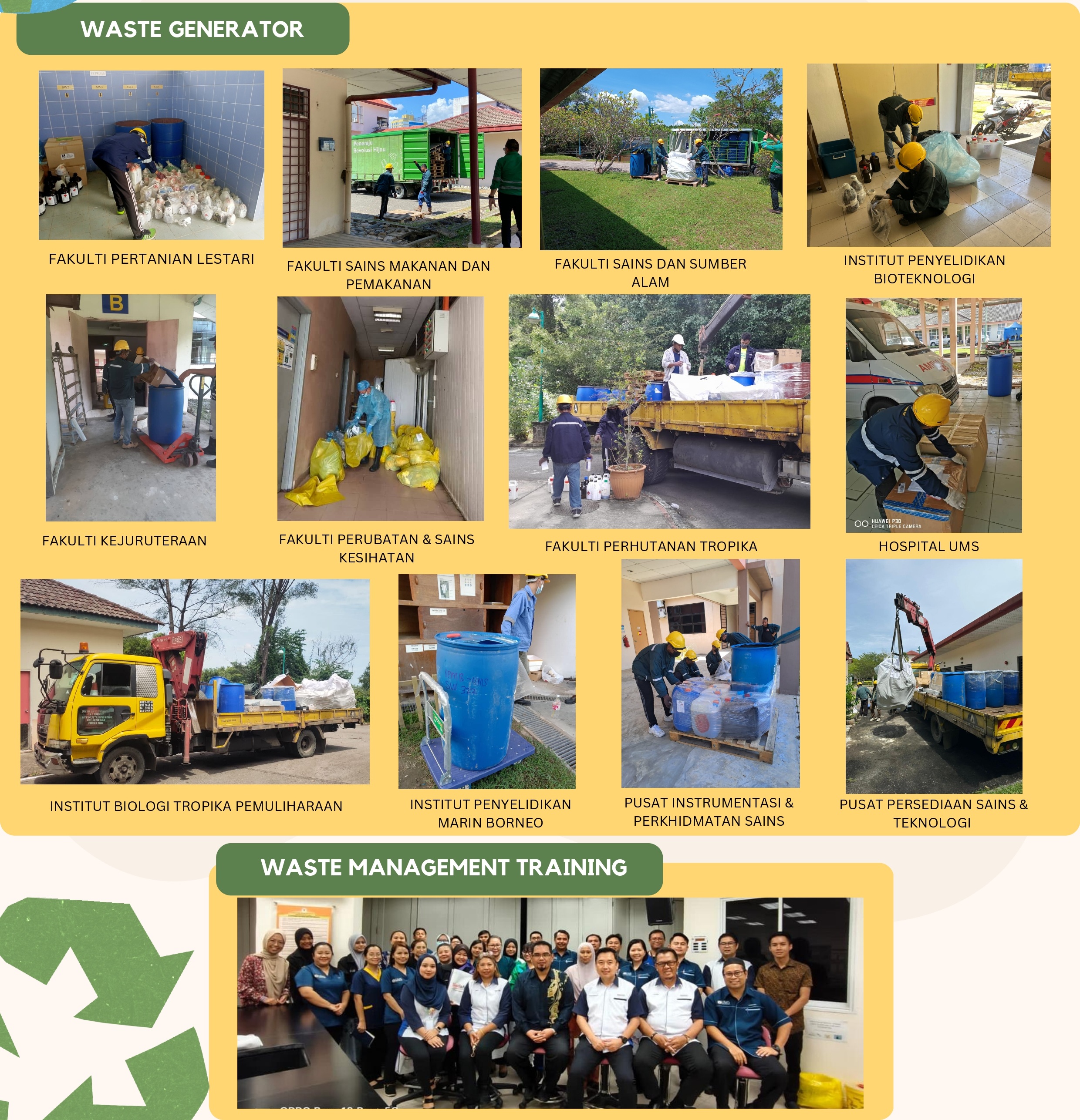
Central Treatment and Internal Pre-Treatment Systems
All domestic and sanitary wastewater generated in UMS is channelled to the JANS Telibong 2 plant, which applies biological and chemical processes to meet Department of Environment (DOE) discharge standards. Before entering the municipal network, internal pre-treatment systems within campus facilities safeguard against contamination:- Grease Traps: Installed in all cafeterias and residential dining halls to capture fats and oils. These traps are maintained weekly by the Development and Maintenance Department (JPP).
- Sedimentation Chambers: Used in laboratories and workshops to remove suspended solids before discharge.
- Chemical Neutralisation Systems: Laboratories, especially at the Faculty of Science and Natural Resources and Faculty of Engineering, employ neutralisation tanks that stabilise pH and remove hazardous residues.
- Hazardous Waste Containment: Research units including the Centre for Instrumental Analysis (CIA) and Faculty Safety Units ensure proper segregation and neutralisation of chemical effluent prior to disposal, in line with the PIPS 2023 requirements.
Monitoring and Compliance Procedures
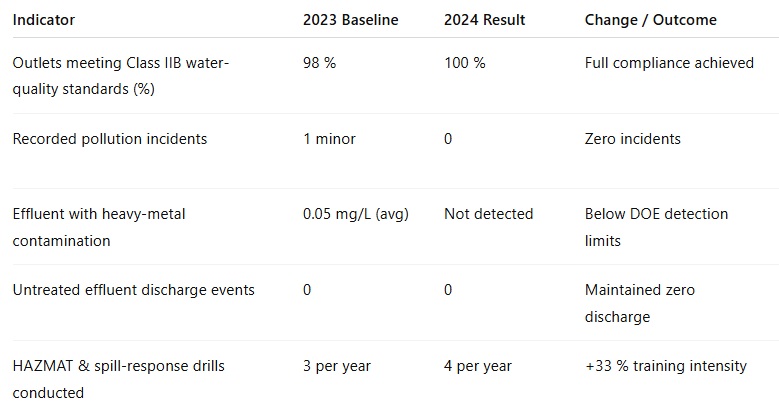
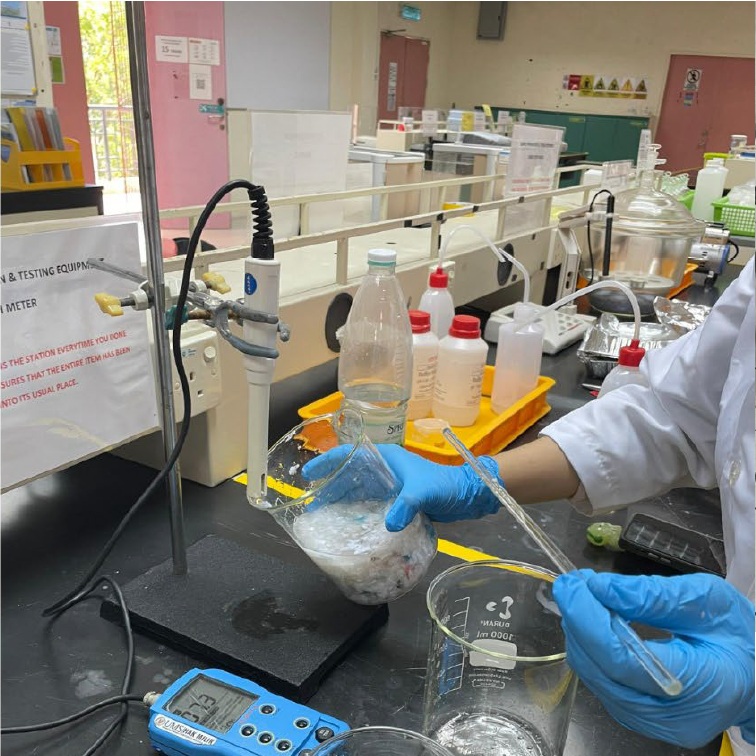
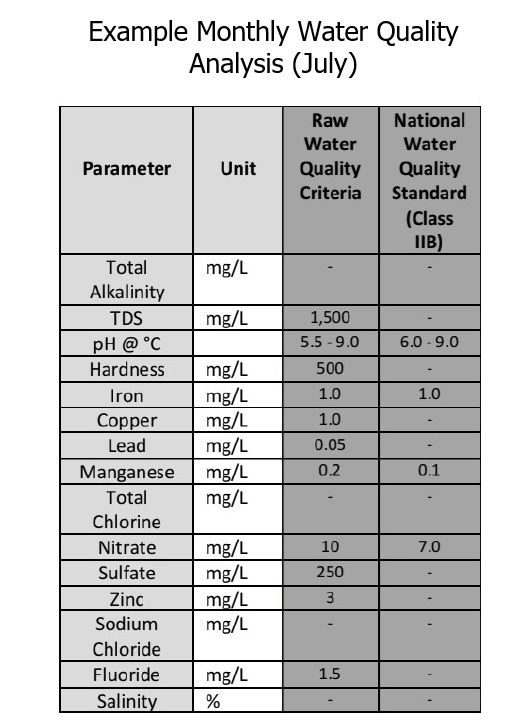
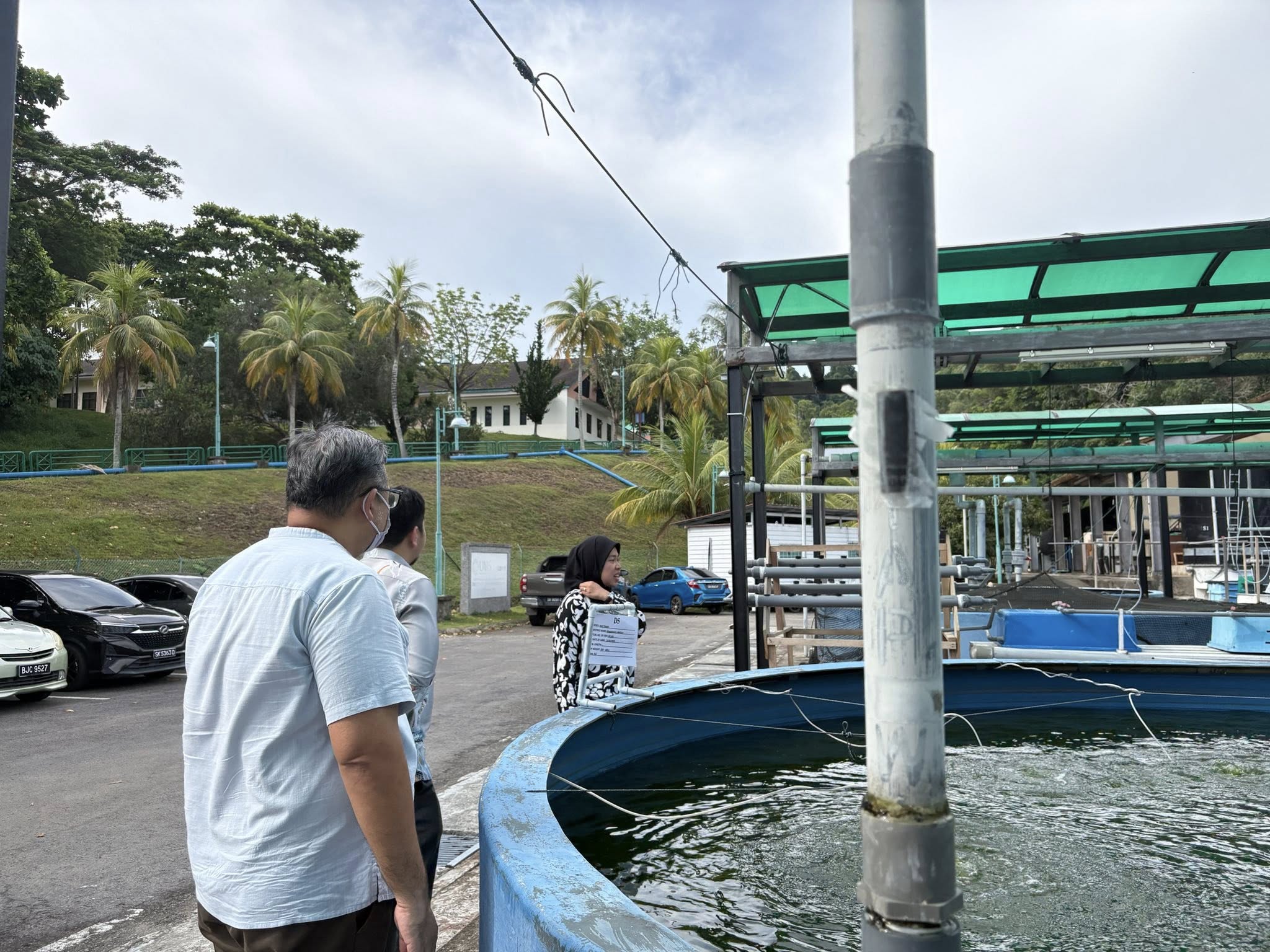
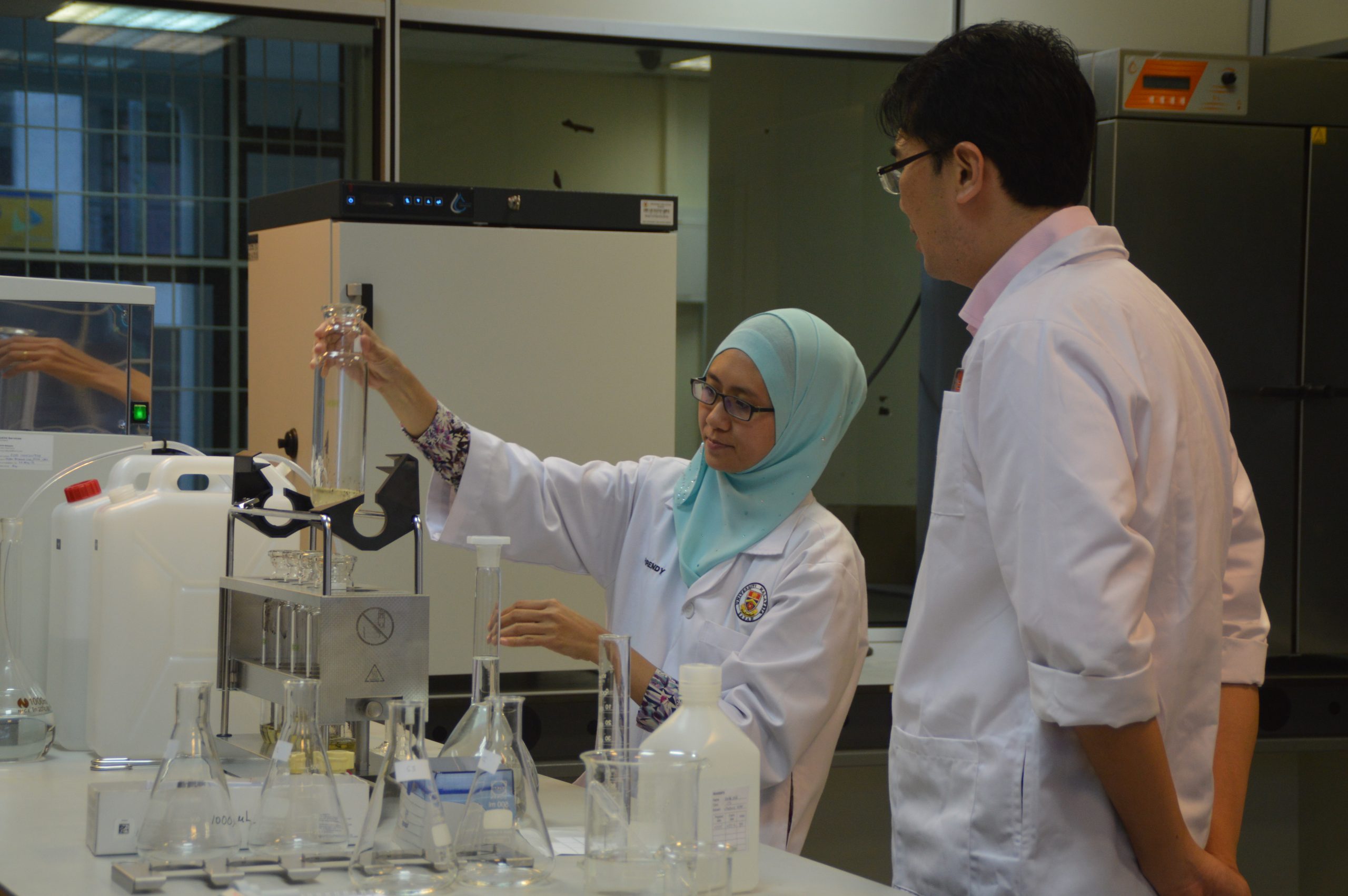
The Development and Maintenance Department (JPP) conducts routine water-quality monitoring at all critical discharge points. Monthly sampling is undertaken at cafeteria outlets, laboratory drainage lines, and the main sewer outflow. Testing parameters include Biochemical Oxygen Demand (BOD), Chemical Oxygen Demand (COD), Total Suspended Solids (TSS), oil and grease, and heavy metals (Pb, Cu, Zn, Hg). Data are verified by the Water Research Unit (WRU) and recorded in the EcoCampus Monitoring Report (2024). The 2024 UMS Water Quality Report confirmed that 100 % of campus outlets met Class IIB standards, as defined under Malaysia’s National Water Quality Index (NWQI), with no detectable heavy-metal contamination or unsafe effluent. Furthermore, all chemical storage and waste-handling activities are conducted under the Panduan Pengurusan Institusi Pengajian Sisa (PIPS) Guidelines 2023, which specify strict containment, labelling, and disposal requirements for laboratory-generated effluent.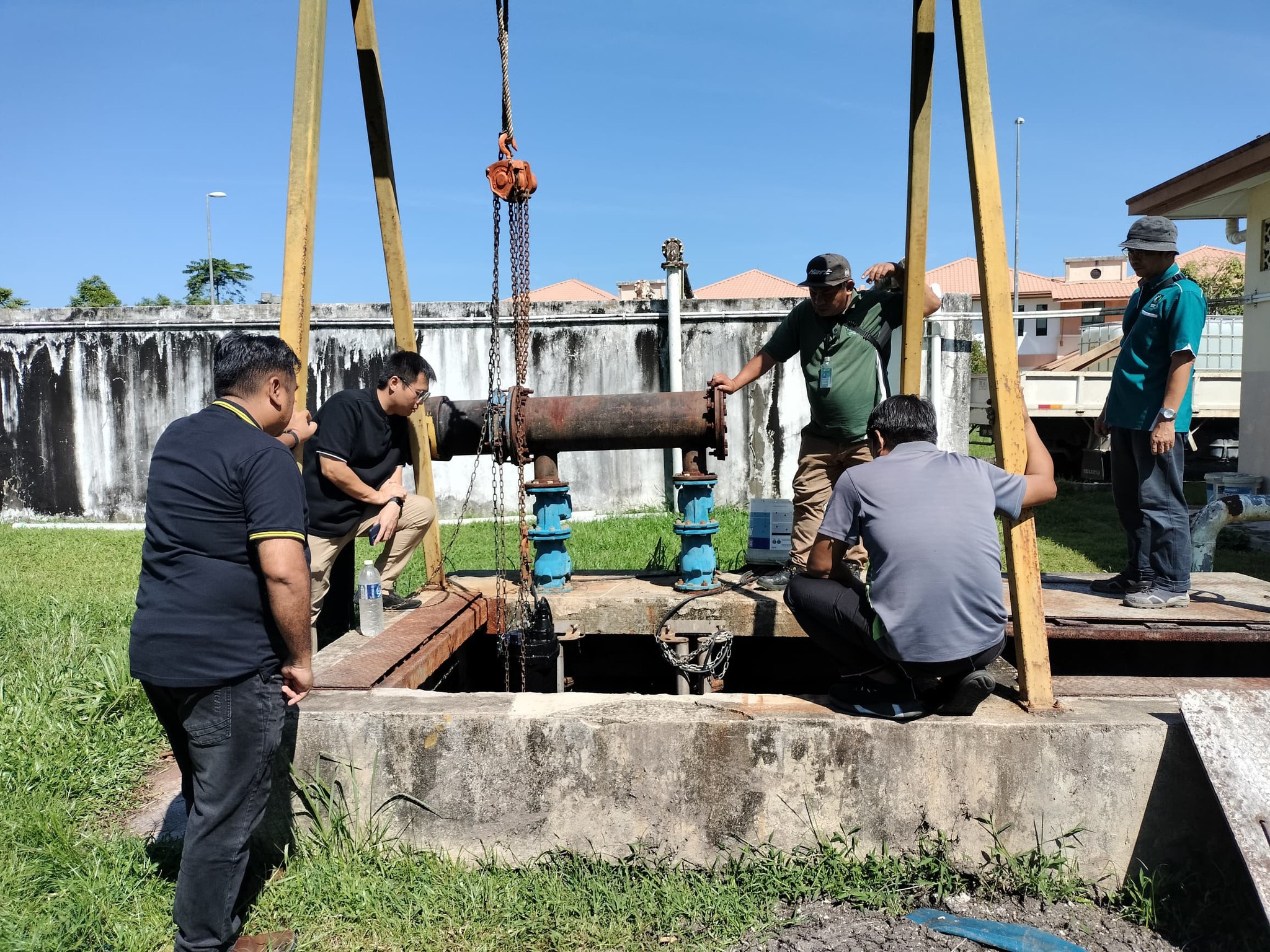
Universiti Malaysia Sabah
HydroCare UMS – Water for All
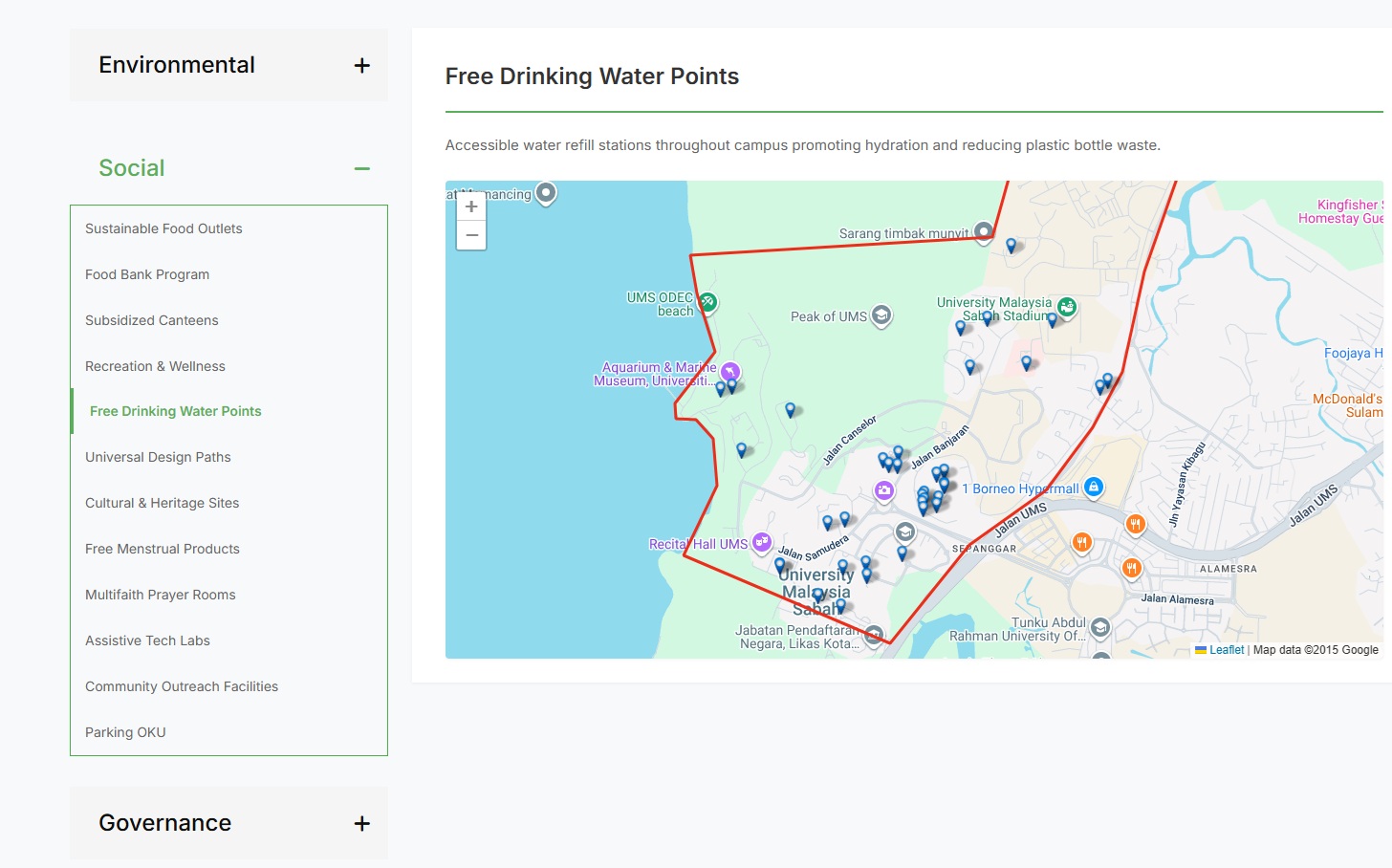
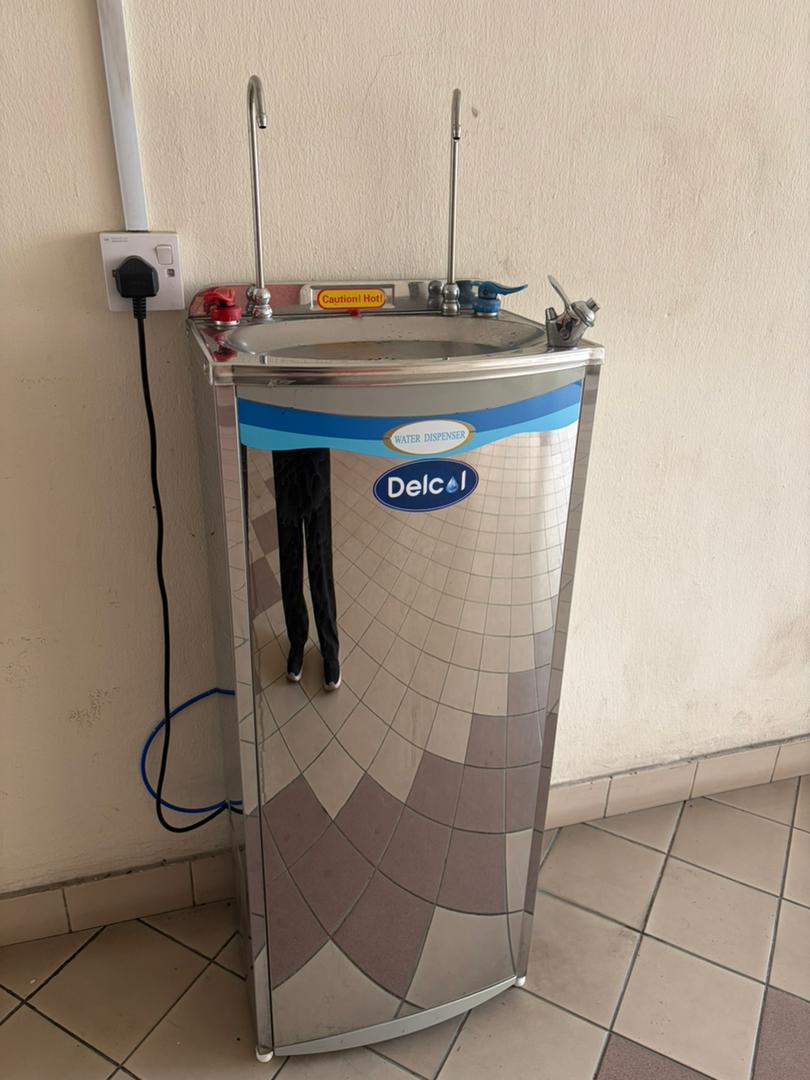
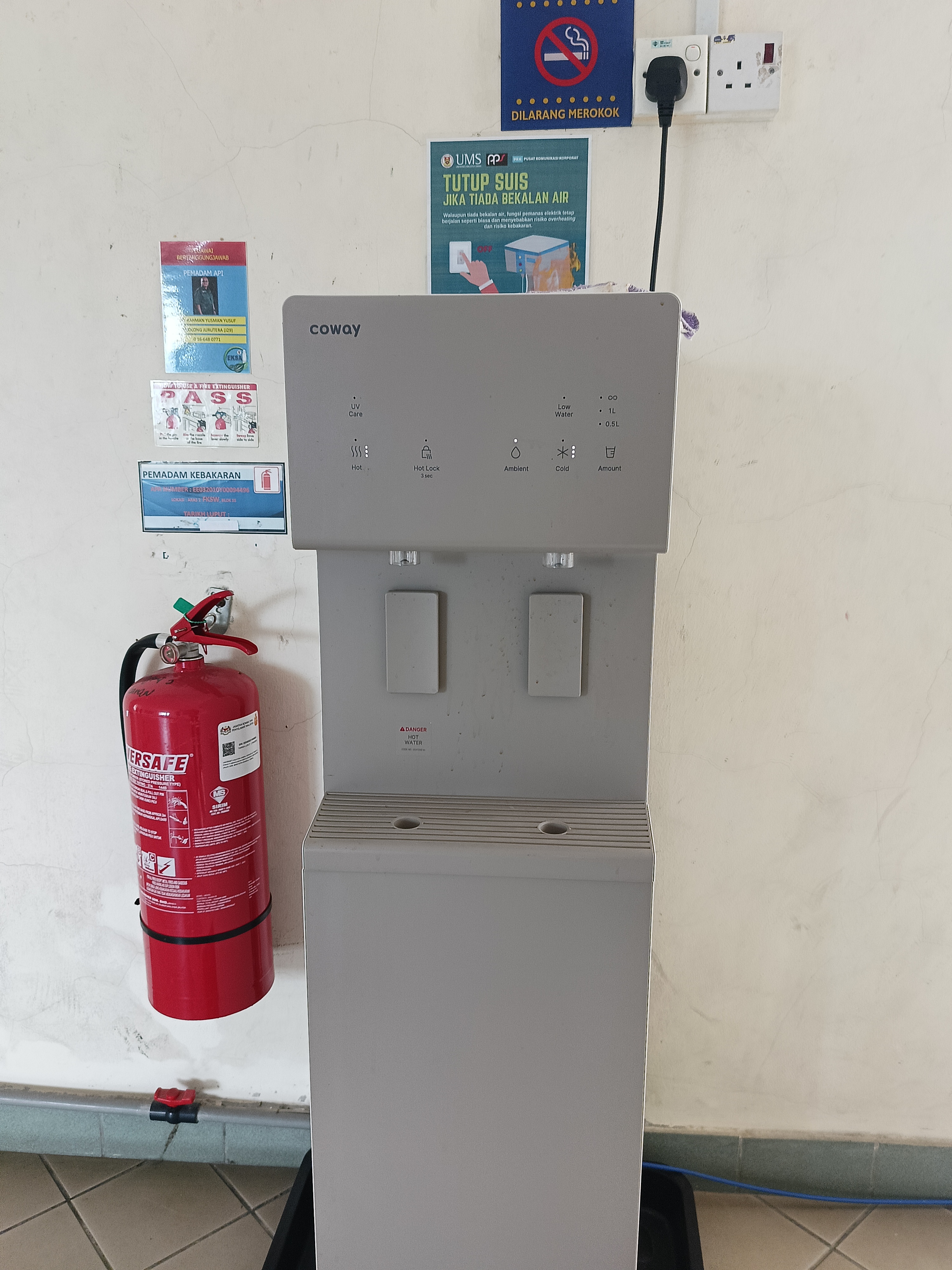
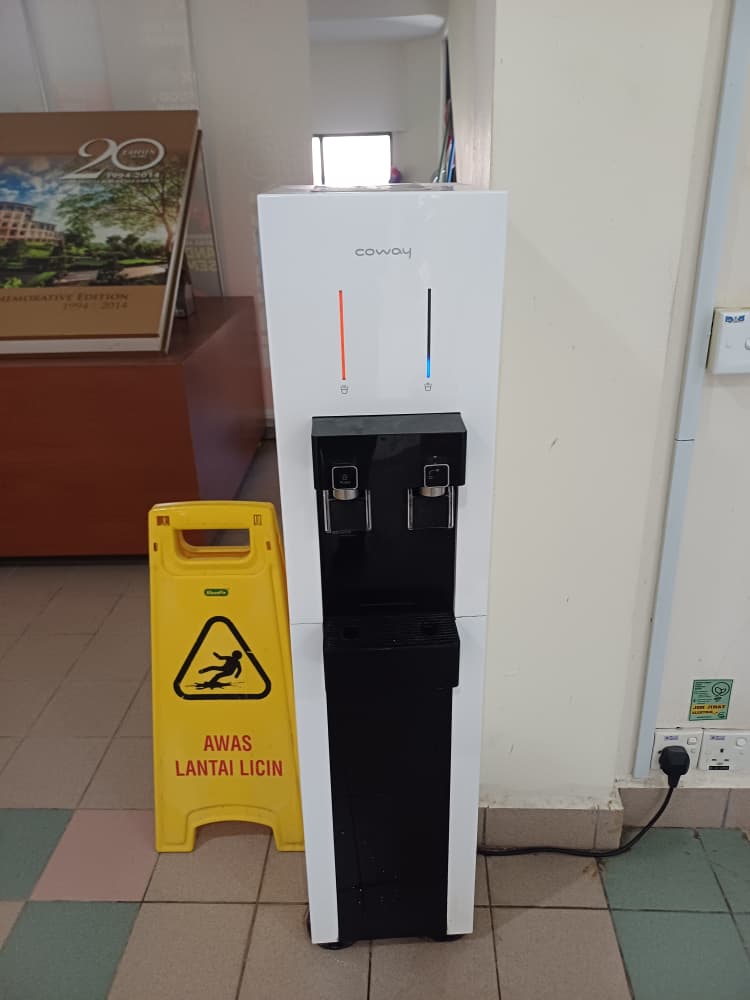
Access to clean and safe drinking water is a fundamental human need and a cornerstone of sustainable campus living. In line with SDG 6 (Clean Water and Sanitation) and the EcoCampus Framework, Universiti Malaysia Sabah (UMS) ensures that all members of its campus community — students, staff, and visitors — have free access to treated and safe drinking water. UMS’s Sustainability and Climate Action Policy (2023–2030) and Healthy Campus Programme promote equitable access to clean water as part of the university’s broader wellness and sustainability goals. Through an integrated infrastructure network, UMS provides treated water from the Jabatan Air Negeri Sabah (JANS) Telibong 2 mains supply, channelled through the R13 and UMS Main Tanks, and distributed across all faculties, residential hostels, and public areas. The Development and Maintenance Department (Jabatan Pembangunan dan Penyelenggaraan, JPP) oversees the installation, maintenance, and monthly quality testing of drinking water stations to ensure compliance with Malaysia’s National Drinking Water Quality Standards (NDWQS). All drinking fountains and refill stations are strategically located and mapped under the UMS Sustainability Green Facilities Map, available on the EcoCampus Portal, allowing users to identify the nearest refill point easily. This initiative not only supports public health and well-being but also aligns with UMS’s environmental commitment to reduce single-use plastic bottles and encourage refillable practices across campus. Through this network, UMS provides a free, accessible, and sustainable drinking water system that promotes inclusivity, health, and environmental responsibility.
GreenScape UMS – Designing with Nature
Smart landscapes that conserve water, nurture biodiversity, and sustain beauty.
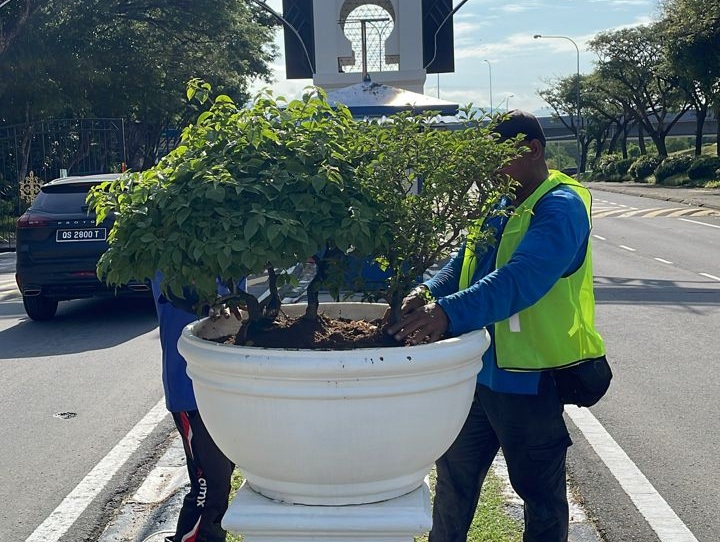
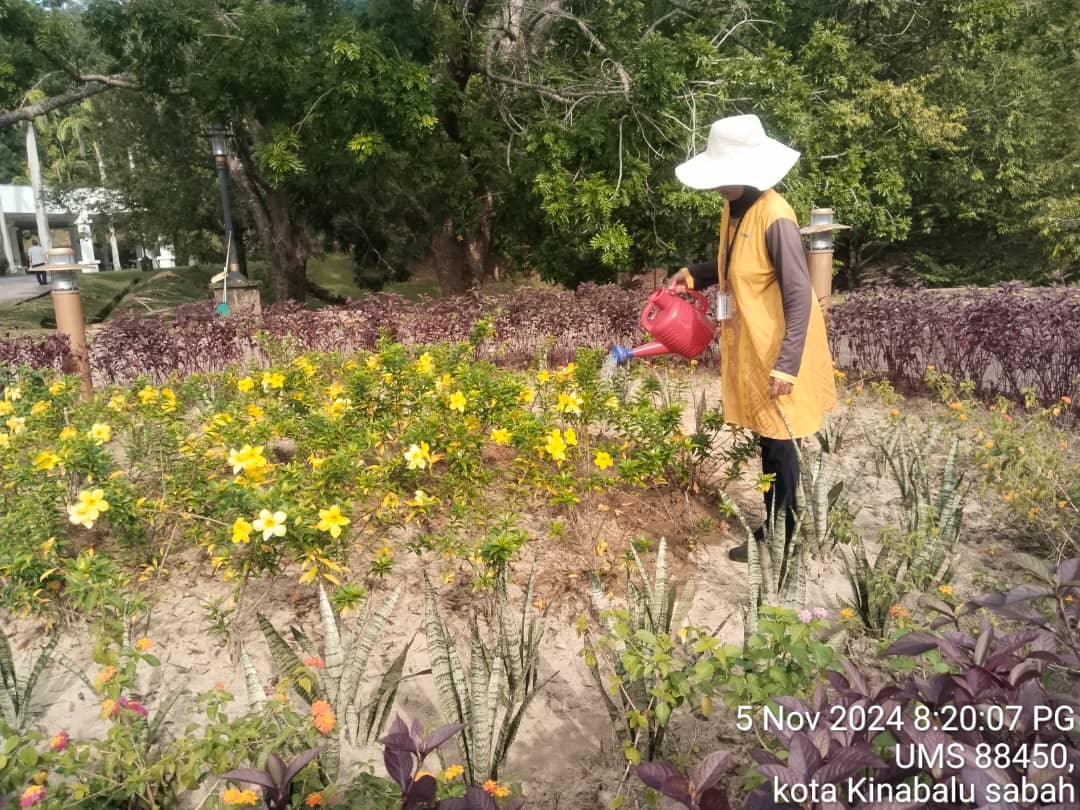
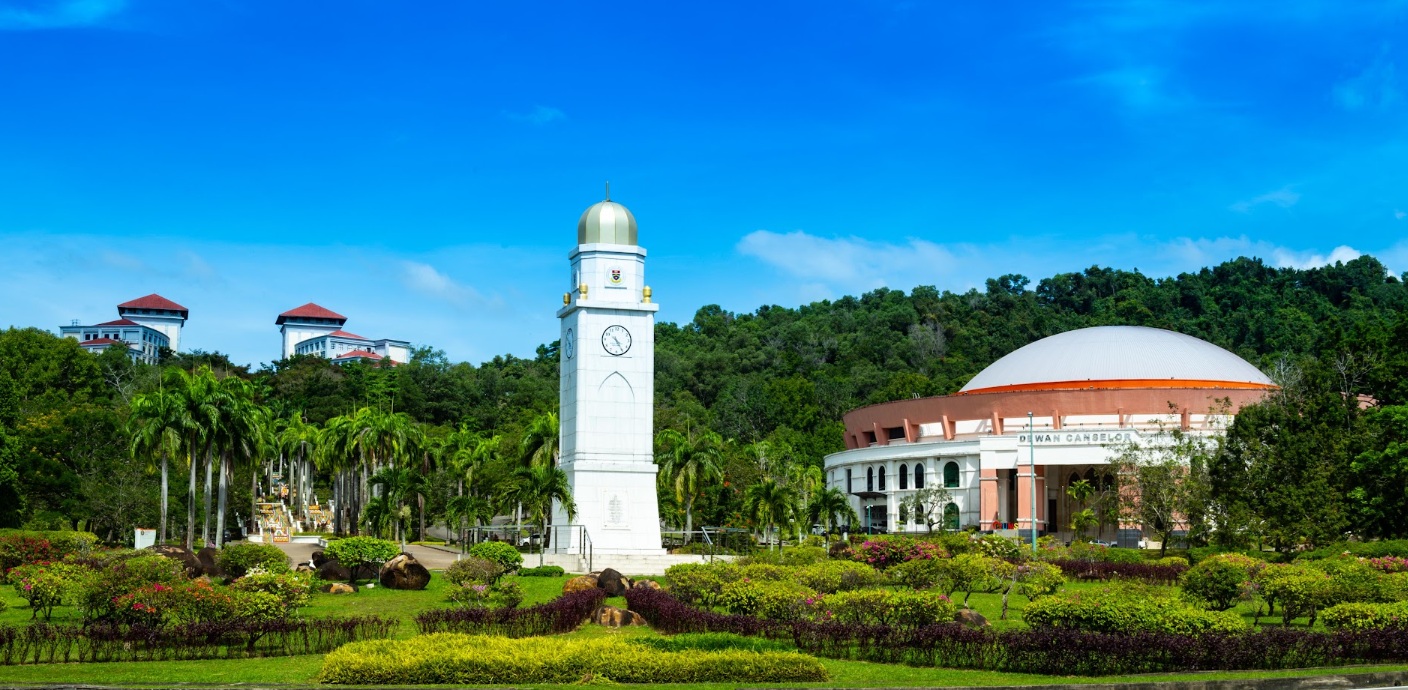
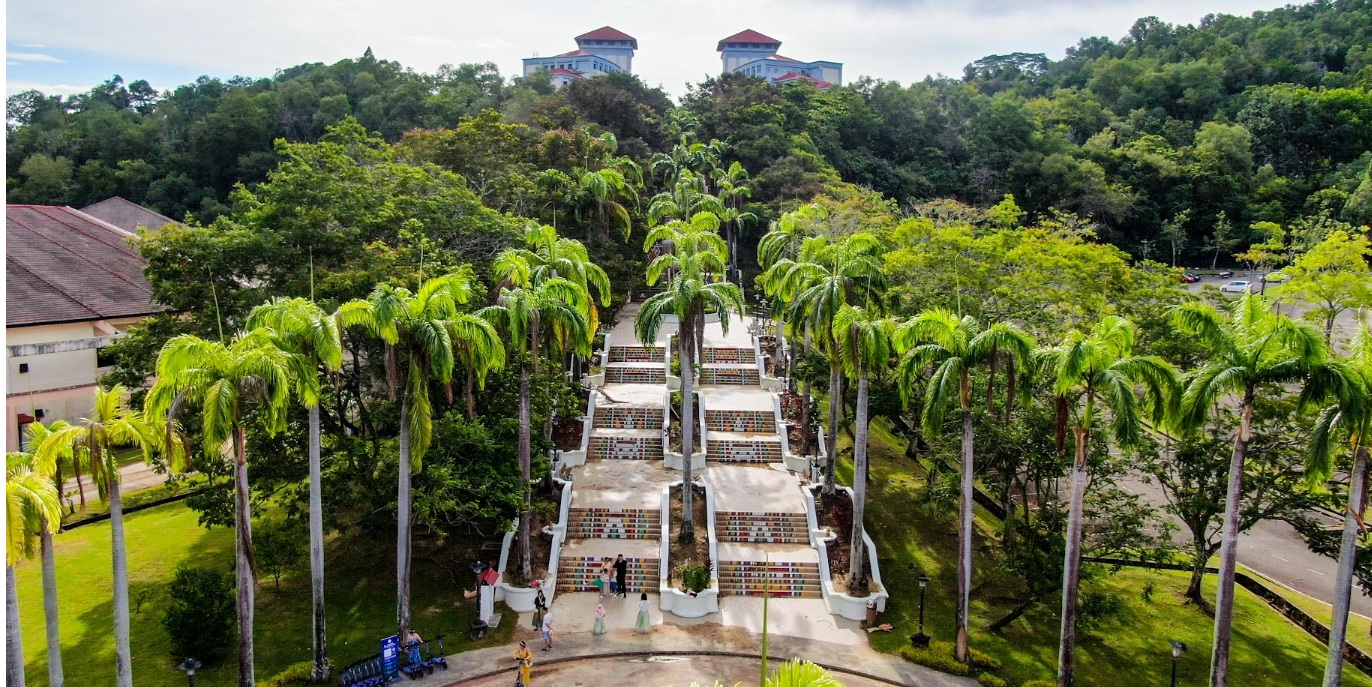
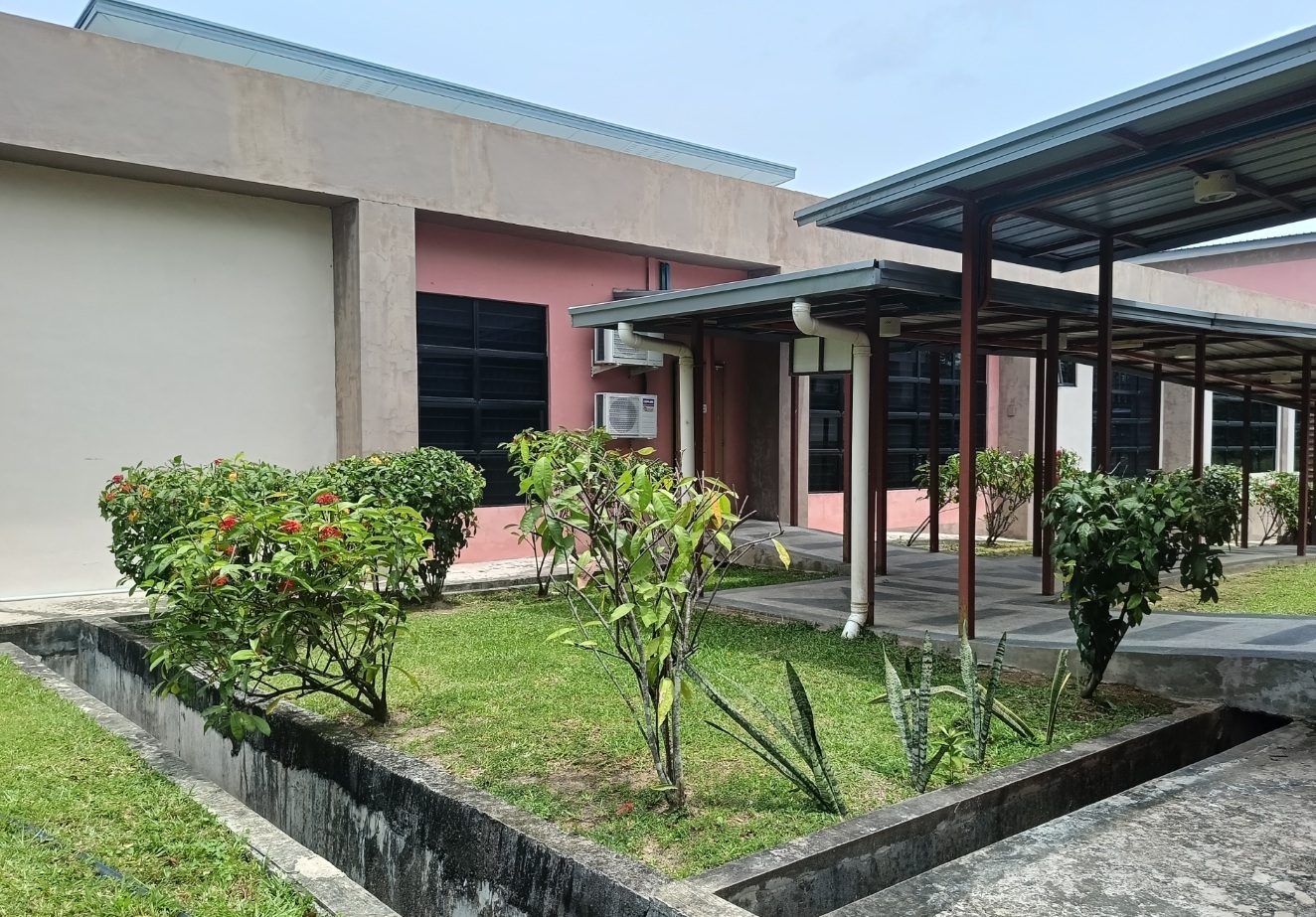
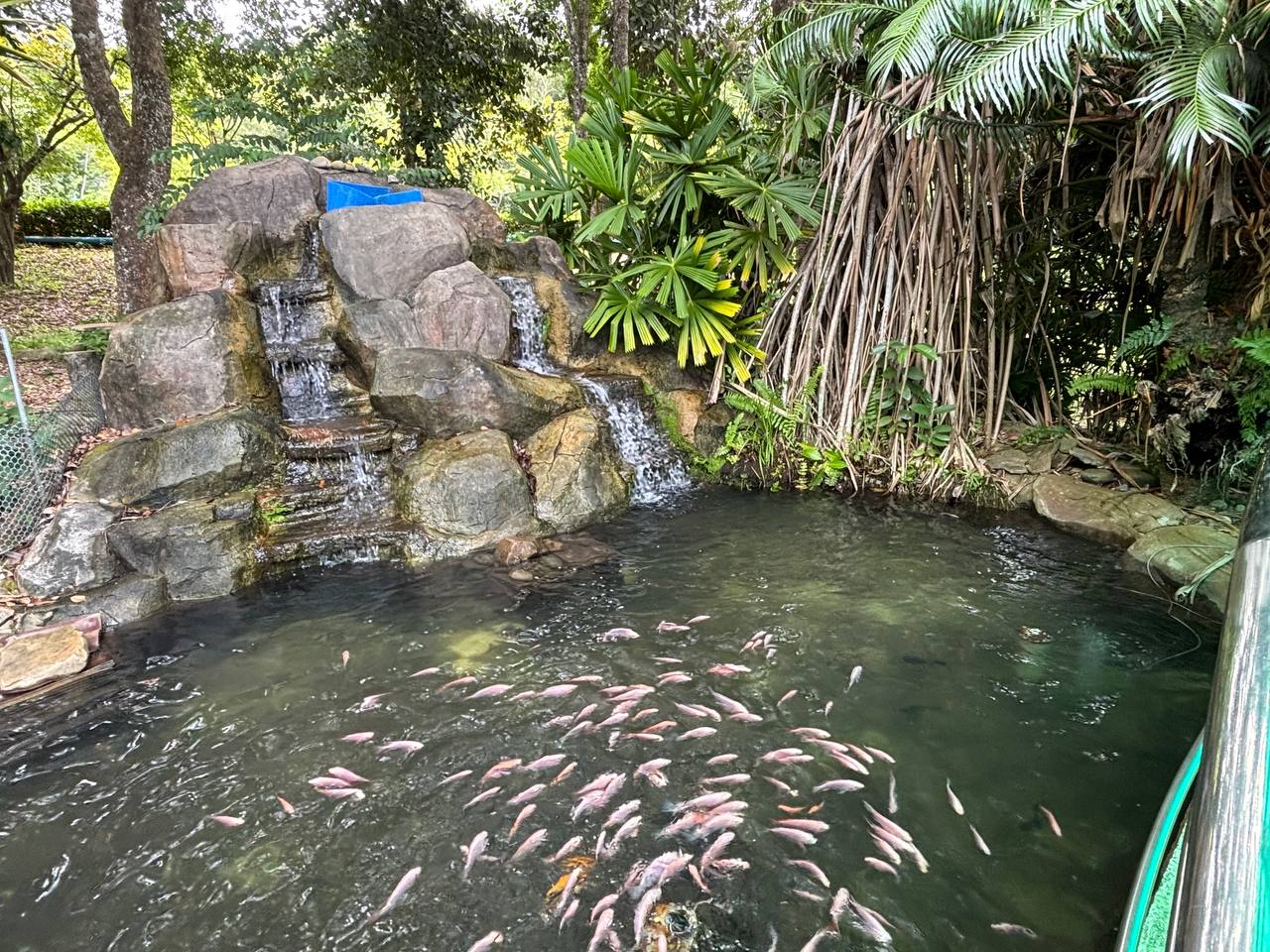
As part of its holistic commitment to environmental sustainability, Universiti Malaysia Sabah (UMS) has adopted water-efficient landscaping practices under the EcoCampus Landscape Management Plan (2023–2027). This initiative, jointly led by the Jabatan Pembangunan dan Penyelenggaraan (JPP) and the EcoCampus Management Centre, aims to reduce freshwater consumption in campus landscaping while maintaining the ecological balance and visual appeal of the university’s green spaces. UMS’s 999-acre main campus, located along the coastal zone of Sepanggar Bay, features extensive natural landscapes, botanical gardens, and thematic ecozones that support both biodiversity and sustainability learning. Given Sabah’s tropical climate — characterised by alternating wet and dry seasons — efficient water use is critical to ensuring that landscape irrigation remains sustainable and cost-effective. To achieve this, UMS has implemented a closed-loop irrigation system that uses treated lake water, groundwater, and harvested rainwater rather than treated mains water for most of its green areas. The university’s natural reservoirs, including the UMS Lake near the Chancellery Complex and the SFERA EcoPark Wetland Ponds, are key water sources for irrigation. Rainwater collected from building rooftops and campus drains is channelled into these ponds, filtered, and reused through gravity-fed irrigation systems. In tandem, UMS practices eco-sensitive landscaping design by prioritising drought-tolerant and native plant species that thrive in Sabah’s tropical and coastal environment. This approach reduces dependency on external water inputs while promoting native biodiversity and aesthetic sustainability.
Sustainable by Design: Green Building Standards at UMS
Universiti Malaysia Sabah (UMS) recognises that sustainable water management is a cornerstone of environmental stewardship and campus resilience. Located within Sabah’s unique tropical ecosystem—where rainfall is abundant yet unevenly distributed—UMS faces the dual challenge of ensuring reliable water availability and minimising waste. In response, the University has institutionalised comprehensive green building standards and sustainable infrastructure policies to optimise water efficiency in all campus developments, renovations, and maintenance activities. These standards integrate national regulations, international best practices, and the principles of the UMS EcoCampus Framework, advancing the university’s long-term commitment to the United Nations Sustainable Development Goal 6 (Clean Water and Sanitation).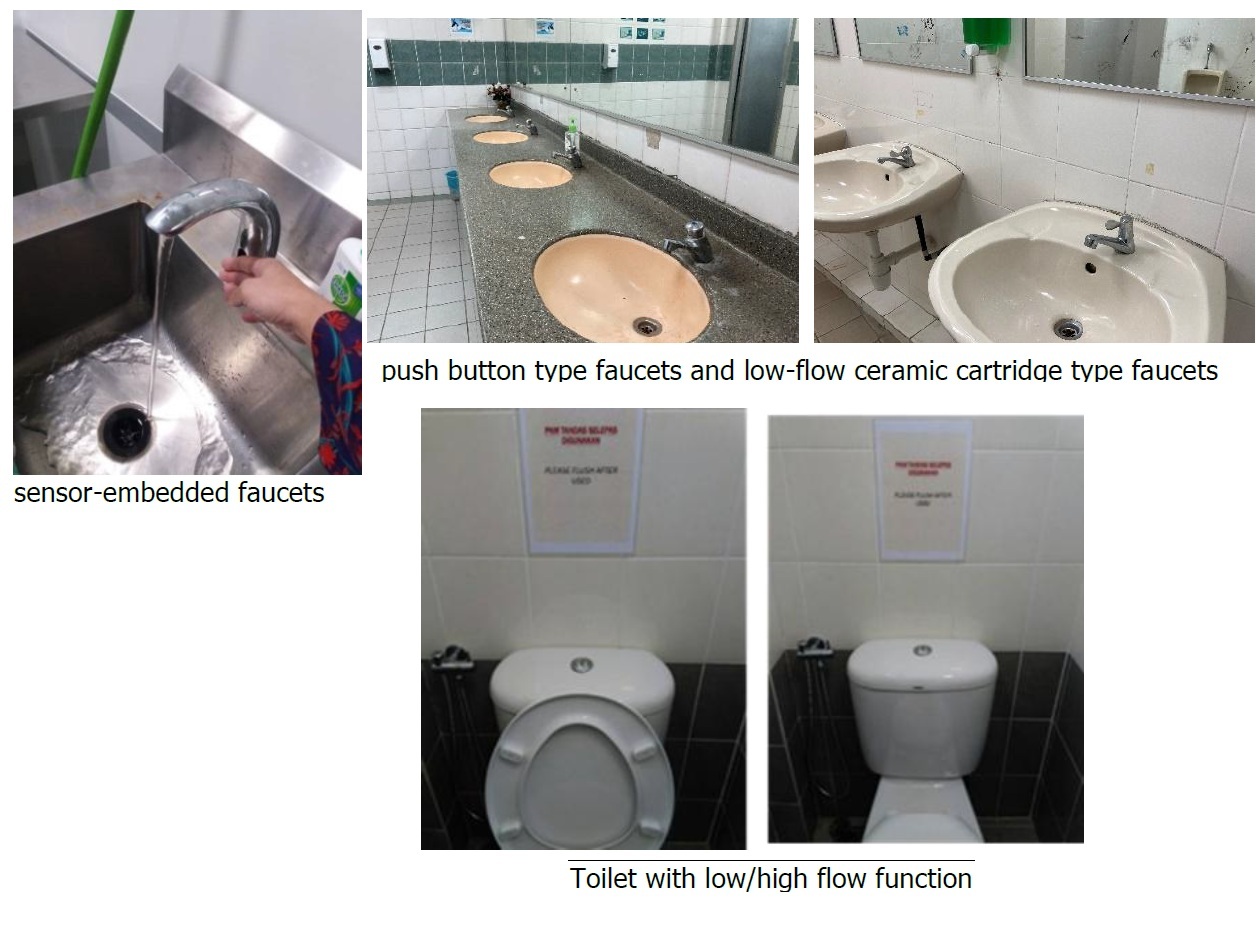
Policy Framework and Regulatory Alignment
UMS applies multiple layers of standards and legal frameworks that collectively guide the planning, design, and operation of water-efficient buildings:- MS 1525:2019 – Energy Efficiency and Use of Renewable Energy for Buildings (Non-Residential) This Malaysian Standard provides technical guidance on the incorporation of efficient water-use devices, cooling systems, and rainwater harvesting. UMS adopts its water-efficiency clauses to ensure that new and retrofitted facilities use technologies that minimise consumption and wastewater generation.
- Uniform Building By-Laws (Amendment 2021) The amendment to Malaysia’s national building regulation mandates green features such as low-flow plumbing fixtures, rainwater harvesting provisions, and greywater reuse systems. UMS fully complies with these requirements through design review and inspection processes led by the Jabatan Pembangunan dan Penyelenggaraan (JPP), ensuring that every building project meets legal and environmental obligations.
- UMS Sustainable Building Design Guideline (2023) Formulated by the EcoCampus Management Centre and Development and Maintenance Department (Jabatan Pembangunan dan Penyelenggaraan, JPP) , this internal guideline harmonises national standards with campus-specific sustainability goals. It prescribes the use of dual-flush toilets, sensor-activated faucets, waterless urinals, and drip-irrigation landscaping systems. The guideline also integrates the Green Building Index (GBI) and MyCREST assessment principles, allowing UMS buildings to benchmark their environmental performance against national sustainability indicators.
Implementation Mechanisms
- Institutional Coordination) The Development and Maintenance Department (Jabatan Pembangunan dan Penyelenggaraan, JPP) serves as the lead department overseeing all infrastructure development, renovation, and facility management at UMS. It coordinates closely with the EcoCampus Management Centre, which monitors sustainability metrics and reports annual progress under the Solid Waste and Water Management Action Plan 2023–2027. Together, these units ensure that water-saving technologies are embedded at every stage—from design and construction to post-occupancy maintenance.
- Green Procurement and Contractual Requirements All project tender documents issued by JPP include clauses mandating compliance with MS 1525 and the Sustainable Building Design Guideline. Contractors are required to install certified water-efficient fixtures, provide documentation of flow rates, and conduct water-pressure calibration before handover.
- Smart Water-Management Systems UMS has progressively integrated IoT-based smart water meters in selected high-consumption zones such as student residential colleges, laboratories, and the Faculty of Engineering complex. These meters collect real-time data on water flow and leakage, enabling early detection and corrective maintenance. The system is part of the broader UMS Digital Infrastructure Initiative, which links building data to the University Monitoring Dashboard for analysis and reporting.
- Rainwater Harvesting and Reuse To reduce dependence on treated water from municipal supply, UMS has incorporated rainwater harvesting systems in multiple buildings, including the SFERA EcoPark, Faculty of Engineering, Faculty of Sustainable Agriculture (Sandakan Campus), and Marine Aquarium and Museum. Harvested rainwater is used for landscape irrigation, toilet flushing, and laboratory cleaning processes. The system design includes first-flush diverters and filtration to ensure water quality standards are met.
- Greywater Recycling Pilot projects under the Faculty of Engineering and Faculty of Science & Natural Resources treat and reuse greywater for non-potable purposes. The Bio-Filtration Greywater System, developed through a UMS research grant, reduces organic load by up to 80 %, offering a scalable model for campus-wide adoption.
- Monitoring and Performance Audits The Development and Maintenance Department (Jabatan Pembangunan dan Penyelenggaraan, JPP) jointly conduct annual water-efficiency audits covering: - Flow-rate verification of installed fixtures -Leak-detection surveys using ultrasonic meters - Comparative analysis of water consumption by building type - Benchmarking against baseline per-capita consumption
Water-Efficient Landscaping at Universiti Malaysia Sabah (UMS)
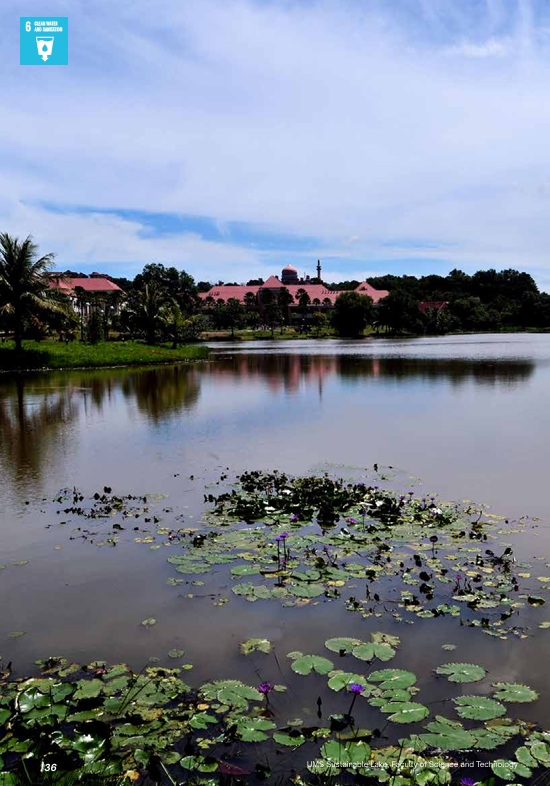
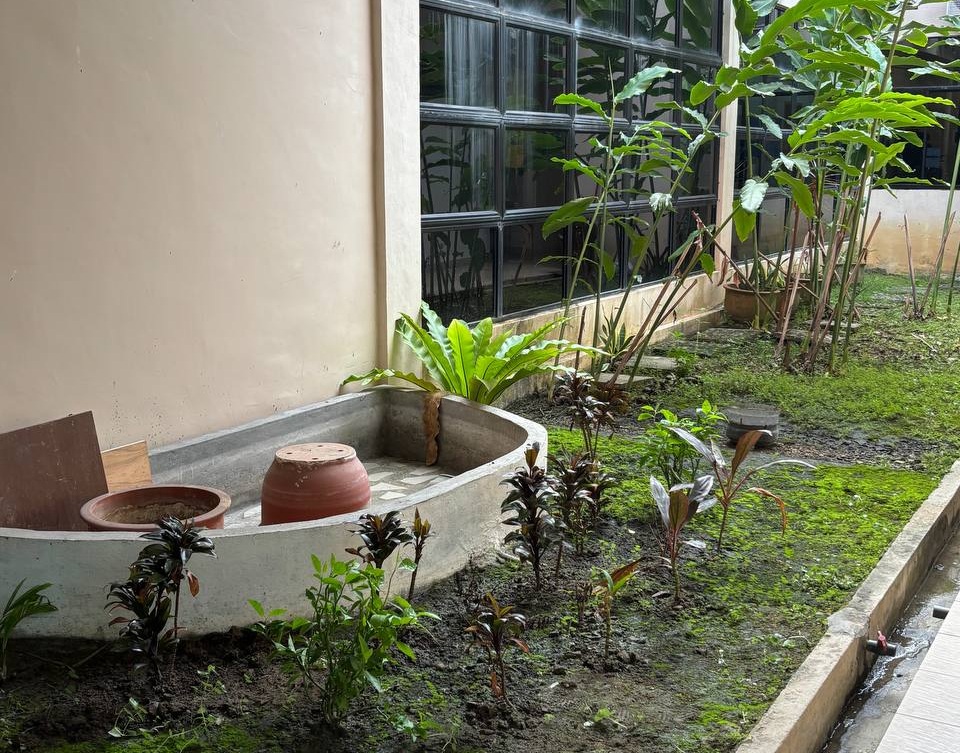
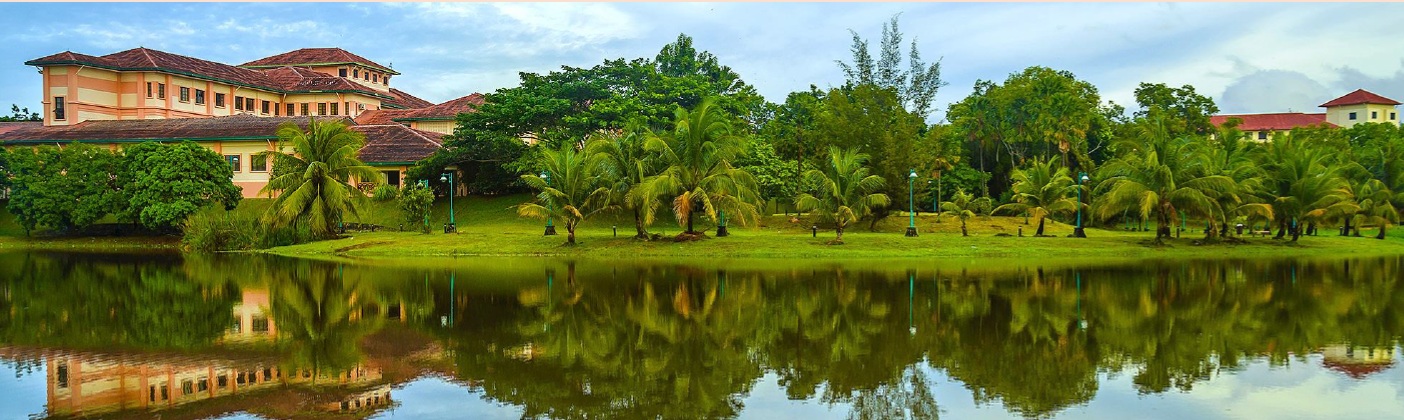
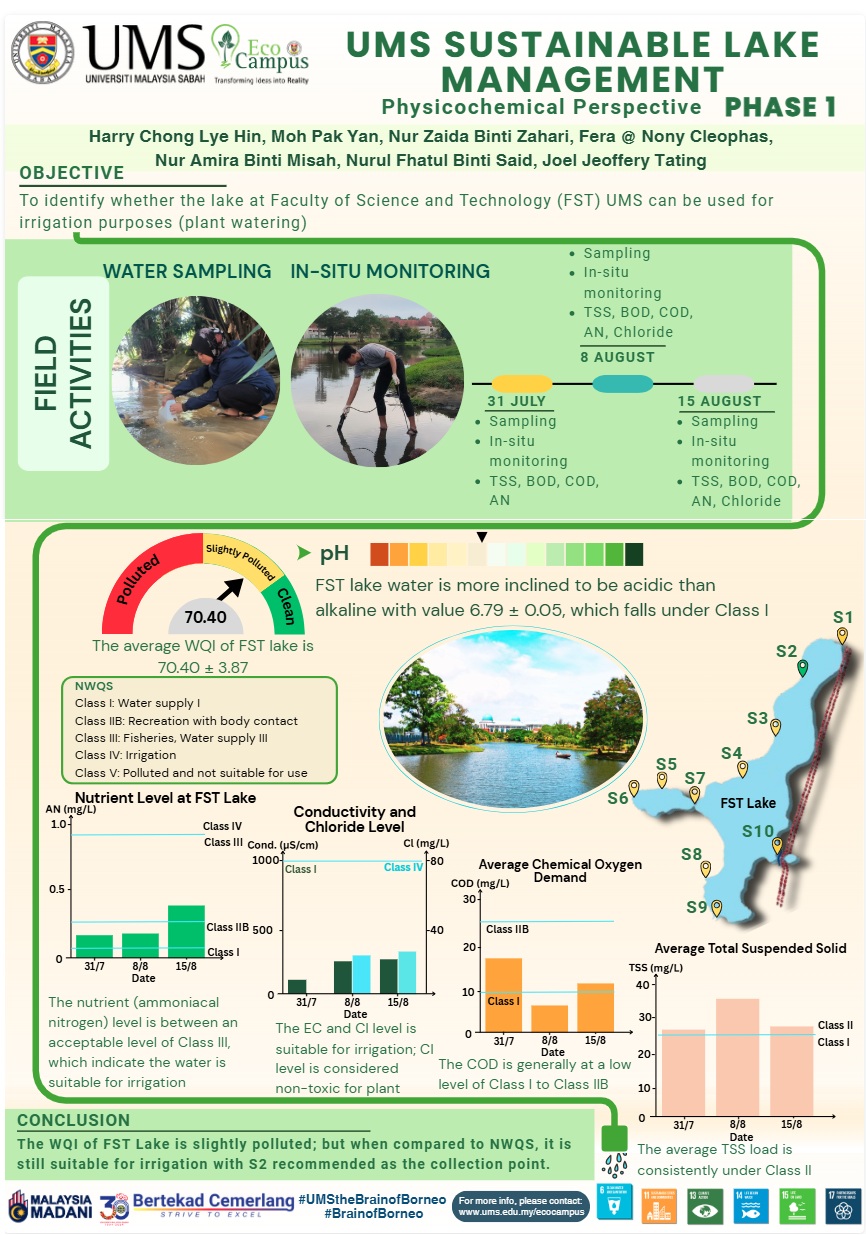
Universiti Malaysia Sabah (UMS) adopts sustainable and water-efficient landscaping practices as part of its EcoCampus Landscape Management Plan (2023–2027). This initiative, coordinated by the Jabatan Pembangunan dan Penyelenggaraan (JPP) and the EcoCampus Management Centre, aims to conserve freshwater resources, promote native biodiversity, and enhance campus resilience to climate variability. To minimise dependence on treated mains water, UMS uses treated lake water from its natural reservoirs and rainwater harvested from building rooftops for irrigation. The UMS Lake, located near the Chancellery Complex, and other on-campus ponds serve as natural storage systems that supply non-potable water for landscape maintenance. Collected rainwater is filtered and reused through gravity-fed irrigation lines and sprinkler systems, reducing the university’s reliance on municipal supply.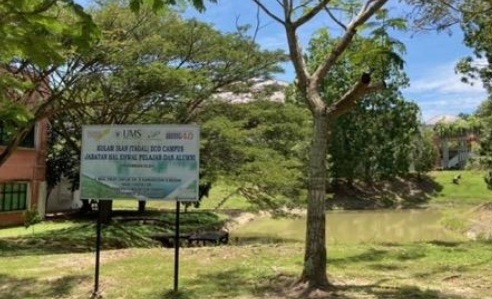
Maximising Water Reuse at UMS: A Whole-Campus EcoCampus Approach
Water scarcity and climate variability pose increasing challenges globally, particularly in regions like Sabah where rural and coastal communities often face limited access to treated water. As a leading EcoCampus and a public university committed to the United Nations Sustainable Development Goals (SDGs), especially SDG 6: Clean Water and Sanitation, UMS recognises its responsibility to model sustainable water practices and reduce strain on local water infrastructure. The UMS Sustainability and Climate Action Policy - Under clause 4.4 Water Conservation is formulated to ensure efficient utilisation of freshwater resources, adoption of green technology, and integration of circular-water principles into campus operations. The policy and water resuse and conservation policy and framework covers engineering design, operations and maintenance, research integration, community engagement, and continuous monitoring through digital dashboards. It applies to all faculties, institutes, residential colleges, laboratories, living labs, and EcoCampus-managed areas. Read MorePolicy and Framework Objectives
The policy and framework aims to:- i. Reduce dependence on treated mains water from Jabatan Air Negeri Sabah (JANS) by increasing alternative water sources.
- ii. Maximise reuse of rainwater, greywater, aquaponic water, and recycled laboratory water for non-potable purposes.
- iii. Integrate water reuse technologies in all new buildings and retrofits.
- iv. Establish a digital water-monitoring ecosystem for real-time tracking and optimisation.
- v. Promote behavioural change, operational efficiency, and institutional accountability.
- vi. Support research, innovation, and living labs related to water reuse, aquaponics, and sustainable infrastructure.
- v. This policy also aligns with national frameworks such as the Malaysia Sustainable Water Management Strategy and the Sabah Water Resources Enactment, as well as international standards including UNESCO’s Education for Sustainable Development (ESD).
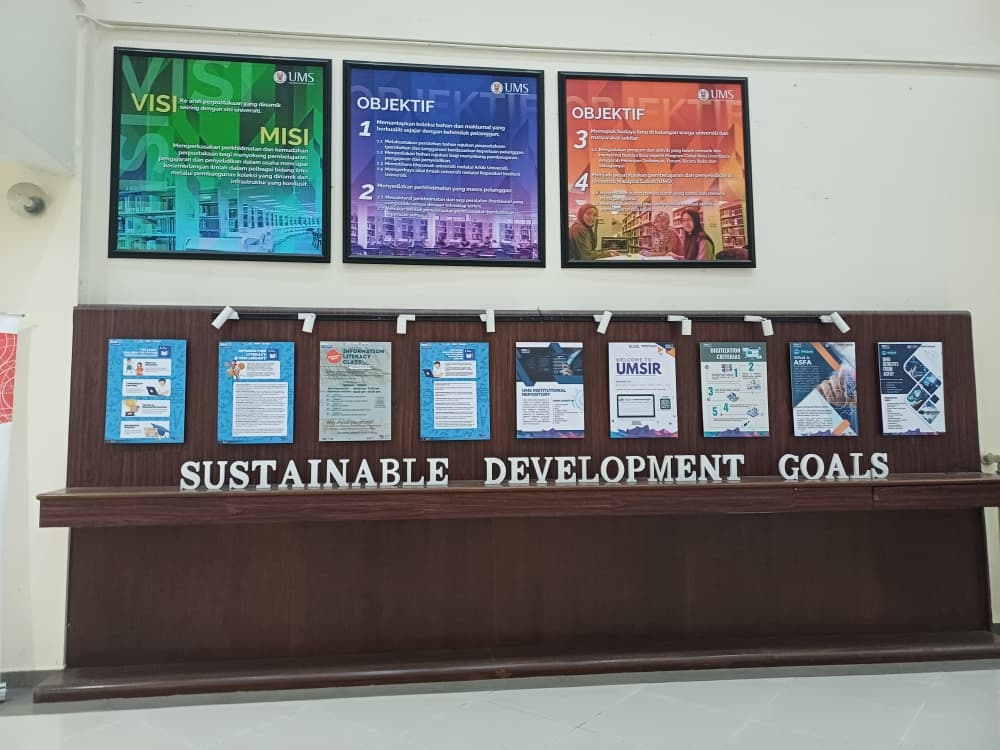
Policy and Framework Implementation Impact
UMS has recorded measurable progress under the implementation of the Water Reuse and Conservation Policy:-
i. Increase in Water Reuse Volumes : 20% increase in reused water volume between 2020 and 2024, including rainwater, aquaponic reuse, and greywater.
-
ii. Reduction in Treated Water Dependence : Due to reuse of rainwater, greywater, and recycled lab water, UMS has reduced its reliance on JANS-supplied treated water by:8–10%, verified through UMS Utility Dashboard data.
-
iii. Per-Capita Water Reduction : Per-capita treated water consumption dropped:From 58 L/day (2020) to To 52 L/day (2024. This was achieved through behavioural campaigns, greywater reuse, and targeted efficiency upgrades.
-
iv. Reduced Operational Costs : Water reuse initiatives have reduced operational water expenses and facilitated green-building savings for campus operations.
-
UMS Building Water-Wise Communities for a Resilient Future.
Water is a fundamental resource that underpins public health, food security, ecological resilience, and socio-economic development. In Sabah—where many rural and island communities face chronic challenges in accessing clean water—effective water management is not merely an environmental concern but a humanitarian necessity. Universiti Malaysia Sabah (UMS), as a Malaysian EcoCampus and a leading higher-learning institution in Borneo, recognises its responsibility to build water literacy, strengthen community resilience, and advance sustainable development aligned with SDG 6: Clean Water and Sanitation. UMS fulfils this responsibility through a wide range of community education programmes, living-lab initiatives, interdisciplinary research, policy partnerships, and rural-empowerment projects. These activities are conducted under the UMS Sustainability and Climate Action Policy (2023–2030), the EcoCampus Sustainability Framework, and the UMS Strategic Plan 2023–2027. By integrating education, research, outreach, and real-world implementation, UMS provides comprehensive and continuous learning opportunities for communities across Sabah—particularly those in underserved, remote, and water-stressed areas.Water, Sanitation and Hygiene (WASH) Capacity Building
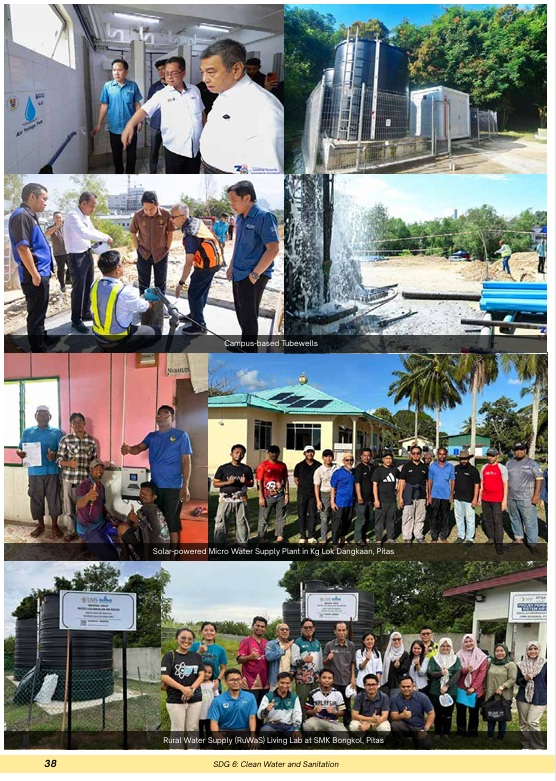
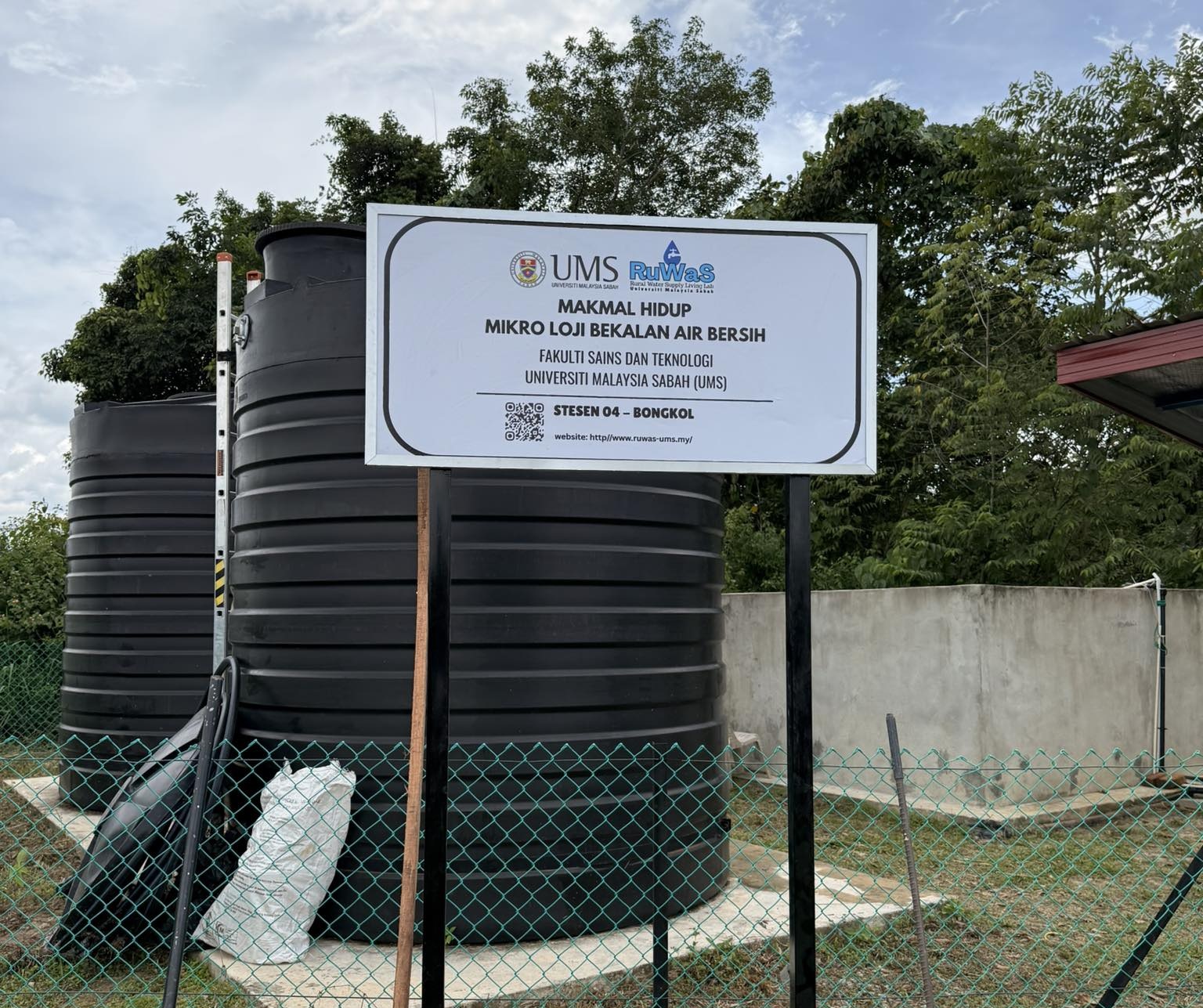
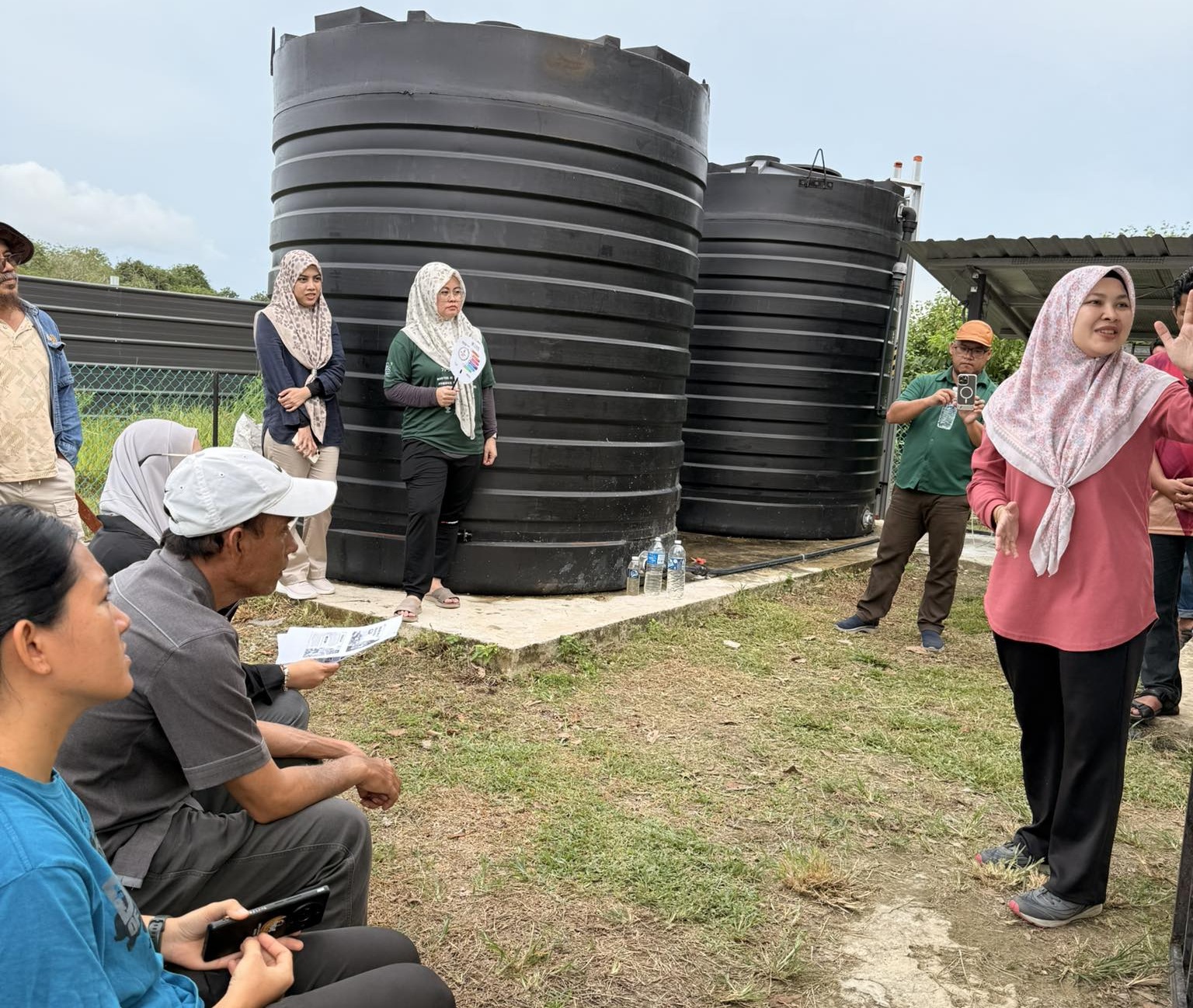
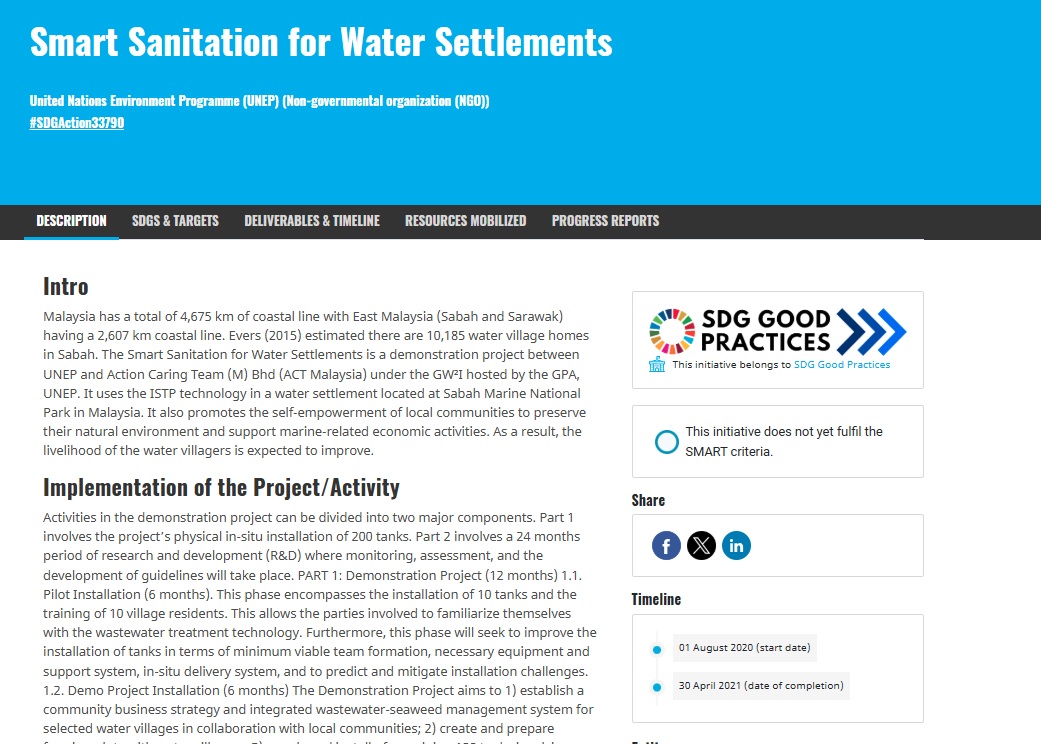
Access to safe water and adequate sanitation remains a daily struggle for many rural and coastal settlements in Sabah. To address this, UMS conducts extensive training and technology-transfer programmes through its Smart Sanitation for Water Settlements Project, implemented jointly with the United Nations Environment Programme (UNEP) and ACT Malaysia. The project trains villagers in rainwater harvesting, greywater reuse, and solar-powered filtration systems that are easy to maintain using local materials. Workshops combine environmental engineering with hygiene education, ensuring that communities understand both the technology and the behavioural practices required to keep systems sustainable. On 2024, a successful trial run was conducted for the Kg Lok Dangkaan Micro Water Supply Plant in Pitas, Sabah. The integrated micro water plant, capable of producing 30,000 litres of clean water per day, is powered by solar energy and equipped with IoT-based monitoring technology for real-time system tracking and maintenance. This project, the third micro water plant developed under a CSR initiative by academic staff from the Faculty of Science and Natural Resources, Universiti Malaysia Sabah (UMS), was funded by the Economic Implementation and Strategic Coordination Agency (LAKSANA) under the Ministry of Finance Malaysia, in collaboration with Perbadanan Baitulmal Negeri Sabah (PBNS) and UMS. According to village representative Mr. Latif bin Asang, the plant provides a vital solution to the community’s long-standing water challenges, especially during the dry season when many household wells run dry, ensuring a sustainable and reliable source of clean water for all residents.On 22 October 2025, Universiti Malaysia Sabah (UMS) conducted a site audit visit at the Rural Water Supply (RUWAS) Living Lab located at SMK Bongkol, Pitas, as part of the accreditation process to be recognised as a Recognised Living Lab (RLL). The visit, led by Prof. Dr. Rosalam Hj. Sarbatly, Deputy Vice-Chancellor (Research and Innovation), together with Assoc. Prof. Dr. Fatimah Ahmedy, Deputy Director (Strategic) of the Research Management Centre (PPP), aimed to evaluate the effectiveness of the Living Lab’s implementation in promoting sustainable rural water treatment technologies, innovation, and social impact. Also present were Ms. Winah, Senior Assistant of SMK Bongkol, along with teachers and wardens involved in the site’s operation and maintenance. The RUWAS Living Lab, established under the Faculty of Science and Technology (FST), UMS, serves as a platform for learning, applied research, and technology transfer related to community-based water treatment. It is the fourth micro water station developed through UMS’s sustainable community engagement initiative. The recognition as a Recognised Living Lab is expected to enhance RUWAS’s role as a model of social innovation in clean water management, environmental education, and sustainable rural development in Sabah.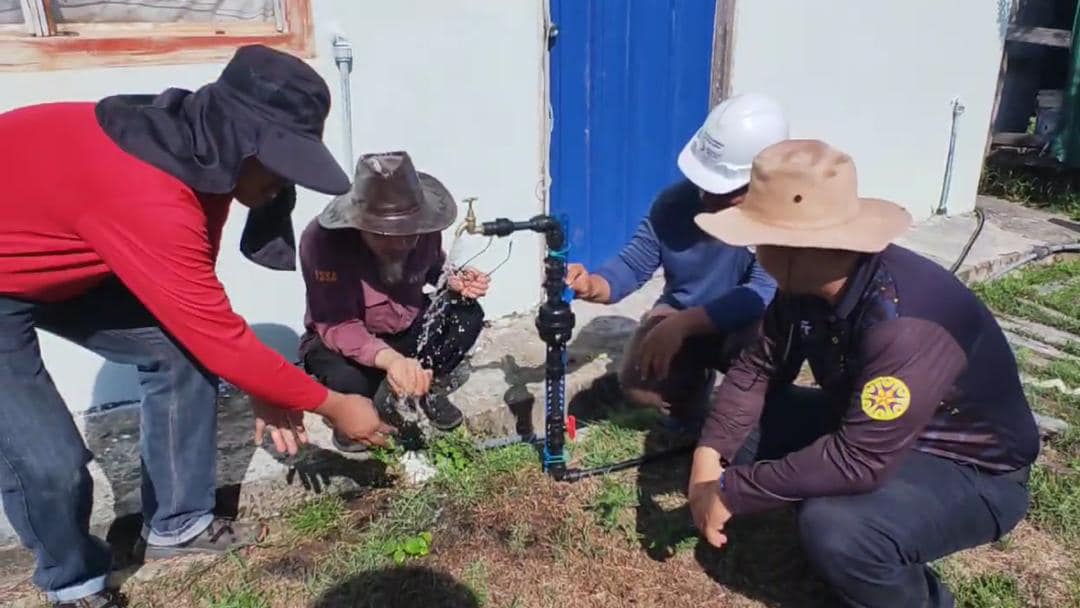
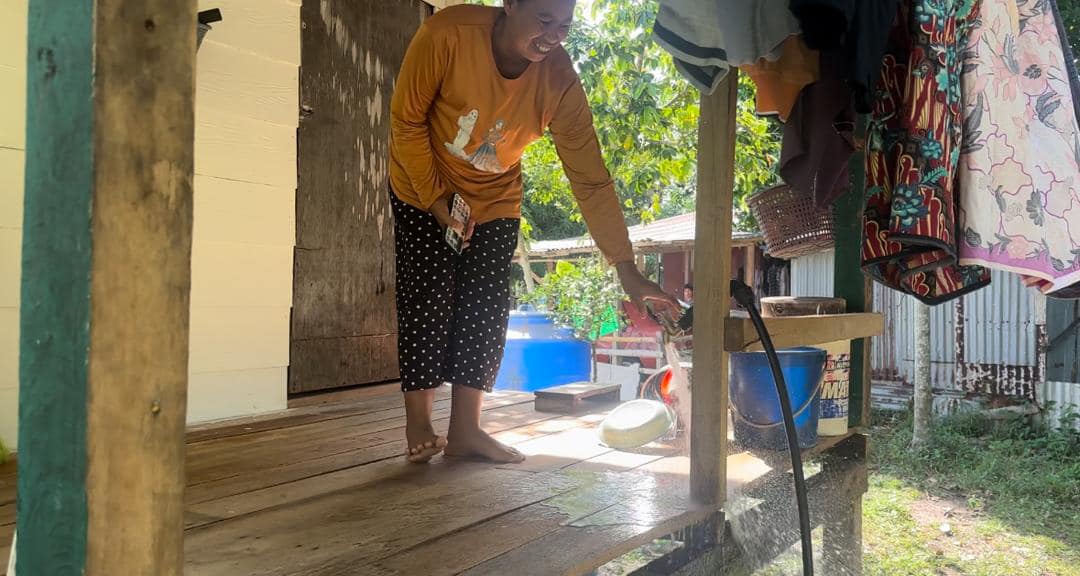
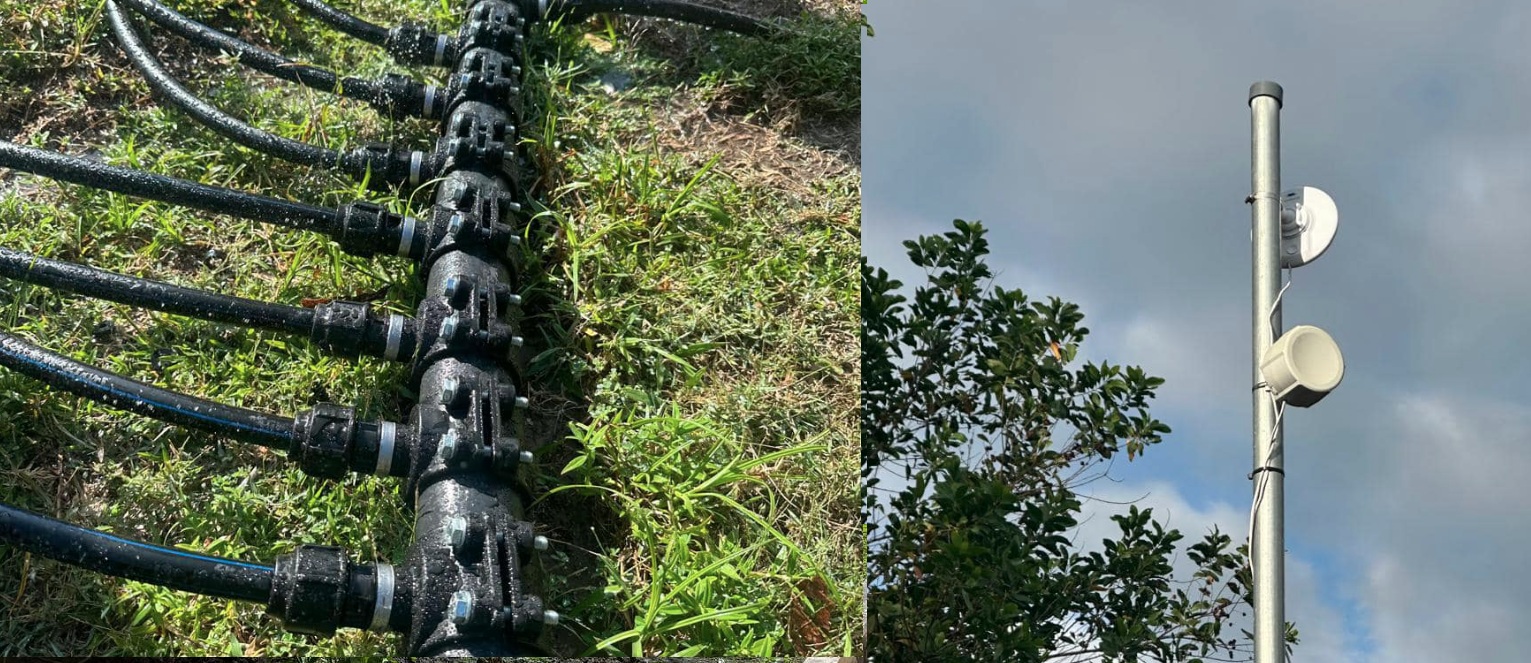 To date, more than 2,500 residents in Semporna, Kota Belud, and Pitas have benefited from this initiative. Participants now operate their own filtration and sanitation systems, leading to a significant reduction in waterborne diseases such as diarrhoea and typhoid. In these villages, clean water has replaced dependency on trucked or contaminated sources, illustrating how practical training can secure one of life’s most fundamental needs.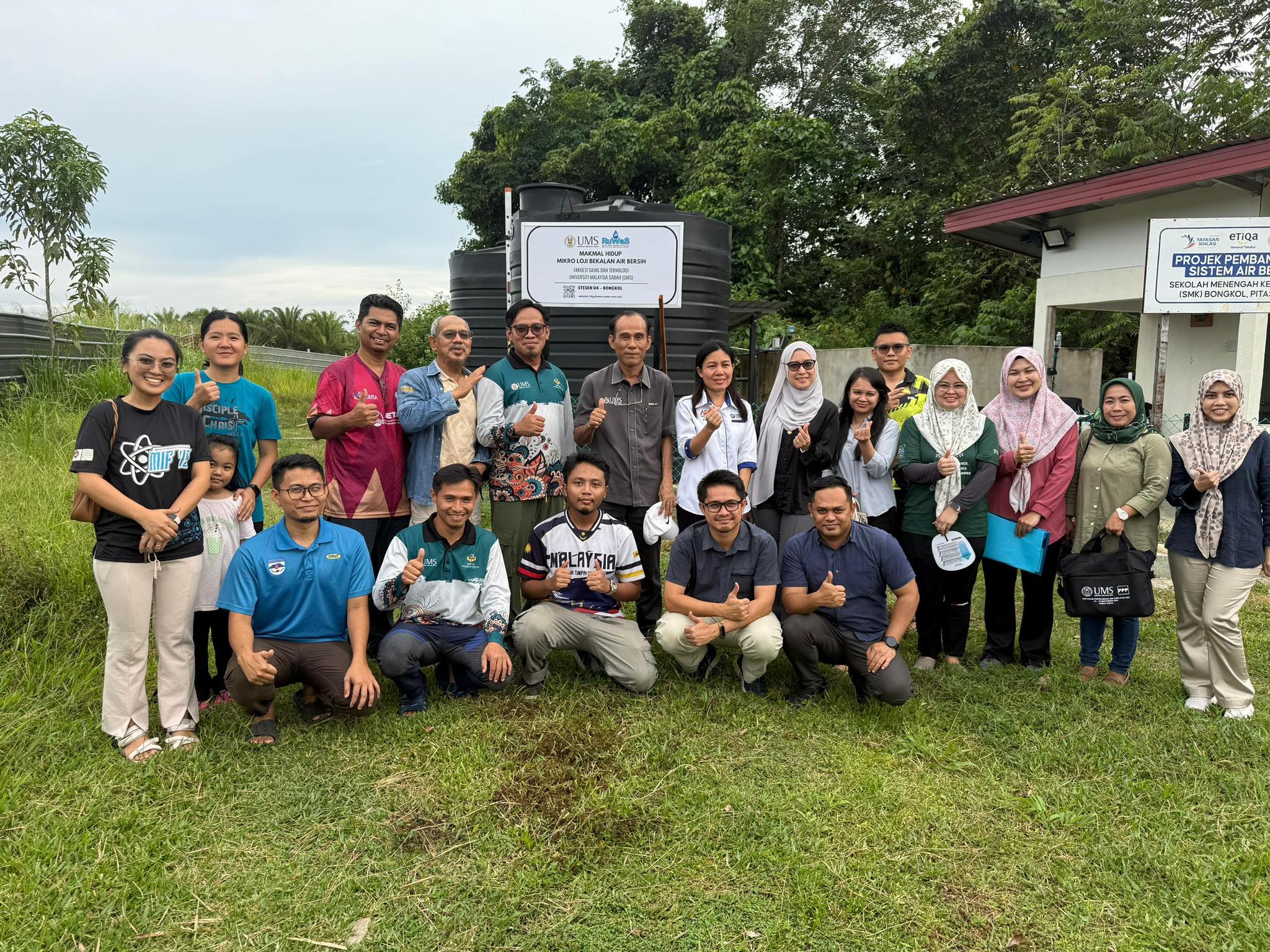
UMS Living Labs as Platforms for Water Education
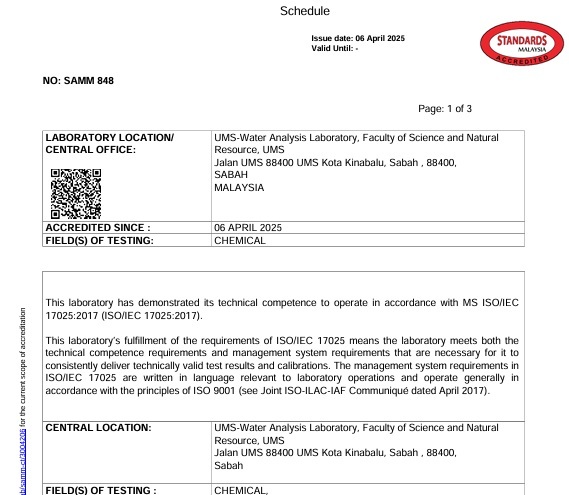
Central to this approach are UMS’s flagship Living Labs, particularly the Micro Water Treatment Systems in Pitas and the Rural Water Supply (RuWaS) projects implemented in several interior villages. These Living Labs function not only as technology demonstrations but as training platforms where communities learn directly how water purification systems operate. Villagers, school teachers, youth groups, and local leaders are equipped with skills to manage filtration processes, operate gravity-fed water systems, perform chlorination, maintain membranes and activated-carbon filters, and monitor system performance using IoT-enabled turbidity, flow-rate, and water-level sensors. This hands-on learning model transforms rural residents from passive water recipients into trained technicians capable of maintaining and improving their own systems.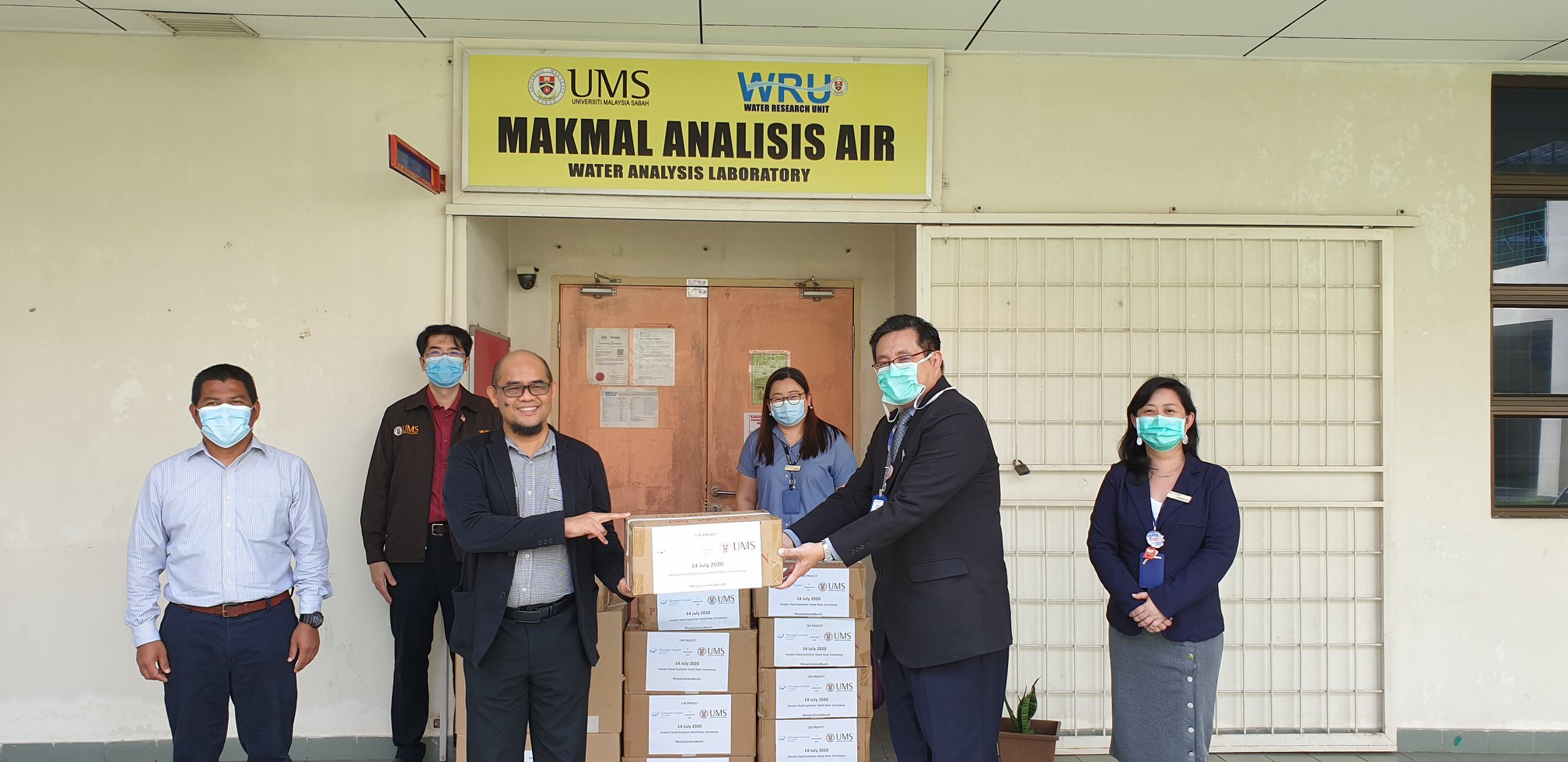
Water for All: UMS Initiatives Supporting Rural and Coastal Water Conservation
Universiti Malaysia Sabah (UMS) plays a leading role in advancing water conservation beyond its campus boundaries through a combination of research translation, rural community outreach, living-lab applications, and multi-agency collaborations that directly benefit communities throughout Sabah. Recognising that sustainable water access remains one of the state’s most critical environmental and socio-economic challenges, UMS positions itself as an active partner to government agencies, NGOs, and local villages in building water security and ecological resilience off campus. Through its Rural Water Supply Living Lab (RuWaS), Micro Water Treatment Projects, Water Research Unit (WRU), and EcoCampus Centre initiatives, the university delivers technical solutions, community education, watershed protection, and capacity-building to improve water quality and conservation practices across both rural and urban settings.Professor @ School: Tunas STEM Desa
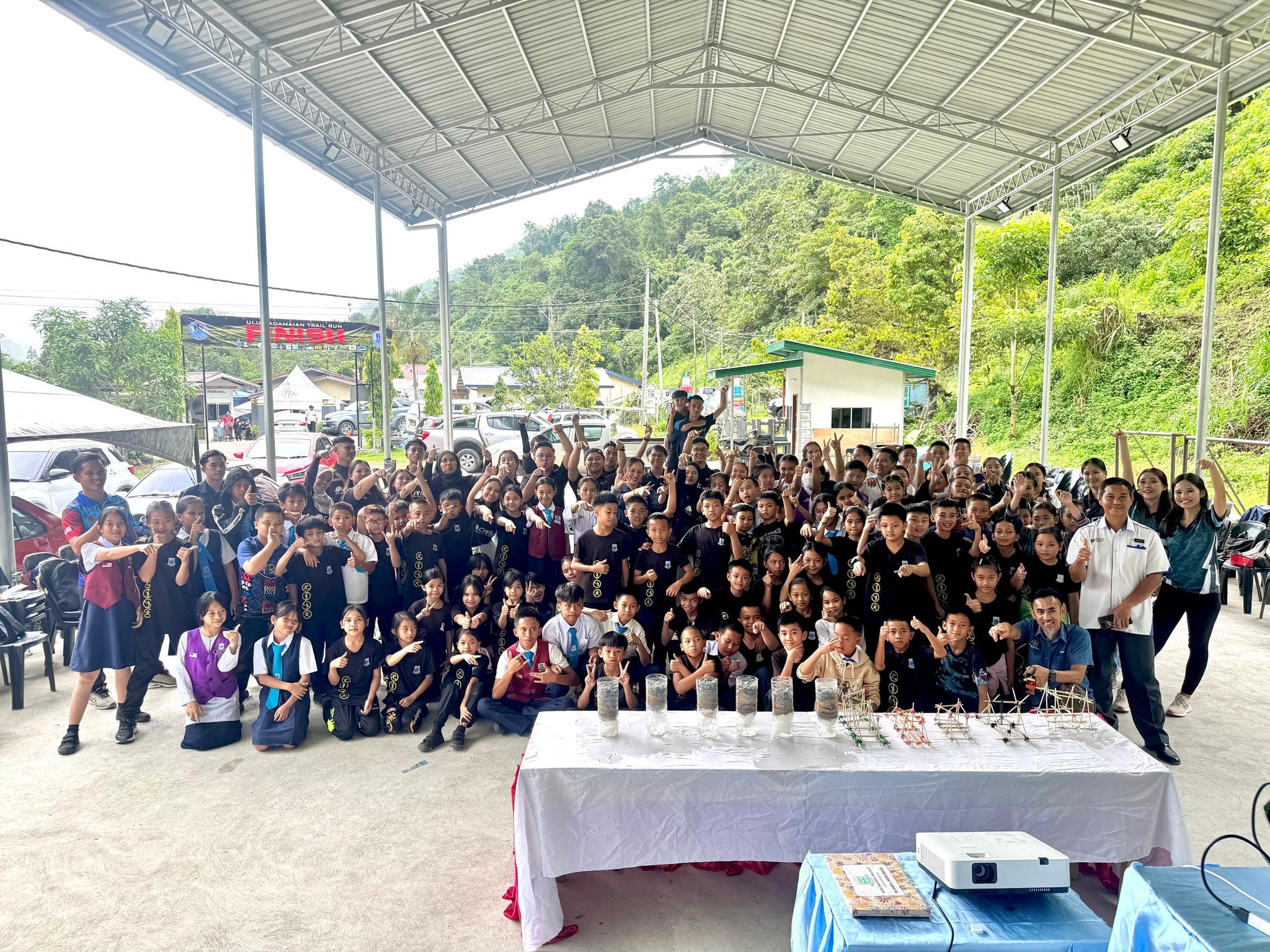
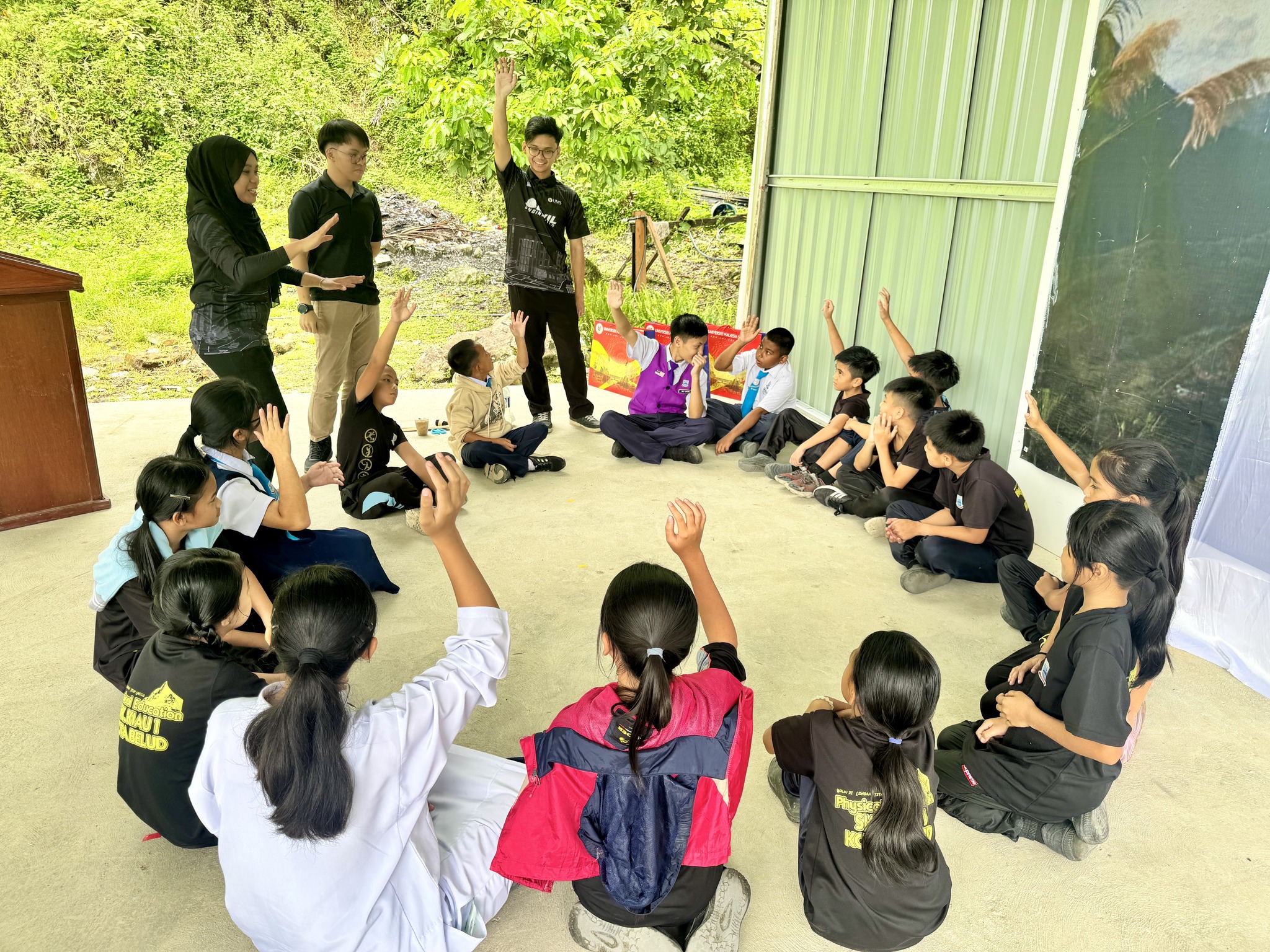
On 20 June 2025, the Professor @ School: Tunas STEM Desa programme, led by AP Ir. Ts. Dr. Lillian Gungat, delivered an engaging STEM learning experience for 85 students from SK Kiau I, Kota Belud. Supported by 24 final-year Civil Engineering students and coordinated by the Civil Engineering Club (CEC), this programme introduced rural primary students to engineering concepts through hands-on activities. Students participated in bridge-building workshops and constructed a water filtration system using sand, charcoal, stones, soil, and recycled bottles—demonstrating the principles of water purification and structural design. The programme successfully sparked early interest in STEM among rural schoolchildren, fostering creativity, teamwork, and problem-solving skills. It also strengthened university–community ties by creating meaningful interaction between UMS students and the local village. Support from the Sabah State Education Department, the Faculty of Engineering, and school leadership ensured strong community participation, reinforcing STEM outreach efforts in underserved areas.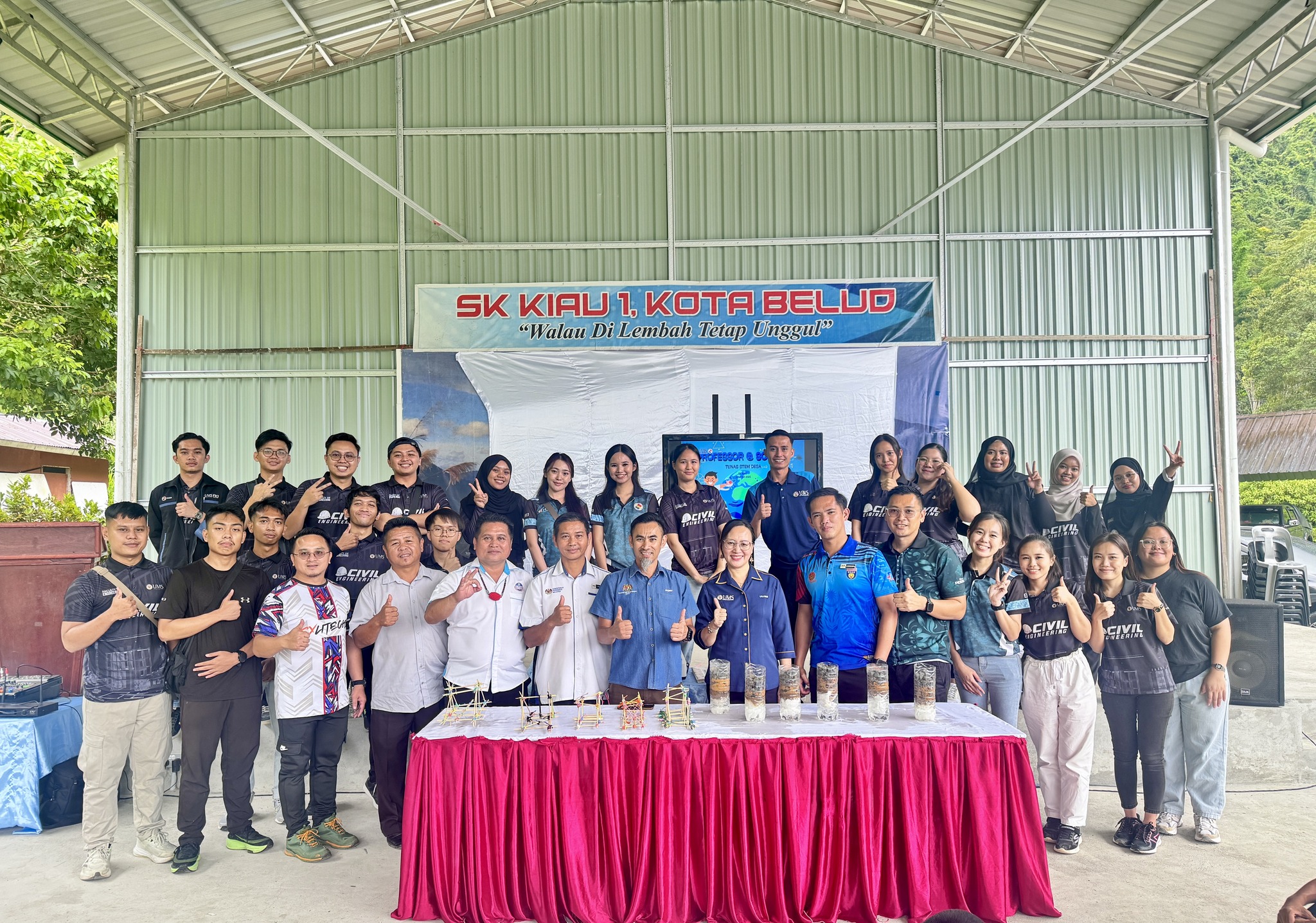
A.I.R Project – Advocacy for Clean Reservoir Water (Kampung Teluk Layang)
On 17 December 2023, 11 Civil Engineering students collaborated with NGO Borneo Komrad and villagers of Kampung Teluk Layang to conduct maintenance and cleaning of the community’s aging water reservoir. The reservoir serves 20 families, and the project involved desludging, clearing debris, restoring inflow channels, and assessing water quality to ensure it meets safe-consumption standards. Students applied theoretical knowledge on water treatment and environmental engineering directly to real-life rural challenges. The project improved the safety and reliability of the village’s main water source, positively affecting community health. It also strengthened environmental sustainability by preventing contamination and prolonging the lifespan of the reservoir system. Beyond water improvement, the initiative empowered local youths and enhanced students’ learning experience by exposing them to community-based engineering solutions. It reinforced the principle that clean water is a basic human right, aligning with SDG 6.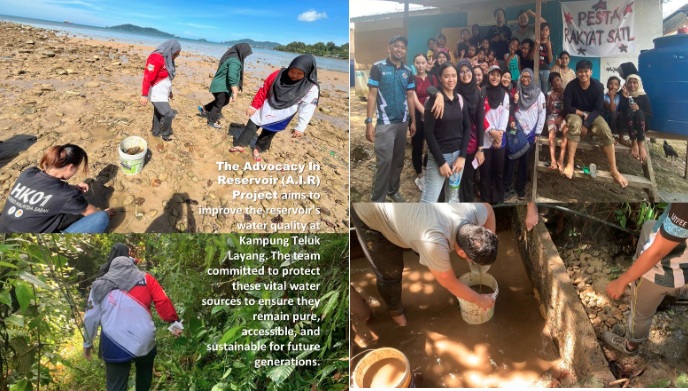
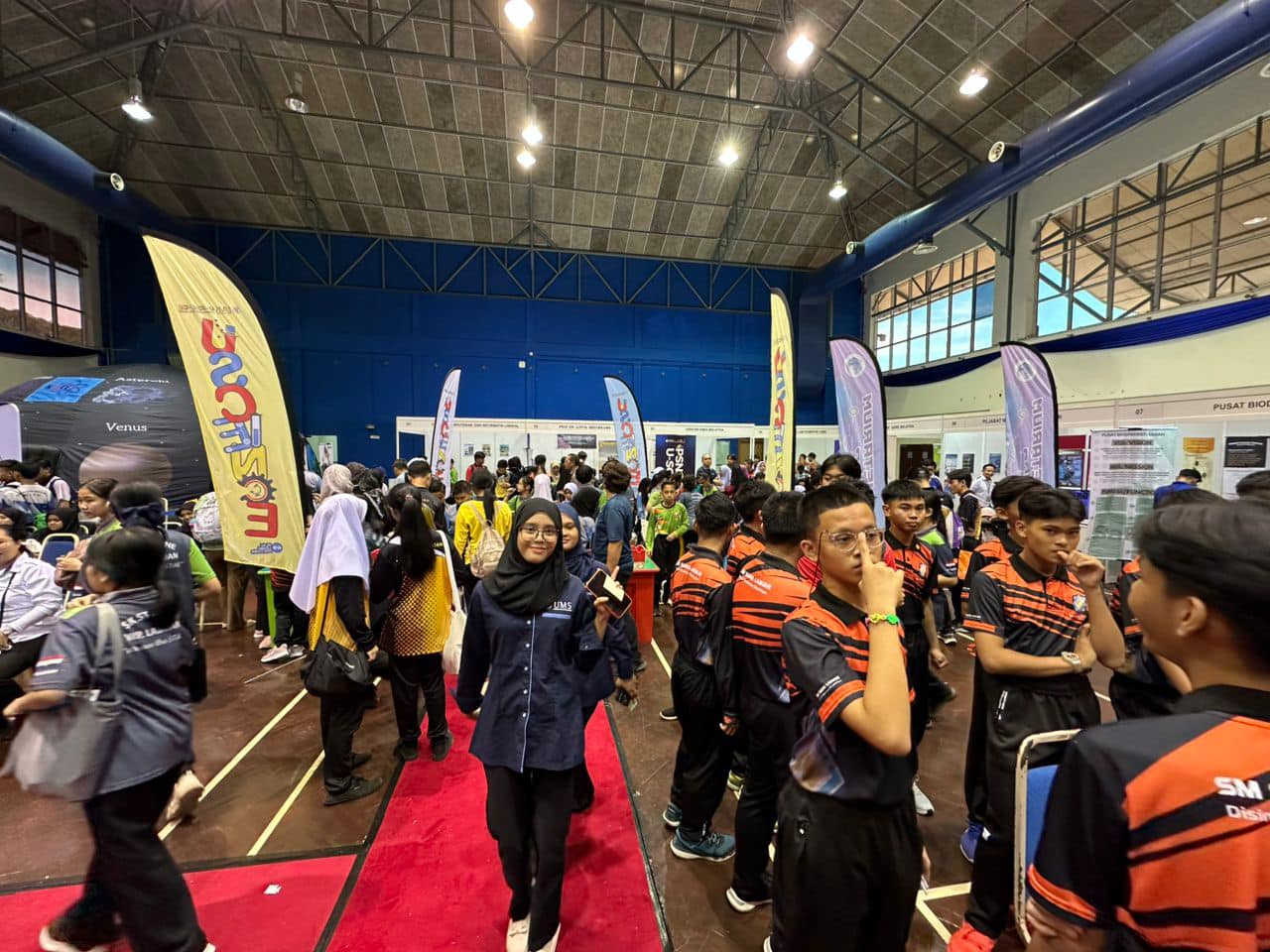
Karnival Sains, Teknologi & Inovasi (STI) Labuan 2024
Held on 9–10 November 2024 at UMSKAL, the national STI Carnival—officiated by the Deputy Minister of MOSTI—featured UMS as a key exhibitor through U-Science and the Faculty of Science and Natural Resources (FSSA). The exhibition showcased science-based innovations, environmental research outputs, and STEM demonstrations aimed at inspiring school students across Labuan. FSSA academics, including PM Dr. Mohd Khalizan Sabullah, Ts. Rechard Lee, and Dr. Hardianshah Saleh, engaged participants with applied science topics. The carnival promoted STEM interest among primary and secondary students, enhancing scientific curiosity and outreach visibility. A highlight was the session by Prof. Dr. Justin Sentian, who shared his Antarctica research, recognised by the Malaysian Book of Records, inspiring youth about climate science. The event strengthened Labuan’s STEM culture and contributed to national efforts in nurturing future scientists and innovators.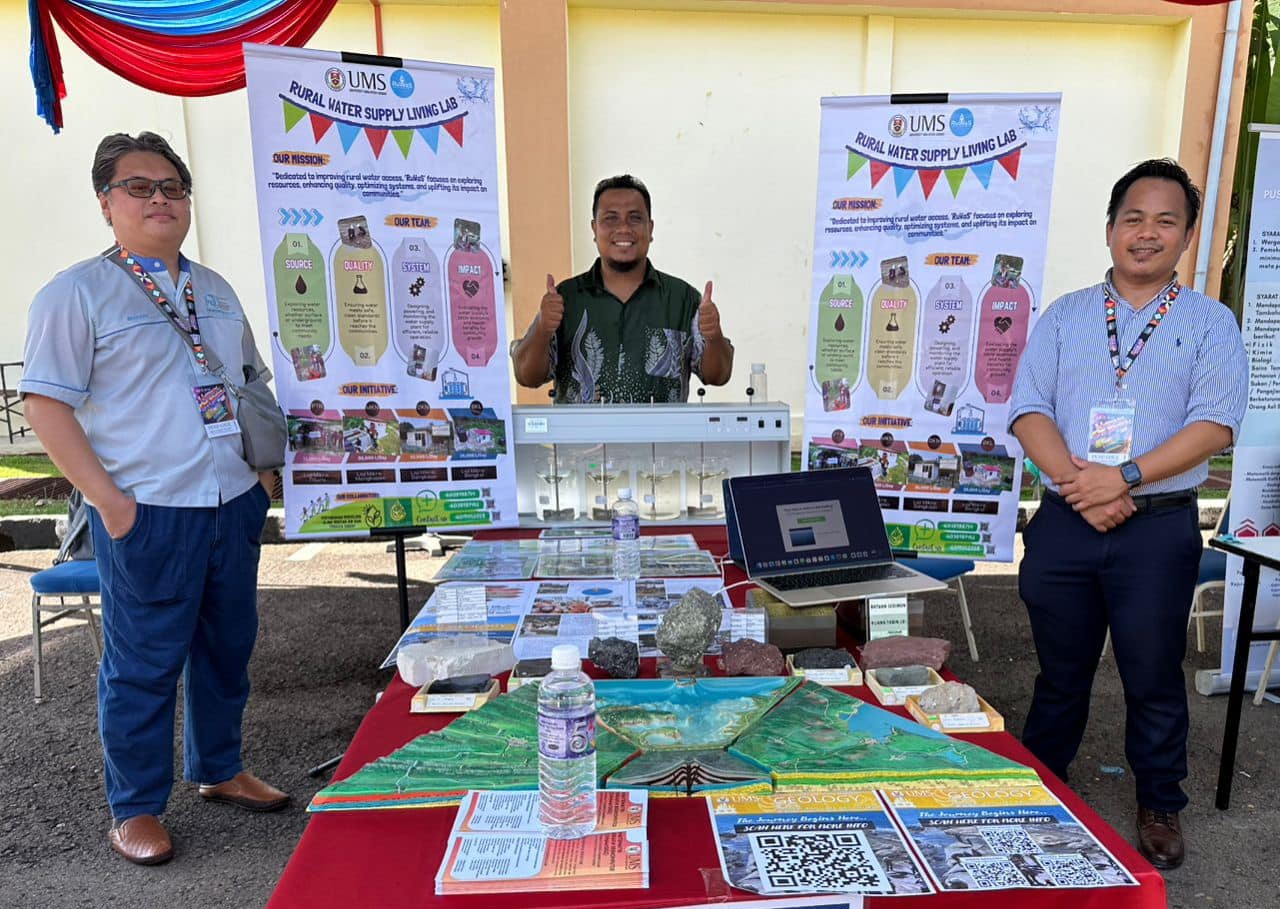
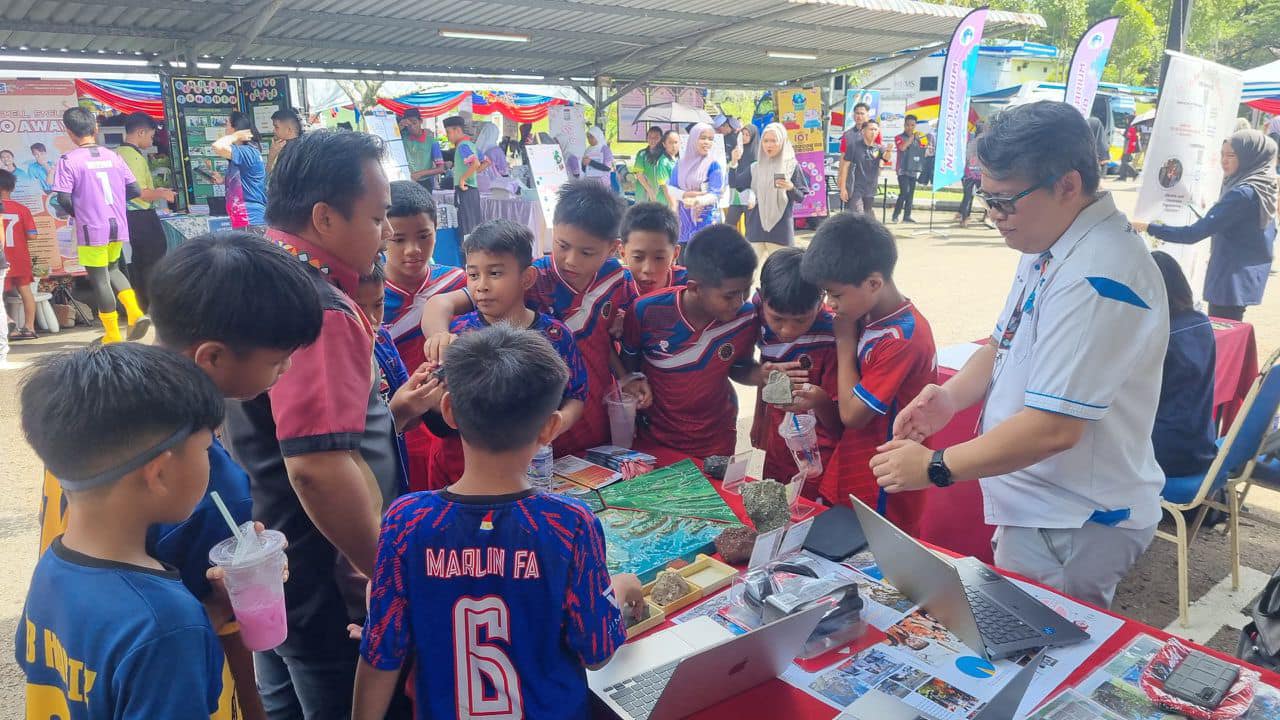
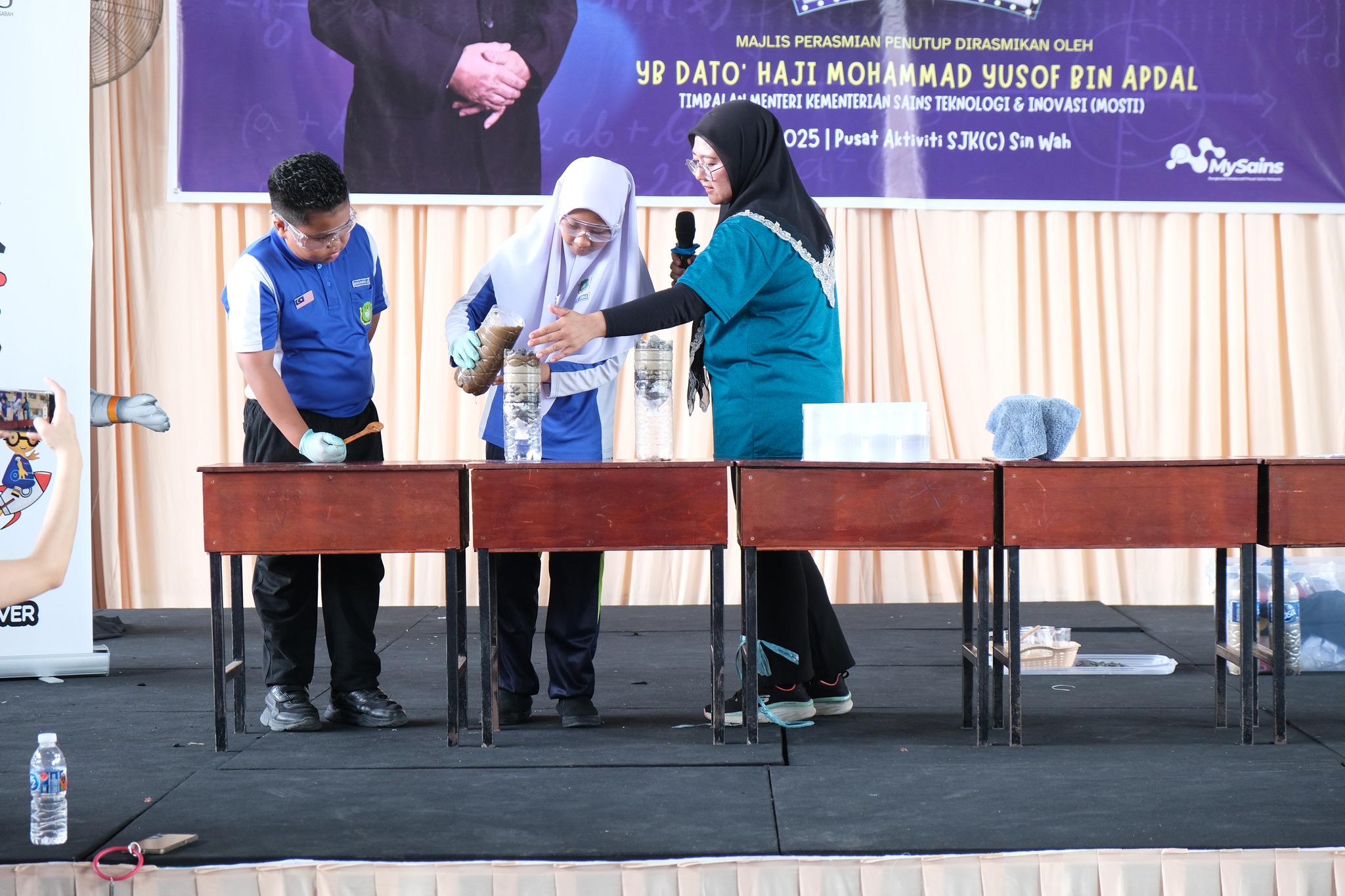
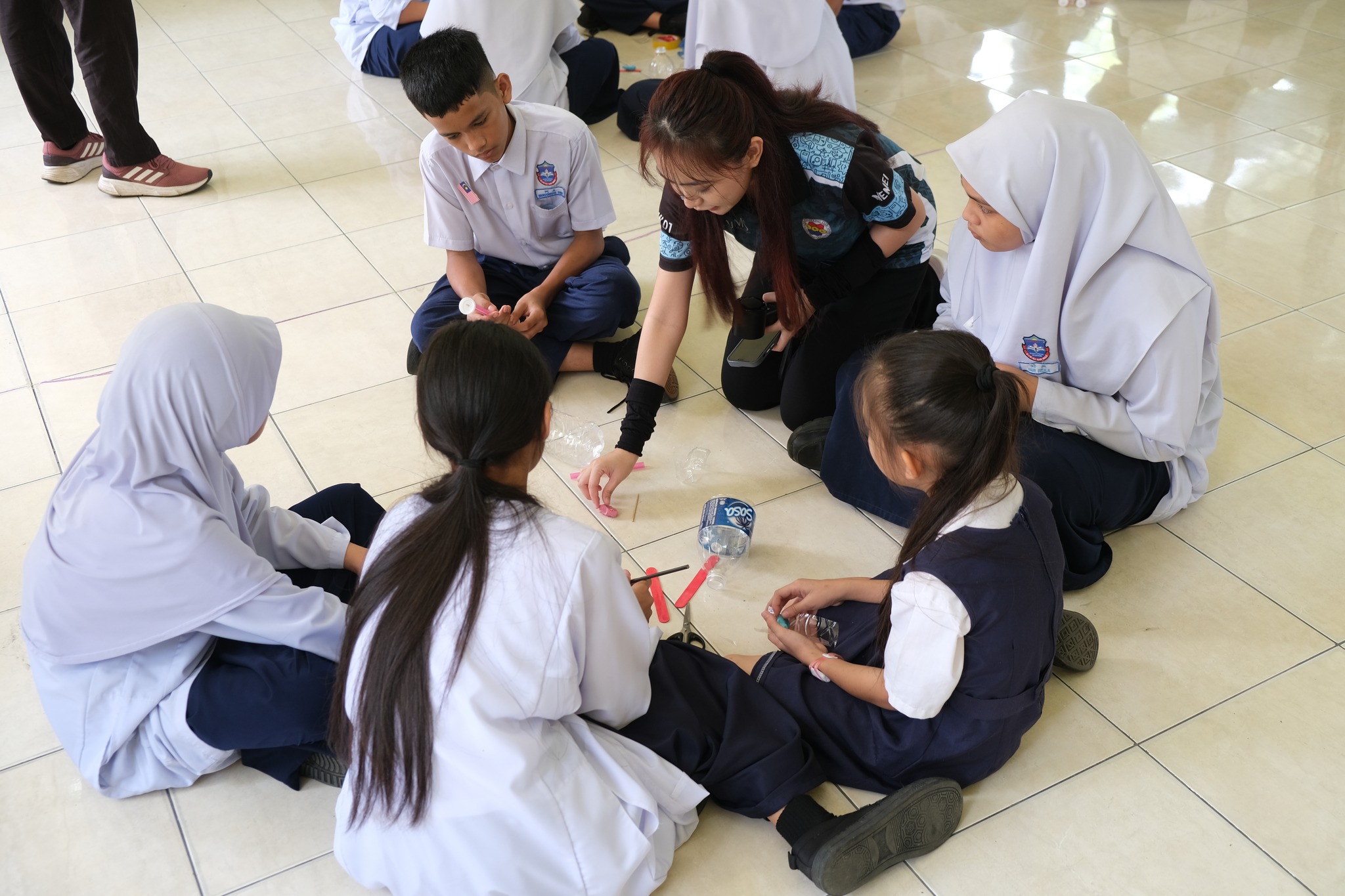
Karnival STEM @ Lahad Datu (SJK(C) Sin Wah)
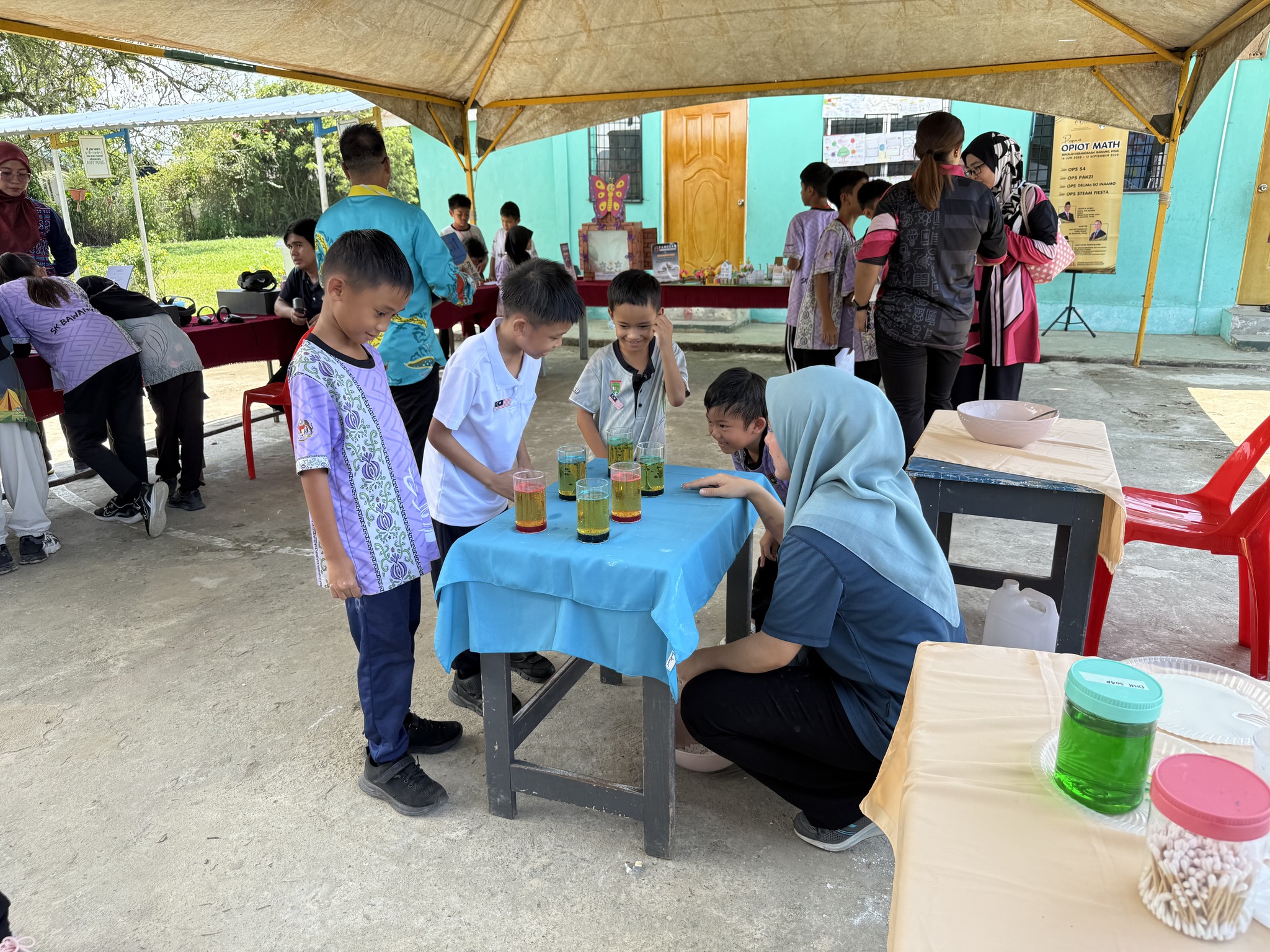
Continuing from the first day’s success, the second day of the STEM Carnival at Lahad Datu (8 May 2025) showcased UMS-led activities including Water Filtration demonstrations, Natural pH Indicator experiments, an Egg Drop Challenge, and an Air Powered Race activity. These were conducted by U-Science UMS and the Civil Engineering Club. A motivational talk on STEM + AI was delivered by Ts. Dr. Nurul Shahadahtul Afizah, highlighting the future of integrating engineering with artificial intelligence. Students from 10 primary schools participated. The carnival provided rural students hands-on exposure to engineering and science, enhancing creativity, experimentation skills, and confidence in STEM learning. It also strengthened UMS’s presence in East Sabah, positioning the university as a leader in STEM outreach and future-skills development. The event’s strong participation demonstrated growing interest in STEM fields in Lahad Datu communities.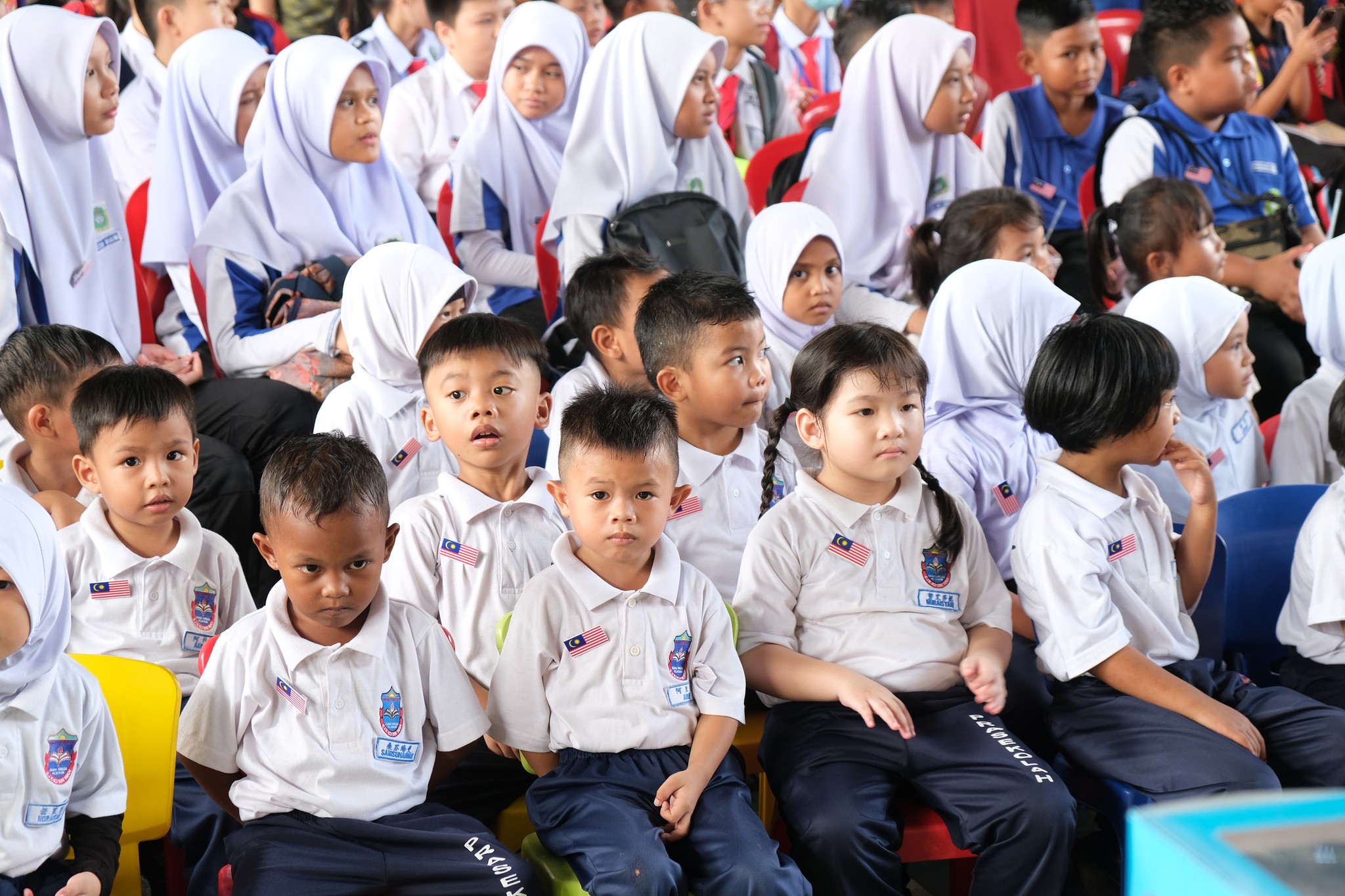
Research Collaboration Visit – Faculty of Engineering (UMS) & DID Inanam
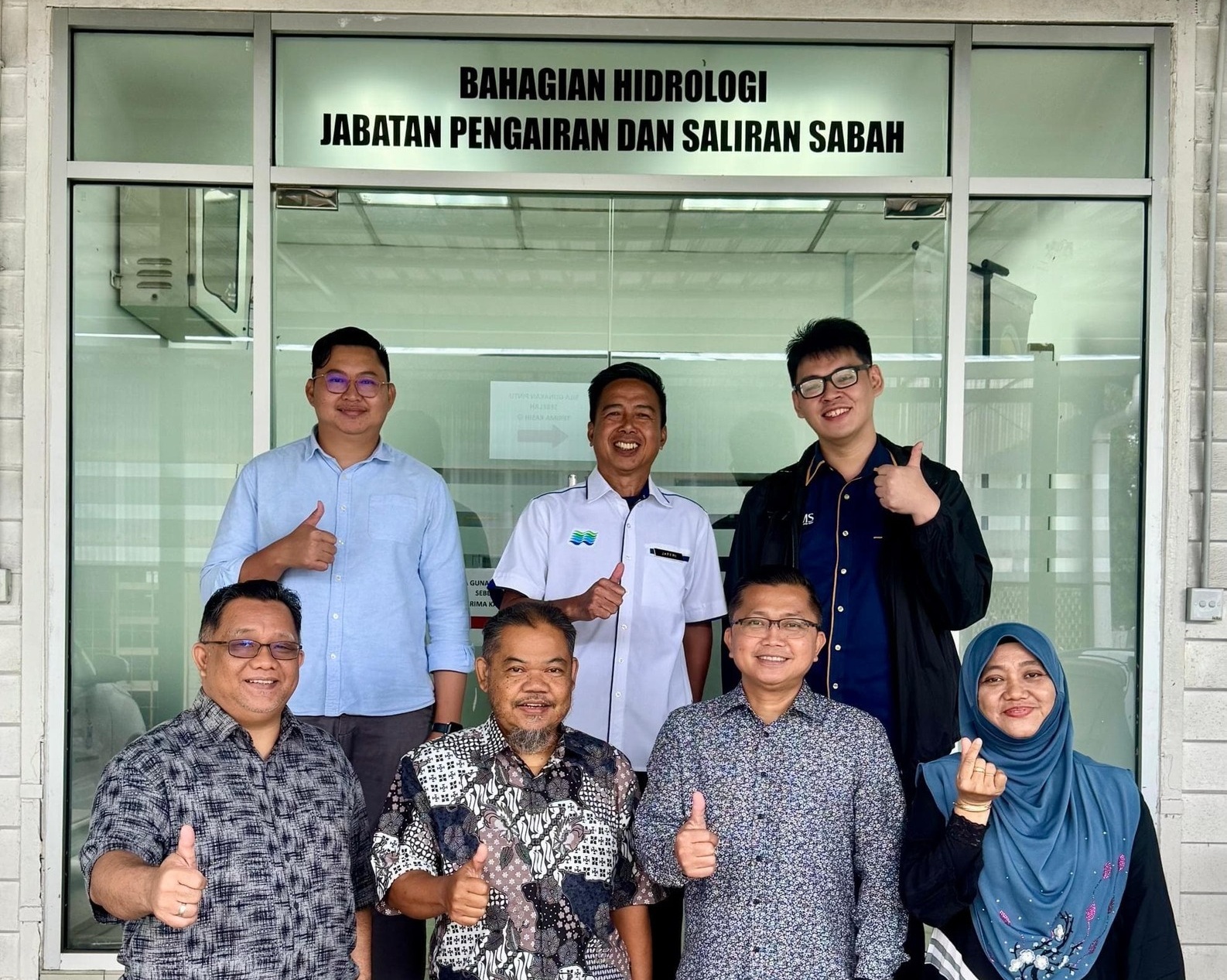
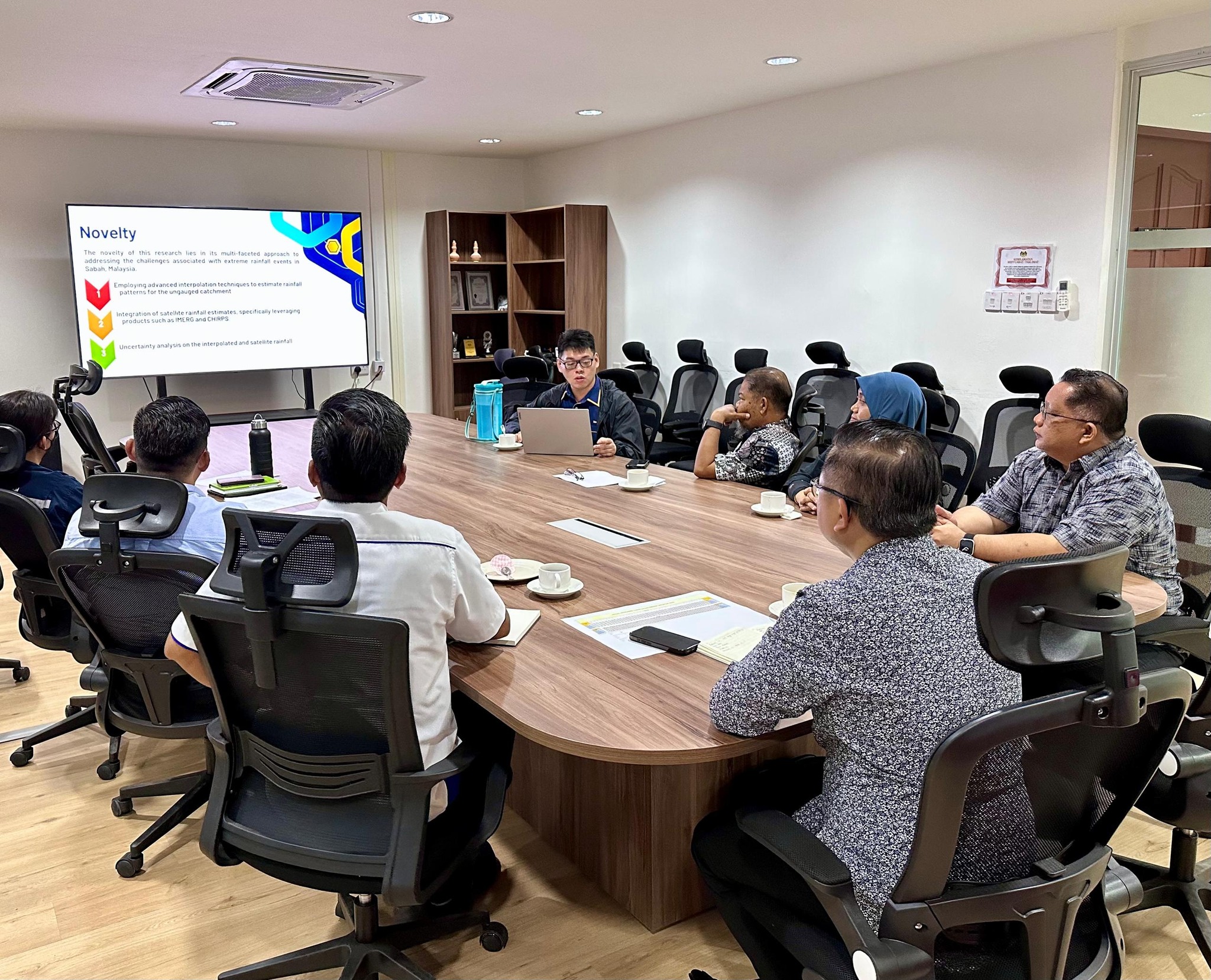
On 5 December 2024, researchers from UMS’s Faculty of Engineering visited the Sabah Department of Irrigation and Drainage (DID) in Inanam to initiate joint work on water management and environmental challenges. Led by Prof. Ir. Dr. Nurmin Bolong and a multidisciplinary FKJ delegation, the meeting focused on data-sharing initiatives, postgraduate opportunities, and accelerating research supporting flood mitigation, watershed engineering, and sustainable water infrastructure. The collaboration strengthens Sabah’s technical capacity to respond to climate-related water challenges, including flooding, sedimentation, and water-supply risks. It also opens pathways for industry-driven research and student placements, ensuring that academic knowledge directly contributes to public-sector problem-solving and sustainable water governance.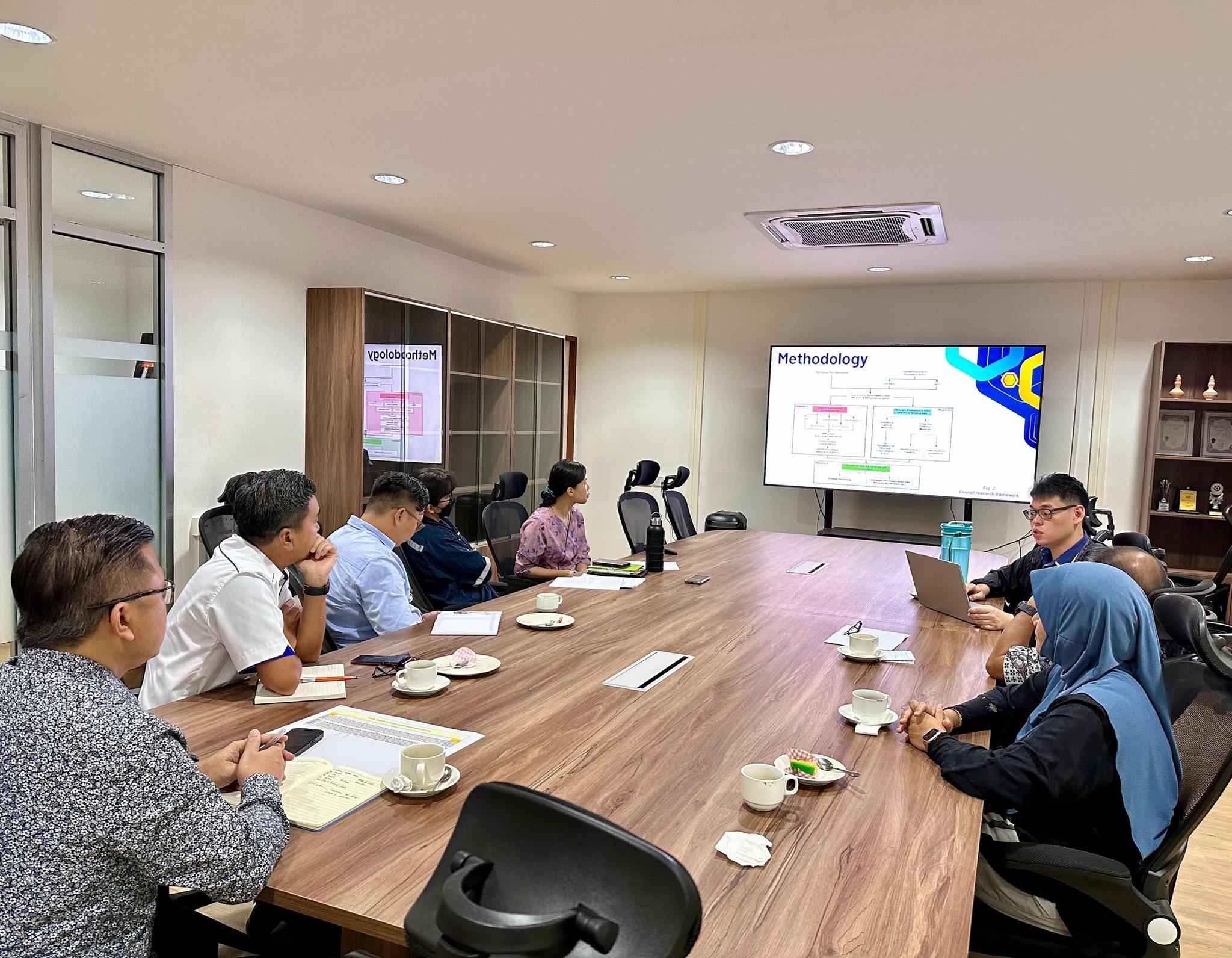
Educational Site Visit – Moyog Water Treatment Plant & Babagon Dam
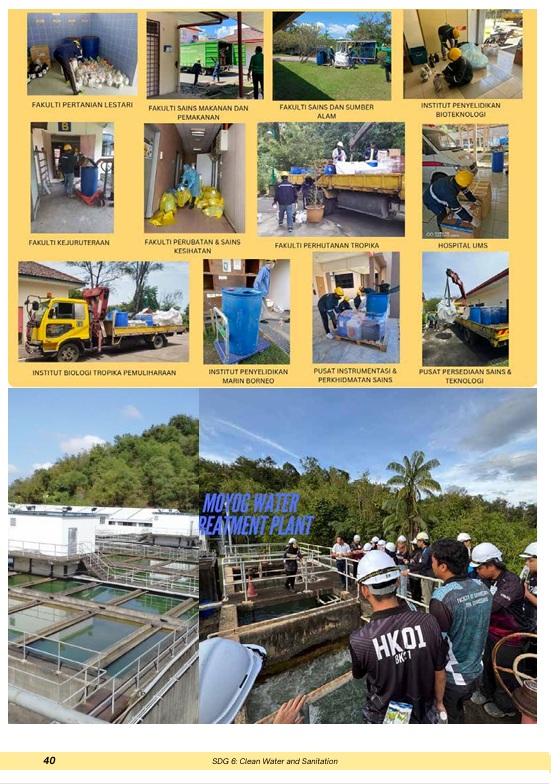
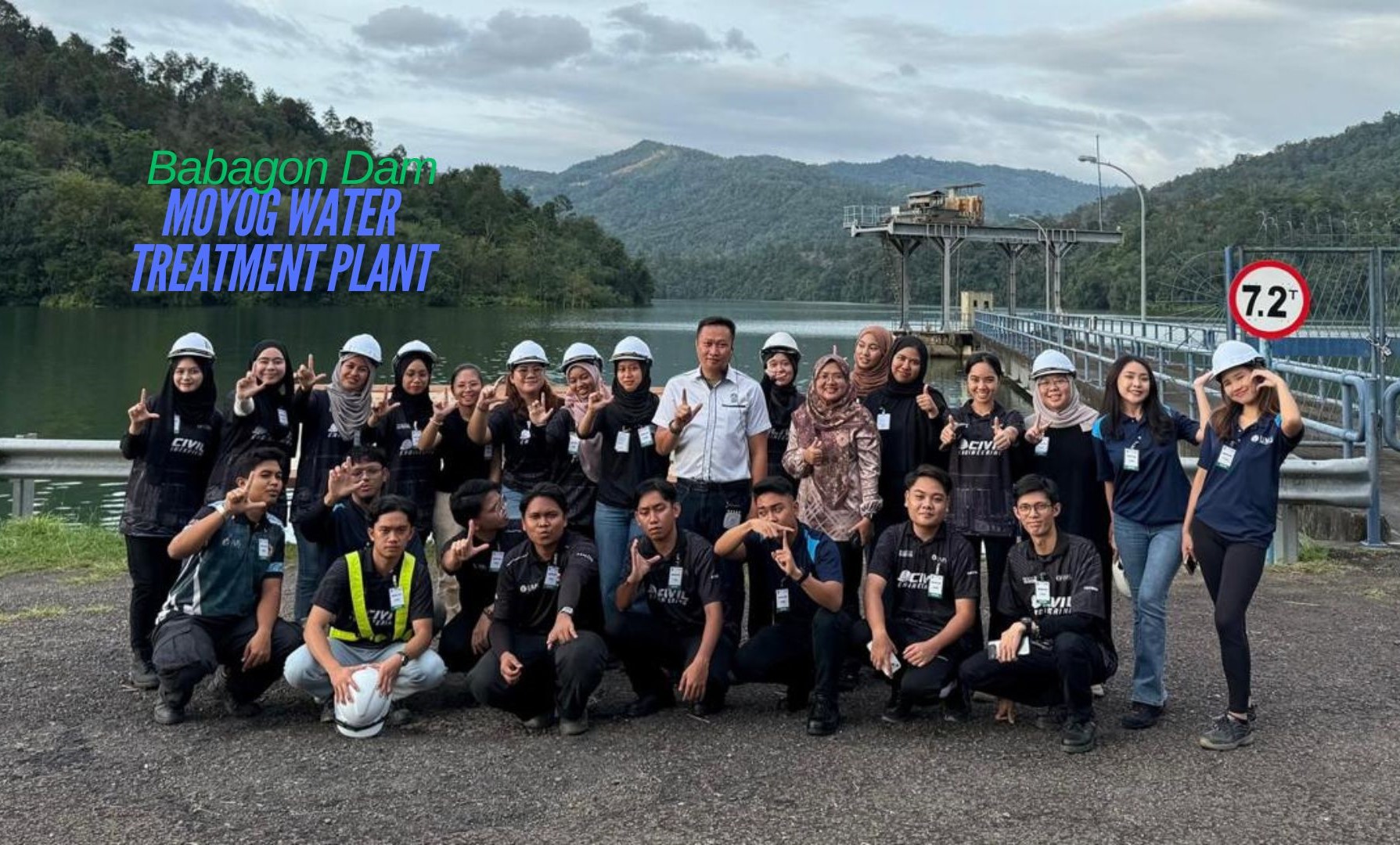
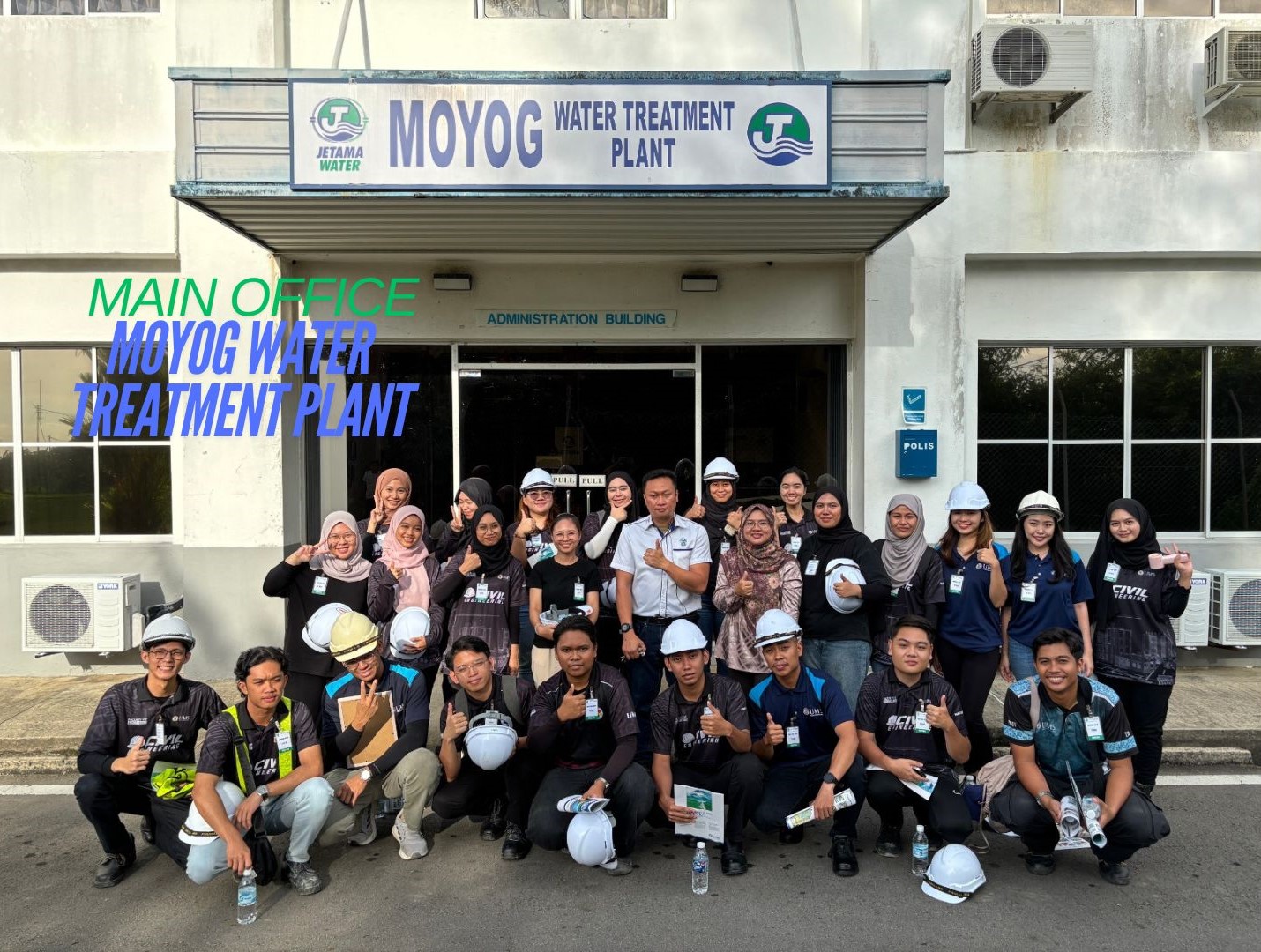
On 6 December 2024, 24 fourth-year engineering students from the Water and Wastewater Engineering course visited the Moyog Water Treatment Plant and Babagon Dam. Guided by Ts. Dr. Siti Nor Farhana Zakaria, students observed aeration, chemical mixing, sedimentation, filtration, sludge handling, and water-quality monitoring. They also learned about Babagon Dam’s role in regional water supply, safety protocols, and infrastructure maintenance. The site visit allowed students to connect theoretical classroom concepts to real-world water engineering systems. It strengthened understanding of Malaysia’s water treatment infrastructure and underscored the importance of integrating sustainability into engineering solutions. Students gained insights into energy efficiency, waste reuse, and system optimisation—skills essential for future water professionals.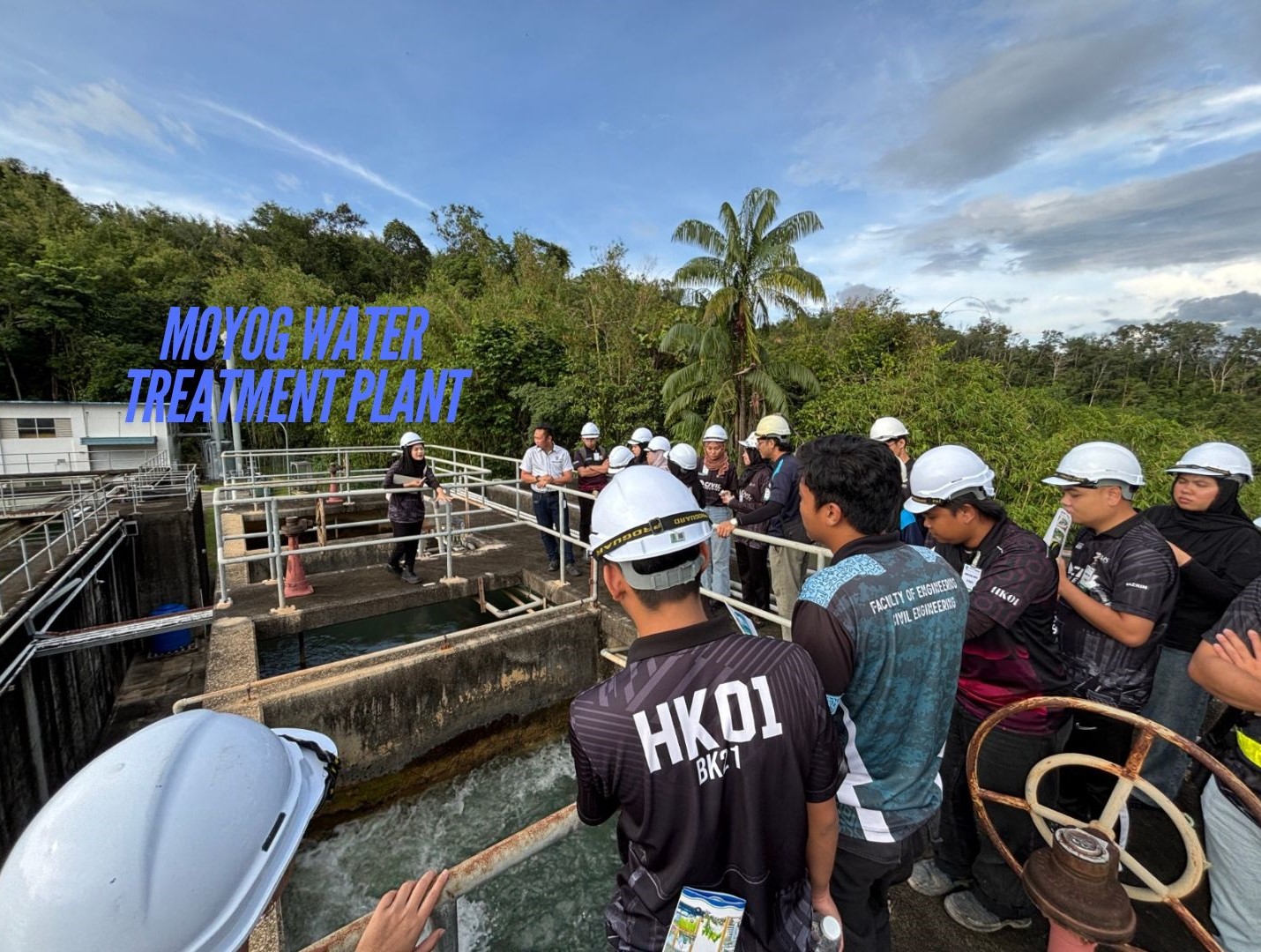
National Symposium on Sustainable Construction (DOBE Research)
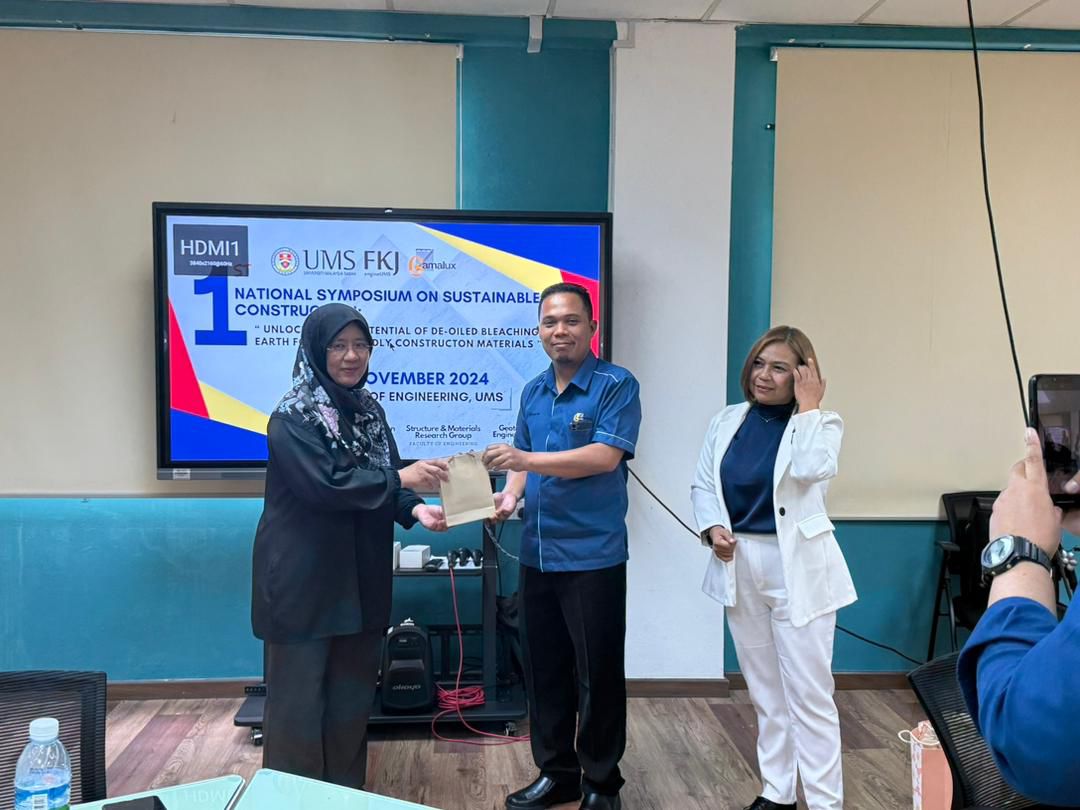
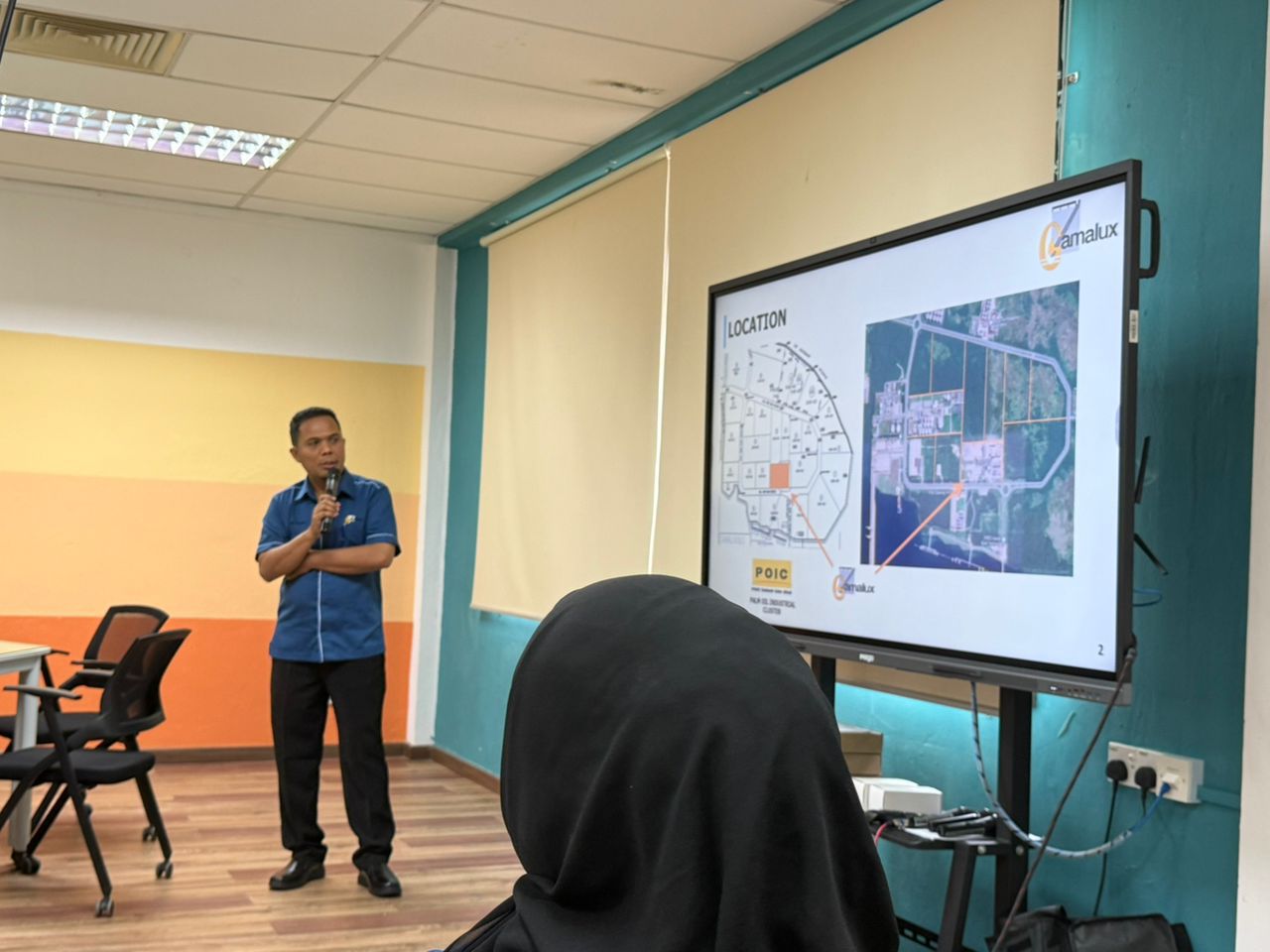
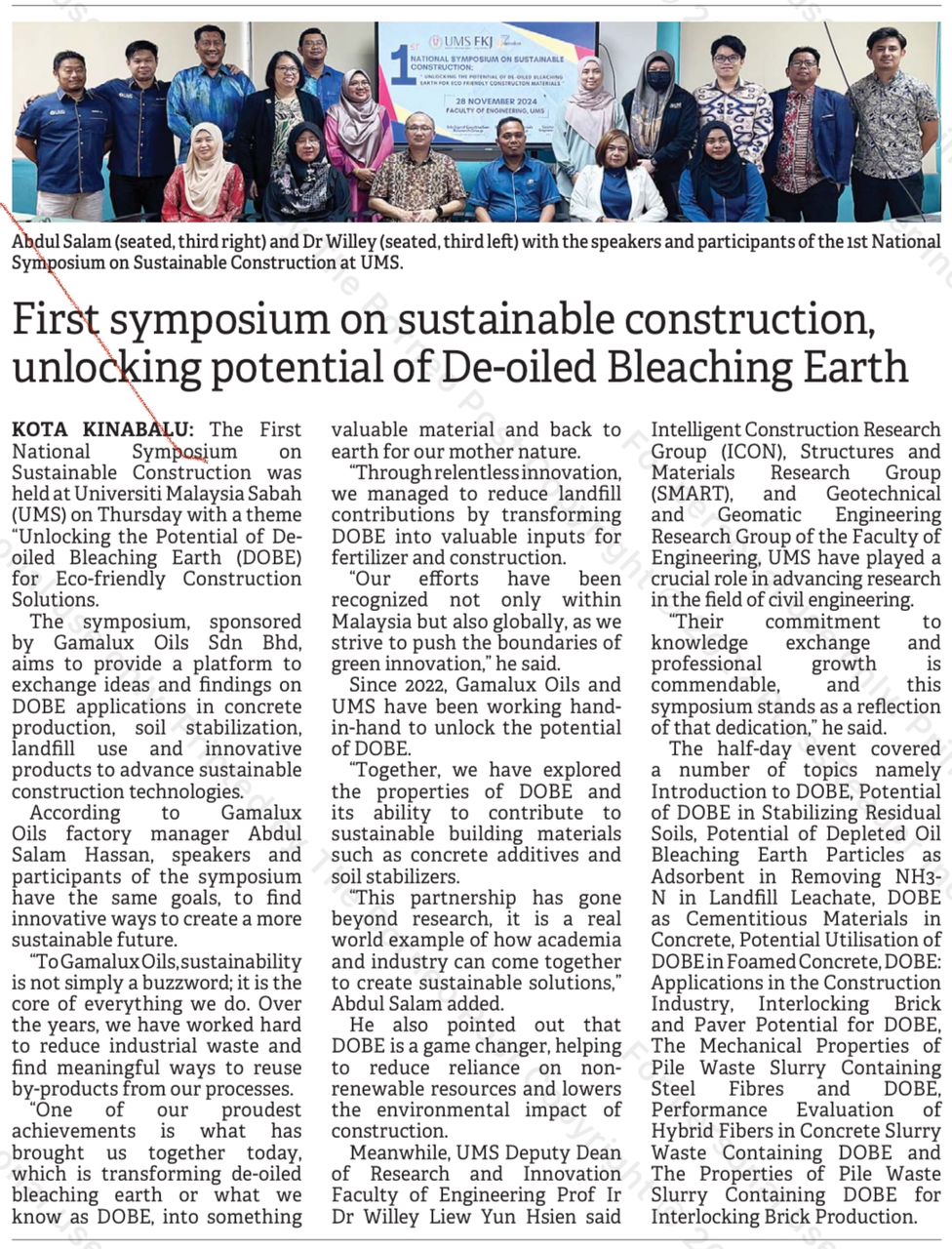
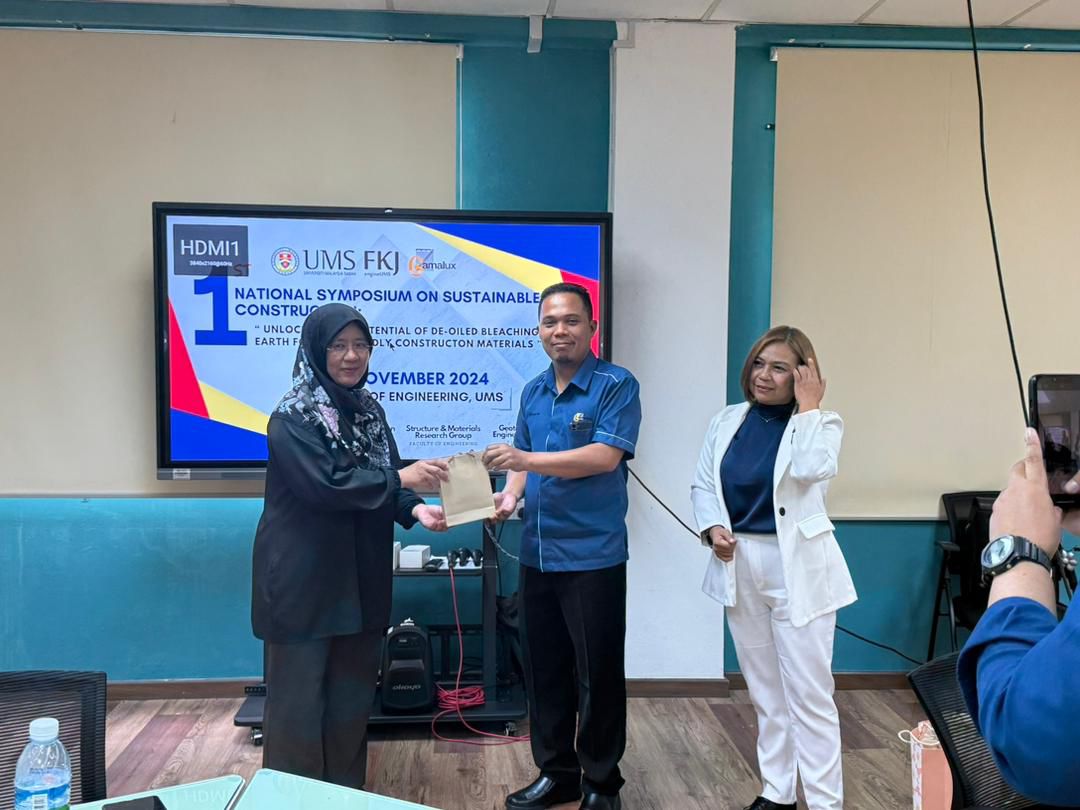
On 28 November 2024, the Faculty of Engineering hosted the 1st National Symposium on Sustainable Construction, featuring collaboration with Gamalux Oils Sdn. Bhd. The symposium explored the potential of De-Oiled Bleaching Earth (DOBE) for eco-friendly construction materials. Experts delivered 11 research presentations, while keynote speakers highlighted industrial adoption opportunities and circular-economy benefits. The symposium catalysed ongoing collaborations between academia and industry, promoting innovative solutions for sustainable construction. The event strengthened Malaysia’s engineering research ecosystem and demonstrated UMS’s leadership in transforming industrial waste into valuable green materials—contributing to SDG 9 (Industry, Innovation & Infrastructure) and SDG 12 (Responsible Consumption & Production).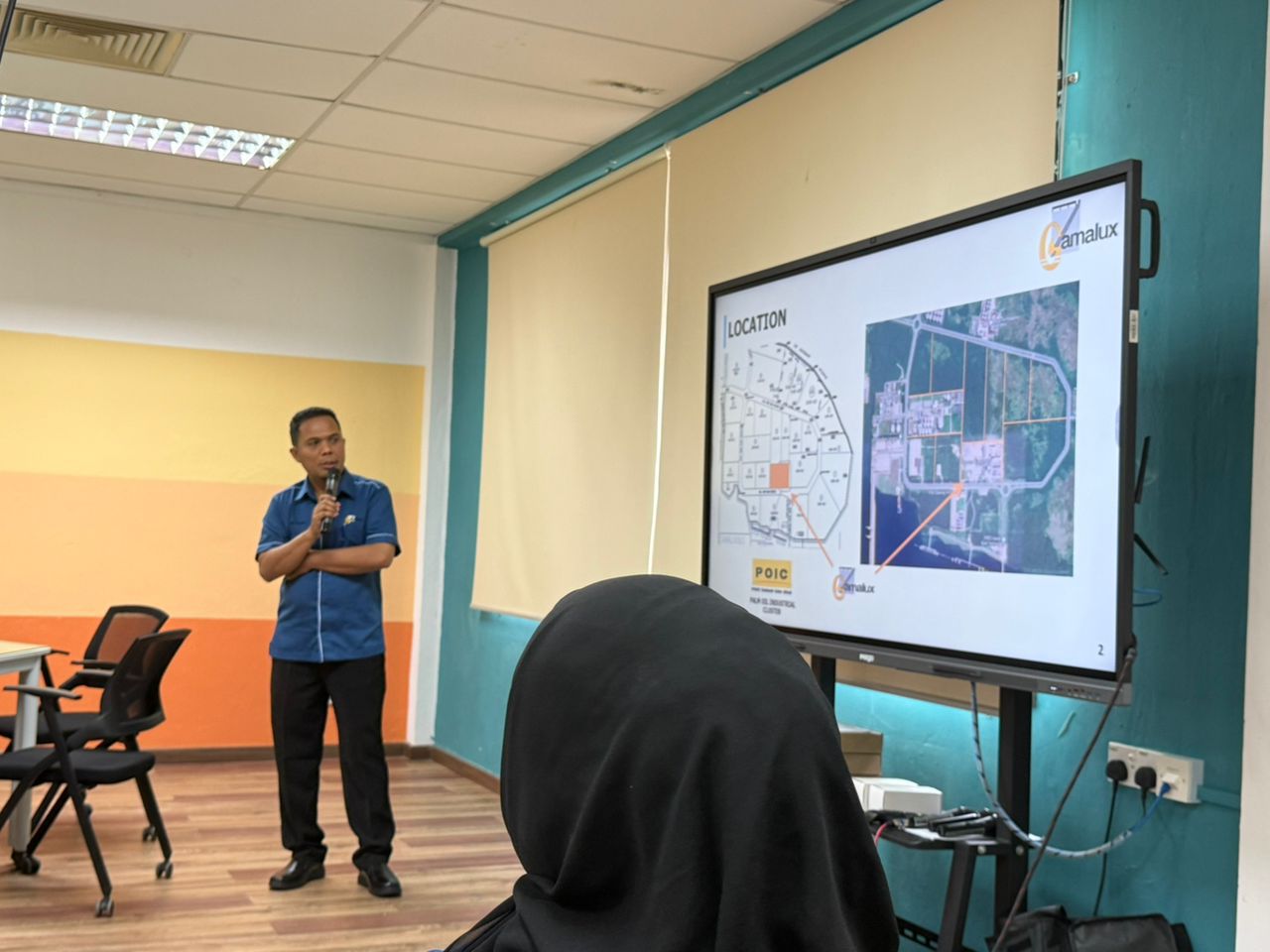
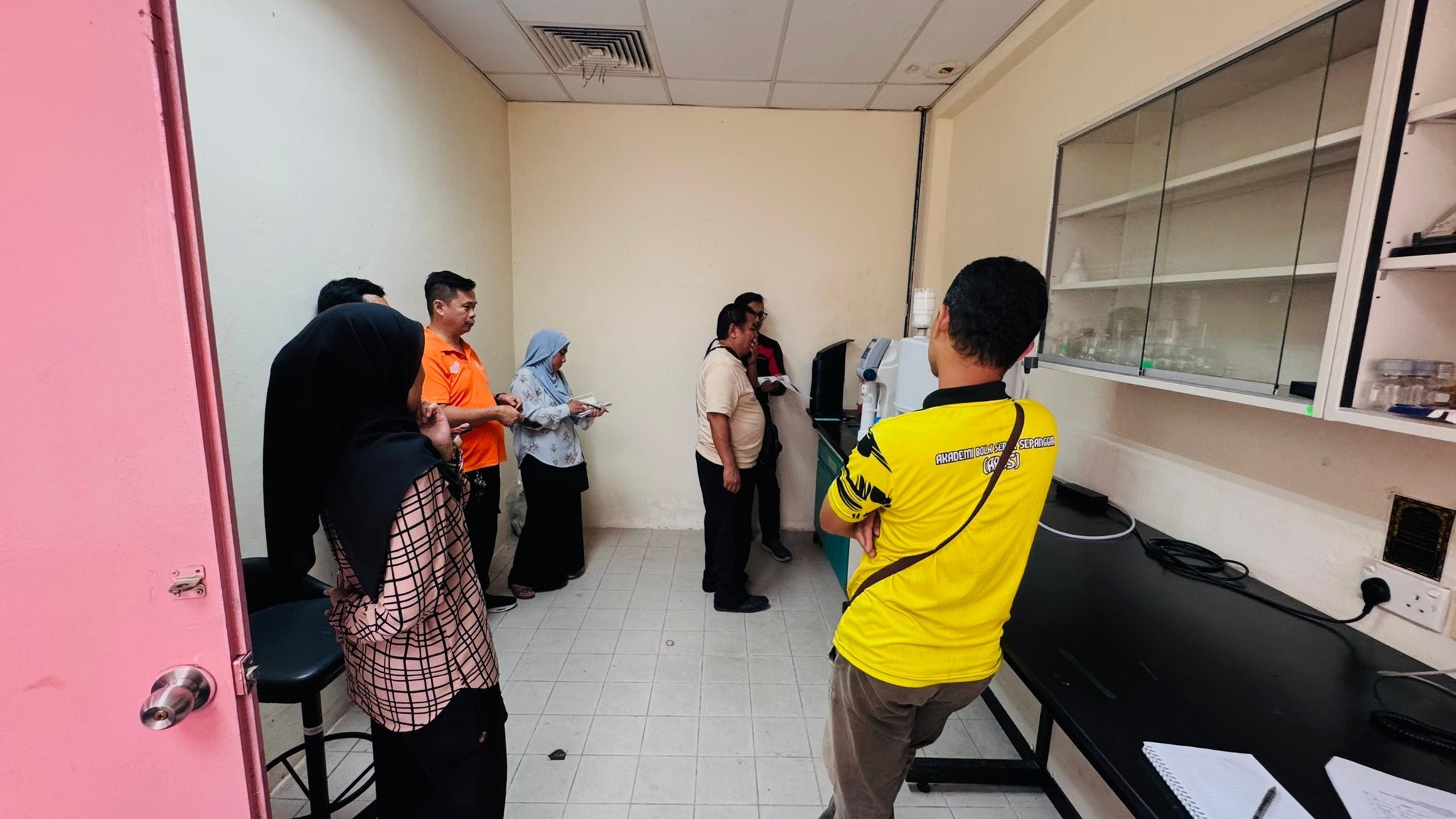
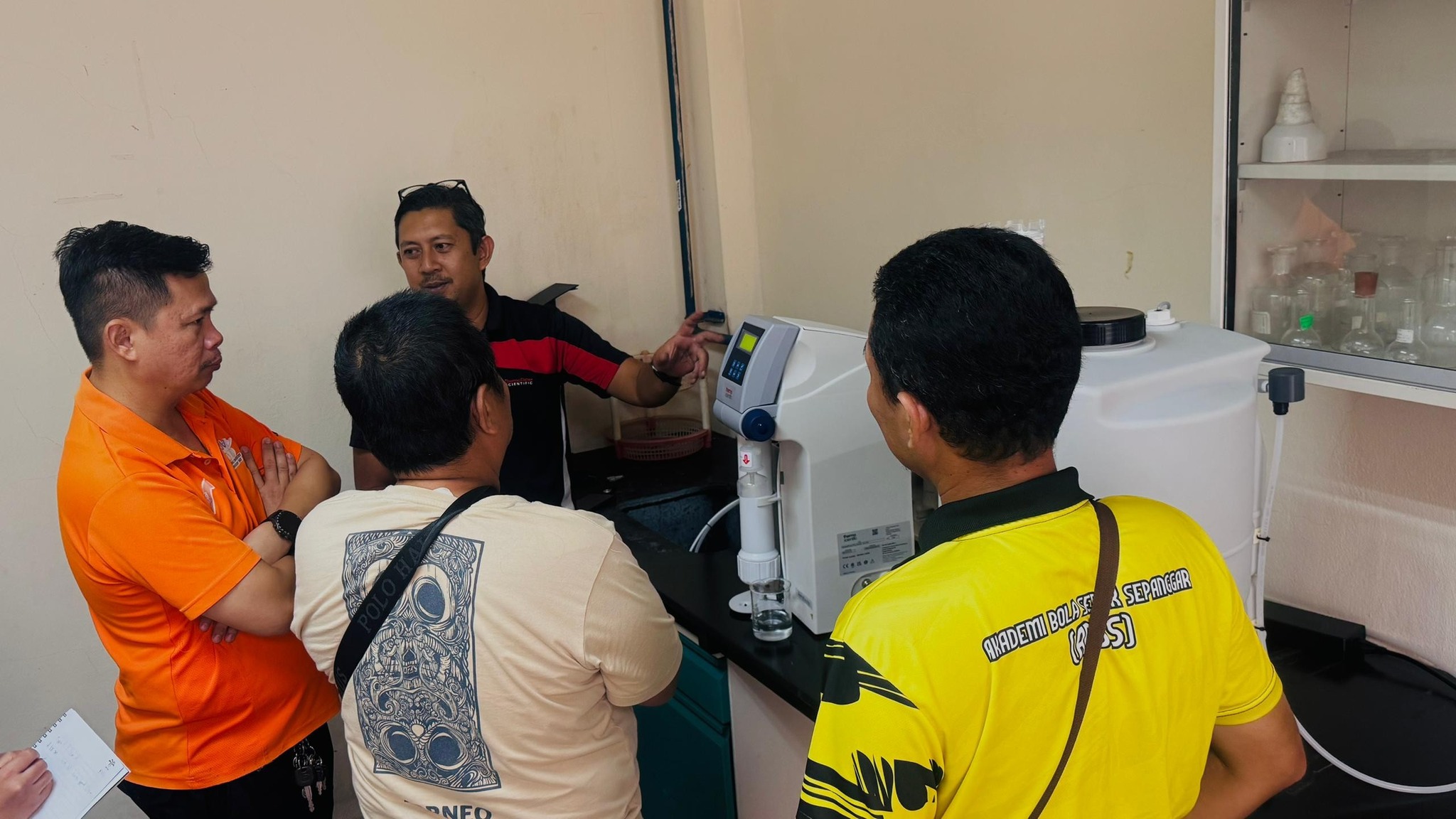
Water Purification System Training – Faculty of Engineering
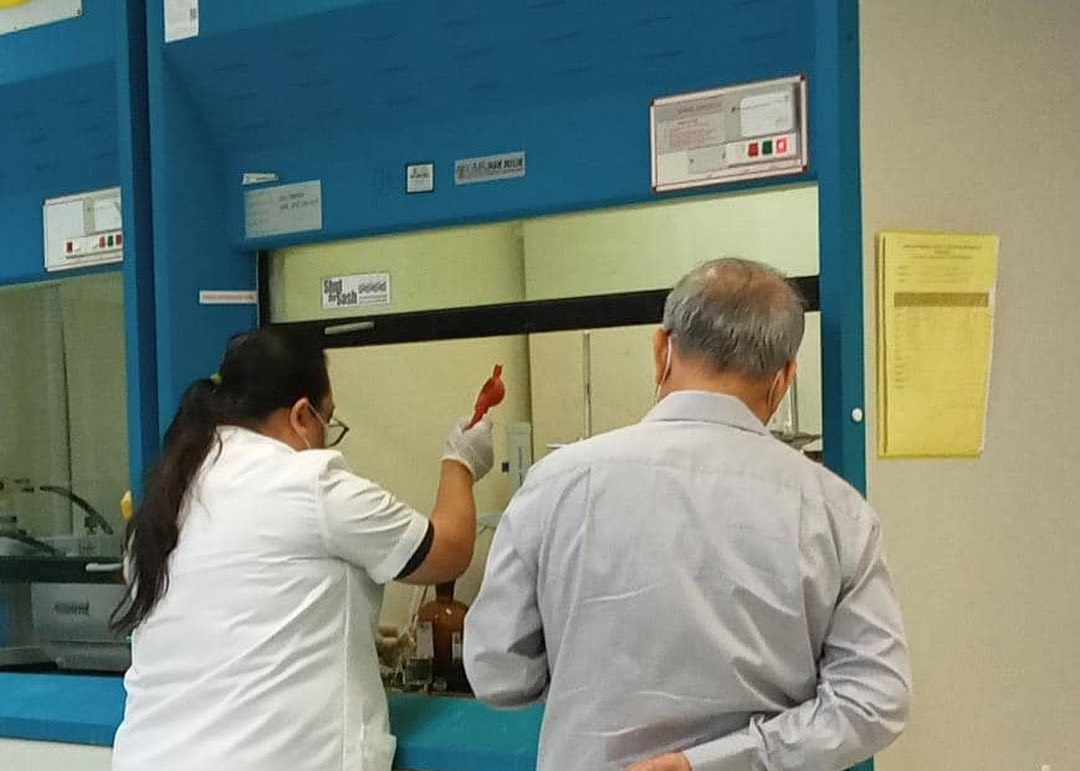
Chemical Engineering Laboratory hosted a full-day Water Purification System Training for staff and postgraduate students. Conducted by Thermo Fisher representative En. Hairuddin, the session covered operation and maintenance of RO, UV, and deionisation systems. 10 participants received hands-on demonstrations and technical guidance to ensure compliance with laboratory safety standards.
The training improved laboratory competency, ensuring that essential water purification equipment is safely and efficiently used. It enhances research reliability, reduces downtime from equipment failure, and builds technical capacity among academic staff. Regular training cycles, as encouraged by the lab coordinator, will support long-term operational excellence and research integrity.
<
UMS Use of Sustainable Water Extraction Technologies On and Off Campus
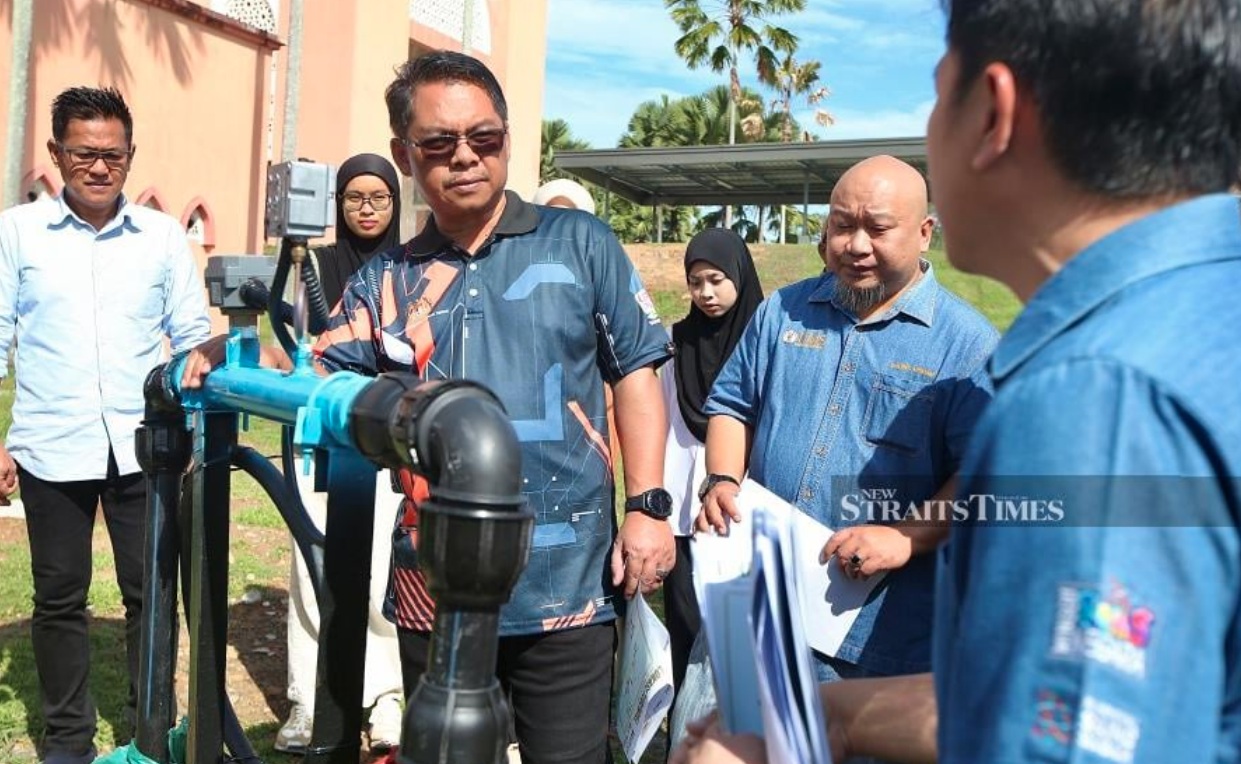
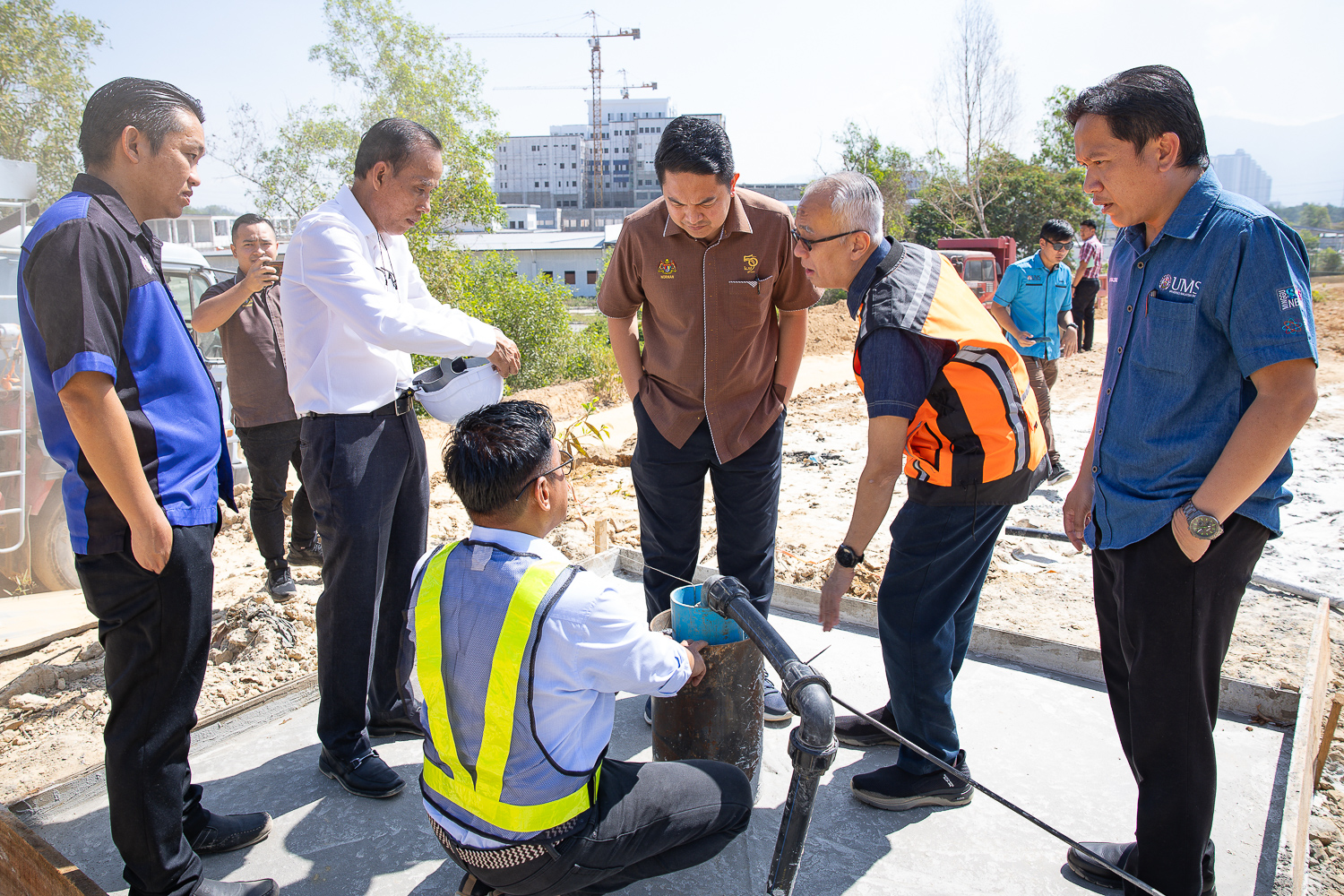
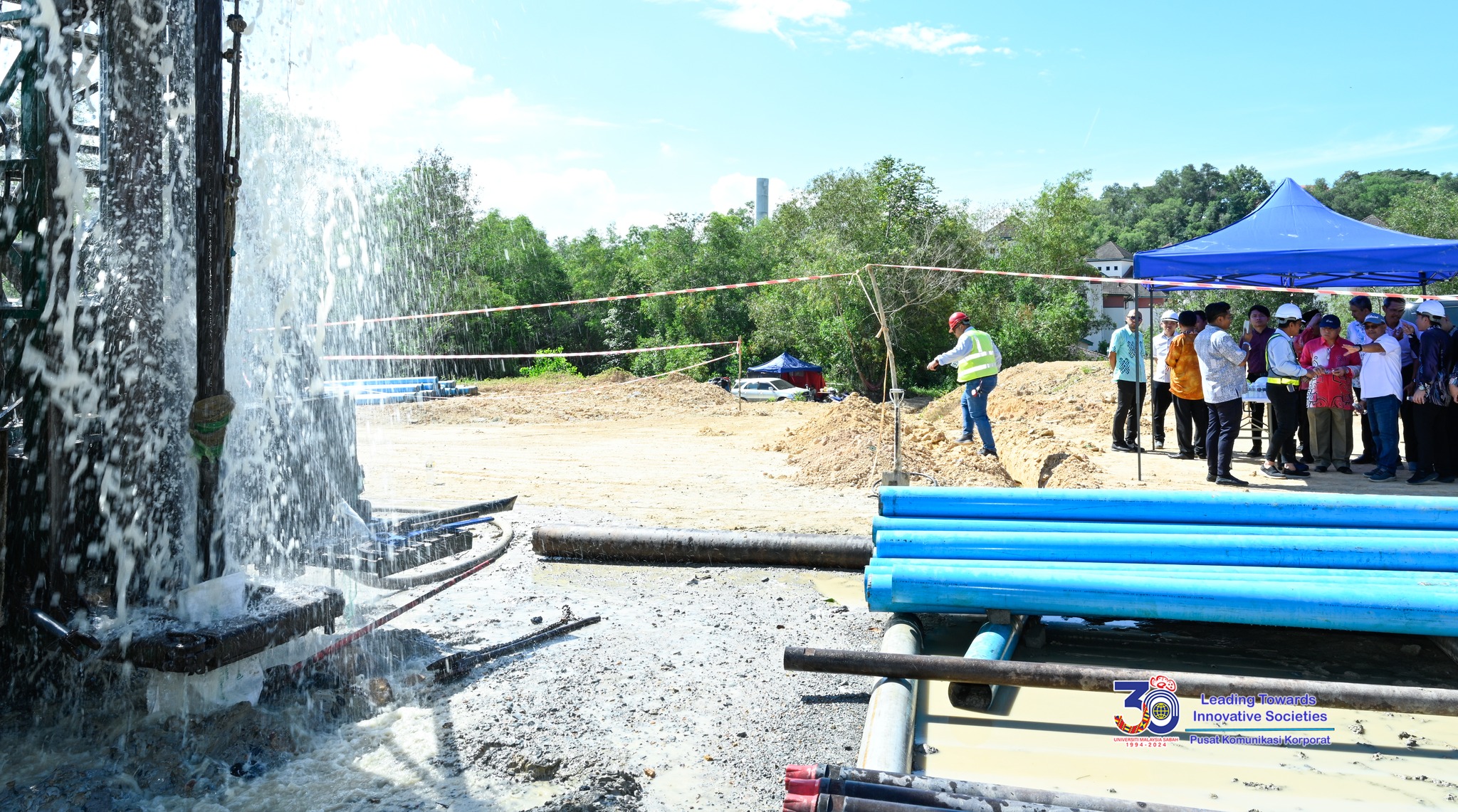
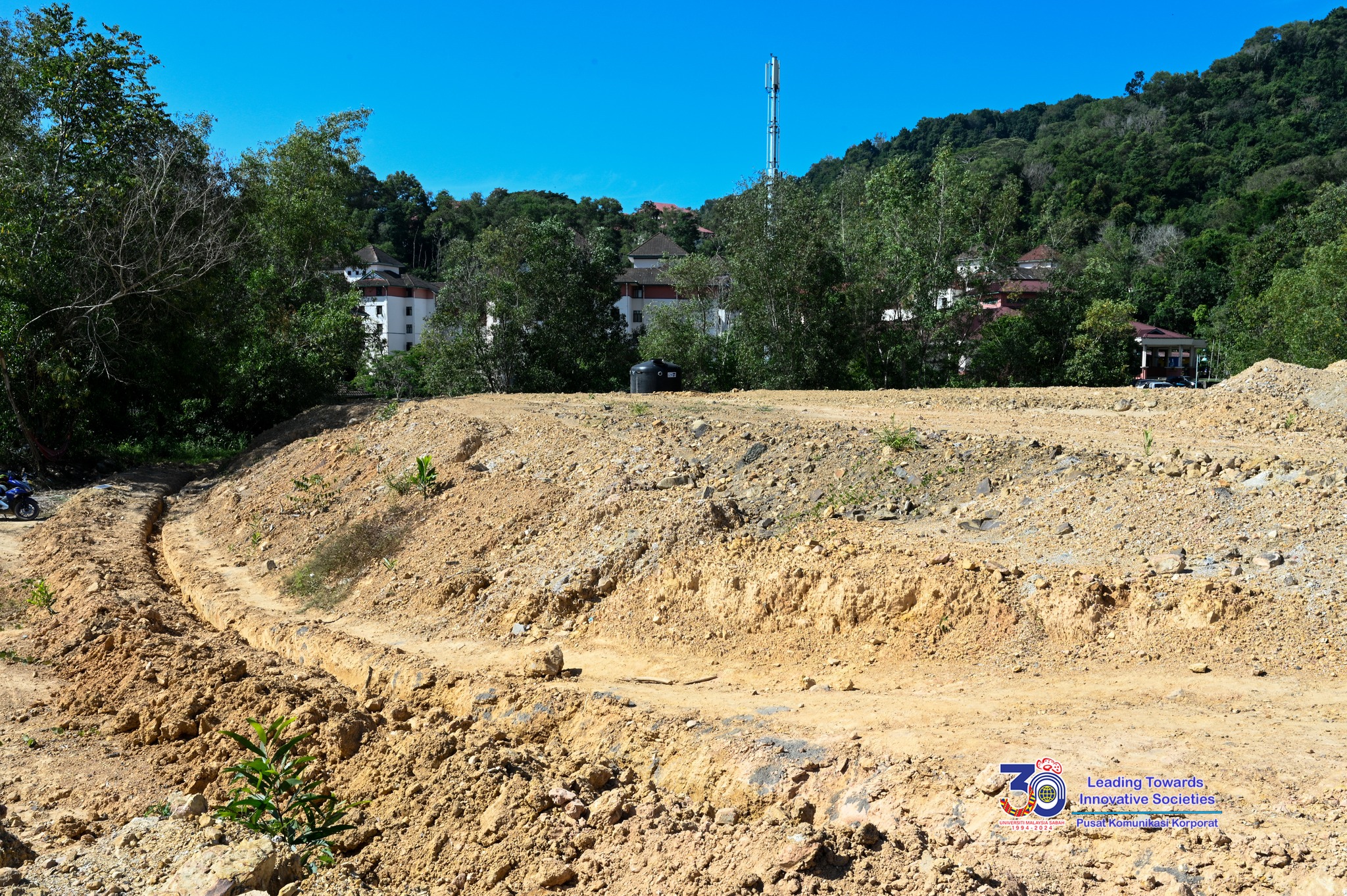
Universiti Malaysia Sabah (UMS) actively adopts and implements sustainable water extraction technologies both on campus and across its associated research sites, community living labs, and rural outreach locations. These efforts are aligned with the university’s EcoCampus Sustainability Framework, the UMS Sustainability and Climate Action Policy (2023–2030), and national commitments to water security under the Malaysia Water Sector Transformation 2040 roadmap. Recognising Sabah’s heavy dependence on surface water, vulnerable aquifers, and climate-sensitive river catchments, UMS plays a strategic role in demonstrating and deploying water extraction technologies that are environmentally responsible, energy-efficient, and suited to rural and semi-urban conditions. The university’s approach combines modern engineering solutions with community capacity-building, ensuring that local populations understand, operate, and maintain systems effectively. On campus, UMS practices sustainable water extraction primarily through its borehole and tubewell systems, which serve selected laboratories, agricultural plots, and EcoCampus living-lab zones. These extraction systems are designed to minimise ecological impact by adhering to Sabah Water Resources Enactment standards and integrating features such as low-flow abstraction pumps, flow-control valves, turbidity sensors, and backflow prevention systems. Across the main campus, the university has installed nine tubewell stations, each equipped with sustainable extraction technology to regulate groundwater abstraction and prevent over-withdrawal. These systems include automated shut-off triggers that activate when water levels fall below safe thresholds, thereby protecting aquifers from long-term depletion. Data from the UMS Utility Dashboard confirms that the tubewell system contributes a portion of non-potable supply for irrigation and selected research needs, reducing demand on treated municipal water and allowing more responsible use of local groundwater sources.

UMS Contributions to SDG 6 Through Strategic Water Security Partnerships
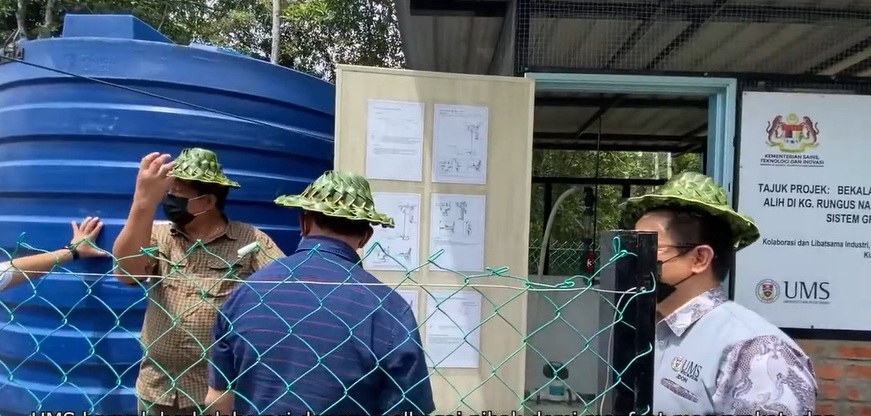
Universiti Malaysia Sabah (UMS) cooperates extensively with local, national, and global authorities to strengthen water security, enhance water governance, and improve sustainable water management across Sabah and Malaysia. Through its Water Research Unit (WRU), EcoCampus Centre, and Living Lab Rural Water Supply (RuWaS), UMS provides scientific expertise, engineering solutions, environmental monitoring, and community-based interventions that directly support government initiatives and policy implementation. At the local and regional levels, UMS partners closely with the Sabah Department of Irrigation and Drainage (JPS), Department of Environment Sabah (DOE Sabah), Ministry of Natural Resources, Environment and Climate Change (NRES), and the Sabah State Government. These partnerships enable joint efforts in river health assessments, hydrogeological studies, watershed mapping, and rural water-infrastructure upgrades. Evidence of this cooperation includes WRU-led field assessments in Sungai Liwagu, Sepangar Bay tributaries, and Moyog River Basin, where UMS provides data on turbidity, E. coli levels, sedimentation, and pollution sources. These findings guide district-level decisions on water extraction limits, pollution control, flooding mitigation, and riparian protection. Through RuWaS, UMS also collaborates with district offices in Pitas, Tenom, Kota Marudu, and Kudat to deploy solar-powered micro water treatment systems in remote villages, improving water access for rural communities that rely on unsafe surface water sources.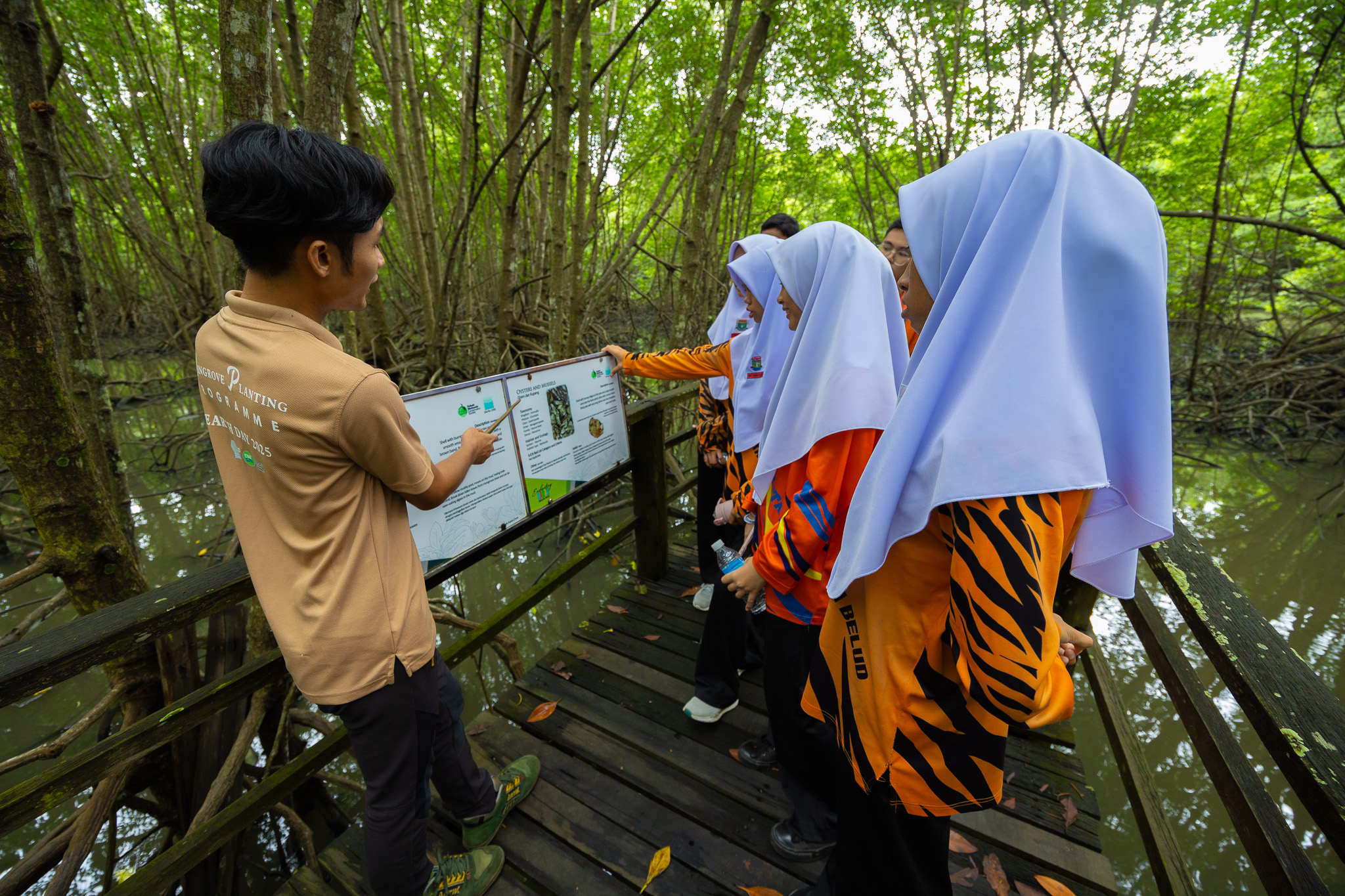
UMS EcoCampus Water Stewardship: Promoting Conscious and Responsible Water Usage
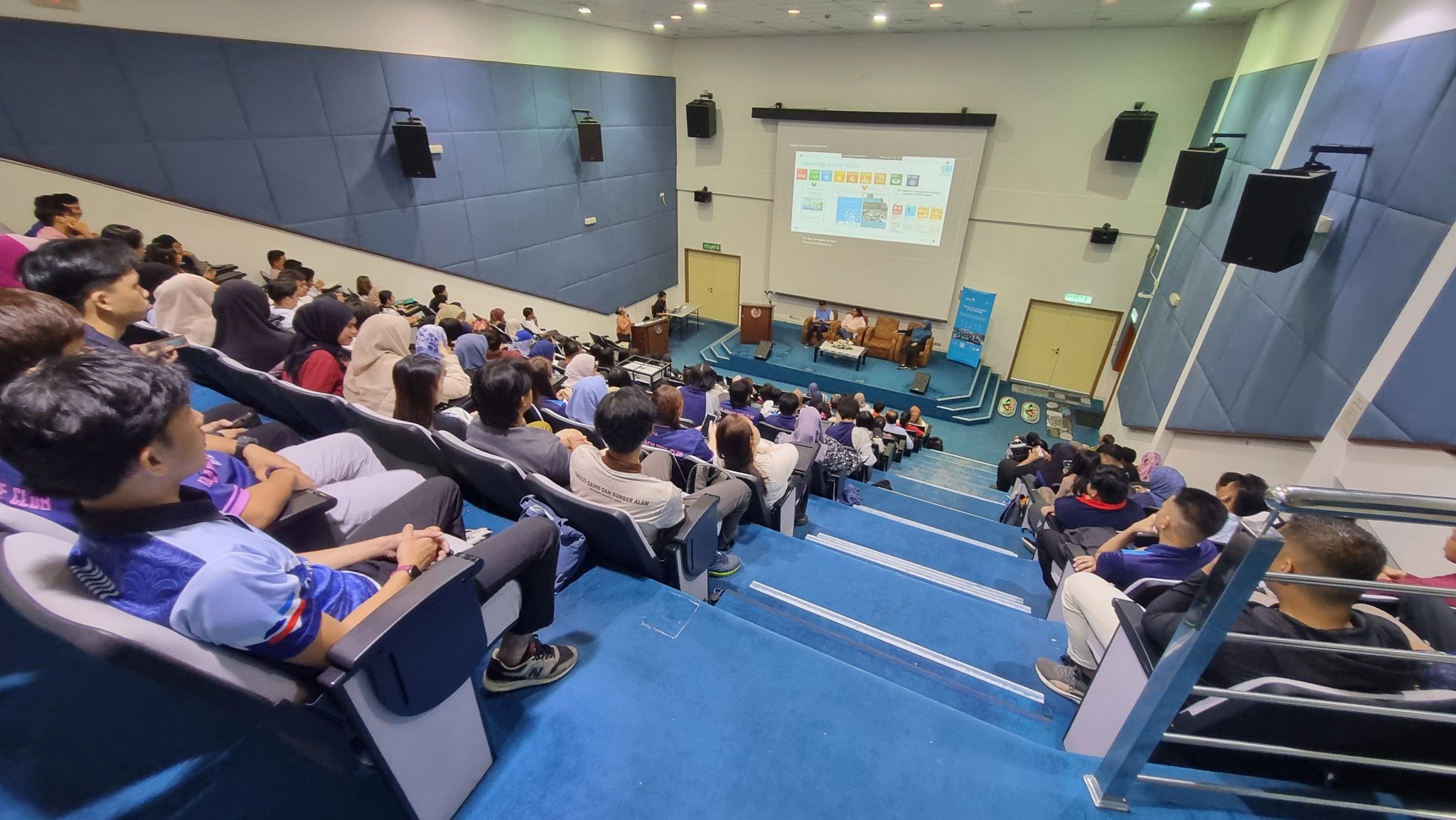
Universiti Malaysia Sabah (UMS) actively promotes conscious water usage across the campus through a comprehensive and institution-wide EcoCampus Water Conservation Programme. This programme integrates awareness, infrastructure improvement, behavioural change, and digital monitoring to reduce water wastage and cultivate a long-term culture of sustainability among staff and students. Led by the Pusat Pengurusan EcoCampus and the Jabatan Pembangunan dan Penyelenggaraan (JPP), the initiative ensures that water conservation is embedded in daily campus operations, strategic management practices, and environmental responsibilities. UMS’s promotion of conscious water usage begins with continuous behavioral campaigns aimed at educating the campus community. Annual events such as Water Saving Month, Smart Water Audit, and Hydration Without Waste deliver powerful messages on the importance of reducing unnecessary consumption. These campaigns utilise infographics, campus-wide posters, workshops, mobile exhibitions, and student-led advocacy to highlight simple but impactful water-saving behaviours—such as reducing tap time, reporting leaks, practising responsible lab water usage, and using recycled water for non-potable purposes. UMS’s collaboration with JANS Sabah and WWF-Malaysia further enriches the outreach component by incorporating materials on regional water scarcity, watershed protection, and Sabah-specific conservation challenges. This partnership also enables joint talks, educational booths, and field activities that extend beyond theoretical awareness into practical engagement. Infrastructure upgrades play a crucial role in reinforcing behavioural change. UMS has installed water-efficient fittings across campus, including dual-flush toilets, aerated taps, sensor-operated faucets, and waterless urinals. Selected buildings—especially under the EcoCampus Sustainable Water Plan (2023–2027)—are equipped with rainwater harvesting systems that supply water for irrigation, cleaning, and landscape maintenance. Laboratories and high-use areas have been fitted with low-flow devices and upgraded piping systems to minimise losses. These physical improvements ensure that the campus environment supports and sustains responsible water practices. UMS’s conscious water-usage strategy is strengthened by digital innovation. Through the UMS Utility Dashboard, JPP continuously monitors water consumption, pipe pressure, flow anomalies, and leakage patterns using digital meters and IoT sensors. The dashboard provides real-time data that helps detect inefficiencies quickly, quantify savings from interventions, and generate monthly water usage reports for university leadership. This data-driven approach ensures that water conservation decisions are evidence-based and responsive. For example, leak alerts have allowed JPP to prevent unnecessary losses and reduce operational cost burdens significantly. The effectiveness of UMS’s efforts is strongly supported by measurable evidence. Between 2021 and 2024, UMS achieved a substantial 8–10% reduction in total water consumption, attributed to both physical improvements and behavioural campaigns. During the same period, per-capita water usage decreased from 58 L/day to 52 L/day, as verified in the JPP Water Usage Reports. These reductions demonstrate significant behavioural transformation and infrastructure optimisation across a large and diverse population of students, staff, laboratories, administrative offices, and campus facilities. The impact of UMS’s commitment extends beyond water savings. Conscious water usage has reduced operational expenditure, increased resilience to drought and climate variability, and supported the broader EcoCampus mission to lower the university’s environmental footprint. It has also enhanced environmental literacy among students—many of whom later become engineers, environmental officers, policymakers, or sustainability advocates. Ultimately, UMS’s leadership in water conservation strengthens Sabah’s sustainability landscape while reaffirming the university’s position as a national model for responsible resource management in higher education.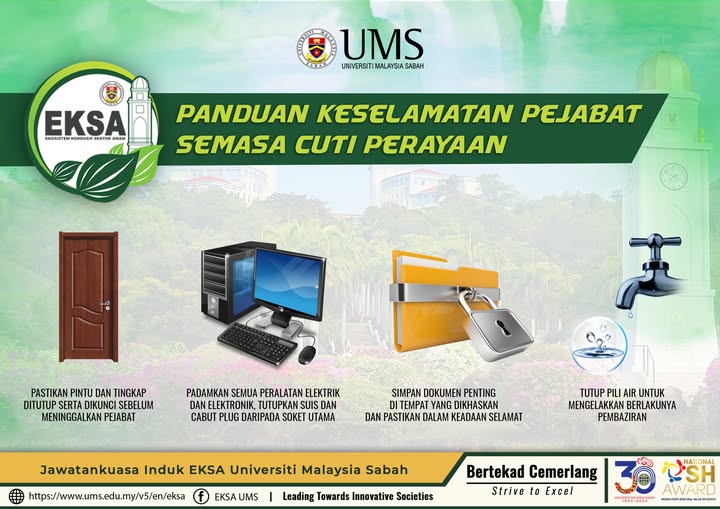
Strengthening Water Awareness Beyond Campus: The UMS Approach
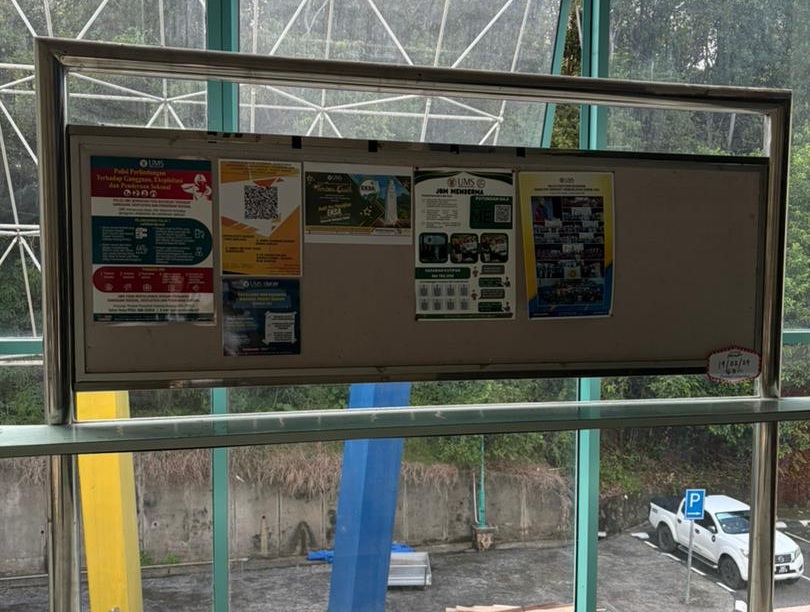
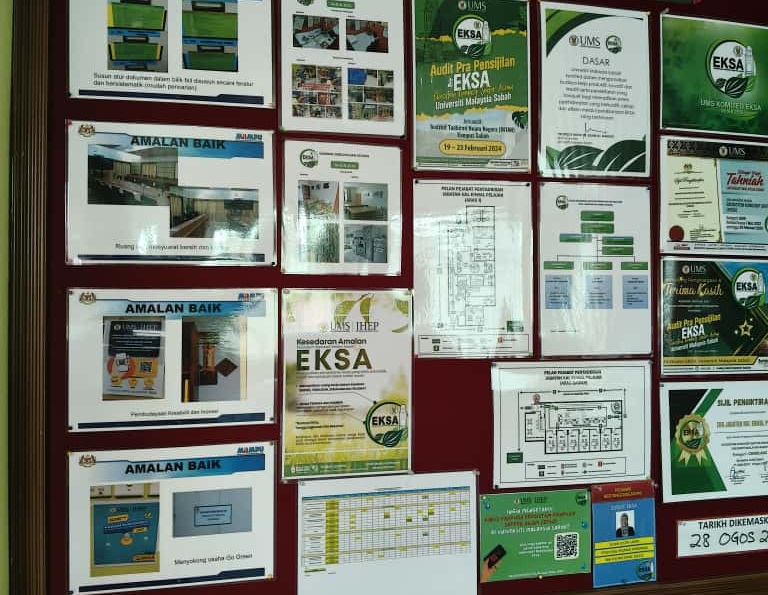
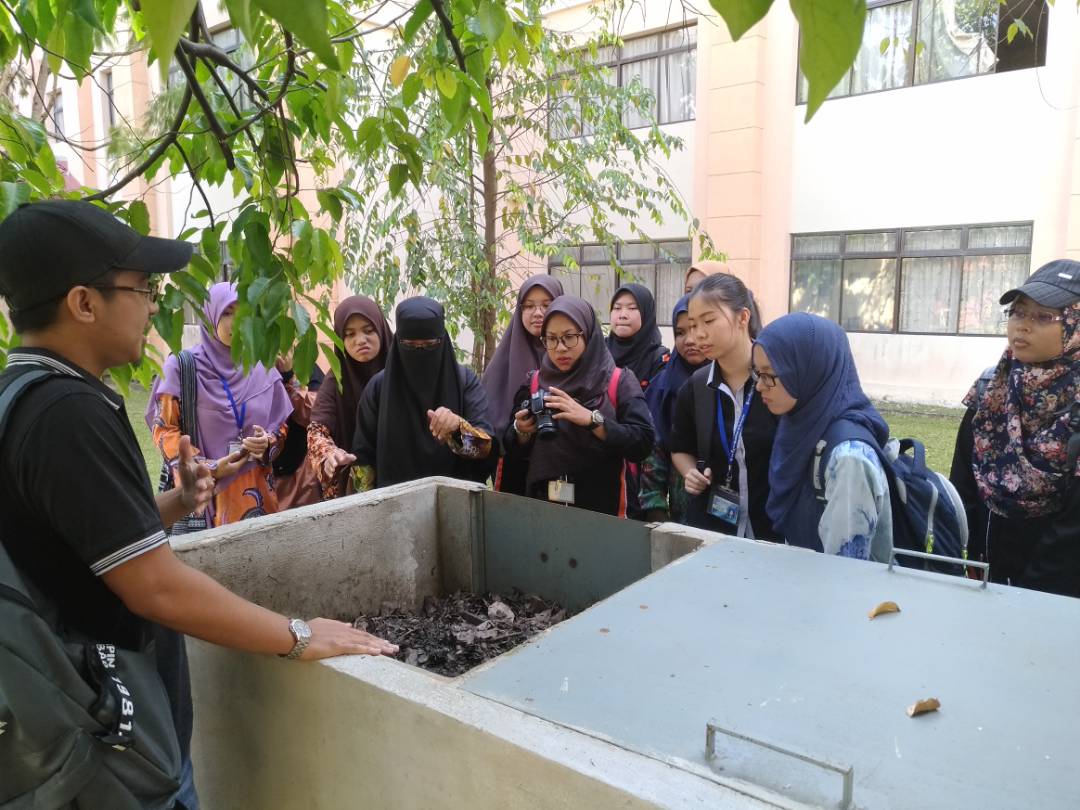
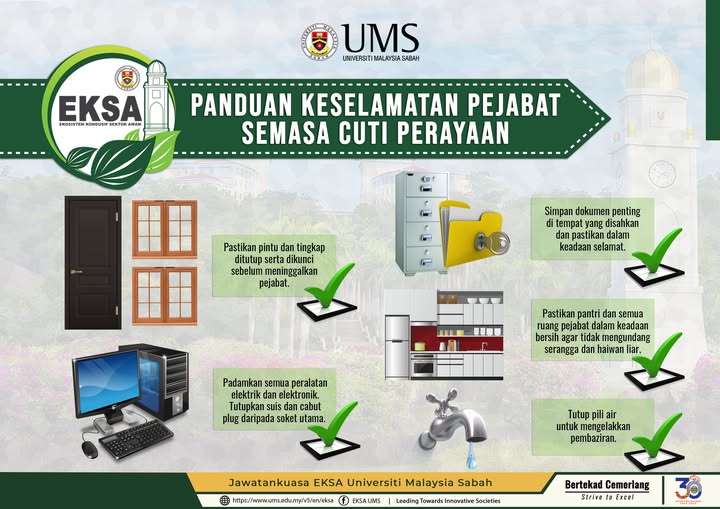
Universiti Malaysia Sabah (UMS) actively promotes conscious water usage not only on campus but also across the wider community through an integrated outreach, education, and operational sustainability framework. Central to this effort is the EcoCampus Sustainability Plan 2023–2027, which is strategically aligned with the national EKSA (Ekosistem Kondusif Sektor Awam) audit system to embed water stewardship into both institutional culture and external engagement. Through this combined EcoCampus–EKSA approach, UMS influences students, staff, schools, rural communities, and local agencies to adopt responsible water practices and reduce wastage. UMS promotes conscious water usage in the community through its public education programmes, technical demonstrations, public campaigns, and collaborations with government and non-profit organisations. Awareness campaigns such as Water Saving Month, Hydration Without Waste, and Know Your Water Footprint are extended to partner schools, district councils, and rural communities through the EcoCampus Management Centre. These campaigns share practical guidance on reducing household water use, adopting low-flow fittings, preventing pipe leaks, and reusing greywater for gardening and sanitation. Demonstrations on rainwater harvesting, water quality testing, simple filtration techniques, and sustainable drainage are frequently conducted for schools and village communities under outreach programmes led by the Water Research Unit (WRU), Faculty of Engineering, and U-Science. The integration of EKSA into UMS’s sustainability framework strengthens community awareness efforts by providing structure, accountability, and measurable outcomes. Under the EKSA Star Rating system, units are evaluated on leak management, facility maintenance, water-saving signage, and engagement activities. These standards are shared with local agencies, schools, and district offices that adopt EKSA-inspired water-saving protocols. As a model institution, UMS becomes a reference point for public-sector bodies implementing sustainable water practices within their own EKSA programmes. UMS also collaborates with external partners to extend water-saving awareness beyond campus. Joint programmes with JANS Sabah promote responsible water consumption, household conservation behaviours, and understanding of state water challenges. Meanwhile, partnerships with WWF-Malaysia support river conservation education, watershed protection, and school-based environmental literacy programmes. Activities such as river clean-ups, “No Plastic in Nature” campaigns, and community water audits help local communities understand how pollution, waste disposal, and unsustainable behaviour degrade water systems. UMS’s effectiveness in promoting conscious water usage is supported by solid evidence. Between 2021 and 2024, the university achieved an 8–10% reduction in total water consumption, while per-capita usage dropped from 58 L/day to 52 L/day, verified through JPP’s Water Usage Reports. These achievements demonstrate the success of combined awareness, monitoring, and infrastructure upgrades. More importantly, the same approaches and educational materials are consistently shared with external communities, amplifying their impact beyond university grounds. The wider impact of UMS’s efforts is multifaceted. Community members gain practical knowledge on efficient water use, schools adopt water-saving behaviours through student clubs and hands-on activities, and public agencies replicate effective EKSA water-saving practices. By linking environmental education with real solutions—such as rainwater harvesting, leak reporting, and water-efficient appliances—UMS strengthens water security awareness across Sabah. The EKSA–EcoCampus synergy fosters a long-term culture of water stewardship, empowering communities to conserve water, reduce costs, and protect local water sources for future generations.
SDG 6 Progress Report : Healthy Minds, Healthy Campus: UMS Advancing SDG 3 in 2024
In 2024, Universiti Malaysia Sabah (UMS) strengthened its commitment to SDG 3: Good Health and Well-Being through inclusive health education, preventive care, and community outreach. Over 30 wellness and medical outreach programmes—including KoSiMM, JESDIET, and HUMS2U mobile clinics—served rural populations across Sabah. UMS also advanced mental health support with 189 counselling sessions and 27 awareness programmes, alongside the Smoke-Free Campus Policy promoting a healthy lifestyle. Through partnerships with KKM, MySoT, and KSTI Sabah, UMS integrated health literacy, toxicology education, and youth wellness into its academic and social ecosystem—ensuring holistic health access for students, staff, and communities alike.