30+
Years of Service
since 1994
Environmental Impact
Protecting Biodiversity & Reducing Ecological Footprints
UMS plays a vital role in protecting biodiversity and reducing ecological footprints by safeguarding some of Borneo’s most significant natural ecosystems. Through its marine conservation programmes at BMRI—such as coral nurseries, turtle rehabilitation, seagrass monitoring, and blue carbon research—the university strengthens the health of Sabah’s coastal and marine environments. These initiatives not only restore fragile habitats but also provide research platforms that guide national and regional conservation policies.
On land, UMS contributes to forest and highland restoration through large-scale tree planting, biodiversity mapping, and climate research conducted at the Mesilou Highland Living Lab. Within the campus, the university enhances green spaces by planting native species, establishing biodiversity corridors, and implementing sustainable landscape management practices. These on-campus greening efforts improve environmental quality, promote ecological stability, and create a living model of sustainability for students and staff.
Complementing its conservation work, UMS drives climate mitigation through solar PV installation, energy-efficient building upgrades, and ongoing initiatives to reduce greenhouse gas emissions. Collectively, these efforts strengthen UMS’s commitment to SDG 13 (Climate Action), SDG 14 (Life Below Water), and SDG 15 (Life on Land), positioning the university as a leader in environmental stewardship and sustainable campus development.
Social Impact
Empowering Students, Communities & Future Change-Makers
UMS integrates sustainability deeply into the lives of its students and surrounding communities by fostering education, empowerment, and inclusive growth. Through programmes such as Professor@School and STEM outreach, the university brings environmental knowledge and scientific awareness to rural schools, helping young learners understand sustainability from an early age. UMS also works closely with coastal and indigenous communities through community-based conservation projects that link environmental protection with local livelihood resilience.
UMS plays a vital role in protecting biodiversity and reducing ecological footprints by safeguarding some of Borneo’s most significant natural ecosystems. Through its marine conservation programmes at BMRI—such as coral nurseries, turtle rehabilitation, seagrass monitoring, and blue carbon research—the university strengthens the health of Sabah’s coastal and marine environments. These initiatives not only restore fragile habitats but also provide research platforms that guide national and regional conservation policies.
The university further strengthens social wellbeing through initiatives like Food Bank UMS, Infaq Dapur Rahmah, and various student welfare programmes that provide essential support to B40 students. These efforts promote equity and ensure that no student is left behind. Additionally, volunteer platforms such as KESUWA, the Sustainability Ambassadors Programme, and youth leadership camps cultivate empathy, civic responsibility, and an understanding of the Sustainable Development Goals among students.
UMS plays a vital role in protecting biodiversity and reducing ecological footprints by safeguarding some of Borneo’s most significant natural ecosystems. Through its marine conservation programmes at BMRI—such as coral nurseries, turtle rehabilitation, seagrass monitoring, and blue carbon research—the university strengthens the health of Sabah’s coastal and marine environments. These initiatives not only restore fragile habitats but also provide research platforms that guide national and regional conservation policies.
Together, these initiatives reflect UMS’s commitment to building an educated, empowered, and socially responsible society. By bridging communities, supporting vulnerable groups, and nurturing future leaders, UMS advances SDG 4 (Quality Education), SDG 10 (Reduced Inequalities), and SDG 17 (Partnerships for the Goals).
Economic Impact
Driving Green Innovation, Sustainable Tourism & Community Livelihoods
UMS drives significant economic impact by championing sustainability-focused innovation and community-based development. Through its blue economy initiatives, the university supports seaweed farming, sustainable aquaculture, and coastal resource management programmes that strengthen local livelihoods while preserving marine ecosystems. These efforts empower communities to adopt environmentally responsible practices that generate stable income and long-term economic resilience.
UMS also contributes to the regional economy through eco-tourism and edu-tourism initiatives developed in partnership with Sabah Parks and local communities. These programmes offer meaningful learning experiences while creating job opportunities and promoting sustainable tourism. In addition, UMS maintains strong collaborations with industry players in areas such as solar energy, renewable technologies, artificial intelligence, and aquaculture innovation—fostering technology transfer, investment, and workforce development.
Student entrepreneurship is another driver of economic impact at UMS, with programmes designed to nurture green startups and social enterprises led by youth. By equipping students with skills in innovation, sustainability, and business management, the university cultivates future leaders who can contribute to Malaysia’s green economy. Altogether, these initiatives strengthen UMS’s commitment to SDG 8 (Decent Work & Economic Growth) and SDG 9 (Industry, Innovation & Infrastructure).
Research & Innovation Impact
Science Guided by Purpose
UMS’s sustainability research plays a transformative role in shaping policy, advancing conservation, and driving technological innovation across Sabah and the wider region. Through its network of Living Labs—including marine science, tropical forestry, renewable energy, and indigenous knowledge—UMS provides real-world platforms where students, researchers, and communities collaborate to solve pressing environmental and social challenges. These living laboratories serve as engines of discovery, offering hands-on opportunities to test new approaches to ecosystem restoration, resource management, and community resilience.
The university’s research strength is further supported by impact-driven grants that focus on climate adaptation, biodiversity protection, renewable energy systems, and smart agriculture. These projects produce actionable findings that inform national and regional policies, contributing to improved climate resilience, water security, and the wellbeing of indigenous communities. UMS researchers also work closely with government agencies to translate scientific knowledge into practical frameworks for sustainable development.
UMS’s global outlook is strengthened through collaborations with key international partners such as WWF-Malaysia, UNEP, SEARRP, UNICEF, CTI-CFF, and leading universities around the world. These partnerships enhance research quality, expand scientific networks, and reinforce UMS’s position as a knowledge hub for Borneo and beyond. Through its sustained research efforts, UMS continues to provide evidence-based solutions that guide sustainable development at local, national, and global levels.
Campus Sustainability Impact
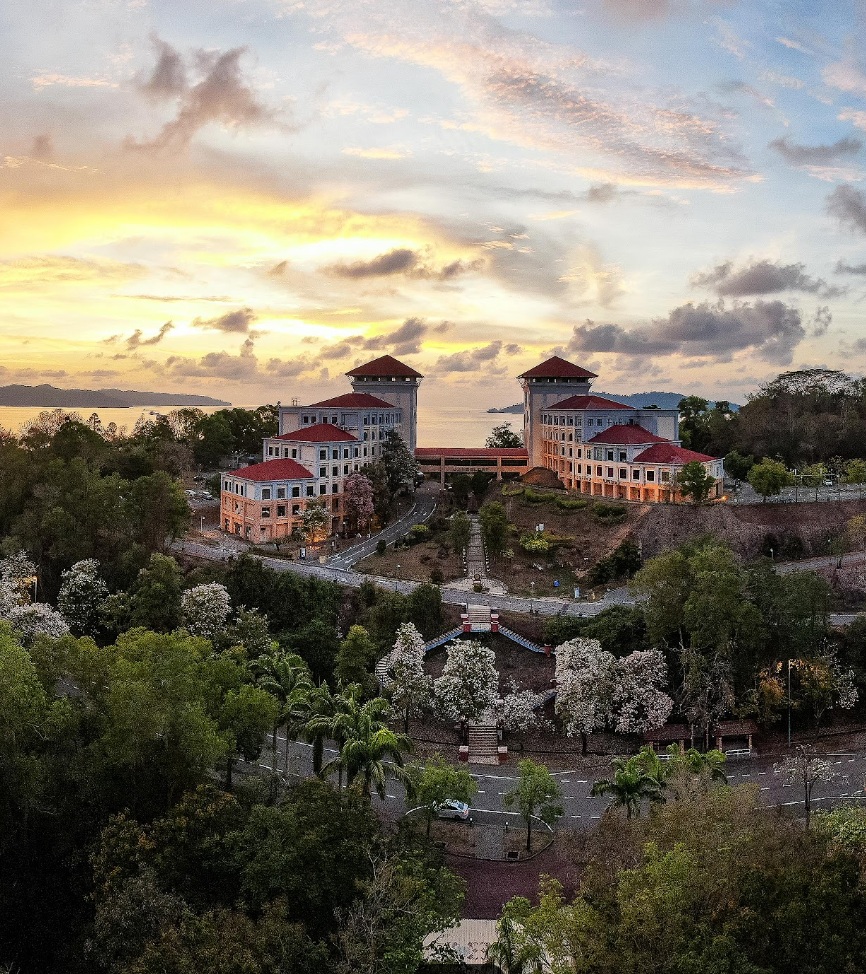
A Living Model of an EcoCampus
UMS strengthens its campus operations by adopting measurable and data-driven sustainability practices that reduce environmental impact and improve resource efficiency. Significant progress has been made in energy management through LED retrofits, solar energy installations, and smart monitoring systems that track real-time electricity usage across academic and residential buildings. Water conservation is equally prioritised through rainwater harvesting, low-flow fixtures, and smart metering technologies that reduce wastage and promote responsible consumption.
Waste reduction is supported by an integrated approach that includes campus recycling hubs, zero-waste campaigns, and composting initiatives that divert organic waste from landfills. At the same time, UMS promotes sustainable mobility through shuttle bus services, designated pedestrian pathways, secure cycling routes, and the use of electric vehicles—making campus travel safer, greener, and more accessible. Digital transformation plays a major role as well, with online systems reducing paper dependency, travel needs, and administrative inefficiencies.
Collectively, these operational improvements demonstrate UMS’s commitment to continuous environmental performance enhancement and align strongly with global sustainability benchmarks. Through sustained efforts in energy efficiency, waste management, mobility, and digitalisation, UMS continues to elevate its standing in frameworks such as UI GreenMetric, THE Impact Rankings, and QS Sustainability.
Community & Regional Impact
Sustainability That Reaches Beyond Campus
UMS extends its sustainability impact far beyond campus by addressing the needs of communities across Sabah through targeted, high-impact initiatives. The university supports rural and underserved areas through practical water solutions such as low-cost filtration systems, river restoration projects, and rainwater harvesting installations. These efforts improve access to clean water and strengthen public health, particularly in remote villages where infrastructure is limited.
UMS also plays an important role in climate adaptation, working closely with coastal and island communities to build resilience against rising sea levels, coastal erosion, and extreme weather. Through research, education, and community engagement, UMS helps local populations develop strategies for sustainable resource use and long-term environmental protection. At the same time, the university preserves indigenous knowledge and cultural heritage by documenting oral traditions, languages, and community histories—ensuring that the wisdom of Sabah’s diverse ethnic groups is protected for future generations.
These community efforts are further strengthened through long-standing collaborations with Sabah Parks, SEARRP, and community-based organisations that support conservation, education, and sustainable livelihoods. Together, these initiatives enhance regional resilience and advance SDG 6 (Clean Water), SDG 11 (Sustainable Cities & Communities), and SDG 17 (Partnerships for the Goals).
Student Impact & Graduate Readiness
Nurturing Future Sustainability Leaders
UMS is deeply committed to preparing students to become future sustainability leaders by integrating Education for Sustainable Development (ESD) across its academic programmes. Students are encouraged to undertake SDG-aligned Final Year Projects in every faculty, allowing them to apply classroom knowledge to real-world sustainability challenges. This approach ensures that sustainability thinking becomes a core part of academic learning, innovation, and problem-solving.
Beyond the classroom, UMS provides extensive hands-on experience through internships, living labs, fieldwork activities, and collaborations with industry and community partners. These experiential learning opportunities expose students to practical issues in environmental conservation, renewable energy, social development, and sustainable technologies. At the same time, leadership camps, volunteer activities, and sustainability innovation challenges empower students to cultivate soft skills, global awareness, and civic responsibility.
Together, these initiatives produce graduates who are industry-ready, socially engaged, and environmentally conscious. UMS students emerge as globally aware changemakers equipped to contribute meaningfully to sustainable development, fully supporting SDG 4 (Quality Education).
UMS—Our Impact, Our Responsibility
UMS continues to build a campus, community, and culture where sustainability is not an initiative, but a way of life. Through environmental stewardship, social equity, research excellence, and community partnership, UMS is shaping a resilient and sustainable future for Sabah and the world.
UMS remains steadfast in its mission as “The Brain of Borneo — nurturing knowledge, protecting nature, and empowering society.”



 Transforming Ideas Into Measurable Change