



Global goals need local hearts—UMS bridges both.

UMS - SDG 17 Partnerships for the Goals
Together, we go further—UMS forges change with every hand joined.
 Collaboration for a Better Tomorrow
Uniting global expertise and local action for a sustainable Borneo.
Under SDG 17 (Partnerships for the Goals), Universiti Malaysia Sabah (UMS) positions itself as a regional hub for collaborative action by forging long-term, high-impact partnerships with global and national organisations such as WWF-Malaysia, UNEP, UN-Habitat, UNICEF, UNESCO, CTI-CFF and WorldFish. Through these alliances, UMS links science, policy, and community practice in areas including climate-risk assessment for marine parks, blue-economy and sustainable fisheries, smart sanitation for floating settlements, child-centred climate and disaster education, inclusive open educational resources (iOER), geopark and cultural-heritage conservation, and climate-adaptive aquaculture. UMS also advances SDG 17 through its leadership collaboration with AKEPT via the Sustainable Development Goals Leadership: University for Society (SDGU4S) programme — one of AKEPT’s flagship national initiatives on higher-education leadership. These multi-stakeholder collaborations strengthen institutional capacity, inform national and regional policies, and empower coastal, rural, and youth communities as active agents of change. Collectively, they demonstrate how UMS translates global sustainability frameworks into locally grounded solutions, advancing Malaysia’s biodiversity, climate, and social-development goals while embodying the spirit of SDG 17.
Partnerships that Power Sustainable Futures
Building global alliances, empowering communities, and driving transformation from Borneo to the world.
Sustainable Development Goal 17 (Partnerships for the Goals) recognises that lasting solutions to global challenges can only be achieved when governments, universities, civil society, communities, and international organisations work together. In this spirit, Universiti Malaysia Sabah (UMS) has positioned itself as a collaborative hub that connects science, policy, and grassroots action across Borneo and beyond. Through strategic alliances with United Nations agencies, international NGOs, research institutes, and community partners, UMS leverages shared expertise to address climate change, biodiversity loss, social inequality, and sustainable livelihoods in an integrated and inclusive way. Building on its strengths in marine science, environmental conservation, social development, and open education, UMS has cultivated long-term partnerships that translate research into real-world solutions. Collaborations with WWF-Malaysia, UNEP, UN-Habitat, UNICEF, UNESCO, CTI-CFF and WorldFish span climate-risk science, marine protected areas, smart sanitation for floating communities, child-centred climate and disaster education, inclusive open educational resources (iOER), geopark development, cultural-heritage safeguarding, blue-economy resilience, and climate-adaptive aquaculture. Together, these alliances exemplify SDG 17 in action—uniting diverse stakeholders to co-create knowledge, strengthen institutional capacity, and empower local communities as active agents of change. Under SDG 17, UMS’s partnership ecosystem has become a powerful driver of sustainability transformation across Sabah and the wider region. From the Climate Change Vulnerability Assessment of Tun Mustapha Park with WWF-Malaysia, smart sanitation pilots with UNEP and UN-Habitat, and child-focused climate research and communication with UNICEF, to UNESCO-aligned initiatives in inclusive open education, geoparks, and cultural heritage, as well as regional marine governance through CTI-CFF and long-standing blue-economy collaboration with WorldFish, UMS consistently bridges global frameworks with local realities. These multi-layered collaborations strengthen policy coherence, enhance community resilience, and advance Malaysia’s biodiversity, climate, and social-development goals—affirming UMS’s role as a committed SDG 17 champion in the Heart of Borneo.
UMS × WWF-Malaysia : Guardians of Borneo’s Blue & Green Frontiers
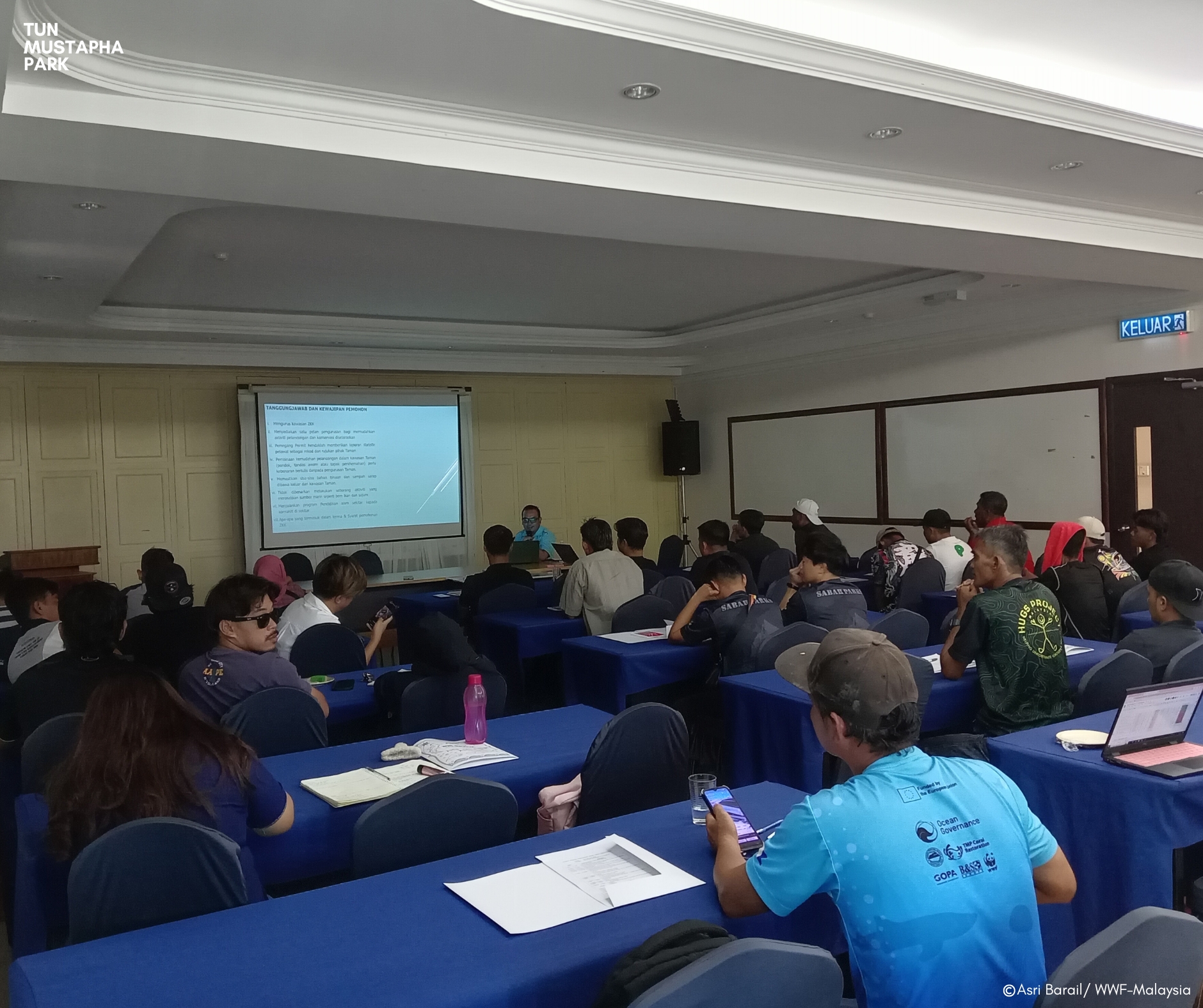
UMS and WWF-Malaysia share a transformative partnership rooted in decades of collaboration across marine conservation, climate resilience, and community-driven sustainability. Together, both institutions have advanced high-impact scientific research that strengthens the management of Sabah’s coastal and marine ecosystems. A landmark achievement of this collaboration is the Climate Change Vulnerability Assessment of Tun Mustapha Park (TMP), a national reference for climate-risk management and adaptive policymaking in Malaysia’s largest marine protected area. This partnership continues to inform institutional responses to climate challenges through shared research, modelling, and environmental monitoring. Beyond policy-relevant science, UMS and WWF-Malaysia jointly empower local communities through sustainable fisheries initiatives, ecosystem-services assessments, and marine stewardship programmes such as “No Plastic in Nature”, turtle conservation, and coral-reef restoration. Together, they have expanded citizen science, youth engagement, and community awareness across key conservation landscapes including TMP, Lahad Datu, and the Semporna Priority Conservation Area. These efforts translate research into action by improving local livelihoods, strengthening ecological resilience, and building a culture of environmental responsibility. This long-standing partnership exemplifies SDG 17 by integrating knowledge sharing, multi-stakeholder collaboration, and community empowerment. From shark-tagging and mangrove protection to riverine biodiversity expeditions and blue-economy innovation, UMS and WWF-Malaysia demonstrate how shared expertise and joint action can deliver measurable, real-world sustainability impact.UMS × UNEP & UN-Habitat: Advancing environmental policy and community resilience through UN-led cooperation
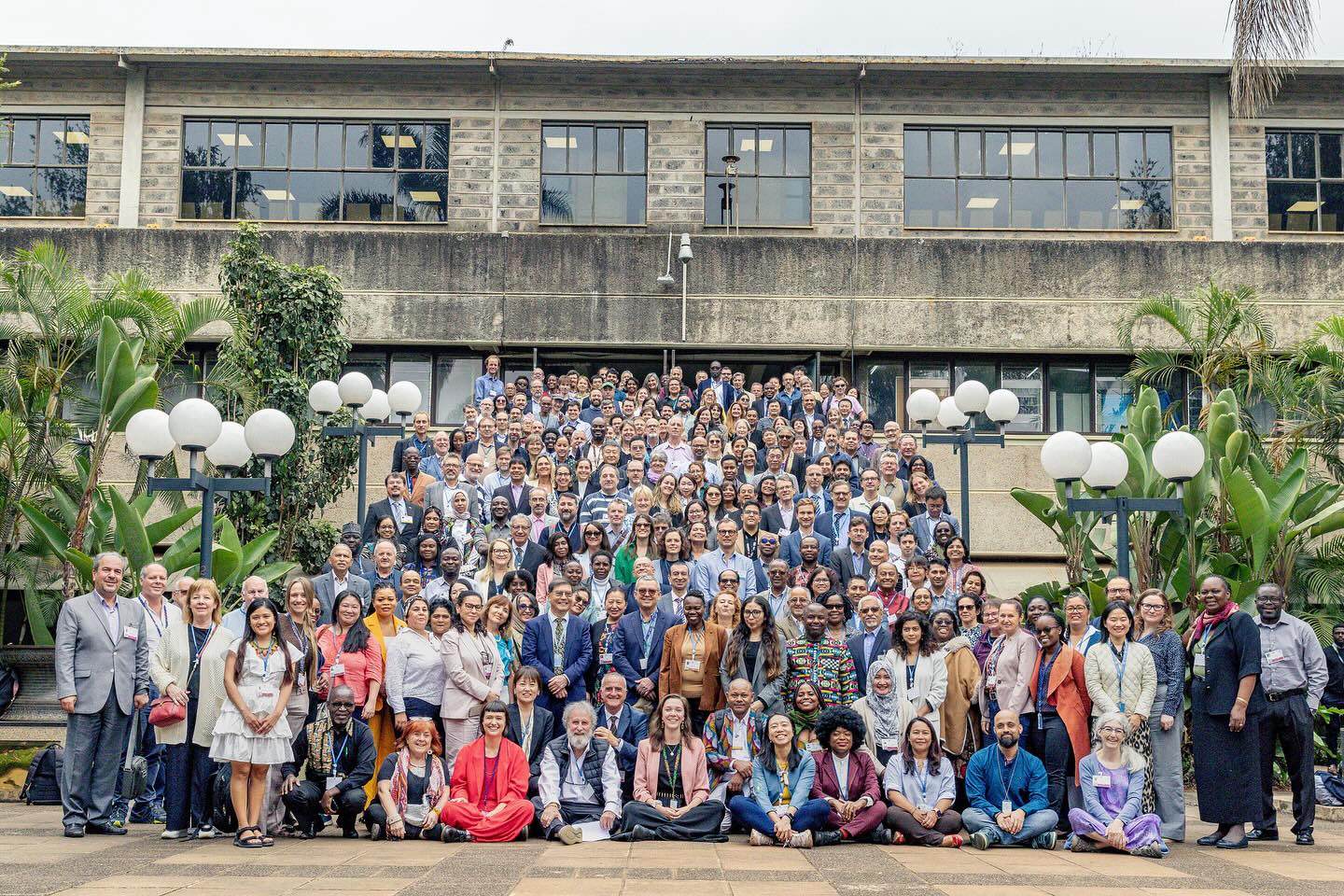
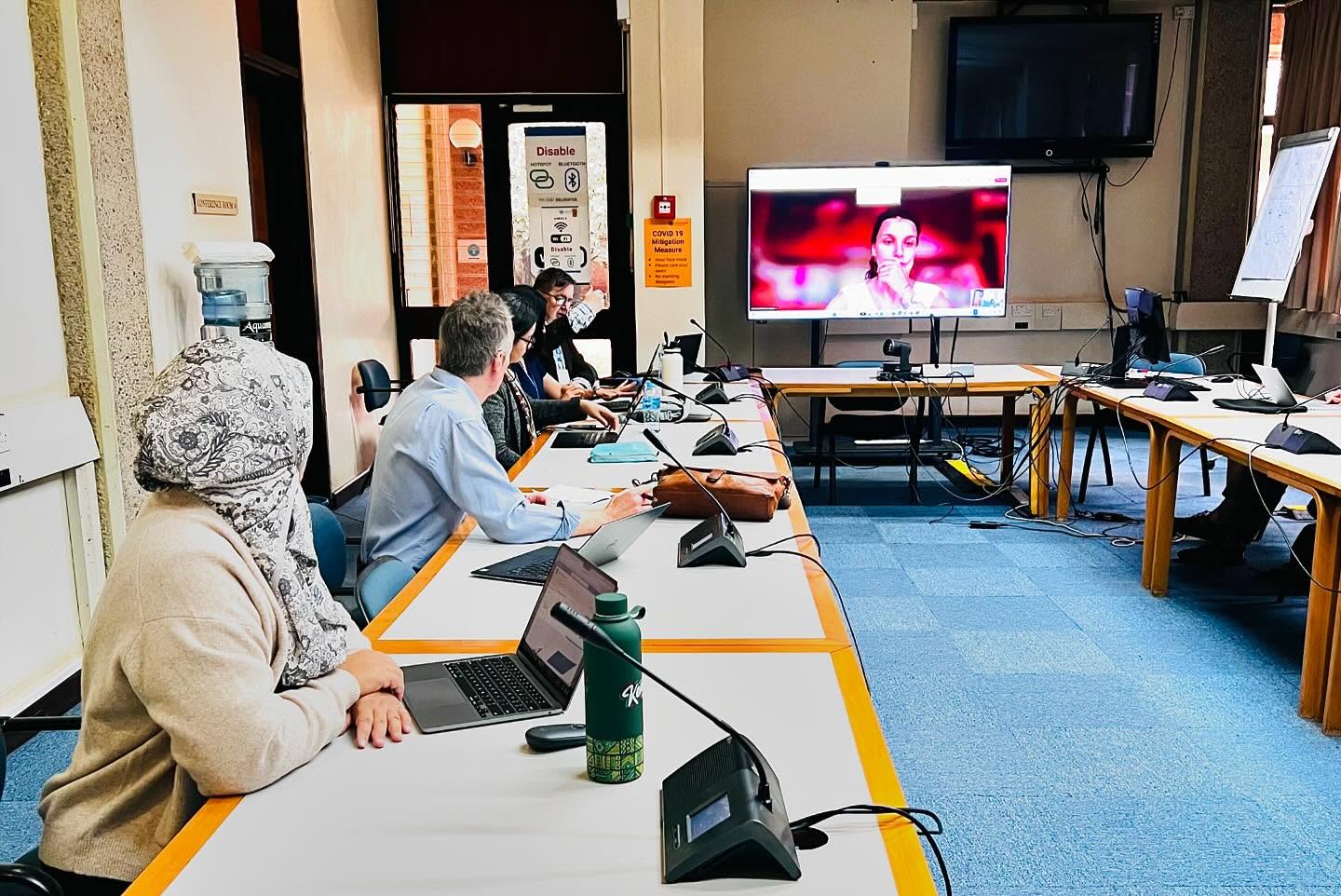
UMS’s collaboration with UNEP and UN-Habitat brings global scientific leadership together with locally grounded solutions for environmental health, water management, and urban resilience. At the policy and research level, UMS contributes directly to global environmental governance through UNEP’s Global Environment Outlook 7 (GEO-7), with Assoc. Prof. Dr. Fiffy Hanisdah Saikim serving as Lead Author for the chapter on biodiversity and nature loss. This appointment positions UMS within UNEP’s international expert ecosystem, ensuring Malaysia’s scientific perspectives shape global biodiversity assessments and climate policy. At the community level, UMS collaborates with UNEP and UN-Habitat under the Global Wastewater Initiative (GWI) to address sanitation challenges in Sabah’s floating-village communities. Together with Action Caring Team (ACT) Malaysia, this partnership introduces low-cost modular wastewater systems and capacity-building programmes that promote safe water, public health, and climate-adaptive infrastructure. These efforts gained global attention in UNEP’s technical brief, showcasing Sabah as a model for innovative, community-led sanitation solutions. Through student forums, regional dialogues, and multi-agency workshops — including the International Forum on Caring for Our Planet — UMS, UNEP, and UN-Habitat jointly strengthen youth participation, environmental education, and coastal resilience. This partnership exemplifies SDG 17 by connecting global frameworks with local realities to produce science-driven, community-centered impact.UMS × UNICEF: Children at the Heart of Climate and Social Resilience
The UMS–UNICEF collaboration is a model of SDG 17-driven social transformation, uniting research, policy advocacy, youth empowerment, and community engagement. Beginning with a RM300,000 UNICEF grant, UMS established the UMS–UNICEF C4D Research Unit, which pioneered communication-for-development strategies addressing women’s and children’s welfare in underserved communities. The partnership expanded into national-level climate advocacy with the co-authored landmark report, “Impact of Climate Change on Children: A Malaysian Perspective.” This study remains a key reference for child-sensitive climate governance in Malaysia. UMS and UNICEF further collaborated on child-centered disaster education through nationwide earthquake preparedness programmes involving 4,000 students across 114 schools in Sabah. These initiatives deliver life-saving knowledge to children in hazard-prone areas and contribute to integrating disaster-risk education into national policymaking via MOE and NADMA. UMS’s contribution to the Asia-Pacific SBCC Regional Symposium 2023 also elevated Malaysia’s role in regional social and behavioural change communication. Student engagement continues to thrive through campaigns such as the Youth Health Campaign, which promotes climate-health literacy among Sabah’s young population. This multi-dimensional partnership exemplifies SDG 17 by aligning global child welfare frameworks with locally relevant interventions that improve resilience, equity, and wellbeing.UMS × UNESCO: Education, Heritage, and Nature in Harmony
UMS’s collaboration with UNESCO spans education transformation, cultural heritage safeguarding, environmental conservation, and community empowerment. As Malaysia’s national leader in Inclusive Open Educational Resources (iOER), UMS works closely with UNESCO and MOHE to advance digital inclusion and educational equity. Through multi-phase national workshops and the development of the iOER repository (ioercop.ums.edu.my), UMS helps educators create accessible learning materials grounded in Universal Design for Learning (UDL). This aligns Malaysia with the UNESCO OER Recommendation (2019) and strengthens global knowledge-sharing networks. Beyond education, UMS plays a pivotal role in the Kinabalu UNESCO Global Geopark (KUGGp) and the emerging Sulaman Geopark, conducting biodiversity surveys, ecosystem monitoring, carbon sequestration research, and cultural documentation that inform conservation strategies. The EGOS 2025 Scientific Seminar further strengthened the integration of geoscience, community livelihoods, and sustainable geotourism, aligning geopark development with UNESCO’s sustainability mission. Through cultural programmes funded by the Suruhanjaya Kebangsaan UNESCO Malaysia — such as Batik Warna Alami — UMS promotes eco-friendly creative industries while preserving indigenous knowledge and intangible heritage. This partnership exemplifies SDG 17 by linking global expertise with local culture, environment, and educational transformation.UMS × CTI-CFF: Safeguarding the Coral Triangle Together
As the Sabah branch of the Coral Triangle Initiative on Coral Reefs, Fisheries and Food Security (CTI-CFF), UMS plays a central role in shaping regional marine governance and biodiversity protection. Working with federal and state partners, UMS leads data-driven research on coral reefs, ecosystem-based fisheries management, and climate adaptation across priority seascapes. Since 2021, UMS has been officially mandated to coordinate Malaysia’s National Plan of Action CTI-CFF 2.0, aligning national ocean policies with regional conservation goals. UMS hosts regional workshops, technical consultations, and training programmes that build the capacity of fisheries officers, conservationists, and youth leaders. Initiatives such as World Oceans Day beach clean-ups, seagrass monitoring, and reef resilience webinars promote public engagement and community stewardship. Meanwhile, UMS’s Coral Nursery Site (CNS) and blue-economy programmes support marine restoration and sustainable coastal livelihoods. Through CTI-CFF, UMS connects local communities with international networks, ensuring that Borneo’s coastal ecosystems remain resilient amid climate challenges. This partnership reflects the essence of SDG 17 by uniting science, policy, and people to protect one of the world’s most important marine ecosystems.UMS × WHO: Global Health Partnerships for a Malaria-Free Borneo
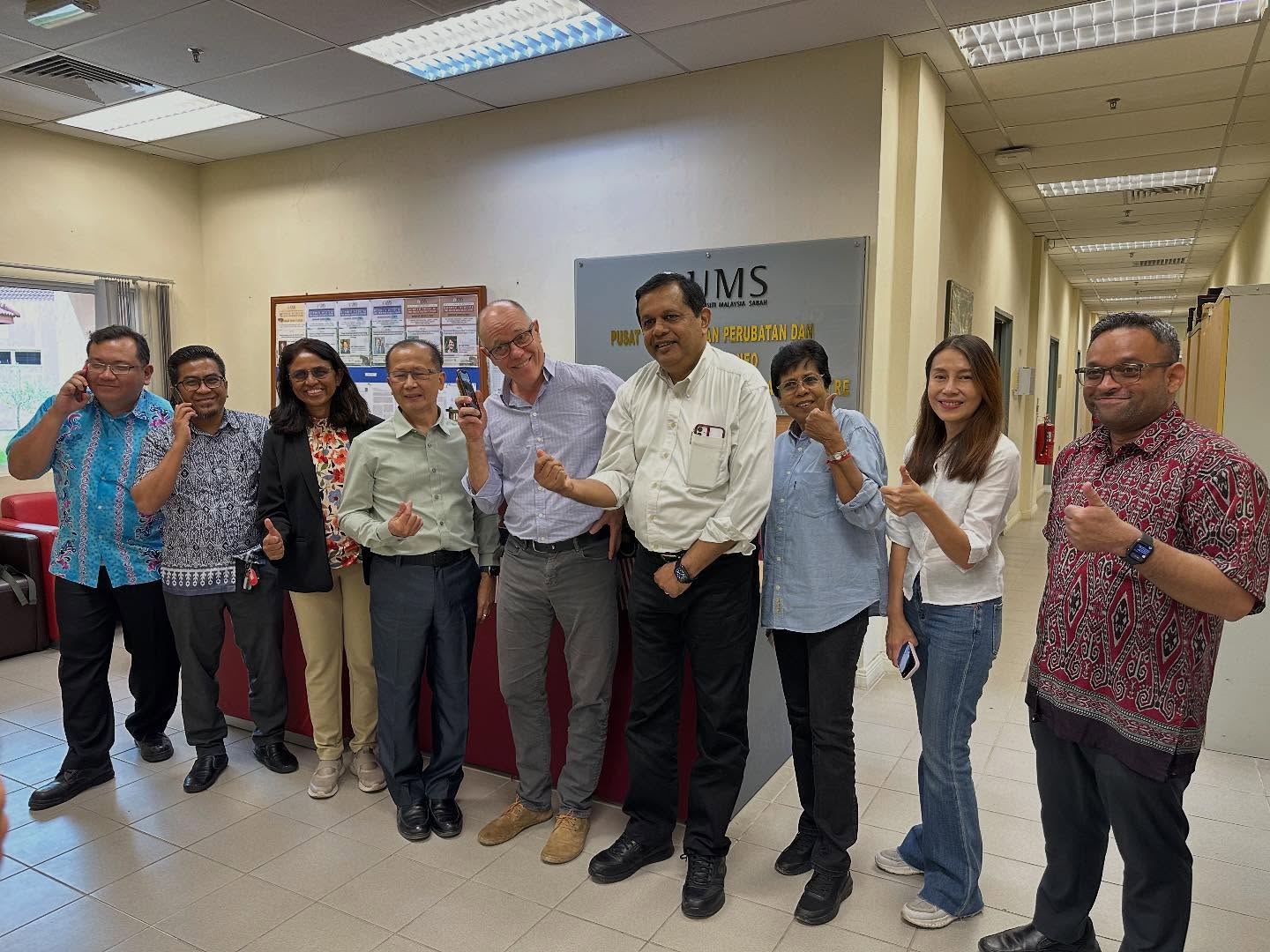
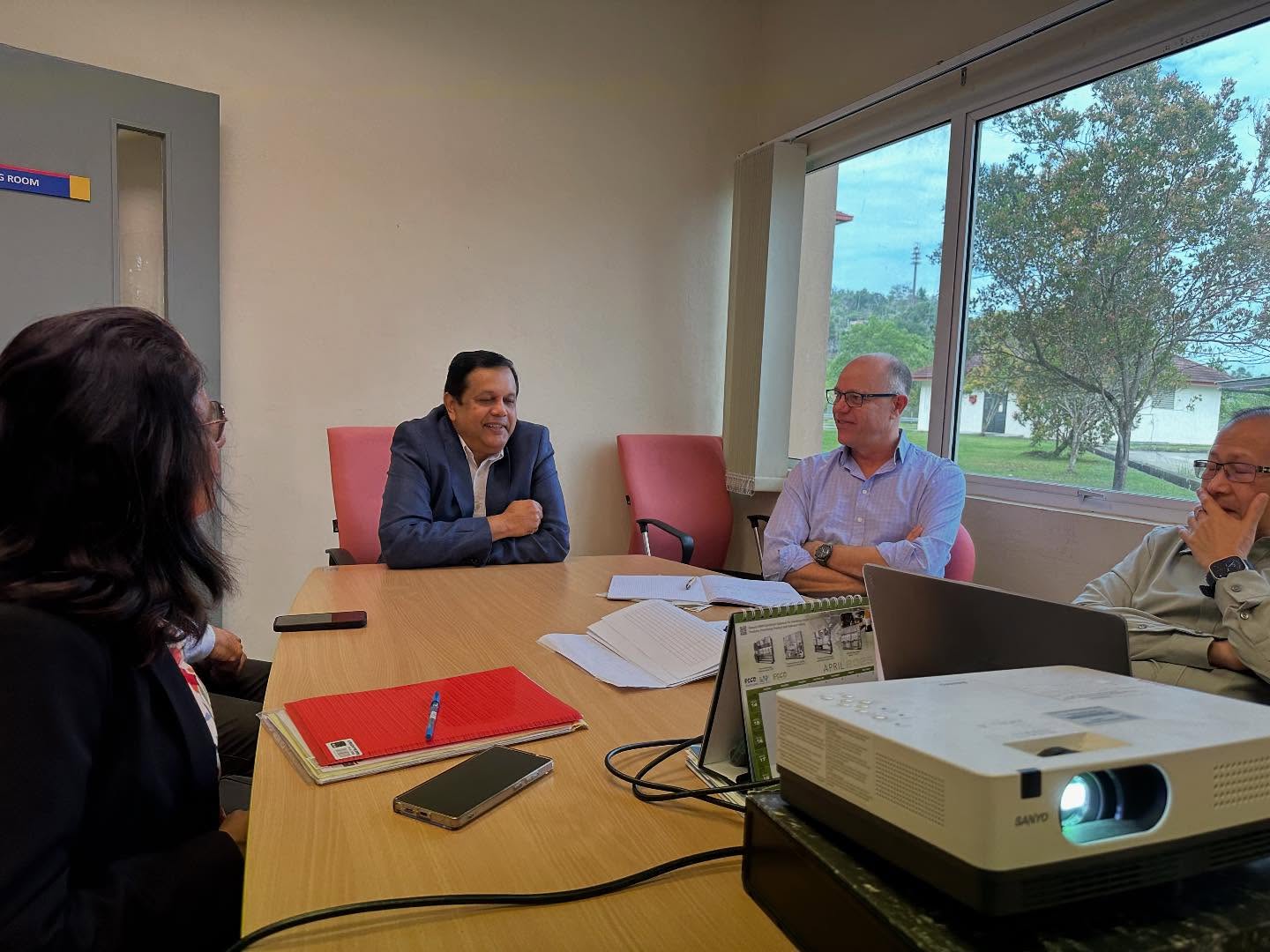
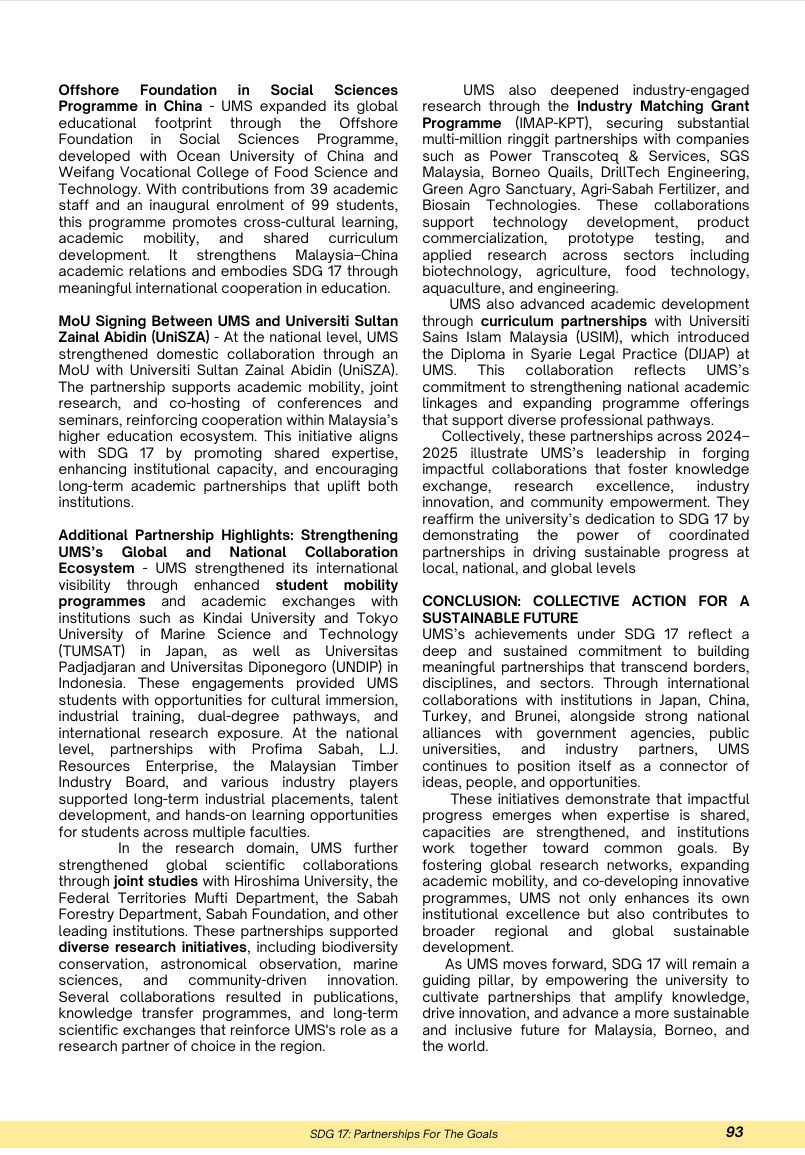
UMS’s collaboration with the World Health Organization (WHO) reflects its growing leadership in global health diplomacy, infectious disease research, and community protection. In 2025, the Faculty of Medicine and Health Sciences (FMHS) had the honour of hosting an international delegation led by Dr. Rabindra Abeyasinghe, WHO Representative to Malaysia, Brunei Darussalam, and Singapore, together with experts from the London School of Hygiene & Tropical Medicine (LSHTM) and Malaysia’s Ministry of Health (MOH). This high-level engagement centered on advancing cooperation in zoonotic malaria, one of Southeast Asia’s most pressing public health challenges, particularly in rural and forest-fringe communities. Through this partnership, UMS aims to establish a regional centre for zoonotic malaria research, enhancing capacity in disease surveillance, vector control, genomic monitoring, and community-based interventions across Sabah and the Borneo region. The collaboration strengthens UMS’s scientific capabilities, while leveraging WHO’s global expertise and LSHTM’s research excellence to accelerate knowledge exchange, training, and policy development. During the visit, UMS Vice-Chancellor Prof. Datuk Dr. Kasim Hj. Mansor reaffirmed the university’s commitment to contributing to global malaria elimination agendas: “UMS is proud to be part of the global network working towards malaria elimination. Through strategic partnerships with WHO, LSHTM, and Malaysia’s Ministry of Health, we aim to lead innovation and capacity-building that safeguard community health and strengthen regional disease surveillance.” This collaboration demonstrates SDG 17 in action by bridging science, policy, and community engagement to address a complex cross-border health issue. By uniting international organisations, national authorities, and academic researchers, UMS plays a pivotal role in shaping a healthier, more resilient, and malaria-free future for Sabah, Malaysia, and the wider Southeast Asian region.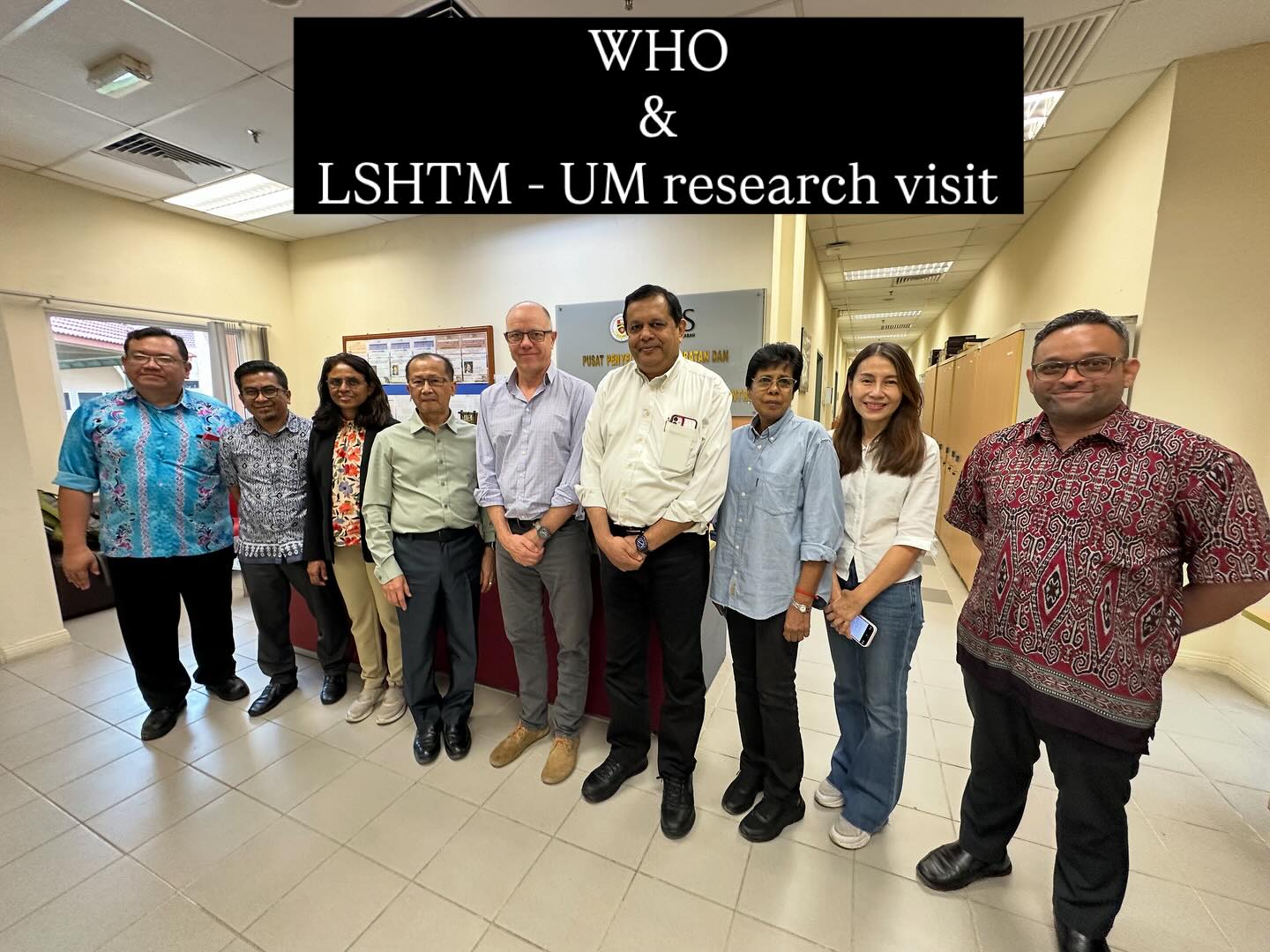
From scientific insight to real-world governance solutions
Advancing National and Regional SDG Policies Through UMS Expertise
In 2024, Universiti Malaysia Sabah (UMS) is directly involved in national and regional SDG policy development, working closely with Malaysian government ministries, state agencies, and NGOs to identify emerging sustainability challenges, shape policies and strategies, support scenario modelling, and strengthen adaptive governance mechanisms. UMS’s policy engagement is evidenced through multiple formal appointments and contributions:National Disaster Risk Reduction (DRR) & Community-Based Disaster Risk Management (CBDRM) Policy Development
UMS played a direct and substantial role in the development of the Garis Panduan Pelaksanaan Pengurusan Risiko Bencana Berasaskan Komuniti (CBDRM) published by the National Disaster Management Agency (NADMA), Prime Minister’s Department. The guideline, launched by the Deputy Prime Minister on 14 May 2024, formally acknowledged UMS’s technical contributions, particularly through YBrs. Prof. Madya Ts. Gs. Dr. Carolyn Melissa Payus (NDRC UMS), who was recognised for her expertise in shaping national-level CBDRM strategies. This involvement reflects UMS’s active participation in policy drafting, expert validation workshops, and the refinement of disaster risk reduction frameworks, directly contributing to SDG 11 on resilience and SDG 13 on climate action.Access Full Published Report Here!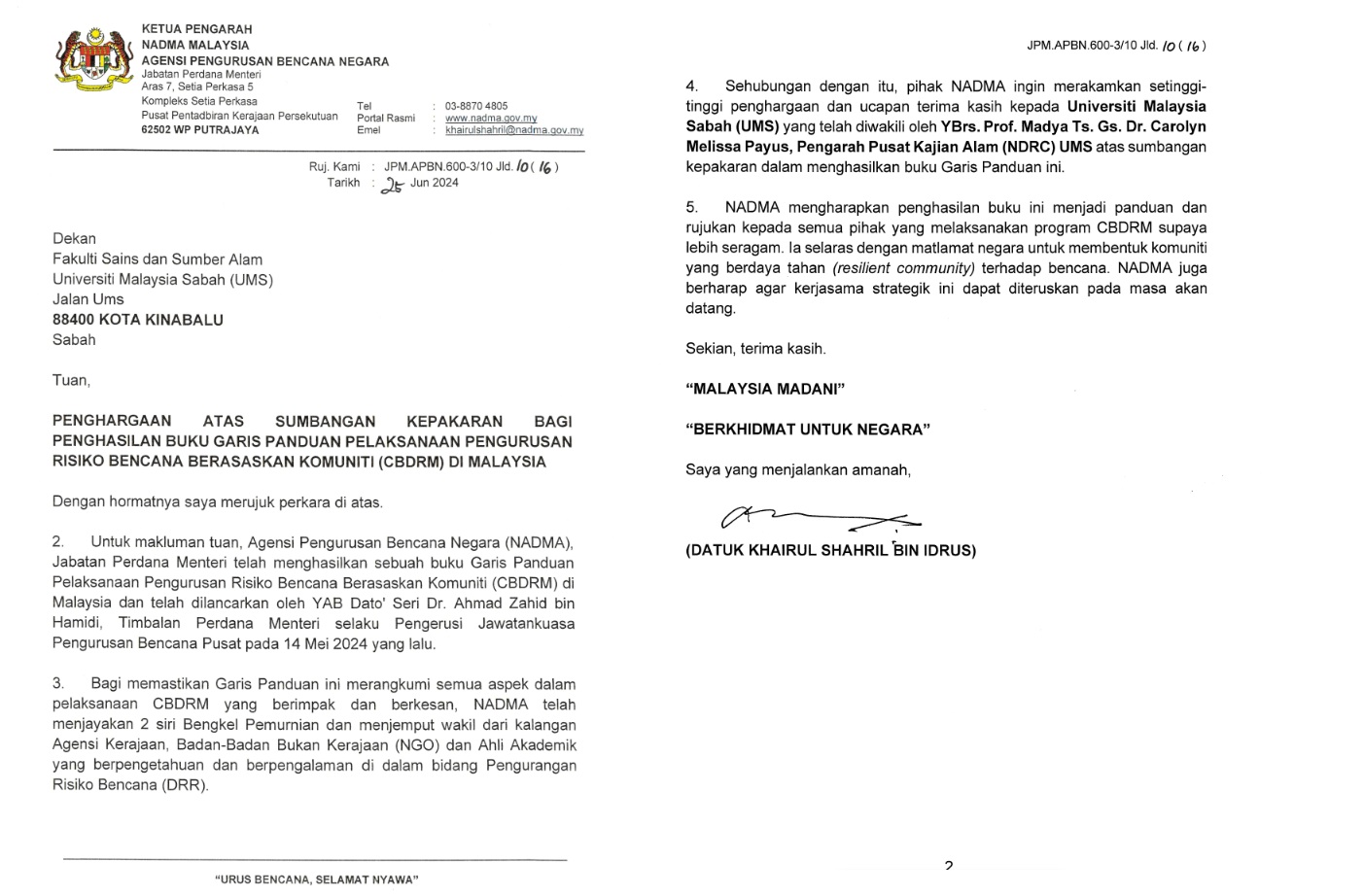
-
Policy and Action Plan Collaboration: Tun Mustapha Park (TMP) Sustainable Fisheries Advisory Committee 2024
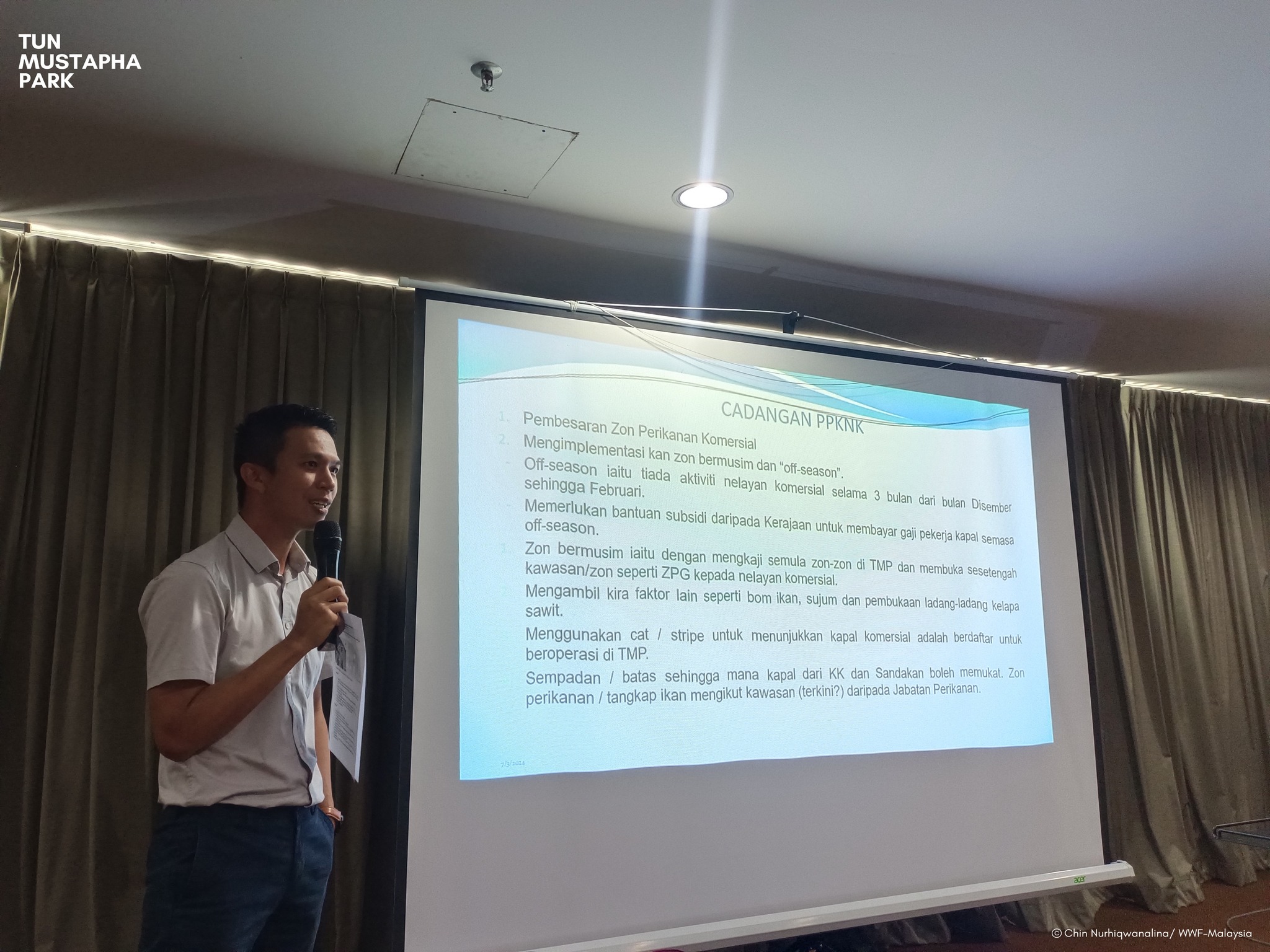
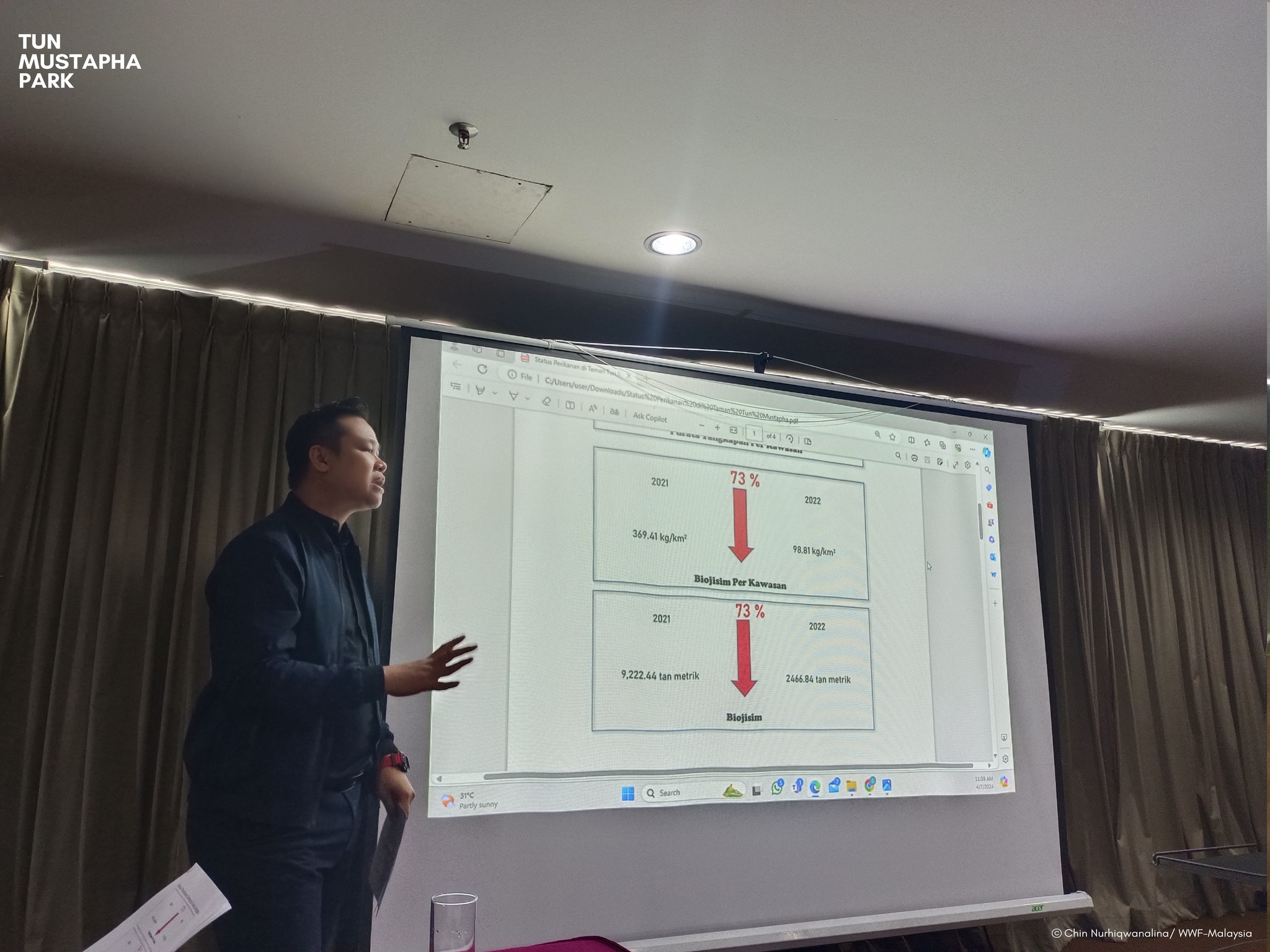
On 4 July 2024, Universiti Malaysia Sabah strengthened its multi-stakeholder policy engagement through participation in the Tun Mustapha Park (TMP) Sustainable Fisheries Advisory Committee Meeting held in Kota Kinabalu. The meeting convened key agencies—including Sabah Parks, UNESCO the Department of Fisheries Sabah, district offices (Kudat, Kota Marudu, Pitas), the Wildlife Department, Marine Police, Malaysian Maritime Enforcement Agency (MMEA), Ko-Nelayan, WWF-Malaysia, and the Borneo Marine Research Institute (BMRI), UMS—reflecting a strong collaborative platform for joint decision-making on marine resource governance. Chaired by Sabah Parks, the committee addressed several critical policy and management issues, such as the outcomes of the dialogue with the Kudat Commercial Fishing Vessel Owners Association (PPKNK), the conservation status of sharks and rays, and updated assessments of fisheries stocks within TMP. A key outcome of the meeting was the identification of the need for a socio-economic study of the TMP region and the formation of inter-agency collaboration to implement endangered species awareness programmes for local communities. Through BMRI’s scientific expertise and active participation in these processes, UMS contributes to evidence-based policy development, co-creates action plans with government and civil society partners, and strengthens collaborative marine management frameworks. This initiative exemplifies SDG 17 in action, ensuring sustainable marine ecosystems and improved livelihoods for fishing communities in the TMP corridor.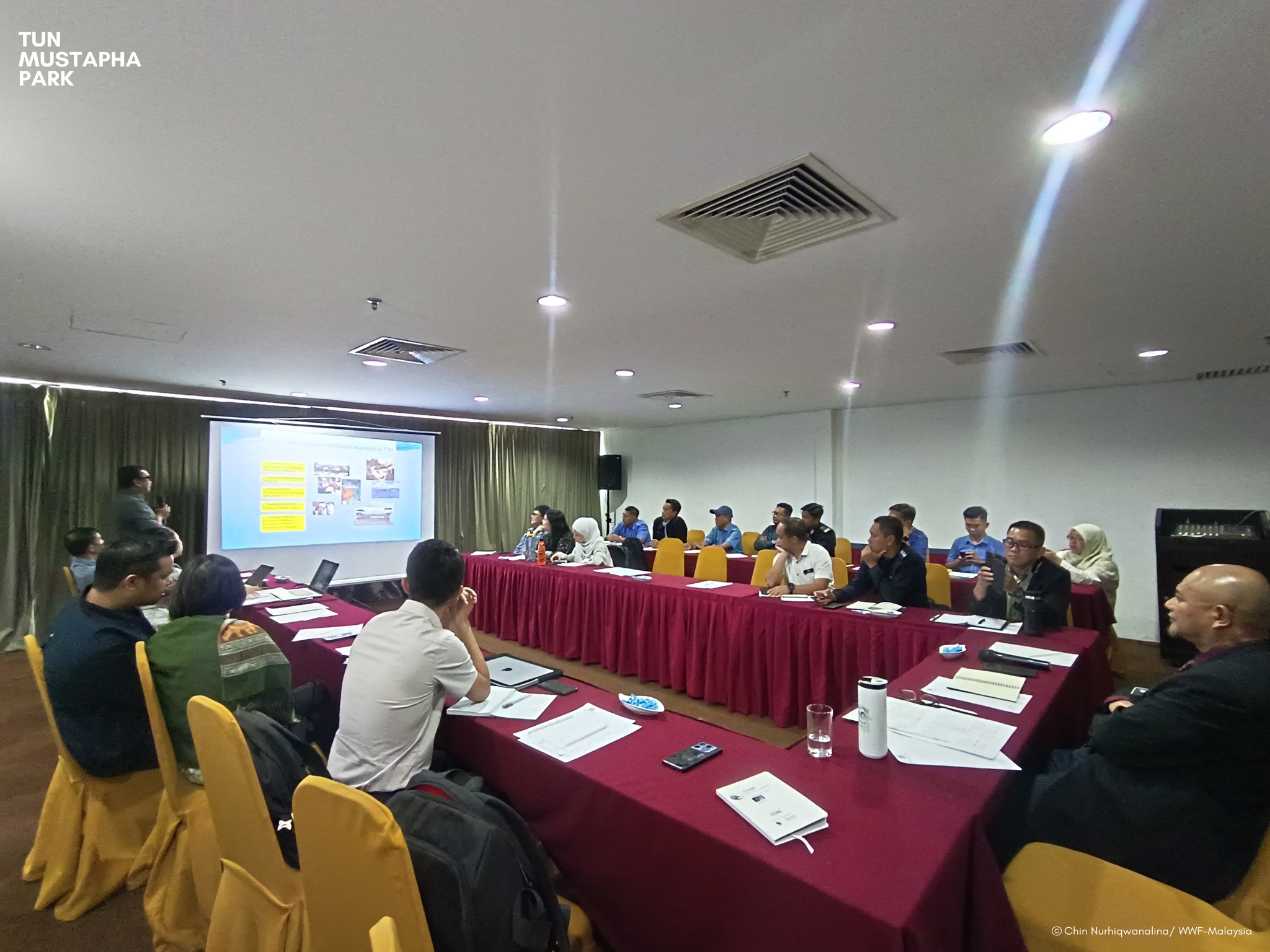
-
Policy Contribution: PUNB UniChallenge 2024
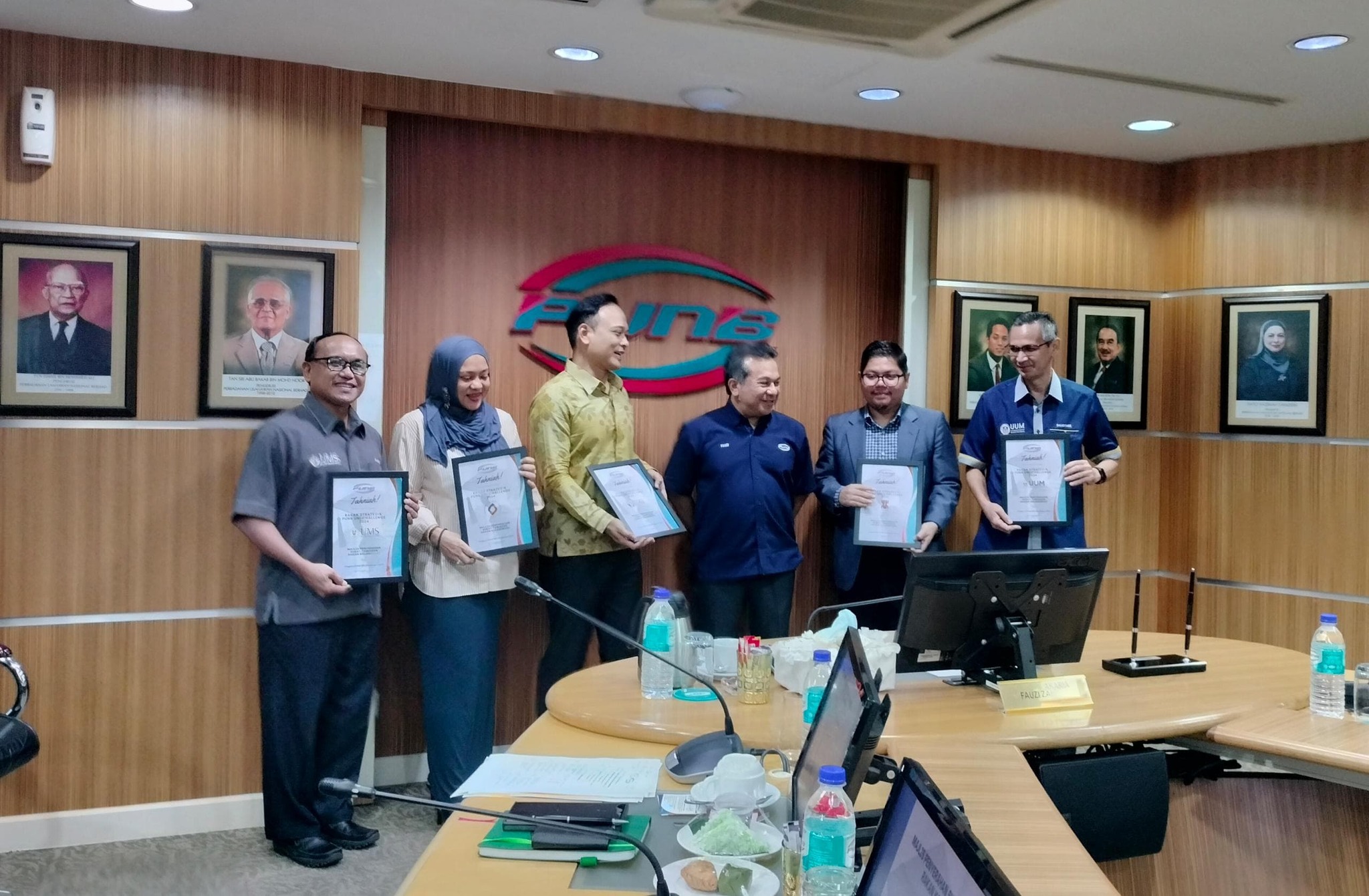
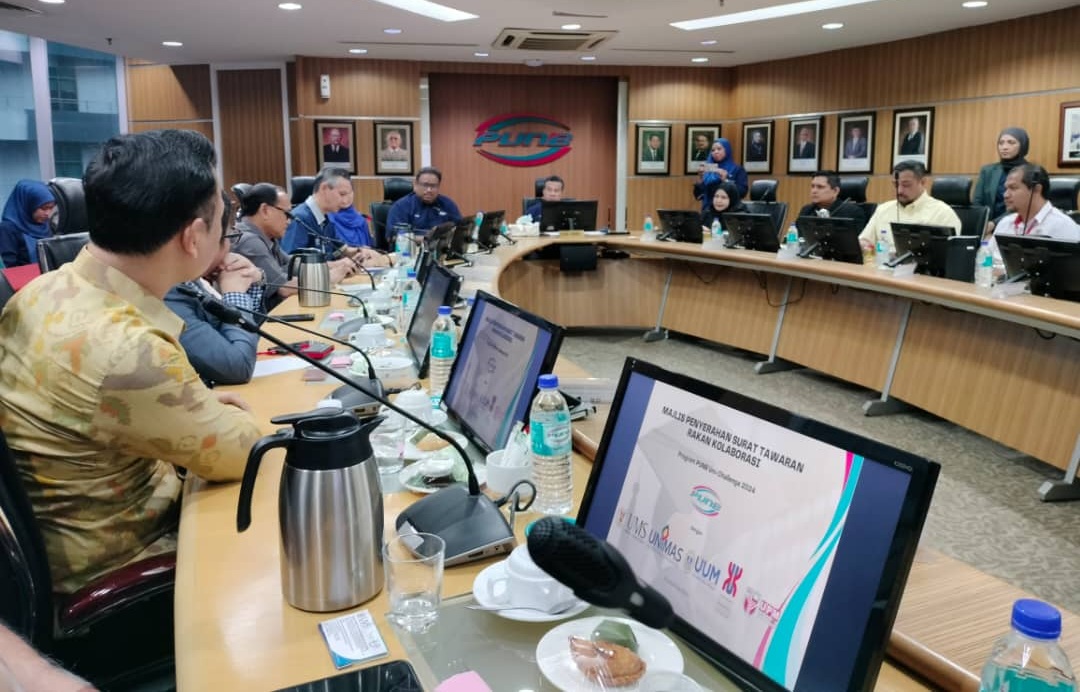
UMS strengthened its national partnership ecosystem through its involvement in the PUNB UniChallenge 2024, an initiative that supports SDG 17 by fostering structured collaboration between government agencies, academia, and community-based entrepreneur groups. During the official ceremony, UMS—represented by Assoc. Prof. Dr. Mohd Rahimie Abd Karim—received the collaboration offer letter from Perbadanan Usahawan Nasional Berhad (PUNB), formalising its role as a strategic partner in developing policy-relevant insights for microenterprise development in Sabah. Organised jointly by PUNB and the Faculty of Business, Economics and Accountancy (FPEP) through the HE04 Entrepreneurship Programme, the initiative includes a RM35,000 grant to support the design of sustainable and inclusive entrepreneurship solutions. Through the Social Entrepreneurship Pitch Challenge, ten UMS student teams worked alongside the Gabungan Persatuan-Persatuan Penjaja dan Peniaga Kecil (G3PNS) Sabah to analyse community-level business challenges and propose actionable strategies aligned with national entrepreneurship development priorities. This collaboration contributes to SDG 17 by enabling UMS to co-create action plans, support evidence-based decision-making, and strengthen capacity-building for small business ecosystems through multi-stakeholder engagement. By linking policy direction from PUNB, academic research expertise, and ground-level insights from G3PNS entrepreneurs, the UniChallenge programme exemplifies an effective and impactful SDG 17 partnership model.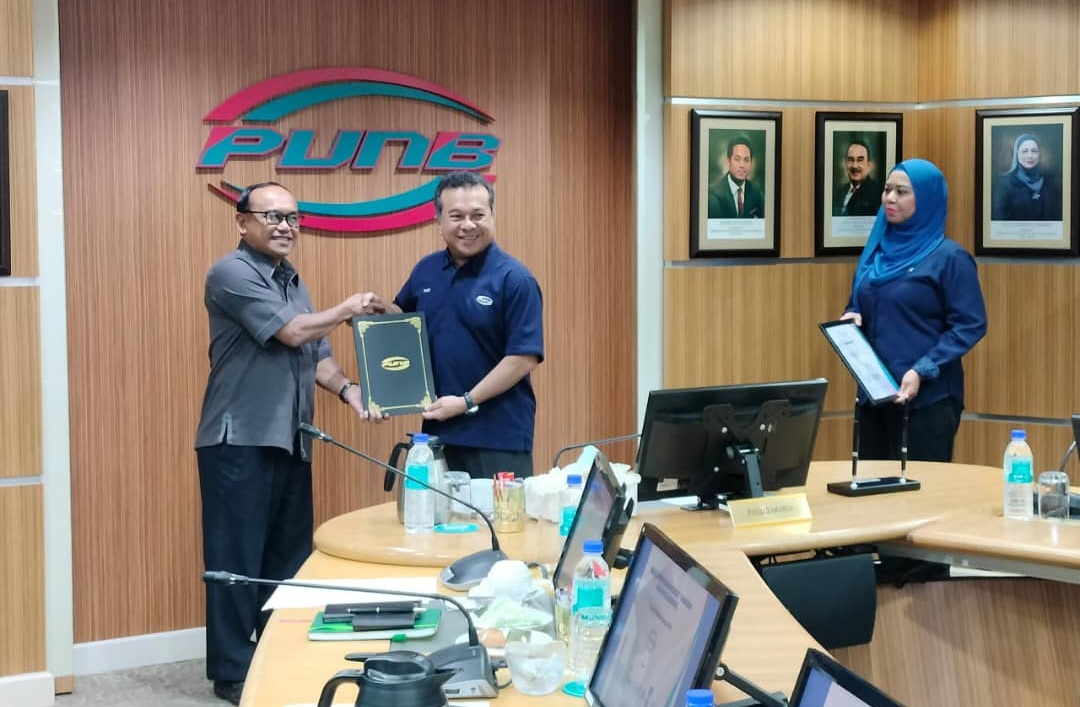
Policy Contribution: Sabah Biodiversity strategy 2024- 2034
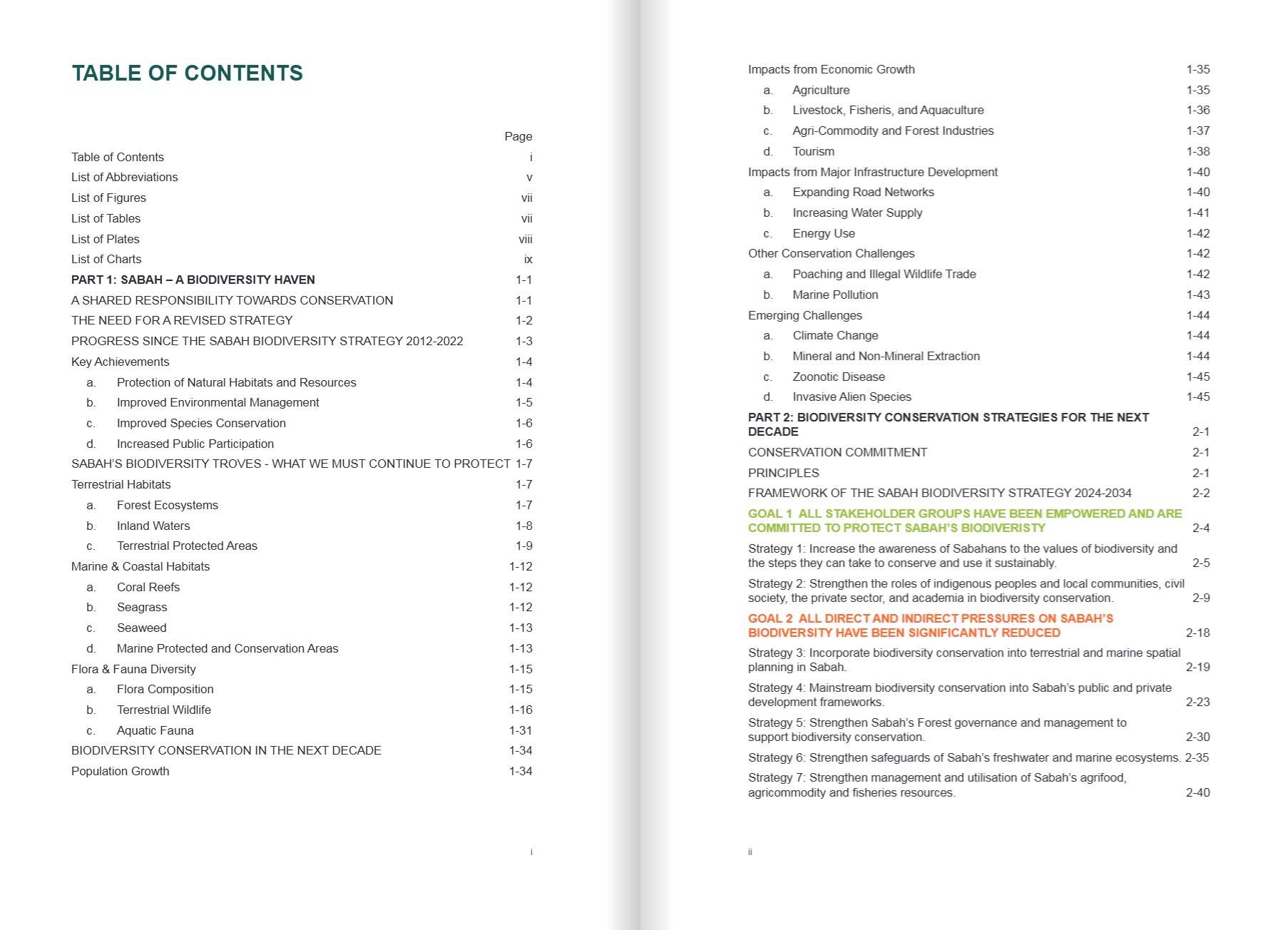
Universiti Malaysia Sabah (UMS) plays a central role in supporting the development and implementation of the Sabah Biodiversity Strategy, a state-level framework that guides the conservation, sustainable use, and equitable benefit-sharing of Sabah’s rich natural heritage. Through its specialised institutes—including the Institute for Tropical Biology and Conservation (ITBC), Borneo Marine Research Institute (BMRI), and the Faculty of Tropical Forestry (FPT)—UMS contributes scientific expertise, biodiversity assessments, ecological monitoring data, and community-based conservation insights that inform state policy direction. UMS researchers work closely with the Sabah Biodiversity Centre (SaBC), the Sabah Forestry Department, and WWF-Malaysia to evaluate ecosystem health, identify threats to key habitats, and develop action plans for species protection, restoration initiatives, and sustainable resource management. This collaboration ensures that evidence-based science directly feeds into the State’s biodiversity priorities and supports long-term environmental governance. By serving as a research partner, technical advisor, and capacity-building hub, UMS significantly advances SDG 17 through multi-stakeholder partnerships that strengthen Sabah’s biodiversity strategy and contribute to regional sustainability outcomes.Access Full Published Report Here!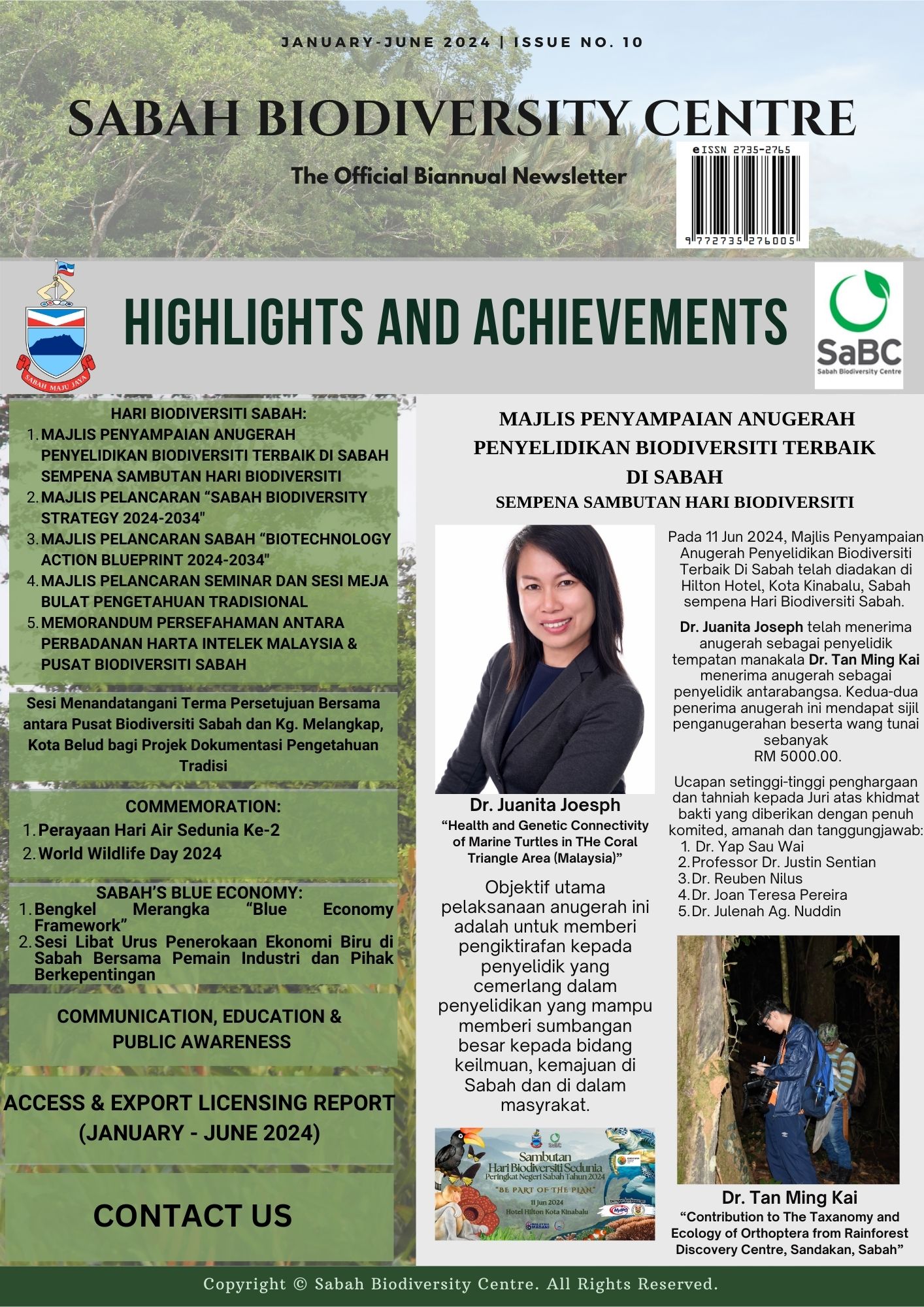
Policy Contribution: National Coral Triangle Initiative Action Plan (CTI–NPOA 2.0)
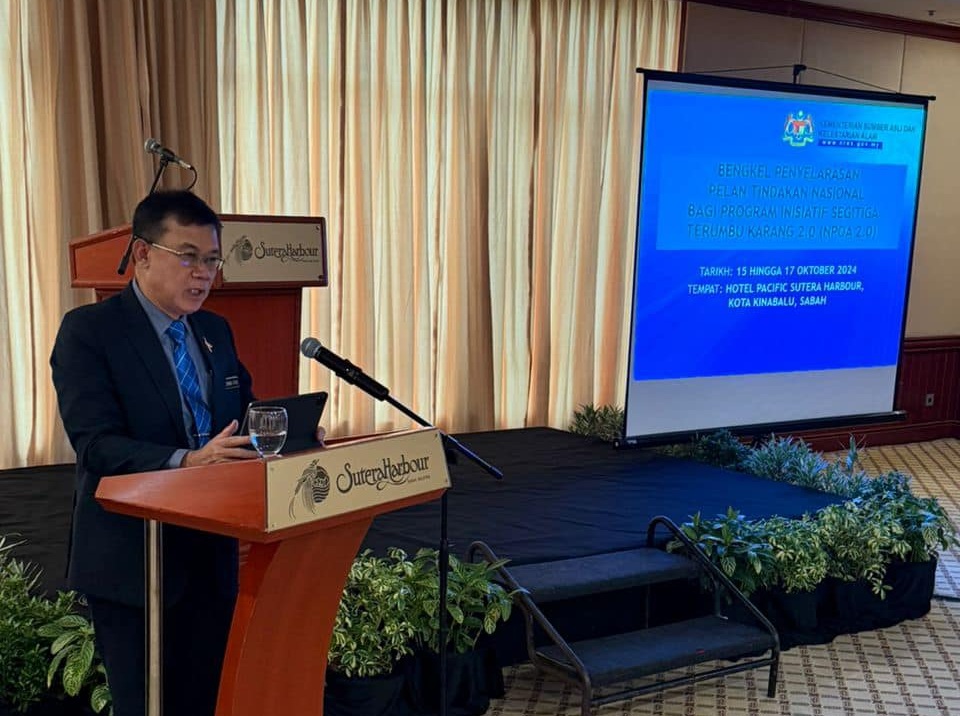
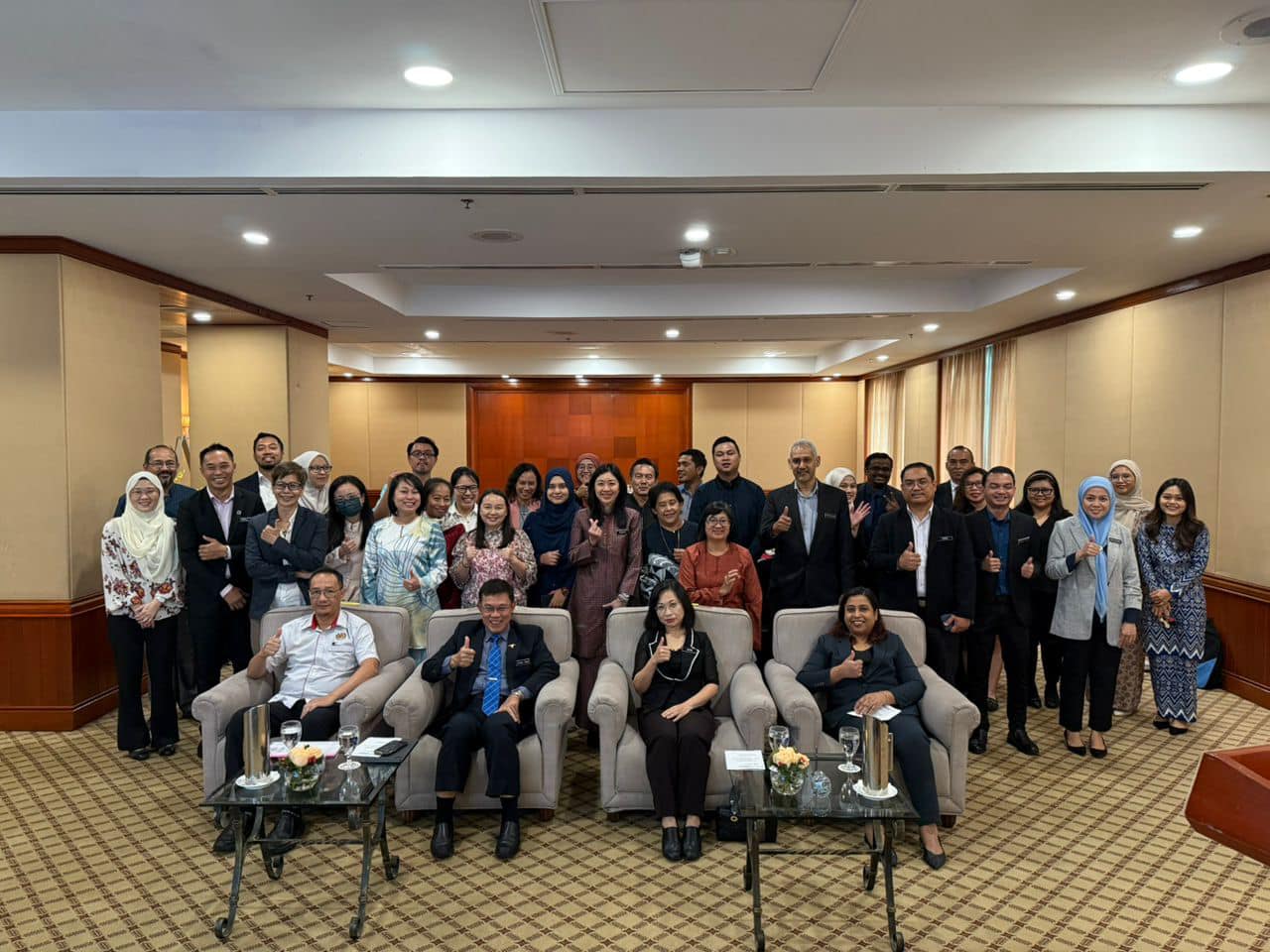
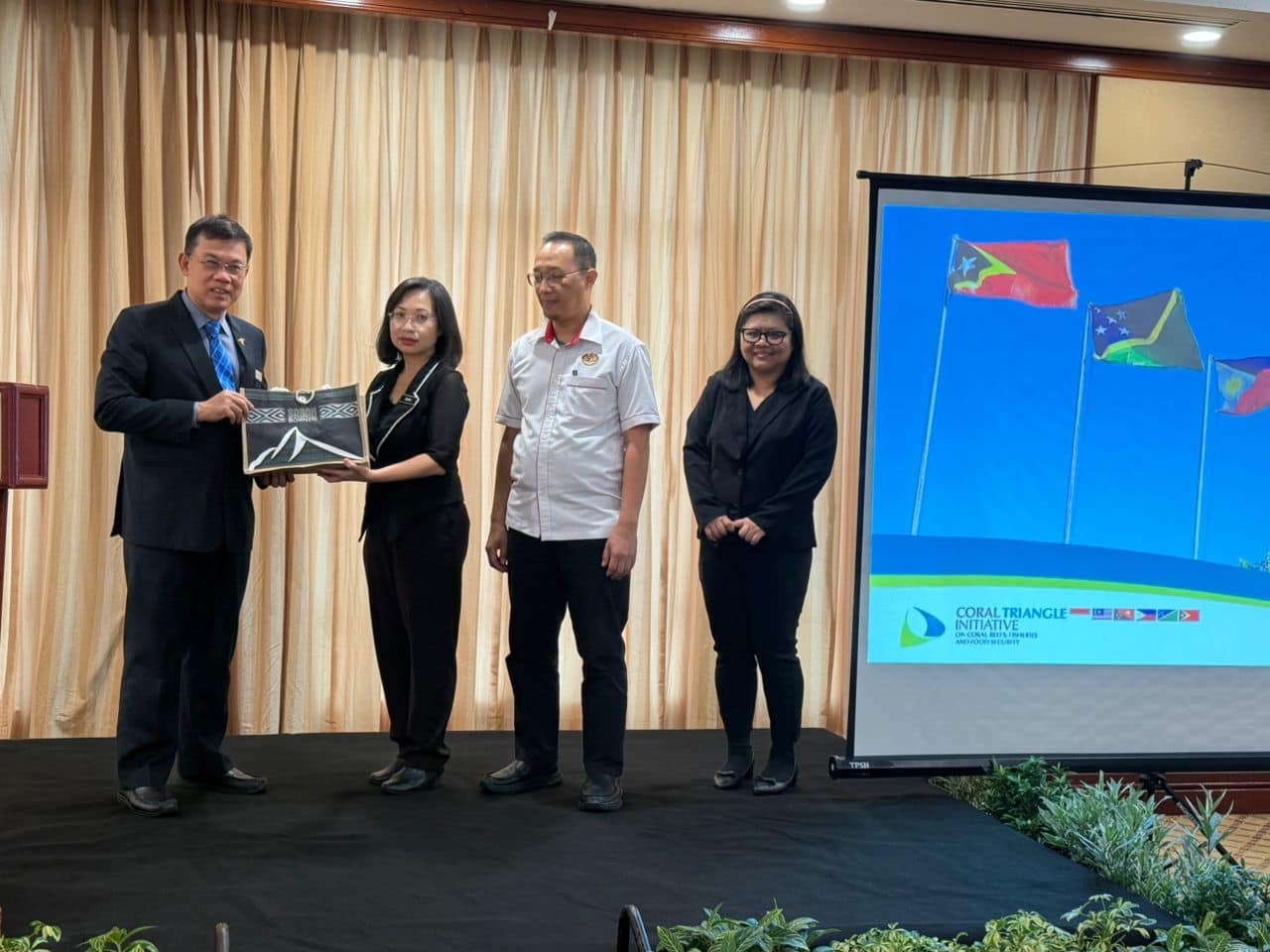
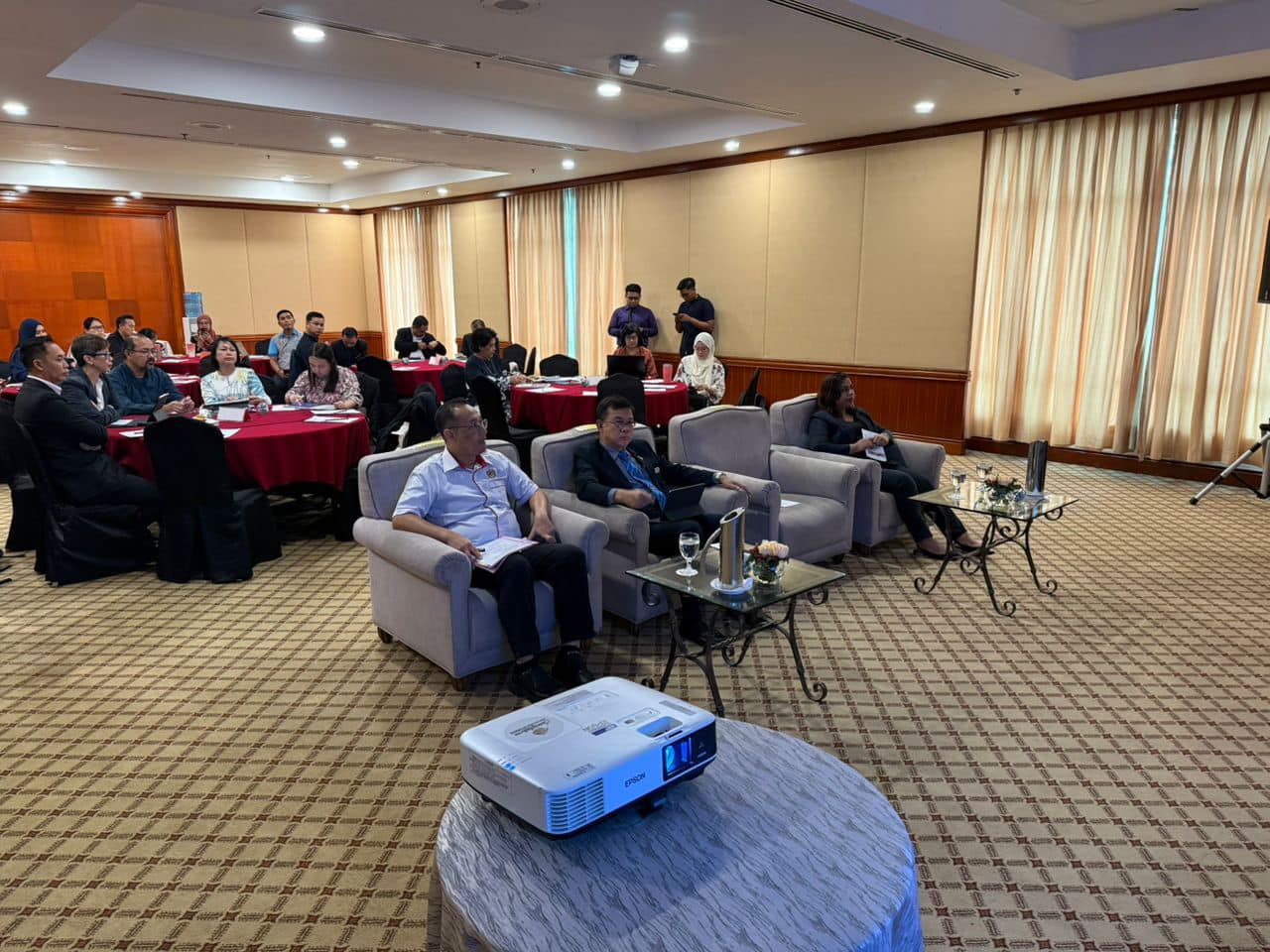
Universiti Malaysia Sabah (UMS), through the Borneo Marine Research Institute (IPMB), strengthened its national policy leadership in 2024 by serving as the national focal point for the development of Malaysia’s Coral Triangle Initiative National Plan of Action 2.0 (CTI–NPOA 2.0). On 15 October 2024, the Secretary General of the Ministry of Natural Resources and Environmental Sustainability (NRES), YBhg. Datuk Dr. Ching Thoo a/l Kim, officiated the National Coordination Workshop for CTI–NPOA 2.0, jointly organised by NRES and IPMB–UMS in Kota Kinabalu. The three-day workshop brought together federal and state ministries, departments, NGOs, and academic experts to refine Malaysia’s marine conservation and climate-resilience priorities under the 2021–2030 framework. As the lead technical institution, UMS facilitated multi-stakeholder consultations, provided scientific evidence for policy direction, and coordinated inputs for the national action plan, which is scheduled for presentation at the CTI Senior Officials Meeting (SOM-19) in Timor-Leste in December 2024. The workshop featured participation from key agencies including WWF-Malaysia, Reef Check Malaysia, GIZ-SOMACORE, and the Sabah Ministry of Agriculture, Fisheries and Food Industries, demonstrating a broad partnership ecosystem aligned with SDG 17. Through this collaboration, UMS plays a pivotal role in shaping Malaysia’s marine governance strategy, strengthening coastal community resilience, and advancing regional commitments within the Coral Triangle Initiative.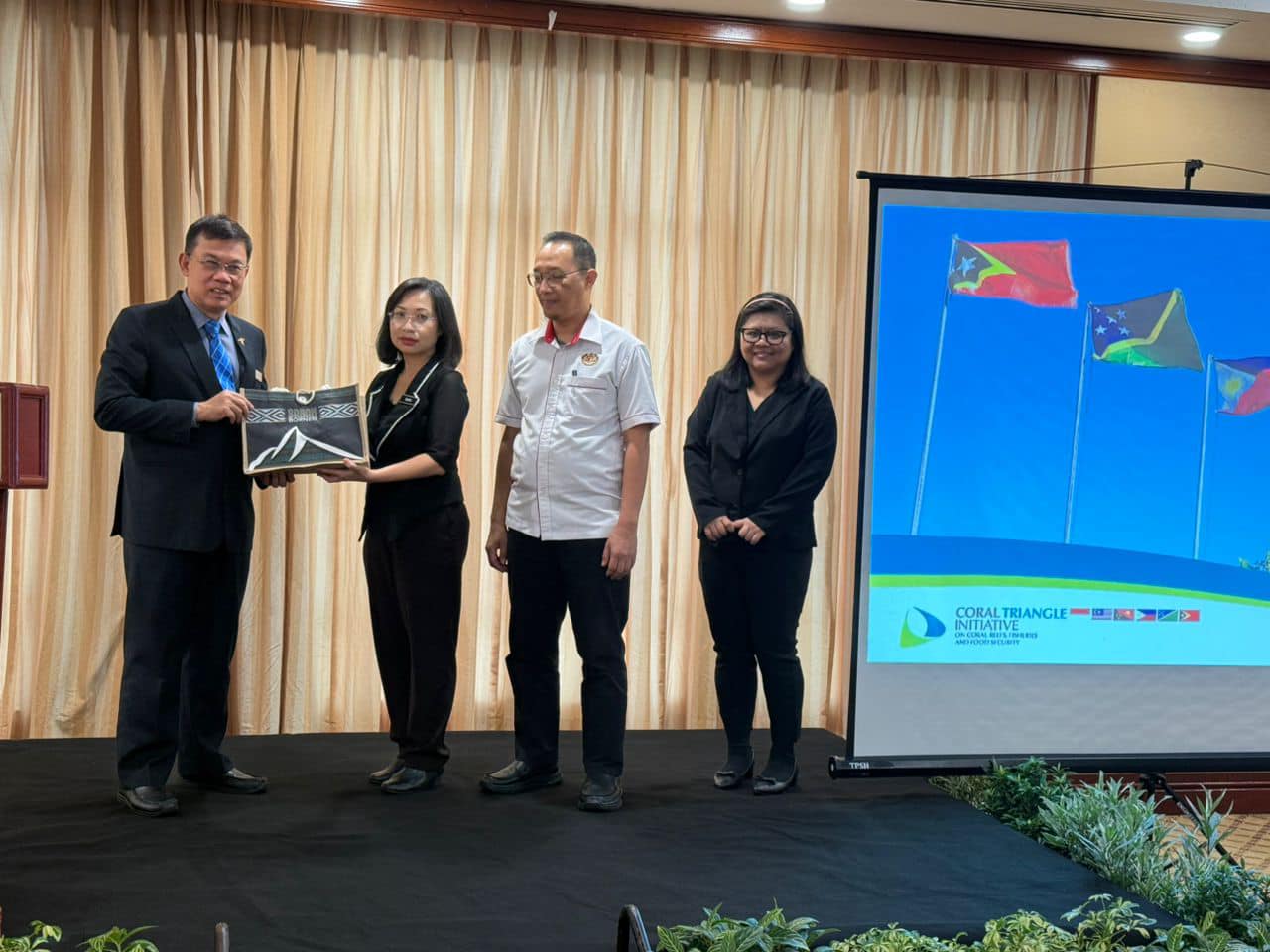
Policy and Action Plan Collaboration: Sabah Economic Outlook and Economic Model (IDS–UMS Partnership)
Universiti Malaysia Sabah (UMS) continues to strengthen state-level policy development through its collaboration with the Institute for Development Studies (IDS) Sabah under the flagship Economy Cluster. In 2024, UMS was formally engaged as a research partner for two major policy projects commissioned by the Chief Minister’s Office (CMO): the Sabah Economic Outlook and the Sabah Economic Model, both conducted jointly with UiTM and UCFS. These projects involve generating evidence-based analysis on Sabah’s economic performance, modelling future growth trajectories, and identifying strategic interventions to support the State’s long-term development agenda. Through this collaboration, UMS researchers contribute expertise in economic modelling, data interpretation, and policy scenario development, supplying the Sabah government with critical insights required for informed decision-making. This multi-institutional partnership between IDS, UiTM, UCFS, and UMS exemplifies the essence of SDG 17 by promoting knowledge-sharing, strengthening institutional capacity, and supporting the co-creation of state-level economic policies and action plans. The partnership reflects UMS’s continued commitment to advancing sustainable development through research-driven policy advisory roles within Sabah’s development ecosystem.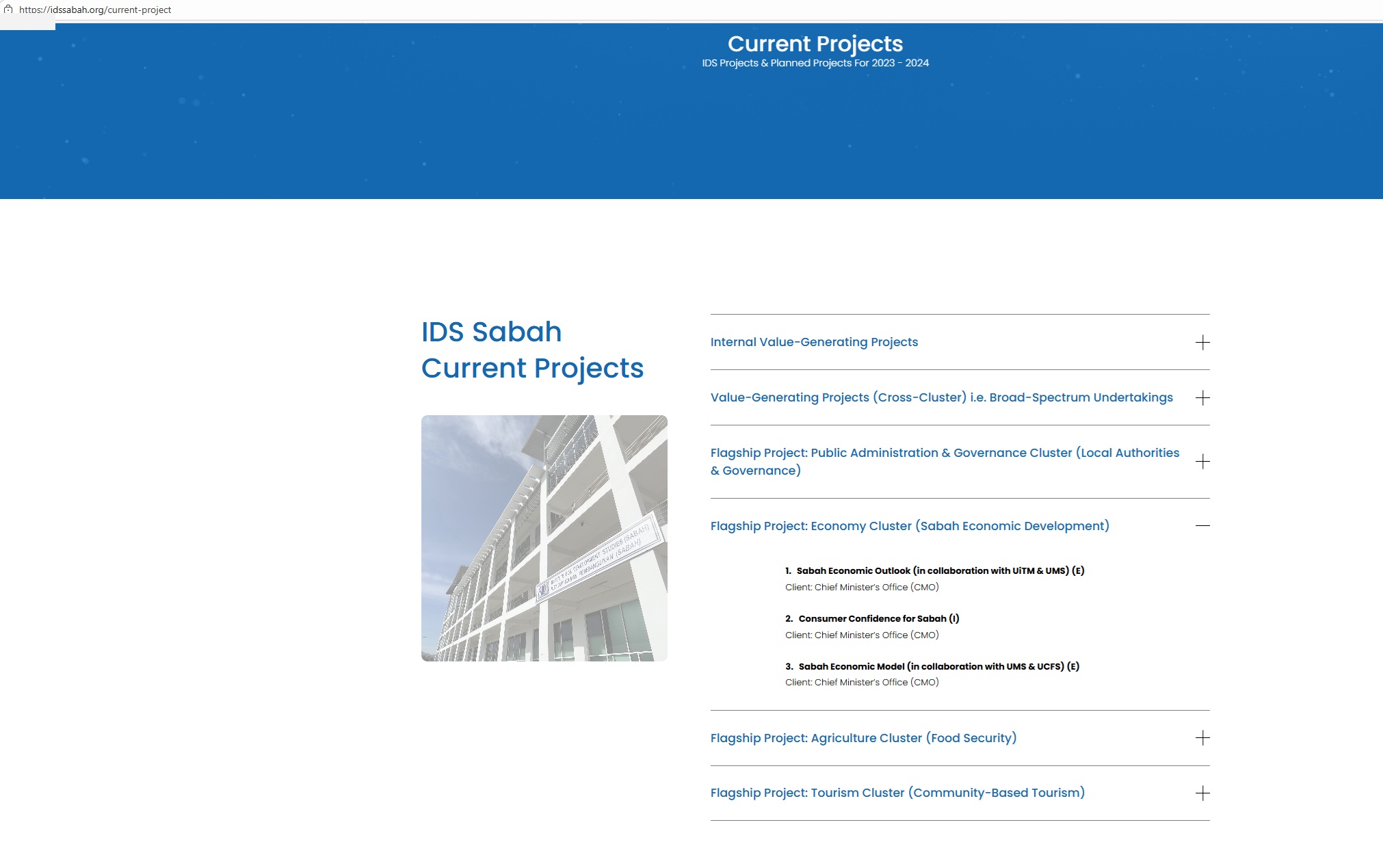
Inter-Agency Climate Adaptation Planning and Research Framework Development
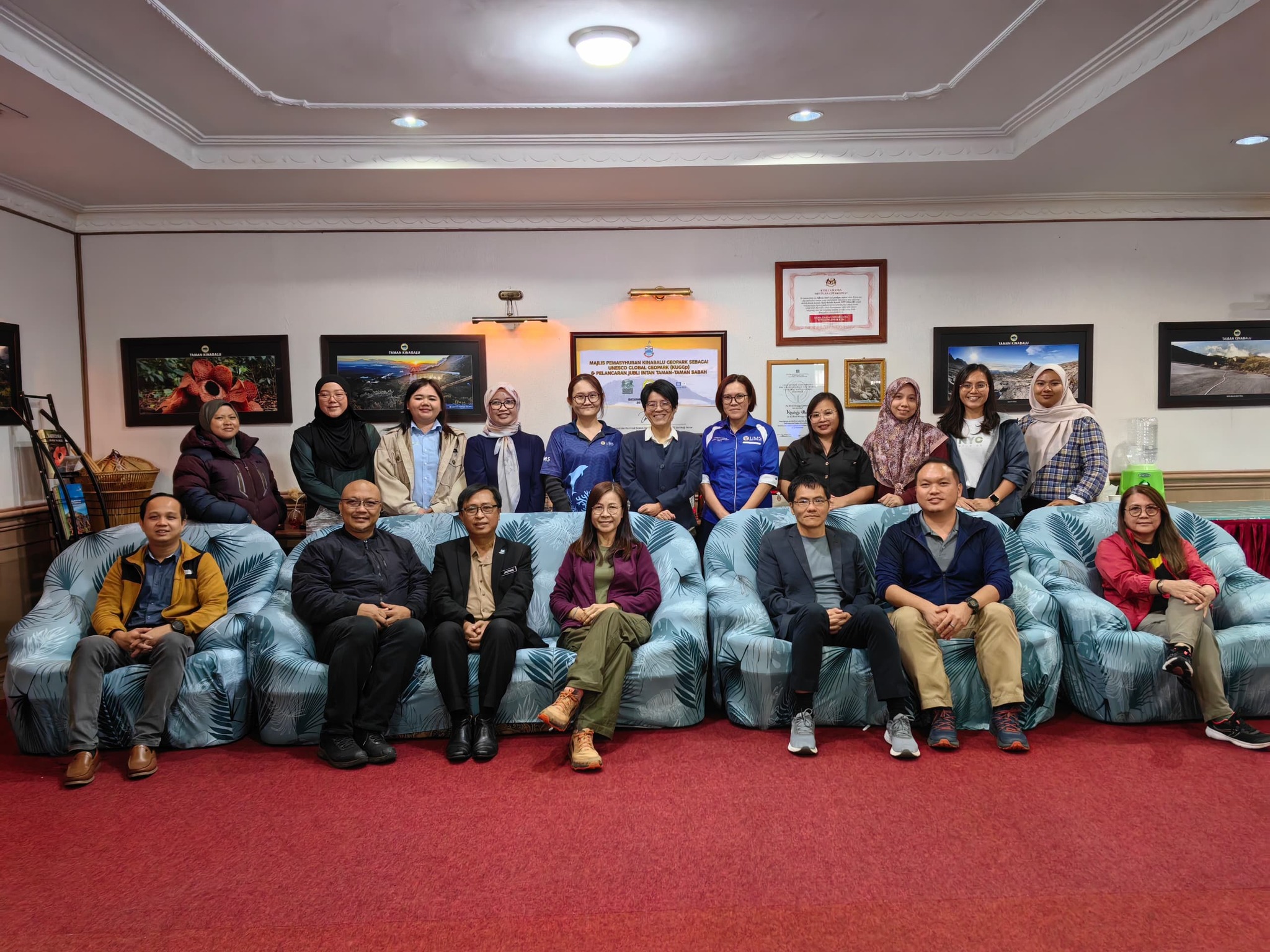
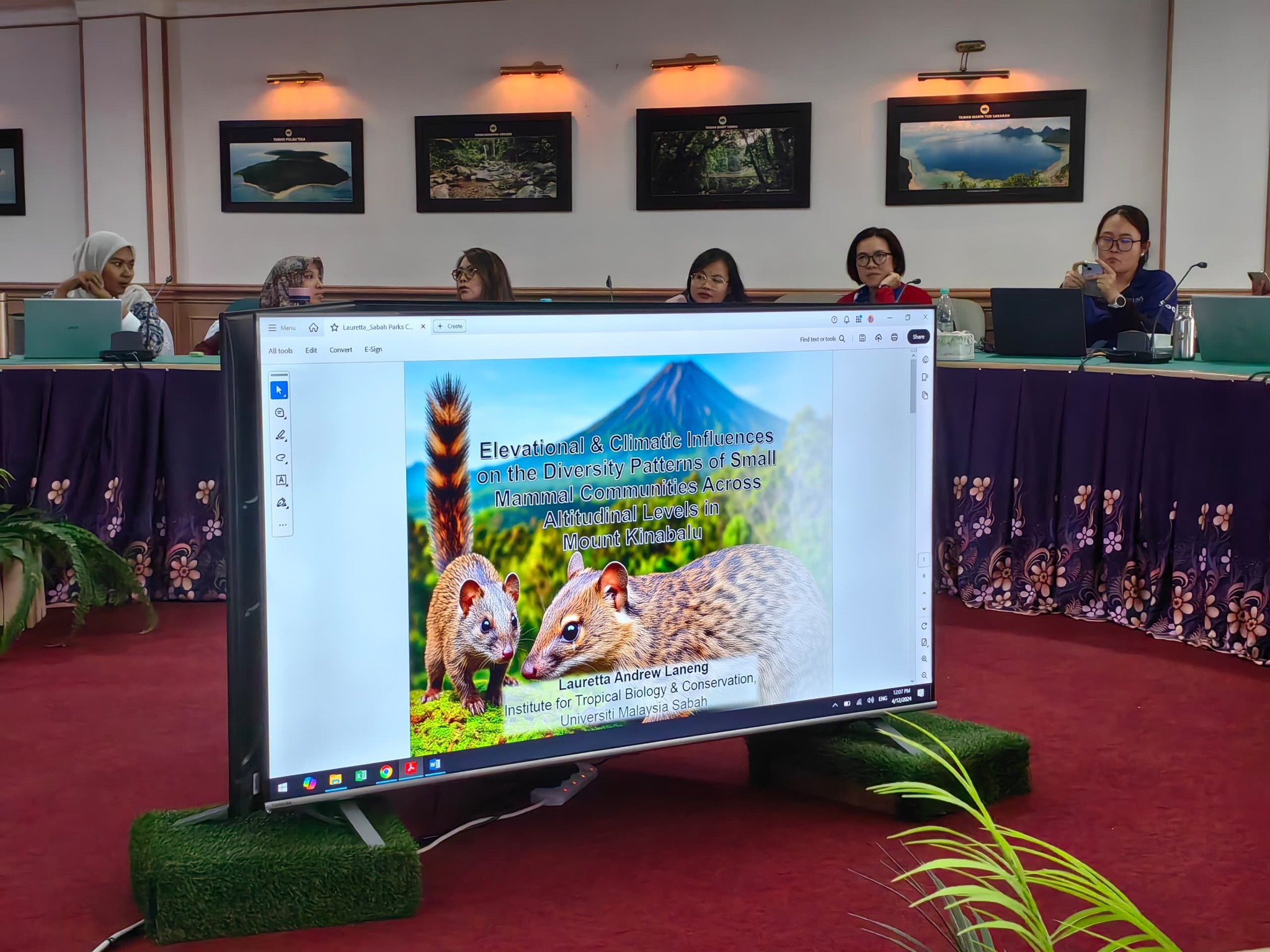
On 4 December 2024, ITBC and Sabah Parks convened the first Climate Change Research Coordination Workshop at Kinabalu Park HQ. Six research proposals under Phase 1 of the Climate Change Ecology Programme were presented, forming the basis for a 10-year collaborative framework to monitor and manage the impacts of climate change on Kinabalu Park’s biodiversity. This workshop strengthened national coordination in climate resilience research.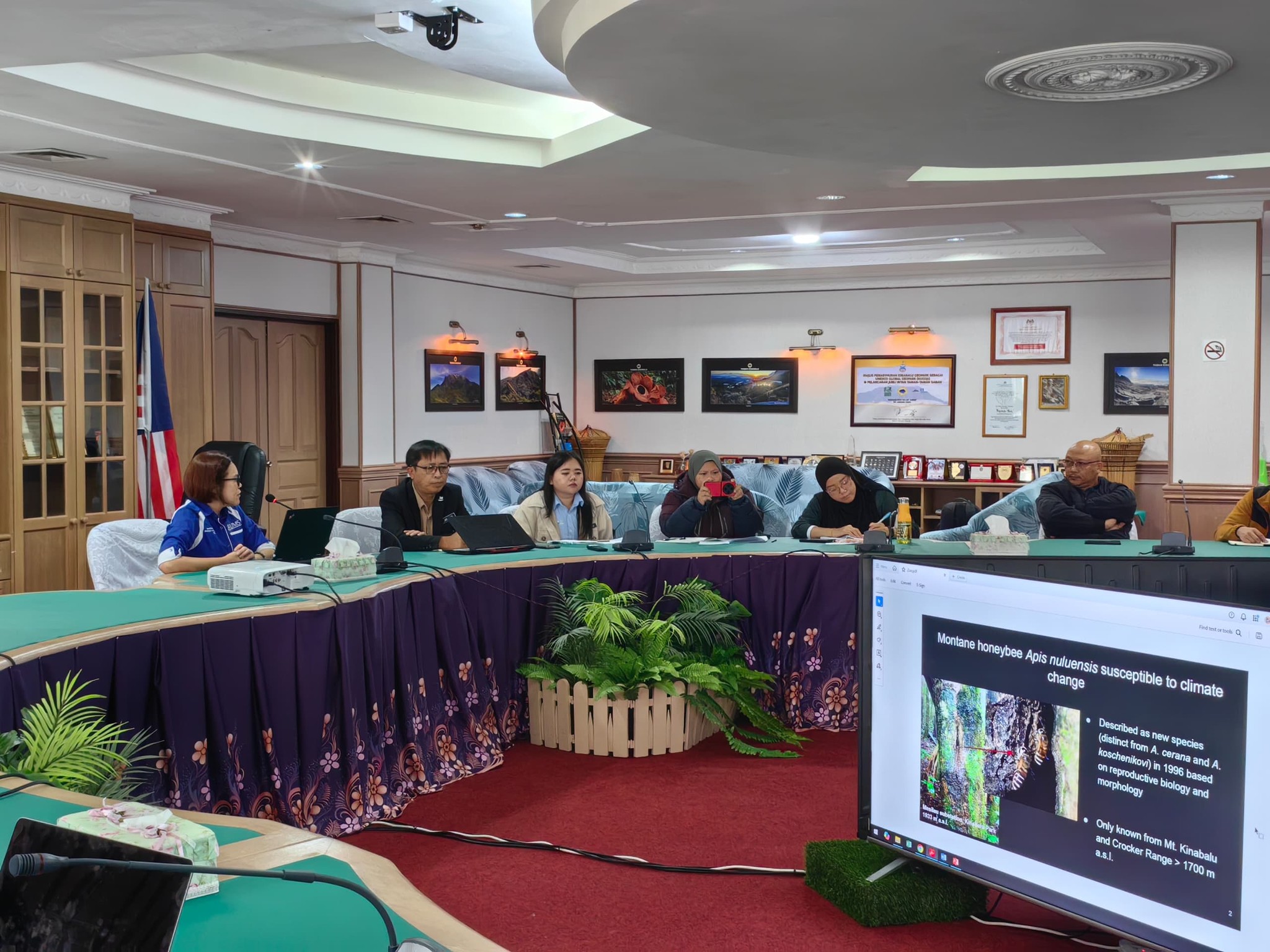
Sabah State Environmental Policy (Dasar Alam Sekitar Negeri Sabah)
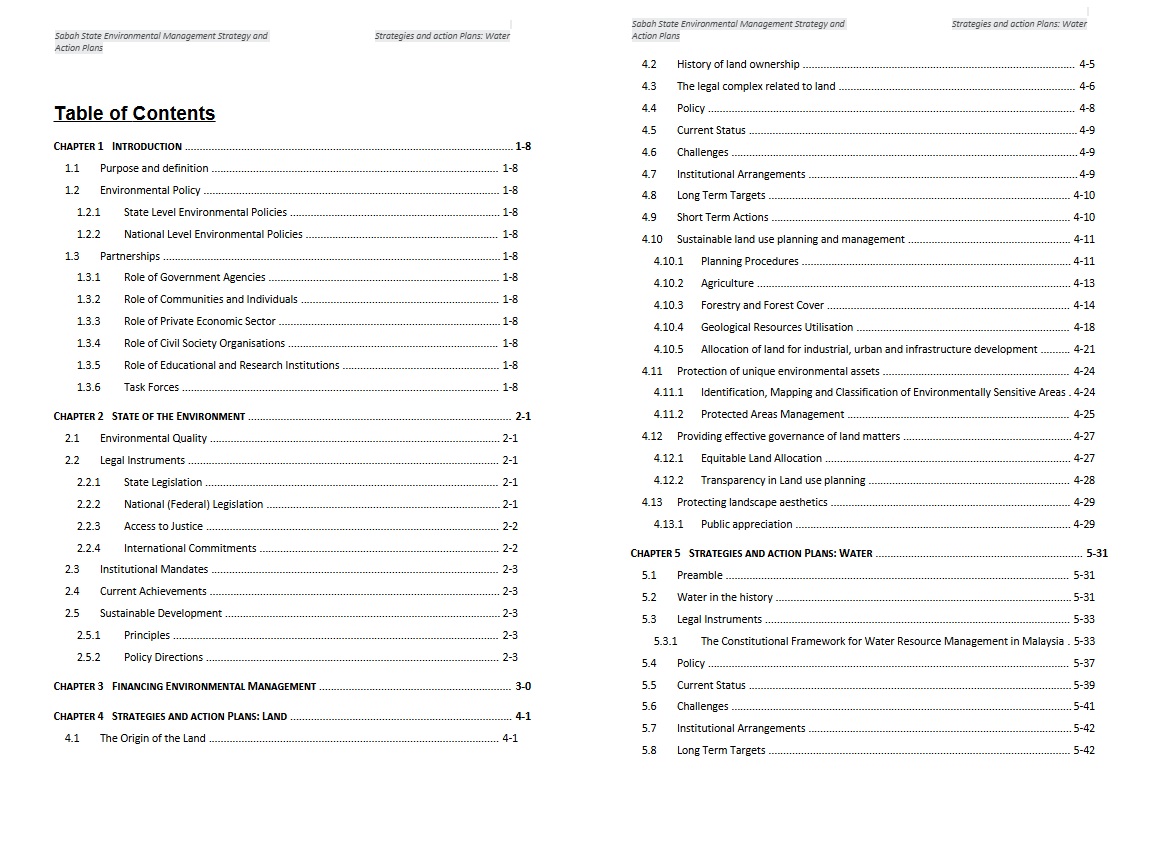
UMS also contributed to state-level policy development through its formal appointment as a Sub-Consultant by Chemsain Konsultant Sdn. Bhd. for the Sabah State Policy on the Environment. An official appointment letter to Dr. Justin Sentian outlined responsibilities including drafting policy summaries, conducting consultations with state agencies, preparing technical papers, and contributing to biodiversity components within the policy. Through this work, UMS was directly involved in problem identification, stakeholder engagement, scenario analysis, drafting, and technical review processes, clearly meeting THE’s definition of “direct involvement in policy development” and demonstrating UMS’s recognised influence in shaping environmental governance and resilience planning in Sabah.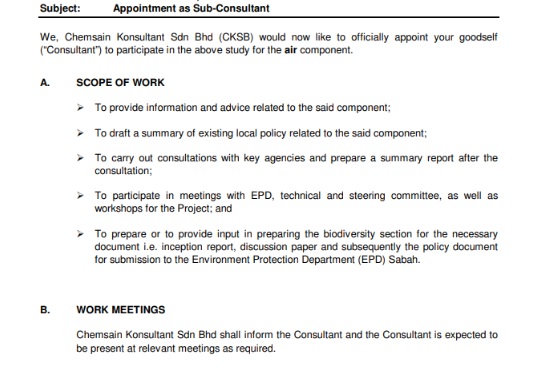
Framework Collaboration: UMS–MoHE–UNESCO Collaboration on Inclusive Open Educational Resources (iOER)
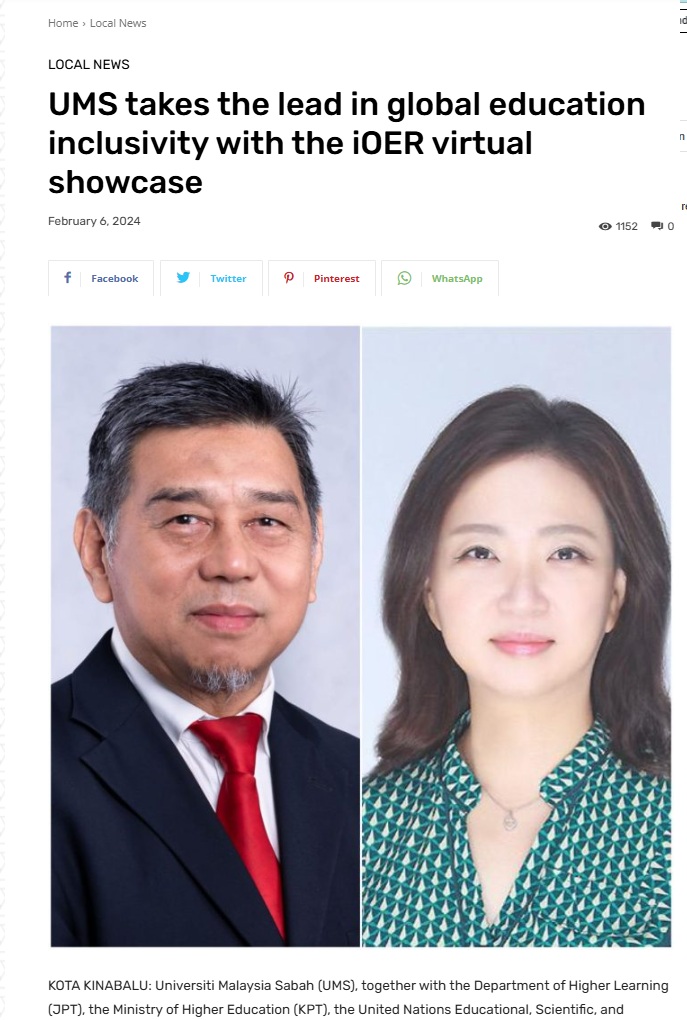
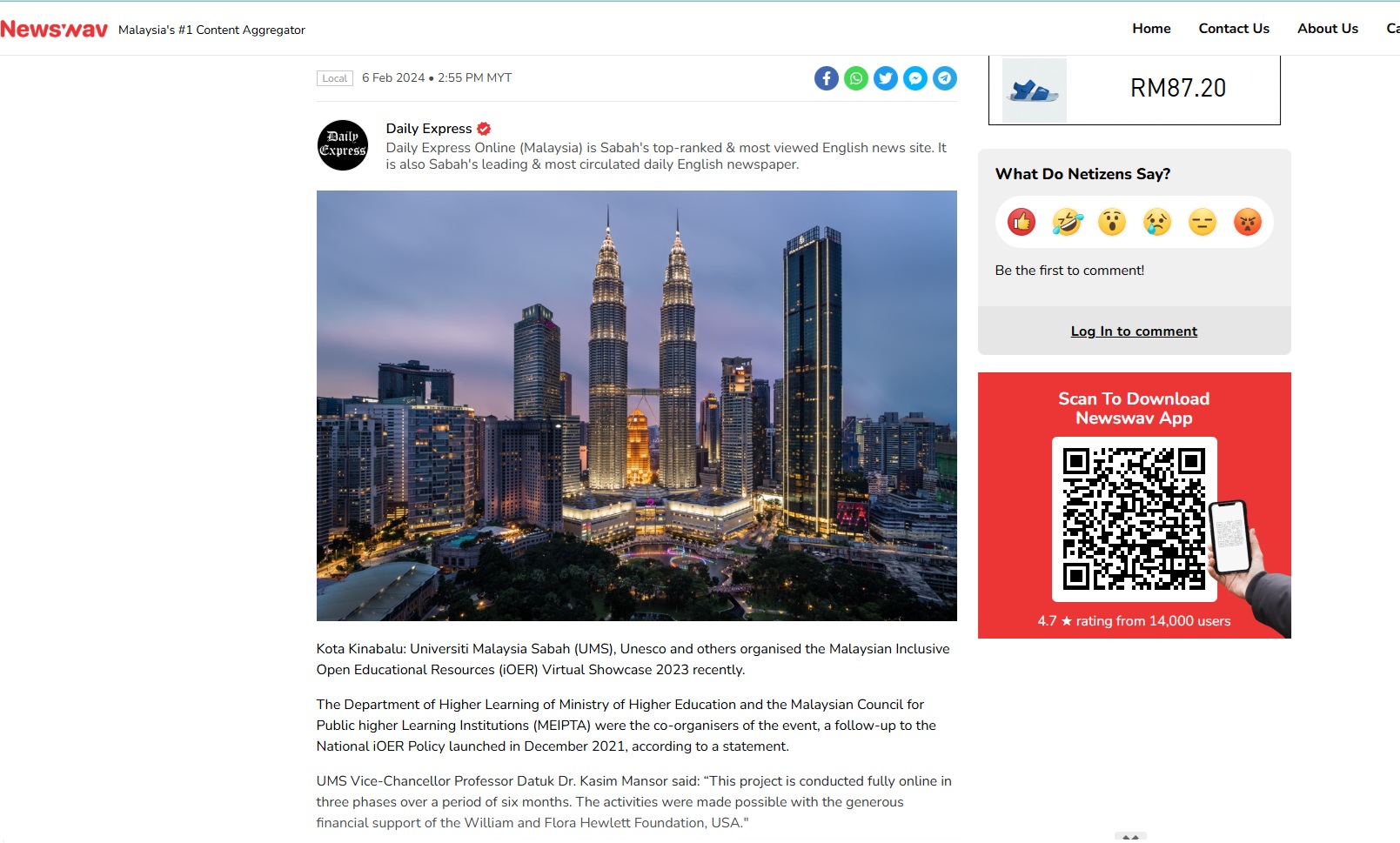
Universiti Malaysia Sabah (UMS) plays a national leadership role in policy development through its collaboration with the Ministry of Higher Education (MoHE) and UNESCO in establishing Malaysia’s Inclusive Open Educational Resources (iOER) Framework. As the lead institution responsible for developing and maintaining the national iOER Portal, UMS directly contributes to shaping Malaysia’s open-access and inclusive education policy ecosystem. The initiative is aligned with UNESCO’s Open Educational Resources (OER) Global Framework, and UMS’s work has informed Malaysia’s national direction on equitable access, digital inclusion, and lifelong learning. By serving as the country’s central hub for open and inclusive learning materials, the UMS iOER Portal provides more than 500 openly licensed digital resources that support evidence-based policy decisions on digital learning accessibility and pedagogical innovation. UMS’s role extends beyond platform development: its accessibility standards, inclusive design templates, and universal-access features—including screen-reader compatibility and captioned learning content—have contributed to national guidelines and best practices for inclusive digital education. Through this multi-stakeholder partnership, UMS actively shapes national policy discourse on open education, digital equity, and inclusive learning environments. This landmark collaboration demonstrates UMS’s contribution to SDG 17 by strengthening national policy development through international cooperation, and reinforces Malaysia’s commitment to SDG 4: Quality Education and inclusive access for all learners.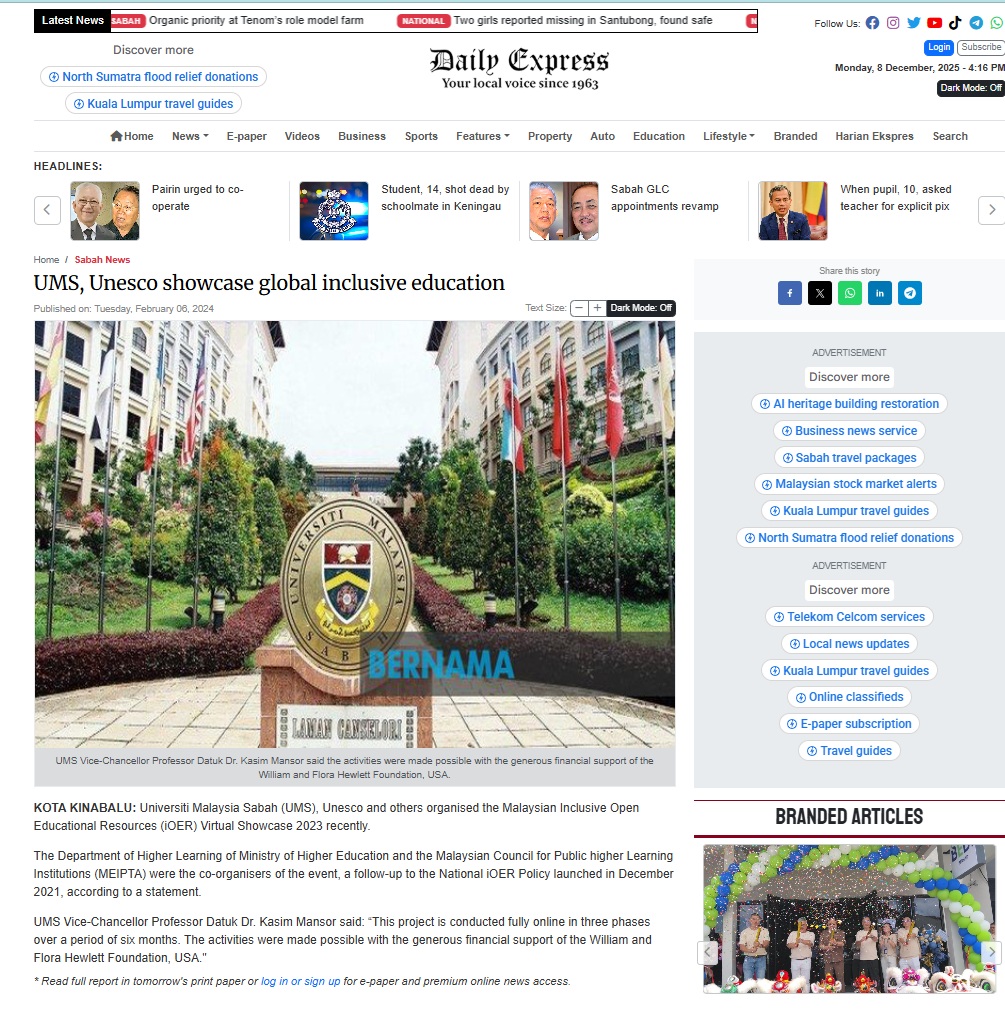
Policy Contribution: National Unity Policy Development for Sabah and Sarawak 2025
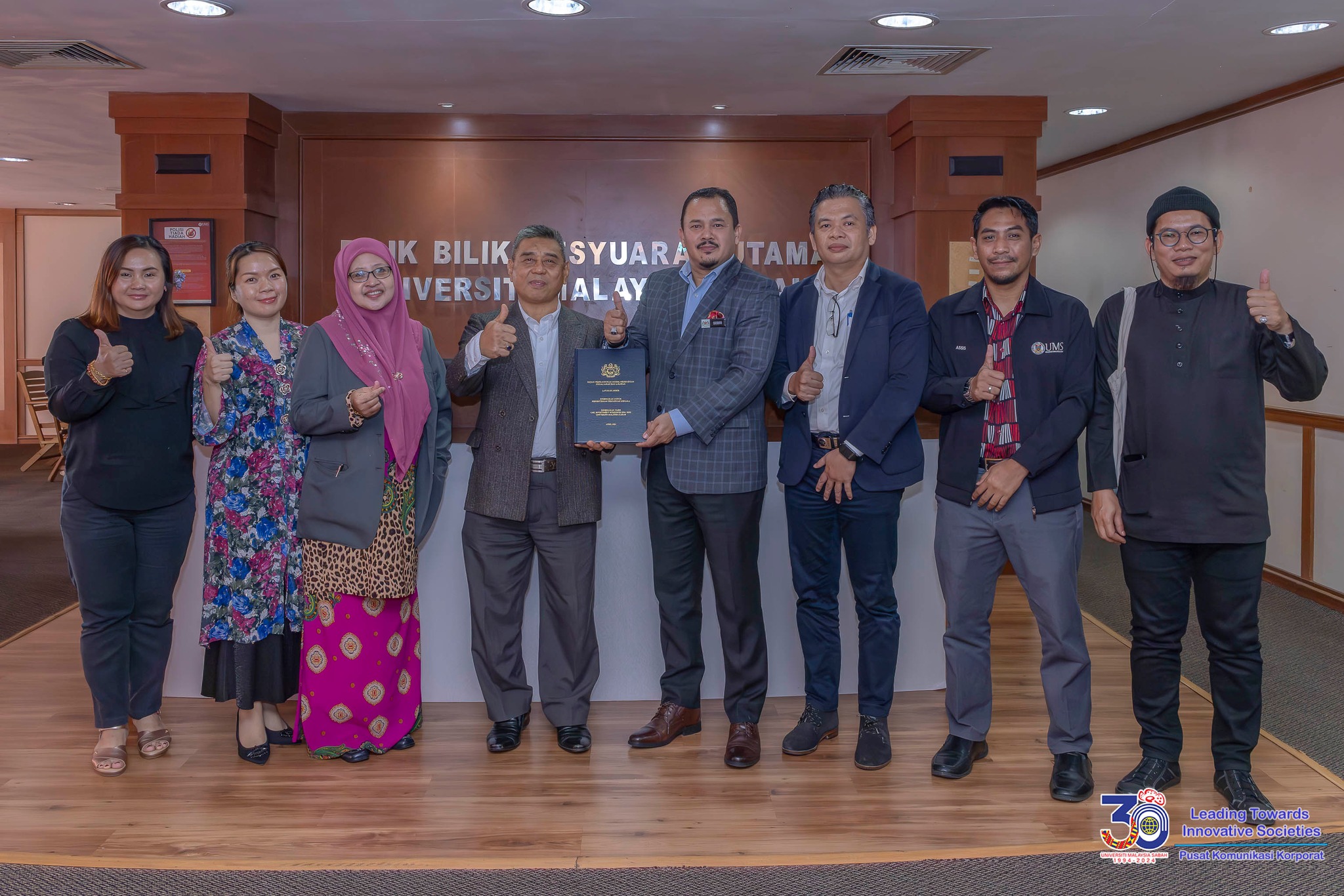
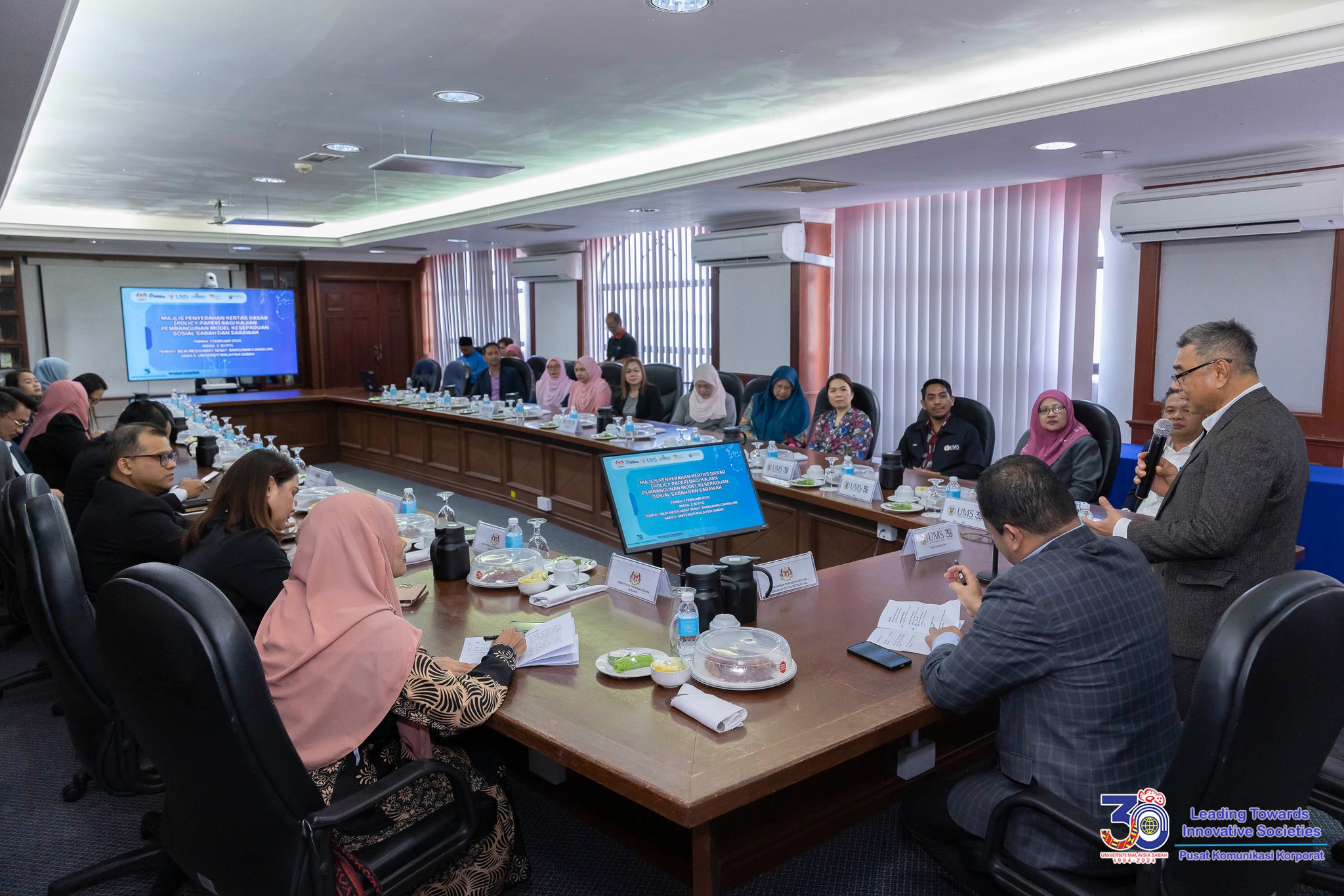
Universiti Malaysia Sabah (UMS) strengthened its national-level policy impact through the development and submission of a comprehensive Policy Paper for the Study on the Development of a Social Cohesion Model for Sabah and Sarawak to the Ministry of National Unity (KPN). This policy research, led by Assoc. Prof. Dr. Suraya Sintang from the Centre for the Promotion of Knowledge and Language (PPIB), was the result of a strategic collaboration between UMS, Universiti Malaysia Sarawak (UNIMAS), Universiti Kebangsaan Malaysia (UKM), and Universiti Malaya (UM). The policy paper was officially handed over by the UMS Vice-Chancellor, Prof. Datuk Dr. Kasim Hj. Mansor, to the Deputy Secretary-General of KPN, demonstrating UMS’s formal mandate and recognised role in shaping national unity strategies. The findings of this six-month study were further validated at the highest policymaking platforms, including presentation at the MexUnity Meeting (a joint council between the Federal Minister of National Unity, state ministers of Sabah and Sarawak, and state EXCOs) and subsequent deliberation at the National Unity Advisory Council (MPPN) chaired by the Deputy Prime Minister. UMS’s involvement covers the full spectrum of policy development—evidence generation, multi-university collaboration, federal-state stakeholder engagement, and presentation of policy recommendations at ministerial and advisory-council levels—demonstrating a strong SDG 17 contribution through meaningful, high-level partnerships that support national policy strengthening for social cohesion in East Malaysia.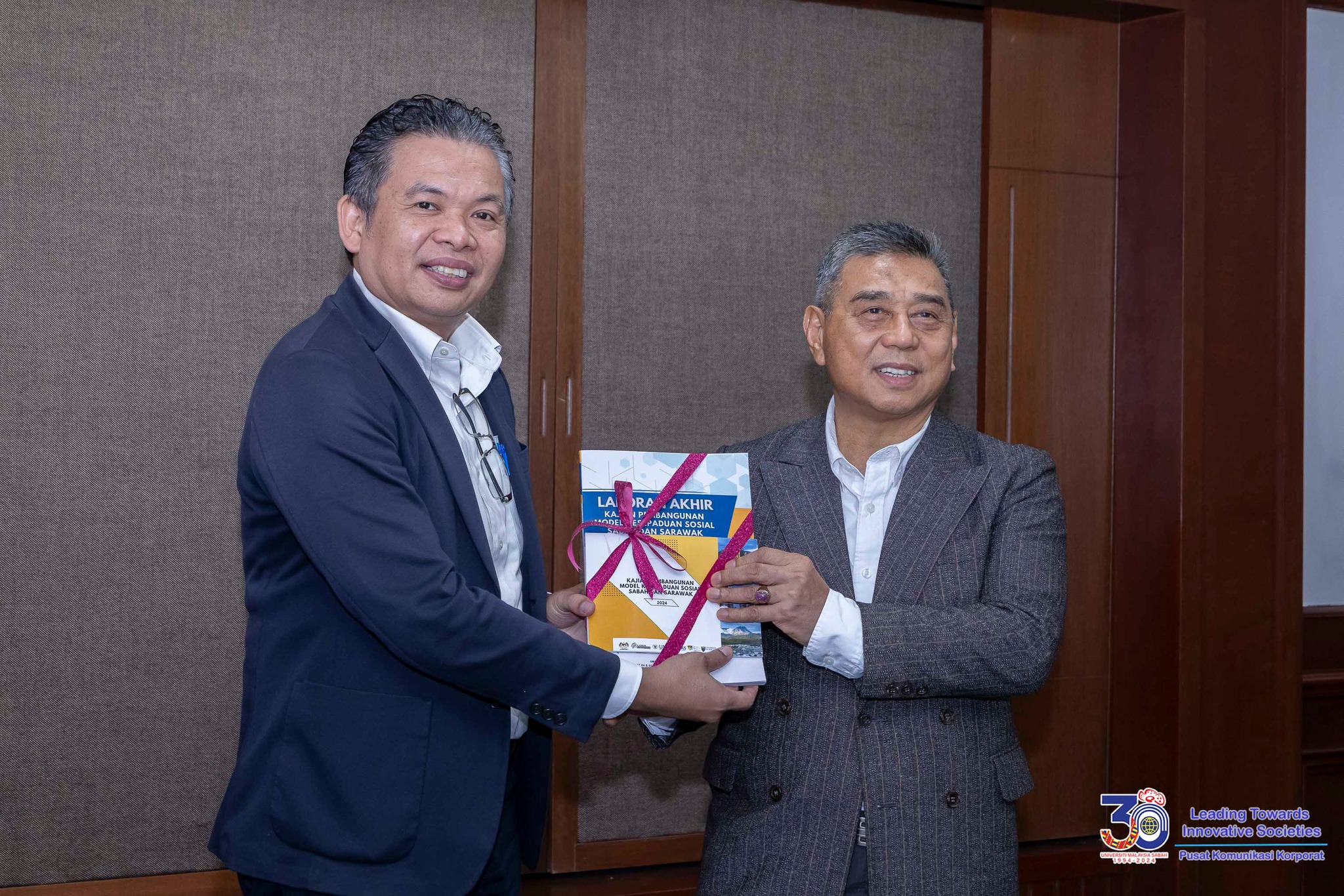
 Building Bridges Across Sectors to Achieve the SDGs
 Cross-Sectoral Dialogue and Collaboration
In 2024, Universiti Malaysia Sabah (UMS) demonstrated strong national and international leadership in advancing SDG 17: Partnerships for the Goals by actively initiating and participating in extensive cross-sectoral dialogues across biodiversity, climate change, forestry, marine conservation, tourism, and sustainable development. Through strategic collaborations with government agencies, NGOs, industry partners, international universities, and regional organisations, UMS convened and contributed to high-impact platforms that integrated scientific research, policy development, and community engagement. These multi-stakeholder engagements not only strengthened evidence-based decision-making across Sabah and the broader region but also reinforced UMS’s role as a catalyst for collaborative action toward environmental stewardship, climate resilience, and sustainable economic development.-
International Research Diplomacy and Strategic Collaboration in Tropical Biodiversity
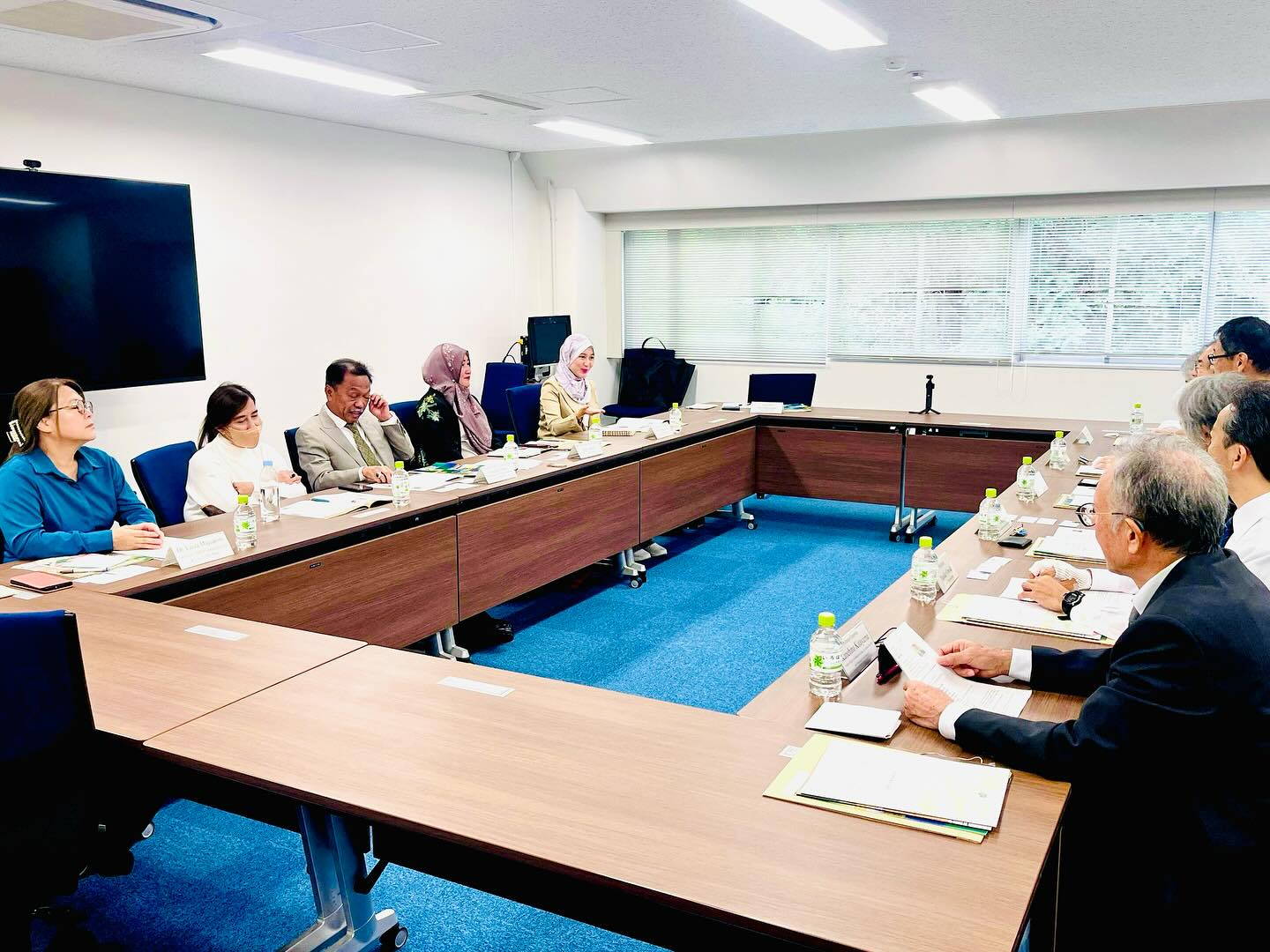
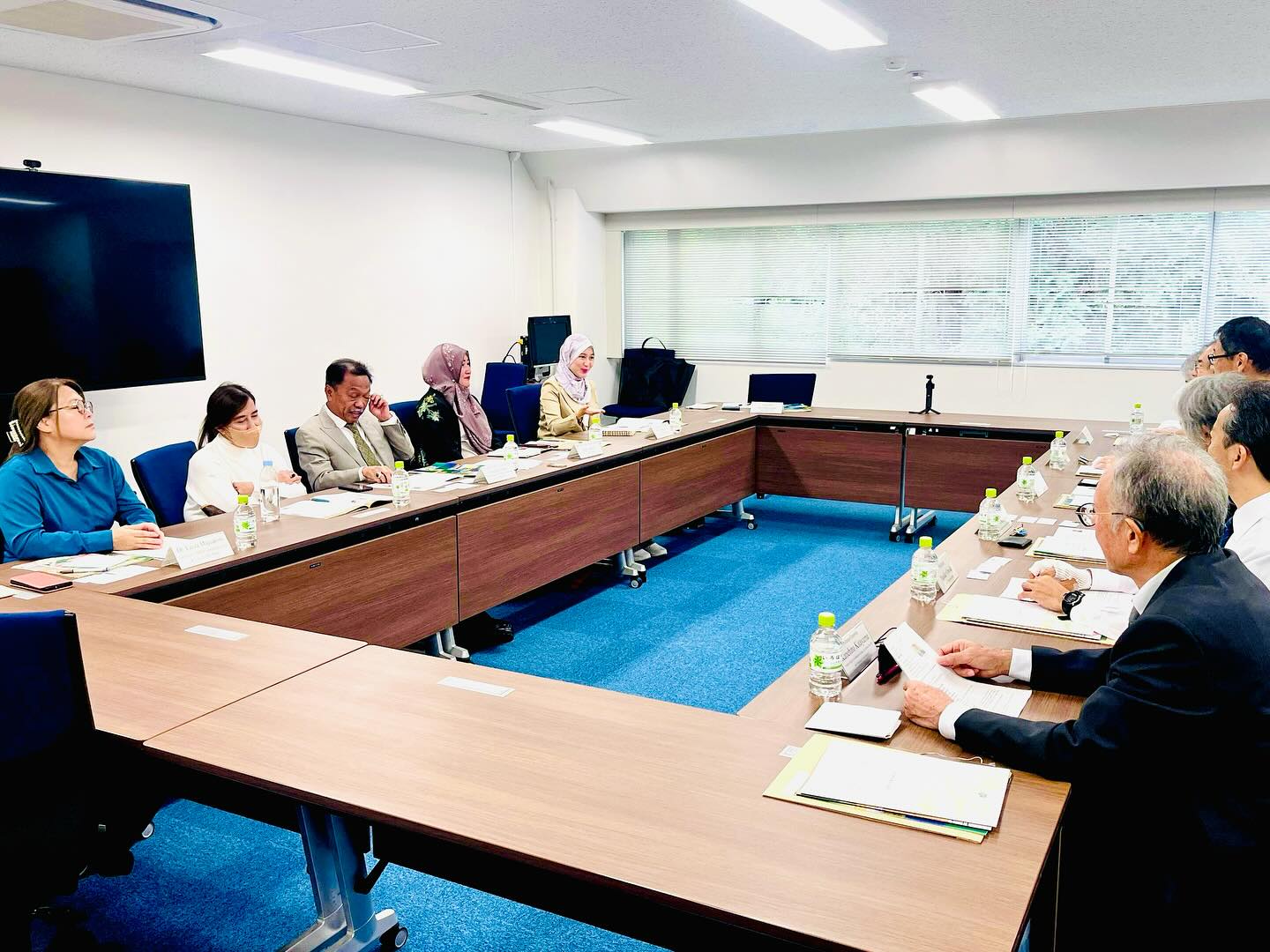
In 2024, ITBC UMS joined the Ministry of Science, Technology, and Innovation (MOSTI) on a courtesy visit to Kyoto University, Japan, to explore future research collaboration in tropical biodiversity. This engagement strengthened UMS’s international scientific diplomacy and opened new avenues for joint research, capacity-building, and innovation.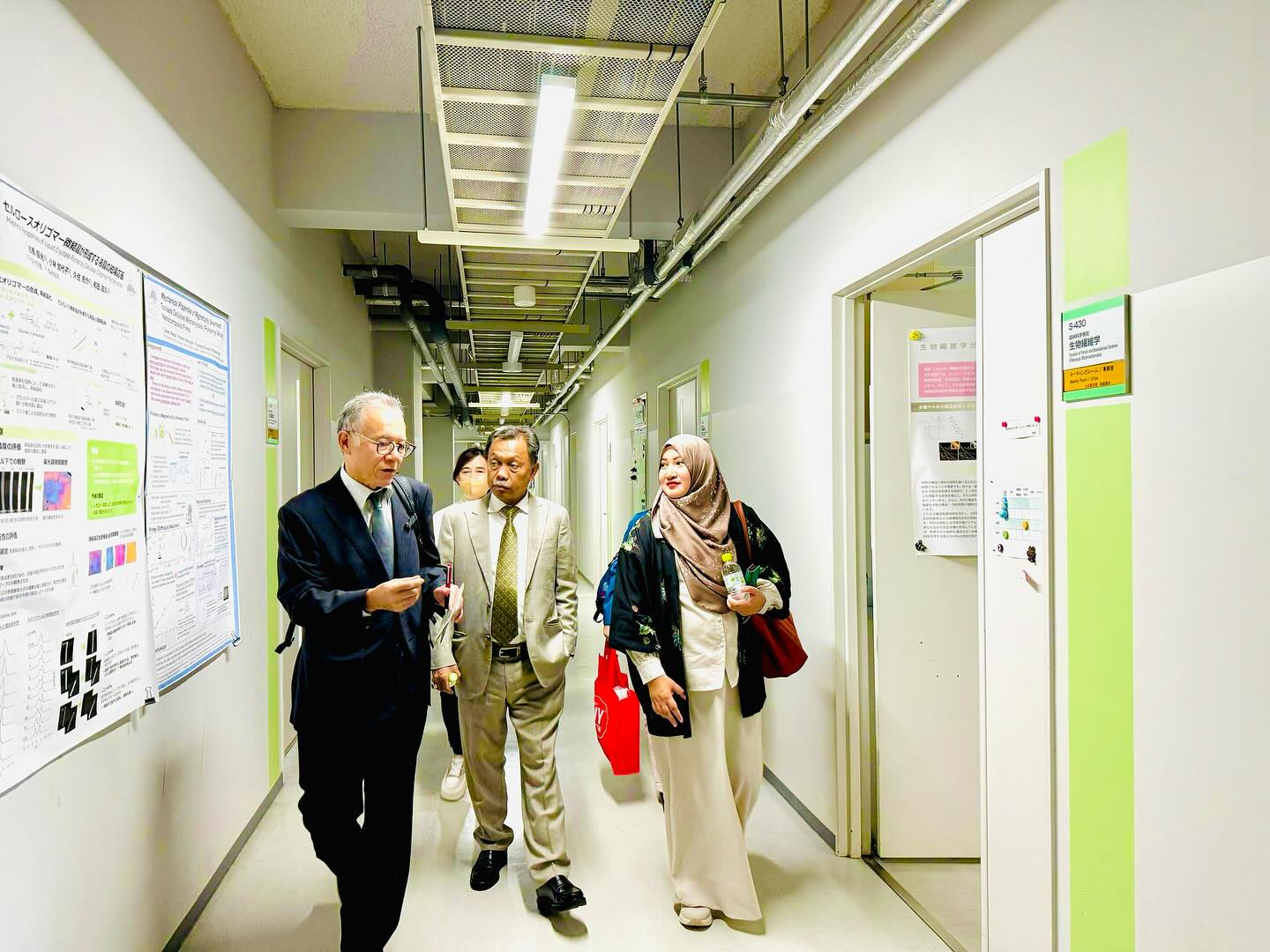
Global Scientific Collaboration on Mountain Ecosystems and Biodiversity Research
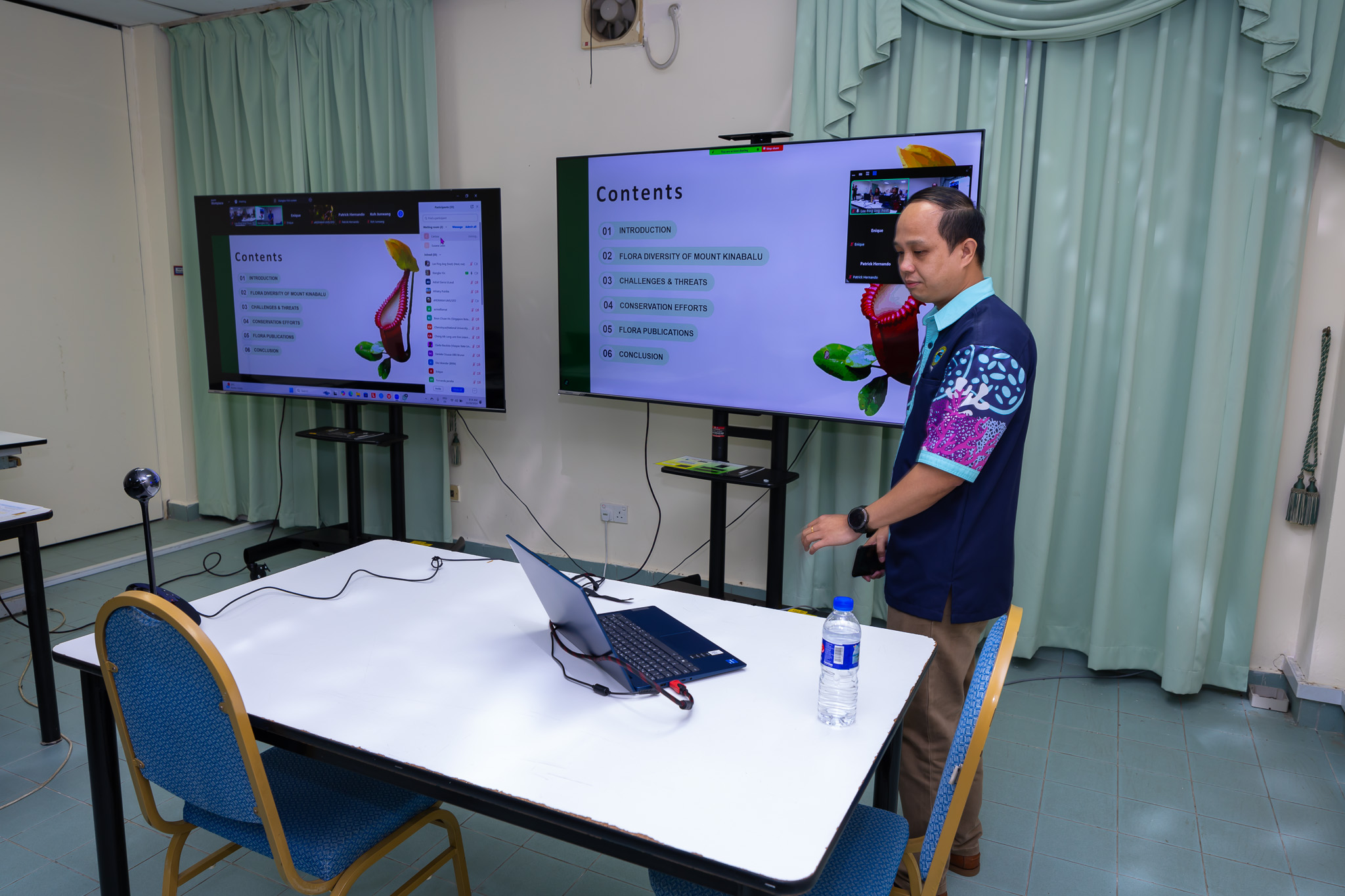
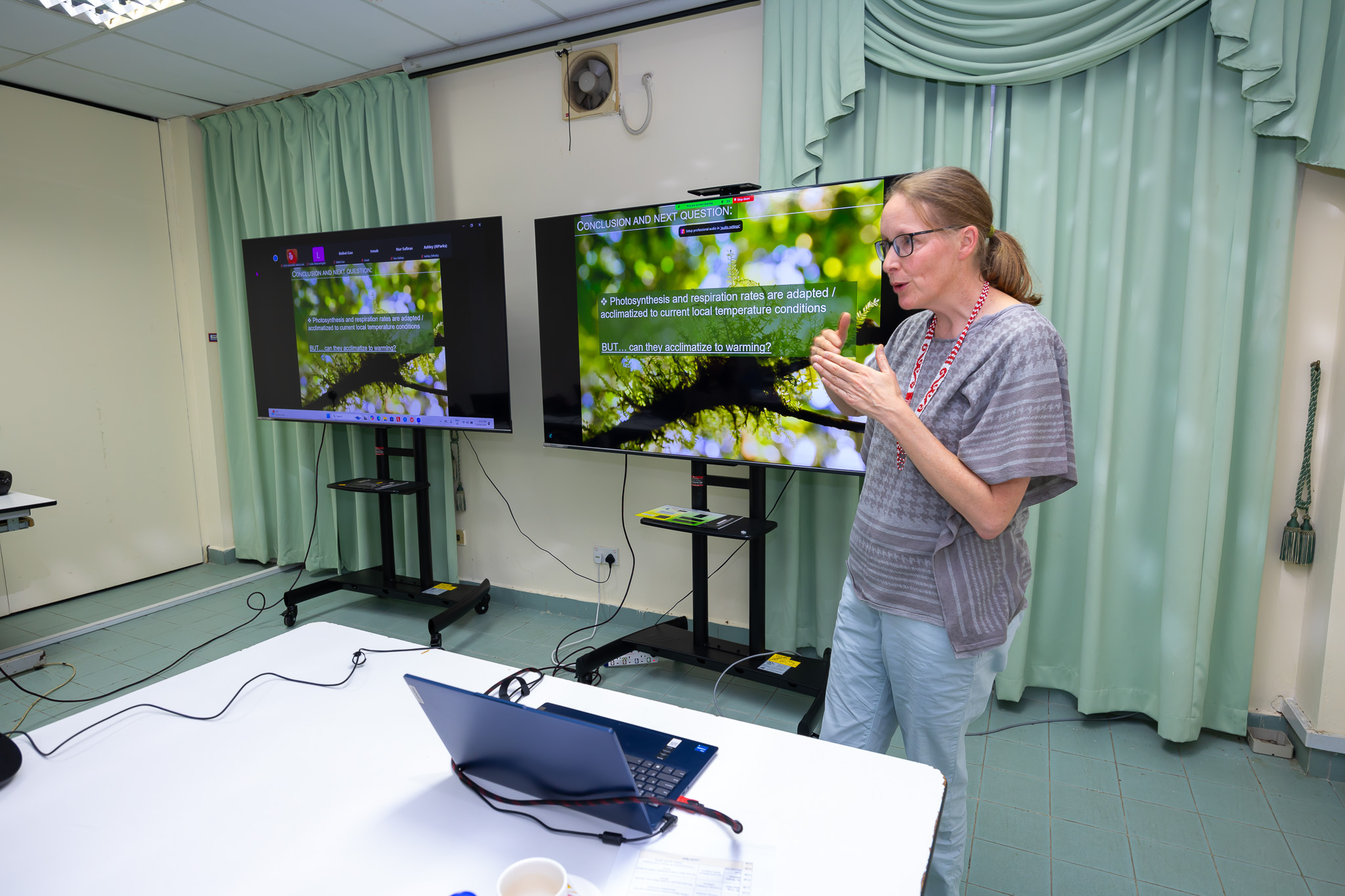
On 28 November 2024, ITBC UMS, together with the University of Marburg (Germany) and Sabah Parks, hosted an international hybrid workshop on “Bryophyte Diversity and Ecosystem Functions in the Tropical Mountain Ecosystem of Mount Kinabalu.” Featuring 11 experts from six countries and over 70 participants worldwide, this platform promoted international research cooperation and advanced global understanding of tropical montane biodiversity.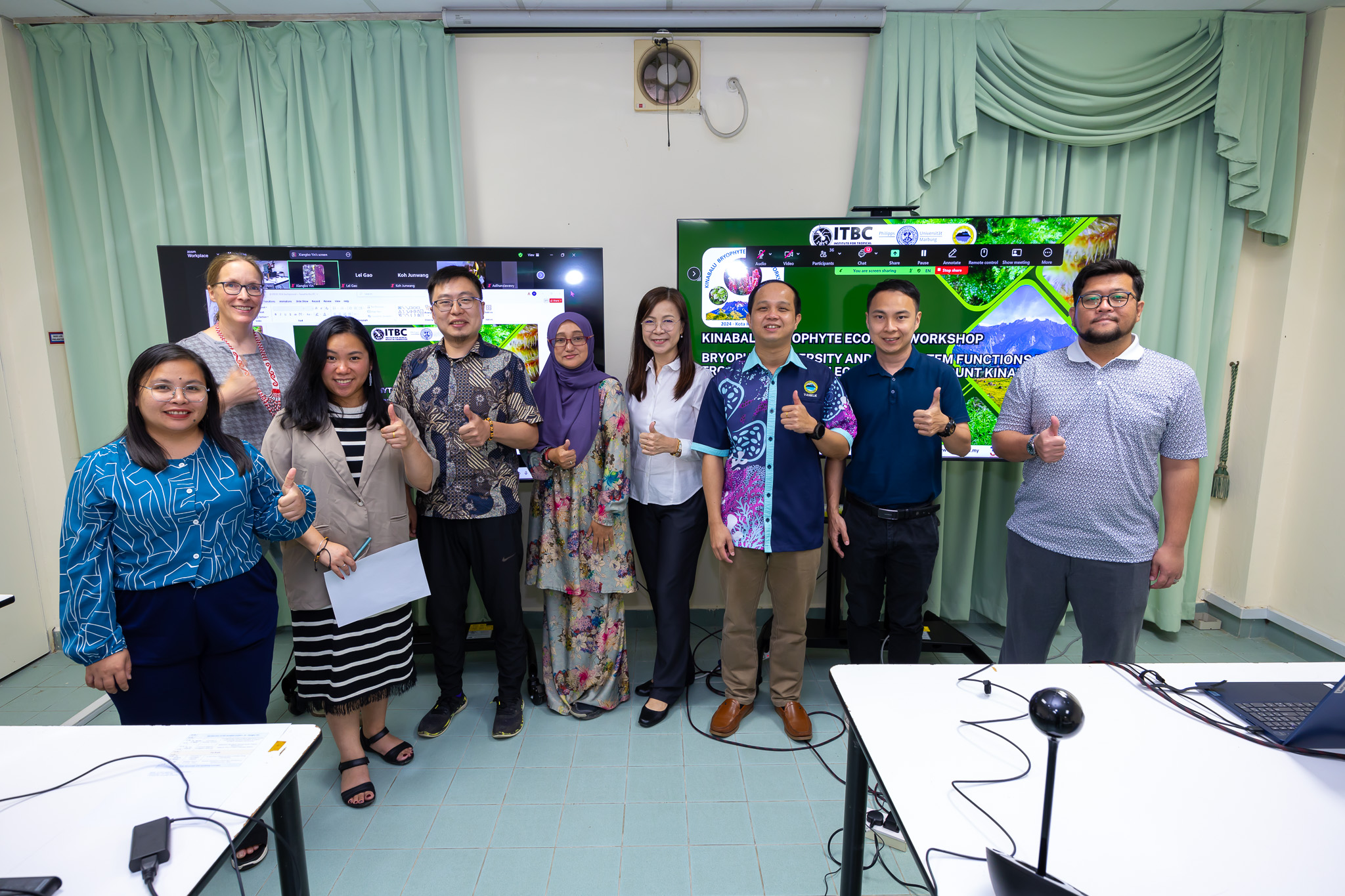
Cross-Sectoral Dialogue on Wildlife Conservation and Digital Innovation
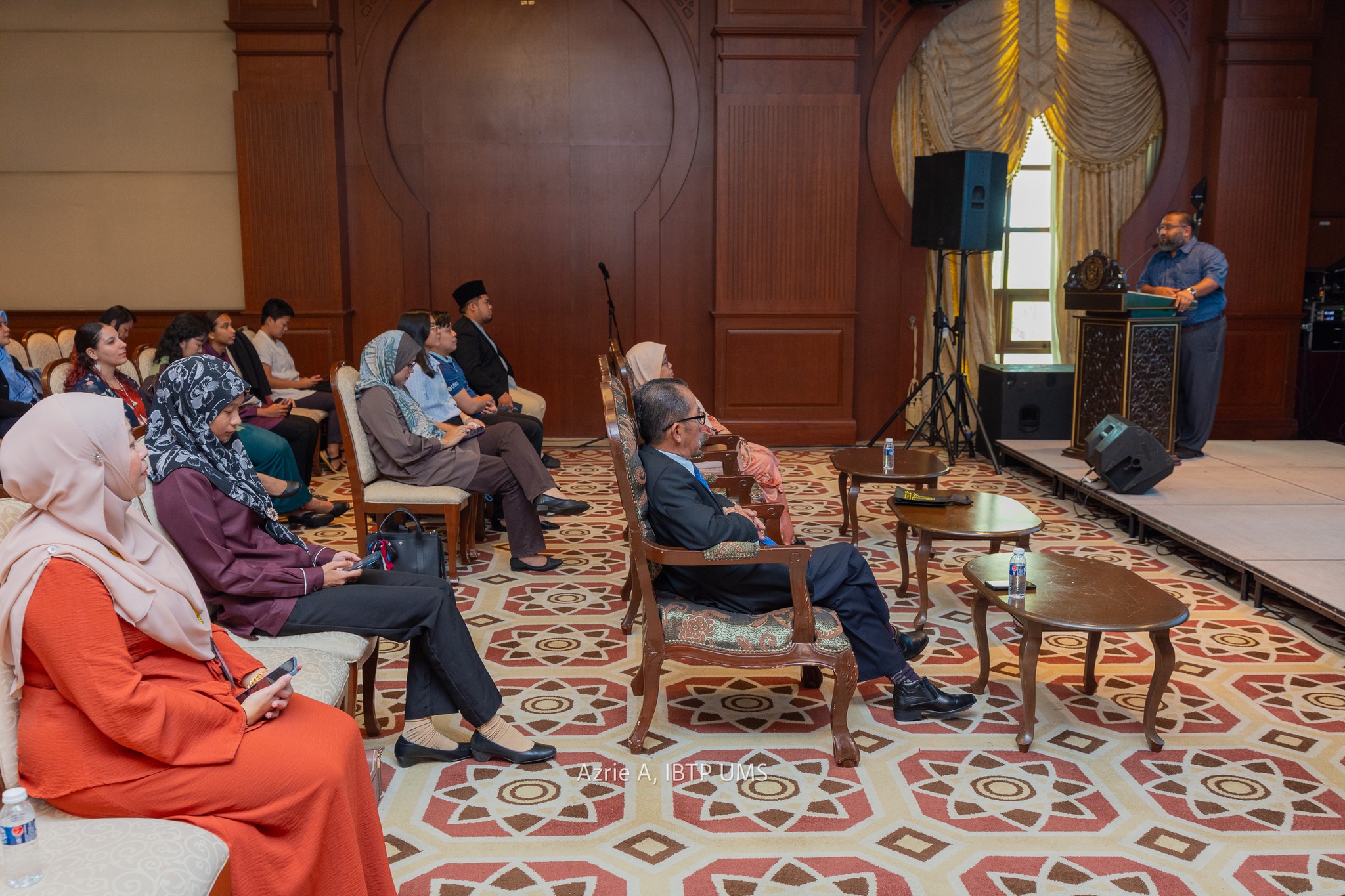
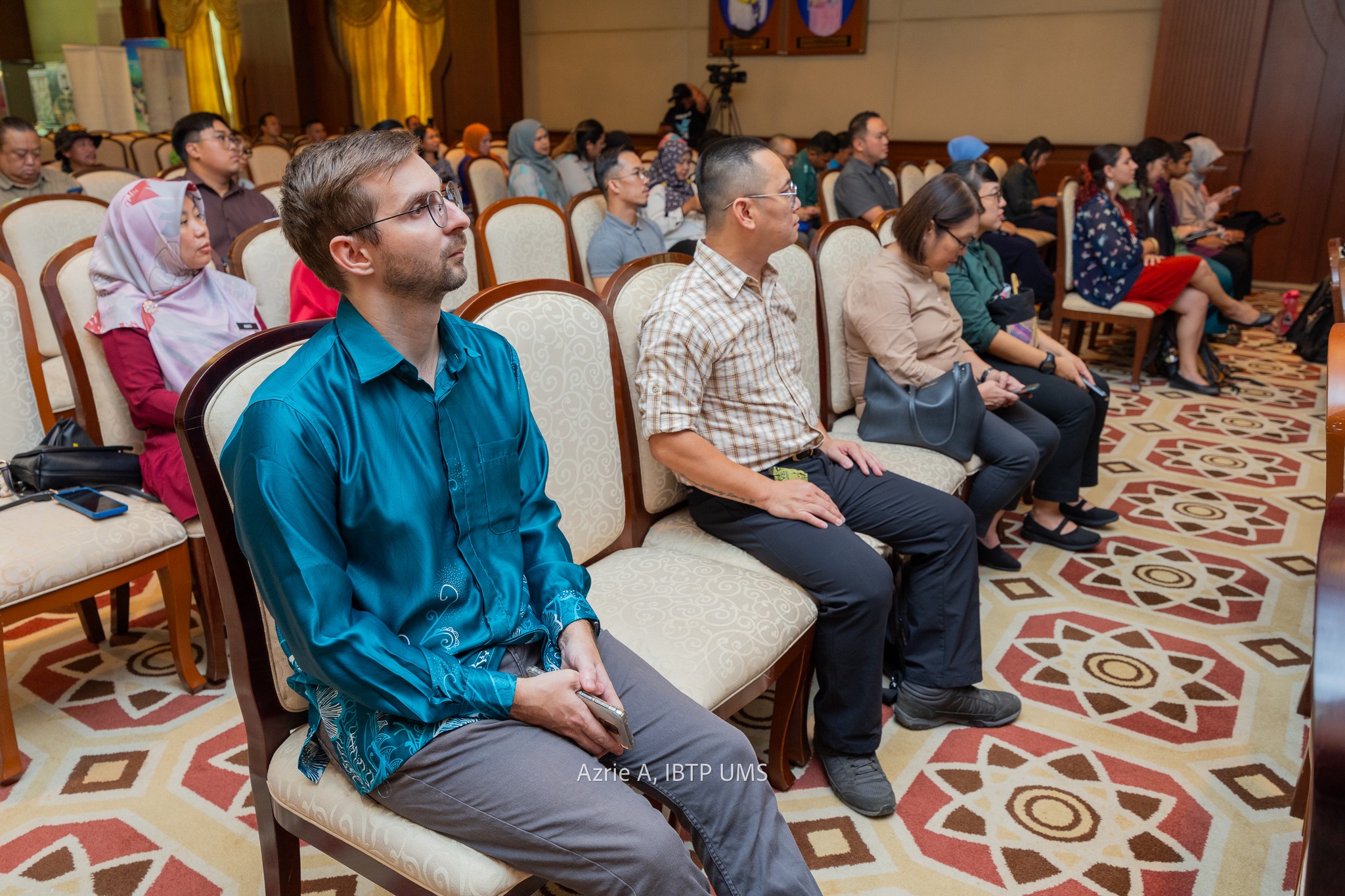
From 5–6 March 2024, UMS co-organised the World Wildlife Day Conference 2024 with the Sabah Wildlife Department, Danau Girang Field Centre, and Sabah Biodiversity Centre. With 13 expert presentations, the conference explored digital innovation in wildlife conservation and strengthened collaboration among government, NGOs, and academic partners.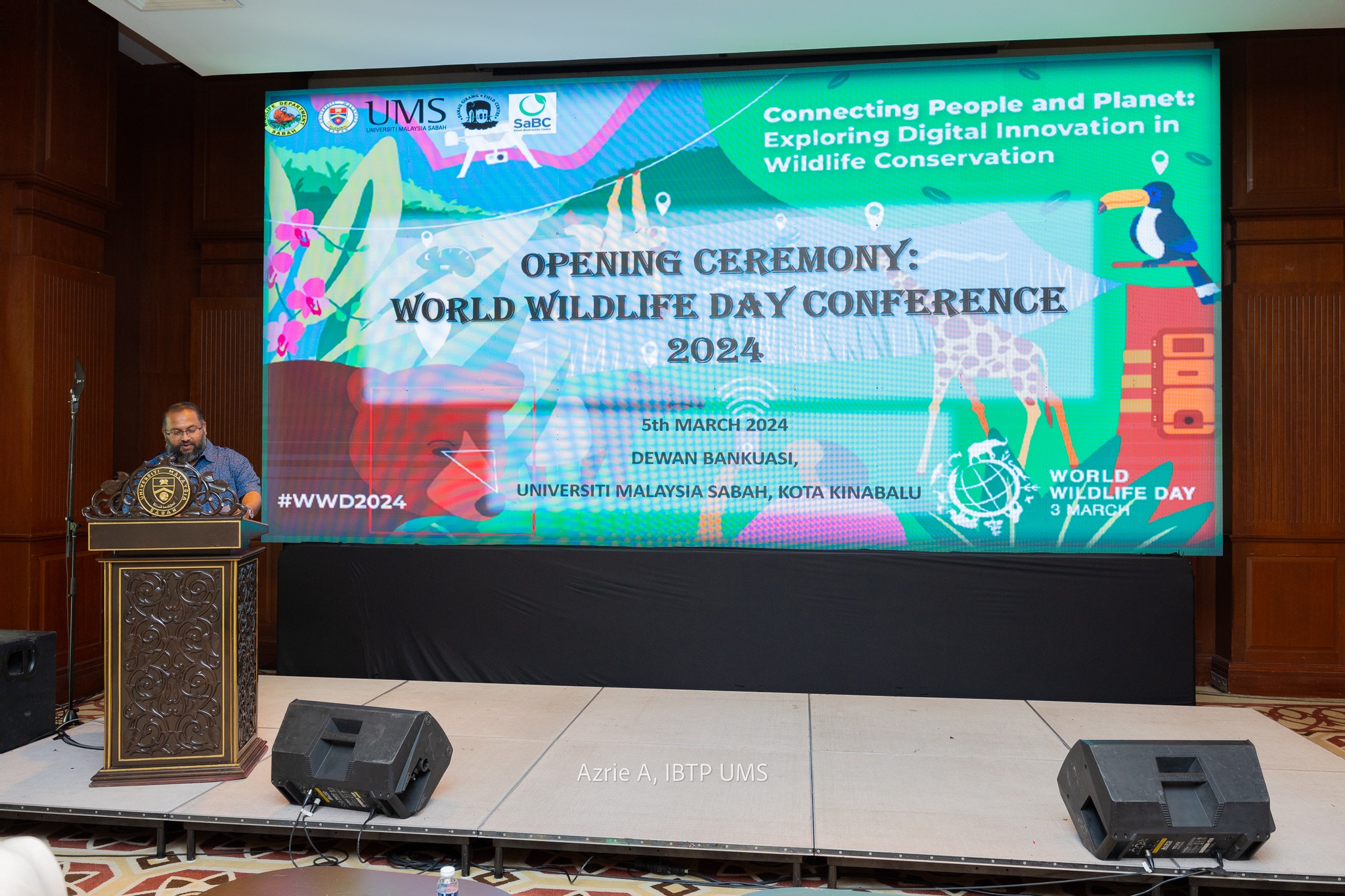
Regional Capacity Building for Sustainable Tourism Policy and Practice
UMS advanced SDG 17 in 2024 by supporting the Malaysian Technical Cooperation Programme (MTCP) through the training-course Sustainable and Resilient Tourism Beyond Frontiers: The Malaysian Borneo Essence. Established in 1980 as Malaysia’s commitment to South–South Cooperation, MTCP facilitates cross-national knowledge sharing, policy dialogue, and technical training by drawing on Malaysia’s development experience. Through this programme, UMS—via the Institute for Tropical Biology and Conservation (ITBC)—served as a national hub for convening government agencies, tourism industry players, academics, and regional partners from across Asia in a collaborative learning environment. This training-course exemplified UMS’s leadership in nature tourism, sustainable tourism policy, and consultancy, creating a platform for multistakeholder dialogue on rebuilding the tourism sector following the severe global downturn during theDecarbonisation Forum COVID-19 pandemic. By integrating principles of sustainable and responsible tourism, climate resilience, and modern innovation frameworks such as IR4.0 and Society 5.0, the programme encouraged participants to collectively explore new models for tourism development that support environmental protection, community well-being, and long-term resilience. Delivered through a cross-sectoral format—featuring lectures, roundtable discussions, case studies, field visits, collaborative presentations, publication activities, and post-course engagement—the programme enabled participants aged 26 to 50 from various ASEAN countries to exchange perspectives, co-develop ideas, and formulate actionable tourism initiatives for their home nations. This initiative demonstrates how UMS leverages international partnerships to strengthen regional capacity, foster policy-relevant dialogue, and advance SDG 17: Partnerships for the Goals through meaningful global cooperation.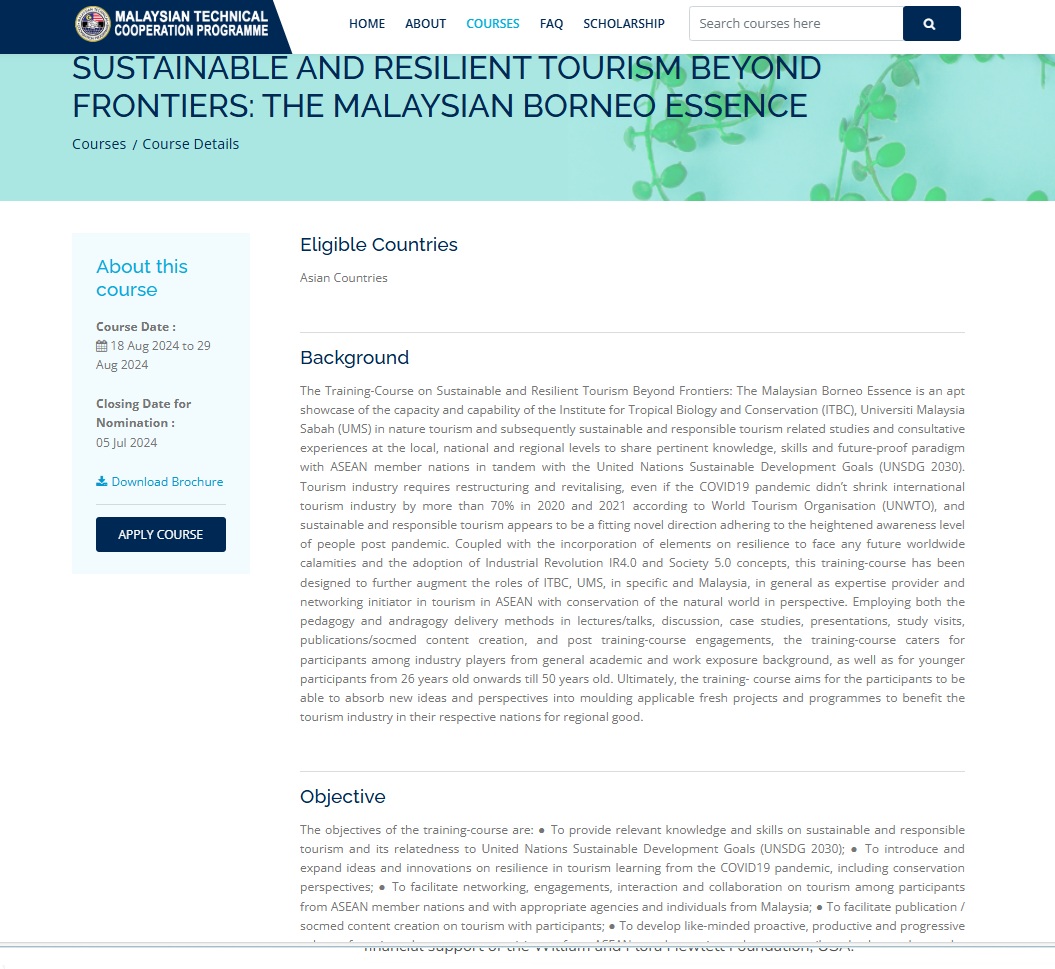
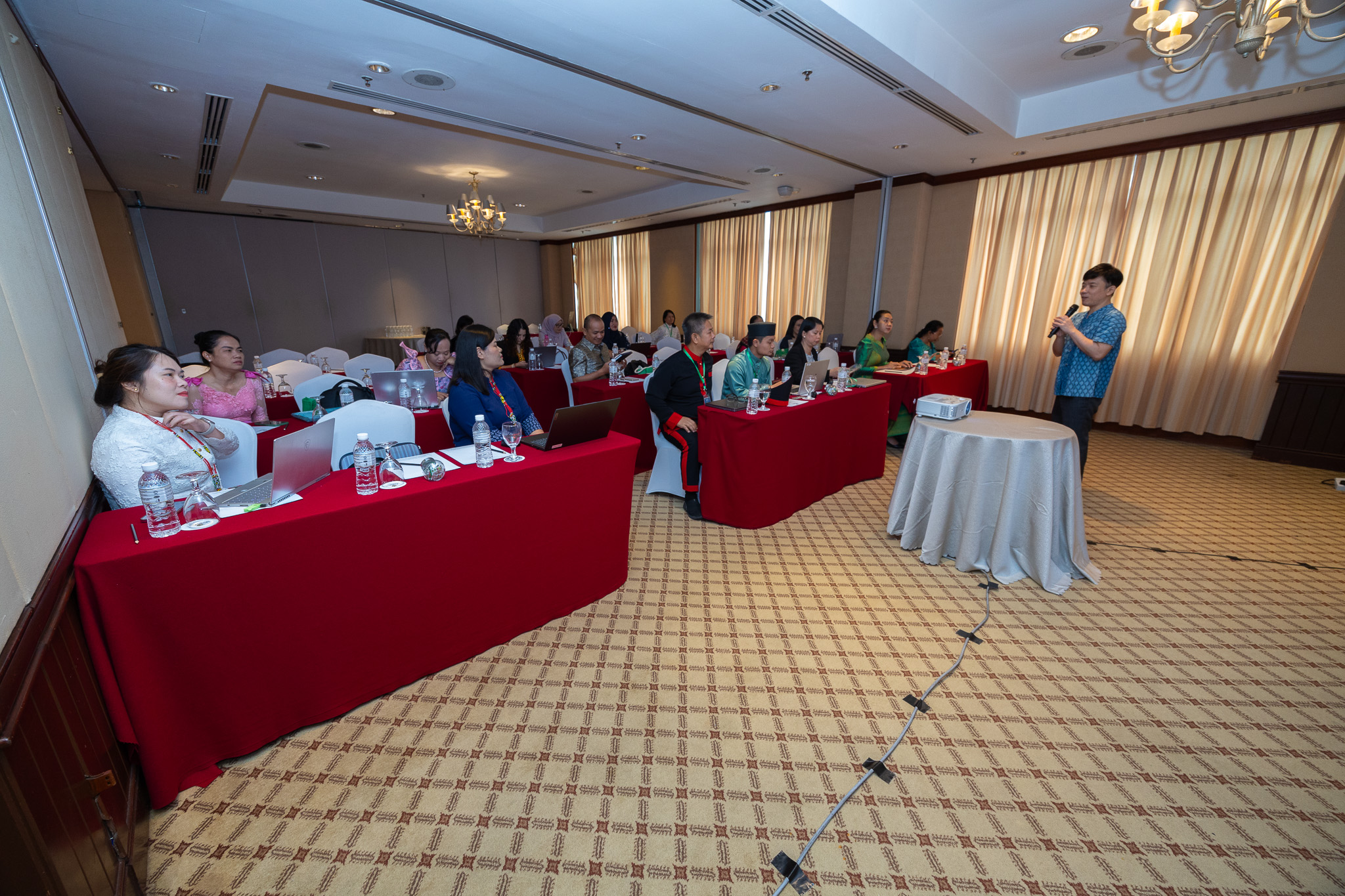
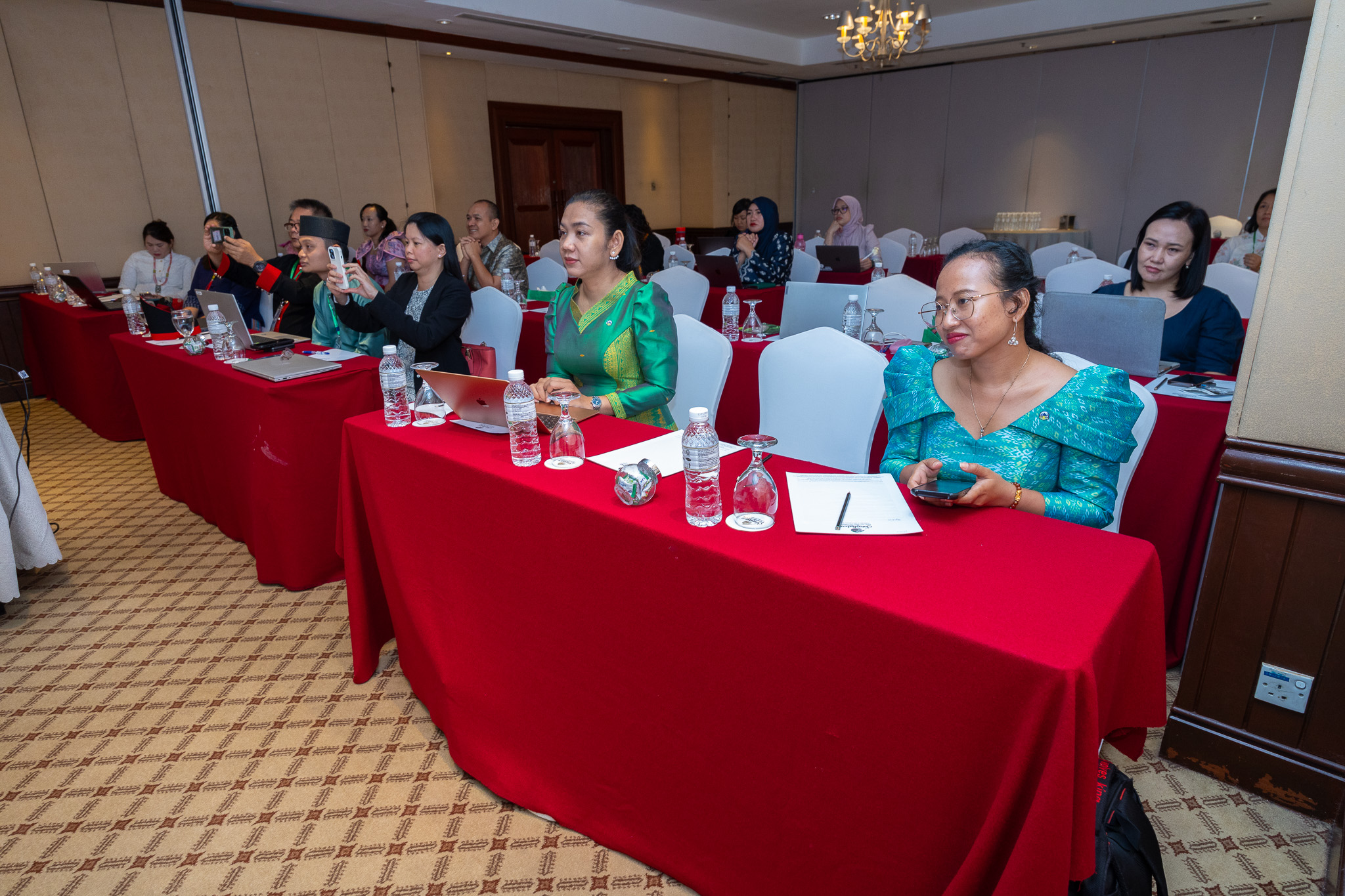
Industry–Academia Partnership for Low-Carbon Pathways and Climate Solutions
Through the Decarbonisation Forum 2024, held in conjunction with the 3rd International Conference on Sustainable Agriculture (ICSA) 2024, UMS brought together industry leaders, policymakers, researchers, and professional bodies to advance cross-sector dialogue on climate mitigation and carbon-neutral transitions. Co-organised with FGV Holdings Berhad and the Institution of Chemical Engineers (IChemE), the forum provided a strategic platform for discussing low-carbon pathways, emerging technologies, and sector-wide decarbonisation strategies. This engagement strengthened multi-stakeholder partnerships, aligned national and industry efforts toward net-zero commitments, and reinforced UMS’s role as a catalyst for collaborative climate solutions under SDG 17: Partnerships for the Goals.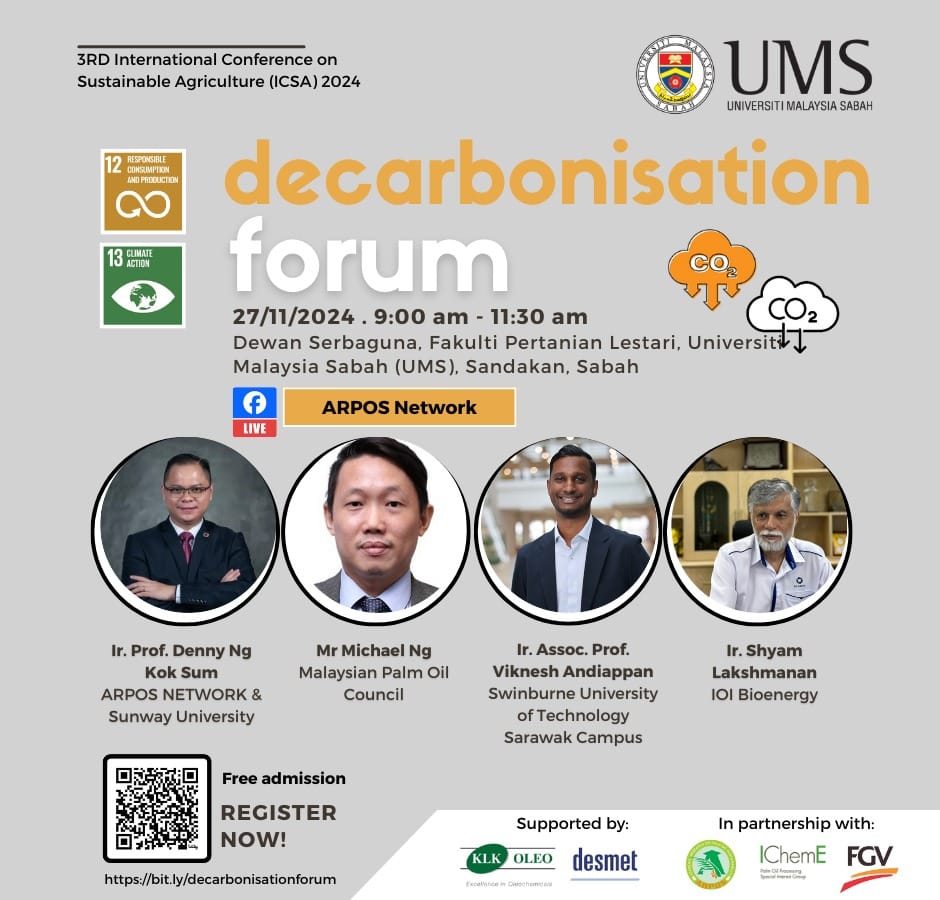
International Dialogue on Sustainable Forestry and Climate Resilience
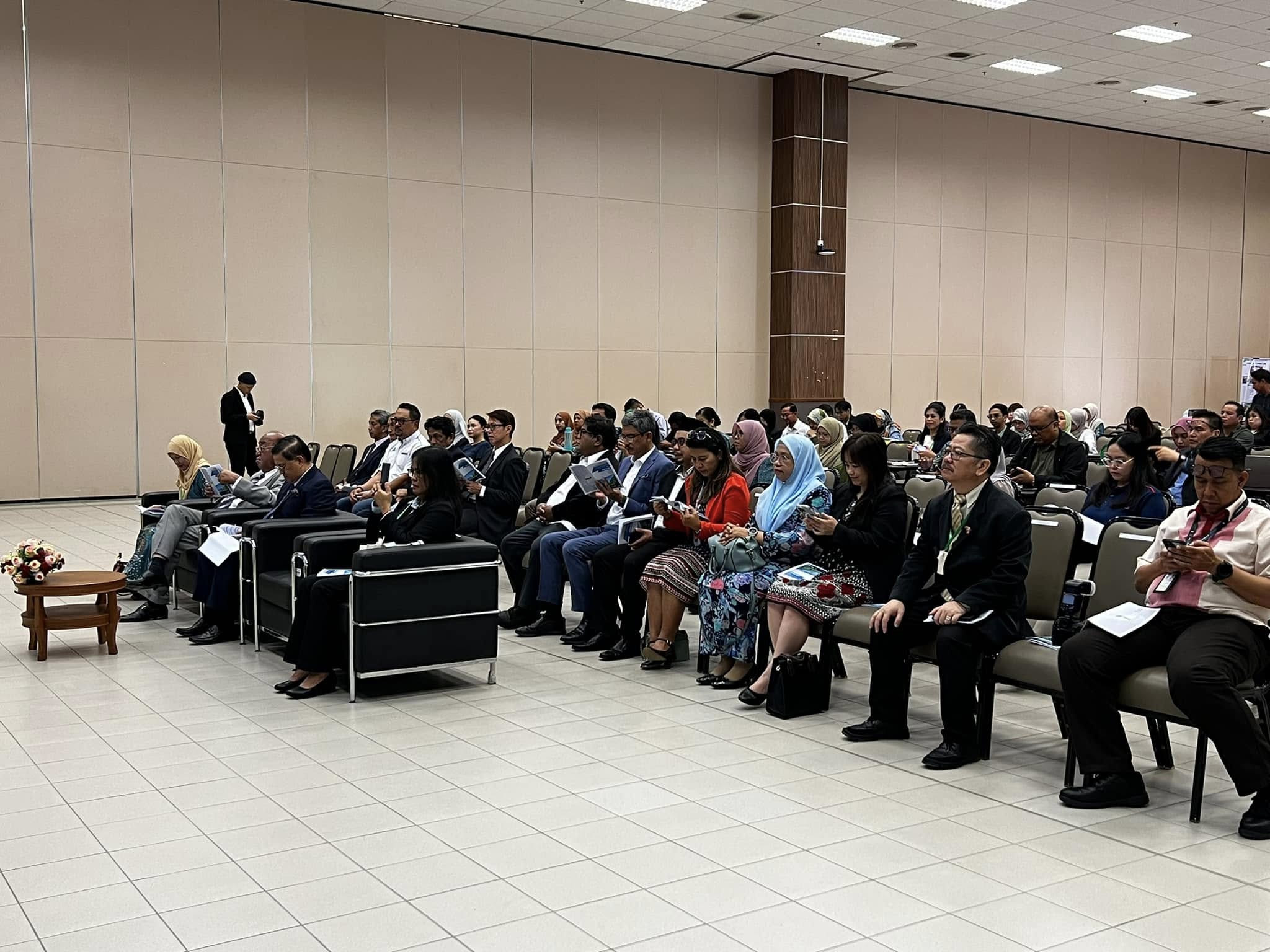
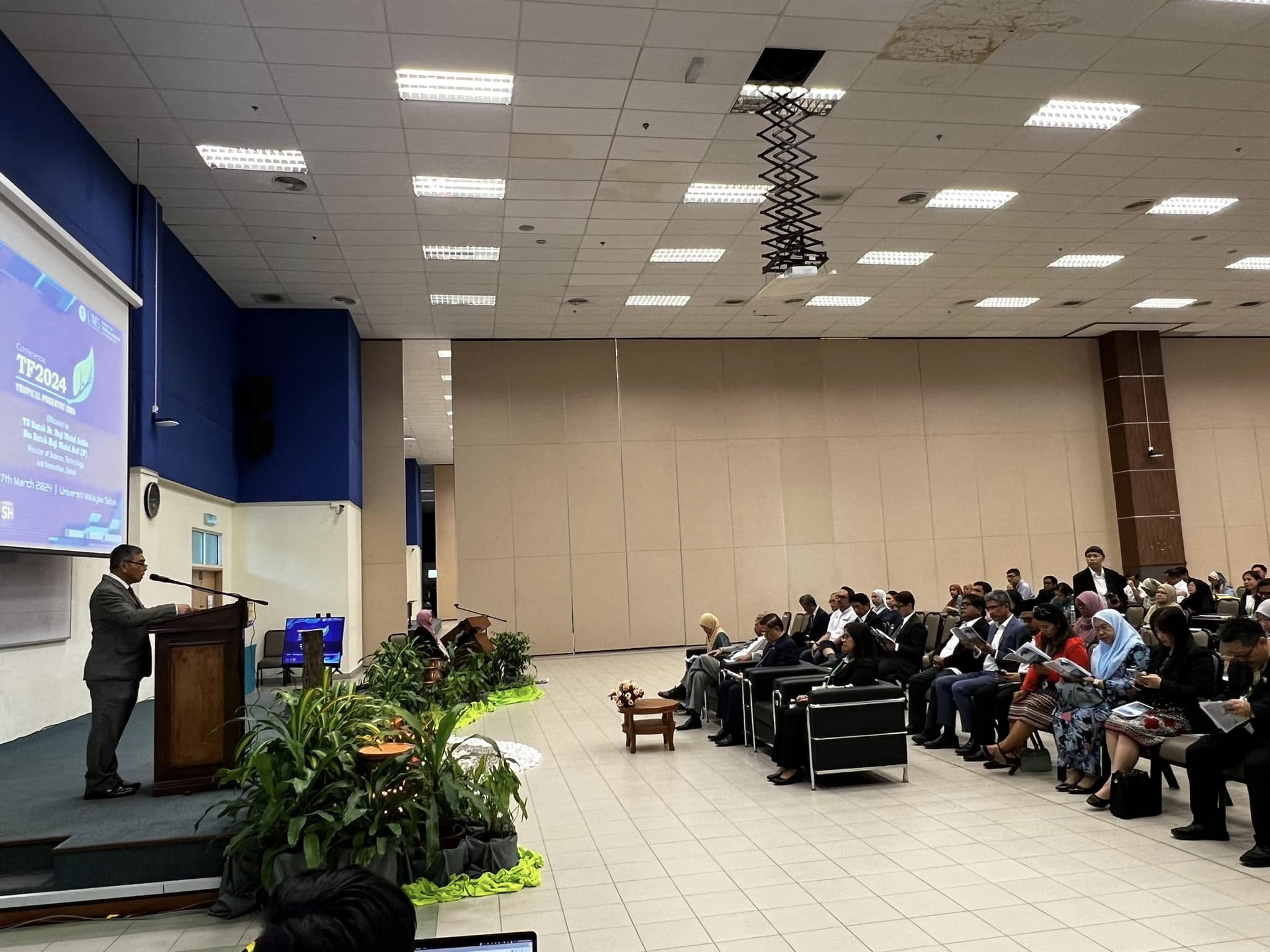
Through the Decarbonisation Forum 2024, held in conjunction with the 3rd International Conference on Sustainable Agriculture (ICSA) 2024, UMS brought together industry leaders, policymakers, researchers, and professional bodies to advance cross-sector dialogue on climate mitigation and carbon-neutral transitions. Co-organised with FGV Holdings Berhad and the Institution of Chemical Engineers (IChemE), the forum provided a strategic platform for discussing low-carbon pathways, emerging technologies, and sector-wide decarbonisation strategies. This engagement strengthened multi-stakeholder partnerships, aligned national and industry efforts toward net-zero commitments, and reinforced UMS’s role as a catalyst for collaborative climate solutions under SDG 17: Partnerships for the Goals.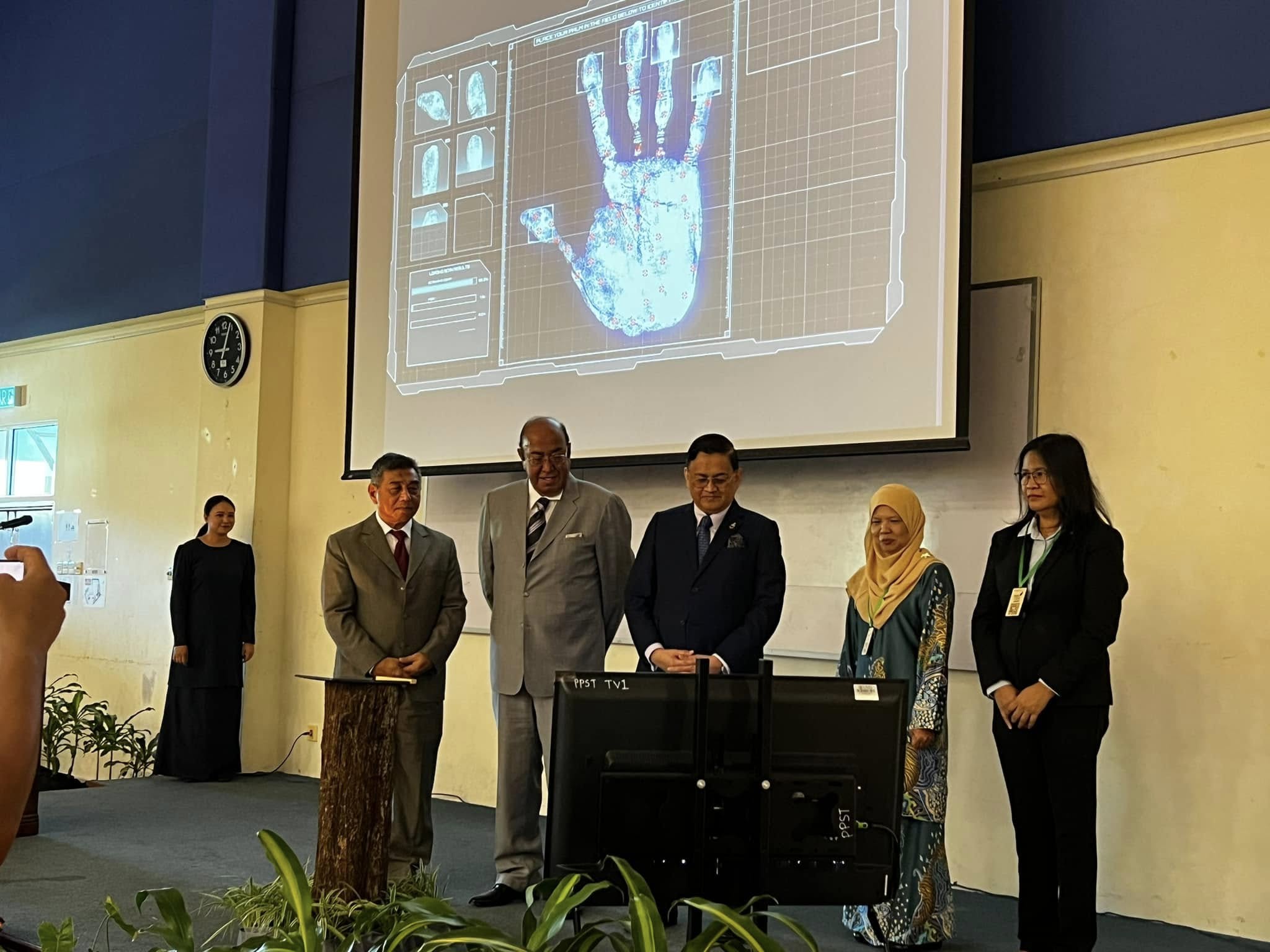
Global Platform for Marine Science, Fisheries Innovation, and SDG Integration
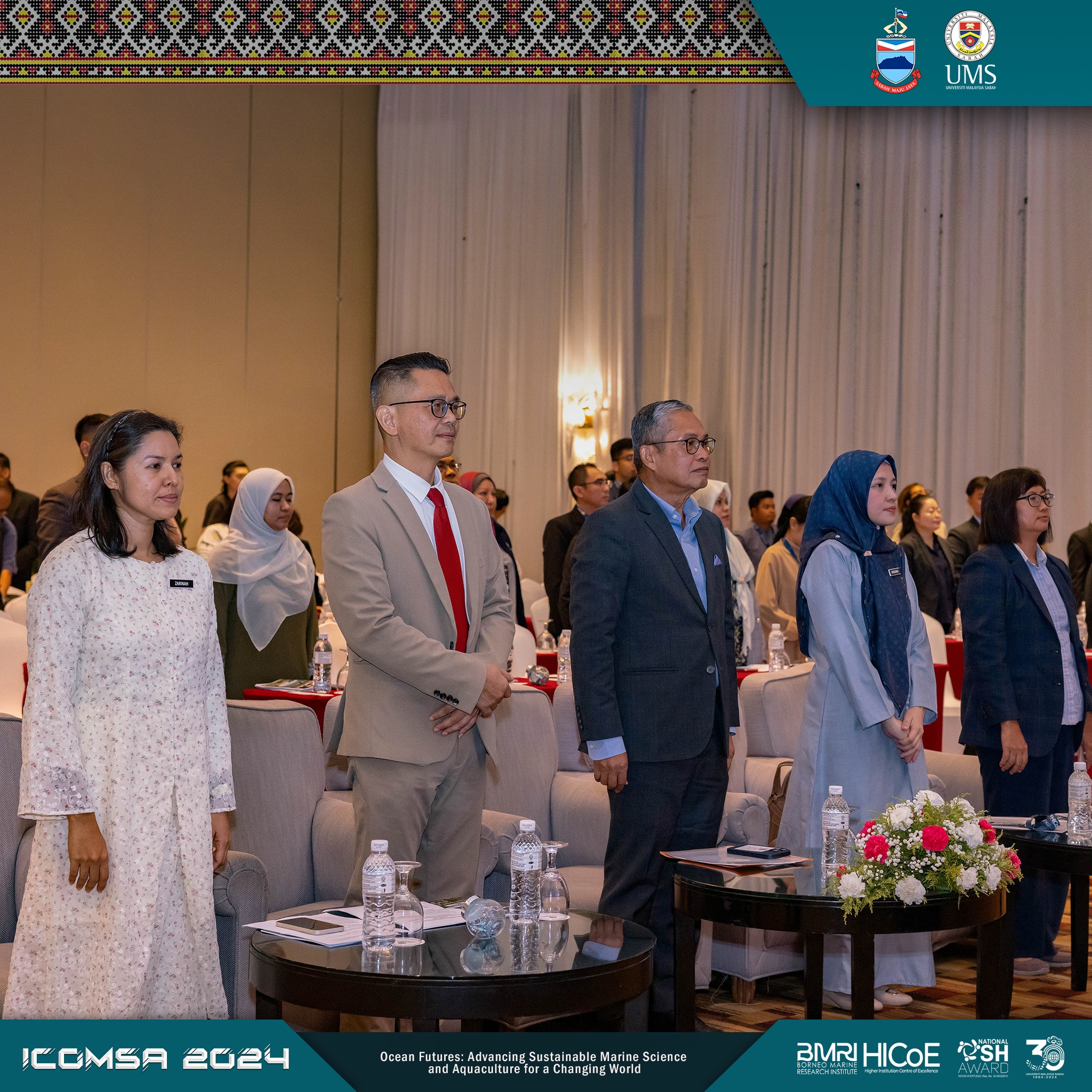
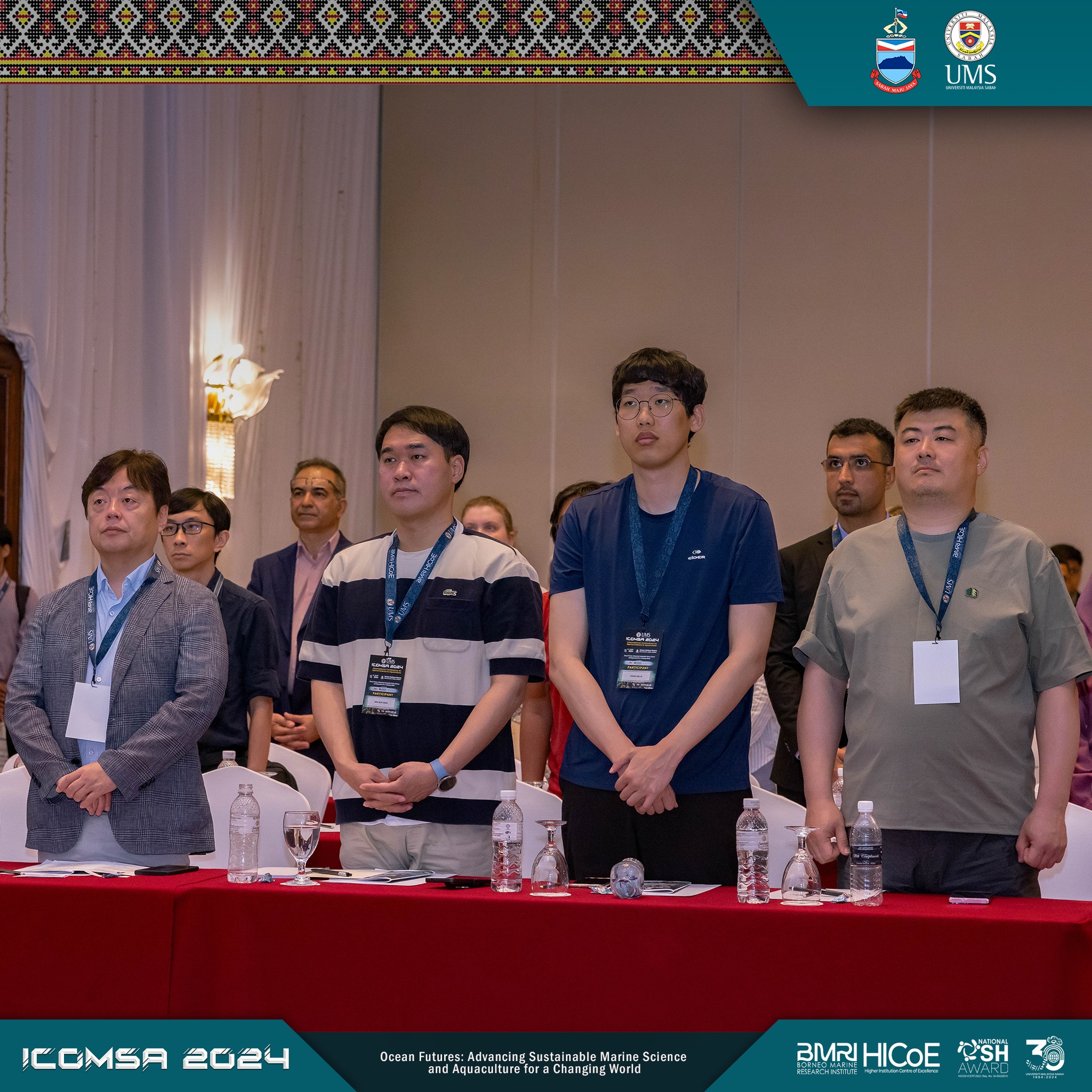
UMS co-hosted the International Conference on Marine Science and Aquaculture (ICOMSA 2024), officiated by the Sabah Maju Jaya Secretariat. This event gathered experts, government agencies, researchers, and NGOs to advance marine science, aquaculture innovation, and sustainable ocean management.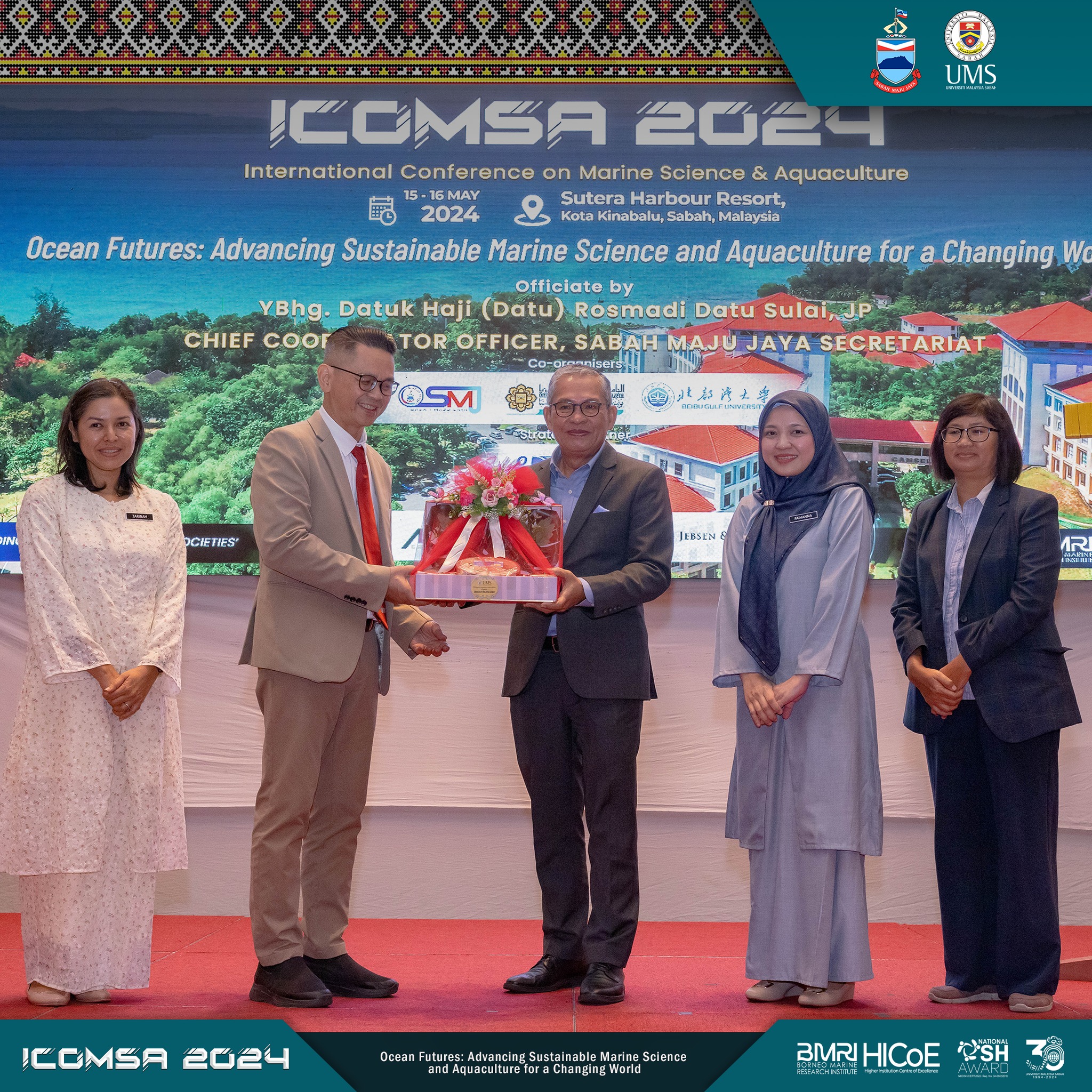
Regional SDG Governance Platform: International Conference on Borneo Sustainability (ICBS 2025)
The International Conference on Borneo Sustainability (ICBS 2025), hosted by Universiti Malaysia Sabah (UMS) and co-organized by Consortium of Universities of Borneo (KUUB), serves as one of the region’s premier platforms for cross-sectoral dialogue on sustainable development, environmental governance, and socio-economic resilience across Borneo. Bringing together government agencies, NGOs, academic institutions, industry partners, Indigenous community representatives, and international organisations, ICBS 2025 facilitates high-level exchanges on pressing sustainability challenges and policy priorities for Sabah, Sarawak, Kalimantan, and beyond. Through plenary sessions, policy roundtables, and technical presentations, participants collaborate on evidence-based approaches to biodiversity conservation, climate resilience, circular economy pathways, blue economy integration, and inclusive community development—aligning regional action with the UN Sustainable Development Goals (SDGs). ICBS 2025 strengthens UMS’s role as a convener of multi-stakeholder partnerships, advancing shared strategies for long-term environmental stewardship and socio-economic transformation in Borneo. By bridging scientific research, public policy, and grassroots perspectives, the conference exemplifies SDG 17: Partnerships for the Goals, catalysing collaborative solutions and reinforcing regional cooperation towards a sustainable and resilient future for Borneo.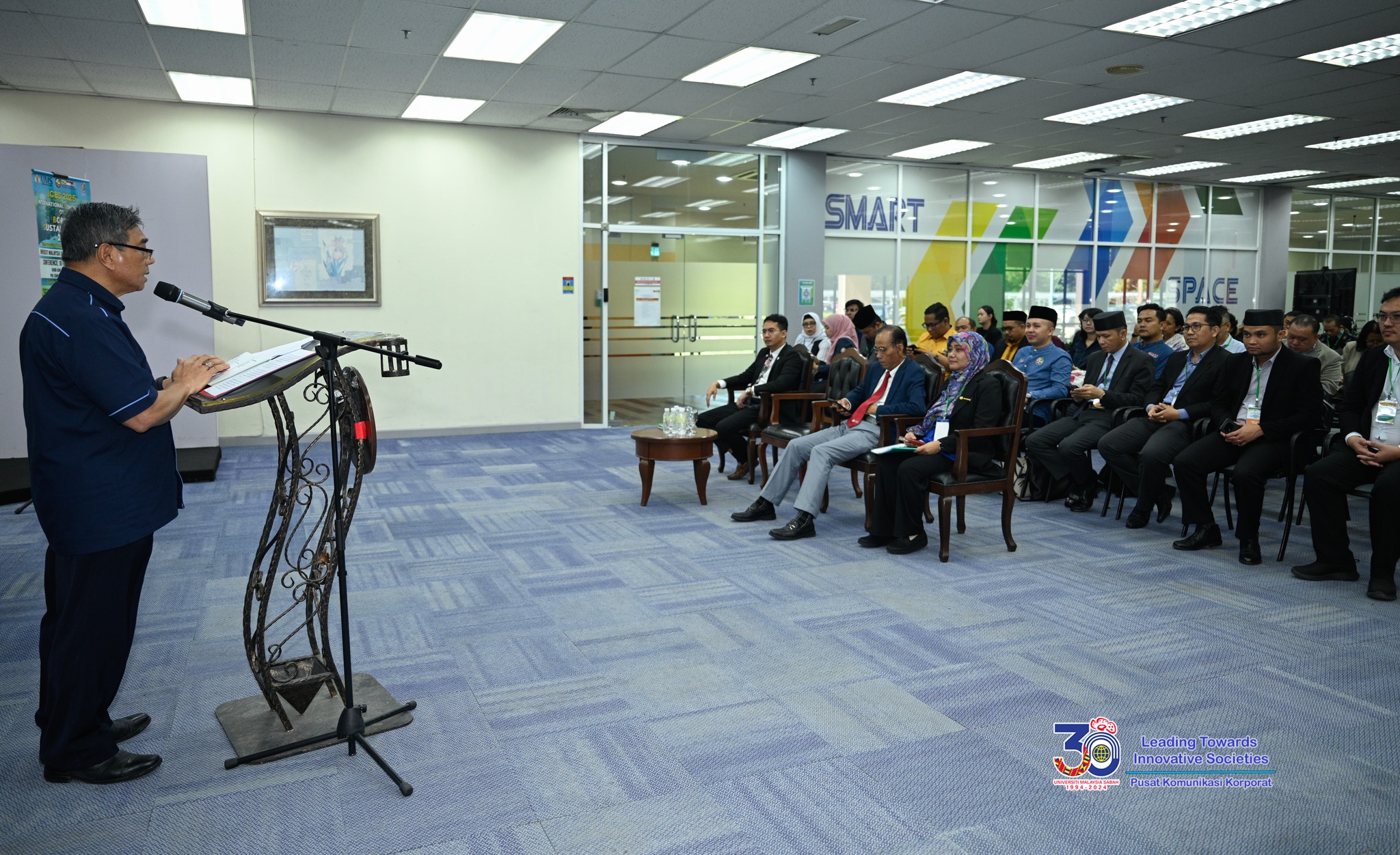
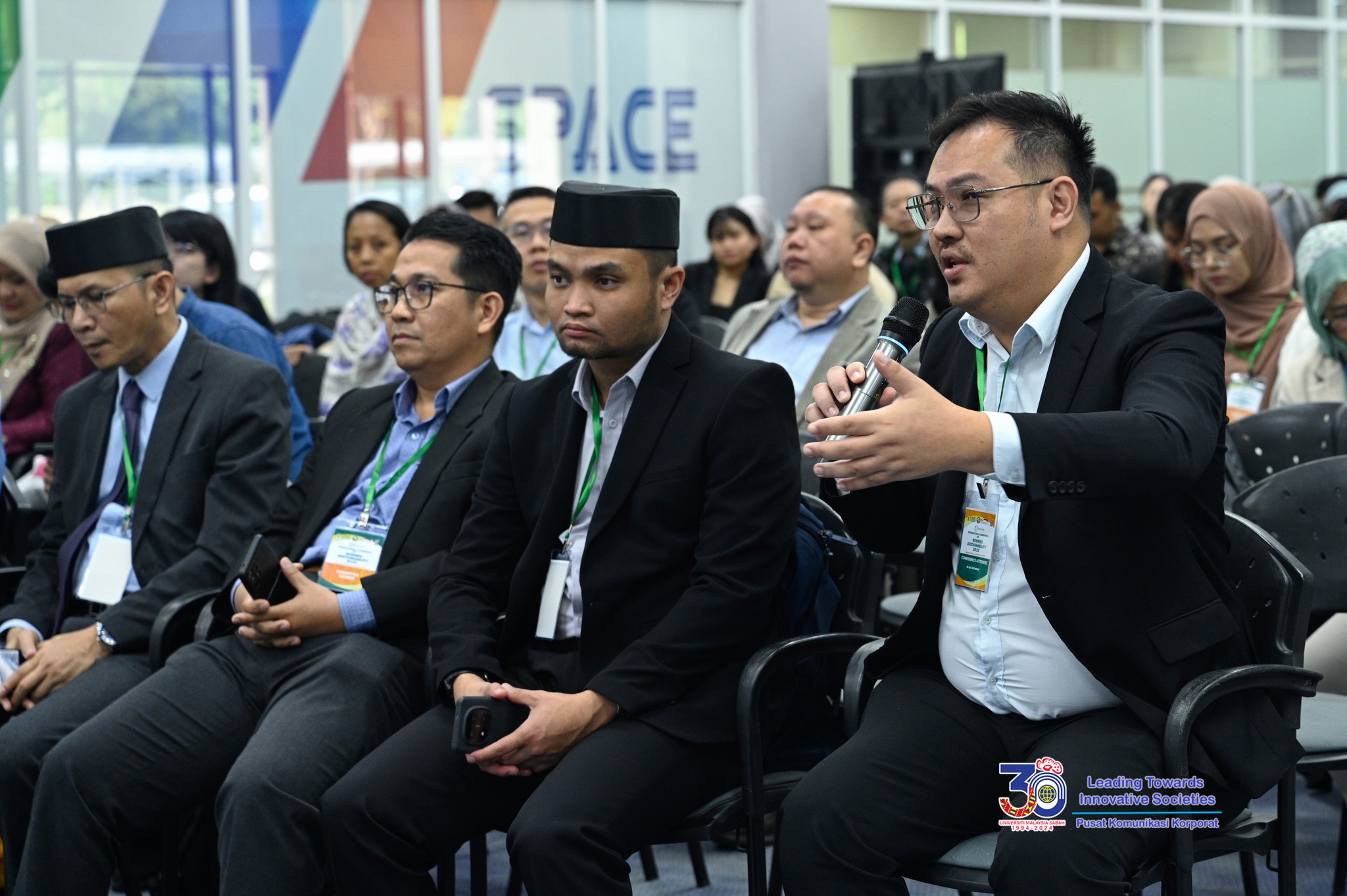
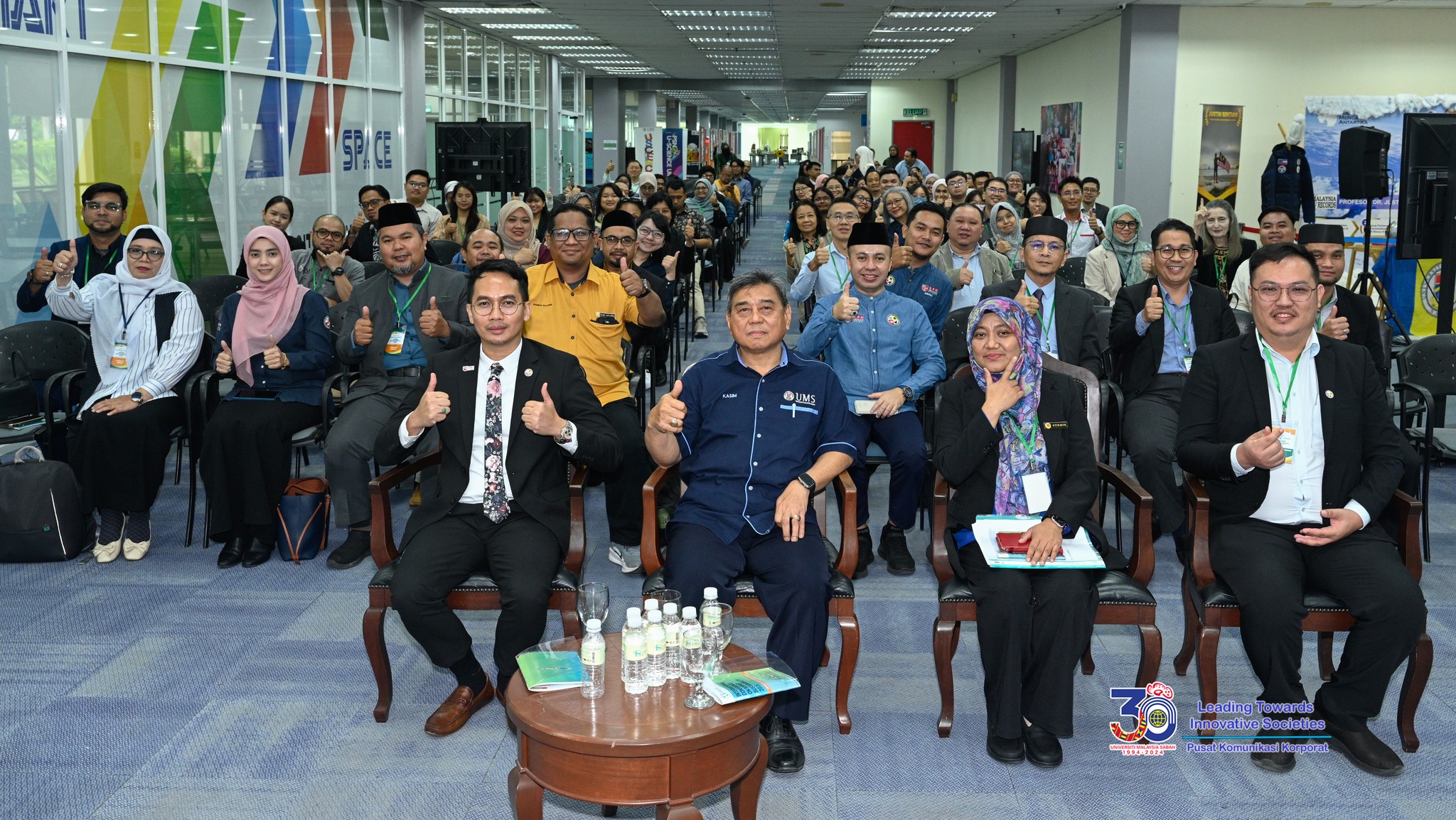
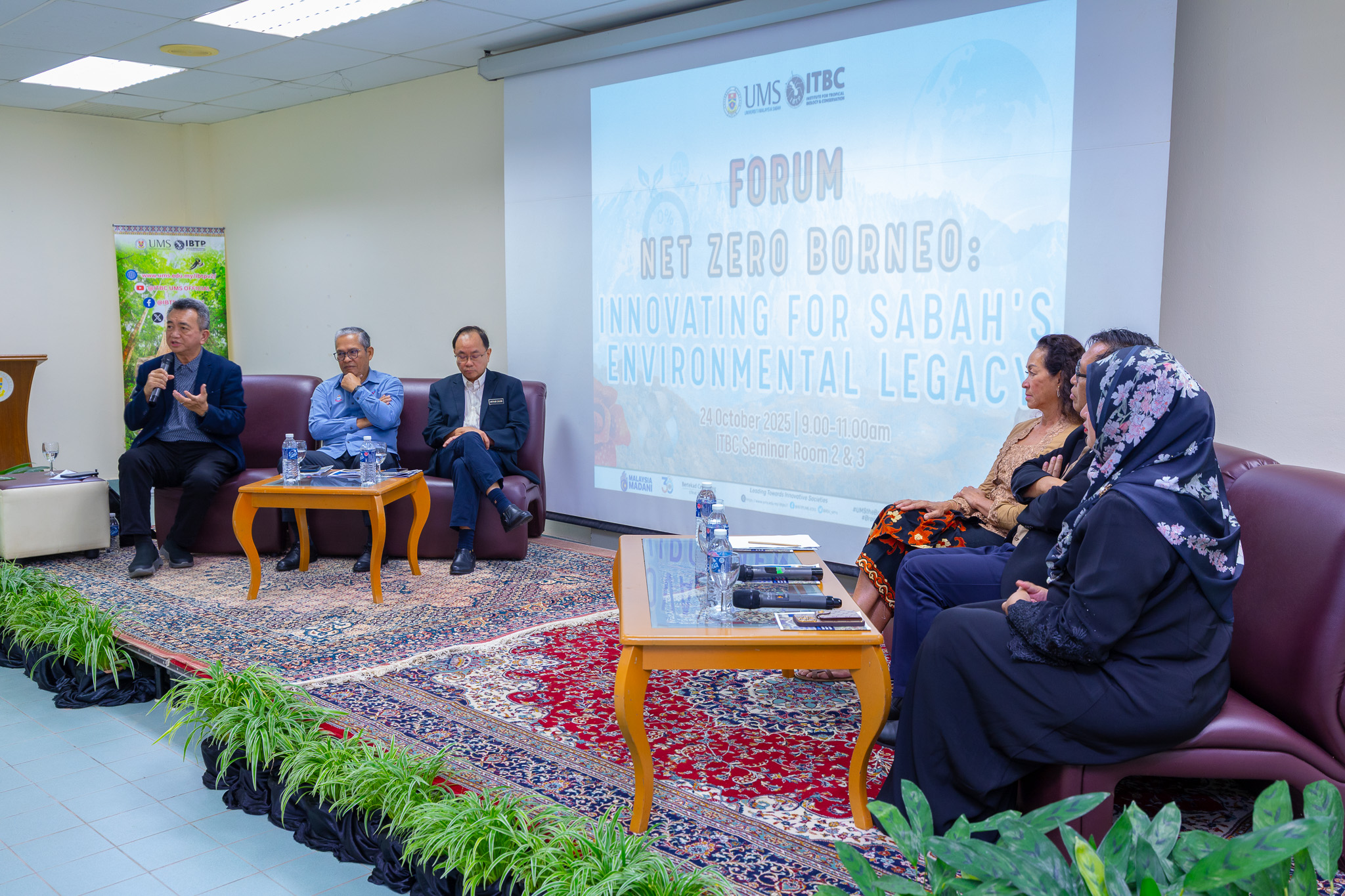
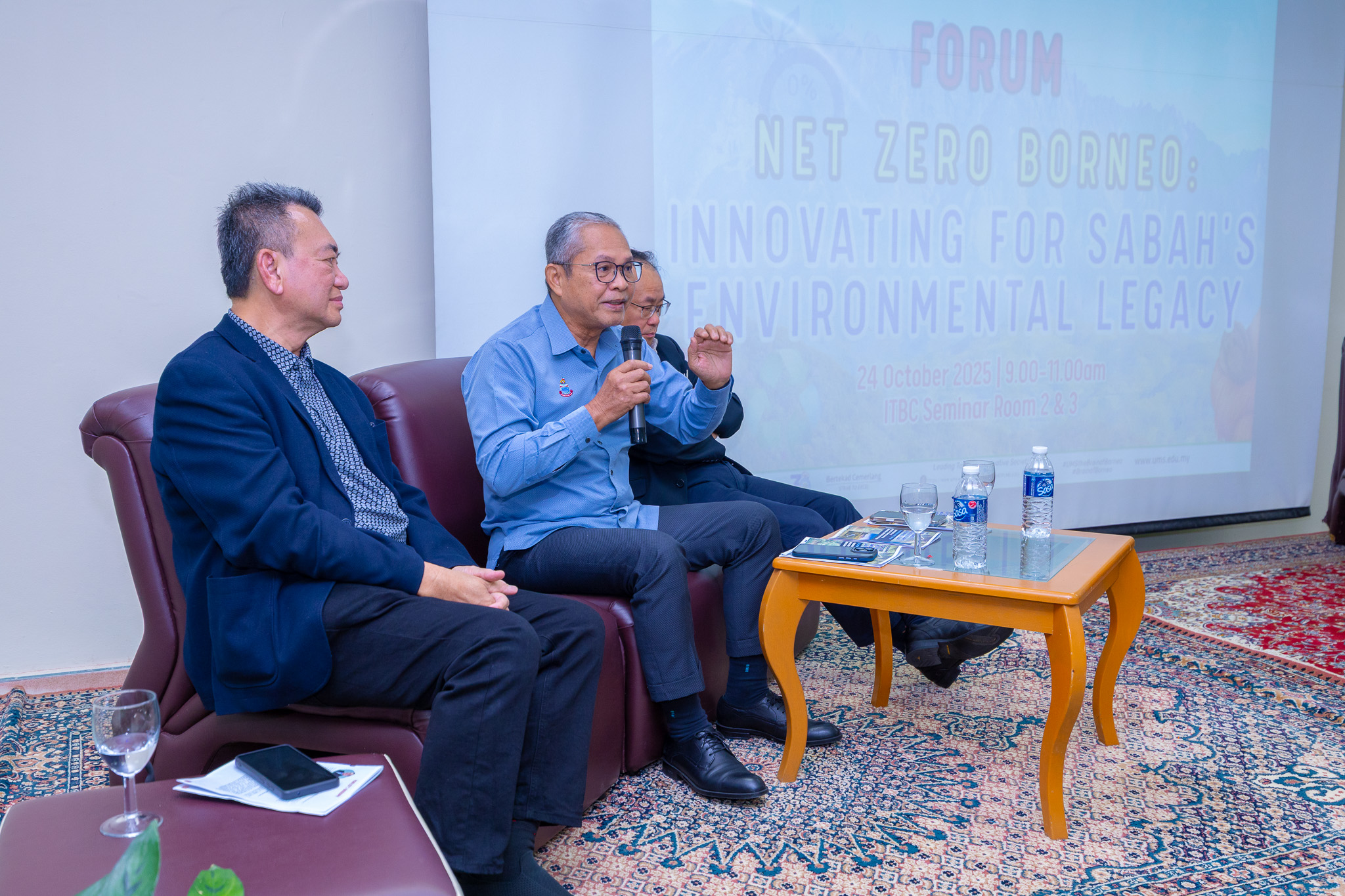
Forum: Net Zero Borneo – Innovating for Sabah’s Environmental Legacy, the EU Deforestation Regulation (EUDR) Seminar, 2025
UMS also co-hosts several high-impact platforms that advance regional and international dialogue on sustainability and environmental governance. These include the Forum: Net Zero Borneo – Innovating for Sabah’s Environmental Legacy, the EU Deforestation Regulation (EUDR) Seminar in partnership with WWF-Malaysia and the Sabah Forestry Department, and the International Forum on Caring for Our Planet with the United Nations Environment Programme (UNEP) and UN-Habitat. Each forum brings together government agencies, NGOs, industry leaders, researchers, and community stakeholders to address shared environmental challenges and co-develop policy responses. These multi-stakeholder platforms promote evidence-based dialogue, open knowledge exchange, and coordinated SDG action, strengthening transparency and inclusivity in environmental decision-making. Through these engagements, UMS reinforces its role as a regional convener of science-driven policy discourse, advancing SDG 17: Partnerships for the Goals and contributing to Sabah’s transition toward sustainable and climate-resilient development.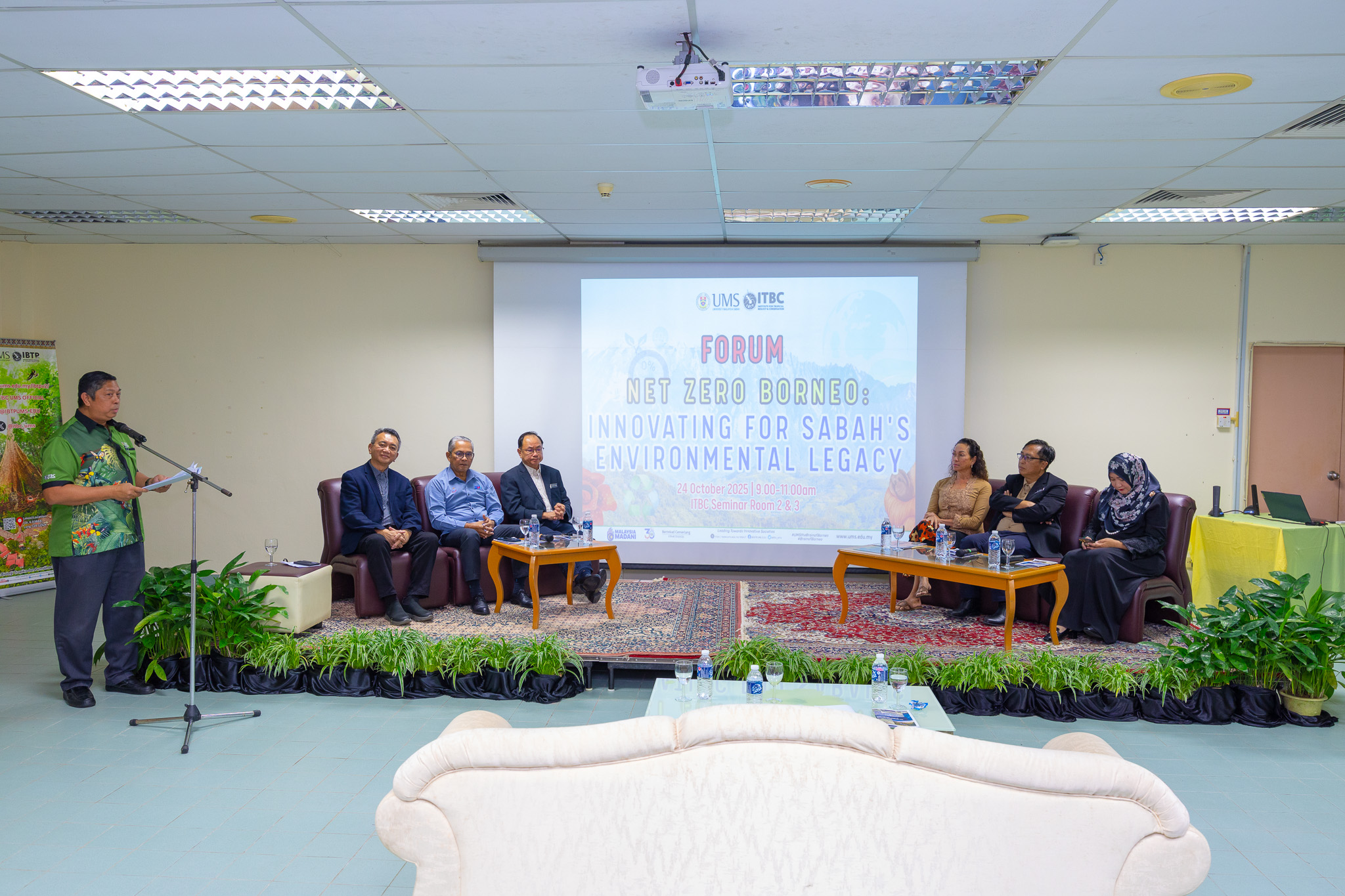
 Strengthening Global Sustainability Metrics Through Science-Driven Evidence
 UMS in Global SDG Data Collaboration
niversiti Malaysia Sabah (UMS) actively participates in international collaborations that generate, monitor, and contribute data for SDG measurement. In 2024, UMS provided scientific datasets, environmental indicators, and ecological monitoring outputs to global and regional partners including UNESCO, UNEP, WWF-Malaysia, and the Coral Triangle Initiative (CTI-CFF). These contributions support biodiversity assessments, marine ecosystem health tracking, climate resilience metrics, and open knowledge accessibility aligned with the SDGs.-
2024 Coral Nursery & Reef Restoration Data – Borneo Marine Research Institute (BMRI), UMS
In November 2024, UMS established its own Coral Nursery Site, generating new datasets on coral propagation, reef recovery, and restoration performance. These field measurements—covering growth rates, survivorship, and local reef health—contribute to broader international datasets on blue carbon ecosystems and marine resilience, supporting SDG 13 and SDG 14. The coral nursery project was partly sponsored by CTI Malaysia, a key member of the multilateral Coral Triangle Initiative on Coral Reefs, Fisheries and Food Security (CTI-CFF), which includes six partner countries such as the Philippines, Malaysia, and Papua New Guinea. The CTI-CFF collaboratively protects the 2.3 million square miles of the Coral Triangle, where more than 70 percent of the world’s corals are found. Additional support was provided by the Ministry of Natural Resources and Environmental Sustainability (NRES), further strengthening regional cooperation in marine conservation and ecological data generation.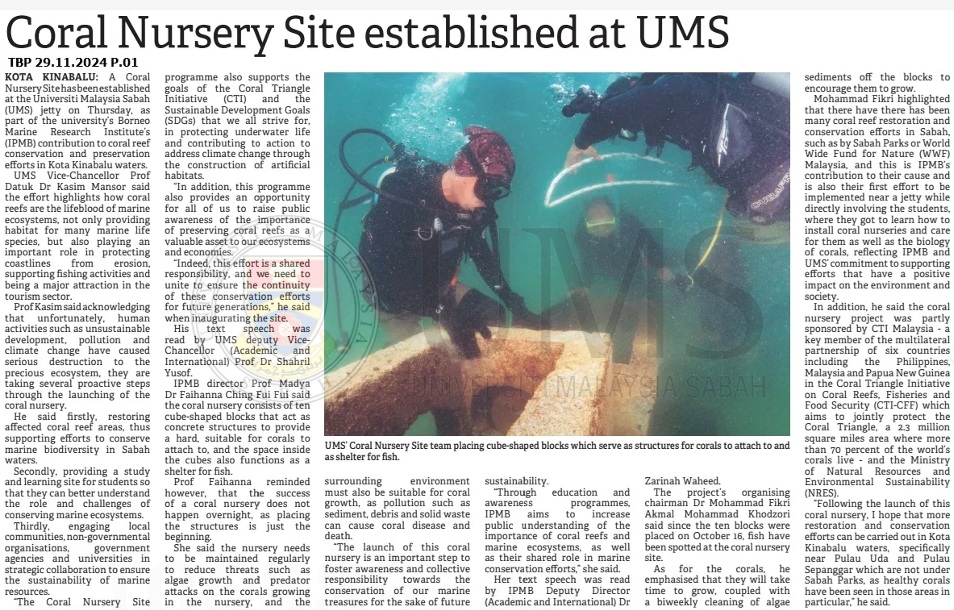
2024 Sea Cucumber (Gamat) Conservation Assessment – Borneo Marine Research Institute (BMRI), UMS
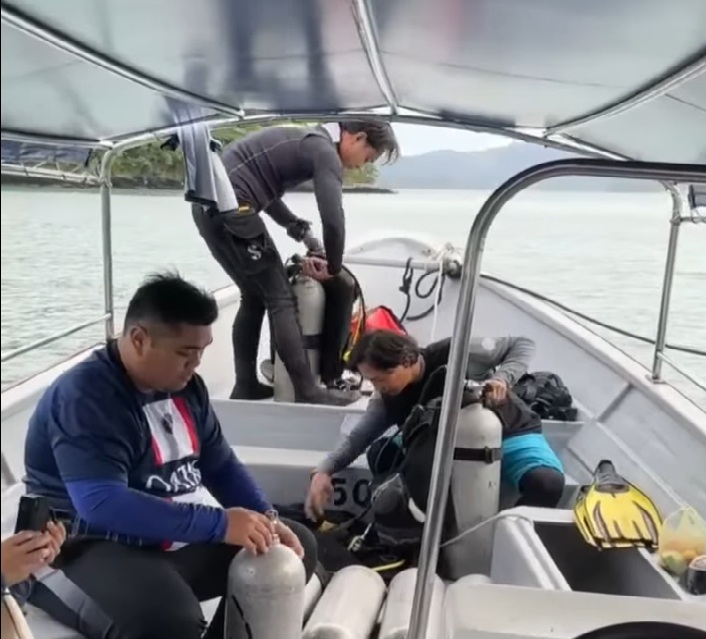
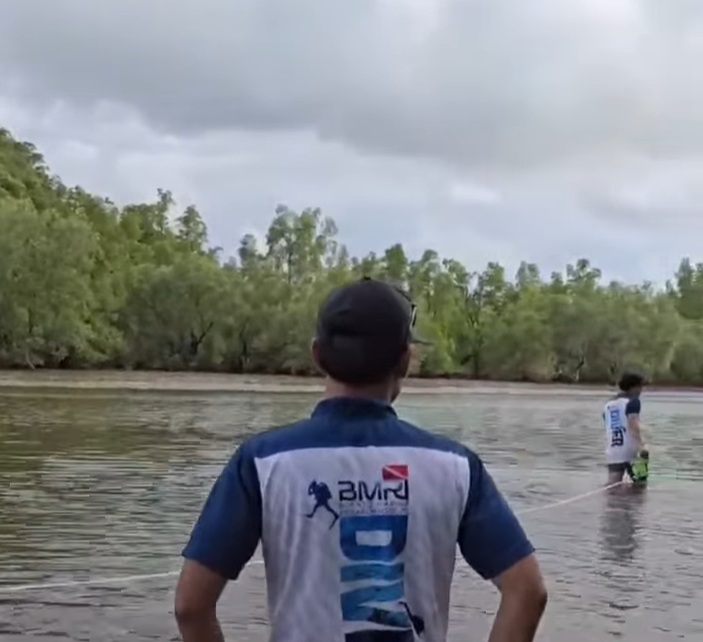
Sea cucumbers, commonly known as gamat or balat in Malaysia, have been increasingly classified as threatened due to overharvesting and habitat degradation. To safeguard this valuable marine species from extinction, conservation efforts grounded in scientific evidence are essential. In line with this, a data collection activity was conducted at the sea cucumber sanctuary area in Pulau Singa, Langkawi from 2–6 September 2024. The initiative involved experts and personnel from the Borneo Marine Research Institute (BMRI–UMS), SIRIM, Dorken Reef, and the Langkawi District Fisheries Department. The study aimed to determine the suitability of Pulau Singa as a natural habitat for sea cucumbers by examining ecological conditions, species distribution, and environmental parameters. The data collected will serve as an important scientific reference for future sea cucumber conservation programmes. It also contributes to the development of biodiversity indicators under SDG 14: Life Below Water, supporting long-term strategies to protect and restore this increasingly vulnerable marine species.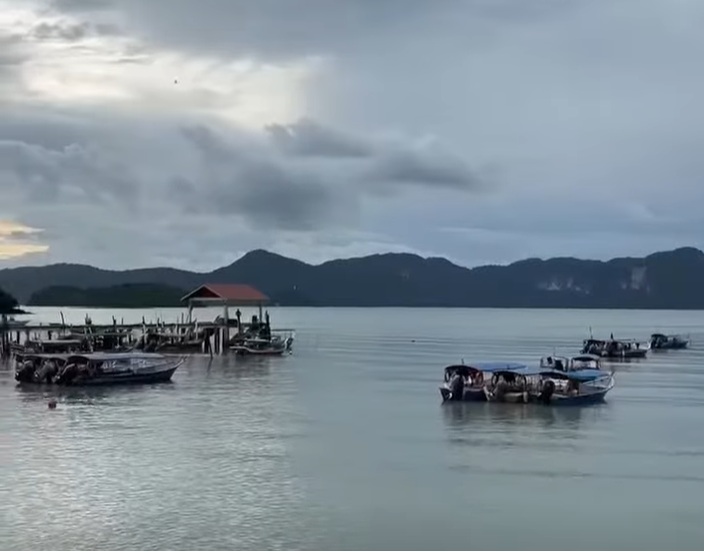
2024 Peer-Reviewed Coral Biodiversity Survey
A UMS x WWF-Malaysia x Coral Reef Research and Monitoring Project -affiliated study published in October 2024 presented comprehensive ecological data on coral diversity and abundance along the West Coast of Sabah. This research provides detailed insights into coral species richness, ecosystem structure, and vulnerable species distribution. As an internationally published dataset, it contributes directly to global scientific baselines used to track marine biodiversity under SDG 14.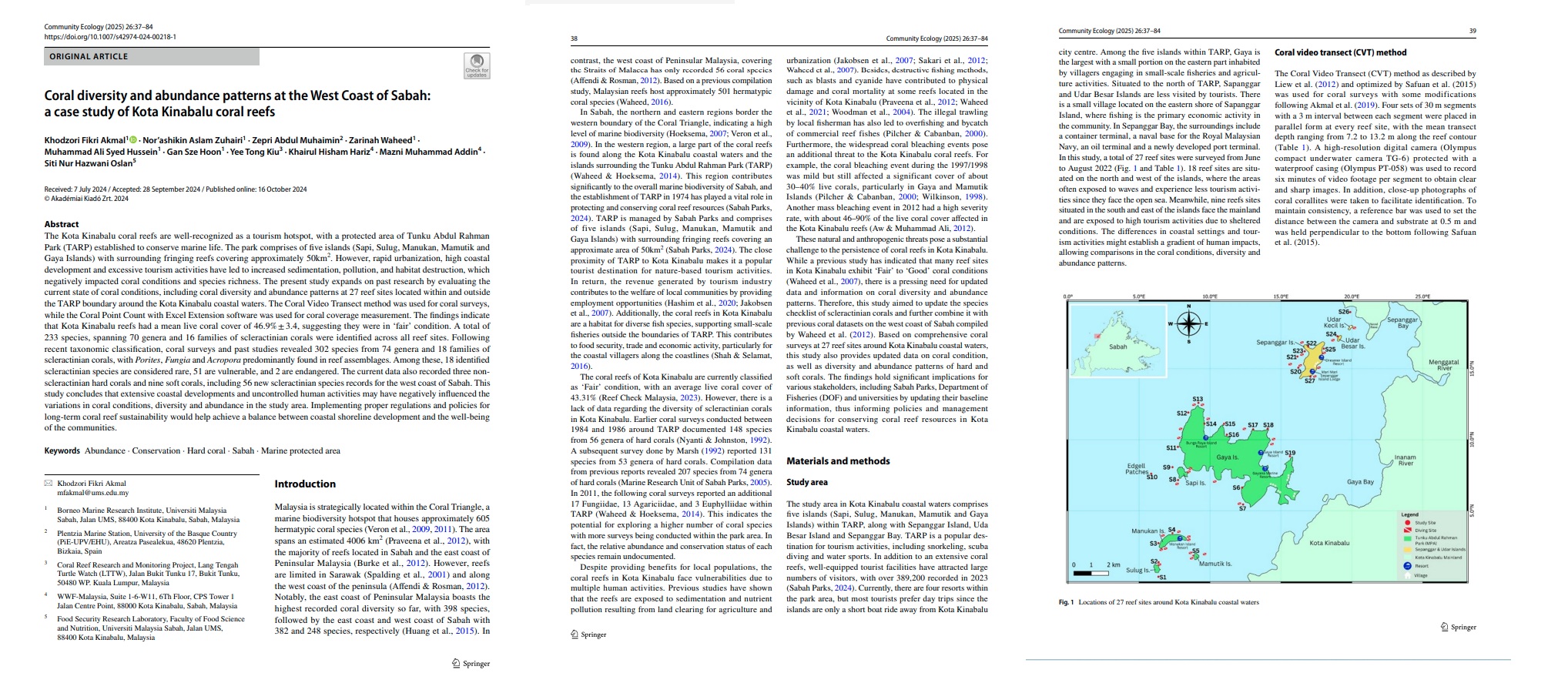
UMS x UNESCO : – Inclusive Open Educational Resources (iOER) - Open Data for Global SDG 4 Measurement
In 2024, UMS contributed SDG-aligned learning materials and open-access educational content to the UNESCO-supported Inclusive Open Educational Resources (iOER) Portal. Coordinated by the Ministry of Higher Education (MoHE), this platform promotes global access to open knowledge, supporting SDG 4 through the dissemination of educational resources that enable equitable learning opportunities.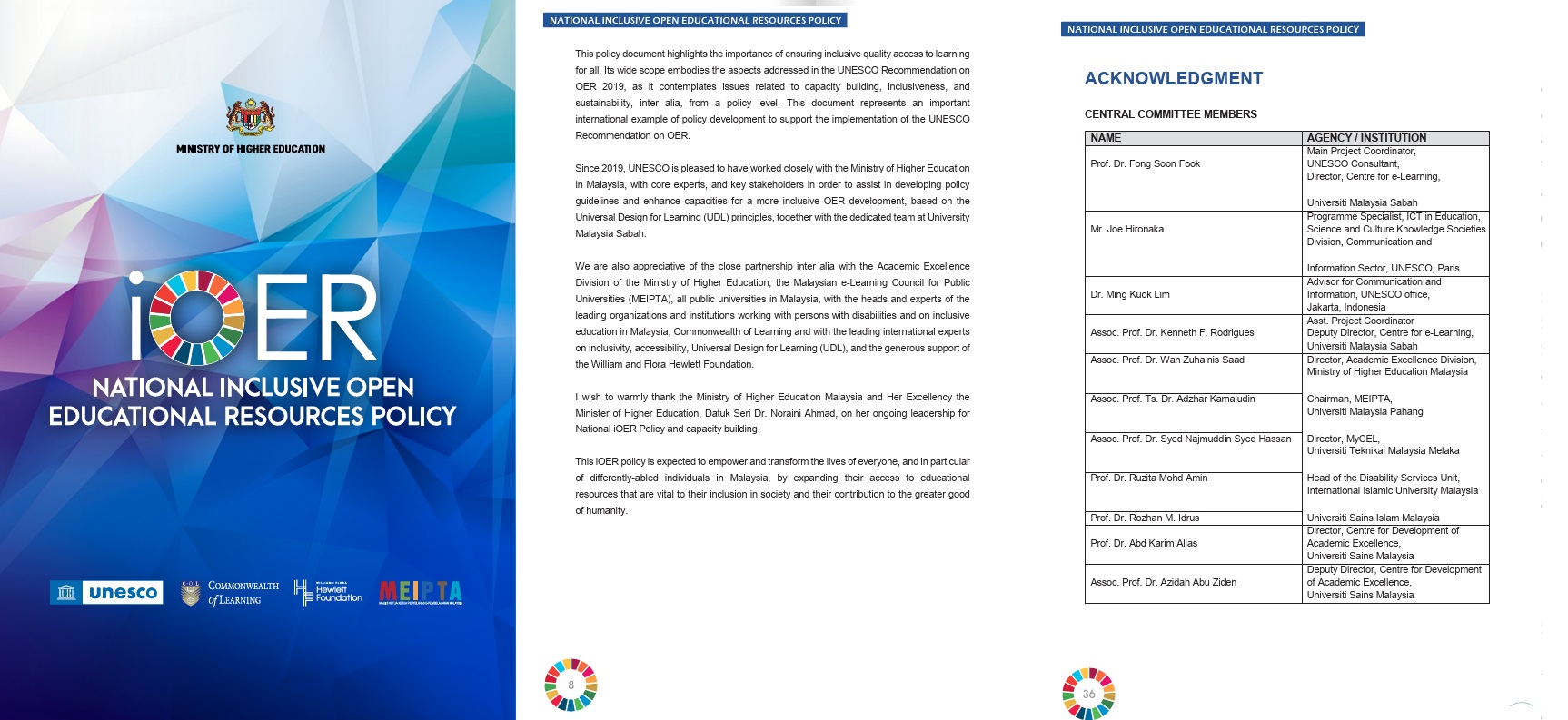
UNEP Global Environment Outlook (GEO-7): UMS Ecological Data Integrated into UNEP's Global Assessment
The Institute for Tropical Biology and Conservation (ITBC) played a key role in contributing biodiversity and ecological datasets towards Malaysia’s input for UNEP’s Global Environment Outlook 7 (GEO-7). These datasets, including habitat conditions, species observations, and environmental change indicators, contribute to global assessments of climate resilience and biodiversity, directly supporting SDG 13 and SDG 15.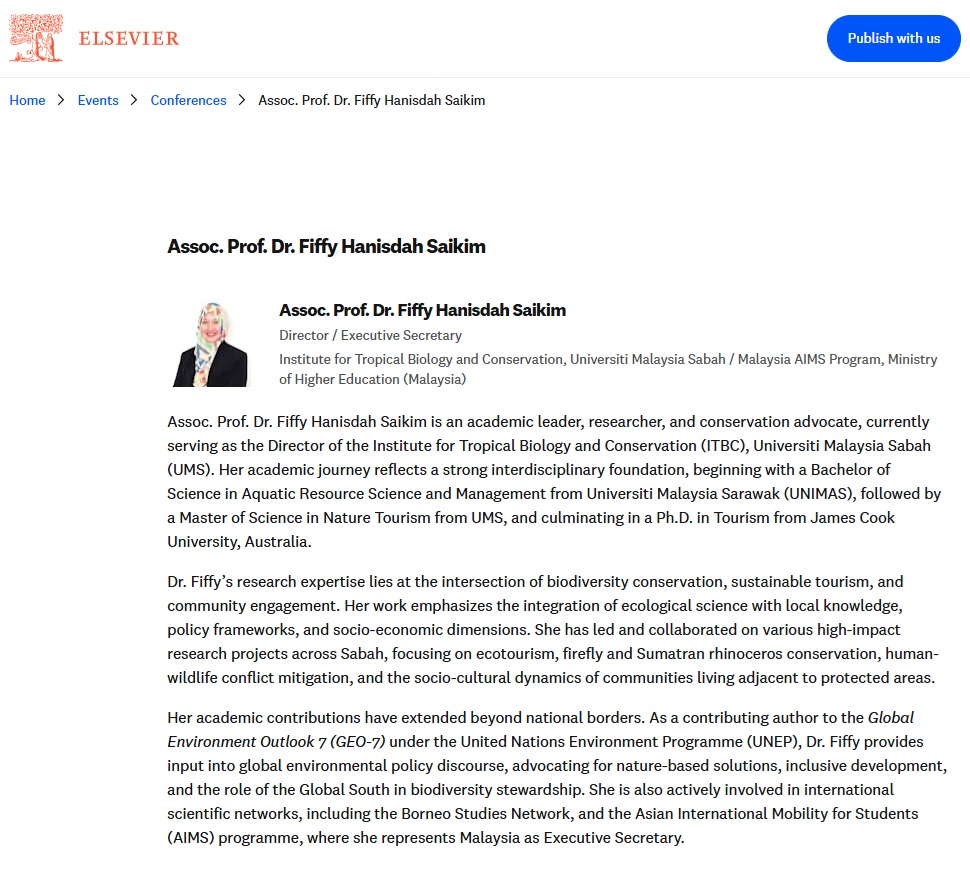
Strengthening global best practice through comparative research, open science, and multi-country collaboration UMS as a Global Contributor to SDG Best Practices
Universiti Malaysia Sabah (UMS) plays an active and influential role in shaping international best practices for the Sustainable Development Goals (SDGs). Through cross-border research collaborations, comparative environmental studies, and global policy dialogues, UMS contributes knowledge, data, and frameworks that strengthen sustainable governance beyond Malaysia. Working closely with UNESCO, UNEP, WWF-Malaysia, CTI-CFF, and regional academic partners, UMS supports the development of shared methodologies, open-science platforms, and evidence-based solutions that inform international SDG benchmarking. By integrating scientific research with global multi-stakeholder initiatives, UMS continues to advance the collective pursuit of sustainability, resilience, and equitable development worldwide.-
UNESCO & MoHE – Development of the Inclusive Open Educational Resources (iOER) Portal
UMS co-developed the UNESCO–MoHE iOER Portal, contributing more than 500 SDG-aligned teaching and learning resources under Creative Commons licences. This initiative supports international best practice in open education, equitable access, and SDG capacity building, particularly for SDG 4 (Quality Education).Coral Triangle Initiative (CTI-CFF) & National Plan of Action CTI 2.0 (2021–2030)
Through the Borneo Marine Research Institute (BMRI), UMS provides critical scientific datasets for the ASEAN-level Coral Triangle Initiative on Coral Reefs, Fisheries and Food Security (CTI-CFF). These contributions include reef health monitoring outputs, fisheries indicators, and marine ecosystem data that support Malaysia’s National Plan of Action CTI 2.0 (2021–2030). UMS’s involvement strengthens regional collaboration by informing shared best practices for marine conservation, sustainable fisheries governance, and transboundary ecosystem management across the Coral Triangle region.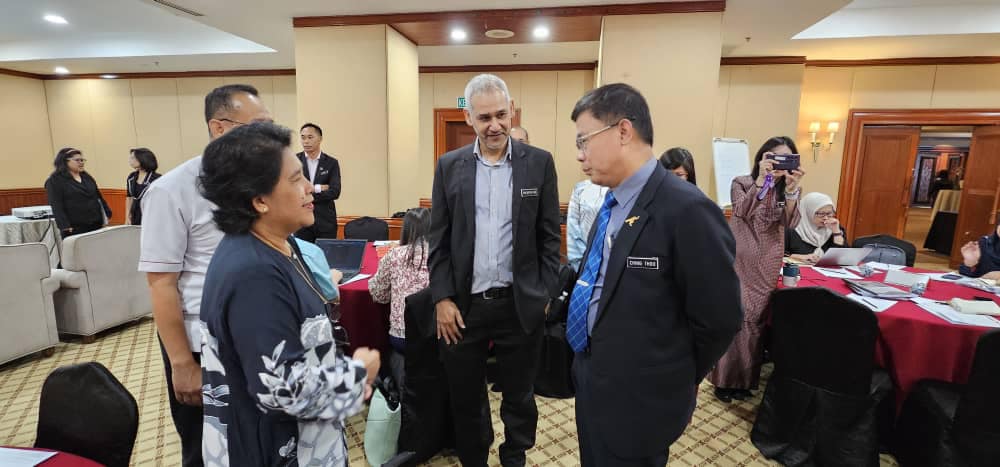
Coral Nursery Project (2024) – Regional Best Practice in Reef Restoration
In November 2024, UMS established its Coral Nursery Site, generating new datasets on coral propagation, survivorship, reef recovery, and restoration performance. Conducted in partnership with CTI Malaysia and the Ministry of Natural Resources and Environmental Sustainability (NRES), this initiative contributes to regional benchmarking on reef restoration and resilience across the Coral Triangle. The project strengthens international best practices by providing empirical data for blue carbon ecosystems, climate adaptation strategies, and SDG 13 and SDG 14 monitoring.UNEP & WWF-Malaysia – Comparative Climate and Biodiversity Assessments
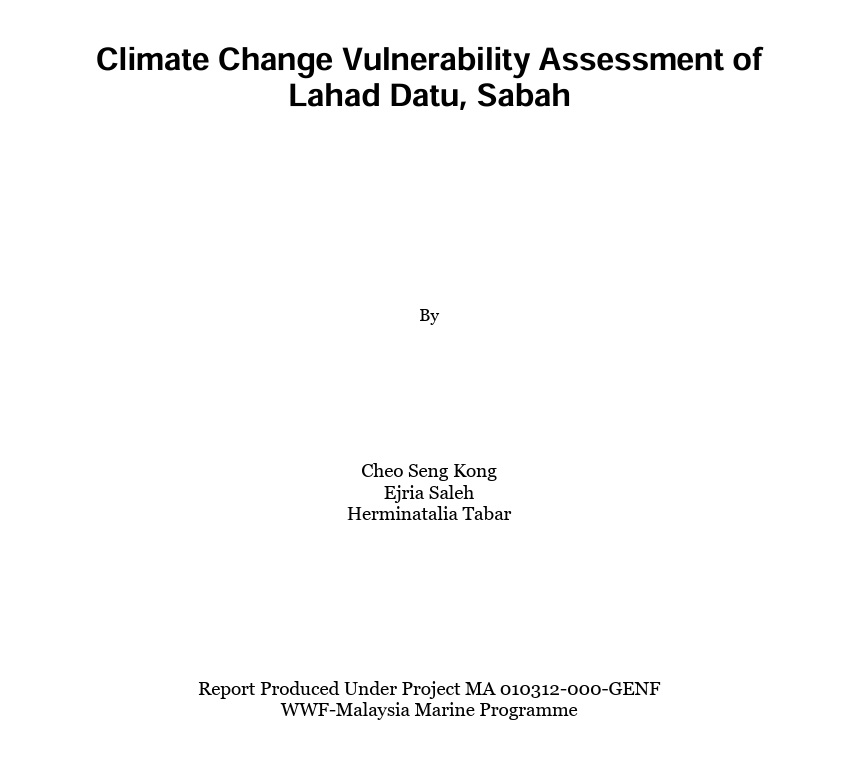
UMS researchers collaborate extensively with UNEP and WWF-Malaysia on ecological and climate-related studies that support global SDG benchmarking. These collaborations include Climate Change Vulnerability Assessments for Tun Mustapha Park and Lahad Datu, comparative biodiversity surveys, marine ecosystem analyses, and modelling of coastal resilience and climate adaptation. The scientific outputs generated through these partnerships contribute directly to international methodologies and cross-country comparison frameworks in conservation, climate risk assessment, and environmental governance.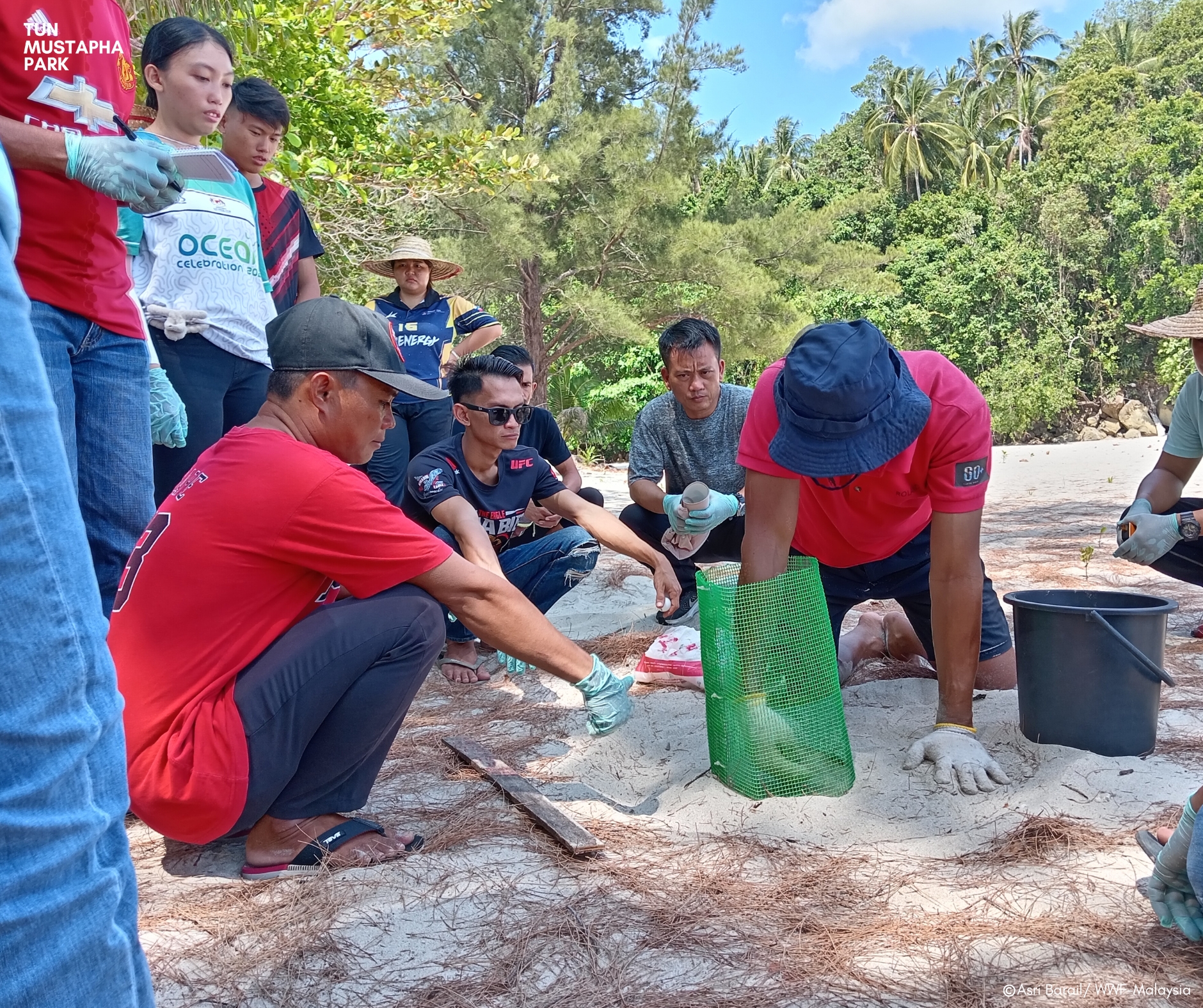
 Access Full SDG Annual Report Here !
SDG 17 Progress Report: Forging Partnerships & Strengthening Collaboration for Sustainable Development in 2024
SDG 17 calls for strengthened multi-stakeholder partnerships — across governments, academia, industry, and civil society — to mobilise resources, share knowledge and technology, and build collective action toward sustainable development. As a leading university in Borneo, UMS recognises that collaboration is essential for translating research, innovation and community programmes into lasting impact: through partnerships, UMS can better address complex environmental, social and economic challenges facing Sabah and the broader region. In 2024, UMS’s approach under SDG 17 reflects a holistic model: combining institutional governance, research collaboration, capacity-building, and external engagement. By strengthening partnerships at multiple levels — local communities, regional stakeholders, national and international networks — UMS contributes to unlocking the means of implementation that make sustainable development possible. Looking ahead, UMS aims to expand and deepen these partnerships, leveraging shared knowledge, resources, and innovation to support the full suite of SDGs. Through continued collaborations, UMS reinforces its role as a catalyst for sustainable development across Sabah, Borneo — and beyond.
-
-