

 Universiti Malaysia Sabah
UMS Community Knowledge Transfer Programme
-
Empowering Communities, Sustaining Livelihoods
The Pusat Kelestarian Libatsama Masyarakat (PKLM) at Universiti Malaysia Sabah (UMS) stands as a bridge between the university and the people — transforming expertise into empowerment, and research into real impact.
Through its Community Knowledge Transfer Programme, PKLM nurtures a two-way exchange where academic knowledge meets local wisdom, creating practical, lasting solutions that uplift lives while protecting the environment.
From coastal villages to highland settlements, UMS academics and students walk side by side with local communities — listening, learning, and co-creating sustainable practices in fisheries, agriculture, waste management, digital literacy, health, and social well-being. Every initiative reflects UMS’s belief that sustainability begins with people — with families, youth, and communities empowered to shape their own future.
-
Community-Led Sustainability in Action
PKLM’s knowledge-transfer activities go beyond workshops or research projects; they build trust, resilience, and self-reliance. Villagers learn new ways to improve livelihoods while preserving their natural heritage, and university teams gain deeper understanding of local realities, ensuring solutions are both scientifically sound and socially grounded.
- Eco-Agro Knowledge Transfer Program: Training rural farmers in climate-smart and organic agriculture.
- Blue Economy Education: Empowering coastal communities with sustainable fisheries and aquaculture skills.
- Zero Waste VillagesPromoting waste segregation, composting, and community recycling systems as well as income generation.
- Digital Inclusion Projects:Equipping youth and women with digital and entrepreneurial literacy.
- Health & Wellness Outreach:Partnering with local leaders for hygiene, nutrition, and preventive care awareness.
Each project reflects UMS’s commitment to inclusive growth, social innovation, and environmental stewardship, ensuring that development leaves no one behind.
-
Together for a Sustainable Sabah
The PKLM programme unites academia, government agencies, NGOs, and the community in one mission — to make sustainability a lived reality. Every engagement fosters mutual respect and shared purpose, reminding us that sustainability is not only about protecting nature but also about nurturing the dignity, resilience, and wisdom of our people.
- From the classrooms of UMS to the heart of every kampung, PKLM continues to prove that true sustainability is built through collaboration, compassion, and knowledge that empowers.
-
Impact Vision:
These knowledge-transfer programmes contribute directly to UMS’s sustainability agenda and Malaysia’s national aspirations by advancing the UN Sustainable Development Goals (SDGs):
Each project represents UMS’s enduring commitment to empower communities, protect the environment, and sustain livelihoods — ensuring that progress in Sabah is both inclusive and lasting.
Program Highlight
Smart Hydroponics for Sustainable Agriculture (BAKAT Programme)
-
Greener Growth, Smarter Harvests.
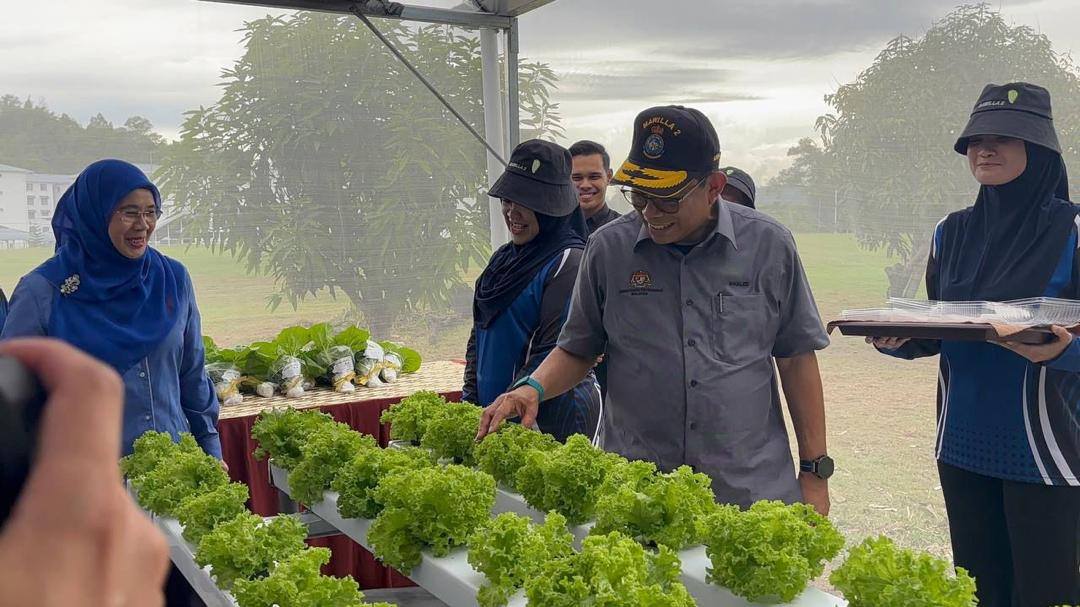
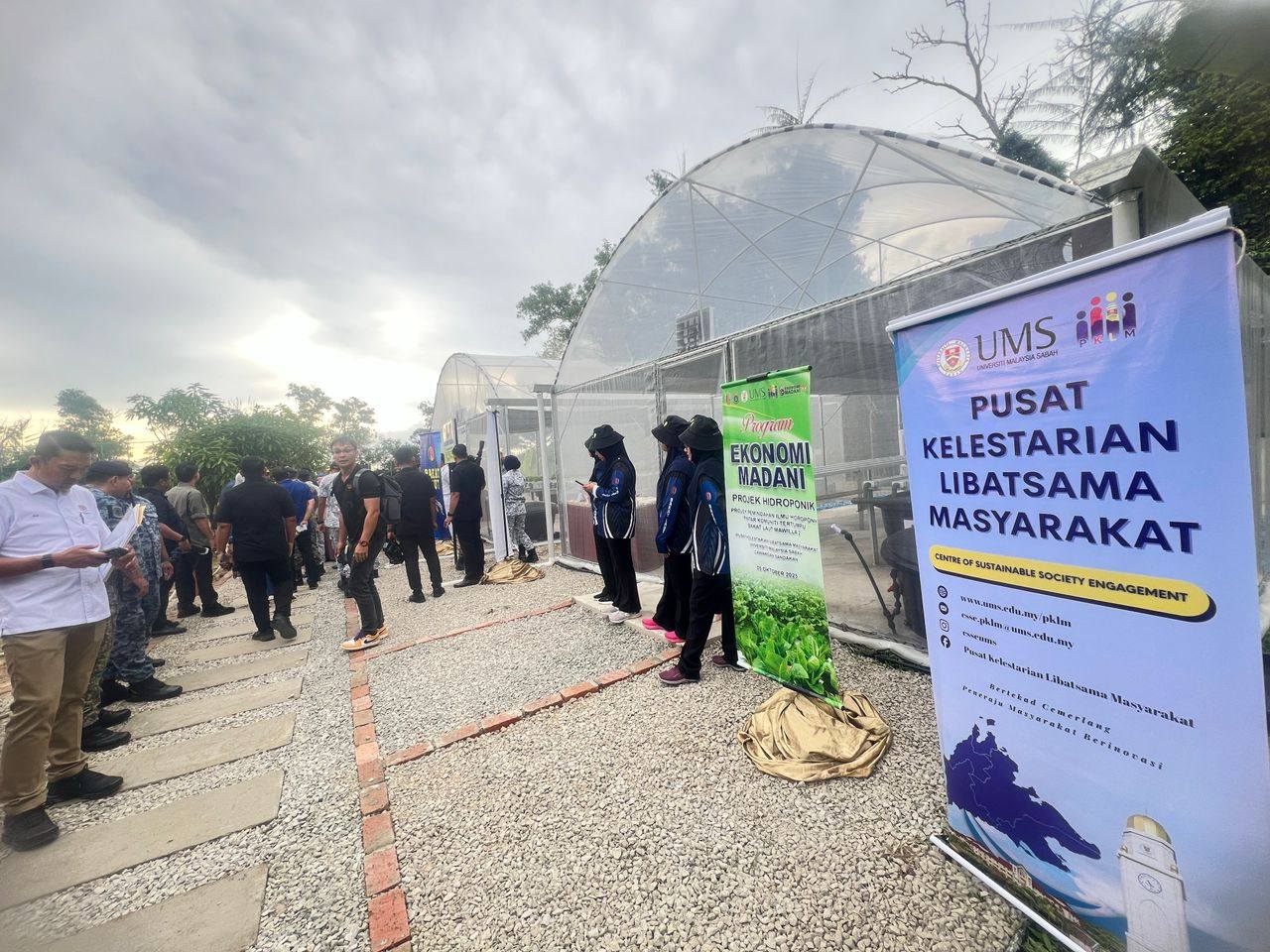
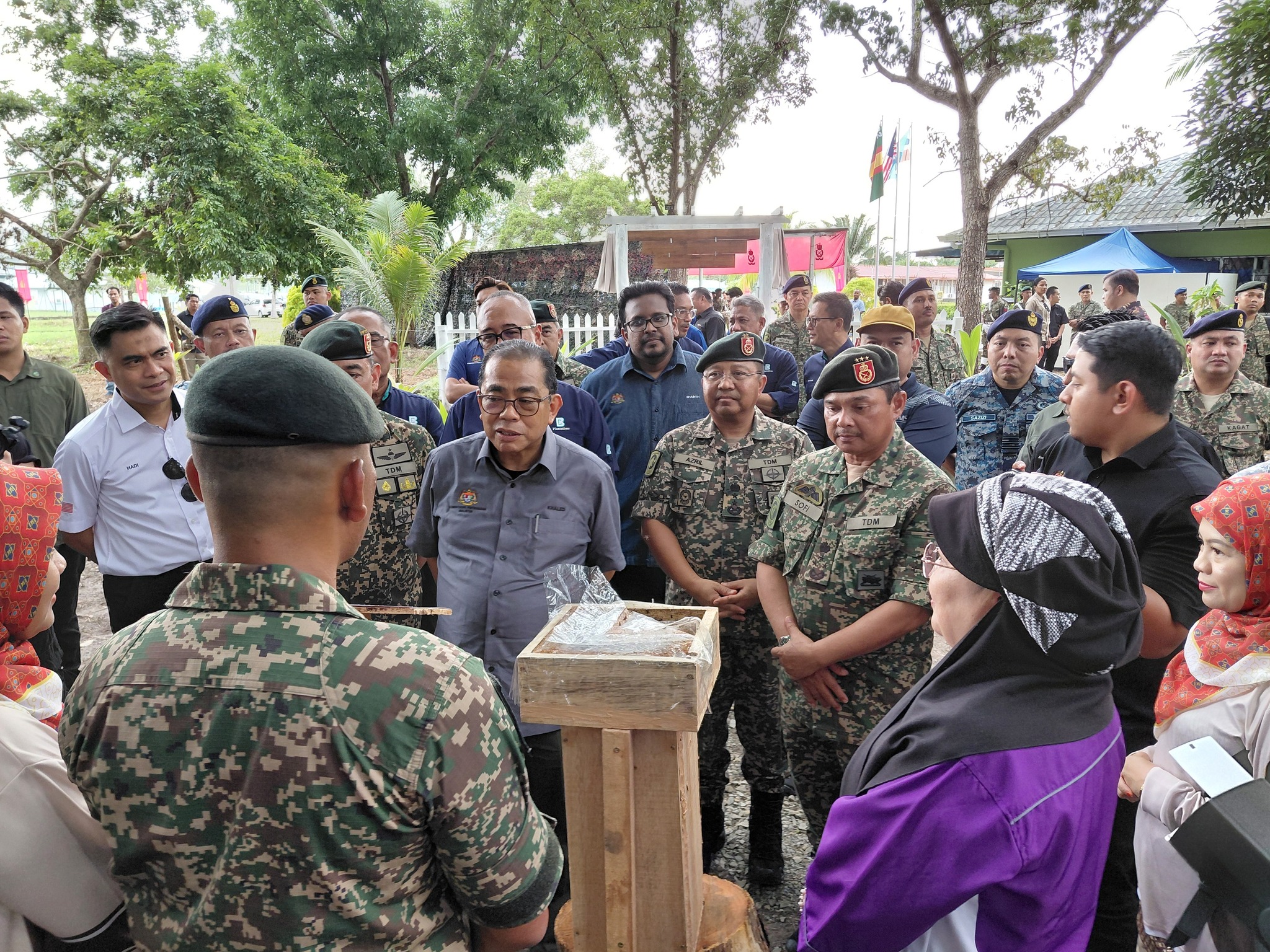
The Smart Hydroponics Community Project stands as a model of innovation, partnership, and sustainable empowerment in action. Officially launched and inaugurated during the Program Ekonomi MADANI visit by YB Dato’ Seri Haji Mohamed Khaled bin Nordin, Minister of Defence, at the Rumah Keluarga Angkatan Tentera (RKAT), Markas Wilayah Laut 2 (MAWILLA 2), Sandakan, the project reflects a new chapter of collaboration between Universiti Malaysia Sabah (UMS) and the Ministry of Defence.
Coordinated by the Pusat Kelestarian Libatsama Masyarakat (PKLM) and led by Assoc. Prof. Dr. Abd. Aziz bin Rekan, the project is implemented through the Faculty of Sustainable Agriculture (UMS Sandakan Campus) under the guidance of Dr. Siti Suliza binti Salamat, who heads the Smart Hydroponics initiative. This transformative effort introduces BAKAT members and local youth to hydroponic farming systems that save water, space, and energy — equipping them with modern, climate-smart agricultural skills that generate income and reduce food dependency.
More than a technology transfer, the project nurtures self-reliance, confidence, and unity among the Badan Kebajikan Keluarga Angkatan Tentera (BAKAT), MAWILLA 2 community. Each hydroponic harvest symbolizes a step toward food security, sustainable living, and inter-agency collaboration that embodies the nation’s Ekonomi MADANI vision — people-centered, innovative, and future-ready.
Komuniti Tertumpu Bombon, Kg. Marakau Ranau – DaMaI Initiative
-
From Nature to Nurture.
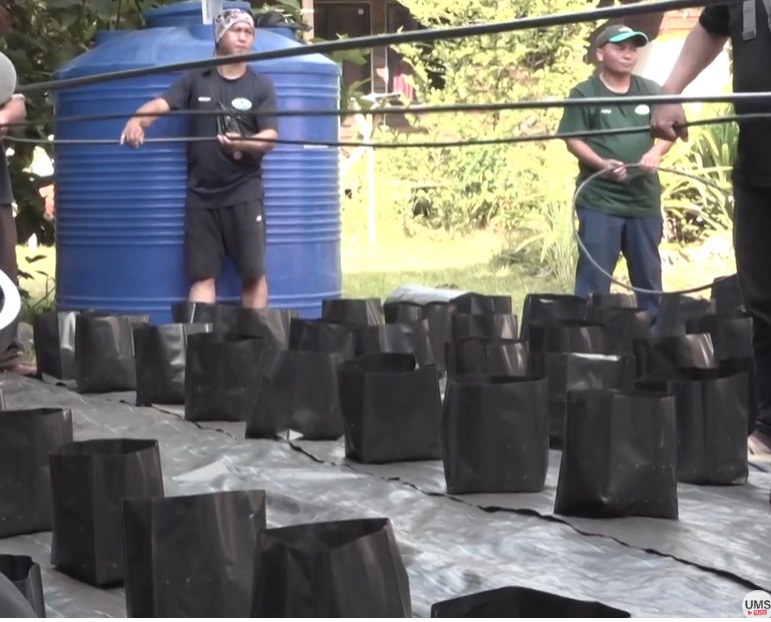
Nestled in the cool highlands of Ranau, the DaMaI (Dana Amanah Malaysia Madani) Initiative empowers villagers of Kg. Marakau Bombon to transform their environment into a living classroom for sustainability. Through eco-tourism, agro-based entrepreneurship, and community cooperatives, the project weaves livelihoods with stewardship of nature.
Here, every seed planted, every trail preserved, and every visitor welcomed contributes to both income resilience and biodiversity conservation, ensuring that progress never comes at the expense of the environment.
-
Community
Bombon, Kg. Marakau Ranau
-
+
Google Map
Kelulut Honey Entrepreneurship for Green Income (BAKAT Programme)
-
Sweet Sustainability, Shared Prosperity.
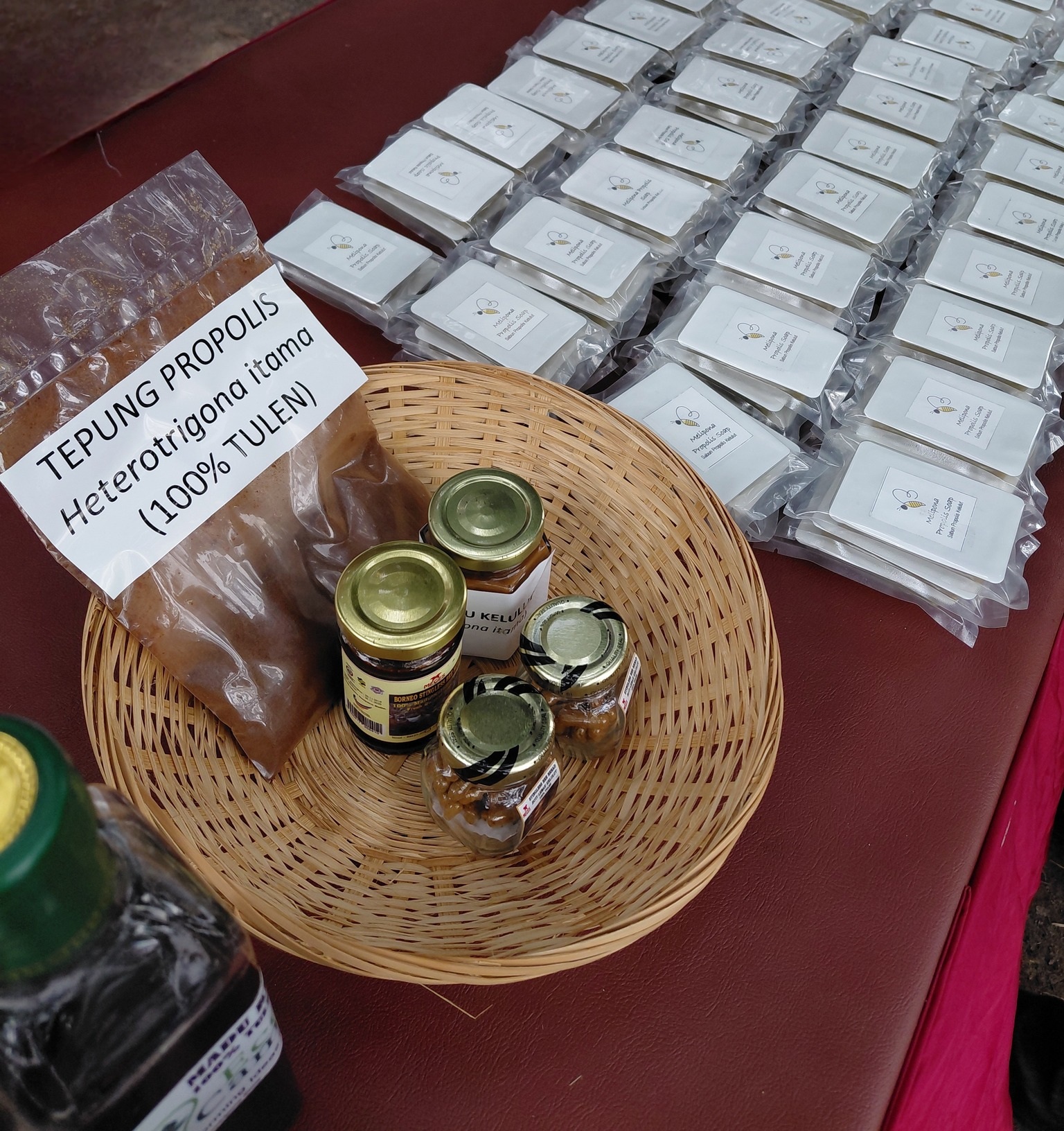
Amid Sabah’s rich tropical landscape, the Kelulut Honey Entrepreneurship Project under the Program Ekonomi MADANI turns nature’s smallest workers into agents of sustainability and empowerment. Coordinated by the Pusat Kelestarian Libatsama Masyarakat (PKLM) in collaboration with Universiti Malaysia Sabah (UMS), the initiative equips Badan Kebajikan Keluarga Angkatan Tentera (BAKAT) members, women, and youth with the knowledge and skills to cultivate kelulut (stingless bee) colonies, harvest pure honey, and develop value-added eco-products such as soaps, balms, and health supplements.
Guided by experts from UMS’s Faculty of Sustainable Agriculture (UMS Sandakan Campus), the project integrates entrepreneurship with ecological stewardship — encouraging communities to protect pollinators that are vital for biodiversity and food systems. Beyond economic gains, participants develop an appreciation for the delicate harmony between human livelihood and the natural environment, forming the heart of a growing green micro-economy.
The Kelulut Project represents more than income generation — it’s a symbol of resilience, creativity, and care for the planet. Every drop of honey produced tells a story of community empowerment, environmental awareness, and the sustainable spirit of Sabah’s people.
Smart Carbon-Free Hydroponics Project (BAKAT Programme)
-
Empowering Communities, Growing Futures.
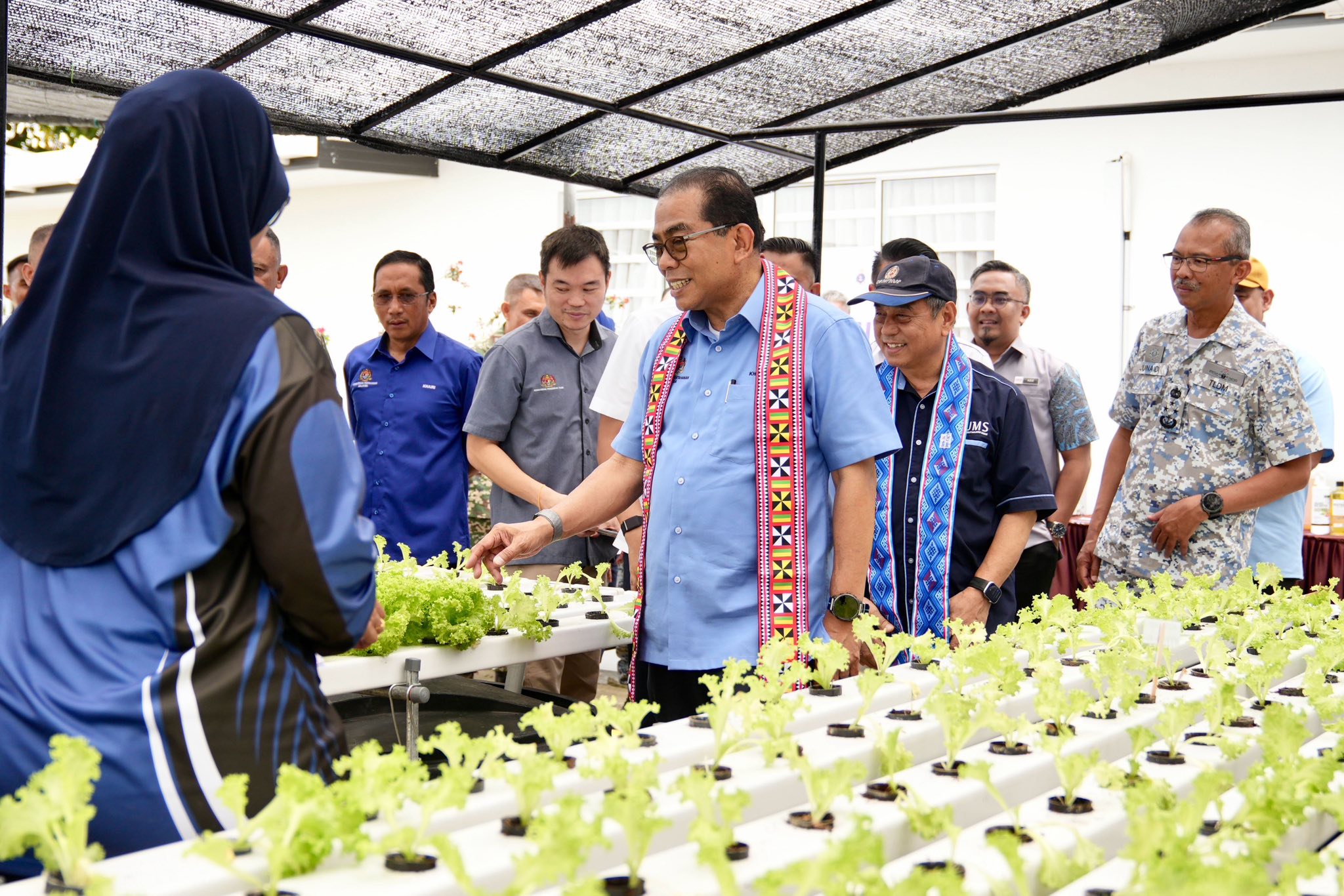
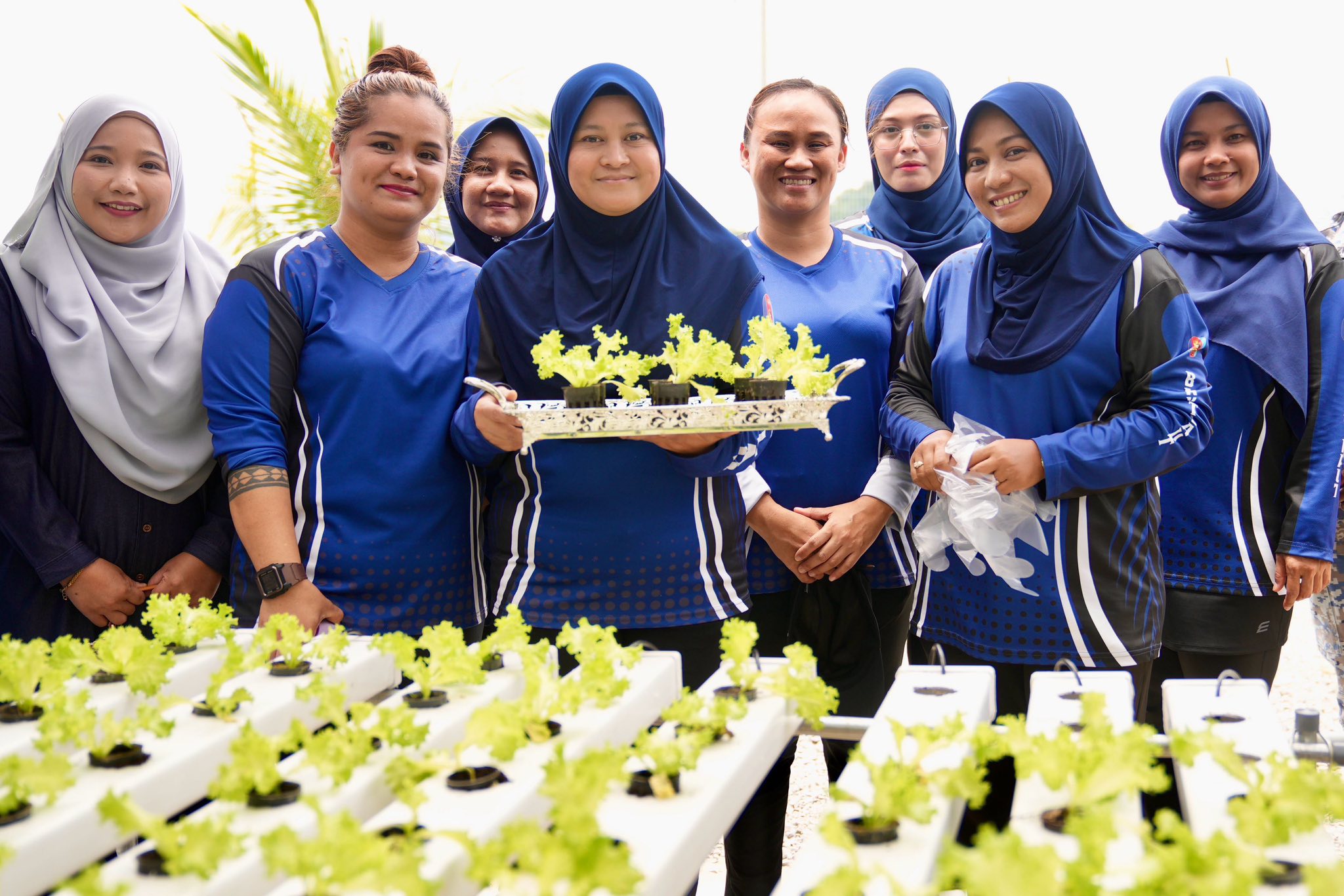
The Smart Carbon-Free Hydroponics Project, an innovative entrepreneurship initiative under the Program Ekonomi MADANI, was developed through collaboration between the Badan Kebajikan Keluarga Angkatan Tentera (BAKAT) and Universiti Malaysia Sabah (UMS) via the Knowledge Transfer Programme (KTP).
This project empowers communities to embrace modern, sustainable agriculture by introducing automated hydroponic systems that use minimal water, land, and energy. Through comprehensive hands-on training led by experts from UMS’s Faculty of Sustainable Agriculture, participants gain technical knowledge, business acumen, and environmental awareness — transforming small urban spaces into productive, eco-friendly gardens.
Beyond cultivating crops, the initiative cultivates confidence, innovation, and resilience among families and youth. It enhances household food security, creates opportunities for supplementary income, and fosters a culture of sustainability and self-reliance within the armed forces community. As a model of inclusive progress, the project embodies the MADANI values of care, partnership, and shared prosperity — proving that when knowledge is transferred with purpose, communities thrive together.
Fertigation, Mushroom Cultivation & Solar Energy Integration
-
Smart Skills, Sustainable Futures.
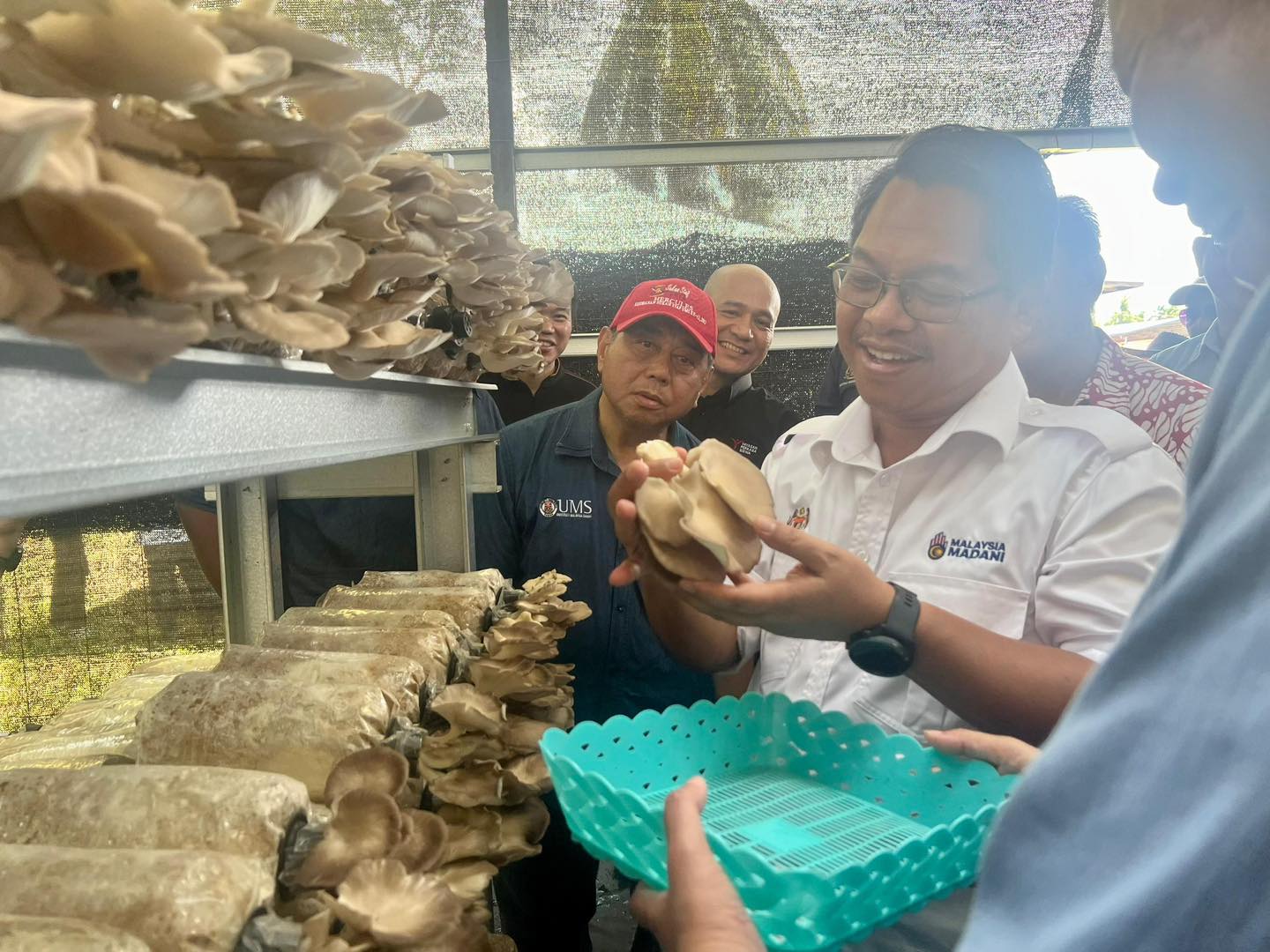
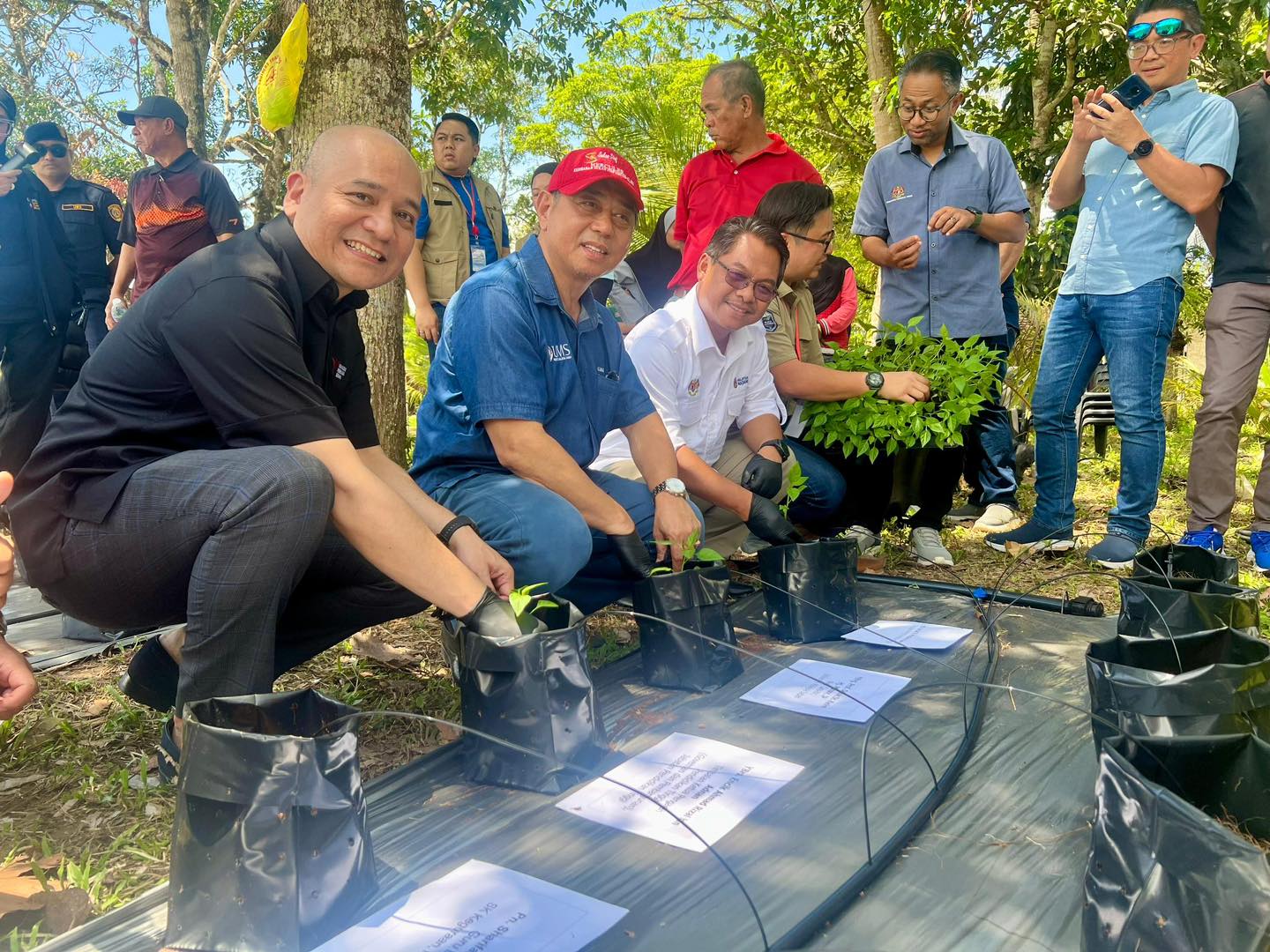
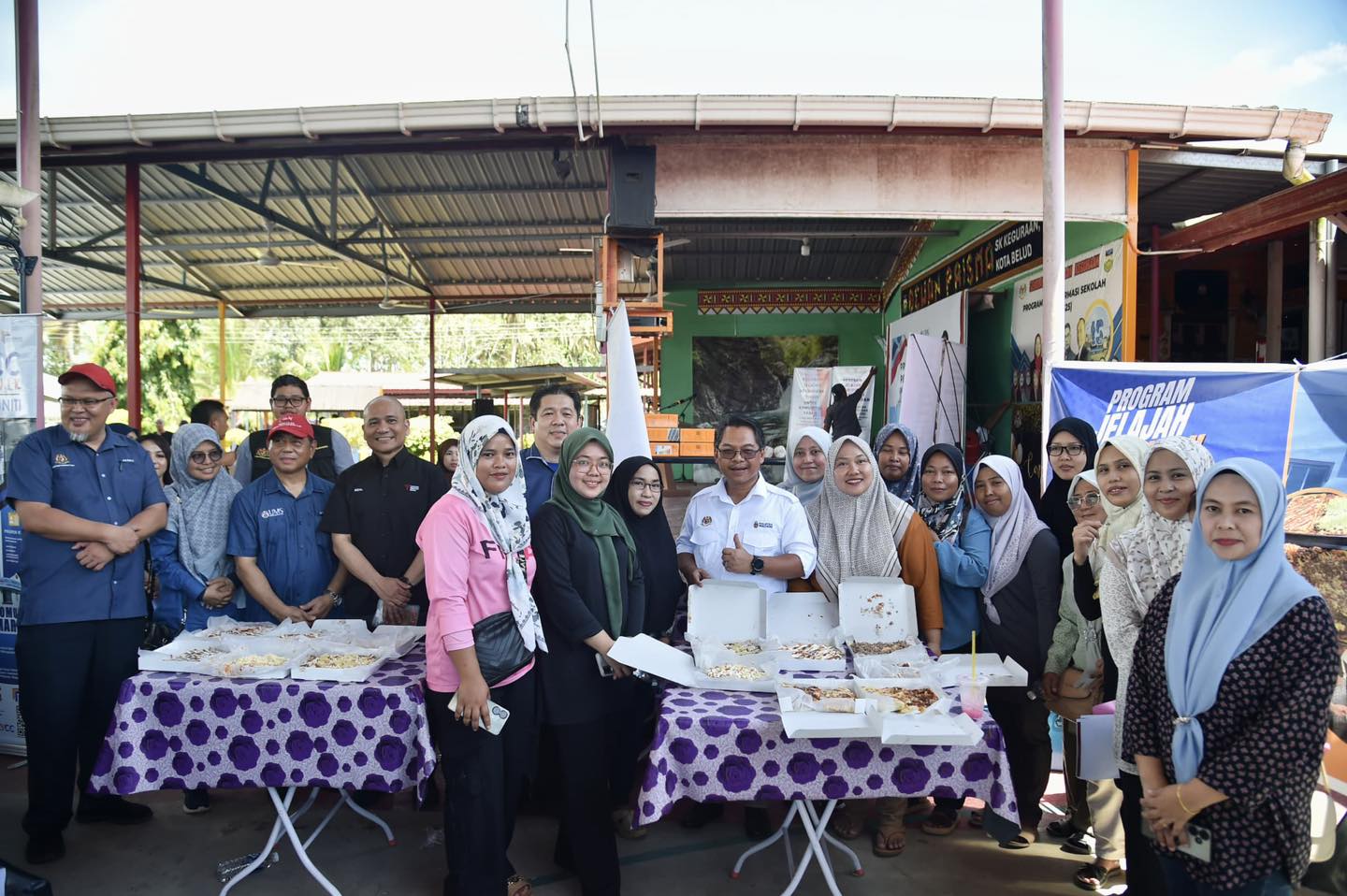
The Fertigation, Mushroom Cultivation & Solar Energy Integration Project is one of Universiti Malaysia Sabah’s most comprehensive community knowledge-transfer initiatives — designed to empower rural communities through a combination of agricultural innovation, renewable energy, and food entrepreneurship. Spearheaded by the Pusat Kelestarian Libatsama Masyarakat (PKLM UMS), this project equips participants with practical, future-ready skills that link sustainability with self-sufficiency.
Through hands-on training, villagers and youth learn how to apply fertigation technology — a smart irrigation system that delivers water and nutrients directly to crops, reducing waste and improving yields. Alongside this, participants gain expertise in mushroom cultivation using eco-friendly methods that recycle organic materials such as sawdust or paddy husks, turning agricultural by-products into profitable resources. Complementing these efforts, the project also introduces solar-energy installation workshops, helping communities reduce dependence on non-renewable electricity while lowering operational costs for small enterprises.
Beyond farming and energy, the initiative encourages local food innovation, guiding participants to create value-added products such as yellow noodles and pizza talam using locally sourced ingredients. These activities promote food security, circular economy principles, and low-carbon lifestyles, while strengthening community entrepreneurship.
At its heart, the project represents UMS’s belief that sustainability begins with skill — that by empowering people with knowledge, innovation, and green technology, we build communities that can grow, adapt, and sustain themselves for generations.
-
Community
SK Keguraan, Kota Belud
-
+
Google Map
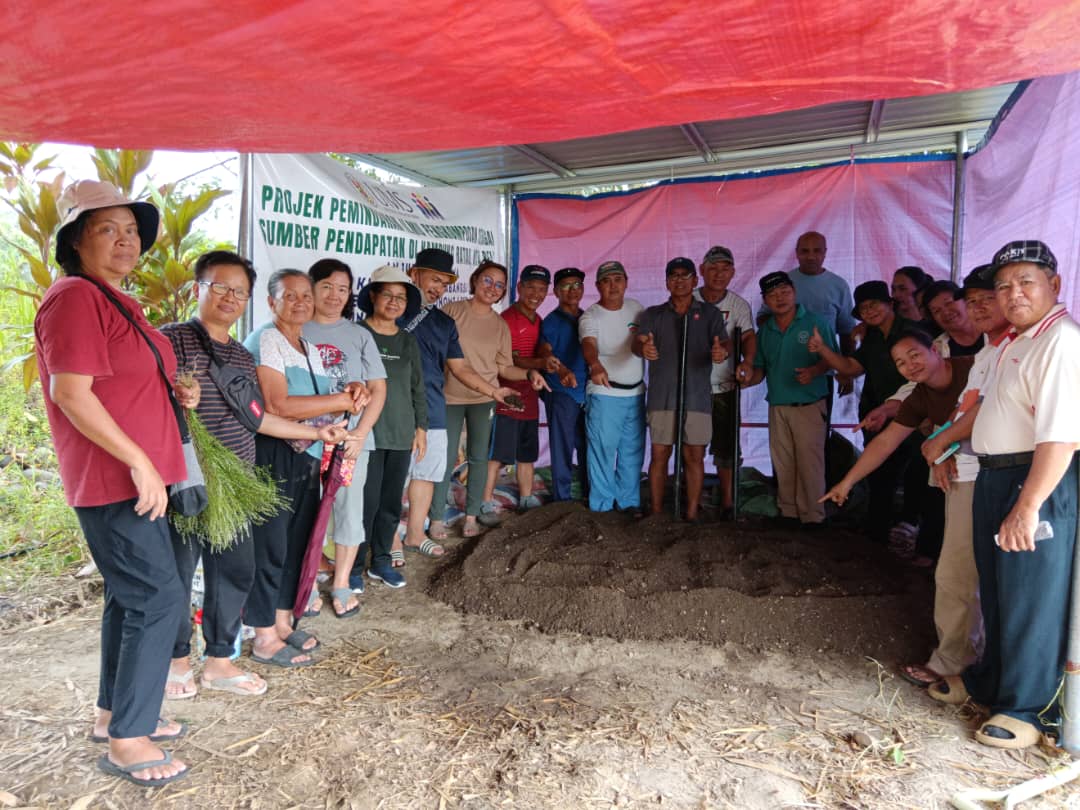
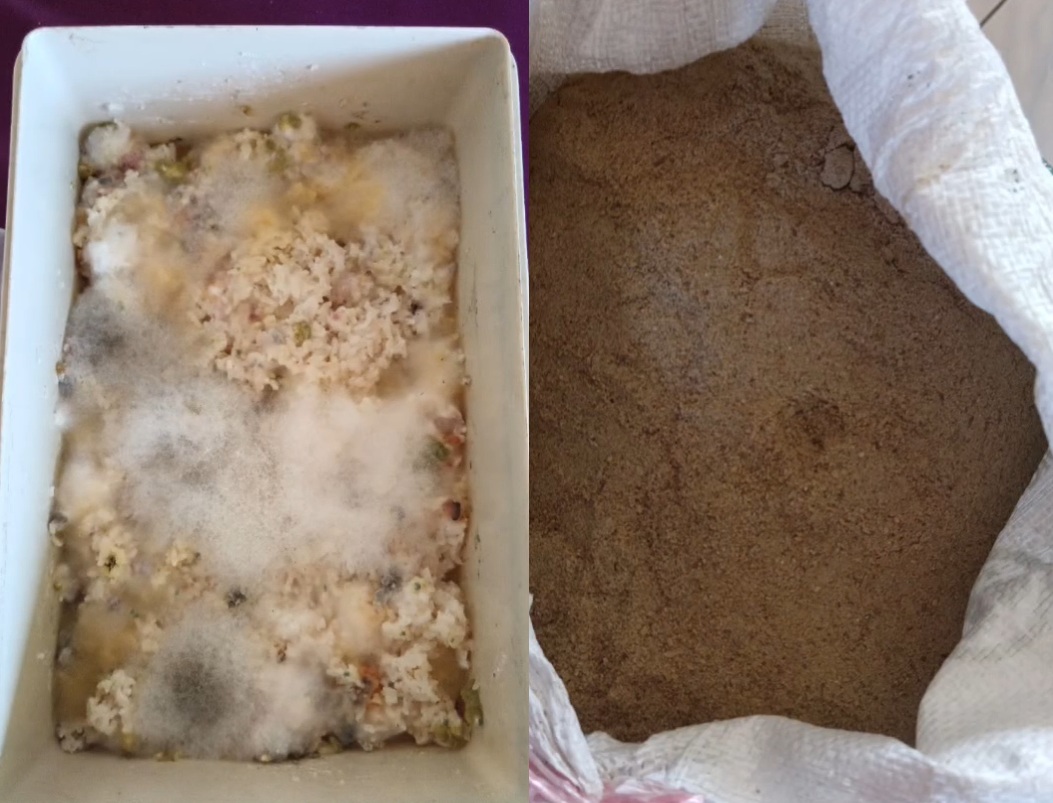
Composting for Circular Agriculture
-
Turning Waste into Worth.
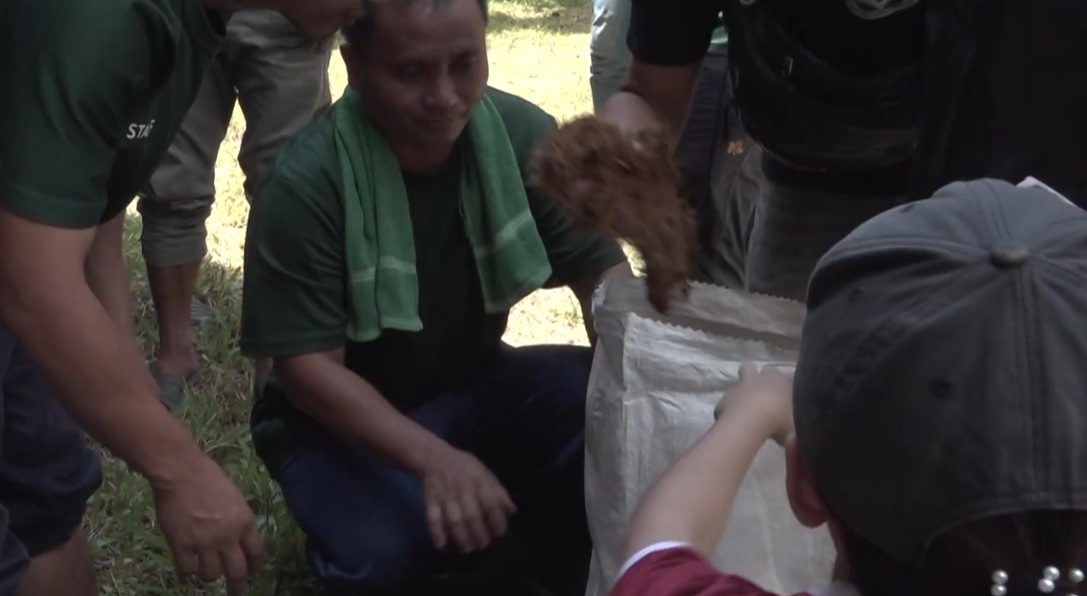
The Composting Knowledge-Transfer Project in Kg. Ratau, Kota Belud, empowers local farmers and families to transform their everyday organic waste into a valuable resource — nutrient-rich natural fertilizer. Led by Universiti Malaysia Sabah (UMS) through the Pusat Kelestarian Libatsama Masyarakat (PKLM), the project teaches participants practical composting methods using household and agricultural residues such as food scraps, leaves, and crop waste. This initiative not only reduces the community’s dependence on chemical fertilizers but also helps to restore soil health, improve productivity, and encourage more sustainable farming systems rooted in circular economy principles.
Beyond its technical outcomes, the project cultivates a mindset of environmental stewardship and shared responsibility. Each compost bin becomes a classroom of change — where villagers learn that even waste holds potential when guided by knowledge and care. The process symbolizes regeneration and resilience: turning what was once discarded into new growth, bridging scarcity with innovation, and nurturing a zero-waste culture that supports climate-smart agriculture. The Kg. Ratau community now stands as an inspiring example of how small rural actions can ripple into a larger movement for sustainability and ecological balance.
-
Community
Kg. Ratau, Kota Belud
-
+
Google Map
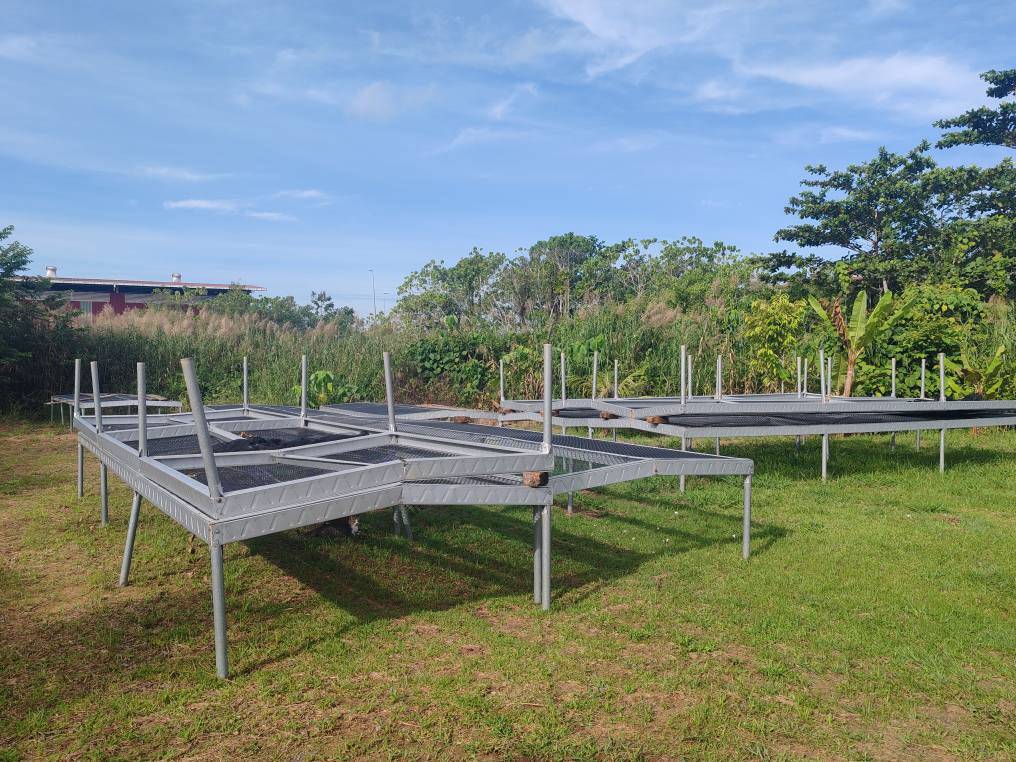
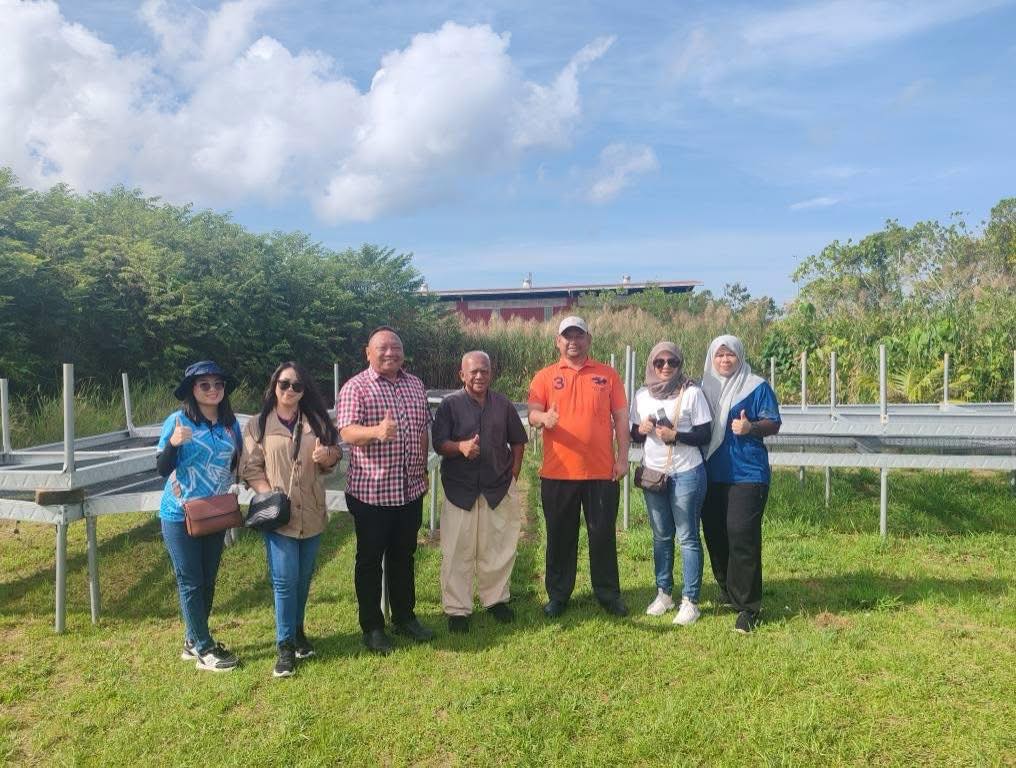
Bagang Bilis & Aquatic Entrepreneurship
-
Sustaining Seas, Empowering Shores.
The Bagang Anchovy Fishing and Processing Project in Kg. Rancha-Rancha Darat, Labuan, stands as a shining example of how traditional livelihoods can evolve through innovation and knowledge transfer. Led by Assoc. Prof. Dr. Geoffrey Harvey Tanakinjal with project members Liew Anak Lubang, Abdul Kamal Bin Char, and Joehan Johan William, this initiative empowers the local fishing community under the guidance of Pusat Kelestarian Libatsama Masyarakat (PKLM UMS).
Through the Knowledge Transfer Programme (KTP), fishers were trained in modern bagang fishing techniques, anchovy (bilis) processing, and product value enhancement. The project introduced significant innovations, including a pulley-based lifting system and modern drying platforms that ensure cleaner, faster, and more hygienic processing. These improvements safeguard products from contamination by dust, insects, and animals while increasing efficiency and product quality. The fishers now market both fresh anchovies (RM5/kg) and dried anchovies (RM20/kg), generating an average gross income of RM15,000 per month, with net earnings of RM7,000, despite operating only during the fishing season.
Beyond economic success, the project revives coastal traditions while embracing sustainability — balancing productivity with respect for the sea. It has elevated the livelihoods of Kampung Rancha-Rancha Darat’s fishing families, strengthened community unity, and demonstrated how innovation and local wisdom can coexist harmoniously. The initiative is a true reflection of UMS’s mission to nurture sustainable, inclusive, and ocean-conscious communities.
-
Community
Kg. Rancha-Rancha Darat, Labuan
-
+
Google Map
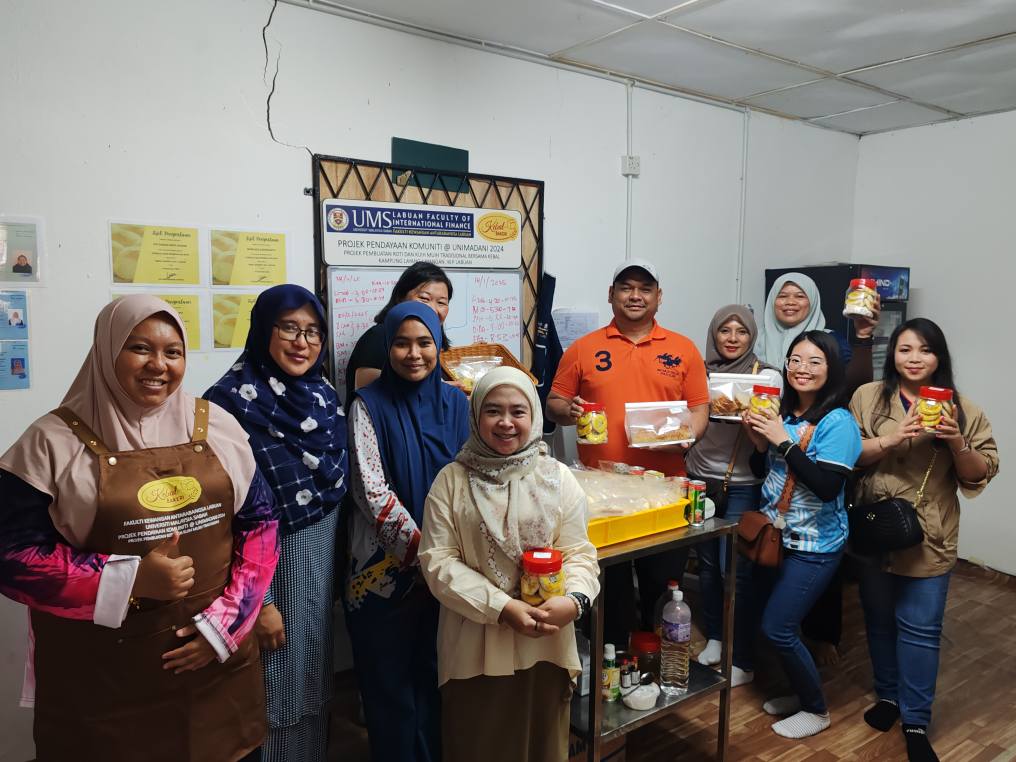
Traditional Bread and Local Pastries Entrepreneurship Project
-
From Local Taste to Lasting Prosperity.
The Traditional Bread and Local Pastries Entrepreneurship Project in Labuan exemplifies how local creativity, innovation, and community spirit can drive sustainable economic growth. Spearheaded by Dr. Suzilah binti Sidek together with Dr. Sharinah binti Puasa, Dr. Emily Yapp Hon Tshin, and Dr. Nazarina Jamil, this project was implemented under the Program Pendayaan Komuniti @ UniMADANI 2024, funded by the Ministry of Finance Malaysia and coordinated by the Pusat Kelestarian Libatsama Masyarakat (UMS).
Working with the Kelab Belia Anak Layangan (KEBAL) community, fifteen active participants received hands-on training in the art and business of traditional pastry-making. The project introduced healthier and innovative products such as sourdough, tausa piang, pandan buns, and buttermilk buns, achieving an impressive average monthly revenue of RM1,900. Particularly, the sourdough bread, one of only two of its kind produced in Labuan, has become a community favourite due to its low production cost, higher market value, and nutritional benefits.
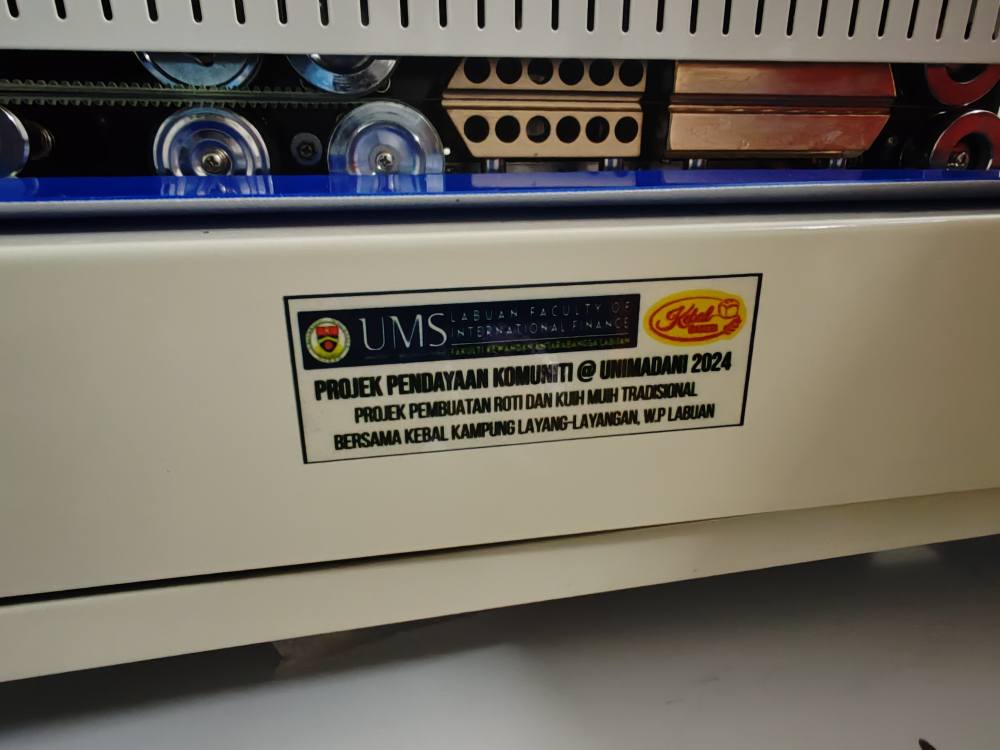
Beyond baking, the project integrates technology and innovation by introducing automated labelling and packaging machines, enhancing both efficiency and product quality. With expanding sales reaching even Peninsular Malaysia, orders now average 300 units per batch, up to twice a week. Participants have also diversified income streams through baking courses and ingredient sales, turning their passion into a sustainable micro-enterprise model.
This initiative not only boosts income but also builds confidence, skills, and identity among the Labuan youth and families involved — a clear testament to the power of knowledge transfer in shaping resilient and self-sustaining communities.
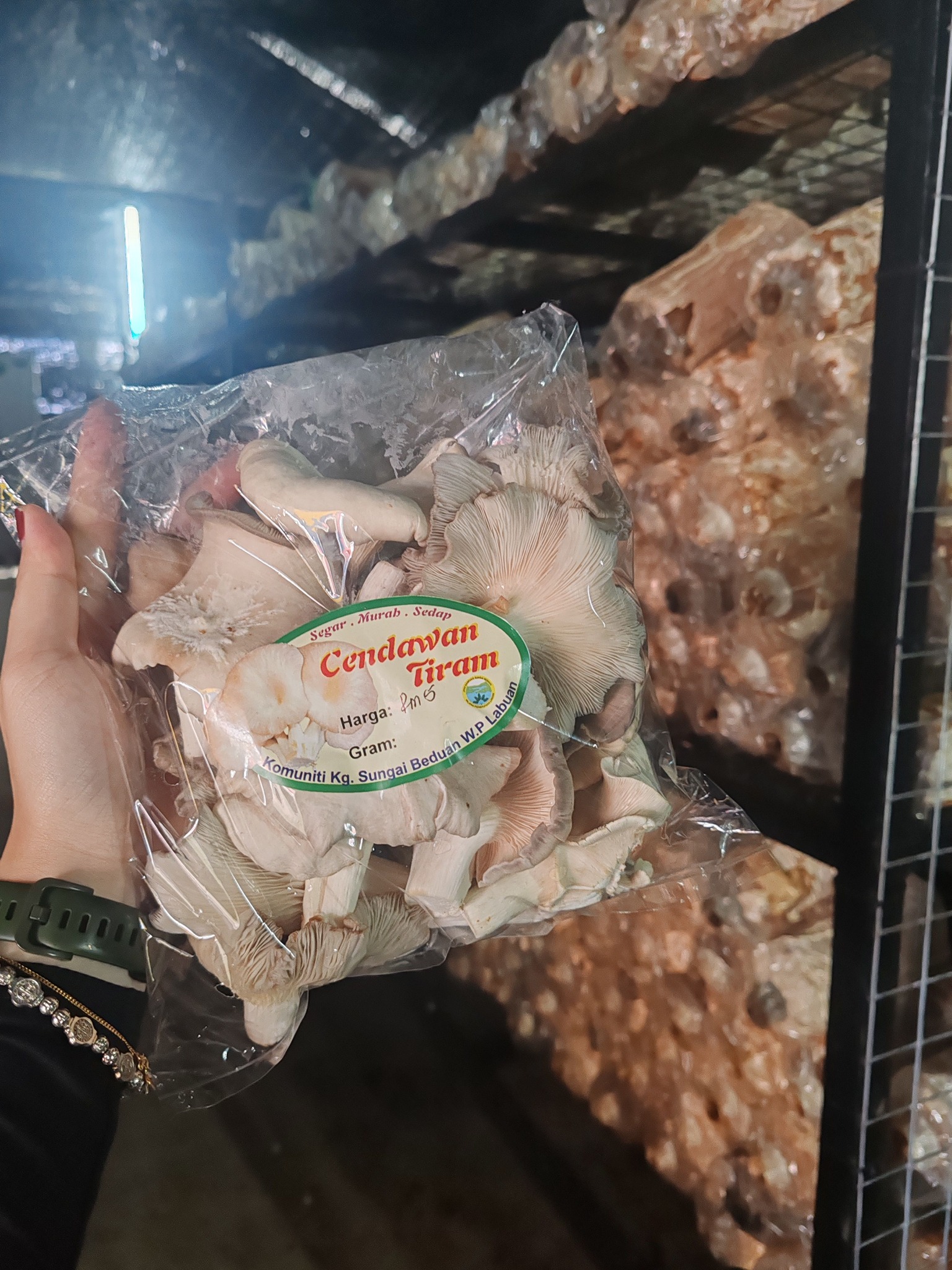
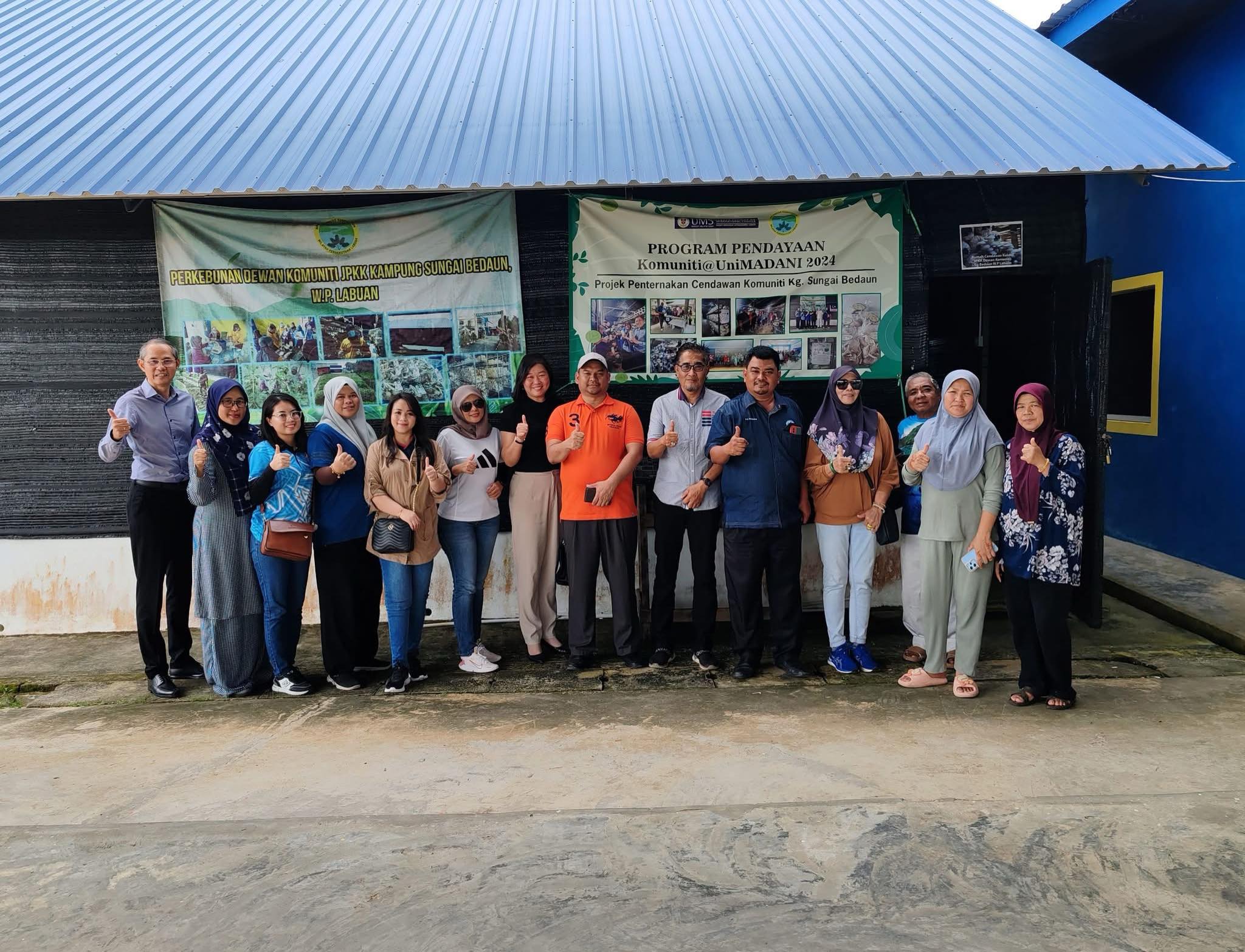
Mushroom Cultivation Project
-
Cultivating Growth, Harvesting Hope.
The Mushroom Cultivation Project in Kg. Sungai Bedaun, Labuan, exemplifies how knowledge transfer can transform small communities into sustainable, income-generating ecosystems. Implemented under the Program Pendayaan Komuniti @ UniMADANI 2024, funded by the Ministry of Finance Malaysia, and led by Dr. Emily Yapp Hon Tshin from the Faculty of International Finance Labuan (FKAL) alongside Dr. Nazarina Jamil, Dr. Sharinah Puasa, and Assoc. Prof. Lee Hock Ann, this initiative brought together innovation, community participation, and environmental awareness.
The project introduced modern mushroom farming techniques using 1,500 cultivation blocks integrated with automatic irrigation systems, block-stacking methods for efficient space use, and lime-layered caps to simplify operations compared to traditional methods. Infrastructure upgrades — including water tanks, chillers, pumps, and packaging equipment — helped maintain product quality and streamline operations. In just three months, the project produced 150 kg of fresh mushrooms, generating RM3,000 in revenue per season, with two harvests expected annually.
Beyond the numbers, the project’s heart lies in empowering 15 community members with practical agricultural and marketing skills. The combination of attractive packaging and digital promotion has expanded the market reach and improved local demand. By blending modern agrotechnology with community entrepreneurship, the initiative not only enhanced local income but also built a foundation for resilient, climate-smart rural economies that can thrive sustainably across generations.
-
Community
Kg. Sungai Bedaun, Labuan
-
+
Google Map
Sustainable Poultry Farming
-
Nurturing Livelihoods, Sustaining Growth.
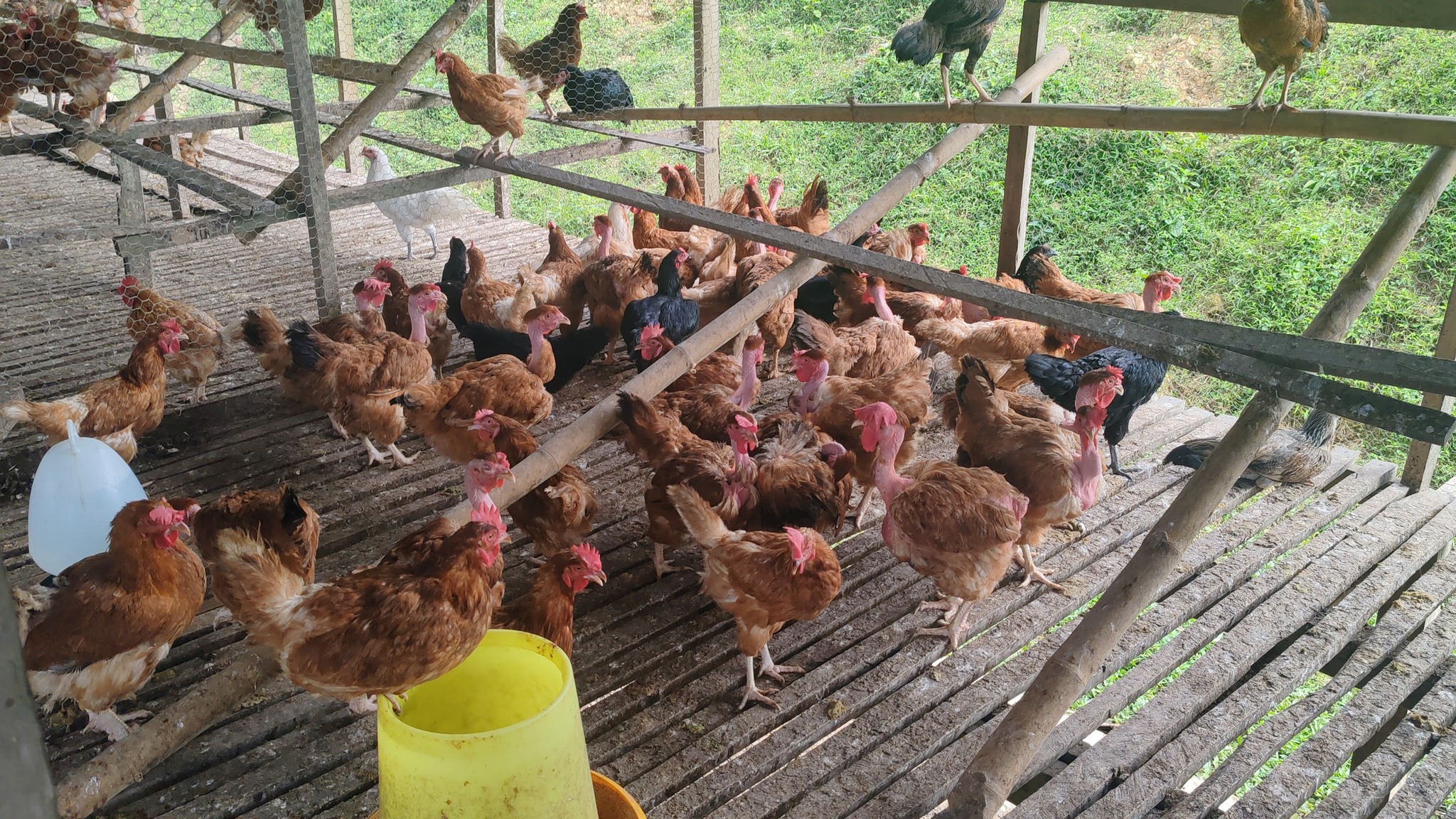
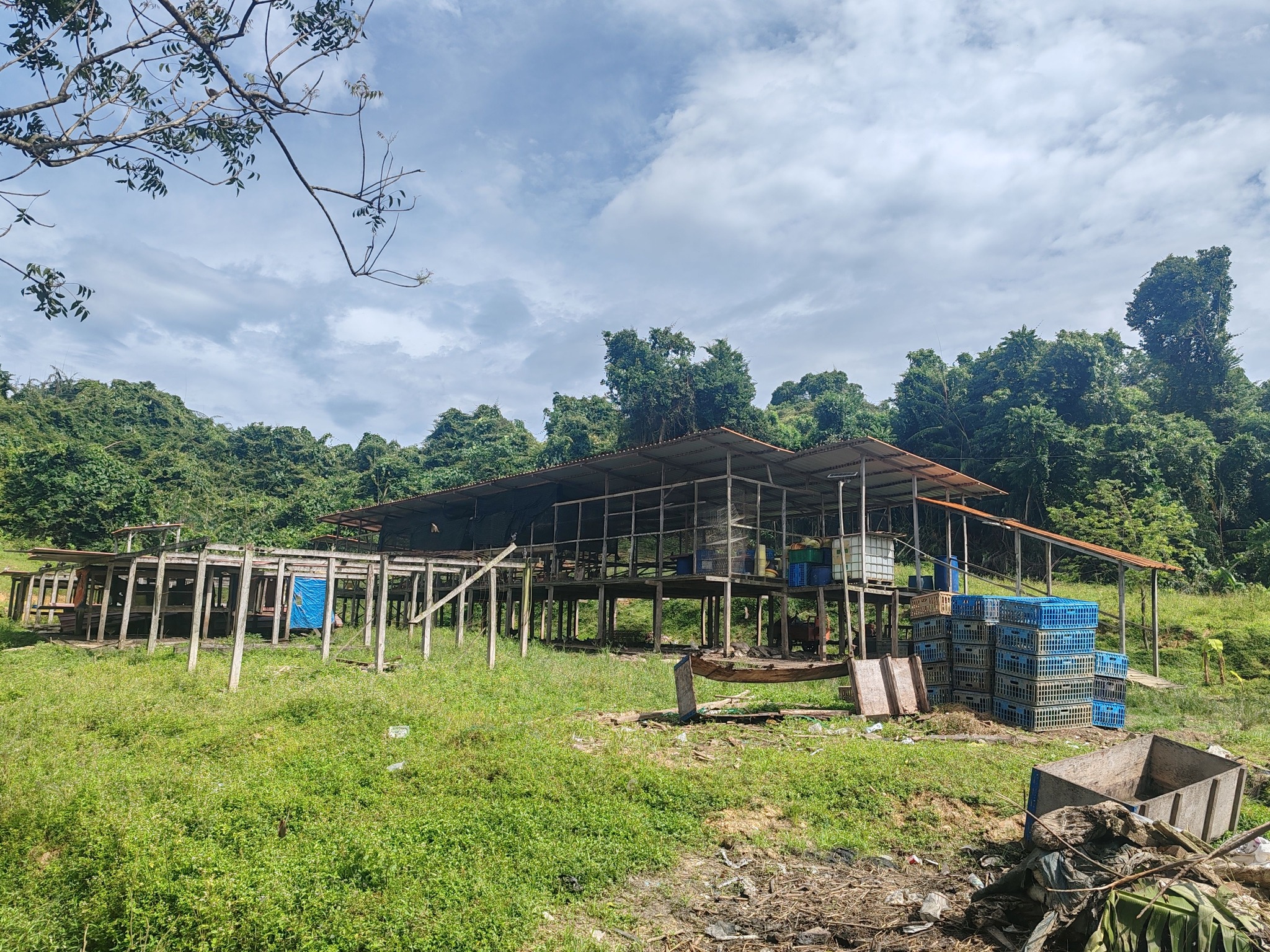
The Layer Chicken Farming Knowledge-Transfer Project in Kg. Bukit Kuda, Labuan, demonstrates how collaboration between academia and local communities can foster sustainable rural entrepreneurship. Implemented by the Faculty of International Finance Labuan (FKAL) under the Pusat Kelestarian Libatsama Masyarakat (PKLM UMS), and funded by the Program Pendayaan Uni@MADANI 2024 from the Ministry of Finance Malaysia, this RM10,000 initiative has successfully empowered 20 active participants from the Northern Labuan Farmers’ Association to strengthen their economic resilience through sustainable poultry farming.
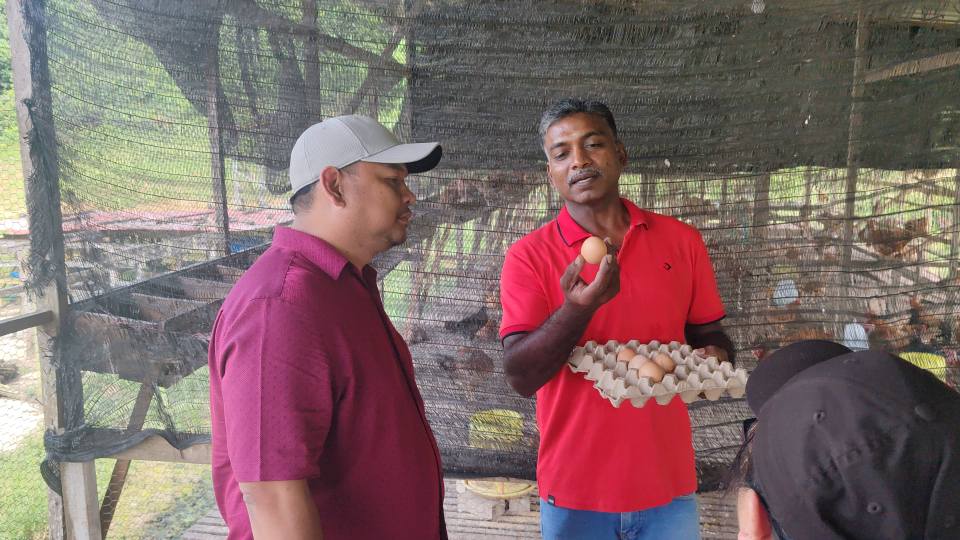
Led by Dr. Ooi Ai Yee (FKAL) with En. Sittha as the community leader, the project has expanded its flock from 100 to 130 chickens, producing 90–120 eggs daily. Innovation lies at the heart of its success — participants have formulated nutritious, low-cost chicken feed from local ingredients and adopted organic waste recycling by turning chicken manure into fertilizer for multi-livestock farms involving goats, cattle, deer, and quail. These efforts have reduced production costs while promoting zero-waste agricultural practices and integrated farm management.
Supported by Assoc. Prof. Dr. Geoffrey Harvey Tanakinjal, Dr. Siti Nur Aqilah Ab Wahab, and Minah Anak Japang, the project team provided expertise in microfinance management, vaccination programs, and training module development. Strategic collaboration with the Department of Veterinary Services Labuan and Sabah Prisons Department further enhanced animal health, logistics, and technical support. During the monitoring visit by Ts. Dr. Ag Sufiyan Abd Hamid, Director of PKLM, on 24 February 2025, the initiative was praised as a model of effective university–community collaboration, blending academic knowledge with grassroots innovation.
With plans to expand its chicken coops and digitalize its financial management, the project continues to evolve as a beacon of sustainable social enterprise, proving that when knowledge meets community, prosperity grows from the ground up.
-
Community
Kg. Bukit Kuda, Labuan
-
+
Google Map
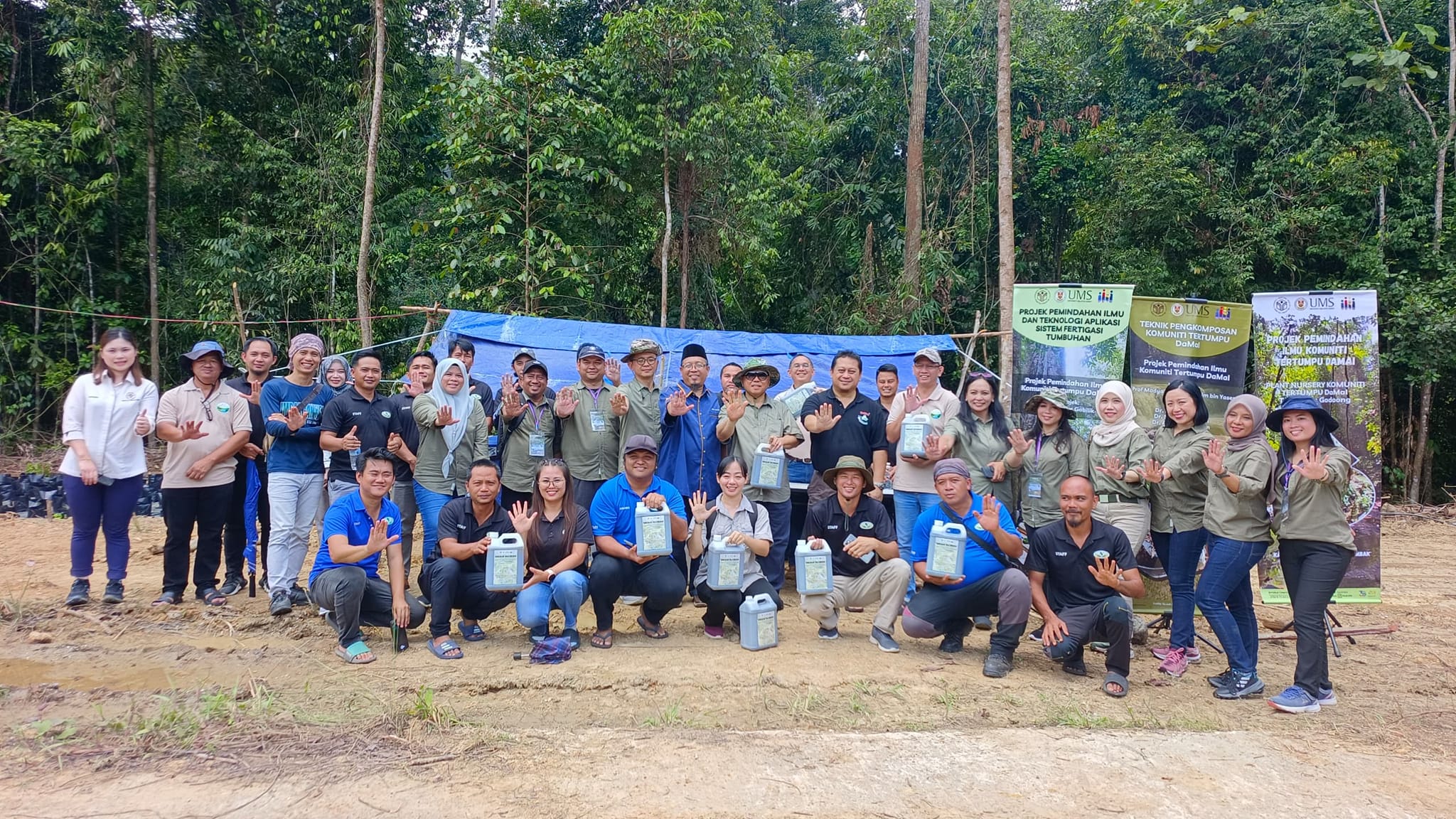
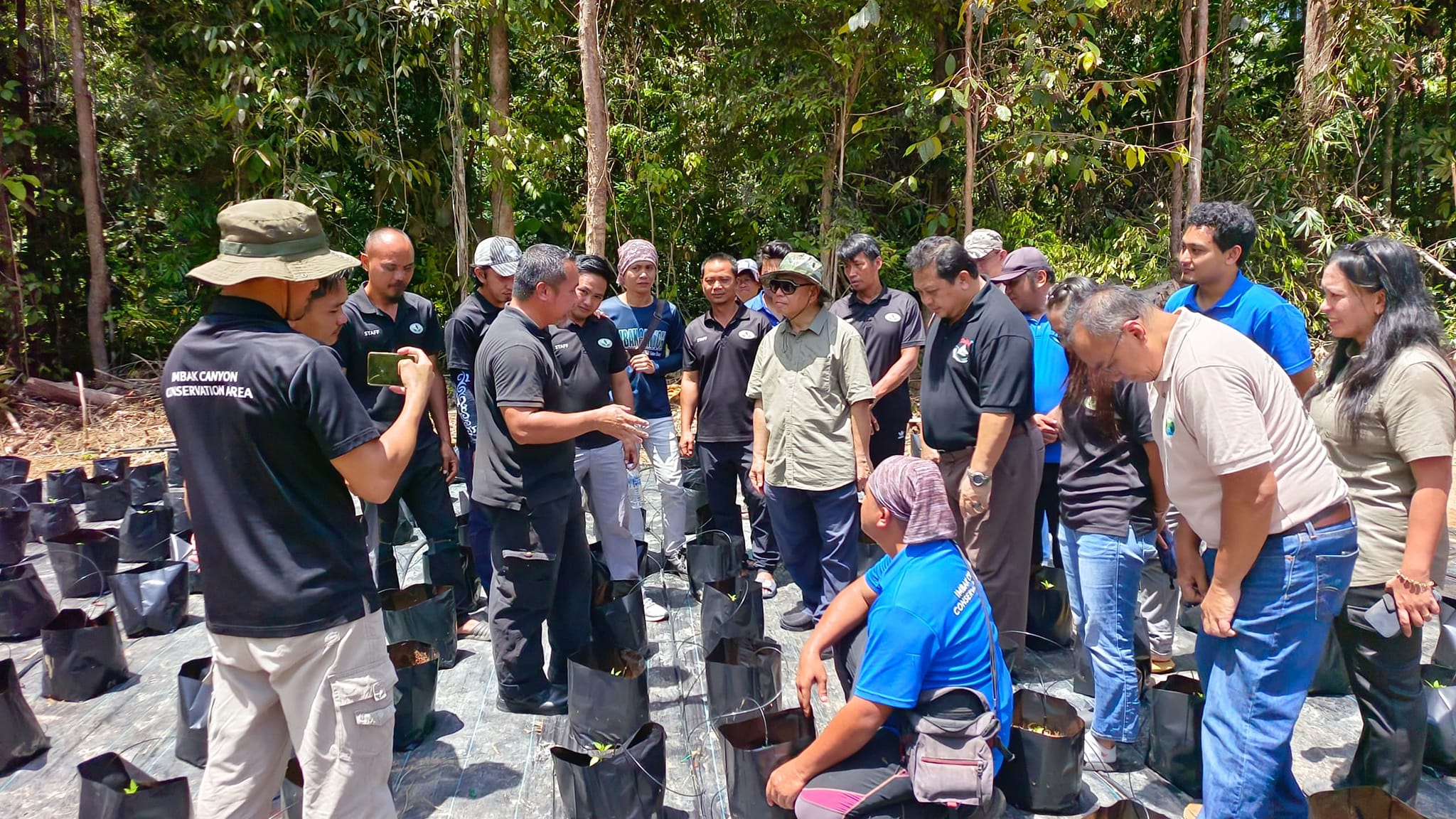
Community Knowledge-Transfer Project at Imbak Canyon Conservation Centre
-
From Roots to Resilience.
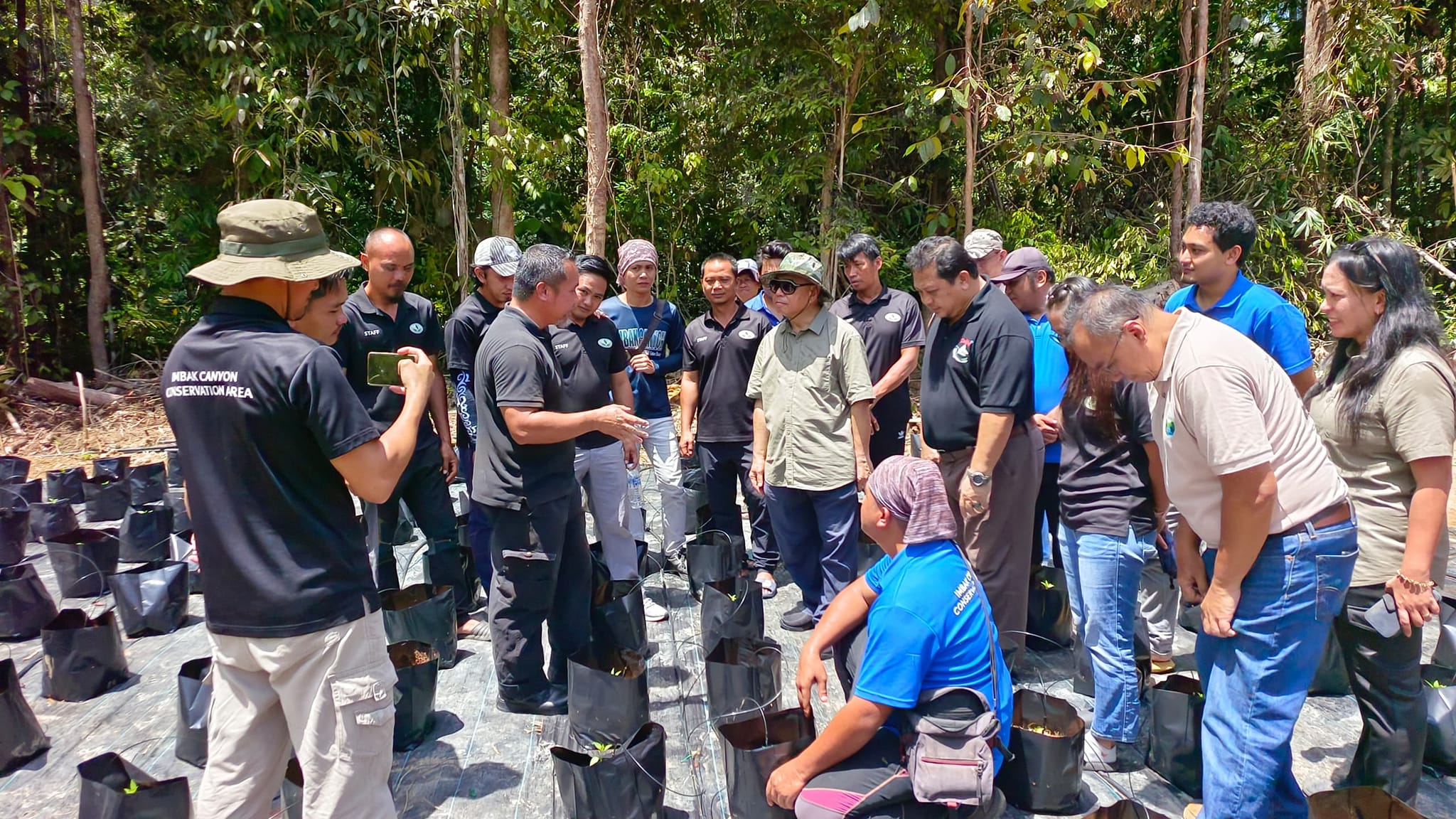
The Community Knowledge-Transfer Project at Imbak Canyon Conservation Centre reflects Universiti Malaysia Sabah’s enduring commitment to advancing sustainability through education, conservation, and community empowerment. Organized by the Pusat Kelestarian Libatsama Masyarakat (PKLM UMS), this annual programme unites researchers, conservationists, and the Yayasan Sabah community within the DaMaI (Danum–Maliau–Imbak) Triangle — one of Malaysia’s most biodiverse conservation landscapes.
Through immersive, hands-on activities, participants engage in the exchange of indigenous knowledge, scientific expertise, and practical sustainability practices. Among the key initiatives are organic fertilizer production, pepper cultivation technology, and forest-based biodiversity awareness modules, all aimed at supporting sustainable livelihoods and responsible resource management. Beyond training, the experience deepens appreciation for nature’s interconnectedness — from observing flying squirrels and rare birds to learning about medicinal plants and ecological balance.
This collaboration stands as a living model of how universities can bridge academia with the heart of nature — empowering conservation workers and local communities alike to become guardians of Sabah’s natural heritage. It is a journey of shared learning, mutual respect, and hope for a sustainable tomorrow where knowledge nurtures both people and the planet.
-
Community
Imbak Canyon Conservation Centre
-
+
Google Map
U4S (Zon Borneo) – Kg. Marakau Bombon, Ranau: Community Knowledge & Sustainable Growth
-
From Roots to Resilience.
Nestled in the highlands of Ranau, Kg. Marakau Bombon has been chosen as a model site under the University for Society (U4S) Programme by Universiti Malaysia Sabah (UMS) and the Pusat Kelestarian Libatsama Masyarakat (PKLM). Through this initiative, local families, youth and community leaders engage in tailored knowledge-transfer projects ranging from eco-tourism development and agro-entrepreneurship to digital-marketing of local products and value-added handicrafts. With expert guidance and community participation, the village is transforming into a living classroom for sustainable development — where tradition and innovation walk hand-in-hand.
By leveraging the U4S platform, Kg. Marakau Bombon has opened new pathways for income, environmental stewardship and inter-generational knowledge-sharing. Its success underscores how targeted community empowerment, grounded in respect for culture and ecology, can bring meaningful, lasting change — helping villagers build resilient livelihoods, revive local heritage and contribute to Sabah’s sustainable future.
-
Community
Kg. Marakau Bombon
-
+
Google Map
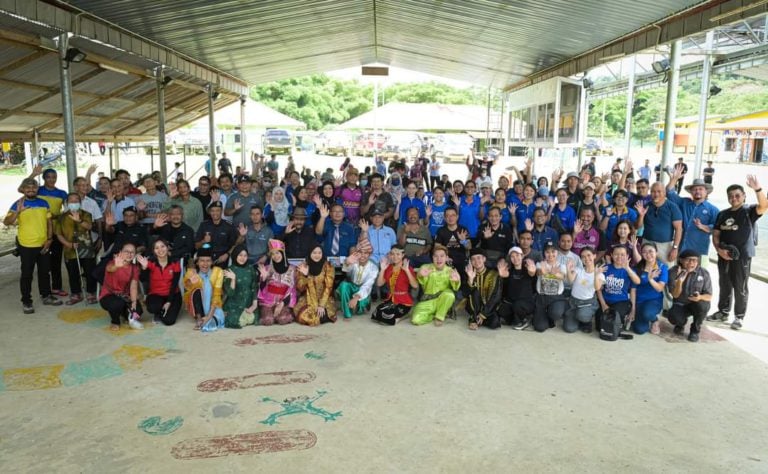
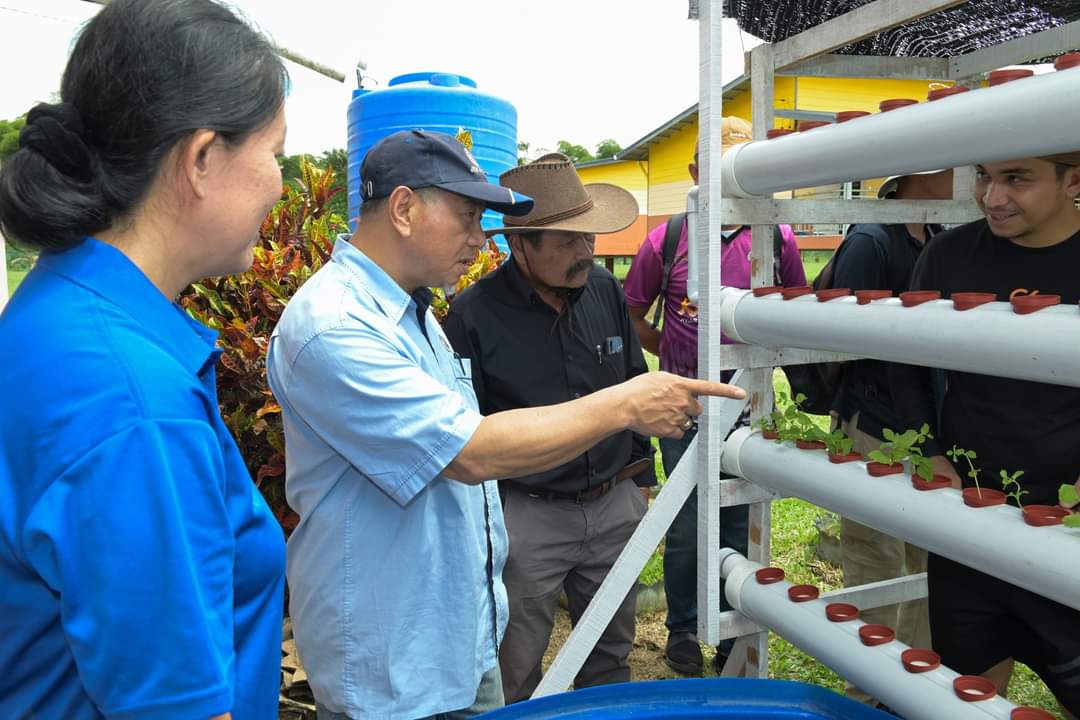
Trans Borneo 2023 Knowledge Transfer Program
-
Cultivating Growth, Harvesting Hope.
Under the Ministry of Higher Education’s Knowledge Transfer Initiative (KRIS), Universiti Malaysia Sabah (UMS) spearheaded ten multidisciplinary community projects in Kampung Long Pasia, Sipitang—a remote highland village located near the Sabah–Sarawak border. The programme mobilised over 90 UMS academics, researchers, and students, working directly with more than 200 local residents across sectors such as health education, aquaculture, smart solar e-Desa systems, ICT literacy, composting, and biodiversity conservation.
By integrating scientific expertise with local wisdom, the initiative enhanced livelihood opportunities through sustainable fish-farming, organic fertiliser production, and eco-tourism potential, while also improving access to clean energy and digital communication. Environmental awareness campaigns and health outreach activities strengthened community wellbeing and self-reliance, especially among women and youth.
Through this holistic approach, the Long Pasia community gained both economic resilience and ecological literacy, reducing dependency on external aid and vulnerability to socio-economic and environmental shocks. The project exemplifies UMS’s model of community-based sustainability, where education and technology become enablers for rural transformation
-
Community
Kampung Long Pasia,Sipitang
-
+
Google Map
Smart Hydroponics for Sustainable Agriculture (BAKAT Programme)
-
Greener Growth, Smarter Harvests.
The Smart Hydroponics Community Project stands as a model of innovation, partnership, and sustainable empowerment in action. Officially launched and inaugurated during the Program Ekonomi MADANI visit by YB Dato’ Seri Haji Mohamed Khaled bin Nordin, Minister of Defence, at the Rumah Keluarga Angkatan Tentera (RKAT), Markas Wilayah Laut 2 (MAWILLA 2), Sandakan, the project reflects a new chapter of collaboration between Universiti Malaysia Sabah (UMS) and the Ministry of Defence. Coordinated by the Pusat Kelestarian Libatsama Masyarakat (PKLM) and led by Assoc. Prof. Dr. Abd. Aziz bin Rekan, the project is implemented through the Faculty of Sustainable Agriculture (UMS Sandakan Campus) under the guidance of Dr. Siti Suliza binti Salamat, who heads the Smart Hydroponics initiative. This transformative effort introduces BAKAT members and local youth to hydroponic farming systems that save water, space, and energy — equipping them with modern, climate-smart agricultural skills that generate income and reduce food dependency. More than a technology transfer, the project nurtures self-reliance, confidence, and unity among the Badan Kebajikan Keluarga Angkatan Tentera (BAKAT), MAWILLA 2 community. Each hydroponic harvest symbolizes a step toward food security, sustainable living, and inter-agency collaboration that embodies the nation’s Ekonomi MADANI vision — people-centered, innovative, and future-ready.
Komuniti Tertumpu Bombon, Kg. Marakau Ranau – DaMaI Initiative
-
From Nature to Nurture.
Nestled in the cool highlands of Ranau, the DaMaI (Dana Amanah Malaysia Madani) Initiative empowers villagers of Kg. Marakau Bombon to transform their environment into a living classroom for sustainability. Through eco-tourism, agro-based entrepreneurship, and community cooperatives, the project weaves livelihoods with stewardship of nature. Here, every seed planted, every trail preserved, and every visitor welcomed contributes to both income resilience and biodiversity conservation, ensuring that progress never comes at the expense of the environment.
-
Community
Bombon, Kg. Marakau Ranau - + Google Map
Kelulut Honey Entrepreneurship for Green Income (BAKAT Programme)
-
Sweet Sustainability, Shared Prosperity.
Amid Sabah’s rich tropical landscape, the Kelulut Honey Entrepreneurship Project under the Program Ekonomi MADANI turns nature’s smallest workers into agents of sustainability and empowerment. Coordinated by the Pusat Kelestarian Libatsama Masyarakat (PKLM) in collaboration with Universiti Malaysia Sabah (UMS), the initiative equips Badan Kebajikan Keluarga Angkatan Tentera (BAKAT) members, women, and youth with the knowledge and skills to cultivate kelulut (stingless bee) colonies, harvest pure honey, and develop value-added eco-products such as soaps, balms, and health supplements. Guided by experts from UMS’s Faculty of Sustainable Agriculture (UMS Sandakan Campus), the project integrates entrepreneurship with ecological stewardship — encouraging communities to protect pollinators that are vital for biodiversity and food systems. Beyond economic gains, participants develop an appreciation for the delicate harmony between human livelihood and the natural environment, forming the heart of a growing green micro-economy. The Kelulut Project represents more than income generation — it’s a symbol of resilience, creativity, and care for the planet. Every drop of honey produced tells a story of community empowerment, environmental awareness, and the sustainable spirit of Sabah’s people.
Smart Carbon-Free Hydroponics Project (BAKAT Programme)
-
Empowering Communities, Growing Futures.
The Smart Carbon-Free Hydroponics Project, an innovative entrepreneurship initiative under the Program Ekonomi MADANI, was developed through collaboration between the Badan Kebajikan Keluarga Angkatan Tentera (BAKAT) and Universiti Malaysia Sabah (UMS) via the Knowledge Transfer Programme (KTP). This project empowers communities to embrace modern, sustainable agriculture by introducing automated hydroponic systems that use minimal water, land, and energy. Through comprehensive hands-on training led by experts from UMS’s Faculty of Sustainable Agriculture, participants gain technical knowledge, business acumen, and environmental awareness — transforming small urban spaces into productive, eco-friendly gardens. Beyond cultivating crops, the initiative cultivates confidence, innovation, and resilience among families and youth. It enhances household food security, creates opportunities for supplementary income, and fosters a culture of sustainability and self-reliance within the armed forces community. As a model of inclusive progress, the project embodies the MADANI values of care, partnership, and shared prosperity — proving that when knowledge is transferred with purpose, communities thrive together.
Fertigation, Mushroom Cultivation & Solar Energy Integration
-
Smart Skills, Sustainable Futures.
The Fertigation, Mushroom Cultivation & Solar Energy Integration Project is one of Universiti Malaysia Sabah’s most comprehensive community knowledge-transfer initiatives — designed to empower rural communities through a combination of agricultural innovation, renewable energy, and food entrepreneurship. Spearheaded by the Pusat Kelestarian Libatsama Masyarakat (PKLM UMS), this project equips participants with practical, future-ready skills that link sustainability with self-sufficiency. Through hands-on training, villagers and youth learn how to apply fertigation technology — a smart irrigation system that delivers water and nutrients directly to crops, reducing waste and improving yields. Alongside this, participants gain expertise in mushroom cultivation using eco-friendly methods that recycle organic materials such as sawdust or paddy husks, turning agricultural by-products into profitable resources. Complementing these efforts, the project also introduces solar-energy installation workshops, helping communities reduce dependence on non-renewable electricity while lowering operational costs for small enterprises. Beyond farming and energy, the initiative encourages local food innovation, guiding participants to create value-added products such as yellow noodles and pizza talam using locally sourced ingredients. These activities promote food security, circular economy principles, and low-carbon lifestyles, while strengthening community entrepreneurship. At its heart, the project represents UMS’s belief that sustainability begins with skill — that by empowering people with knowledge, innovation, and green technology, we build communities that can grow, adapt, and sustain themselves for generations.
-
Community
SK Keguraan, Kota Belud - + Google Map
Composting for Circular Agriculture
-
Turning Waste into Worth.
The Composting Knowledge-Transfer Project in Kg. Ratau, Kota Belud, empowers local farmers and families to transform their everyday organic waste into a valuable resource — nutrient-rich natural fertilizer. Led by Universiti Malaysia Sabah (UMS) through the Pusat Kelestarian Libatsama Masyarakat (PKLM), the project teaches participants practical composting methods using household and agricultural residues such as food scraps, leaves, and crop waste. This initiative not only reduces the community’s dependence on chemical fertilizers but also helps to restore soil health, improve productivity, and encourage more sustainable farming systems rooted in circular economy principles. Beyond its technical outcomes, the project cultivates a mindset of environmental stewardship and shared responsibility. Each compost bin becomes a classroom of change — where villagers learn that even waste holds potential when guided by knowledge and care. The process symbolizes regeneration and resilience: turning what was once discarded into new growth, bridging scarcity with innovation, and nurturing a zero-waste culture that supports climate-smart agriculture. The Kg. Ratau community now stands as an inspiring example of how small rural actions can ripple into a larger movement for sustainability and ecological balance.
-
Community
Kg. Ratau, Kota Belud - + Google Map
Bagang Bilis & Aquatic Entrepreneurship
-
Sustaining Seas, Empowering Shores.
The Bagang Anchovy Fishing and Processing Project in Kg. Rancha-Rancha Darat, Labuan, stands as a shining example of how traditional livelihoods can evolve through innovation and knowledge transfer. Led by Assoc. Prof. Dr. Geoffrey Harvey Tanakinjal with project members Liew Anak Lubang, Abdul Kamal Bin Char, and Joehan Johan William, this initiative empowers the local fishing community under the guidance of Pusat Kelestarian Libatsama Masyarakat (PKLM UMS). Through the Knowledge Transfer Programme (KTP), fishers were trained in modern bagang fishing techniques, anchovy (bilis) processing, and product value enhancement. The project introduced significant innovations, including a pulley-based lifting system and modern drying platforms that ensure cleaner, faster, and more hygienic processing. These improvements safeguard products from contamination by dust, insects, and animals while increasing efficiency and product quality. The fishers now market both fresh anchovies (RM5/kg) and dried anchovies (RM20/kg), generating an average gross income of RM15,000 per month, with net earnings of RM7,000, despite operating only during the fishing season. Beyond economic success, the project revives coastal traditions while embracing sustainability — balancing productivity with respect for the sea. It has elevated the livelihoods of Kampung Rancha-Rancha Darat’s fishing families, strengthened community unity, and demonstrated how innovation and local wisdom can coexist harmoniously. The initiative is a true reflection of UMS’s mission to nurture sustainable, inclusive, and ocean-conscious communities.
-
Community
Kg. Rancha-Rancha Darat, Labuan - + Google Map
Traditional Bread and Local Pastries Entrepreneurship Project
-
From Local Taste to Lasting Prosperity.
The Traditional Bread and Local Pastries Entrepreneurship Project in Labuan exemplifies how local creativity, innovation, and community spirit can drive sustainable economic growth. Spearheaded by Dr. Suzilah binti Sidek together with Dr. Sharinah binti Puasa, Dr. Emily Yapp Hon Tshin, and Dr. Nazarina Jamil, this project was implemented under the Program Pendayaan Komuniti @ UniMADANI 2024, funded by the Ministry of Finance Malaysia and coordinated by the Pusat Kelestarian Libatsama Masyarakat (UMS). Working with the Kelab Belia Anak Layangan (KEBAL) community, fifteen active participants received hands-on training in the art and business of traditional pastry-making. The project introduced healthier and innovative products such as sourdough, tausa piang, pandan buns, and buttermilk buns, achieving an impressive average monthly revenue of RM1,900. Particularly, the sourdough bread, one of only two of its kind produced in Labuan, has become a community favourite due to its low production cost, higher market value, and nutritional benefits. Beyond baking, the project integrates technology and innovation by introducing automated labelling and packaging machines, enhancing both efficiency and product quality. With expanding sales reaching even Peninsular Malaysia, orders now average 300 units per batch, up to twice a week. Participants have also diversified income streams through baking courses and ingredient sales, turning their passion into a sustainable micro-enterprise model. This initiative not only boosts income but also builds confidence, skills, and identity among the Labuan youth and families involved — a clear testament to the power of knowledge transfer in shaping resilient and self-sustaining communities.
Mushroom Cultivation Project
-
Cultivating Growth, Harvesting Hope.
The Mushroom Cultivation Project in Kg. Sungai Bedaun, Labuan, exemplifies how knowledge transfer can transform small communities into sustainable, income-generating ecosystems. Implemented under the Program Pendayaan Komuniti @ UniMADANI 2024, funded by the Ministry of Finance Malaysia, and led by Dr. Emily Yapp Hon Tshin from the Faculty of International Finance Labuan (FKAL) alongside Dr. Nazarina Jamil, Dr. Sharinah Puasa, and Assoc. Prof. Lee Hock Ann, this initiative brought together innovation, community participation, and environmental awareness. The project introduced modern mushroom farming techniques using 1,500 cultivation blocks integrated with automatic irrigation systems, block-stacking methods for efficient space use, and lime-layered caps to simplify operations compared to traditional methods. Infrastructure upgrades — including water tanks, chillers, pumps, and packaging equipment — helped maintain product quality and streamline operations. In just three months, the project produced 150 kg of fresh mushrooms, generating RM3,000 in revenue per season, with two harvests expected annually. Beyond the numbers, the project’s heart lies in empowering 15 community members with practical agricultural and marketing skills. The combination of attractive packaging and digital promotion has expanded the market reach and improved local demand. By blending modern agrotechnology with community entrepreneurship, the initiative not only enhanced local income but also built a foundation for resilient, climate-smart rural economies that can thrive sustainably across generations.
-
Community
Kg. Sungai Bedaun, Labuan - + Google Map
Sustainable Poultry Farming
-
Nurturing Livelihoods, Sustaining Growth.
The Layer Chicken Farming Knowledge-Transfer Project in Kg. Bukit Kuda, Labuan, demonstrates how collaboration between academia and local communities can foster sustainable rural entrepreneurship. Implemented by the Faculty of International Finance Labuan (FKAL) under the Pusat Kelestarian Libatsama Masyarakat (PKLM UMS), and funded by the Program Pendayaan Uni@MADANI 2024 from the Ministry of Finance Malaysia, this RM10,000 initiative has successfully empowered 20 active participants from the Northern Labuan Farmers’ Association to strengthen their economic resilience through sustainable poultry farming. Led by Dr. Ooi Ai Yee (FKAL) with En. Sittha as the community leader, the project has expanded its flock from 100 to 130 chickens, producing 90–120 eggs daily. Innovation lies at the heart of its success — participants have formulated nutritious, low-cost chicken feed from local ingredients and adopted organic waste recycling by turning chicken manure into fertilizer for multi-livestock farms involving goats, cattle, deer, and quail. These efforts have reduced production costs while promoting zero-waste agricultural practices and integrated farm management. Supported by Assoc. Prof. Dr. Geoffrey Harvey Tanakinjal, Dr. Siti Nur Aqilah Ab Wahab, and Minah Anak Japang, the project team provided expertise in microfinance management, vaccination programs, and training module development. Strategic collaboration with the Department of Veterinary Services Labuan and Sabah Prisons Department further enhanced animal health, logistics, and technical support. During the monitoring visit by Ts. Dr. Ag Sufiyan Abd Hamid, Director of PKLM, on 24 February 2025, the initiative was praised as a model of effective university–community collaboration, blending academic knowledge with grassroots innovation. With plans to expand its chicken coops and digitalize its financial management, the project continues to evolve as a beacon of sustainable social enterprise, proving that when knowledge meets community, prosperity grows from the ground up.
-
Community
Kg. Bukit Kuda, Labuan - + Google Map
Community Knowledge-Transfer Project at Imbak Canyon Conservation Centre
-
From Roots to Resilience.
The Community Knowledge-Transfer Project at Imbak Canyon Conservation Centre reflects Universiti Malaysia Sabah’s enduring commitment to advancing sustainability through education, conservation, and community empowerment. Organized by the Pusat Kelestarian Libatsama Masyarakat (PKLM UMS), this annual programme unites researchers, conservationists, and the Yayasan Sabah community within the DaMaI (Danum–Maliau–Imbak) Triangle — one of Malaysia’s most biodiverse conservation landscapes. Through immersive, hands-on activities, participants engage in the exchange of indigenous knowledge, scientific expertise, and practical sustainability practices. Among the key initiatives are organic fertilizer production, pepper cultivation technology, and forest-based biodiversity awareness modules, all aimed at supporting sustainable livelihoods and responsible resource management. Beyond training, the experience deepens appreciation for nature’s interconnectedness — from observing flying squirrels and rare birds to learning about medicinal plants and ecological balance. This collaboration stands as a living model of how universities can bridge academia with the heart of nature — empowering conservation workers and local communities alike to become guardians of Sabah’s natural heritage. It is a journey of shared learning, mutual respect, and hope for a sustainable tomorrow where knowledge nurtures both people and the planet.
-
Community
Imbak Canyon Conservation Centre - + Google Map
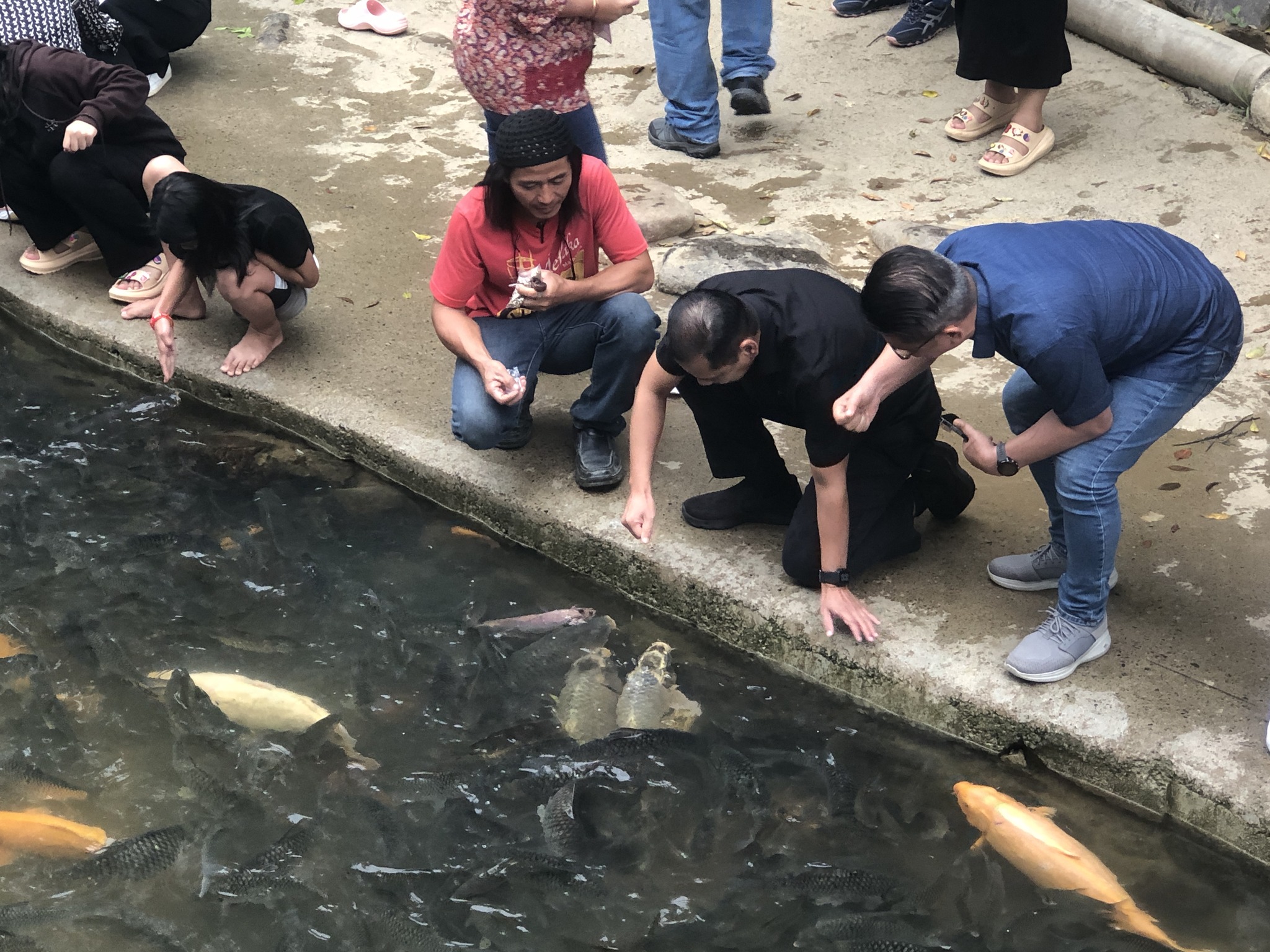
U4S (Zon Borneo) – Kg. Marakau Bombon, Ranau: Community Knowledge & Sustainable Growth
-
From Roots to Resilience.
Nestled in the highlands of Ranau, Kg. Marakau Bombon has been chosen as a model site under the University for Society (U4S) Programme by Universiti Malaysia Sabah (UMS) and the Pusat Kelestarian Libatsama Masyarakat (PKLM). Through this initiative, local families, youth and community leaders engage in tailored knowledge-transfer projects ranging from eco-tourism development and agro-entrepreneurship to digital-marketing of local products and value-added handicrafts. With expert guidance and community participation, the village is transforming into a living classroom for sustainable development — where tradition and innovation walk hand-in-hand. By leveraging the U4S platform, Kg. Marakau Bombon has opened new pathways for income, environmental stewardship and inter-generational knowledge-sharing. Its success underscores how targeted community empowerment, grounded in respect for culture and ecology, can bring meaningful, lasting change — helping villagers build resilient livelihoods, revive local heritage and contribute to Sabah’s sustainable future.
-
Community
Kg. Marakau Bombon - + Google Map
Trans Borneo 2023 Knowledge Transfer Program
-
Cultivating Growth, Harvesting Hope.
Under the Ministry of Higher Education’s Knowledge Transfer Initiative (KRIS), Universiti Malaysia Sabah (UMS) spearheaded ten multidisciplinary community projects in Kampung Long Pasia, Sipitang—a remote highland village located near the Sabah–Sarawak border. The programme mobilised over 90 UMS academics, researchers, and students, working directly with more than 200 local residents across sectors such as health education, aquaculture, smart solar e-Desa systems, ICT literacy, composting, and biodiversity conservation. By integrating scientific expertise with local wisdom, the initiative enhanced livelihood opportunities through sustainable fish-farming, organic fertiliser production, and eco-tourism potential, while also improving access to clean energy and digital communication. Environmental awareness campaigns and health outreach activities strengthened community wellbeing and self-reliance, especially among women and youth. Through this holistic approach, the Long Pasia community gained both economic resilience and ecological literacy, reducing dependency on external aid and vulnerability to socio-economic and environmental shocks. The project exemplifies UMS’s model of community-based sustainability, where education and technology become enablers for rural transformation
-
Community
Kampung Long Pasia,Sipitang - + Google Map